



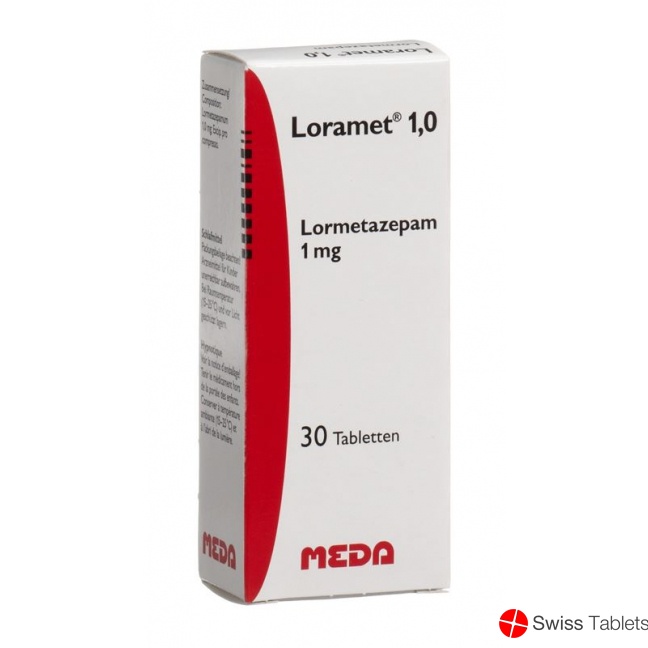
LORAMET 1 mg Comprimidos

Revisión de receta online
Un médico revisará tu caso y determinará si la prescripción es médicamente apropiada.

Habla con un médico sobre este medicamento
Comenta tus síntomas y las opciones de tratamiento en una consulta online.



Cómo usar LORAMET 1 mg COMPRIMIDOS
Contenido del prospecto
- Introducción
- Qué es Loramet y para qué se utiliza
- Qué necesita saber antes de empezar a tomar Loramet
- Cómo tomar Loramet
- Posibles efectos adversos
- Conservación de Loramet
- Contenido del envase e información adicional
Introducción
Prospecto: información para el usuario
LORAMET 1 mg comprimidos
Lormetazepam
Lea todo el prospecto detenidamente antes de empezar a tomar este medicamento, porque contiene información importante para usted.
- Conserve este prospecto, ya que puede tener que volver a leerlo.
- Si tiene alguna duda, consulte a su médico o farmacéutico.
- Este medicamento se le ha recetado solamente a usted, y no debe dárselo a otras personas aunque tengan los mismos síntomas que usted, ya que puede perjudicarles.
- Si experimenta efectos adversos, consulte a su médico o farmacéutico, incluso si se trata de efectos adversos que no aparecen en este prospecto. Ver sección 4.
Contenido del prospecto
- Qué es Loramet y para qué se utiliza
- Qué necesita saber antes de empezar a tomar Loramet
- Cómo tomar Loramet
- Posibles efectos adversos
- Conservación de Loramet
- Contenido del envase e información adicional
1. Qué es Loramet y para qué se utiliza
Loramet contiene lormetazepam que pertenece a un grupo de medicamentos denominados benzodiazepinas. Está indicado en el tratamiento de corta duración del insomnio.
Las benzodiazepinas sólo están indicadas para el tratamiento de un trastorno intenso, que limita la actividad del paciente o lo somete a una situación de estrés importante.

¿No estás seguro de si este medicamento es adecuado para ti?
Comenta tus síntomas y tratamiento con un médico online.
2. Qué necesita saber antes de empezar a tomar Loramet
No tome Loramet
- Si es alérgico al principio activo, a las benzodiazepinas o a cualquiera de los demás componentes de este medicamento (incluidos en la sección 6).
- Si sufre miastenia gravis (músculos muy débiles o cansados).
- Si tiene insuficiencia respiratoria grave.
- Si sufre síndrome de apnea del sueño.
- Si tiene antecedentes de dependencia al alcohol o drogas.
- En caso de intoxicación aguda con alcohol, medicamentos para dormir, para aliviar el dolor o con medicamentos psicotrópicos (agentes neurolépticos, antidepresivos, sales de litio).
Advertencias y precauciones
Consulte a su médico o farmacéutico antes de empezar a tomar Loramet.
Si alguno de los siguientes casos le es aplicable a usted, informe a su médico. Su médico lo tendrá en cuenta durante el tratamiento con Loramet.
- Si padece ataxia espinal o cerebelosa (falta de coordinación de los movimientos).
- Si tiene algún trastorno de hígado o riñón.
- Si tiene glaucoma de ángulo cerrado.
- Si su médico le ha prescrito un tratamiento prolongado, es aconsejable que le realicen análisis de sangre periódicos y pruebas de funcionamiento hepático
- Si durante el tratamiento se queda embarazada, debe comunicárselo a su médico.
- No se recomienda su uso en niños ni adolescentes.
- Si está en tratamiento con opioides ya que puede producir dificultad en la respiración, sedación, coma e incluso muerte.
Tenga en cuenta que puede experimentar las siguientes reacciones:
Tolerancia
Después de un uso continuado durante algunas semanas, puede detectarse un cierto grado de pérdida de eficacia con respecto a los efectos hipnóticos.
Amnesia
Las benzodiazepinas, incluida Loramet, pueden inducir amnesia (alteración en la memoria). Este hecho ocurre más frecuentemente transcurridas varias horas tras la administración del medicamento por lo que, para disminuir el riesgo asociado, los pacientes deberían asegurarse de dormir de forma ininterrumpida durante 7-8 horas tras la toma del comprimido.
Dependencia y abuso
El tratamiento con benzodiazepinas puede provocar el desarrollo de dependencia física y psíquica. Este riesgo se incrementa con la dosis y la duración, pero la dependenia puede ocurrir también durante el tratamiento a corto plazo con el rango de dosis terapéutica.
Para prevenir al máximo este riesgo deben tener en cuenta estas precauciones:
? La toma de benzodiazepinas se hará sólo bajo prescripción médica (nunca porque hayan dado resultado en otros pacientes) y nunca aconsejar a otras personas.
? No aumentar, en absoluto, las dosis prescritas por el médico, ni prolongar el tratamiento más tiempo del recomendado.
- En pacientes con un historial de abuso de drogas y/o alcohol puede producirse un abuso potencial del medicamento.
? Consultar al médico regularmente para que decida si debe continuarse el tratamiento.
Insomnio de rebote y ansiedad
Al cesar la administración pueden reaparecer los síntomas que le llevaron a la toma del medicamento, así como cambios de humor, ansiedad, insomnio, intranquilidad entre otras, por lo que su médico le indicará de forma precisa cómo disminuir la dosis progresivamente.
Se debe evitar la suspensión de lormetazepam de un modo brusco y seguirse un proceso de reducción gradual de la dosis.
Reacciones psiquiátricas y paradójicas
En el tratamiento con benzodiazepinas, incluida Loramet, pueden reaparecer depresiones pre-existentes o empeoramiento del estado depresivo. Además, pueden desenmascarar las tendencias al suicidio de los pacientes depresivos, lo que deberá ser vigilado en estos pacientes.
El medicamento debe de ser suspendido si aparecen estas reacciones.
Uso de Loramet con otros medicamentos
Comunique a su médico o farmacéutico si está utilizando o ha utilizado recientemente o podría tener que utilizar cualquier otro medicamento.
El uso simultáneo de Loramet con opioides (analgésicos, medicamentos para terapia de sustitución, y algunos antitusivos) aumenta el riesgo de somnolencia, dificultad respiratoria (depresión respiratoria), coma y pueden poner en peligro la vida. Debido a esto, la administración conjunta solo debe ser considerada cuando no sean posibles otros tratamientos alternativos.
Sin embargo, si su médico le prescribe Loramet junto con opioides, la posología y la duración del tratamiento simultáneo debería ser limitado por su médico.
Por favor, comunique a su médico todos los opioides que esté tomando, y siga cuidadosamente las recomendaciones sobre la posología que su médico le indique. Podría ser de ayuda informar a amigos o familiares de que estén al tanto de los signos y síntomas indicados anteriormente. Póngase en contacto con su médico si experimenta tales síntomas.
El alcohol aumenta el efecto sedante de este medicamento por lo que se recomienda evitar el consumo de alcohol.
Ciertos medicamentos pueden interaccionar con Loramet y hacer que se sienta más somnoliento de lo debido. Estos son los medicamentos denominados depresores del sistema nervioso central, entre lo que se incluyen los utilizados para el tratamiento de enfermedades mentales como antipsicóticos (neurolépticos), hipnóticos, ansiolíticos/sedantes, antidepresivos; los utilizados para aliviar dolores fuertes (analgésicos narcóticos), los utilizados para el tratamiento de convulsiones/ataques epilépticos (antiepilépticos), medicamentos anestésicos, medicamentos barbitúricos y medicamentos utilizados para el tratamiento de alergias (antihistamínicos sedantes).
La administración conjunta de Loramet con otros medicamentos como teofilina o aminofilina, agentes beta-bloqueantes, glucósidos cardiacos, anticonceptivos orales y algunos antibióticos pueden alterar el efecto de Loramet prolongando o disminuyendo su actividad.El efecto de los relajantes musculares puede verse potenciado.
Toma de Loramet con los alimentos y bebidas
Evite el consumo de alcohol durante el tratamiento con Loramet ya que aumenta el efecto sedante de este
medicamento.
Embarazo y lactancia
Si está embarazada o en periodo de lactancia, cree que podría estar embarazada o tiene intención de quedarse embarazada, consulte a su médico o farmacéutico antes de utilizar este medicamento.
Embarazo
El uso de benzodiazepinas, incluida Loramet, parece estar relacionado a un posible aumento del riesgo congénito de malformaciones en el primer trimestre de embarazo. Se ha detectado el paso de benzodiazepinas y metabolitos a través de la placenta.
Si por estricta exigencia médica, se administra el producto durante una fase tardía del embarazo, o a altas dosis durante el parto, es previsible que puedan aparecer efectos sobre el neonato como hipoactividad, hipotermia, hipotonía (bajo tono muscular), apnea (dificultad respiratoria), depresión respiratoria moderada, problemas de alimentación y desequilibrio en la respuesta metabólica al estrés por frío.
Los niños nacidos de madres que toman benzodiazepinas, de forma crónica durante varias semanas del embarazo o durante el último periodo del embarazo, pueden desarrollar dependencia física y desencadenar síndrome de abstinencia en el periodo postnatal.
Lactancia
Loramet no debe ser utilizado durante la lactancia, ya que las benzodiazepinas, incluida Loramet, se excretan por la leche materna. Se han detectado casos de sedación e incapacidad de mamar en neonatos cuyas madres se encontraban bajo tratamiento con benzodiazepinas. Estos recién nacidos deberán ser vigilados para detectar alguno de los efectos farmacológicos mencionados (incluyendo sedación e irritabilidad).
Uso en niños y adolescentes:
Las benzodiazepinas no están indicadas en niños ni adolescentes, excepto para la premedicación de medidas diagnósticas o quirúrgicas (anestesiología, cuidados intensivos). En estos casos se recomienda una dosis única de 1 mg.
Uso en personas de edad avanzada y pacientes debilitados
Las personas de edad avanzada y pacientes debilitados deben recibir una dosis menor dado que son más susceptibles a los efectos del medicamento. Siga cuidadosamente las instrucciones de su médico.
Debido al efecto de relajación muscular, existe riesgo de caídas y consecuentemente fracturas, en personas de edad avanzada, especialmente en pacientes que se levantan durante la noche.
Uso en pacientes con insuficiencia respiratoria
Lormetazepam está contraindicado en pacientes con insuficiencia respiratoria grave.
Uso en pacientes con insuficiencia hepática
Lormetazepam deberá ser usado con precaución en pacientes con insuficiencia hepática grave y/o encefalopatía.
Pérdida o duelo
En los casos de pérdida o duelo, el ajuste psicológico puede ser inhibido por las benzodiazepinas.
Conducción y uso de máquinas
Loramet es un medicamento que produce sueño. No conduzca ni utilice máquinas si siente somnolencia o si nota que su atención y capacidad de reacción se encuentran reducidas. Preste especial atención al inicio del tratamiento o si se aumenta la dosis.
Loramet contiene lactosa
Si su médico le ha indicado que padece una intolerancia a ciertos azúcares, consulte con él antes de tomar este medicamento.
3. Cómo tomar Loramet
Siga exactamente las instrucciones de administración de este medicamento indicadas por su médico. En caso de dudas, consulte de nuevo a su médico o farmacéutico.
Su médico le indicará la duración de su tratamiento con Loramet. La duración del tratamiento debe ser lo más corta posible.
El tratamiento debe comenzarse con las dosis más bajas y no debe excederse la dosis máxima.
Adultos:
La dosis recomendada es de 1 comprimido (1 mg de lormetazepam) diario, 15 a 30 minutos antes de acostarse, administrado por vía oral.
La dosis habitual puede aumentarse a criterio del médico en caso de insomnio grave o persistente que no responda a la pauta habitual, hasta 2 comprimidos diarios, lo que significa un máximo de 2 mg de lormetazepam.
Uso en niños y adolescentes
Lormetazepam no está indicado en el tratamiento del insomnio en niños y adolescentes.
Personas de edad avanzada, pacientes debilitados o con alteraciones vasculares cerebrales (arteriosclerosis), insuficiencia respiratoria leve o moderada y/o insuficiencia renal y/o hepática.
La dosis debe reducirse 0,5 mg de lormetazepam al día. Para obtener esta dosis existen otras presentaciones de lormetazepam disponibles.
Para insuficiencia respiratoria grave ver sección 2.
No interrumpa el tratamiento de forma brusca. Su médico le indicará la forma precisa de cómo disminuir la dosis progresivamente, ya que al cesar la administración pueden reaparecer los síntomas que le llevaron a la toma del medicamento.
Si toma más Loramet del que debe
Los síntomas de la sobredosificación con benzodiazepinas se manifiestan generalmente por distintos grados de depresión del sistema nervioso central, que pueden ir desde somnolencia hasta coma.
En casos moderados, los síntomas incluyen somnolencia, confusión, letargia y disartria (trastornos del lenguaje). En casos más serios pueden aparecer ataxia (incoordinación del movimiento voluntario), reacciones paradójicas, depresión del sistema nervioso central, hipotonía, hipotensión, depresión respiratoria (dificultades respiratorias), depresión cardiaca, coma y muerte.
Tratamiento de la sobredosificación: el manejo clínico de la sobredosis de cualquier medicamento, siempre debe tener en cuenta la posibilidad de que el paciente haya ingerido múltiples productos.
Tras una sobredosis de benzodiazepinas, se debe provocar el vómito (antes de una hora) si el paciente conserva la consciencia. No se recomienda provocar el vómito si existe riesgo de aspiración. Si el paciente está inconsciente deberá realizarse un lavado gástrico con conservación de la vía aérea. Si el vaciado gástrico no aporta ninguna ventaja, deberá administrarse carbón activado para reducir la absorción.
Deberá prestarse especial atención a las funciones respiratoria y cardiovascular si el paciente requiere ingreso en una unidad de cuidados intensivos para su monitorización.
Uso de antídoto en caso de sobredosis: en pacientes hospitalizados puede usarse el flumazenilo (antagonista de benzodiazepinas) como método coadyuvante en el tratamiento de la sobredosis pero nunca como sustituto del método descrito anteriormente. En los pacientes que toman benzodiazepinas de forma crónica o en casos de sobredosificación por antidepresivos cíclicos, debe tenerse especial cuidado al administrarles flumazenilo ya que dicha asociación de fármacos puede aumentar el riesgo de convulsiones.
En caso de sobredosis o ingestión accidental, consulte inmediatamente a su médico o farmacéutico o llame al Servicio de Información Toxicológica, teléfono 91 562 04 20, indicando el medicamento y la cantidad ingerida.
Si olvidó tomar Loramet
No tome una dosis doble para compensar las dosis olvidadas.
Si interrumpe el tratamiento con Loramet
No interrumpa el tratamiento con Loramet hasta que su médico se lo diga.
Si usted deja de tomar Loramet, especialmente si es de forma brusca, pueden aparecer cambios de humor, ansiedad, insomnio e intranquilidad, entre otros.
Su médico le explicará cómo debe disminuir progresivamente la dosis hasta finalizar su tratamiento.
Si tiene cualquier otra duda sobre el uso de este medicamento, pregunte a su médico o farmacéutico.

¿Has empezado a tomar el medicamento y tienes preguntas?
Comenta tus síntomas y tratamiento con un médico online.
4. Posibles efectos adversos
Al igual que todos los medicamentos, este medicamento puede producir efectos adversos, aunque no todas las personas los sufran.
Según las frecuencias, se definen como:
Muy frecuentes(pueden afectar a más de 1 de cada 10 personas): Dolor de cabeza.
Frecuentes(pueden afectar hasta 1 de cada 10 personas):
Ansiedad, alteraciones de la líbido y bradifrenia. Mareos, sedación, somnolencia, alteración de la atención, amnesia, disartria (habla pastosa), disgeusia. Taquicardia. Vómitos, náuseas, dolor abdominal superior, estreñimiento, boca seca. Prurito. Alteración de la micción. Astenia, hiperhidrosis, malestar.
Muy raros(pueden afectar hasta 1 de cada 10.000 personas):
Hipersensibilidad. Síndrome de secreción inapropiada de hormona antidiurética (SIADH), hiponatremia. Problemas visuales (incluyendo doble visión y visión borrosa). Hipotensión (disminución de la presión sanguínea). Insuficiencia respiratoria, apnea, empeoramiento de la apnea del sueño, empeoramiento de la enfermedad pulmonar obstructiva crónica (EPOC). Aumento de las transaminasas hepáticas y aumento de la fosfatasa alcalina en sangre. Dermatitis alérgica.
Frecuencia no conocida (no puede estimarse a partir de los datos disponibles):
Angiodema. Suicidio completado, intento de suicidio (debido al desenmascaramiento de una depresión pre-existente), psicosis aguda, alucinación, dependencia, abuso de drogas, depresión (desenmascaramiento de una depresión pre-existente), engaño, síndrome de retirada/rebote de insomnio, agitación, agresión, irritabilidad, inquietud, enfado, pesadillas, estado de confusión, delirio, comportamiento anormal, trastorno emocional, retraso psicomotor. Nivel bajo de conciencia, ataxia, convulsión, temblor, alteraciones extrapiramidales. Nistagmo (movimiento involuntario del ojo). Urticaria, rash. Debilidad muscular, calambres musculares. Fatiga, hipotermia, reacciones paradójicas.
Debido al efecto de relajación muscular, existe riesgo de caídas y consecuentemente fracturas, en personas de edad avanzada.
Comunicación de efectos adversos:
Si experimenta cualquier tipo de efecto adverso, consulte a su médico o farmacéutico, incluso si se trata de posibles efectos adversos que no aparecen en este prospecto. También puede comunicarlos directamente a través del Sistema Español de Farmacovigilancia de medicamentos de Uso Humanos: https://www.notificaram.es. Mediante la comunicación de efectos adversos usted puede contribuir a proporcionar más información sobre la seguridad de este medicamento.
5. Conservación de Loramet
Mantener este medicamento fuera de la vista y del alcance de los niños. Loramet no requiere condiciones especiales de conservación.
No utilice este medicamento después de la fecha de caducidad que aparece en el envase después de CAD. La fecha de caducidad es el último día del mes que se indica.
Los medicamentos no se deben tirar por los desagües ni a la basura. Deposite los envases y los medicamentos que no necesita en el Punto SIGRE de la farmacia. En caso de duda, pregunte a su farmacéutico cómo deshacerse de los envases y de los medicamentos que no necesita. De esta forma ayudará a proteger el medio ambiente.
6. Contenido del envase e información adicional
Composición de Loramet 1 mg comprimidos
- El principio activo es lormetazepam. Cada comprimido contiene 1 mg de lormetazepam.
- Los demás componentes son lactosa monohidrato, almidón de maíz, povidona y estearato de magnesio.
Aspecto del producto y contenido del envase
Loramet 1 mg se presenta en estuches conteniendo 30 comprimidos. Los comprimidos son redondos y de color blanco, ranurados en una de sus caras y con la marca L1 en la otra cara. La ranura sirve únicamente para fraccionar y facilitar la deglución, pero no para dividir en dosis iguales.
Titular de la autorización de comercialización y responsable de la fabricación
Titular de la autorización de comercialización:
Viatris Healthcare Limited
Damastown Industrial Park
Mulhuddart, Dublín 15
Dublín
Irlanda
Responsable de la fabricación:
Haupt Pharma Münster GmbH
Schleebrüggenkamp 15
D-48159 Münster
Alemania
Pueden solicitar más información respecto a este medicamento dirigiéndose al representante local del titular de la autorización de comercialización:
Viatris Pharmaceuticals, S.L.
C/ General Aranaz, 86
28027 - Madrid
España
Fecha de la última revisión de este prospecto:diciembre 2022
La información detallada y actualizada de este medicamento está disponible en la página Web de la Agencia Española de Medicamentos y Producto Sanitarios (AEMPS) https://www.aemps.gob.es/
- País de registro
- Forma farmacéuticaCOMPRIMIDO, 1 mg
- Código ATCN05CD06
- Precio medio en farmacia2.01 EUR
- Principio activo
- Requiere recetaSí
- Fabricante
- ComposiciónLACTOSA (74,0 mg mg)
- Esta información es de carácter general y no sustituye la consulta con un profesional sanitario.
- Alternativas a LORAMET 1 mg COMPRIMIDOSForma farmacéutica: COMPRIMIDO, 2 mg lormetazepamPrincipio activo: LormetazepamFabricante: Viatris Healthcare LimitedRequiere recetaForma farmacéutica: COMPRIMIDO, 1 mgPrincipio activo: LormetazepamFabricante: Laboratorios Alter S.A.Requiere recetaForma farmacéutica: COMPRIMIDO, 2 mgPrincipio activo: LormetazepamFabricante: Laboratorios Alter S.A.Requiere receta
Médicos online para LORAMET 1 mg COMPRIMIDOS
Comenta la dosis, los posibles efectos secundarios, interacciones, contraindicaciones o la revisión de receta de LORAMET 1 mg COMPRIMIDOS, sujeto a valoración médica y a la normativa local.







Obtén una receta de LORAMET 1 mg COMPRIMIDOS online
Rellena un formulario de 2 minutos
Cuéntanos tus síntomas, historial y el medicamento que necesitas.
Elige un médico o nosotros te asignamos uno
Escoge un especialista o te conectamos con el próximo médico disponible.
El médico revisa tu caso
Normalmente en 30 minutos. Puede hacerte preguntas adicionales por chat.
Recógela en cualquier farmacia
Receta electrónica enviada a tu correo, válida en toda España.
Preguntas frecuentes
LORAMET 1 mg COMPRIMIDOS requiere receta en España. Puedes confirmarlo con un médico online según tu caso.
El principio activo de LORAMET 1 mg COMPRIMIDOS es Lormetazepam. Esta información ayuda a identificar medicamentos con la misma composición pero con diferentes nombres comerciales.
El precio medio en farmacia de LORAMET 1 mg COMPRIMIDOS es de aproximadamente 2.01 EUR. Puede variar según el fabricante y la forma farmacéutica.
LORAMET 1 mg COMPRIMIDOS es fabricado por Viatris Healthcare Limited. La marca y el envase pueden variar según el distribuidor.
Los Médicos de familia, Psiquiatras, Dermatólogos, Cardiólogos, Endocrinólogos, Gastroenterólogos, Neumólogos, Nefrólogos, Reumatólogos, Hematólogos, Infectólogos, Alergólogos, Geriatras, Pediatras, Oncólogos pueden valorar la prescripción de LORAMET 1 mg COMPRIMIDOS cuando esté clínicamente indicado. Puedes reservar una videoconsulta para comentar tu caso y las opciones de tratamiento.
España cuenta con una infraestructura sanitaria bien desarrollada en ciudades principales como Madrid, Barcelona, Valencia y Sevilla. Las farmacias están ampliamente disponibles y operan bajo estrictas regulaciones, garantizando el acceso a medicamentos con receta.
Puedes comprar LORAMET 1 mg COMPRIMIDOS en Madrid, Barcelona, Sevilla o Valencia en cualquier farmacia local con una receta válida.
Para obtener una receta, puedes utilizar Oladoctor:
Otros medicamentos con el mismo principio activo (Lormetazepam) incluyen LORAMET 2 mg COMPRIMIDOS, LORMETAZEPAM ALTER 1 MG COMPRIMIDOS EFG, LORMETAZEPAM ALTER 2 MG COMPRIMIDOS EFG. Pueden tener diferentes nombres comerciales o formulaciones, pero contienen el mismo componente terapéutico. Consulta siempre con un médico antes de cambiar o iniciar un nuevo medicamento.
