



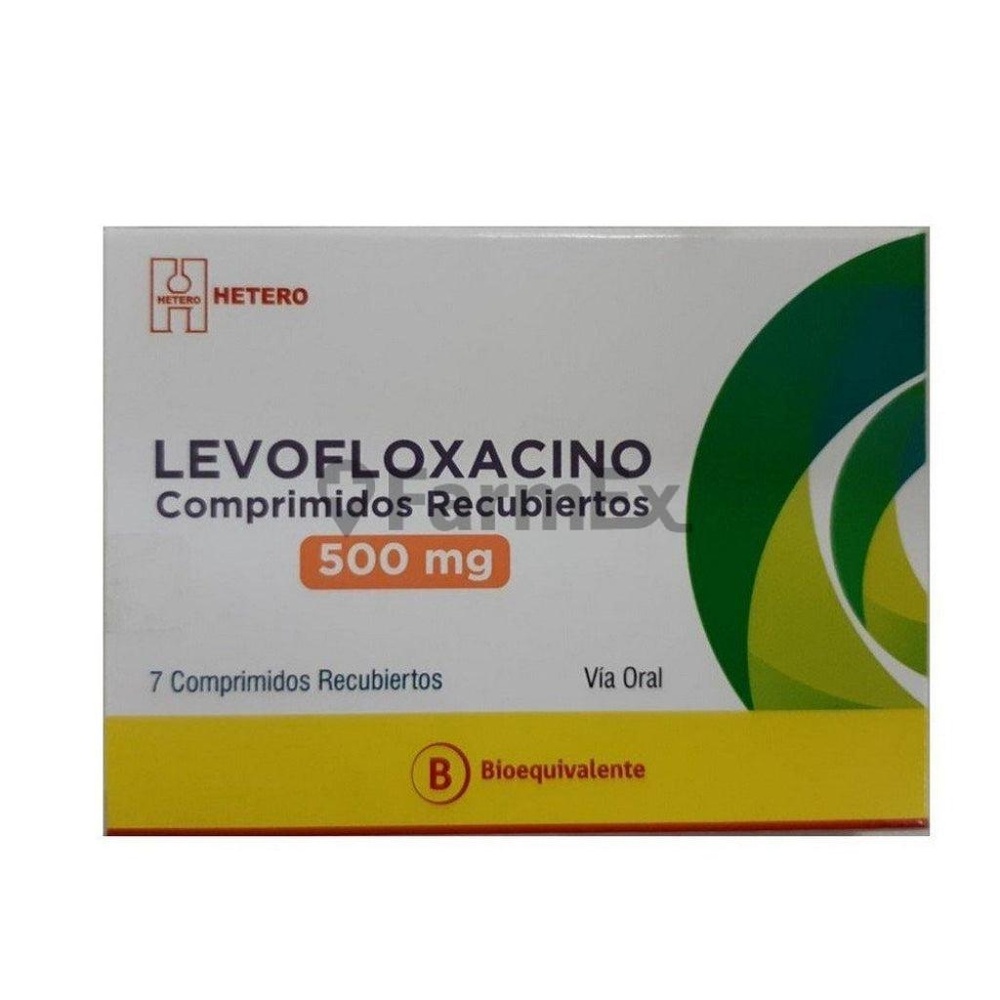
LEVOFLOXACINO SUN 500 mg Comprimidos recubiertos con película

Revisión de receta online
Un médico revisará tu caso y determinará si la prescripción es médicamente apropiada.

Habla con un médico sobre este medicamento
Comenta tus síntomas y las opciones de tratamiento en una consulta online.



Cómo usar LEVOFLOXACINO SUN 500 MG COMPRIMIDOS RECUBIERTOS CON PELICULA EFG
Contenido del prospecto
- Introducción
- Qué es Levofloxacino SUN comprimidos y para qué se utiliza
- Qué necesita saber antes de empezar a tomar Levofloxacino SUN comprimidos
- Cómo tomar Levofloxacino SUN comprimidos
- Posibles efectos adversos
- Conservación de Levofloxacino SUN comprimidos
- Contenid del envase e información adicional
Introducción
PROSPECTO: INFORMACIÓN PARA EL USUARIO
Levofloxacino SUN 500 mg comprimidos recubiertos con película EFG
Levofloxacino
Lea todo el prospecto detenidamente antes de empezar a tomar el medicamento, porque contiene información importante para usted.
- Conserve este prospecto, ya que puede tener que volver a leerlo.
- Si tiene alguna duda, consulte a su médico o farmacéutico.
- Este medicamento se le ha recetado solamente a usted, y no debe dárselo a otras personas aunque tengan los mismos síntomas que usted, ya que puede perjudicarles.
- Si experimenta efectos adversos, consulte a su médico o farmacéutico, incluso si se trata de efectos adversos que no aparecen en este prospecto. Ver sección 4.
Contenido del prospecto:
- Qué es Levofloxacino SUN comprimidos y para qué se utiliza
- Qué necesita saber antes de empezar a tomar Levofloxacino SUN comprimidos
- Cómo tomar Levofloxacino SUN comprimidos
- Posibles efectos adversos
- Conservación de Levofloxacino SUN comprimidos
- Contenido del envase e información adicional
1. Qué es Levofloxacino SUN comprimidos y para qué se utiliza
El nombre de este medicamento es Levofloxacino SUN comprimidos. Levofloxacino SUN comprimidos contiene un principio activo llamado levofloxacino. Este pertenece al grupo de medicamentos denominados antibióticos. El levofloxacino es un antibiótico del tipo de las quinolonas. Funciona matando las bacterias que causan infecciones en su organismo.
Los antibióticos se utilizan para tratar infecciones bacterianas y no sirven para tratar infecciones víricas como la gripe o el catarro. Es importante que siga las instrucciones relativas a la dosis, el intervalo de administración y la duración del tratamiento indicadas por su médico. No guarde ni reutilice este medicamento. Si una vez finalizado el tratamiento le sobra antibiótico, devuélvalo a la farmacia para su correcta eliminación. No debe tirar los medicamentos por el desagüe ni a la basura. |
Levofloxacino SUN comprimidos se puede utilizar para tratar infecciones en:
- los senos paranasales
- los pulmones, en personas con problemas respiratorios de larga duración o neumonía
- el tracto urinario, incluyendo los riñones o la vejiga
- la próstata, cuando la infección es persistente
- la piel y bajo la piel, incluidos los músculos. Esto se denomina algunas veces “tejidos blandos”
En algunas situaciones especiales, Levofloxacino SUN comprimidos recubiertos con película se puede utilizar para reducir la posibilidad de adquirir una infección pulmonar denominada ántrax o un agravamiento de dicha enfermedad después de que haya estado expuesto a la bacteria causante del ántrax.

¿No estás seguro de si este medicamento es adecuado para ti?
Comenta tus síntomas y tratamiento con un médico online.
2. Qué necesita saber antes de empezar a tomar Levofloxacino SUN comprimidos
No tome este medicamento y consulte a su médico si:
- Es alérgico a levofloxacino, a otros antibióticos del tipo de las quinolonas como moxifloxacino, ciprofloxacino u ofloxacino, o a cualquiera de los demás componentes de este medicamento (incluidos en la sección 6)
Los signos de una reacción alérgica incluyen: erupción en la piel, dificultad para tragar o respirar, hinchazón de labios, cara, garganta o lengua
- Padece o ha padecido epilepsia
- Ha sufrido alguna vez problemas en los tendones, como tendinitis, que estuvieran relacionados con la toma de medicamentos del tipo de las quinolonas. El tendón es el tejido que une su músculo con el esqueleto
- Es un niño o adolescente en periodo de crecimiento
- Está embarazada, pudiera quedarse embarazada o cree que podría estar embarazada
- Está en periodo de lactancia
No tome este medicamento si le afecta cualquiera de los casos arriba descritos. En caso de duda, consulte con su médico o farmacéutico antes de tomar Levofloxacino SUN.
Advertencias y precauciones
Antes de empezar a tomar este medicamento
No debe tomar medicamentos antibacterianos del tipo fluoroquinolonas/quinolonas, incluido Levofloxacino SUN, si ha experimentado alguna reacción adversa grave con anterioridad al tomar una quinolona o una fluoroquinolona. Si este es su caso, debe informar a su médico lo antes posible.
Consulte a su médico o farmacéutico antes de tomar su medicamento si:
- Tiene 60 años o edad superior
- Está usando corticosteroides, a veces llamados esteroides (ver sección “Toma de Levofloxacino SUN con otros medicamentos”)
- Ha tenido alguna vez un ataque epiléptico (convulsiones)
- Ha sufrido daño cerebral debido a un accidente cerebrovascular u otra lesión cerebral
- Tiene problemas de riñón
- Tiene lo que se conoce como “deficiencia de glucosa-6-fosfato deshidrogenasa”, ya que puede ser propenso a tener problemas en la sangre graves cuando esté tomando este medicamento
- Ha tenido alguna vez problemas mentales
- Alguna vez ha tenido problemas de corazón: se debe tener precaución cuando esté utilizando este tipo de medicamento, si ha nacido con, o tiene antecedentes familiares de prolongación del intervalo QT (visto en el electrocardiograma (ECG), representación gráfica de la actividad eléctrica del corazón), tiene desequilibrio en los niveles de sales en sangre (especialmente un bajo nivel de potasio o magnesio en sangre), tiene un ritmo cardiaco lento (denominado “bradicardia”), tiene un corazón débil (fallo cardiaco), tiene antecedentes de ataque al corazón (infarto de miocardio), si es una mujer o una persona de edad avanzada o está tomando otros medicamentos que puedan producir cambios anormales en el ECG (ver sección “Toma de Levofloxacino SUN con otros medicamentos”)
- Es diabético
- Alguna vez ha tenido problemas de hígado
- Padece miastenia gravis.
- si le han diagnosticado un aumento de tamaño o un «bulto» de un vaso sanguíneo de gran tamaño (aneurisma aórtico o aneurisma de un vaso de gran tamaño periférico).
- si ha sufrido un episodio previo de disección aórtica (desgarro de la pared de la aorta).
- Si se le ha diagnosticado una insuficiencia de la válvula cardíaca (regurgitación de las válvulas cardíacas.
- si tiene antecedentes familiares de aneurisma aórtico o disección aórtica o enfermedad congénita de las válvulas cardíacas u otros factores de riesgo o trastornos predisponentes (p. ej., trastornos del tejido conjuntivo como el síndrome de Marfan o el síndrome vascular de Ehlers-Danlos, el Síndrome de Turner o el Síndrome de Sjögren (una enfermedad autoinmune inflamatoria), o trastornos vasculares como arteritis de Takayasu, arteritis de células gigantes, enfermedad de Behçet, hipertensión arterial o aterosclerosis conocida, artritis reumatoide (una enfermedad de las articulaciones) o endocarditis (una infección del corazón)).
- ha desarrollado alguna vez una erupción cutánea grave o descamación de la piel, ampollas y/o llagas en la boca después de tomar levofloxacino.
Durante el tratamiento con este medicamento
En raras ocasiones pueden aparecer dolor e hinchazón en las articulaciones e inflamación o rotura de los tendones. Su riesgo aumenta si usted es una persona de edad avanzada (mayor de 60 años), ha recibido un trasplante de un órgano, tiene problemas de riñón o está en tratamiento con corticosteroides. La inflamación y la rotura de tendones se pueden producir dentro de las primeras 48 horas de tratamiento e incluso hasta varios meses después de interrumpir el tratamiento con levofloxacino. Al primer signo de dolor o inflamación de un tendón (por ejemplo, en su tobillo, muñeca, codo, hombro o rodilla), deje de tomar levofloxacino, póngase en contacto con su médico y mantenga en reposo la zona dolorosa. Evite cualquier ejercicio innecesario, ya que este podría aumentar el riesgo de rotura de un tendón.
En raras ocasiones, se puede experimentar síntomas de lesión de los nervios (neuropatía) como dolor, quemazón, hormigueo, entumecimiento y/o debilidad, especialmente en pies y piernas o en manos y brazos. Si esto sucede, deje de tomar levofloxacino e informe a su médico inmediatamente para prevenir el desarrollo de un trastorno potencialmente irreversible.
Reacciones cutáneas graves
Se han notificado reacciones cutáneas graves incluyendo síndrome de Stevens-Johnson, necrólisis epidérmica tóxica (NET), y reacción a fármaco con eosinofilia y síntomas sistémicos (DRESS) con el uso de levofloxacino.
- SJS/NET pueden aparecer inicialmente en el tronco como granos rojizos en forma de diana o manchas circulares a menudo con ampollas en el centro. También pueden aparecer, úlceras en la boca, garganta, nariz, genitales y ojos (ojos rojos
e hinchados). Estas erupciones graves de la piel a menudo vienen precedidas por fiebre y/o síntomas similares a los de la gripe. Las erupciones pueden progresar a una descamación generalizada de la piel y a complicaciones amenazantes para la vida o ser mortales.
- DRESS se manifiesta inicialmente con síntomas similares a los de la gripe y una erupción en la cara, después una erupción más extendida con una elevación de la temperatura corporal, niveles elevados de enzimas hepáticas observados en los análisis de sangre y un aumento de un tipo de células blancas de la sangre (eosinofilia) y ganglios linfáticos agrandados.
Si usted desarrolla una erupción grave o alguno de estos síntomas de la piel, deje de tomar levofloxacino y contacte con su médico o busque atención médica inmediatamente.
Efectos adversos graves incapacitantes de duración prolongada y potencialmente irreversibles.
Los medicamentos antibacterianos que contienen fluoroquinolonas/quinolona, incluido levofloxacino, se han asociado a efectos adversos muy raros pero graves, algunos de ellos fueron de larga duración (persistentes durante meses o años), incapacitantes o potencialmente irreversibles. Esto incluye dolor en los tendones, los músculos y las articulaciones de las extremidades superiores e inferiores, dificultad para caminar, sensaciones anómalas como pinchazos, hormigueo, cosquilleo, entumecimiento o quemazón (parestesia), trastornos sensitivos tales como disminución de la visión, del gusto, del olfato y de la audición, depresión, deterioro de la memoria, fatiga intensa y trastornos graves del sueño.
Si experimenta alguno de estos efectos adversos después de tomar levofloxacino, pongase en contacto con su médico inmediatamente antes de continuar con el tratamiento. Usted y su médico decidirán si continuar o no el tratamiento, considerando también el uso de un antibiótico de otra clase.
Si siente un dolor fuerte y repentino en el abdomen, el pecho o la espalda, que pueden ser síntomas de disección o aneurisma aórticos acuda inmediatamente a un servicio de urgencias. Puede aumentar el riesgo si está recibiendo un tratamiento con corticoesteroides sistémicos.
Si empieza a experimentar una aparición repentina de disnea, especialmente cuando se tumba en la cama, o si observa hinchazón en los tobillos, los pies o el abdomen o la aparición de palpitaciones cardíacas (sensación de latido cardíaco rápido o irregular), debe informar a su médico inmediatamente.
Informe a su médico o farmacéutico antes de tomar Levofloxacino SUN, si no está seguro de que cualquiera de los casos arriba descritos es aplicable a usted.
Toma de Levofloxacino SUN con otros medicamentos
Informe a su médico o farmacéutico si está tomando, ha tomado recientemente o podría tener que tomar cualquier otro medicamento. Esto es porque Levofloxacino SUN puede afectar al funcionamiento de otros medicamentos. Además, algunos medicamentos pueden afectar al funcionamiento de Levofloxacino SUN.
En particular, informe a su médico si está tomando cualquiera de los siguientes medicamentos, ya que aumenta la posibilidad de sufrir efectos adversos al tomarlos junto con Levofloxacino SUN:
- Corticosteroides, a veces llamados esteroides - usados para la inflamación. Puede tener más probabilidades de sufrir inflamación y/o rotura de sus tendones
- Warfarina - usada para hacer la sangre mas líquida. Puede tener mayor probabilidad de sufrir una hemorragia. Su médico puede necesitar análisis de sangre periódicos para comprobar si su sangre coagula correctamente
- Teofilina - usada para problemas respiratorios. Tiene mayor probabilidad de sufrir un ataque epiléptico (convulsiones) si la toma con Levofloxacino SUN
- Antiinflamatorios no esteroideos (AINES) - usados para el dolor y la inflamación como el ácido acetilsalicílico, ibuprofeno, fenbufeno, ketoprofeno, indometacina. Tiene mayor probabilidad de sufrir un ataque epiléptico (convulsiones) al tomarlos con Levofloxacino SUN
- Ciclosporina - usada después de los trasplantes de órganos. Puede tener mayor probabilidad de sufrir los efectos adversos de la ciclosporina
- Medicamentos de acción conocida sobre los latidos de su corazón. Esto incluye medicamentos usados para el ritmo anormal de corazón (antiarrítmicos como quinidina, hidroquinidina, disopiramida, sotalol, dofetilida, ibutilida y amiodarona), para la depresión (antidepresivos tricíclicos como amitriptilina e imipramina), para trastornos psiquiátricos (antipsicóticos), y para infecciones bacterianas (antibióticos “macrólidos” como eritromicina, azitromicina y claritromicina)
- Probenecid (usado para la gota) y cimetidina (usada para úlceras y ardor de estómago). Se debe de tener especial cuidado cuando se toman estos medicamentos con Levofloxacino SUN. Si usted tiene problemas de riñón, su médico puede querer darle una dosis más baja.
No tome Levofloxacino SUN comprimidos al mismo tiempo que los siguientes medicamentos, ya que puede afectar al modo de acción de Levofloxacino SUN comprimidos:
- Comprimidos de hierro (para la anemia), suplementos de zinc, antiácidos que contengan aluminio o magnesio (para la acidez o ardor de estómago), didanosina, o sucralfato (para las úlceras de estómago). Ver sección 3 “Si ya está tomando hierro, suplementos de zinc, antiácidos, didanosina o sucralfato” a continuación.
Determinación de opiáceos en orina
Las pruebas de orina pueden mostrar resultados “falsos positivos” de presencia de analgésicos fuertes denominados “opiáceos” en pacientes que toman Levofloxacino SUN. Informe a su médico de que está tomando Levofloxacino SUN si le ha recetado una prueba de orina.
Test de Tuberculosis
Este medicamento puede causar un resultado de “falso negativo” en algunos test utilizados en el laboratorio para buscar la bacteria causante de la tuberculosis.
Embarazo y lactancia
No tome este medicamento si:
- está embarazada, pudiera quedarse embarazada o cree que podría estar embarazada.
- está en periodo de lactancia o tiene previsto estarlo
Si usted desarrolla una erupción grave o alguno de estos síntomas de la piel, deje de
tomar levofloxacino y contacte con su médico o busque atención médica
inmediatamente.
Conducción y uso de máquinas
Pueden aparecer algunos efectos adversos tales como mareos, somnolencia, alteración del equilibrio (vértigo) o alteraciones visuales. Algunos de estos efectos adversos pueden afectar a su capacidad para concentrarse o disminuir su velocidad de reacción. Si esto ocurre, no conduzca ni realice cualquier trabajo que requiera un nivel elevado de atención.
Información importante sobre algunos ingredientes de Levofloxacino SUN
Este medicamento puede producir reacciones alérgicas porque contiene el colorante azoico amarillo anaranjado S (E-110). Puede provocar asma, especialmente en pacientes alérgicos al ácido acetilsalicílico.
3. Cómo tomar Levofloxacino SUN comprimidos
Siga exactamente las instrucciones de administración de este medicamento indicadas por su médico. En caso de duda, consulte de nuevo a su médico o farmacéutico.
Cómo tomar este medicamento
- Tome este medicamento por la boca
- Trague los comprimidos enteros con un poco de agua
- Los comprimidos se pueden tomar durante o entre las comidas
Proteja su piel de la luz solar
No exponga su piel directamente al sol (aun estando nublado) mientras esté tomando este medicamento y durante dos días después de dejar de tomarlo, ya que su piel se hará mucho más sensible al sol y puede quemarse, escocerle o incluso llenarse de ampollas si no toma las siguientes precauciones:
- Asegúrese de usar cremas solares con factor de protección alto
- Lleve siempre un sombrero y ropa que cubra sus brazos y piernas
- Evite las lámparas de rayos ultravioleta (UVA)
Si ya está tomando comprimidos de hierro, suplementos de zinc, antiácidos, didanosina o sucralfato
- No tome estos medicamentos al mismo tiempo que Levofloxacino SUN. Debe tomar estos medicamentos como mínimo dos horas antes o dos horas después de tomar Levofloxacino SUN comprimidos.
Qué dosis debe tomar
- Su médico decidirá qué cantidad de Levofloxacino SUN comprimidos debe tomar.
- La dosis dependerá del tipo de infección que tenga y de dónde está localizada la infección en su cuerpo.
- La duración del tratamiento dependerá de la gravedad de su infección.
- Si cree que el efecto del medicamento es demasiado débil o fuerte, no cambie la dosis usted mismo, pregunte a su médico.
Adultos y pacientes de edad avanzada
Infección en los senos paranasales
- Dos comprimidos de Levofloxacino de 250 mg, una vez al día
- O, un comprimido de Levofloxacino SUN 500 mg, una vez al día
Infección en los pulmones, en personas con problemas respiratorios de larga duración
- Dos comprimidos de Levofloxacino de 250 mg, una vez al día
- O, un comprimido de Levofloxacino SUN 500 mg, una vez al día
Neumonía
- Dos comprimidos de Levofloxacino de 250 mg, una o dos veces al día
- O, un comprimido de Levofloxacino SUN 500 mg, una o dos veces al día
Infección en el tracto urinario, incluyendo riñones o vejiga
- Uno o dos comprimidos de Levofloxacino de 250 mg, al día
- O, medio o un comprimido de Levofloxacino SUN 500 mg, al día
Infección en la próstata
- Dos comprimidos de Levofloxacino de 250 mg, una vez al día
- O, un comprimido de Levofloxacino SUN 500 mg, una vez al día
Infección en la piel y debajo de la piel incluidos los músculos
- Dos comprimidos de Levofloxacino de 250 mg, una o dos veces al día
- O, un comprimido de Levofloxacino SUN 500 mg, una o dos veces al día
Adultos y pacientes de edad avanzada con problemas en los riñones
Su médico posiblemente le administrará una dosis más baja.
Niños y adolescentes
Este medicamento no se debe administrar a niños ni adolescentes.
Si toma más Levofloxacino SUN comprimidos del que debe
Si accidentalmente toma más comprimidos de los que debiera, informe a su médico o consiga inmediatamente ayuda médica. Tome el medicamento y llévelo consigo para que el médico sepa lo que ha tomado. Los efectos que pueden aparecer son: ataques epilépticos (convulsiones), confusión, mareos, disminución de la consciencia, temblores, trastornos del corazón que pueden ocasionar latidos irregulares del corazón así como malestar (náuseas) o ardor de estómago.
Consulte inmediatamente a su médico, farmacéutico o llame al servicio de información toxicológica, teléfono 91.562.04.20, indicando el medicamento y la cantidad tomada.
Se recomendará llevar el envase y el prospecto del medicamento al profesional sanitario.
Si olvidó tomar Levofloxacino SUN comprimidos
Si olvidó tomar una dosis, tómela enseguida, a no ser que sea casi la hora de su siguiente dosis. No tome una dosis doble para compensar las dosis olvidadas.
Si interrumpe el tratamiento con Levofloxacino SUN comprimidos
No interrumpa su tratamiento con Levofloxacino SUN aunque se sienta mejor. Es importante que termine el tratamiento que su médico le ha prescrito. Si deja de tomarlos demasiado pronto, la infección puede aparecer de nuevo, su estado puede empeorar o la bacteria se puede hacer resistente al medicamento.
Si tiene cualquier otra duda sobre el uso del producto, pregunte a su médico o farmacéutico.

¿Has empezado a tomar el medicamento y tienes preguntas?
Comenta tus síntomas y tratamiento con un médico online.
4. Posibles efectos adversos
Al igual que todos los medicamentos, Levofloxacino SUN puede producir efectos adversos, aunque no todas las personas los sufran. Normalmente son efectos de leves a moderados y suelen desaparecer en poco tiempo.
Interrumpa el tratamiento con Levofloxacino SUN y contacte con un médico o vaya a un hospital rápidamente si nota los efectos adversos siguientes:
- Si tiene una reacción alérgica. Los signos pueden incluir: erupción en la piel, dificultad para tragar o respirar, hinchazón de labios, cara, garganta o lengua
Interrumpa el tratamiento con Levofloxacino SUN y contacte con un médico inmediatamente si nota los siguientes efectos adversos graves, ya que puede necesitar tratamiento médico urgente:
Frecuencia no conocida(no puede estimarse a partir de los datos disponibles)
- Diarrea acuosa que puede contener sangre, posiblemente con calambres de estómago y fiebre. Estos podrían ser los signos de un problema grave de intestino
Raros(pueden afectar hasta 1 de cada 1.000 personas)
- Dolor e inflamación en los tendones o ligamentos, que podrían conducir a la rotura. El tendón de Aquiles es el que más frecuentemente se ve afectado
- Ataques epilépticos (convulsiones)
- Erupción generalizada, temperatura corporal alta, elevación de las enzimas hepáticas, anomalías sanguíneas (eosinofilia), ganglios linfáticos agrandados y otros órganos del cuerpo implicados (reacción a fármaco con eosinofilia y síntomas sistémicos conocida también como DRESS o síndrome de hipersensibilidad a fármacos). Ver también sección 2.
- Síndrome asociado con alteraciones en la eliminación de agua y niveles bajos de sodio (SIADH)
- Disminución de los niveles de azúcar en sangre (hipoglucemia) o disminución de los niveles de azúcar en sangre que puede dar lugar a coma (coma hipoglucémico). Esto es importante para los pacientes diabéticos
- Ver u oír cosas que no son reales (alucinaciones, paranoia), cambios de opinión y pensamientos (reacciones psicóticas) con riesgo de tener pensamientos o acciones suicidas.
- Depresión, trastornos mentales, sensación de inquietud (agitación), sueños anormales o pesadillas.
Frecuencia no conocida(no puede estimarse a partir de los datos disponibles)
- Quemazón, cosquilleo, dolor o entumecimiento. Estos pueden ser los signos de lo que se denomina “neuropatía”
- Erupciones graves de la piel incluyendo síndrome de Stevens-Johnson y necrólisis epidérmica tóxica. Estas pueden aparecer en el tronco como máculas rojizas en forma de diana o manchas circulares a menudo con ampollas en el centro, descamación de la piel, úlceras en la boca, garganta, nariz, genitales y ojos y pueden estar precedidas por fiebre y síntomas similares a los de la gripe. Ver también sección 2.
- Pérdida de apetito, color amarillo de piel y ojos, orina de color oscuro, escozor o estómago doloroso a la palpación (abdomen). Estos pueden ser los signos de problemas de hígado que pueden incluir un fallo fulminante del hígado
Consulte inmediatamente a un especialista de la vista si se deteriora su visión o tiene cualquier otro problema en sus ojos mientras está tomando Levofloxacino SUN.
Informe a su médico si cualquiera de los siguientes efectos adversos se agravara o durara más de unos días:
Frecuentes(pueden afectar hasta 1 de cada 10 personas)
- Problemas de sueño
- Dolor de cabeza, mareo
- Malestar (náuseas, vómitos) y diarrea
- Aumento del nivel de algunas enzimas del hígado en la sangre
Poco frecuentes(pueden afectar hasta 1 de cada 100 personas)
- Cambios en el número de otras bacterias u hongos, infección por un hongo denominado Candida, que pueden necesitar tratamiento
- Cambios en el número de glóbulos blancos en los resultados de sus análisis de sangre (leucopenia, eosinofilia)
- Estrés (ansiedad), confusión, nerviosismo, somnolencia, temblores, sensación de mareo (vértigo)
- Dificultad para respirar (disnea)
- Cambios en el sabor de las cosas, pérdida de apetito, trastornos de estómago o indigestión (dispepsia), dolor en la zona del estómago, sensación de hinchazón (flatulencia) o estreñimiento
- Picor y erupción en la piel, prurito intenso o habones (urticaria), exceso de sudoración (hiperhidrosis)
- Dolor de las articulaciones o dolor muscular
- Valores anormales en sus análisis de sangre debidos a problemas de hígado (aumento de la bilirrubina) o de riñón (aumento de la creatinina)
- Debilidad generalizada
Raros(pueden afectar hasta 1 de cada 1.000 personas)
- Aparición de hematomas y sangrado con facilidad debido a la disminución del número de plaquetas de la sangre (trombocitopenia)
- Disminución del número de glóbulos blancos en sangre (neutropenia)
- Respuesta inmune exagerada (hipersensibilidad)
- Sensación de hormigueo en manos y pies (parestesias)
- Trastornos del oído (tinnitus) o de la vista (visión borrosa)
- Latido anormalmente rápido del corazón (taquicardia) o disminución de la tensión arterial (hipotensión)
- Debilidad muscular. Esto es importante en personas con miastenia gravis (enfermedad rara del sistema nervioso)
- Cambios en el funcionamiento de los riñones y de forma ocasional, insuficiencia renal que puede ser consecuencia de una reacción en el riñón de tipo alérgico denominada nefritis intersticial
- Fiebre
- Manchas eritematosas claramente delimitadas con/o sin ampollas que se desarrollan a
las pocas horas de la administración de levofloxacino y se curan con hiperpigmentación
residual postinflamatoria; por lo general, se repite en el mismo sitio de la piel o de la
membrana mucosa después de la exposición posterior a levofloxacino
- Delirios
- Deterioro de la memoria.
Frecuencia no conocida(no puede estimarse a partir de los datos disponibles)
- Disminución de glóbulos rojos en sangre (anemia): esto puede hacer que la piel se vuelva pálida o amarillenta debido al daño en los glóbulos rojos; disminución en el número de todos los tipos de células de la sangre (pancitopenia)
- Fiebre, dolor de garganta y un malestar general persistente. Esto puede ser debido a una disminución del número de glóbulos blancos (agranulocitosis)
- Colapso circulatorio (shock de tipo anafiláctico)
- Aumento de los niveles de azúcar en sangre (hiperglucemia). Esto es importante en las personas con diabetes
- Cambios en el olfato, pérdida de olfato o gusto (parosmia, anosmia, ageusia)
- Trastornos del movimiento y de la marcha (discinesia, trastornos extrapiramidales)
- Pérdida temporal de la consciencia o de la postura (síncope)
- Pérdida temporal de la visión
- Problemas o pérdida de oído
- Latido del corazón anormalmente rápido, latido del corazón irregular con peligro para la vida incluyendo parada del corazón, alteración del ritmo cardiaco (denominada “prolongación del intervalo QT”, observada en el ECG, representación gráfica de la actividad eléctrica del corazón)
- Dificultad para respirar o sibilancia (broncoespasmo)
- Reacciones alérgicas pulmonares
- Inflamación del páncreas (pancreatitis)
- Inflamación del hígado (hepatitis)
- Aumento de la sensibilidad de la piel al sol y a la luz ultravioleta (fotosensibilidad)
- Inflamación de los vasos que transportan la sangre por el cuerpo debido a una reacción alérgica (vasculitis)
- Inflamación del tejido del interior de la boca (estomatitis)
- Rotura muscular y destrucción del músculo (rabdomiólisis)
- Articulaciones rojas e hinchadas (artritis)
- Dolor, incluyendo dolor de espalda, pecho y extremidades
- Crisis de porfiria en pacientes con porfiria (enfermedad metabólica muy rara)
- Dolor de cabeza persistente con o sin visión borrosa (hipertensión intracraneal benigna)
La administración de antibióticos que contienen quinolonas y fluoroquinolonas se ha asociado a casos muy raros de reacciones adversas de larga duración (incluso meses o años) o permanentes, tales como inflamación de tendones, rotura de tendones, dolor en las articulaciones, dolor en las extremidades, dificultad para caminar, sensaciones anómalas tales como pinchazos, hormigueo, cosquilleo, quemazón, entumecimiento o dolor (neuropatía), depresión, fatiga, trastornos del sueño, disminución de la memoria y disminución de la audición, la visión, el gusto y el olfato, en algunos casos con independencia de la presencia de factores de riesgo preexistentes.
Se han notificado casos de aumento de tamaño y debilitamiento o desgarro de la pared aórtica (aneurismas y disecciones), lo que podría producir una rotura y llegar a ser mortal, e insuficiencia de válvulas cardíacas en pacientes que han recibido fluoroquinolonas. Ver también la sección 2.
Comunicación de efectos adversos:
Si experimenta cualquier tipo de efecto adverso, consulte a su médico o farmacéutico o enfermero, incluso si se trata de posibles efectos adversos que no aparecen en este prospecto. También puede comunicarlos directamente a través del Sistema Español de Farmacovigilancia de medicamentos de Uso Humano: https://www.notificaram.es.
Mediante la comunicación de efectos adversos usted puede contribuir a proporcionar más información sobre la seguridad de este medicamento.
5. Conservación de Levofloxacino SUN comprimidos
Mantener este medicamento fuera de la vista y del alcance de los niños.
Este medicamento no requiere condiciones especiales de conservación, pero es preferible conservar Levofloxacino SUN comprimidos en el envase original en un lugar seco.
No utilice este medicamento después de la fecha de caducidad que aparece en el envase y el blíster después de CAD. La fecha de caducidad es el último día del mes que se indica.
Los medicamentos no se deben tirar por los desagües ni a la basura. Deposite los envases y los medicamentos que no necesita en el punto SIGRE de la farmacia. Pregunte a su farmacéutico cómo deshacerse de los envases y de los medicamentos que ya no necesita. De esta forma, ayudará a proteger el medio ambiente.
6. Contenid del envase e información adicional
Composición de Levofloxacino SUN comprimidos
El principio activo es levofloxacino.
Cada comprimido de Levofloxacino SUN 500 mg contiene 500 mg de levofloxacino en forma de levofloxacino hemihidrato.
Los demás componentes son:
Núcleo: Celulosa microcristalina, hidroxipropilcelulosa, crospovidona, estearato de magnesio.
Recubrimiento:Hipromelosa, laca de aluminio índigo carmín (E-132), laca de aluminio amarillo anaranjado S (E-110), óxido de hierro rojo (E-172), macrogol 4000, dióxido de titanio (E-171) y óxido de hierro amarillo.
Aspecto del producto y contenido del envase
Levofloxacino SUN son comprimidos recubiertos con película para uso por vía oral. Levofloxacino SUN 500 mg comprimidos recubiertos con película son comprimidos oblongos, biconvexos, ranurados y de color naranja. El comprimido se puede dividir en mitades iguales.
Levofloxacino SUN 500 mg comprimidos recubiertos con película están envasados en blister y se presentan en envases de 1, 5, 7 y 10 comprimidos.
Puede que solamente estén comercializados algunos tamaños de envases.
Titular de la autorización de comercialización
Sun Pharmaceutical Industries Europe B.V.,
Polarisavenue 87,
2132JH Hoofddorp, Países Bajos
Responsable de la fabricación
Pharmathen, S.A.
6 Dervenakion str 153 51 Pallini
Attiki, Grecia
Representante Local:
Sun Pharma Laboratorios, S.L.
Rambla de Catalunya 53-55
08007 – Barcelona
España
Este medicamento está autorizado en los estados miembros del Espacio Económico Europeo con los siguientes nombres:
IT/H/0294/01-02/DC
España Levofloxacino SUN 500 mg comprimidos recubiertos con película
Italia LEVOFLOXACINA SUN
Para cualquier información sobre este medicamento, consulte al titular de la autorización de comercialización.
Este prospecto ha sido revisado en Septiembre de 2022
La información detallada y actualizada de este medicamento está disponible en la página Web de la Agencia Española de Medicamentos y Productos Sanitarios (AEMPS) http://www.aemps.gob.es/
- País de registro
- Forma farmacéuticaCOMPRIMIDO, 500 MG
- Código ATCJ01MA12
- Precio medio en farmacia13.11 EUR
- Principio activo
- Requiere recetaSí
- Fabricante
- ComposiciónAMARILLO ANARANJADO S (E 110, CI=15985) (0,038 mg mg), ALCOHOL ETILICO (ETANOL) (90,00 mg mg)
- Esta información es de carácter general y no sustituye la consulta con un profesional sanitario.
- Alternativas a LEVOFLOXACINO SUN 500 MG COMPRIMIDOS RECUBIERTOS CON PELICULA EFGForma farmacéutica: COMPRIMIDO, 500 MGPrincipio activo: levofloxacinoFabricante: Especialidades Farmaceuticas Centrum S.A.Requiere recetaForma farmacéutica: COMPRIMIDO, 500 MGPrincipio activo: levofloxacinoFabricante: Mabo Farma S.A.Requiere recetaForma farmacéutica: COMPRIMIDO, 500 MGPrincipio activo: levofloxacinoFabricante: Accord Healthcare S.L.U.Requiere receta
Médicos online para LEVOFLOXACINO SUN 500 MG COMPRIMIDOS RECUBIERTOS CON PELICULA EFG
Comenta la dosis, los posibles efectos secundarios, interacciones, contraindicaciones o la revisión de receta de LEVOFLOXACINO SUN 500 MG COMPRIMIDOS RECUBIERTOS CON PELICULA EFG, sujeto a valoración médica y a la normativa local.









Obtén una receta de LEVOFLOXACINO SUN 500 MG COMPRIMIDOS RECUBIERTOS CON PELICULA EFG online
Rellena un formulario de 2 minutos
Cuéntanos tus síntomas, historial y el medicamento que necesitas.
Elige un médico o nosotros te asignamos uno
Escoge un especialista o te conectamos con el próximo médico disponible.
El médico revisa tu caso
Normalmente en 30 minutos. Puede hacerte preguntas adicionales por chat.
Recógela en cualquier farmacia
Receta electrónica enviada a tu correo, válida en toda España.
Preguntas frecuentes
LEVOFLOXACINO SUN 500 MG COMPRIMIDOS RECUBIERTOS CON PELICULA EFG requiere receta en España. Puedes confirmarlo con un médico online según tu caso.
El principio activo de LEVOFLOXACINO SUN 500 MG COMPRIMIDOS RECUBIERTOS CON PELICULA EFG es levofloxacino. Esta información ayuda a identificar medicamentos con la misma composición pero con diferentes nombres comerciales.
El precio medio en farmacia de LEVOFLOXACINO SUN 500 MG COMPRIMIDOS RECUBIERTOS CON PELICULA EFG es de aproximadamente 13.11 EUR. Puede variar según el fabricante y la forma farmacéutica.
LEVOFLOXACINO SUN 500 MG COMPRIMIDOS RECUBIERTOS CON PELICULA EFG es fabricado por Sun Pharmaceutical Industries (Europe) B.V.. La marca y el envase pueden variar según el distribuidor.
Los Médicos de familia, Psiquiatras, Dermatólogos, Cardiólogos, Endocrinólogos, Gastroenterólogos, Neumólogos, Nefrólogos, Reumatólogos, Hematólogos, Infectólogos, Alergólogos, Geriatras, Pediatras, Oncólogos pueden valorar la prescripción de LEVOFLOXACINO SUN 500 MG COMPRIMIDOS RECUBIERTOS CON PELICULA EFG cuando esté clínicamente indicado. Puedes reservar una videoconsulta para comentar tu caso y las opciones de tratamiento.
España cuenta con una infraestructura sanitaria bien desarrollada en ciudades principales como Madrid, Barcelona, Valencia y Sevilla. Las farmacias están ampliamente disponibles y operan bajo estrictas regulaciones, garantizando el acceso a medicamentos con receta.
Puedes comprar LEVOFLOXACINO SUN 500 MG COMPRIMIDOS RECUBIERTOS CON PELICULA EFG en Madrid, Barcelona, Sevilla o Valencia en cualquier farmacia local con una receta válida.
Para obtener una receta, puedes utilizar Oladoctor:
Otros medicamentos con el mismo principio activo (levofloxacino) incluyen ASEY 500 mg COMPRIMIDOS RECUBIERTOS CON PELICULA EFG, BACTYFLOX 500 MG COMPRIMIDOS RECUBIERTOS CON PELICULA EFG, LEVOFLOXACINO ACCORD 500 mg COMPRIMIDOS RECUBIERTOS CON PELICULA EFG. Pueden tener diferentes nombres comerciales o formulaciones, pero contienen el mismo componente terapéutico. Consulta siempre con un médico antes de cambiar o iniciar un nuevo medicamento.
