


HOLOCLAR 79000-316000 CELULAS/CM2 EQUIVALENTE DE TEJIDO VIVO



Cómo usar HOLOCLAR 79000-316000 CELULAS/CM2 EQUIVALENTE DE TEJIDO VIVO
Traducción generada por IA
Este contenido ha sido traducido automáticamente y se ofrece solo con fines informativos. No sustituye la consulta con un profesional sanitario.
Ver originalContenido del prospecto
Introducción
Prospecto: Información para el paciente
Holoclar 79.000-316.000 células/cm2equivalente de tejido vivo.
Células epiteliales corneales humanas autólogas explantadas ex vivo, entre las que se encuentran células madre.
Este medicamento está sujeto a seguimiento adicional, lo que agilizará la detección de nueva información sobre su seguridad. Puede contribuir comunicando los efectos adversos que pudiera usted tener. La parte final de la sección 4 incluye información sobre cómo comunicar estos efectos adversos.
Lea todo el prospecto detenidamente antes de que se le administre este medicamento, porque contiene información importante para usted.
- Conserve este prospecto, ya que puede tener que volver a leerlo.
- Si tiene alguna duda, consulte a su cirujano.
- Si experimenta efectos adversos, consulte a su cirujano, incluso si se trata de efectos adversos que no aparecen en este prospecto. Ver sección 4.
Contenido del prospecto
- Qué es Holoclar y para qué se utiliza
- Qué necesita saber antes de que se le administre Holoclar
- Cómo se administra Holoclar
- Posibles efectos adversos
- Conservación de Holoclar
- Contenido del envase e información adicional
1. Qué es Holoclar y para qué se utiliza
Holoclar es un medicamento usado como reemplazo de las células dañadas de la córnea (la córnea es la capa transparente que cubre el iris, la zona colorida en el centro del ojo), incluidas las células limbares que normalmente ayudan a mantener su ojo en buen estado.
Holoclar está constituido por una capa de células suyas que han sido cultivadas (expandidas ex vivo) a partir de una muestra de células limbares tomadas a partir de su ojo durante un pequeño procedimiento quirúrgico llamado biopsia. Cada preparación de Holoclar se hace de forma individualizada y es para un único tratamiento, aunque los tratamientos se pueden repetir. Las células empleadas para fabricar Holoclar se conocen como células limbares autólogas:
- Autólogosignifica que proviene de células pertenecientes a usted.
- El limboes una parte del ojo. Constituye el borde que rodea la parte central, coloreada (iris) del ojo. La imagen muestra la localización del limbo en su ojo.
- El limbo contiene células limbaresque tienen por función ayudar a mantener la salud del ojo, y algunas de estas células son células madre, de las que se pueden originar nuevas células. Estas células nuevas pueden reemplazar a las células dañadas de su ojo.

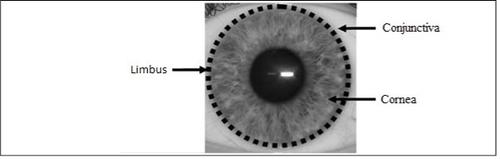
Holoclar se implanta para reparar la superficie lesionada del ojo en adultos. Cuando el ojo ha sido gravemente dañado por quemaduras de tipo físico o químico, se pueden producir muchas cicatrices y el limbo se puede ver afectado. El daño al limbo interfiere con el proceso normal de curación, lo cual significa que la lesión en su ojo nunca desaparecerá del todo.
Al tomar nuevas células limbares sanas, se produce en el laboratorio una nueva capa de tejido sano que se hace crecer sobre una capa de soporte de fibrina, un tipo de proteína que sirve de andamiaje. Esta capa de tejido se implanta entonces por el cirujano en la córnea dañada, ayudando a que su ojo sane de forma natural.

2. Qué necesita saber antes de que se le administre Holoclar
No debe implantársele Holoclar:
- si es alérgico a cualquiera de los componentes de este medicamento (incluidos en la sección 6) o al suero bobino y las células de ratón.
Advertencias y precauciones
Consulte a su cirujano antes de que se le implante Holoclar.
Holoclar se prepara de forma individualizada a partir de células suyas, sólo para su uso personal, y no debe de ser utilizado por otra persona que no sea usted.
Si usted presenta una infección ocular o enrojecimiento (inflamación) de los ojos, su tratamiento debe ser pospuesto hasta que se recupere.
Cuando se fabrica Holoclar, se emplean dos componentes de origen animal. Uno es suero fetal bovino, que proviene de vacas y se emplea para hacer crecer sus células. El otro componente es un tipo especial de células inactivadas de ratón que se emplea para estimular el crecimiento de sus células limbares. Si usted es alérgico a cualquiera de estos componentes, no se le podrá administrar este medicamento (ver más arriba, bajo “No debe implantársele Holoclar).
Si usted presenta cualquiera de los siguientes problemas en sus ojos, se deben tratar antes de usar este medicamento:
- Párpados irregulares
- Cicatrización de la conjuntiva (la capa protectora que se encuentra sobre el blanco del ojo) con lesiones en la superficie en contacto con el interior de los párpados (acortamiento del fórnix)
- Incapacidad del ojo para sentir dolor (anestesia de la córnea o conjuntiva o hipoestesia)
- Crecimiento de la conjuntiva por encima de la córnea (pterigión)
- Sequedad ocular grave
Otros casos en los que no se puede utilizar Holoclar
Aunque el cirujano haya tomado ya una pequeña muestra de células limbares (una biopsia) necesaria para fabricar el medicamento, es posible que usted no cumpla con los requisitos para el tratamiento con Holoclar. Esto puede ocurrir si su biopsia no tiene la calidad suficiente para fabricar Holoclar, si resulta imposible cultivar las células en el laboratorio o si las células no cumplen todos los requisitos de calidad tras ser cultivadas. Su cirujano le informará al respecto.
Niños y adolescentes
Hasta la fecha solamente se ha tratado a un número reducido de niños, por lo que se desconoce si el medicamento es seguro para su uso en niños o hasta qué punto resulta eficaz.
Problemas de riñón e hígado
Hable con su cirujano antes del inicio del tratamiento en caso de que padezca alguna enfermedad del riñón o el hígado.
Uso de Holoclar con otros medicamentos
Algunos colirios contienen un conservante llamado "cloruro de benzalconio". Este componente puede dañar las células que forman parte de Holoclar. No utilice colirios que contengan cloruro de benzalconio u otros conservantes. Consulte a su médico o farmacéutico para mayor información.
Embarazo y lactancia
Si está embarazada, cree que podría estar embarazada o está en periodo de lactancia, debe posponer el tratamiento con este medicamento.
Conducción y uso de máquinas
Holoclar se administra mediante cirugía ocular y esto tendrá un impacto en su capacidad para conducir y usar máquinas. Por lo tanto, no debe conducir ni usar máquinas después de que se la haya implantado Holoclar en su ojo, hasta que el cirujano le autorice a hacerlo. Siga sus indicaciones cuidadosamente.
3. Cómo se administra Holoclar
Holoclar solamente se puede recetar y administrar por un cirujano oftalmólogo en un hospital.
El tratamiento con Holoclar es un procedimiento en dos etapas.
Visita 1: Realización de la biopsia
En la primera visita, el cirujano realizará una biopsia, lo que significa retirar una cantidad muy pequeña de tejido que contiene células limbares (de su ojo). Antes de la biopsia, el cirujano le dará un colirio para anestesiar su ojo y realizará el procedimiento quirúrgico de biopsia. La biopsia se empleará para fabricar Holoclar. Tras la biopsia, su cirujano le recetará un tratamiento con antibióticos para disminuir el riesgo de una infección.
La producción de Holoclar llevará algunas semanas.
Visita 2: Implante de Holoclar
En la segunda visita esto es lo que el cirujano llevará cabo:
- Anestesiar su ojo
- Retirar la superficie cicatrizada de la córnea
- Reemplazarla por Holoclar
El día de la cirugía, el cirujano anestesiará su ojo y entonces coserá con puntos el borde de su nueva córnea para asegurarse de que Holoclar se queda en su sitio. Su párpado se mantendrá cerrado con apósito durante tres días y su ojo se vendará por un periodo de entre 10 y 15 días tras la implantación.
Tras la cirugía, se le recetará un tratamiento para una recuperación completa: antibióticos para disminuir el riesgo de una infección y esteroides para disminuir la inflamación y la irritación. Es muy importante que usted utilice todos los medicamentos que le recete el cirujano, ya que de lo contrario es posible que la implantación de Holoclar no funcione.
Lea los prospectos de los medicamentos individuales que se le receten para obtener más información sobre ellos.
En caso de duda sobre el tratamiento con Holoclar, consulte a su cirujano.

4. Posibles efectos adversos
Al igual que todos los medicamentos, este medicamento puede producir efectos adversos, aunque no todas las personas los sufran.
La mayor parte de los efectos adversos son oculares, algunos de los cuales son causados directamente por la cirugía. La mayoría de los efectos adversos son de naturaleza leve y desaparecen en las semanas posteriores a la cirugía.
Los efectos adversos más graves son problemas con la córnea (erosión) y perforación corneal, los cuales podrían manifestarse durante los 3 meses siguientes a la implantación de Holoclar. En ese caso, póngase en contacto con su cirujano.
Efectos adversos muy frecuentes: pueden afectar a más de 1 de cada 10 personas
- Inflamación de los párpados (blefaritis)
Efectos adversos frecuentes:pueden afectar hasta 1 de cada 10 personas
- Sangrado alrededor del sitio de la operación donde se implantó Holoclar
- Problemas con la córnea (erosión)
- Aumento de la presión intraocular (glaucoma)
- Dolor ocular
- Inflamación de la córnea
Efectos adversos poco frecuentes:pueden afectar hasta 1 de cada 100 personas
- Trastornos oculares: párpado pegajoso, ojos rojos, hinchazón del ojo, perforación de la córnea e irritación ocular
- Sensibilidad a la luz
- Crecimiento alrededor del implante (metaplasia)
- Infección de la córnea
- Rotura de los puntos
- Desmayos
- Sangrado de la piel del párpado
Comunicación de efectos adversos
Si experimenta cualquier tipo de efecto adverso, consulte a su cirujano, incluso si se trata de efectos adversos que no aparecen en este prospecto. También puede comunicarlos directamente a través del Sistema Español de Farmacovigilancia de Medicamentos de Uso Humano https://www.notificaram.es. Mediante la comunicación de efectos adversos usted puede contribuir a proporcionar más información sobre la seguridad de este medicamento.
5. Conservación de Holoclar
Mantener este medicamento fuera de la vista y del alcance de los niños.
No utilice este medicamento después de la fecha de caducidad que aparece en la etiqueta.
No conservar por encima de 25 °C ni por debajo de 15 °C.
No refrigerar o congelar.
Mantenga Holoclar dentro del envase de acero, en la bolsa de plástico, hasta la cirugía. Esta medida es para protegerlo frente a la contaminación por bacterias.
Holoclar no debe irradiarse ni esterilizarse.
Ya que este medicamento se utilizará durante su cirugía, el personal sanitario es responsable de la conservación adecuada del medicamento antes y durante su uso, así como de una eliminación apropiada.
6. Contenido del envase e información adicional
Composición de Holoclar
- El principio activo lo constituyen entre 300.000 y 1.200.000 células oculares vivas provenientes de su biopsia, de las cuales una media de 3,5% son células madre. Cada centímetro cuadrado de Holoclar contiene entre 79.000 y 316.000 células.
- Contiene dos excipientes, uno de los cuales es fibrina (una capa transparente de soporte para mantener Holoclar intacto), el otro es un líquido que contiene aminoácidos, vitaminas, sales e hidratos de carbono para almacenar las células en el vial llamado medio de Eagle modificado por Dulbecco, DMEM, suplementado con L-glutamina.
Aspecto del producto y contenido del envase
Holoclar es una capa de células para ser implantada en su ojo. Las células se mantienen vivas en un envase estéril pequeño. El medicamento se cubre con varias capas de embalaje que tienen por fin proteger el medicamento frente a las bacterias y asegurarse de que Holoclar se mantenga a una temperatura sin cambios durante 36 horas, si se conserva a temperatura ambiente.
Cada paquete contiene una dosis de tratamiento individual que es lo suficientemente grande como para cubrir su córnea.
Titular de la autorización de comercialización yResponsable de la fabricación
Holostem Terapie Avanzate s.r.l.
Via Glauco Gottardi 100, 41125 Modena (Italia)
Teléfono: +39 059 2058070
Fax: +39 059 2058115
Fecha de la última revisión de este prospecto:
Este medicamento se ha autorizado con una «aprobación condicional». Esta modalidad de aprobación significa que se espera obtener más información de este medicamento.
La Agencia Europea de Medicamentos revisará la información nueva de este medicamento al menos una vez al año y este prospecto se actualizará cuando sea necesario.
Otras fuentes de información
La información detallada de este medicamento está disponible en la página web de la Agencia Europea de Medicamentos: http://www.ema.europa.eu.
- País de registro
- Forma farmacéuticaEQUIVALENTE DE TEJIDO VIVO, 79000 – 316000 células/cm2
- Código ATCS01XA19
- Principio activo
- Requiere recetaSí
- Fabricante
- Esta información es de carácter general y no sustituye la consulta con un profesional sanitario.
- Alternativas a HOLOCLAR 79000-316000 CELULAS/CM2 EQUIVALENTE DE TEJIDO VIVOForma farmacéutica: COLIRIO, 5,5 mg sodio cloruro;3 mg hipomelosa/mlPrincipio activo: artificial tears and other indifferent preparationsFabricante: Alcon Healthcare S.A.No requiere recetaForma farmacéutica: COLIRIO, 3,2 mg/mlPrincipio activo: artificial tears and other indifferent preparationsFabricante: Bausch & Lomb S.A.No requiere recetaForma farmacéutica: COLIRIO, 3,2 mg/mlPrincipio activo: artificial tears and other indifferent preparationsFabricante: Bausch & Lomb S.A.No requiere receta
Médicos online para HOLOCLAR 79000-316000 CELULAS/CM2 EQUIVALENTE DE TEJIDO VIVO
Comenta la dosis, los posibles efectos secundarios, interacciones, contraindicaciones o la revisión de receta de HOLOCLAR 79000-316000 CELULAS/CM2 EQUIVALENTE DE TEJIDO VIVO, sujeto a valoración médica y a la normativa local.








Preguntas frecuentes
