



GLUCOSA 20% SOLUCION PARA PERFUSION

Revisión de receta online
Un médico revisará tu caso y determinará si la prescripción es médicamente apropiada.

Habla con un médico sobre este medicamento
Comenta tus síntomas y las opciones de tratamiento en una consulta online.



Cómo usar GLUCOSA B.BRAUN 20% SOLUCION PARA PERFUSION
Contenido del prospecto
- Introducción
- Qué es Glucosa B. Braun 20 % y para qué se utiliza
- Qué necesita saber antes de empezar a usar Glucosa B. Braun 20 %
- Cómo usar Glucosa B. Braun 20 %
- Posibles efectos adversos
- Conservación de Glucosa B. Braun 20 %
- Contenido del envase e información adicional
Introducción
PROSPECTO: INFORMACIÓN PARA EL USUARIO
Glucosa B.Braun 20% solución para perfusión
Lea todo el prospecto detenidamente antes de empezar a usar este medicamento, porque contiene información importante para usted.
- Conserve este prospecto ya que puede tener que volver a leerlo.
- Si tiene alguna duda, consulte a su médico o farmacéutico.
- Este medicamento se le ha recetado solamente a usted y no debe dárselo a otras personas, aunque tengan los mismos síntomas que usted, ya que puede perjudicarles.
- Si experimenta efectos adversos, consulte a su médico o farmacéutico, incluso si se trata de efectos adversos que no aparecen en este prospecto. Ver sección 4.
Contenido del prospecto:
- Qué es Glucosa B.Braun 20% y para qué se utiliza
- Que necesita saber antes de empezar a usar Glucosa B.Braun 20%
- Cómo usar Glucosa B.Braun 20%
- Posibles efectos adversos
- Conservación de Glucosa B.Braun 20%
Contenido del envase e información adicional
1. Qué es Glucosa B. Braun 20 % y para qué se utiliza
Glucosa B.Braun 20% es una solución para perfusión (que se administra por vía intravenosa mediante un gotero) que se utiliza para:
- proporcionar una fuente de hidratos de carbono (azúcar) para alimentación parenteral. La nutrición parenteral se utiliza para alimentar a los pacientes que no pueden comer. Se realiza mediante una perfusión (inyección lenta) a través de una vena.
- prevenir o tratar el nivel bajo de azúcar en sangre (hipoglucemia).
- proporcionar al paciente líquido adicional cuando el cuerpo no tiene suficiente agua (deshidratación).
- como solución de soporte para administrar otros medicamentos compatibles.

¿No estás seguro de si este medicamento es adecuado para ti?
Comenta tus síntomas y tratamiento con un médico online.
2. Qué necesita saber antes de empezar a usar Glucosa B. Braun 20 %
No use Glucosa B.Braun 20%:
Si es alérgico a la Glucosa o a alguno de los demás componentes de este medicamento (incluidos en la sección 6).
Si usted tiene:
- alteración importante de la tolerancia a la glucosa.
- altas cantidades de glucosa en sangre (hiperglucemia) o concentración sanguínea de lactato que se encuentra en la sangre, superior a la normal (hiperlactatemia).
- baja concentración de potasio o sodio en sangre (hipocaliemia o hiponatremia) .
- edema por acumulación de líquido en tejidos.
- deshidratación hipotónica (mayor pérdida de sales que de agua).
- fluidificación de la sangre debido a la adición de demasiado líquido (hemodilución) y cuando hay mucho líquido en los espacios extracelulares del cuerpo (hiperhidratación extracelular).
- insuficiencia renal grave (cuando los riñones no funcionan bien y se necesita diálisis) con anuria (supresión en la formación de orina).
- después de un accidente cerebro-vascular (hemorragia).
- bajo volumen de sangre con hipoxia (déficit de oxígeno en el organismo).
- durante las primeras 24 horas después de un traumatismo craneal.
Si fuera necesario administrarle grandes cantidades de la solución puede que aparezcan más contraindicaciones ya que se le prefundirán elevadas cantidades de glucosa y fluidos.
Advertencias y precauciones
Deben evaluarse los pacientes, teniendo en cuenta el balance de agua, iones y de glucosa en sangre. Cambios en estos valores pueden requerir un tratamiento adecuado.
La administración prolongada de glucosa puede causar déficit de potasio, fosfato o magnesio y puede incrementar el volumen de líquido externo a las células, causando intoxicación por agua.
La administración rápida de soluciones concentradas de glucosa puede provocar incremento en el nivel de glucosa y síndrome hiperosmolar. Se debe considerar el riesgo de sobrecarga del sistema cardiovascular (corazón y circulación sanguínea) con acumulación de líquido en pulmón (edema) especialmente en pacientes sensibles, en aquellos casos en que el volumen de líquido administrado sea muy elevado.
Deben realizarse con frecuencia controles del nivel glucosa en sangre, y en caso necesario, se administrará insulina: una unidad por cada 10 g de glucosa.
Se debe administrar con precaución en pacientes con edad avanzada o problemas en su hígado.
Se deberán tener en cuenta las precauciones y advertencias relacionadas con cualquier medicamento añadido a la solución de glucosa.
Los pacientes en presencia de estados críticos, con dolor, estrés postoperatorio, infecciones, quemaduras, enfermedades del sistema nervioso, cardíacas, hepáticas y renales y pacientes que toman medicamentos que aumentan el efecto de la vasopresina (hormona que regula la cantidad de fluidos corporales), cuando se le administra esta solución tiene un determinado riesgo de desarrollar niveles anormalmente bajos de sodio en sangre (hiponatremia aguda) que puede conducir a inflamación cerebral (encefalopatía).
La hiponatremia aguda puede causar una encefalopatía hiponatrémica aguda (edema cerebral) caracterizada por dolor de cabeza, náuseas, convulsiones, letargo y vómitos. Los pacientes con edema cerebral tienen un riesgo especial de sufrir un daño cerebral grave, irreversible y potencialmente mortal.
Niños, mujeres en edad fértil y pacientes con enfermedades cerebrales graves como meningitis (infección en las membranas que rodean el cerebro) o daño cerebral corren un determinado riesgo de inflamación cerebral grave y potencialmente mortal causada por una disminución aguda de los niveles de sodio en sangre.
Uso de Glucosa B.Braun 20 % con otros medicamentos
Informe a su médico o farmacéutico si está utilizando o ha utilizado recientemente otros medicamentos, incluso los adquiridos sin receta.
El uso de Glucosa B.Braun 20% con otros medicamentos puede alterar la eficacia de ambos tratamientos:
La administración de glucocorticoides, diuréticos, difenilhidantoína, clorpormacina aumentan el nivel de glucosa en sangre.
La administración intravenosa de glucosa en pacientes tratados con insulina o antidiabéticos orales (biguanidas, sulfonilureas), puede dar lugar a una reducción de la eficacia terapéutica de estos últimos.
Si le administran glucosa junto con glucósidos digitálicos (digoxina), se puede producir un aumento de la actividad digitálica, existiendo el riesgo de desarrollar intoxicaciones por estos medicamentos.
Medicamentos que incrementan el efecto de la vasopresina y el riesgo de tener niveles bajos de sodio (hiponatremia):
- Carbamazepina e oxcarbazepina usadas para el tratamiento de la epilepsia.
- Vincristina y Ifosfamida usados para el tratamiento del cáncer.
- Ciclofosfamida para tratar cáncer y enfermedades autoinmunes.
- Inhibidores selectivos de los receptadores de Serotonina (ISRS) para tratar la depresión.
- Antipsicóticos para trastornos mentales.
- Analgésicos opioides para aliviar dolores severos.
- Medicamentos antiinflamatorios no esteroideos para aliviar dolores leves a moderados y para tratar inflamación corporal.
- Desmopresina para tratar la diabetes insípida (extrema sed y producción continua de grandes volumen de orina diluida).
- Oxitocina usada durante el parto.
- Vasopresina y terlipresina usada para tratar las “varices esofágicas sangrantes” (venas dilatadas en el esófago causadas por problemas hepáticos).
- Diuréticos (medicamentos que incrementan la cantidad de orina excretada).
Su médico comprobará la compatibilidad de esta solución con cualquier aditivo antes de usarlo. Estas soluciones no deben administrarse con los mismos equipos de infusión utilizados o que se utilizarán en la administración de sangre ya que existe posibilidad de aparición de aglutinación.
Embarazo y lactancia
Si está embarazada o en periodo de lactancia, cree que podría estar embarazada o tiene intención de quedarse embarazada, consulte a su médico o farmacéutico antes de utilizar este medicamento.
La glucosa atraviesa la placenta mientras que no lo hace la insulina, así el propio feto es el responsable de la síntesis de insulina en respuesta a la administración de glucosa. Infusiones superiores a 10 g/hora causan aumentos en la insulina fetal. Debe por tanto administrarse con precaución en embarazadas
Las soluciones de glucosa deben de administrarse con especial precaución en mujeres embarazadas durante el parto, especialmente si se administran en combinación con oxitocina, debido al riesgo de hiponatremia.
.
Por otra parte, no existen evidencias que hagan pensar que pueda provocar efectos adversos durante el período de lactancia en el neonato. No obstante, se recomienda utilizar también con precaución durante este período.
3. Cómo usar Glucosa B. Braun 20 %
Siga exactamente las instrucciones de administración de este medicamento indicadas por su médico. En caso de duda, consulte de nuevo a su médico o farmacéutico.
Será administrada por personal sanitario únicamente y la dosificación depende de los requerimientos que imponga el estado del paciente, del peso corporal, situación clínica y estado metabólico. Según las necesidades individuales, administrar de 0,7 a 4 g de glucosa por kg de peso corporal y día; o hasta 0,5 g de glucosa por kg de peso corporal y hora.
Su médico monitorizará el balance hídrico, los niveles de glucosa y niveles de electrolitos (principalmente el sodio) en sangre antes y durante el tratamiento, especialmente en pacientes con alteraciones en la liberación de vasopresina (hormona que regula los fluidos corporales) y en pacientes que toman medicamentos que aumentan la acción de vasopresina debido a un riesgo de niveles anormalmente bajos de sodio en sangre (hiponatremia).
Glucosa B.Braun 20% puede hacerse extremadamente hipotónico tras su administración debido a la metabolización de la glucosa en el cuerpo.
Si usa más Glucosa B. Braun 20% del que debe
Es poco probable que esto suceda ya que su doctor determinará sus dosis diarias. Sin embargo, si usted recibiera una sobredosis del medicamento puede haber exceso de agua (hiperhidratación), exceso de glucosa en sangre (hiperglucemia), alteraciones en el equilibrio de las sales en la sangre (hiperosmolaridad), que cursa con alteraciones de la conciencia, convulsiones y coma.
Si tiene cualquier otra duda sobre el uso de este producto, pregunte a su médico o farmacéutico.
En caso de sobredosis o ingestión accidental, consulte al Servicio de Información Toxicológica (teléfono: 91.562 04 20) o consulte a su médico o farmacéutico. Lleve este prospecto con usted.

¿Has empezado a tomar el medicamento y tienes preguntas?
Comenta tus síntomas y tratamiento con un médico online.
4. Posibles efectos adversos
Al igual que todos los medicamentos, este medicamento puede producir efectos adversos, aunque no todas las personas los sufran.
Pueden ser señales de una reacción alérgica (hipersensibilidad) muy grave o incluso mortal:
- inflamación de la piel de la cara y los labios o inflamación de la garganta.
- dificultad al respirar.
- erupción cutánea.
- enrojecimiento de la piel (eritema cutáneo).
- ronchas (urticaria).
Se le prescribirá un tratamiento de acuerdo a los síntomas.
Usted puede desarrollar un desequilibrio en el nivel de fluidos y de ciertos minerales en su cuerpo. Puede desarrollar niveles bajos de sodio (hiponatremia), potasio, fosfato y magnesio en sangre.
Otros efectos adversos son.
- un nivel de azúcar en la sangre alto (hiperglucemia).
- exceso de líquido en los vasos sanguíneos (hemodilución e hipervolemia).
- azúcar en orina (glucosuria).
- escalofríos.
- sudoración.
- fiebre (reacción febril).
- infección en la zona de inyección.
- reacciones relacionadas con la vía de administración:
- reacción o dolor local (enrojecimiento o hinchazón en el lugar de perfusión).
- irritación e inflamación de la vena a través de la que se realiza la perfusión (flebitis). Puede provocar enrojecimiento, dolor o escozor o hinchazón en la vena de la perfusión.
- formación de un coágulo (trombosis venosa) en el lugar de perfusión, que provoca dolor, inflamación o enrojecimiento en la zona del coágulo.
- escape de la solución para perfusión a los tejidos que rodean la vena (extravasación). Esto puede dañar los tejidos y provocar cicatrices.
- Hiponatremia hospitalaria.
- Encefalopatía hiponatrémica.
Comunicación de efectos adversos
Si experimenta cualquier tipo de efecto adverso, consulte a su médico o farmacéutico, incluso si se trata de posibles efectos adversos que no aparecen en este prospecto. También puede comunicarlos directamente a través del Sistema Español de Farmacovigilancia de Medicamentos de Uso Humano: www.notificaRAM.es
Mediante la comunicación de efectos adversos usted puede contribuir a proporcionar más información sobre la seguridad de este medicamento.
5. Conservación de Glucosa B. Braun 20 %
Mantener este medicamento fuera de la vista y del alcance de los niños.
No requiere condiciones especiales de conservación.
No utilice este medicamento después de la fecha de caducidad que aparece en el envase. La fecha de caducidad es el último día del mes que se indica.
Los medicamentos no se deben tirar por los desagües ni a la basura. Pregunte a su farmacéutico cómo deshacerse de los envases y de los medicamentos que no necesita. De esta forma ayudará a proteger el medio ambiente.
6. Contenido del envase e información adicional
Composición de Glucosa B.Braun 20%
El principio activo es Glucosa. Cada envase de 500 ml contiene 100 g de Glucosa (como glucosa monohidrato, 220 mg/ml).
Los demás componentes (excipientes) son ácido clorhídrico (ajuste de pH) y agua para preparaciones inyectables.
Valor energético 800 kcal/l
Osmolaridad teórica 1.110 mOsm/l
Acidez (hasta pH 7,4) <1,0 mmol/l
pH 3,5 – 5,5
Aspecto del producto y contenido del envase:
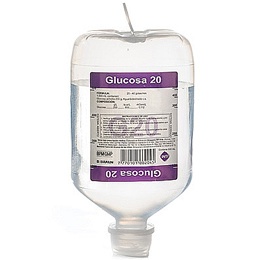
Glucosa B.Braun 20% es una solución para perfusión que se presenta acondicionada en botellas de plástico (Ecoflacplus) de 500 ml (puede que no se comercialicen todos los tamaños).
Envase clínico: 10 botellas de 500 ml
Titular de la autorización de comercialización
B|BRAUN
- Braun Medical, S.A.
Ctra. de Terrassa, 121
08191-Rubí (Barcelona)
España
Responsable de la fabricación
B|BRAUN
- Braun Medical, S.A.
Ctra. de Terrassa, 121
08191-Rubí (Barcelona)
España
O
- BRAUN MELSUNGEN AG
Carl-Braun Strasse, 1
D-34212 Melsungen, Alemania
Fecha de la última revisión de este prospecto: Octubre 2019.
La información detallada de este medicamento está disponible en la página Web de la Agencia Española de Medicamentos y Productos Sanitarios. http://www.aemps.es.
—————————————————————————————————————
Esta información está destinada únicamente a médicos o profesionales del sector sanitario:
El contenido de cada envase es para una sola perfusión. Debe desecharse la fracción no utilizada.
Debe inspeccionarse visualmente la solución para perfusión antes de su uso. La solución debe ser transparente, no contener precipitados y el envase debe estar intacto. No administrar en caso contrario.
Utilizar un procedimiento aséptico para administrar la solución y la adición de medicamentos si fuera necesario.
Antes de adicionar medicamentos a la solución o de administrar simultáneamente con otros medicamentos, se debe comprobar que no existen incompatibilidades.
Estas soluciones no deben administrarse por medio de los mismos equipos de perfusión que se están utilizando, se han utilizado o se utilizarán para la administración de sangre, ya que existe la posibilidad de pseudoaglutinación.
La eliminación del medicamento no utilizado y de todos los materiales que hayan estado en contacto con él, se realizará de acuerdo con la normativa local.
- País de registro
- Forma farmacéuticaINYECTABLE PERFUSION, 22 g
- Código ATCB05BA03
- Principio activo
- Requiere recetaSí
- Fabricante
- Esta información es de carácter general y no sustituye la consulta con un profesional sanitario.
- Alternativas a GLUCOSA B.BRAUN 20% SOLUCION PARA PERFUSIONForma farmacéutica: INYECTABLE PERFUSION, 50 g glucosaPrincipio activo: carbohydratesFabricante: Fresenius Kabi España, S.A.U.Requiere recetaForma farmacéutica: INYECTABLE PERFUSION, 11 gPrincipio activo: carbohydratesFabricante: Fresenius Kabi España, S.A.U.Requiere recetaForma farmacéutica: INYECTABLE PERFUSION, GLUCOSA MONOHIDRATADA 5,5 gPrincipio activo: carbohydratesFabricante: Fresenius Kabi España, S.A.U.Requiere receta
Médicos online para GLUCOSA B.BRAUN 20% SOLUCION PARA PERFUSION
Comenta la dosis, los posibles efectos secundarios, interacciones, contraindicaciones o la revisión de receta de GLUCOSA B.BRAUN 20% SOLUCION PARA PERFUSION, sujeto a valoración médica y a la normativa local.









Obtén una receta de GLUCOSA B.BRAUN 20% SOLUCION PARA PERFUSION online
Rellena un formulario de 2 minutos
Cuéntanos tus síntomas, historial y el medicamento que necesitas.
Elige un médico o nosotros te asignamos uno
Escoge un especialista o te conectamos con el próximo médico disponible.
El médico revisa tu caso
Normalmente en 30 minutos. Puede hacerte preguntas adicionales por chat.
Recógela en cualquier farmacia
Receta electrónica enviada a tu correo, válida en toda España.
Preguntas frecuentes
GLUCOSA B.BRAUN 20% SOLUCION PARA PERFUSION requiere receta en España. Puedes confirmarlo con un médico online según tu caso.
El principio activo de GLUCOSA B.BRAUN 20% SOLUCION PARA PERFUSION es carbohydrates. Esta información ayuda a identificar medicamentos con la misma composición pero con diferentes nombres comerciales.
GLUCOSA B.BRAUN 20% SOLUCION PARA PERFUSION es fabricado por B Braun Medical S.A.. La marca y el envase pueden variar según el distribuidor.
Los Médicos de familia, Psiquiatras, Dermatólogos, Cardiólogos, Endocrinólogos, Gastroenterólogos, Neumólogos, Nefrólogos, Reumatólogos, Hematólogos, Infectólogos, Alergólogos, Geriatras, Pediatras, Oncólogos pueden valorar la prescripción de GLUCOSA B.BRAUN 20% SOLUCION PARA PERFUSION cuando esté clínicamente indicado. Puedes reservar una videoconsulta para comentar tu caso y las opciones de tratamiento.
España cuenta con una infraestructura sanitaria bien desarrollada en ciudades principales como Madrid, Barcelona, Valencia y Sevilla. Las farmacias están ampliamente disponibles y operan bajo estrictas regulaciones, garantizando el acceso a medicamentos con receta.
Puedes comprar GLUCOSA B.BRAUN 20% SOLUCION PARA PERFUSION en Madrid, Barcelona, Sevilla o Valencia en cualquier farmacia local con una receta válida.
Para obtener una receta, puedes utilizar Oladoctor:
Otros medicamentos con el mismo principio activo (carbohydrates) incluyen DEXTROSA FRESENIUS KABI 50% SOLUCION PARA PERFUSION, FREEFLEX GLUCOSA 10% SOLUCIÓN PARA PERFUSIÓN, FREEFLEX GLUCOSA 5% SOLUCION PARA PERFUSION. Pueden tener diferentes nombres comerciales o formulaciones, pero contienen el mismo componente terapéutico. Consulta siempre con un médico antes de cambiar o iniciar un nuevo medicamento.
