



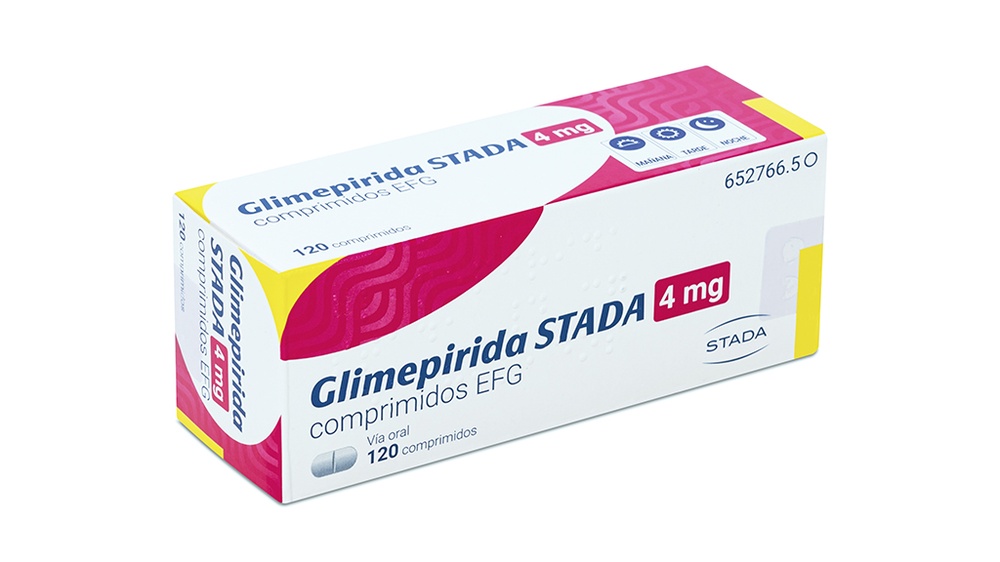
GLIMEPIRIDA 4 mg Comprimidos

Revisión de receta online
Un médico revisará tu caso y determinará si la prescripción es médicamente apropiada.

Habla con un médico sobre este medicamento
Comenta tus síntomas y las opciones de tratamiento en una consulta online.



Cómo usar GLIMEPIRIDA STADA 4 mg COMPRIMIDOS EFG
Contenido del prospecto
- Introducción
- Prospecto: información para el usuario
- Glimepirida STADA 4 mgcomprimidos EFG
- Qué es Glimepirida Stada y para qué se utiliza
- Qué necesita saber antes de empezar a tomar Glimepirida Stada
- Cómo tomar Glimepirida Stada
- Posibles efectos adversos
- Conservación de Glimepirida Stada
- Contenido del envase e información adicional
Introducción
Prospecto: información para el usuario

¿No estás seguro de si este medicamento es adecuado para ti?
Comenta tus síntomas y tratamiento con un médico online.
Glimepirida STADA 4 mgcomprimidos EFG
Lea todo el prospecto detenidamente antes de empezar a tomar este medicamento, porque contiene información importante para usted.
- Conserve este prospecto, ya que puede tener que volver a leerlo.
- Si tiene alguna duda, consulte a su médico o farmacéutico.
- Este medicamento se le ha recetado solamente a usted, y no debe dárselo a otras personas aunque tengan los mismos síntomas que usted, ya que puede perjudicarles.
- Si experimenta efectos adversos, consulte a su médico o farmacéutico, incluso si se trata de efectos adversos que no aparecen en este prospecto. Ver sección 4.
Contenido del prospecto
- Qué es Glimepirida Stada y para qué se utiliza
- Qué necesita saber antes de empezar a tomar Glimepirida Stada
- Cómo tomar Glimepirida Stada
- Posibles efectos adversos
- Conservación de Glimepirida Stada
- Contenido del envase e información adicional
1. Qué es Glimepirida Stada y para qué se utiliza
Glimepirida es un medicamento de administración oral utilizado para reducir el azúcar en sangre. Este medicamento pertenece a un grupo de medicamentos para reducir el azúcar en sangre denominados sulfonilureas. Glimepirida actúa aumentando la cantidad de insulina liberada por el páncreas. La insulina reduce la cantidad de azúcar en sangre.
Para qué se utiliza glimepirida:
- Glimepirida se utiliza para el tratamiento de un cierto tipo de diabetes (diabetes mellitus tipo 2) cuando la dieta, el ejercicio físico y la reducción de peso por sí solos no son adecuados para controlar sus niveles de azúcar en sangre.

¿Has empezado a tomar el medicamento y tienes preguntas?
Comenta tus síntomas y tratamiento con un médico online.
2. Qué necesita saber antes de empezar a tomar Glimepirida Stada
No tome glimepirida:
- si es alérgico a glimepirida, otras sulfonilureas (medicamentos utilizados para reducir el azúcar en sangre, como la glibenclamida) o sulfonamidas (medicamentos utilizados en infecciones bacterianas, como sulfametoxazol) o cualquiera de los demás componentes de este medicamento (incluidos en la Sección 6)
- si tiene diabetes insulino-dependiente (diabetes mellitus tipo 1)
- si sufre cetoacidosis (una complicación de la diabetes con alguno de los siguientes síntomas: fatiga, náuseas, orinar frecuentemente y rigidez muscular)
- si sufre un coma diabético
- si sufre alteraciones graves de los riñones
- si sufre alteraciones graves del hígado
No tome este medicamento si tiene alguna de las condiciones arriba descritas. Si no está seguro, consulte a su médico o farmacéutico antes de tomar glimepirida.
Advertencias y precauciones
Consulte a su médico o farmacéutico antes de empezar a tomar glimepirida:
- si usted se está recuperando de alguna lesión, operación, infección con fiebre, u otras formas de estrés, informe a su médico ya que puede ser necesario un cambio temporal de tratamiento.
- si usted tiene una alteración grave de hígado o riñón.
Si no está seguro de si padece alguna de estas condiciones, consulte a su médico o farmacéutico antes de tomar glimepirida.
Puede ocurrir una reducción en los niveles de hemoglobina y rotura de los glóbulos rojos (anemia hemolítica) en pacientes con carencia de la enzima glucosa-6-fosfato deshidrogenasa.
Niños y adolescentes
La información disponible sobre el uso de glimepirida en menores de 18 años es limitada. Por tanto, su uso en estos pacientes no está recomendado.
Información importante sobre la hipoglucemia (niveles bajos de azúcar en sangre)
Al tomar glimepirida, usted puede experimentar hipoglucemia (niveles bajos de azúcar en sangre). Consulte, a continuación, la información adicional sobre la hipoglucemia, sus signos y tratamiento.
Los siguientes factores pueden aumentar el riesgo de sufrir hipoglucemia:
- desnutrición, horario de comidas irregular, no comer o retrasar una comida o periodos de ayuno
- cambios en la dieta
- tomar más glimepirida de la necesaria
- tener reducida la función del hígado
- tener una alteración grave del hígado
- sufrir alteraciones inducidas por hormonas (alteración de la tiroides, de la pituitaria o del córtex adrenal)
- tomar alcohol (especialmente al saltarse una comida)
- tomar ciertos medicamentos (ver “Toma de glimepirida con otros medicamentos”)
- si usted hace más ejercicio y no come suficiente o ingiere alimentos con menos carbohidratos de lo normal
Los signos de hipoglucemia incluyen:
- sensación de hambre, dolor de cabeza, náuseas, vómitos, inactividad, adormecimiento, alteraciones del sueño, cansancio, agresividad, disminución de la concentración. Reducción de la alerta y del tiempo de reacción, depresión, confusión, alteraciones visuales y del habla, dificultad para hablar, agitación, parálisis parcial, alteraciones sensoriales, mareos, sensación de inutilidad.
- los siguientes signos también pueden aparecer: sudoración, piel fría y húmeda, ansiedad, palpitaciones del corazón aceleradas, elevada presión arterial, palpitaciones, dolor fuerte en el pecho que puede irradiar a las zonas cercanas (angina de pecho y arritmias cardíacas).
Si el nivel de azúcar continúa disminuyendo puede sufrir una considerable confusión (delirium), desarrollar convulsiones, pérdida del control, respiración poco profunda y latidos del corazón más lentos, pudiendo llegar a la inconsciencia. El cuadro clínico de una reducción grave de los niveles de azúcar puede parecerse a una apoplejía.
Tratamiento de la hipoglucemia:
En la mayoría de los casos, los signos de una reducción del azúcar en sangre desaparecen rápidamente al consumir cualquier tipo de azúcar, p.ej. terrones de azúcar, zumos, té con azúcar.
Usted deberá, por tanto, llevar cualquier tipo de azúcar (p.ej., terrones de azúcar). Recuerde que los edulcorantes artificiales no son efectivos. Contacte con su médico o acuda al hospital si la toma de azúcar no le ayuda o si los síntomas reaparecen.
Ensayos de laboratorio
El nivel de azúcar en sangre u orina debe ser controlado regularmente. Su médico le realizará también análisis de sangre para controlar sus niveles de células sanguíneas y el funcionamiento del hígado.
Toma de glimepirida con otros medicamentos
Informe a su médico o farmacéutico si está utilizando, ha utilizado recientemente o podría tener que utilizar cualquier otro medicamento.
Su médico puede modificar su dosis de glimepirida si usted toma otros medicamentos, lo que puede debilitar o aumentar el efecto de glimepirida en los niveles de azúcar en sangre.
Los siguientes medicamentos pueden aumentar el efecto reductor de azúcar en sangre de glimepirida. Esto puede provocar riesgo de hipoglucemia (niveles bajos de azúcar en sangre):
- otros medicamentos para el tratamiento de la diabetes mellitus (como insulina o metformina)
- medicamentos para el tratamiento del dolor y la inflamación (fenilbutazona, azapropazona, oxifenbutazona y medicamentos similares a la aspirina)
- medicamentos para el tratamiento de las infecciones urinarias (como algunas sulfonamidas de acción prolongada)
- medicamentos para el tratamiento de infecciones fúngicas y bacterianas (tetraciclinas, cloranfenicol, fluconazol, miconazol, quinolonas, claritromicina)
- medicamentos para evitar la formación de coágulos en sangre (derivados cumarínicos como la warfarina)
- medicamentos para aumentar la masa muscular (anabolizantes)
- medicamentos utilizados como terapia sustitutiva de la hormona sexual masculina
- medicamentos para el tratamiento de la depresión (fluoxetina, inhibidores de la MAO)
- medicamentos para reducir los niveles elevados de colesterol (fibratos)
- medicamentos para reducir la presión arterial elevada (inhibidores del ECA)
- medicamentos llamados antiarrítmicos utilizados para controlar el ritmo cardíaco anormal (disopiramida)
- medicamentos para el tratamiento de la gota (alopurinol, probenecid, sulfinpirazona)
- medicamentos para el tratamiento del cáncer (ciclofosfamida, ifosfamida, trofosfamida)
- medicamentos para adelgazar (fenfluramina)
- medicamentos para incrementar la circulación cuando se administran a dosis elevadas por perfusión intravenosa (pentoxifilina)
- medicamentos para el tratamiento de las alergias nasales como la fiebre del heno (tritoqualina)
- medicamentos denominados simpaticolíticos para el tratamiento de la presión arterial elevada, insuficiencia cardíaca o síntomas prostáticos
Los siguientes medicamentos pueden reducir el efecto reductor de azúcar en sangre de glimepirida. Esto puede provocar riesgo de hiperglucemia (niveles elevados de azúcar en sangre):
- medicamentos que contengan hormonas sexuales femeninas (estrógenos y progestágenos)
- medicamentos para facilitar la producción de orina (diuréticos tiazídicos)
- medicamentos utilizados para estimular la glándula tiroidea (como levotiroxina)
- medicamentos para el tratamiento de alergias e inflamaciones (glucocorticoides)
- medicamentos para el tratamiento de alteraciones mentales graves (clorpromazina y otros derivados de la fenotiazina)
- medicamentos para aumentar la frecuencia cardíaca, para el tratamiento del asma o de la congestión nasal, tos y escalofríos, usados para adelgazar, o en emergencias que pongan en peligro la vida del paciente (adrenalina y simpaticomiméticos)
- medicamentos para el tratamiento de los niveles elevados de colesterol (ácido nicotínico)
- medicamentos para el tratamiento del estreñimiento cuando se utilizan a largo plazo (laxantes)
- medicamentos para el tratamiento de las convulsiones (fenitoína)
- medicamentos para el tratamiento del nerviosismo y los problemas para dormir (barbitúricos)
- medicamentos para el tratamiento de la presión elevada en el ojo (acetazolamida)
- medicamentos para el tratamiento de la presión arterial elevada o disminuir los niveles de azúcar en sangre (diazóxido)
- medicamentos para el tratamiento de las infecciones, tuberculosis (rifampicina)
- medicamentos para el tratamiento de niveles bajos de azúcar en sangre graves (glucagón)
Los siguientes medicamentos pueden incrementar o reducir el efecto reductor de azúcar en sangre de glimepirida:
- medicamentos para el tratamiento de las úlceras estomacales (llamados antagonistas H2)
- medicamentos para el tratamiento de la presión sanguínea elevada o la insuficiencia cardíaca como los beta-bloqueadores, clonidina, guanetidina y reserpina. También pueden enmascarar los síntomas de hipoglucemia, por lo que hay que tener un especial cuidado al administrar estos medicamentos
Glimepirida puede incrementar o reducir el efecto de los siguientes medicamentos:
- medicamentos para evitar la formación de coágulos en sangre (derivados cumarínicos como la warfarina).
Toma de glimepirida con alimentos, bebidas y alcohol
La ingesta de alcohol puede incrementar o reducir el efecto reductor de azúcar en sangre de glimepirida de un modo impredecible.
Embarazo y lactancia
Si está embarazada o en periodo de lactancia, cree que podría estar embarazada o tiene intención de quedarse embarazada, consulte a su médico o farmacéutico antes de utilizar este medicamento.
Embarazo
No tome glimepirida durante el embarazo. Informe a su médico si está o puede estar embarazada, o si planea estarlo.
Lactancia
Glimepirida puede pasar a la leche materna. No tome glimepirida durante la lactancia.
Conducción y uso de máquinas
Deberá tener en cuenta que la capacidad de alerta y el tiempo de reacción se pueden ver alterados debido a la hipoglucemia o hiperglucemia (disminución o aumento de azúcar en la sangre) o si usted sufre alteraciones visuales como consecuencia de dichos estados. Tenga en cuenta que puede ponerse en peligro usted mismo o a otras personas (p.ej., al conducir o utilizar máquinas). Consulte a su médico si puede conducir en caso de:
- Tener episodios frecuentes de hipoglucemia.
- Tener fiebre o no tener signos de alarma en caso de hipoglucemia.
Glimepirida Stada 4 mg contiene lactosa y sodio
Si su médico le ha indicado que padece una intolerancia a ciertos azúcares, consulte con él antes de tomar este medicamento.
Este medicamento contiene menos de 23 mg de sodio (1 mmol) por comprimido; esto es, esencialmente “exento de sodio”.
3. Cómo tomar Glimepirida Stada
Siga exactamente las instrucciones de administración de este medicamento indicadas por su médico. En caso de duda, consulte de nuevo a su médico o farmacéutico.
La dosis recomendada es:
La dosis de glimepirida depende de sus necesidades, estado y resultado del análisis de sangre y orina y está establecida por su médico. No tome más comprimidos de los que su médico le haya indicado:
- La dosis recomendada inicial es de 1 mg de glimepirida al día vía oral.
- En caso necesario, su médico puede incrementar la dosis cada 1-2 semanas de tratamiento.
- La dosis máxima recomendada es de 6 mg de glimepirida al día.
- Puede iniciarse una terapia combinada de glimepirida y metformina o glimepirida e insulina. En este caso su médico determinará la dosis adecuada de glimepirida, metformina o insulina para usted de manera individualizada.
- Si usted cambia de peso o de estilo de vida, o si se encuentra en una situación de estrés, puede ser necesario el cambio de la dosis de glimepirida, en ese caso, informe a su médico.
Forma de administración
- Tome este medicamento vía oral, justo antes o junto a la primera comida principal del día (normalmente el desayuno). Si usted no toma desayuno debe tomar el medicamento cada día a la misma hora tal como le indique su médico. Es importante no saltarse ninguna comida cuando esté tomando glimepirida.
- Ingiera los comprimidos enteros con al menos medio vaso de agua. No triture o mastique los comprimidos.
Si toma más glimepirida de la que debe
Si usted toma demasiada glimepirida o una dosis adicional, existe el riesgo de hipoglucemia (ver la sección 2 para los síntomas de hipoglucemia) y debería tomar inmediatamente suficiente azúcar (p.ej. un terrón de azúcar, zumo, té con azúcar) e informar a su médico inmediatamente. Al tratar una hipoglucemia por ingestión accidental en niños, la cantidad de azúcar administrada debe ser cuidadosamente controlada para evitar la posibilidad de provocar una hiperglucemia peligrosa. A las personas en estado de inconsciencia no se les debe administrar ni alimentos ni bebidas.
Dado que el estado de hipoglucemia puede durar algún tiempo es muy importante que el paciente sea cuidadosamente controlado hasta que no haya peligro. Puede ser necesaria una hospitalización, como medida de precaución. Muestre al médico el envase o los comprimidos restantes, para que éste sepa lo que el paciente ha ingerido.
Los casos graves de hipoglucemia acompañados de pérdida de consciencia e insuficiencia neurológica grave son casos de emergencia que requieren un tratamiento médico inmediato y la hospitalización. Asegúrese de que siempre haya personas informadas que puedan llamar a un médico en caso de emergencia.
En caso de sobredosis o ingestión accidental, consulte al Servicio de Información Toxicológica. Teléfono 91 562 04 20.
Si olvidó tomar glimepirida
No tome una dosis doble para compensar las dosis olvidadas.
Si interrumpe el tratamiento con glimepirida
Si usted interrumpe el tratamiento, no se conseguirá el efecto de reducción de azúcar en sangre deseado o su enfermedad empeorará de nuevo. Continúe tomando glimepirida hasta que su médico le indique que puede interrumpirlo.
Si tiene cualquier otra duda sobre el uso de este medicamento, pregunte a su médico o farmacéutico.
4. Posibles efectos adversos
Al igual que todos los medicamentos, glimepirida puede producir efectos adversos, aunque no todas las personas los sufran.
Informe a su médico inmediatamente si usted experimenta cualquiera de los siguientes síntomas:
- reacciones alérgicas (incluyendo la inflamación de los vasos sanguíneos, a menudo con erupción cutánea) que pueden transformarse en reacciones graves con dificultad para respirar, caída de la presión sanguínea y en ocasiones shock.
- función hepática anormal, incluyendo piel y ojos amarillentos (ictericia), problemas con el flujo de bilis (colestasis), inflamación del hígado (hepatitis) o insuficiencia hepática.
- alergia (hipersensibilidad) de la piel como picores, erupción, urticaria y sensibilidad aumentada al sol. Algunas reacciones alérgicas suaves pueden evolucionar a reacciones graves.
- hipoglucemia grave incluyendo pérdida del conocimiento, ataques o coma.
Algunos pacientes experimentan las siguientes reacciones adversas al tomar glimepirida:
Raras(pueden afectar hasta 1 de cada 1.000 pacientes)
- azúcar en sangre en niveles inferiores a los normales (hipoglucemia) (ver sección 2 “Advertencias y precauciones”)
- disminución del número de células sanguíneas:
- Plaquetas (lo que aumenta el riesgo de sangrado o de hematomas).
- Glóbulos blancos (lo que facilita las infecciones).
- Glóbulos rojos (lo que puede palidecer la piel y causar debilidad o falta de aire).
Estas reacciones generalmente desaparecen al interrumpir el tratamiento con glimepirida.
Muy raras(pueden afectar hasta 1 de cada 10.000 pacientes)
- reacciones alérgicas (incluyendo inflamación de los vasos sanguíneos, a menudo con erupción cutánea) que pueden transformarse en reacciones graves con dificultad para respirar, caída de la presión sanguínea y en ocasiones shock. Si usted experimenta cualquiera de estos síntomas, informe a su médico inmediatamente
- función hepática anormal, incluyendo piel y ojos amarillentos (ictericia), problemas con el flujo de bilis (colestasis), inflamación del hígado (hepatitis) o insuficiencia hepática. Si usted experimenta cualquiera de estos síntomas, informe a su médico inmediatamente
- náuseas, diarrea, sensación de estar hinchado y dolor abdominal
- reducción del nivel de sodio en sangre (apreciable en análisis de sangre)
Frecuencia no conocida(no puede estimarse a partir de los datos disponibles)
- alergia (hipersensibilidad) de la piel como picores, erupción, urticaria y sensibilidad aumentada al sol. Algunas reacciones alérgicas suaves pueden evolucionar a reacciones graves con dificultad para tragar o respirar, hinchazón en labios, garganta o lengua. En caso de presentar alguna de estas reacciones adversas, informe a su médico inmediatamente
- pueden aparecer reacciones alérgicas con sulfonilureas, sulfonamidas o medicamentos relacionados
- puede presentar problemas de visión al iniciar el tratamiento con glimepirida. Esto se debe a los cambios en los niveles de azúcar en sangre y debería mejorar rápidamente
- enzimas del hígado aumentadas
- disminución grave de las plaquetas en sangre y sangrado anormal o hematomas bajo la piel.
Comunicación de efectos adversos
Si experimenta cualquier tipo de efecto adverso, consulte a su médico o farmacéutico, incluso si se trata de posibles efectos adversos que no aparecen en este prospecto. También puede comunicarlos directamente a través del Sistema Español de Farmacovigilancia de Medicamentos de Uso Humano: https://www.notificaram.es. Mediante la comunicación de efectos adversos usted puede contribuir a proporcionar más información sobre la seguridad de este medicamento.
5. Conservación de Glimepirida Stada
Mantener este medicamento fuera de la vista y del alcance de los niños.
No conservar a temperatura superior a 30.ºC.
No utilice este medicamento después de la fecha de caducidad que aparece en el envase después de CAD. La fecha de caducidad es el último día del mes que se indica.
Los medicamentos no se deben tirar por los desagües ni a la basura. Deposite los envases y los medicamentos que no necesita en el Punto SIGRE de la farmacia. En caso de duda pregunte a su farmacéutico cómo deshacerse de los envases y de los medicamentos que no necesita. De esta forma, ayudará a proteger el medio ambiente
6. Contenido del envase e información adicional
Composición de Glimepirida Stada 4 mg
El principio activo es glimepirida.
Cada comprimido contiene 4 mg de glimepirida.
Los demás componentes son lactosa monohidrato, almidón glicolato sódico tipo A, estearato de magnesio, celulosa microcristalina, povidona K 29-32, índigo carmín (E-132).
Aspecto del producto y contenido del envase
Glimepirida Stada 4 mg comprimidos son comprimidos azules, planos, oblongos, de 10x5 mm con bordes biselados, ranurados en una de las caras y con una “G” grabada en la otra.
En caso de necesitar una dosis correspondiente a medio comprimido, éste puede ser partido sobre una superficie dura con la ranura hacia arriba. Ejerza presión desde arriba con su pulgar y con una pequeña espátula divídalo en dos mitades iguales.
Glimepirida Stada se presenta en blísteres de PVC/Al.
Los envases de Glimepirida Stada 4 mg comprimidos contienen 10, 20, 30, 50, 60, 90, 118, 120, 180 y 195 comprimidos.
Puede que no todos los tamaños de envase estén comercializados.
Titular de la autorización de comercialización y responsable de la fabricación
Titular de la autorización de comercialización
Laboratorio STADA, S.L.
Frederic Mompou, 5
08960 Sant Just Desvern (Barcelona) España
Responsable de la fabricación
STADA Arzneimittel AG
Stadastr. 2 – 18
61118 Bad Vilbel (Alemania)
o
Actavis Ltd.
BLB015-016, Bulebel Industrial Estate
Zejtun ZTN 3000
o
Balkanpharma – Dupnitsa AD
3 Samokovsko Shosse Str.
Dupnitsa 2600
Bulgaria
o
KeVaRo Group EOOD
9 Tsaritsa Eleonora Str., Office #23
Krasno Selo Administrative District
1618 Sofia
Bulgaria
Este medicamento está autorizado en los estados miembros del Espacio Económico Europeo con los siguientes nombres:
Dinamarca Glimepirid Stada 1mg/2mg/3mg/4mg tablets
España Glimepirida STADA 2 mg/4 mg comprimidos EFG
Alemania Glimepirid STADA 1mg/2mg/3mg/4mg/6mg Tabletten
Suecia Glimepirid Stada 1mg/2mg/3mg/4mg tablets
Francia Glimepirid EG 1mg/2mg/3mg/4mg/6mg comprimé
Fecha de la última revisión de este prospecto:agosto 2019
La información detallada y actualizada de este medicamento está disponible en la página web de la Agencia Española de Medicamentos y Productos Sanitarios (AEMPS) http://www.aemps.gob.es/
- País de registro
- Forma farmacéuticaCOMPRIMIDO, 4 mg
- Código ATCA10BB12
- Precio medio en farmacia20.36 EUR
- Principio activo
- Requiere recetaSí
- Fabricante
- ComposiciónLACTOSA HIDRATADA (138,0 mg mg), CARBOXIMETILALMIDON SODICO (8,0 mg mg), LACTOSA HIDRATADA (1,60 mg mg)
- Esta información es de carácter general y no sustituye la consulta con un profesional sanitario.
- Alternativas a GLIMEPIRIDA STADA 4 mg COMPRIMIDOS EFGForma farmacéutica: COMPRIMIDO, 2 mgPrincipio activo: GlimepiridaFabricante: Sanofi Aventis S.A.Requiere recetaForma farmacéutica: COMPRIMIDO, 4 mgPrincipio activo: GlimepiridaFabricante: Sanofi Aventis S.A.Requiere recetaForma farmacéutica: COMPRIMIDO, 2 mgPrincipio activo: GlimepiridaFabricante: Aurovitas Spain, S.A.U.Requiere receta
Médicos online para GLIMEPIRIDA STADA 4 mg COMPRIMIDOS EFG
Comenta la dosis, los posibles efectos secundarios, interacciones, contraindicaciones o la revisión de receta de GLIMEPIRIDA STADA 4 mg COMPRIMIDOS EFG, sujeto a valoración médica y a la normativa local.

Obtén una receta de GLIMEPIRIDA STADA 4 mg COMPRIMIDOS EFG online
Rellena un formulario de 2 minutos
Cuéntanos tus síntomas, historial y el medicamento que necesitas.
Elige un médico o nosotros te asignamos uno
Escoge un especialista o te conectamos con el próximo médico disponible.
El médico revisa tu caso
Normalmente en 30 minutos. Puede hacerte preguntas adicionales por chat.
Recógela en cualquier farmacia
Receta electrónica enviada a tu correo, válida en toda España.
Preguntas frecuentes
GLIMEPIRIDA STADA 4 mg COMPRIMIDOS EFG requiere receta en España. Puedes confirmarlo con un médico online según tu caso.
El principio activo de GLIMEPIRIDA STADA 4 mg COMPRIMIDOS EFG es Glimepirida. Esta información ayuda a identificar medicamentos con la misma composición pero con diferentes nombres comerciales.
El precio medio en farmacia de GLIMEPIRIDA STADA 4 mg COMPRIMIDOS EFG es de aproximadamente 20.36 EUR. Puede variar según el fabricante y la forma farmacéutica.
GLIMEPIRIDA STADA 4 mg COMPRIMIDOS EFG es fabricado por Laboratorio Stada S.L.. La marca y el envase pueden variar según el distribuidor.
Los Médicos de familia, Psiquiatras, Dermatólogos, Cardiólogos, Endocrinólogos, Gastroenterólogos, Neumólogos, Nefrólogos, Reumatólogos, Hematólogos, Infectólogos, Alergólogos, Geriatras, Pediatras, Oncólogos pueden valorar la prescripción de GLIMEPIRIDA STADA 4 mg COMPRIMIDOS EFG cuando esté clínicamente indicado. Puedes reservar una videoconsulta para comentar tu caso y las opciones de tratamiento.
España cuenta con una infraestructura sanitaria bien desarrollada en ciudades principales como Madrid, Barcelona, Valencia y Sevilla. Las farmacias están ampliamente disponibles y operan bajo estrictas regulaciones, garantizando el acceso a medicamentos con receta.
Puedes comprar GLIMEPIRIDA STADA 4 mg COMPRIMIDOS EFG en Madrid, Barcelona, Sevilla o Valencia en cualquier farmacia local con una receta válida.
Para obtener una receta, puedes utilizar Oladoctor:
Otros medicamentos con el mismo principio activo (Glimepirida) incluyen AMARYL 2 mg COMPRIMIDOS, AMARYL 4 mg COMPRIMIDOS, GLIMEPIRIDA AUROVITAS 2 MG COMPRIMIDOS EFG. Pueden tener diferentes nombres comerciales o formulaciones, pero contienen el mismo componente terapéutico. Consulta siempre con un médico antes de cambiar o iniciar un nuevo medicamento.
