



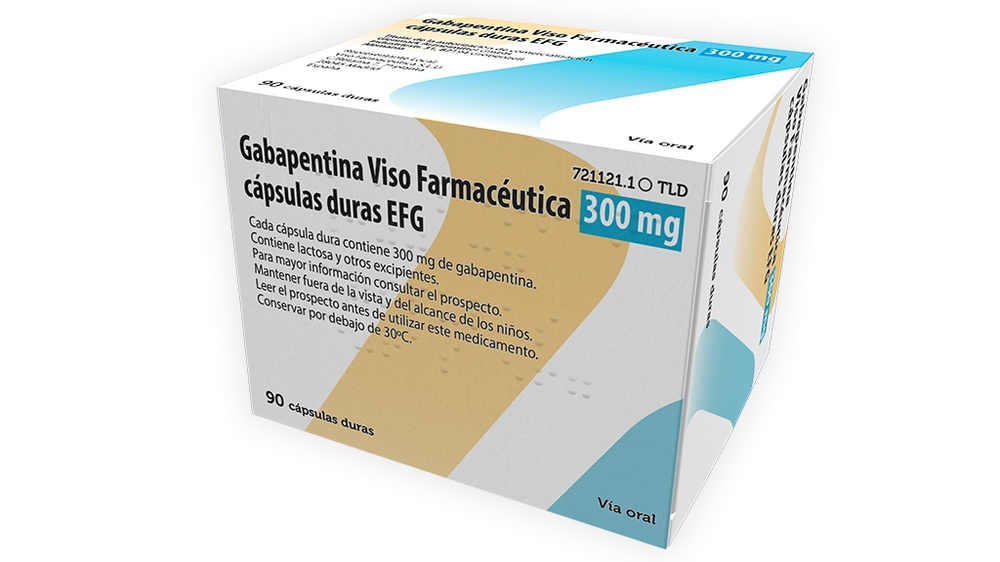
GABAPENTINA 300 mg Cápsulas Duras

Revisión de receta online
Un médico revisará tu caso y determinará si la prescripción es médicamente apropiada.

Habla con un médico sobre este medicamento
Comenta tus síntomas y las opciones de tratamiento en una consulta online.



Cómo usar GABAPENTINA VISO FARMACEUTICA 300 MG CAPSULAS DURAS EFG
Contenido del prospecto
- Introducción
- Qué es Gabapentina Viso Farmacéutica y para qué se utiliza
- Qué necesita saber antes de empezar a tomar Gabapentina Viso Farmacéutica
- Cómo tomar Gabapentina Viso Farmacéutica
- Posibles efectos adversos
- Conservación de Gabapentina Viso Farmacéutica
- Contenido del envase e información adicional
Introducción
Prospecto: información para el usuario
Gabapentina Viso Farmacéutica 300 mg cápsulas duras EFG
Lea todo el prospecto detenidamente antes de empezar a tomar este medicamento, porque contiene información importante para usted.
- Conserve este prospecto, ya que puede tener que volver a leerlo.
- Si tiene alguna duda, consulte a su médico o farmacéutico.
- Este medicamento se le ha recetado solamente a usted, y no debe dárselo a otras personas aunque tengan los mismos síntomas que usted, ya que puede perjudicarles.
- Si experimenta efectos adversos, consulte a su médico o farmacéutico, incluso si se trata de efectos adversos que no aparecen en este prospecto. Ver sección 4.
Contenido del prospecto
- Qué es Gabapentina Viso Farmacéutica y para qué se utiliza
- Qué necesita saber antes de empezar a tomar Gabapentina Viso Farmacéutica
- Cómo tomar Gabapentina Viso Farmacéutica
- Posibles efectos adversos
- Conservación de Gabapentina Viso Farmacéutica
- Contenido del envase e información adicional
l
1. Qué es Gabapentina Viso Farmacéutica y para qué se utiliza
Gabapentina Viso Farmacéutica pertenece a un grupo de medicamentos que se emplean en el tratamiento de la epilepsia y el dolor neuropático (dolor persistente provocado por una lesión nerviosa).
El principio activo de Gabapentina Viso Farmacéutica es gabapentina.
Gabapentina Viso Farmacéutica está indicado en el tratamiento de:
- Varias formas de epilepsia(crisis que están limitadas en un principio a determinadas zonas del cerebro, tanto si la crisis se extiende a otras áreas del cerebro como si no). El médico que le trate a usted o a su hijo de 6 años de edad o mayor le recetará Gabapentina Viso Farmacéutica para ayudar a tratar la epilepsia cuando el tratamiento actual no controle totalmente la enfermedad. Usted o su hijo de 6 años de edad o mayor deben tomar Gabapentina Viso Farmacéutica en combinación con el tratamiento actual a menos que se le indique lo contrario. Gabapentina Viso Farmacéutica también se puede administrar como único fármaco en el tratamiento de adultos y niños mayores de 12 años.
Dolor neuropático periférico (dolor neuropático persistente provocado por una lesión en los nervios). El dolor neuropático periférico puede estar provocado por distintas enfermedades (se produce principalmente en las piernas y/o brazos), como la diabetes o el herpes zóster. Las sensaciones dolorosas pueden describirse como calor, quemazón, dolor pulsátil, fulgurante, punzante, agudo, calambres, dolor, hormigueo, entumecimiento, agujetas, etc.

¿No estás seguro de si este medicamento es adecuado para ti?
Comenta tus síntomas y tratamiento con un médico online.
2. Qué necesita saber antes de empezar a tomar Gabapentina Viso Farmacéutica
No tome Gabapentina Viso Farmacéutica:
- si es alérgico (hipersensible) a la gabapentina o a alguno de los demás componentes de este medicamento (incluidos en la sección 6).
Advertencias y precauciones
Consulte a su médico o farmacéutico antes de empezar a tomar Gabapentina.
- si tiene problemas renales, su médico puede prescribirle diferentes pautas posológicas
- si está siendo sometido a hemodiálisis (eliminación de los productos de desecho debido a una insuficiencia renal), informe a su médico si desarrolla dolor muscular y/o debilidad
- si presenta signos como dolor de estómago persistente, vómitos y náuseas, póngase en contacto con su médico de inmediato, ya que estos síntomas pueden ser indicativos de una pancreatitis aguda (inflamación del páncreas).
- si tiene trastornos del sistema nervioso, trastornos respiratorios o si tiene más de 65 años, es posible que su médico le recete un régimen de dosificación diferente.antes de tomar este medicamento, informe a su médico si alguna vez ha abusado o ha tenido dependencia del alcohol, de medicamentos recetados o de drogas ilegales; puede que tenga un mayor riesgo de desarrollar dependencia a Gabapentina Viso Farmacéutica.
Se han informado casos de abuso y dependencia de la gabapentina posterior a su comercialización. Habla con tu médico si tienes un historial de abuso o dependencia.
Un reducido número de pacientes en tratamiento con antiepilépticos como la gabapentina tienen pensamientos de autolesionarse o ideas suicidas. Si en algún momento tiene este tipo de pensamientos, póngase en contacto con su médico de inmediato.
Dependencia
Algunas personas pueden desarrollar dependencia (necesidad de seguir tomando el medicamento) a Gabapentina Viso Farmacéutica. Pueden tener síndrome de abstinencia cuando dejan de tomar Gabapentina Viso Farmacéutica (ver sección 3, "Cómo tomar Gabapentina Viso Farmacéutica" y "Si interrumpe el tratamiento con Gabapentina Viso Farmacéutica"). Si le preocupa desarrollar dependencia a Gabapentina Viso Farmacéutica, es importante que consulte a su médico.
Si experimenta alguno de los siguientes signos mientras toma Gabapentina Viso Farmacéutica, puede ser indicativo de que ha desarrollado dependencia.
- Siente que necesita tomar el medicamento durante más tiempo del que le han prescrito.
- Siente que necesitar tomar una dosis superior a la recomendada.
- Está tomando el medicamento por motivos diferentes a su prescripción.
- Ha intentado varias veces dejar de tomar el medicamento o controlar cómo lo toma, sin éxito.
- Cuando deja de tomar el medicamento se encuentra mal y se siente mejor cuando vuelve a tomarlo.
Si nota algo de lo anterior, hable con su médico para decidir cuál es la mejor vía de tratamiento para usted, incluyendo cuándo es apropiado dejar el tratamiento y cómo hacerlo de forma segura.
Información importante sobre las posibles reacciones graves
Se han notificado erupciones cutáneas graves asociadas al uso de gabapentina, incluyendo síndrome de Stevens-Johnson, necrólisis epidérmica tóxica y erupción medicamentosa con eosinofilia y síntomas sistémicos (DRESS). Deje de tomar gabapentina y busque atención médica inmediatamente si nota cualquiera de los síntomas relacionados con estas reacciones cutáneas graves descritos en la sección 4.
Lea la descripción de síntomas graves que aparecen en la sección 4 de este prospecto, a continuación de `Si experimenta alguno de los siguientes síntomas después de tomar este medicamento, póngase en contacto con su médico de inmediato, ya que pueden ser graves´.
Debilidad muscular, sensibilidad o dolory particularmente, si al mismo tiempo, se siente mal o tiene fiebre, puede ser causado por un colapso muscular anormal que puede poner en riesgo la vida y provocar problemas renales. También puede experimentar una decoloración de la orinay un cambio en los resultados de las pruebas de sangre (aumento significativo de la creatina fosfoquinasa en sangre). Si experimenta alguno de estos signos o síntomas, por favor contacte con su médico de inmediato.
Otros medicamentos y Gabapentina Viso Farmacéutica
Informe a su médico o farmacéutico si está tomando, ha tomado recientemente o pudiera tener que tomar cualquier otro medicamento. En particular, informe a su médico (o farmacéutico) si está tomando o ha estado tomando recientemente algún medicamento para tratar convulsiones, trastornos del sueño, depresión, ansiedad o cualquier otro problema neurológico o psiquiátrico.
Medicamentos que contienen opioides como la morfina
Si está tomando algún medicamento que contenga opioides (como morfina), informe a su médico o farmacéutico ya que los opioides pueden aumentar el efecto de Gabapentina. Además, la combinación de Gabapentina con opioides puede causar somnolencia, sedación, disminución de la respiración, o la muerte.
Antiácidos para la indigestión
Cuando se toma Gabapentina a la vez que antiácidos con aluminio y magnesio, la absorción de Gabapentina en el estómago se puede ver reducida. Por tanto, se recomienda tomar Gabapentina como mínimo dos horas después de la toma de un antiácido.
Gabapentina Viso Farmacéutica:
- no se espera que interactúe con otros medicamentos antiepilépticoso la píldora anticonceptivaoral.
- puede interferir con algunas pruebas de laboratorio, por lo que si necesita un análisis de orina, informe a su médico o al hospital lo que está tomando.
Toma de Gabapentina Viso Farmacéutica con alimentos
Gabapentina se puede tomar con o sin alimentos.
Embarazo, lactancia y fertilidad
- Si está embarazada o cree que podría estar embarazada, debe comunicárselo inmediatamente a su médico para analizar los posibles riesgos que el medicamento que está tomando podría representar para el feto.
- No debería interrumpir su tratamiento sin antes consultarlo con su médico.
- Si está planeando quedarse embarazada debería evaluar su tratamiento tan pronto como sea posible con su médico o farmacéutico antes de quedarse embarazada.
- Si está en periodo de lactancia o está planteandose dar el pecho, consulte a su médico o farmacéutico antes de tomar este medicamento.
Embarazo
Gabapentina Viso Farmacéutica se puede utilizar durante el primer trimestre del embarazo si es necesario.
Si planea quedarse embarazada o si está embarazada o cree que puede estarlo, consulte a su médico inmediatamente.
Si se ha quedado embarazada y tiene epilepsia, es importante que no deje de tomar su medicamento sin antes consultar a su médico, ya que esto puede empeorar su enfermedad. El empeoramiento de su epilepsia puede poner en riesgo tanto a usted como a su bebé no nacido.
En un estudio que revisó datos de mujeres en países nórdicos que tomaron gabapentina en los primeros 3 meses de embarazo, no hubo un mayor riesgo de defectos de nacimiento o problemas con el desarrollo de la función cerebral (trastornos del neurodesarrollo). Sin embargo, los bebés de mujeres que tomaron gabapentina durante el embarazo tenían un mayor riesgo de bajo peso al nacer y parto prematuro.
Si se toma durante el embarazo, gabapentina puede provocar síntomas de abstinencia en los recién nacidos. Este riesgo puede ser mayor cuando gabapentina se toma concomitantemente con analgésicos opioides (fármacos para el tratamiento del dolor intenso).
Póngase en contacto de inmediato con su médico si se queda embarazada, cree que pudiera estar embarazada o está pensando quedarse embarazada mientras esté en tratamiento con Gabapentina. No interrumpa el tratamiento con este medicamento bruscamente, ya que podría provocar crisis recidivantes lo que podría tener consecuencias graves para usted y para su hijo.
Lactancia
Gabapentina, el principio activo de Gabapentina Viso Farmacéutica, se excreta en la leche materna. Puesto que se desconoce el efecto que puede tener en recién nacidos, Gabapentina no está recomendado su uso durante la lactancia.
Fertilidad
No hay efectos sobre la fertilidad en estudios con animales.
Conducción y uso de máquinas
Gabapentina puede provocar sensación de mareo, adormecimiento y cansancio. No debe conducir, manejar máquinas complejas ni participar en actividades que pudieran ser peligrosas hasta que no sepa si este medicamento afecta a su capacidad para realizar estas actividades.
Gabapentina contiene lactosa.
Gabapentina cápsulas duras contiene lactosa (un tipo de azúcar). Si su médico le ha indicado que padece una intolerancia a ciertos azúcares, consulte con él antes de tomar este medicamento.
3. Cómo tomar Gabapentina Viso Farmacéutica
Siga exactamente las instrucciones de administración de este medicamento indicadas por su médico o farmacéutico. En caso de duda, consulte de nuevo a su médico o farmacéutico. No tome una cantidad de medicamento superior a la prescrita.
Su médico determinará cuál es la dosis indicada para usted.
Epilepsia,la dosis recomendada es
Uso en niños y adolescentes:
Tome el número de cápsulas que su médico le haya prescrito. Lo normal es que su médico vaya aumentando la dosis gradualmente. La dosis inicial suele ser de 300 a 900 mg al día. A partir de entonces, se puede aumentar la dosis hasta una dosis máxima diaria de 3600 mg/día y su médico le indicará que tome esta cantidad repartida en tres tomas separadas, es decir, una vez por la mañana, una por la tarde y otra por la noche.
Niños de 6 años o más:
Su médico decidirá la dosis que deberá administrarle a su hijo, que calculará en función de su peso. El tratamiento se inicia con una dosis inicial baja, que se va aumentando gradualmente durante un período de unos 3 días. La dosis habitual para regular la epilepsia es de 25 a 35 mg/kg/día. Suele administrarse dividida en tres tomas, por lo general una vez por la mañana, una por la tarde y otra por la noche.
El uso de Gabapentina no está recomendado en niños menores de 6 años.
Dolor neuropático periférico, la dosis recomendada es
Adultos
Tome el número de cápsulas que su médico le haya prescrito. Lo normal es que su médico vaya aumentando la dosis gradualmente. La dosis inicial suele ser de 300 a 900 mg al día. A partir de entonces, se puede aumentar la dosis, según le indique su médico, hasta una dosis máxima diaria de 3600 mg/día y su médico le indicará que tome esta cantidad repartida en tres tomas, es decir, una vez por la mañana, una por la tarde y otra por la noche.
Si tiene problemas de riñón o está siendo sometido a hemodiálisis
Si tiene problemas de riñón o está siendo sometido a hemodiálisis, su médico le recetará una pauta posológica y/o una dosis distintas.
Pacientes de edad avanzada (mayores de 65 años)
Debe tomar la dosis normal de Gabapentina, a menos que tenga problemas en los riñones. Su médico puede prescribirle una pauta posológica y/o una dosis diferente si tiene problemas en los riñones.
Si tiene la impresión de que el efecto de Gabapentina es demasiado fuerte o demasiado débil, hable con su médico o farmacéutico lo antes posible.
Método de administración
Gabapentina es para uso oral. Siempre trague las cápsulas con abundante agua.
Continúe tomando Gabapentina hasta que su médico le indique que deje de hacerlo.
Si toma más Gabapentina Viso Farmacéutica del que debe
Dosis superiores a las recomendadas pueden provocar un incremento de los efectos adversos, incluyendo pérdida del conocimiento, mareo, visión doble, habla arrastrada, adormecimiento y diarrea. En caso de sobredosis o ingestión accidental, consulte inmediatamente a su médico, farmacéutico o llame al Servicio de Información Toxicológica, teléfono 91 562 04 20, indicando el medicamento y la cantidad ingerida o acuda a la unidad de urgencias del hospital más cercano si toma más Gabapentina del que su médico le prescribió. Lleve consigo cualquier cápsula que no haya tomado, junto con el envase y el prospecto de manera que el hospital pueda identificar fácilmente el medicamento que ha tomado.
Si olvidó tomar Gabapentina Viso Farmacéutica
Si olvidó tomar una dosis, tómela lo antes posible en cuanto lo recuerde, a menos que ya le toque tomar la siguiente dosis. No tome una dosis doble para compensar las dosis olvidadas.
Si interrumpe el tratamiento con Gabapentina Viso Farmacéutica
No deje de tomar Gabapentina Viso Farmacéutica repentinamente. Si desea dejar de tomar Gabapentina Viso Farmacéutica, háblelo con su médico en primer lugar. Su médico le indicará cómo proceder. Si va a dejar el tratamiento, esto debe hacerse de forma gradual durante un mínimo de una semana. Debe saber que puede experimentar ciertos efectos adversos, llamados síndrome de abstinencia, tras interrumpir un tratamiento a corto o largo plazo con Gabapentina Viso Farmacéutica. Entre ellos se incluyen convulsiones, ansiedad, dificultad para dormir, sensación de malestar (náuseas), dolor, sudoración, temblores, dolor de cabeza, depresión, sensación anormal, mareos y sensación general de malestar. Estos efectos ocurren habitualmente en las primeras 48 horas tras la interrupción del tratamiento con Gabapentina Viso Farmacéutica. Si experimenta este síndrome de abstinencia, debe ponerse en contacto con su médico.
Si tiene cualquier otra duda sobre el uso de este medicamento, pregunte a su médico o farmacéutico.

¿Has empezado a tomar el medicamento y tienes preguntas?
Comenta tus síntomas y tratamiento con un médico online.
4. Posibles efectos adversos
Deje de tomar Gabapentina Viso Farmacéutica y busque atención médica inmediatamente si nota cualquiera de estos síntomas:
- Parches enrojecidos y sin relieve con forma de diana o circulares en el tronco, a menudo con ampollas en el centro; descamación de la piel, úlceras en la boca, garganta, nariz, genitales y ojos. Estas erupciones cutáneas graves pueden venir precedidas de fiebre y síntomas parecidos a la gripe (síndrome de Stevens-Johnson, necrólisis epidérmica tóxica).
- Erupción expandida, temperatura corporal alta y aumento del tamaño de los ganglios linfáticos (síndrome DRESS o síndrome de hipersensibilidad al fármaco).
Al igual que todos los medicamentos, este medicamento puede producir efectos adversos, aunque no todas las personas los sufran.
Si experimenta alguno de los siguientes síntomas después de tomar este medicamento, póngase en contacto con su médico de inmediato,ya que pueden ser graves:
- Dolor de estómago persistente, sensación de mareo y mareo, ya que estos síntomas pueden ser indicativos de una pancreatitis aguda (inflamación del páncreas).
- Problemas de respiración, que si son graves, pueden necesitar atención de emergencia y cuidados intensivos para continuar respirando normalmente.
- Puede provocar una reacción alérgicagrave o potencialmente mortal que puede afectar a la piel o a otras partes del organismo, como el hígado o las células sanguíneas. No siempre aparece una erupción cuando surge este tipo de reacción. Esta reacción podría precisar su hospitalización o la interrupción del tratamiento con Gabapentina. Póngase en contacto con su médico inmediatamente, si experimenta alguno de los síntomas siguientes:
- erupción cutánea y enrojecimiento y/o pérdida de cabello)
- urticaria
- fiebre
- inflamación de los ganglios persistente
- hinchazón de los labios, cara y la lengua
- amarilleamiento de la piel o del blanco de los ojos
- hematomas o hemorragias sin explicación aparente
- fatiga o debilidad intensas
- dolor muscular sin explicación aparente
- infecciones frecuentes
Estos síntomas podrían ser los primeros signos de una reacción grave. El médico le explorará y determinará si debe seguir en tratamiento con Gabapentina.
- Si está siendo sometido a hemodiálisis, informe a su médico de cualquier dolor o debilidad musculares que experimente.
Otros efectos adversos son:
Muy frecuentes(pueden afectar a más de 1 de cada 10 personas):
- Infecciones virales
- Somnolencia, sensación de mareo, falta de coordinación
- Cansancio, fiebre
Frecuentes(pueden afectar a más de 1 de cada 10 personas):
- Neumonía, infecciones respiratorias, infecciones del tracto urinario, otitis u otras infecciones
- Recuento bajo de glóbulos blancos
- Anorexia, aumento del apetito
- Ira, confusión, cambios de humor, depresión, ansiedad, nerviosismo, dificultad para razonar
- Convulsiones, movimientos espasmódicos, dificultad para hablar, pérdida de memoria, temblores, dificultad para conciliar el sueño, dolor de cabeza, sensibilidad en la piel, disminución de la sensibilidad (entumecimiento), dificultad de coordinación, movimiento inusual de los ojos, aumento, disminución o ausencia de los reflejos
- Visión borrosa, visión doble
- Vértigo
- Tensión arterial elevada, rubor o dilatación de los vasos sanguíneos
- Dificultad para respirar, bronquitis, dolor de garganta, tos, nariz seca
- Vómitos (mareo), náuseas (sensación de mareo), alteraciones en las piezas dentales, inflamación de las encías, diarrea, dolor de estómago, indigestión, estreñimiento, boca o garganta secas, flatulencias
- Edema facial, hematomas, erupción cutánea, prurito, acné.
- Dolor de las articulaciones, dolor muscular, dolor de espalda, sacudidas.
- Disfunción eréctil (impotencia)
- Hinchazón de las piernas y los brazos, dificultad para caminar, debilidad, dolor, malestar, síntomas pseudogripales.
- Disminución en el recuento de glóbulos blancos, aumento de peso.
- Lesiones, fracturas y abrasiones accidentales.
En los ensayos clínicos realizados en la población pediátrica también se notificaron con frecuencia comportamiento agresivo y movimientos espasmódicos.
Poco frecuentes(pueden afectar a más de 1 de cada 100 personas)
- Agitación (un estado de inquietud crónica y movimientos involuntarios y sin propósito)
- Reacciones alérgicas como urticaria
- Disminución del movimiento
- Latido cardíaco acelerado
- Dificultad para tragar
- Hinchazón con afectación del rostro, el tronco y las piernas
- Resultados anómalos de las pruebas analíticas que podrían indicar problemas de hígado
- Discapacidad mental
- Caídas
- Aumento de los niveles de glucosa en sangre (con mayor frecuencia en pacientes con diabetes)
Raros (pueden afectar hasta 1 en 1.000 personas)
- Disminución en los niveles de glucosa en sangre (más a menudo observada en pacientes con diabetes)
- Pérdida de consciencia
- Problemas para respirar, respiraciones superficiales (depresión respiratoria)
Desde la comercialización de Gabapentina se han notificado los siguientes efectos adversos:
- Disminución del número de plaquetas (células encargadas de la coagulación sanguínea)
- Pensamientos suicidas, alucinaciones
- Problemas de movimientos anómalos como contorsiones, movimientos espasmódicos y rigidez
- Pitidos en los oídos
- Coloración amarilla de la piel y los ojos (ictericia), inflamación del hígado
- Insuficiencia renal aguda, incontinencia
- Crecimiento del tejido mamario, aumento del tamaño de la mama
- Acontecimientos adversos que aparecen tras la interrupción brusca del tratamiento con gabapentina (ansiedad, dificultad para conciliar el sueño, sensación de mareo, dolor, sudoración), dolor en el pecho
- Ruptura de las fibras musculares (rabdomiólisis)
- Cambio en los resultados de las pruebas de sangre (aumentó la creatina fosfoquinasa)
- Problemas con el funcionamiento sexual, incluida la incapacidad de lograr un clímax sexual, retraso de la eyaculación
- Bajo nivel de sodio en la sangre
- Anafilaxia (reacción alérgica grave, potencialmente mortal, que incluye dificultad para respirar, hinchazón de labios, garganta y lengua, e hipotensión que requiere tratamiento urgente)
- Desarrollar dependencia a gabapentina (“dependencia del fármaco”)
Debe saber que puede experimentar ciertos efectos adversos, llamados síndrome de abstinencia, tras interrumpir un tratamiento a corto o largo plazo con gabapentina (ver “"Si interrumpe el tratamiento con Gabapentina Viso Farmacéutica").
Comunicación de efectos adversos
Si experimenta cualquier tipo de efecto adverso, consulte a su médico, farmacéutico o enfermera, incluso si se trata de posibles efectos adversos que no aparecen en este prospecto. También puede comunicarlos directamente a través del Sistema Español de Farmacovigilancia de Medicamentos de Uso Humano www.notificaRAM.es. Mediante la comunicación de efectos adversos usted puede contribuir a proporcionar más información sobre la seguridad de este medicamento.
5. Conservación de Gabapentina Viso Farmacéutica
Mantener este medicamento fuera de la vista y del alcance de los niños.
No utilice este medicamento después de la fecha de caducidad que aparece en la caja después de CAD. La fecha de caducidad es el último día del mes que se indica.
Conservar por debajo de 30ºC.
Los medicamentos no se deben tirar por los desagües ni a la basura. Deposite los envases y los medicamentos que no necesite en el punto SIGRE de la farmacia. Pregunte a su farmacéutico cómo deshacerse de los envases y de los medicamentos que ya no necesita. De esta forma ayudará a proteger el medio ambiente.
6. Contenido del envase e información adicional
Composición de Gabapentina Viso Farmacéutica
El principio activo de Gabapentina Viso Farmacéutica es gabapentina.
Gabapentina Viso Farmacéutica 300 mg cápsulas duras contiene 300 mg de gabapentina.
Los demás componentes que están presentes en el contenido de la cápsula son: lactosa monohidrato, almidón de maíz y talco.
Las cubiertas de las cápsulas contienen: gelatina, dióxido de titanio (E171) y laurilsulfato sódico. Además, las cubiertas de las cápsulas de 300 mg contienen óxido de hierro amarillo (E172).
La tinta de impresión contiene goma laca y óxido de hierro negro (E172).
Aspecto del producto y contenido del envase
Gabapentina Viso Farmacéutica 300 mg cápsulas duras son cápsulas duras de gelatina de tamaño `1´, con una tapa de amarillo claro a amarillo y un cuerpo de amarillo claro a amarillo, con una `G´ en la tapa y un `457´ en el cuerpo con tinta negra, rellenas con polvo de blanco a blanquecino.
Gabapentina Viso Farmacéutica 300 mg cápsulas duras está disponible en blisters que contienen: 1, 10, 30, 45, 50, 60, 84, 90, 100, 120, 180 y 200 y envases con 50, 100, 200, 200 (multi-envase que incluye 2 frascos de 100 cápsulas), 300, 500 y 1000 cápsulas duras.
Puede que solamente estén comercializados algunos tamaños de envases.
Titular de la autorización de comercialización y responsable de la fabricación
Titular de la autorización de comercialización:
Glenmark Arzneimittel GmbH
Industriestr. 31
82194 Gröbenzell
Alemania
Responsable de la fabricación:
Glenmark Pharmaceuticals s.r.o.
Fibichova 143
56617 Vysoké Mýto
República Checa
Glenmark Pharmaceuticals Europe Limited
Building 2, Croxley Green Business Park
Croxley Green, WD18 8YA
Reino Unido
Pueden solicitar más información respecto a este medicamento dirigiéndose al representante local del titular de la autorización de comercialización:
Glenmark Farmacéutica, S.L.U.
C/ Retama 7, 7ª planta
28045 Madrid
España
Este medicamento está autorizado en los Estados Miembros del Espacio Económico Europeo con los siguientes nombres:
País | Nombre del medicamento |
Alemania | Gabapentin Glenmark 300 mg Hartkapseln |
España | Gabapentina Viso Farmacéutica 300 mg cápsulas duras EFG |
Países Bajos | Gabapentine Glenmark 300 mg harde capsules |
Fecha de la última revisión de este prospecto:Septiembre 2024
La información detallada de este medicamento está disponible en la página Web de la Agencia Española de Medicamentos y Productos Sanitarios (AEMPS)
- País de registro
- Forma farmacéuticaCAPSULA, 300 mg
- Código ATCN02BF01
- Precio medio en farmacia3.08 EUR
- Principio activo
- Requiere recetaSí
- Fabricante
- ComposiciónLACTOSA MONOHIDRATO (19,5 mg mg), LAURILSULFATO DE SODIO (0,0608 mg mg)
- Esta información es de carácter general y no sustituye la consulta con un profesional sanitario.
- Alternativas a GABAPENTINA VISO FARMACEUTICA 300 MG CAPSULAS DURAS EFGForma farmacéutica: CAPSULA, 300 mgPrincipio activo: GabapentinaFabricante: Almus Farmaceutica S.A.U.Requiere recetaForma farmacéutica: CAPSULA, 400 mgPrincipio activo: GabapentinaFabricante: Almus Farmaceutica S.A.U.Requiere recetaForma farmacéutica: COMPRIMIDO, 600 mgPrincipio activo: GabapentinaFabricante: Almus Farmaceutica S.A.U.Requiere receta
Médicos online para GABAPENTINA VISO FARMACEUTICA 300 MG CAPSULAS DURAS EFG
Comenta la dosis, los posibles efectos secundarios, interacciones, contraindicaciones o la revisión de receta de GABAPENTINA VISO FARMACEUTICA 300 MG CAPSULAS DURAS EFG, sujeto a valoración médica y a la normativa local.









Obtén una receta de GABAPENTINA VISO FARMACEUTICA 300 MG CAPSULAS DURAS EFG online
Rellena un formulario de 2 minutos
Cuéntanos tus síntomas, historial y el medicamento que necesitas.
Elige un médico o nosotros te asignamos uno
Escoge un especialista o te conectamos con el próximo médico disponible.
El médico revisa tu caso
Normalmente en 30 minutos. Puede hacerte preguntas adicionales por chat.
Recógela en cualquier farmacia
Receta electrónica enviada a tu correo, válida en toda España.
Preguntas frecuentes
GABAPENTINA VISO FARMACEUTICA 300 MG CAPSULAS DURAS EFG requiere receta en España. Puedes confirmarlo con un médico online según tu caso.
El principio activo de GABAPENTINA VISO FARMACEUTICA 300 MG CAPSULAS DURAS EFG es Gabapentina. Esta información ayuda a identificar medicamentos con la misma composición pero con diferentes nombres comerciales.
El precio medio en farmacia de GABAPENTINA VISO FARMACEUTICA 300 MG CAPSULAS DURAS EFG es de aproximadamente 3.08 EUR. Puede variar según el fabricante y la forma farmacéutica.
GABAPENTINA VISO FARMACEUTICA 300 MG CAPSULAS DURAS EFG es fabricado por Glenmark Arzneimittel Gmbh. La marca y el envase pueden variar según el distribuidor.
Los Médicos de familia, Psiquiatras, Dermatólogos, Cardiólogos, Endocrinólogos, Gastroenterólogos, Neumólogos, Nefrólogos, Reumatólogos, Hematólogos, Infectólogos, Alergólogos, Geriatras, Pediatras, Oncólogos pueden valorar la prescripción de GABAPENTINA VISO FARMACEUTICA 300 MG CAPSULAS DURAS EFG cuando esté clínicamente indicado. Puedes reservar una videoconsulta para comentar tu caso y las opciones de tratamiento.
España cuenta con una infraestructura sanitaria bien desarrollada en ciudades principales como Madrid, Barcelona, Valencia y Sevilla. Las farmacias están ampliamente disponibles y operan bajo estrictas regulaciones, garantizando el acceso a medicamentos con receta.
Puedes comprar GABAPENTINA VISO FARMACEUTICA 300 MG CAPSULAS DURAS EFG en Madrid, Barcelona, Sevilla o Valencia en cualquier farmacia local con una receta válida.
Para obtener una receta, puedes utilizar Oladoctor:
Otros medicamentos con el mismo principio activo (Gabapentina) incluyen GABAPENTINA ALMUS 300 mg CAPSULAS DURAS EFG, GABAPENTINA ALMUS 400 mg CAPSULAS DURAS EFG, GABAPENTINA ALMUS 600 mg COMPRIMIDOS RECUBIERTOS CON PELICULA EFG. Pueden tener diferentes nombres comerciales o formulaciones, pero contienen el mismo componente terapéutico. Consulta siempre con un médico antes de cambiar o iniciar un nuevo medicamento.
