



FRIDEX 1 mg /Ml Colirio

Revisión de receta online
Un médico revisará tu caso y determinará si la prescripción es médicamente apropiada.

Habla con un médico sobre este medicamento
Comenta tus síntomas y las opciones de tratamiento en una consulta online.



Cómo usar FRIDEX 1 MG/ML COLIRIO EN SOLUCION EN ENVASE UNIDOSIS
Contenido del prospecto
- Introducción
- Qué es Fridex y para qué se utiliza
- Qué necesita saber antes de empezar a usar Fridex
- Cómo usar Fridex
- Posibles efectos adversos
- Conservación de Fridex
- Contenido del envase e información adicional
Introducción
Prospecto: información para el usuario
Fridex 1 mg/ml colirio en solución en envase unidosis
Dexametasona fosfato
Lea todo el prospecto detenidamente antes de empezar a usar este medicamento, porque contiene información importante para usted.
- Conserve este prospecto, ya que puede tener que volver a leerlo.
- Si tiene alguna duda, consulte a su médico o farmacéutico.
- Este medicamento se le ha recetado solamente a usted, y no debe dárselo a otras personas aunque tengan los mismos síntomas que usted, ya que puede perjudicarles.
- Si experimenta efectos adversos, consulte a su médico o farmacéutico, incluso si se trata de efectos adversos que no aparecen en este prospecto. Ver sección 4.
Contenido del prospecto
- Qué es Fridex y para qué se utiliza
- Qué necesita saber antes de empezar a usar Fridex
- Cómo usar Fridex
- Posibles efectos adversos
- Conservación de Fridex
- Contenido del envase e información adicional
1. Qué es Fridex y para qué se utiliza
Este medicamento contiene el principio activo dexametasona, que es un corticoide indicado para detener los síntomas inflamatorios (dolor, calor, hinchazón y enrojecimiento).
Este medicamento está indicado para el tratamiento de la inflamación de sus ojos.
Si tiene infección en un ojo (ojo rojo, lágrimas y mucosidad), se le administrará otro medicamento para tomar al mismo tiempo que Fridex (ver Sección 2).

¿No estás seguro de si este medicamento es adecuado para ti?
Comenta tus síntomas y tratamiento con un médico online.
2. Qué necesita saber antes de empezar a usar Fridex
No useFridex
- si es alérgico a dexametasona fosfato de sodio o a alguno de los demás componentes de este medicamento (incluidos en la sección 6);
- si tiene una infección ocular que puede ser causada por una bacteria (infección purulenta aguda), hongos o virus (virus del herpes, virus vaccinia, virus de la varicela) o causada por amebas (un parásito);
- si tiene daños en la superficie del ojo (pequeños agujeros, úlceras o lesiones que no se han curado correctamente);
- si tiene presión alta en el ojo que se sabe que es causada por glucocorticoides (familia de medicamentos corticosteroides).
Advertencias y precauciones
Consulte a su médico o farmacéutico antes de empezar a usar este medicamento.
No inyectar, no ingerir.
Evite el contacto de la punta del envase dispensador con el ojo o los párpados.
Se necesita un estricto control del ojo durante el uso de Fridex y, en particular:
- para niños y ancianos. Se recomienda un control más frecuente.
- si tiene una infección ocular. Utilice ese medicamento sólo si está siendo tratado con un medicamento antiinfeccioso al mismo tiempo.
- si tiene una úlcera corneal (una llaga abierta en la superficie del ojo con dolor a veces extremo, lágrimas, ojos entrecerrados y pérdida de visión). No use este medicamento, a menos que la inflamación sea la causa principal del retraso en la curación.
- si sufre de presión alta en el ojo. Si ya ha tenido presión alta en el ojo después de usar un medicamento esteroide ocular, corre el riesgo de tenerlo nuevamente si usa este medicamento.
- si tiene glaucoma, una enfermedad que puede causar daño al nervio óptico y puede causar pérdida de visión.
- niños: no usar durante un tratamiento a largo plazo sin descanso.
- si tiene conjuntivitis alérgica grave (enrojecimiento, hinchazón, picazón y lágrimas en los ojos) que otro medicamento no ha podido tratar. Use este medicamento solo durante un corto período de tiempo.
- si tiene diabetes. Informe a su oftalmólogo u óptico sobre su enfermedad antes de usar este medicamento.
- si tiene un ojo rojo que no ha sido diagnosticado. No use este medicamento antes de hablar con su médico.
- diabético: si es diabético, informe a su oftalmólogo u óptico.
- si tiene un ojo rojo que no ha sido diagnosticado, no use este medicamento.
- para niños y ancianos. Se recomienda un control más frecuente.
Evite llevar lentes de contacto durante el uso de este medicamento.
Consulte a su médico si nota hinchazón y aumento de peso alrededor del tronco y en la cara, ya que estos son generalmente los primeros signos de una afección llamada síndrome de Cushing. Se puede desarrollar una disminución de la función de la glándula suprarrenal después de interrumpir un tratamiento a largo plazo o intensivo con este medicamento. Consulte a su médico antes de interrumpir el tratamiento por su cuenta. Estos riesgos son especialmente importantes en niños y pacientes tratados con un medicamento llamado ritonavir o cobicistat.
Póngase en contacto con su médico si presenta visión borrosa u otras alteraciones visuales.
Niños
No utilice este medicamento en niños durante un tratamiento a largo plazo sin descanso.
Uso de Fridex con otros medicamentos
Informe a su médico o farmacéutico si está utilizando, ha utilizado recientemente o pudiera tener que utilizar cualquier otro medicamento.
Si está usando otros colirios, espere 15 minutos para instilar el otro medicamento.
El uso conjunto de colirios que contienen esteroides y colirios que contienen betabloqueantes (para tratar la presión alta en el ojo) puede causar la sedimentación de fosfato de calcio en la superficie del ojo.
Informe a su médico si está usando ritonavir o cobicistat, ya que estos medicamentos pueden aumentar la cantidad de dexametasona en la sangre.
Embarazo y lactancia
Si está embarazada o en periodo de lactancia, cree que podría estar embarazada o tiene intención de quedarse embarazada, consulte a su médico o farmacéutico antes de utilizar este medicamento.
No hay suficiente información sobre el uso de este medicamento durante el embarazo para evaluar los posibles efectos adversos. Por esta razón, no se recomienda el uso de este medicamento durante el embarazo.
No se sabe si este medicamento pasa a la leche materna. Sin embargo, la dosis de este medicamento es baja, por lo tanto, este medicamento se puede usar durante la lactancia.
Conducción y uso de máquinas.
Es posible que tenga visión borrosa por un corto tiempo después de usar este colirio. Espere hasta que su visión sea normal antes de conducir o usar máquinas.
Fridex contiene fosfato
Este medicamento contiene 0,4461 mg de fosfatos en 0,3 ml, lo que equivale a 1,487 mg / ml.
Si sufre un daño severo en la capa transparente en la parte frontal del ojo (la córnea), los fosfatos pueden causar en casos muy raros parches nublados en la córnea debido a la acumulación de calcio durante el tratamiento.
3. Cómo usar Fridex
Siga exactamente las instrucciones de administración de este medicamento indicadas por su médico o farmacéutico. En caso de duda, consulte de nuevo a su médico o farmacéutico.
Dosis
La dosis habitual recomendada es 1 gota, de 4 a 6 veces al día en el ojo a tratar.
Si su afección es más grave, se le puede indicar que comience con 1 gota cada hora y luego cambie a 1 gota cada 4 horas, después de que el medicamento haya empezado a funcionar. Es importante reducir la dosis lentamente para evitar que la afección empeore nuevamente.
Uso en personas de edad avanzada
No se necesita ajustar la dosis del medicamento.
Uso en niños
No utilice este medicamento en niños durante un tratamiento a largo plazo sin descanso.
Método de administración
Este medicamento debe ser instilado en el ojo. No inyecte ni trague el medicamento.
|
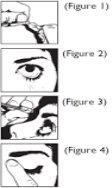
- Abra el sobre de aluminio que contiene 5 envases unidosis.
- Lávese bien las manos antes de usar estas gotas.
- Separe un envase unidosis de la tira y abra la parte superior del envase unidosis (Figura 1).
- Incline la cabeza hacia atrás y baje ligeramente con el dedo el párpado inferior hacia abajo (Figura 2). Ponga una gota en el ojo para ser tratado. Evite el contacto entre la punta del envase y el ojo o los párpados (Figura 3).
- Inmediatamente después de colocar la gota en el ojo, presione ligeramente con el dedo en la esquina interna del ojo más cercana a la nariz durante unos minutos (Figura 4). Esto ayuda a evitar que el colirio se extienda al resto de su cuerpo.
- Deseche el envase unidosis después de su uso. No lo guarde para usarlo nuevamente.
Duración del tratamiento
Por lo general, necesitará usar sus gotas durante varios días. No use este medicamento durante más de 14 días.
Si usa más Fridex del que debe
Si se ha puesto demasiado medicamento en el ojo y le duele, enjuáguelo con agua estéril. Informe inmediatamente a su médico o farmacéutico.
En caso de sobredosis o ingestión accidental, consulte inmediatamente a su médico o farmacéutico o llame al Servicio de Información Toxicológica, teléfono: 91 562 04 20 indicando el medicamento y la cantidad ingerida.
Si olvidó usar Fridex
No use una dosis doble para compensar las dosis olvidadas.
Si interrumpe el tratamiento con Fridex
No deje de usar este medicamento bruscamente. Informe a su médico si está pensando en suspender el tratamiento.
Si tiene cualquier otra duda sobre el uso de este medicamento, pregunte a su médico, o farmacéutico.

¿Has empezado a tomar el medicamento y tienes preguntas?
Comenta tus síntomas y tratamiento con un médico online.
4. Posibles efectos adversos
Al igual que todos los medicamentos, este medicamento puede producir efectos adversos, aunque no todas las personas los sufran.
Muy frecuentes(pueden afectar a más de 1 de cada 10 personas)
- presión alta en el ojo después de 2 semanas de usar las gotas.
Frecuentes(pueden afectar hasta 1 de cada 10 personas)
- molestias, irritación, ardor, escozor, picazón y visión borrosa después de su uso. Estos suelen ser leves y no duran mucho.
Poco frecuentes(pueden afectar hasta 1 de cada 100 personas)
- signos de una reacción alérgica
- curación que tarda más de lo esperado
- lente turbia (catarata)
- infecciones oculares
- presión alta en el ojo (glaucoma)
- si se usa con frecuencia, es posible que los riñones no produzcan suficientes hormonas (supresión de la función corticoadrenal). Esto podría mostrarse por niveles bajos de azúcar en la sangre, deshidratación, pérdida de peso y sentirse confundido acerca de dónde se encuentra.
Muy raro(puede afectar hasta 1 de cada 10.000 personas)
- superficie inflamada del ojo que produce ojos rojos, lágrimas e irritación (conjuntivitis)
- pupila dilatada (midriasis)
- hinchazón de la cara (edema facial)
- párpados caídos (ptosis)
- inflamación del ojo que causa dolor y enrojecimiento (uveítis)
- sedimento de calcio en la superficie del ojo (calcificación de la córnea)
- superficie inflamada del ojo que proporciona visión borrosa, ojos secos, sensibilidad a la luz, ardor, lágrimas y una sensación arenosa en el ojo (queratopatía cristalina)
- cambios en el grosor de la superficie del ojo
- hinchazón de la superficie del ojo (edema corneal)
- úlcera en la superficie del ojo que causa dolor, lágrimas, ojos entrecerrados y pérdida de visión
- pequeños agujeros en la superficie del ojo (perforación de la córnea)
Comunicación de efectos adversos
Si experimenta cualquier tipo de efecto adverso, consulte a su médico o farmacéutico, incluso si se trata de posibles efectos adversos que no aparecen en este prospecto. También puede comunicarlos directamente a través del Sistema Español de Farmacovigilancia de Medicamentos de Uso Humano: www.notificaRAM.es. Mediante la comunicación de efectos adversos usted puede contribuir a proporcionar más información sobre la seguridad de este medicamento.
5. Conservación de Fridex
Mantener este medicamento fuera de la vista y del alcance de los niños.
No utilice este medicamento después de la fecha de caducidad que aparece en el envase. La fecha de caducidad es el último día del mes que se indica.
Después de abrir el envase unidosis: desechar cualquier solución residual que quede en el envase unidosis después de la instilación.
Mantener los envases unidosis dentro del sobre para protegerlos de la luz y usar en 60 días.
Conservar el envase unidosis en el embalaje exterior para protegerlo de la luz.
Conservar por debajo de 25ºC.
Los medicamentos no se deben tirar por los desagües ni a la basura. Deposite los envases y los medicamentos que no necesite en el punto SIGRE de la farmacia o en cualquier otro sistema de recogida de residuos de medicamentos. En caso de duda, pregunte a su farmacéutico como deshacerse de los envases y de los medicamentos que ya no necesita. De esta forma ayudará a proteger el medio ambiente.
6. Contenido del envase e información adicional
Composición de Fridex
- El principio activo es dexametasona fosfato sódico. Cada ml de solución contiene 1 mg de dexametasona fosfato (como dexametasona fosfato sódico), igual a 40 microgramos de dexametasona fosfato (con volumen de gota teórico de aproximadamente 40 microlitros).
- Los demás componentes son: edetato de disodio, fosfato de disodio dodecahidrato, cloruro de sodio, ácido clorhídrico (para ajustar el pH), hidróxido de sodio (para ajustar el pH) y agua para preparaciones inyectables.
Aspecto del producto y contenido del envase
Fridex es una solución transparente e incolora que se suministra en envases unidosis.
Cada envase unidosis contiene 0,3 ml de solución.
Una caja contiene 20 o 30 envases unidosis envasados en sobres.
Titular de la autorización de comercialización y responsable de fabricación
Titular de la autorización de comercialización
NTC S.r.l.
Via Luigi Razza, 3
20124 Milán (Italia)
Responsable de la fabricación
Farmigea SpA
Via Giovan Battista Oliva, 6/8
56121 Pisa (PI)
Italia
Pueden solicitar más información respecto a este medicamento dirigiéndose al representante local del titular de la autorización de comercialización:
NTC Ophthalmics Iberica S.L.
Calle Pinar, 5,
28006 Madrid, España
Este medicamento está autorizado en los estados miembros del Espacio Económico Europeo con los siguientes nombres:
Portugal: Dexametasona NTC
Reino Unido: Dexamethasone phosphate 1 mg/mL (as sodium phosphate) Eye drops, Solution in a single-dose container
España: Fridex 1 mg/ml colirio en solución en envase unidosis
Fecha de la última revisión de este prospecto:Julio 2019
La información detallada y actualizada de este medicamento está disponible en la página web de la Agencia Española de Medicamentos y Productos Sanitarios (AEMPS) http://www.aemps.gob.es/
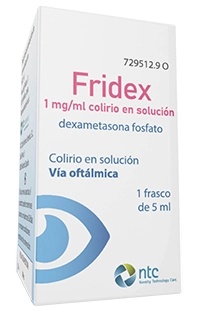
- País de registro
- Forma farmacéuticaCOLIRIO, 1 mg/ml
- Código ATCS01BA01
- Principio activo
- Requiere recetaSí
- Fabricante
- ComposiciónEDETATO DE DISODIO (0.0003 g mg), CLORURO DE SODIO (0.001818 g mg), HIDROGENOFOSFATO DE SODIO DODECAHIDRATO (0.001618 g mg), HIDROXIDO DE SODIO (E 524) (csp ml mg)
- Esta información es de carácter general y no sustituye la consulta con un profesional sanitario.
- Alternativas a FRIDEX 1 MG/ML COLIRIO EN SOLUCION EN ENVASE UNIDOSISForma farmacéutica: COLIRIO, 1 mg/mlPrincipio activo: DexametasonaFabricante: Pharmaselect International Beteiligungs GmbhRequiere recetaForma farmacéutica: COLIRIO, 0,1 %Principio activo: DexametasonaFabricante: Fidia Farmaceutici S.P.A.Requiere recetaForma farmacéutica: COLIRIO, 1mg/mlPrincipio activo: DexametasonaFabricante: Laboratoires TheaRequiere receta
Médicos online para FRIDEX 1 MG/ML COLIRIO EN SOLUCION EN ENVASE UNIDOSIS
Comenta la dosis, los posibles efectos secundarios, interacciones, contraindicaciones o la revisión de receta de FRIDEX 1 MG/ML COLIRIO EN SOLUCION EN ENVASE UNIDOSIS, sujeto a valoración médica y a la normativa local.









Obtén una receta de FRIDEX 1 MG/ML COLIRIO EN SOLUCION EN ENVASE UNIDOSIS online
Rellena un formulario de 2 minutos
Cuéntanos tus síntomas, historial y el medicamento que necesitas.
Elige un médico o nosotros te asignamos uno
Escoge un especialista o te conectamos con el próximo médico disponible.
El médico revisa tu caso
Normalmente en 30 minutos. Puede hacerte preguntas adicionales por chat.
Recógela en cualquier farmacia
Receta electrónica enviada a tu correo, válida en toda España.
Preguntas frecuentes
FRIDEX 1 MG/ML COLIRIO EN SOLUCION EN ENVASE UNIDOSIS requiere receta en España. Puedes confirmarlo con un médico online según tu caso.
El principio activo de FRIDEX 1 MG/ML COLIRIO EN SOLUCION EN ENVASE UNIDOSIS es Dexametasona. Esta información ayuda a identificar medicamentos con la misma composición pero con diferentes nombres comerciales.
FRIDEX 1 MG/ML COLIRIO EN SOLUCION EN ENVASE UNIDOSIS es fabricado por Ntc S.R.L.. La marca y el envase pueden variar según el distribuidor.
Los Médicos de familia, Psiquiatras, Dermatólogos, Cardiólogos, Endocrinólogos, Gastroenterólogos, Neumólogos, Nefrólogos, Reumatólogos, Hematólogos, Infectólogos, Alergólogos, Geriatras, Pediatras, Oncólogos pueden valorar la prescripción de FRIDEX 1 MG/ML COLIRIO EN SOLUCION EN ENVASE UNIDOSIS cuando esté clínicamente indicado. Puedes reservar una videoconsulta para comentar tu caso y las opciones de tratamiento.
España cuenta con una infraestructura sanitaria bien desarrollada en ciudades principales como Madrid, Barcelona, Valencia y Sevilla. Las farmacias están ampliamente disponibles y operan bajo estrictas regulaciones, garantizando el acceso a medicamentos con receta.
Puedes comprar FRIDEX 1 MG/ML COLIRIO EN SOLUCION EN ENVASE UNIDOSIS en Madrid, Barcelona, Sevilla o Valencia en cualquier farmacia local con una receta válida.
Para obtener una receta, puedes utilizar Oladoctor:
Otros medicamentos con el mismo principio activo (Dexametasona) incluyen AMEXXINE 1 MG/ML COLIRIO EN SOLUCION, COLIRCUSI DEXAMETASONA 1 mg/ml colirio en solución, DEXAFREE 1 MG/ML COLIRIO EN SOLUCION EN ENVASE UNIDOSIS. Pueden tener diferentes nombres comerciales o formulaciones, pero contienen el mismo componente terapéutico. Consulta siempre con un médico antes de cambiar o iniciar un nuevo medicamento.
