


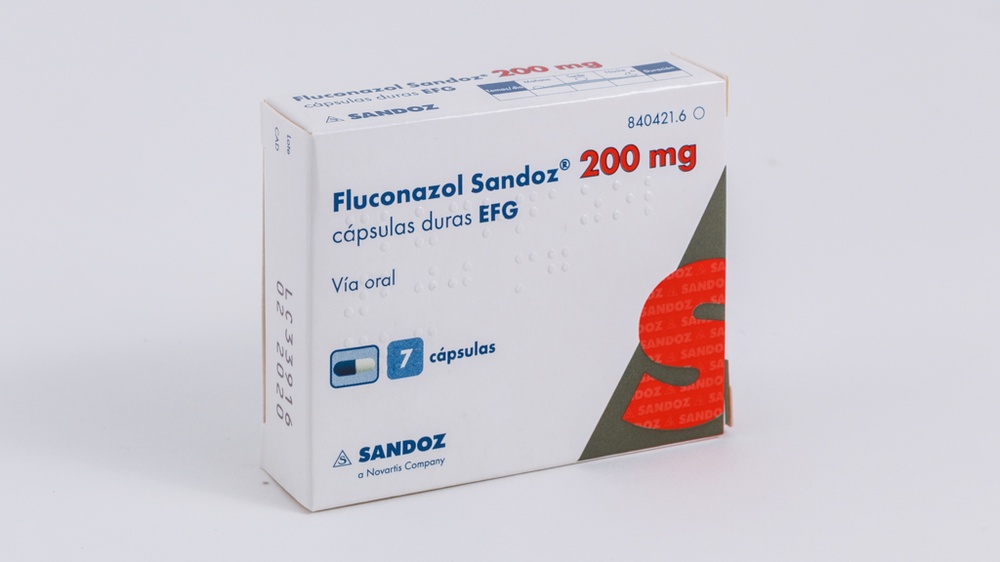
FLUCONAZOL SANDOZ 200 MG CÁPSULAS DURAS EFG



Cómo usar FLUCONAZOL SANDOZ 200 MG CÁPSULAS DURAS EFG
Traducción generada por IA
Este contenido ha sido traducido automáticamente y se ofrece solo con fines informativos. No sustituye la consulta con un profesional sanitario.
Ver originalContenido del prospecto
Introducción
Prospecto: información para el paciente

Fluconazol Sandoz 50 mg cápsulas durasEFG
Fluconazol Sandoz 100 mg cápsulas durasEFG

Fluconazol Sandoz 150 mg cápsulas durasEFG
Fluconazol Sandoz 200 mg cápsulas durasEFG
Lea todo el prospecto detenidamente antes de empezar a tomar este medicamento, porque contiene información importante para usted.
- Conserve este prospecto, ya que puede tener que volver a leerlo.
- Si tiene alguna duda, consulte a su médico, farmacéutico o enfermero.
- Este medicamento se le ha recetado solamente a usted, y no debe dárselo a otras personas, aunque tengan los mismos síntomas que usted, ya que puede perjudicarles.
- Si experimenta efectos adversos, consulte a su médico, farmacéutico o enfermero, incluso si se trata de efectos adversos que no aparecen en este prospecto. Ver sección 4.
Contenido del prospecto
- Qué es Fluconazol Sandoz y para qué se utiliza
- Qué necesita saber antes de empezar a tomar Fluconazol Sandoz
- Cómo tomar Fluconazol Sandoz
- Posibles efectos adversos
- Conservación de Fluconazol Sandoz
- Contenido del envase e información adicional
1. Qué es Fluconazol Sandoz y para qué se utiliza
Fluconazol es uno de los medicamentos del grupo llamado “antifúngicos”. El principio activo es fluconazol. Fluconazol se utiliza para el tratamiento de infecciones producidas por hongos, y también se puede utilizar para prevenir la aparición de una infección por Candida. La causa más frecuente de las infecciones fúngicas es una levadura llamada Candida.
Adultos
Su médico puede recetarle este medicamento para el tratamiento de los siguientes tipos de infecciones fúngicas:
- meningitis criptocócica: una infección fúngica en el cerebro,
- coccidioidomicosis: una enfermedad del sistema broncopulmonar,
- infecciones producidas por Candidalocalizadas en el torrente sanguíneo, en órganos del cuerpo (p.ej., corazón, pulmones) o en el tracto urinario,
- candidiasis de las mucosas: infección que afecta al recubrimiento de la boca, de la garganta o asociadas a prótesis dentales,
- candidiasis genital: infección de la vagina o del pene,
- infecciones de la piel: (p.ej., pie de atleta, tiña, tiña inguinal, infección de las uñas).
También podrían recetarle Fluconazol Sandoz para:
- evitar la reaparición de la meningitis criptocócica,
- evitar la reaparición de las infecciones en las mucosas por Candida,,
- reducir la aparición repetida de infecciones vaginales por Candida,
- prevenir el contagio de infecciones producidas por Candida(si su sistema inmunológico está débil y no funciona adecuadamente).
Niños y adolescentes (0 a17 años)
Su médico puede recetarle este medicamento para el tratamiento de los siguientes tipos de infecciones fúngicas:
- candidiasis de las mucosas: infección que afecta al recubrimiento de la boca o de la garganta,
- infecciones producidas por Candidalocalizadas en el torrente sanguíneo, en órganos del cuerpo (p.ej., corazón, pulmones) o en el tracto urinario,
- meningitis criptocócica: una infección fúngica en el cerebro.
También puede recetarle Fluconazol Sandoz para:
- prevenir el contagio de infecciones producidas por Candida(si su sistema inmunológico está débil y no funciona adecuadamente),
evitar la reaparición de la meningitis criptocócica.
2. Qué necesita saber antes de empezar a tomar Fluconazol Sandoz
No tome Fluconazol Sandoz:
- si es alérgico a fluconazol, a otros medicamentos para el tratamiento de infecciones fúngicas o a alguno de los demás componentes de este medicamento (incluidos en la sección 6). Los síntomas pueden incluir picor, enrojecimiento de la piel o dificultad para respirar,
- si está tomando astemizol, terfenadina (medicamentos antihistamínicos para el tratamiento de las alergias),
- si está tomando cisaprida (utilizada para el tratamiento de molestias de estómago),
- si está tomando pimozida (utilizada para el tratamiento de enfermedades mentales),
- si está tomando quinidina (utilizada para el tratamiento de las arritmias del corazón),
- si está tomando eritromicina (un antibiótico para el tratamiento de infecciones).
Advertencias y precauciones
Consulte a su médico o farmacéutico antes de empezar a tomar fluconazol si:
- tiene problemas de hígado o de los riñones,
- sufre una enfermedad del corazón, incluido problemas del ritmo del corazón,
- tiene niveles anormales de potasio, calcio o magnesio en la sangre,
- aparecen reacciones graves de la piel (picor, enrojecimiento de la piel o dificultad para respirar),
- si aparecen signos de “insuficiencia adrenal”, en la que las glándulas adrenales no producen una cantidad suficiente de determinadas hormonas, como el cortisol (fatiga crónica o prolongada, debilidad muscular, pérdida de apetito, pérdida de peso, dolor abdominal),
- si alguna vez ha presentado una erupción cutánea grave o descamación de la piel, ampollas y/o llagas en la boca después de tomar fluconazol,
- si la infección por hongos no mejora, puede ser necesario un tratamiento antifúngico alternativo.
Se han notificado reacciones cutáneas graves, incluida la reacción a fármacos con eosinofilia y síntomas sistémicos (DRESS), en relación con el tratamiento con fluconazol. Deje de tomar fluconazol y busque atención médica inmediatamente si nota alguno de los síntomas relacionados con estas reacciones cutáneas graves que se describen en la sección 4.
Otros medicamentos yFluconazol Sandoz
Informe a su médico o farmacéutico si está tomando, ha tomado recientemente o pudiera tener que tomar cualquier otro medicamento. Informe inmediatamentea su médico si está tomando, ha tomado recientemente o pudiera tener que utilizar los siguientes medicamentos que pueden interaccionar con fluconazol como: astemizol, terfenadina (un antihistamínico para el tratamiento de las alergias), cisaprida (utilizado para las molestias de estómago), pimozida (utilizada para el tratamiento de enfermedades mentales), quinidina (utilizada para el tratamiento de arritmias del corazón) o eritromicina (un antibiótico para el tratamiento de infecciones), ya que estos medicamentos no se deben tomar con fluconazol (ver sección: “No tome Fluconazol Sandoz”).
Hay algunos medicamentos que pueden interaccionar con fluconazol.
Asegúrese de que su médico sabe si está tomando alguno de los siguientes medicamentos:
- rifampicina o rifabutina (antibióticos para las infecciones),
- alfentanilo, fentanilo (utilizados como anestésicos),
- amitriptilina, nortriptilina (utilizados como antidepresivos),
- amfotericina B, voriconazol (antifúngicos),
- medicamentos que hacen la sangre menos viscosa, para prevenir la formación de coágulos (warfarina u otros medicamentos similares),
- benzodiacepinas (midazolam, triazolam o medicamentos similares) utilizados para ayudar a dormir o para la ansiedad,
- carbamazepina, fenitoína (utilizados para el tratamiento de convulsiones),
- nifedipino, isradipino, amlodipino, verapamilo, felodipino y losartán (para la hipertensión-tensión arterial alta),
- olaparib (utilizado para el tratamiento de el cáncer de ovario),
- ciclosporina, everolimus, sirolimus o tacrolimus (para prevenir el rechazo a trasplantes),
- ciclofosfamida, alcaloides de la vinca (vincristina, vinblastina o medicamentos similares) utilizados para el tratamiento del cáncer,
- halofantrina (utilizado para el tratamiento de la malaria),
- estatinas (atorvastatina, simvastatina y fluvastatina o medicamentos similares) utilizados para reducir los niveles de colesterol altos,
- metadona (utilizado para el dolor),
- celecoxib, flurbiprofeno, naproxeno, ibuprofeno, lornoxicam, meloxicam, diclofenaco (antiinflamatorios no esteroideos-AINEs),
- anticonceptivos orales,
- prednisona (esteroide),
- zidovudina, también conocida como AZT; saquinavir (utilizados en pacientes infectados por el VIH),
- medicamentos para la diabetes, tales como clorpropamida, glibenclamida, glipizida o tolbutamida,
- teofilina (utilizado para controlar el asma),
- tofacitinib (utilizado para el tratamiento de la artritis reumatoide),
- tolvaptan (utilizado para el tratamiento de la hiponatremina (niveles bajos de sodio en sangre) o para retardar el deterioro de la función renal).
- vitamina A (complemento nutricional),
- ivacaftor (utilizado para el tratamiento de la fibrosis quística),
- amiodarona (utilizada para el tratamiento de los latidos irregulares “arritmias”),
- hidroclorotiazida (diurético),
- ibrutinib (utilizado para tratar cáncer en la sangre).
Informe a su médico o farmacéutico si está tomando, ha tomado recientemente o podría tener que tomar cualquier otro medicamento.
Toma deFluconazol Sandozcon alimentos y bebidas
Puede tomar el medicamento acompañado o no de alimentos.
Embarazo, lactancia y fertilidad
Si está embarazada o en periodo de lactancia, cree que podría estar embarazada o tiene intención de quedarse embarazada, consulte a su médico o farmacéutico antes de utilizar este medicamento.
Si está planeando quedarse embarazada, se recomienda que espere una semana después de una dosis única de fluconazol antes de quedarse embarazada.
Para ciclos de tratamiento con fluconazol más largos, consulte a su médico sobre la necesidad de utilizar métodos anticonceptivos adecuados durante el tratamiento, cuyo uso se debe mantener durante una semana después de la última dosis.
No debe tomar fluconazol si está embarazada, cree que podría estar embarazada o tiene intención de quedarse embarazada o de dar el pecho, a menos que su médico se lo haya indicado
Puede continuar la lactancia después de tomar una dosis única de hasta 150 mg de fluconazol. No debe continuar la lactancia si está tomando dosis repetidas de fluconazol.
Fluconazol tomado durante el primer o el segundo trimestre del embarazo puede aumentar el riesgo de aborto espontáneo. Fluconazol durante el primer trimestre puede aumentar el riesgo de que un bebé nazca con anomalías congénitas que afecten al corazón, a los huesos y/o músculos.
Se han notificado casos de bebés nacidos con anomalías congénitas que afectan al cráneo, los oídos y los huesos del muslo y del codo en mujeres tratadas durante tres meses o más con dosis altas (400-800 mg diarios) de fluconazol por coccidioidomicosis. La relación entre el fluconazol y estos casos no está clara.
Conducción y uso de máquinas
Cuando vaya a conducir o usar máquinas debe tener en cuenta que ocasionalmente pueden producirse mareos o convulsiones.
Fluconazol Sandozcontiene lactosa y sodio
Este medicamento contiene lactosa. Si su médico le ha indicado que padece una intolerancia a ciertos azúcares, consulte con él antes de tomar este medicamento.
Este medicamento contiene menos de 23 mg de sodio (1 mmol) por cápsula dura; esto es, esencialmente “exento de sodio”.
3. Cómo tomar Fluconazol Sandoz
Siga exactamente las instrucciones de administración de este medicamento indicadas por su médico o farmacéutico. En caso de duda, consulte de nuevo a su médico o farmacéutico.
Las cápsulas se deben tragar enteras con ayuda de un vaso de agua. Es mejor que tome sus medicamentos siempre a la misma hora del día.
A continuación se indica la dosis recomendada de este medicamento para los distintos tipos de infecciones:
Adultos
Afección | Dosis |
Para el tratamiento de la meningitis criptocócica | 400 mg el primer día y posteriormente 200 mg a 400 mg una vez al día durante 6 a 8 semanas o más tiempo si es necesario. En ocasiones se incrementa la dosis hasta 800 mg |
Para evitar la reaparición de meningitis criptocócica | 200 mg una vez al día hasta que le indique su médico |
Para el tratamiento de coccidioidomicosis | 200 mg a 400 mg una vez al día desde 11 meses hasta 24 meses o más tiempo si fuese necesario. En ocasiones se incrementa la dosis hasta 800 mg |
Para el tratamiento de infecciones fúngicas internas producidas por Candida | 800 mg el primer día y posteriormente 400 mg una vez al día hasta que le indique su médico |
Para el tratamiento de infecciones en las mucosas que afecten al recubrimiento de la boca, garganta o asociadas a prótesis dentales | 200 mg a 400 mg el primer día y, después, 100 mg a 200 mg una vez al día hasta que le indique su médico |
Para el tratamiento de las candidiasis de las mucosas – la dosis depende de dónde se localiza la infección | 50 mg a 400 mg una vez al día durante 7 a 30 días hasta que le indique su médico |
Para evitar la reaparición de las infecciones en las mucosas que afecten al recubrimiento de la boca y de la garganta | 100 mg a 200 mg una vez al día, o 200 mg 3 veces a la semana, mientras continúe el riesgo de desarrollar una infección |
Para el tratamiento de la candidiasis genital | 150 mg en una única dosis |
Para reducir las apariciones repetidas de la candidiasis vaginal | 150 mg cada tres días hasta un total de 3 dosis (día 1, 4 y 7) y luego una vez a la semana mientras continúe el riesgo de desarrollar una infección |
Para el tratamiento de infecciones fúngicas de la piel o de las uñas | Dependiendo del lugar de la infección 50 mg una vez al día, 150 mg una vez a la semana, 300 a 400 mg una vez a la semana durante 1 a 4 semanas (para el pie de atleta pueden ser necesarias hasta 6 semanas, para infecciones de las uñas continuar el tratamiento hasta que crezca una uña sana) |
Para prevenir el contagio de una infección producida por Candida(si su sistema inmunológico está débil y no funciona adecuadamente) | 200 mg a 400 mg una vez al día mientras continúe el riesgo de desarrollar una infección |
Adolescentes de12 a17 años de edad
Siga la dosis indicada por su médico (la posología de adultos o la de niños).
Niños hasta 11 años de edad
La dosis máxima diaria para niños es 400 mg al día.
La dosis se basará en el peso del niño en kilogramos.
Afección | Dosis diaria |
Candidiasis de las mucosas e infecciones de la garganta producidas por Candida– la dosis y la duración del tratamiento depende de la gravedad de la infección y de dónde está localizada. | 3 mg por kg de peso corporal una vez al día (el primer día se podría dar 6 mg por kg de peso corporal) |
Meningitis criptocócica o infecciones fúngicas internas producidas por Candida | 6 mg a 12 mg por kg de peso corporal una vez al día |
Para evitar la reaparición de la meningitis criptocócica | 6 mg por kg de peso corporal una vez al día |
Para prevenir que el niño se contagie de una infección causada por Candida(si su sistema inmunológico no funciona adecuadamente) | 3 mg a 12 mg por kg de peso corporal una vez al día |
Niños de0 a4 semanas de edad
Niños de3 a4 semanas de edad:
- la misma dosis que la descrita en la tabla, pero administrada una vez cada 2 días. La dosis máxima es 12 mg por kg de peso corporal cada 48 horas.
Niños menores de 2 semanas de edad:
- la misma dosis que la descrita en la tabla, pero administrada una vez cada 3 días. La dosis máxima es 12 mg por kg de peso cada 72 horas.
Edad avanzada
La dosis habitual de adultos, a menos que padezca problemas en los riñones.
Pacientes con problemas en los riñones
Su médico podría cambiarle la dosis, dependiendo de cómo funcionen sus riñones.
Si toma más Fluconazol Sandozdel que debe
Tomar demasiadas cápsulas a la vez puede hacerle sentirse mal. Contacte inmediatamente con su médico o con el hospital más cercano.
Si ha tomado más fluconazol del que debe, consulte inmediatamente a su médico, a su farmacéutico o llame al Servicio de Información Toxicológica, teléfono: 91 562 04 20, indicando el medicamento y la cantidad utilizada.
Los síntomas de una posible sobredosis podrían incluir escuchar, ver, sentir y pensar cosas que no son reales (alucinaciones y comportamiento paranoide). Puede ser adecuado iniciar un tratamiento sintomático (con medidas de soporte y lavado de estómago si es necesario).
Si olvidó tomar Fluconazol Sandoz
No tome una dosis doble para compensar las dosis olvidadas. Si ha olvidado tomar una dosis, tómela tan pronto como se acuerde. Si queda poco para la próxima dosis, no tome la dosis que ha olvidado.
Si tiene cualquier otra duda sobre el uso de este medicamento, pregunte a su médico o farmacéutico.
4. Posibles efectos adversos
Al igual que todos los medicamentos, este medicamento puede producir efectos adversos, aunque no todas las personas los sufran.
Algunas personas desarrollan reacciones alérgicasaunque las reacciones alérgicas graves son raras. Si aparecen algunos de los siguientes efectos adversos, hable con su médico o farmacéutico. Esto incluye cualquier efecto adverso no mencionado en este prospecto. Si padece cualquiera de los siguientes síntomas, informe inmediatamente a su médico.
- pitidos repentinos al respirar, dificultad para respirar u opresión en el pecho,
- hinchazón de los párpados, la cara o los labios,
- picor en todo el cuerpo, enrojecimiento de la piel o puntos rojos con picor,
- erupción cutánea,
- reacciones graves de la piel, tales como erupción que causa ampollas (esto puede afectar a la boca y a la lengua).
Fluconazol Sandoz puede afectar a su hígado. Los signos que indican problemas del hígado incluyen:
- cansancio,
- pérdida de apetito,
- vómitos,
- coloración amarillenta de la piel o del blanco de los ojos (ictericia).
Si le ocurre cualquiera de estos síntomas, deje de tomar Fluconazol Sandoz y comuníqueselo inmediatamente a su médico.
Otros efectos adversos:
Adicionalmente, si considera que alguno de los efectos adversos que sufre es grave o si aprecia cualquier efecto adverso no mencionado en este prospecto, informe a su médico o farmacéutico.
Efectos adversos frecuentes (pueden afectar hasta 1 de cada 10 pacientes):
- dolor de cabeza,
- molestias de estómago, diarrea, malestar, vómitos,
- resultados elevados de los análisis de sangre indicativos de la función del hígado,
- erupción.
Efectos adversos poco frecuentes (pueden afectar hasta 1 de cada 100 pacientes):
- reducción de las células rojas de la sangre, que puede hacer que su piel sea pálida y causar debilidad o dificultad al respirar,
- disminución del apetito,
- incapacidad de dormir, sensación de adormecimiento,
- convulsiones, mareos, sensación de estar dando vueltas, hormigueo, pinchazos o entumecimiento, cambios en la sensación del gusto,
- estreñimiento, digestión pesada, gases, boca seca,
- dolor muscular,
- daño en el hígado y coloración amarillenta de la piel y de los ojos (ictericia),
- ronchas, ampollas (habones), picor, aumento de la sudoración,
- cansancio, sensación general de malestar, fiebre.
Efectos adversos raros (pueden afectar hasta 1 de cada 1.000 pacientes) :
- glóbulos blancos en la sangre que ayudan a defendernos de las infecciones y células de la sangre que ayudan a parar las hemorragias, más bajos de lo normal,
- coloración rojiza o púrpura de la piel, que se puede deber a un número bajo de plaquetas, otros cambios de las células de la sangre,
- cambios en los análisis de sangre (niveles altos de colesterol, grasas),
- niveles bajos de potasio en la sangre,
- temblores,
- electrocardiograma alterado (ECG), cambios en la frecuencia o el ritmo del corazón,
- fallo de la función del hígado,
- reacciones alérgicas (algunas veces grave), incluyendo erupción extensa con ampollas y descamación de la piel, reacciones alérgicas graves, hinchazón de los labios o de la cara,
- caída del pelo.
Frecuencia no conocida (no puede estimarse a partir de los datos disponibles):
- reacción de hipersensibilidad con erupción cutánea, fiebre, glándulas inflamadas, incremento de un tipo de glóbulos blancos (eosinofilia) e inflamación de órganos internos (hígado, pulmones, corazón, riñones e intestino grueso) (reacción al fármaco o erupción con eosinofilia y síntomas sistémicos [DRESS]).
Deje de tomar fluconazol y busque atención médica inmediatamente si nota alguno de los siguientes síntomas:
- erupción generalizada, temperatura corporal alta y ganglios linfáticos agrandados (síndrome de DRESS o síndrome de hipersensibilidad a fármacos).
Comunicación de efectos adversos
Si experimenta cualquier tipo de efecto adverso, consulte a su médico o farmacéutico, incluso si se trata de posibles efectos adversos que no aparecen en este prospecto. También puede comunicarlos directamente a través del Sistema Español de Farmacovigilancia de Medicamentos de Uso Humano: https://www.notificaram.es. Mediante la comunicación de efectos adversos usted puede contribuir a proporcionar más información sobre la seguridad de este medicamento.
5. Conservación de Fluconazol Sandoz
Mantener este medicamento fuera de la vista y del alcance de los niños.
No utilice este medicamento después de la fecha de caducidad que aparece en el envase después de CAD. La fecha de caducidad es el último día del mes que se indica.
Conservar en el embalaje original.
No requiere condiciones especiales de conservación.
Los medicamentos no se deben tirar por los desagües ni a la basura. Deposite los envases y los medicamentos que no necesita en el Punto SIGRE de la farmacia. En caso de duda pregunte a su farmacéutico cómo deshacerse de los envases y de los medicamentos que no necesita. De esta forma, ayudará a proteger el medio ambiente.
6. Contenido del envase e información adicional
Composición deFluconazol Sandoz
- El principio activo es fluconazol. Cada cápsula dura contiene 50, 100, 150 o 200 mg de fluconazol.
- Los demás componentes (excipientes) son:
Contenido de las cápsulas: lactosa monohidrato (lactosa), almidón de maíz, dióxido de sílice coloidal, estearato de magnesio y laurilsulfato de sodio.
Composición de las cápsulas:
Fluconazol Sandoz 50 mg cápsulas duras: amarillo de quinoleína (E104), dióxido de titanio (E171), agua, gelatina.
Fluconazol Sandoz 100 mg cápsulas duras: dióxido de titanio (E171), agua, gelatina.
Fluconazol Sandoz 150 mg cápsulas duras: óxido de hierro amarillo (E172), dióxido de titanio (E171), agua, gelatina.
Fluconazol Sandoz 200 mg cápsulas duras: Indigotina (E132), dióxido de titanio (E171), agua, gelatina.
Aspecto del producto y contenido del envase
Fluconazol Sandoz 50 mg cápsulas duras: cápsula dura de gelatina con tapa y cuerpo de color amarillo opaco, en envases conteniendo 7 cápsulas o 500 (EC) cápsulas.
Fluconazol Sandoz 100 mg cápsulas duras: cápsula dura de gelatina con tapa y cuerpo de color blanco opaco, en envases conteniendo 7 cápsulas o 100 (EC) cápsulas.
Fluconazol Sandoz 150 mg cápsulas duras: cápsula dura de gelatina con tapa y cuerpo de color amarillo crema opaco, en envases conteniendo 1 cápsulas, 4 cápsulas o 100 (EC) cápsulas.
Fluconazol Sandoz 200 mg cápsulas duras: cápsula dura de gelatina con tapa de color azul opaco y cuerpo de color blanco opaco, en envases conteniendo 7 cápsulas o 100 (EC) cápsulas.
Puede que solamente estén comercializados algunos tamaños de envases.
Titular de la autorización de comercialización y responsable de la fabricación
Titular de la autorización de comercialización
Sandoz Farmacéutica, S.A.
Centro Empresarial Parque Norte
Edificio Roble
C/ Serrano Galvache, 56
28033 Madrid
España
Responsable de la fabricación
LICONSA, S.A.
Avda. Miralcampo, Nº 7
Polígono Industrial Miralcampo
19200 Azuqueca de Henares (Guadalajara)
España
Fecha de la última revisión de esteprospecto: marzo 2024
La información detallada de este medicamento está disponible en la página web de la Agencia Española de Medicamentos y Productos Sanitarios (AEMPS) http://www.aemps.gob.es/
- País de registro
- Forma farmacéuticaCAPSULA, 200 mg fluconazol
- Código ATCJ02AC01
- Precio medio en farmacia30 EUR
- Principio activo
- Requiere recetaSí
- Fabricante
- Esta información es de carácter general y no sustituye la consulta con un profesional sanitario.
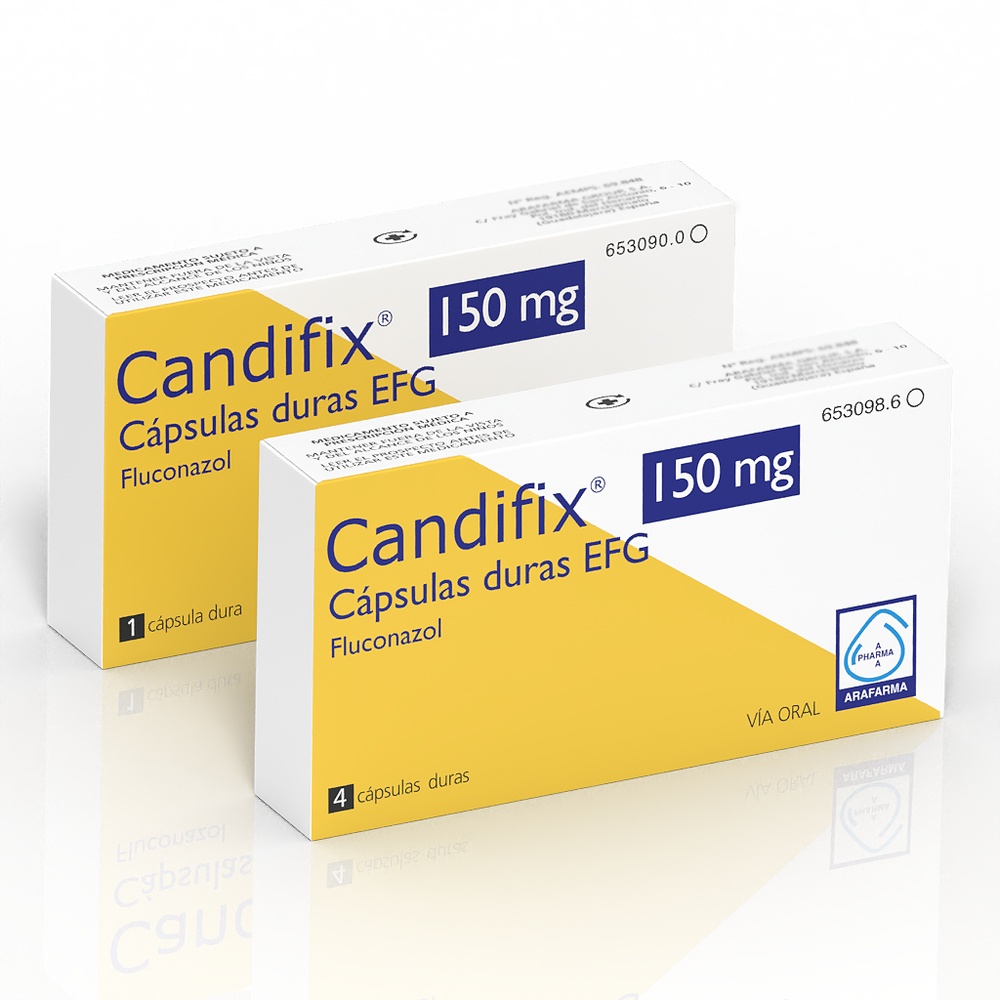
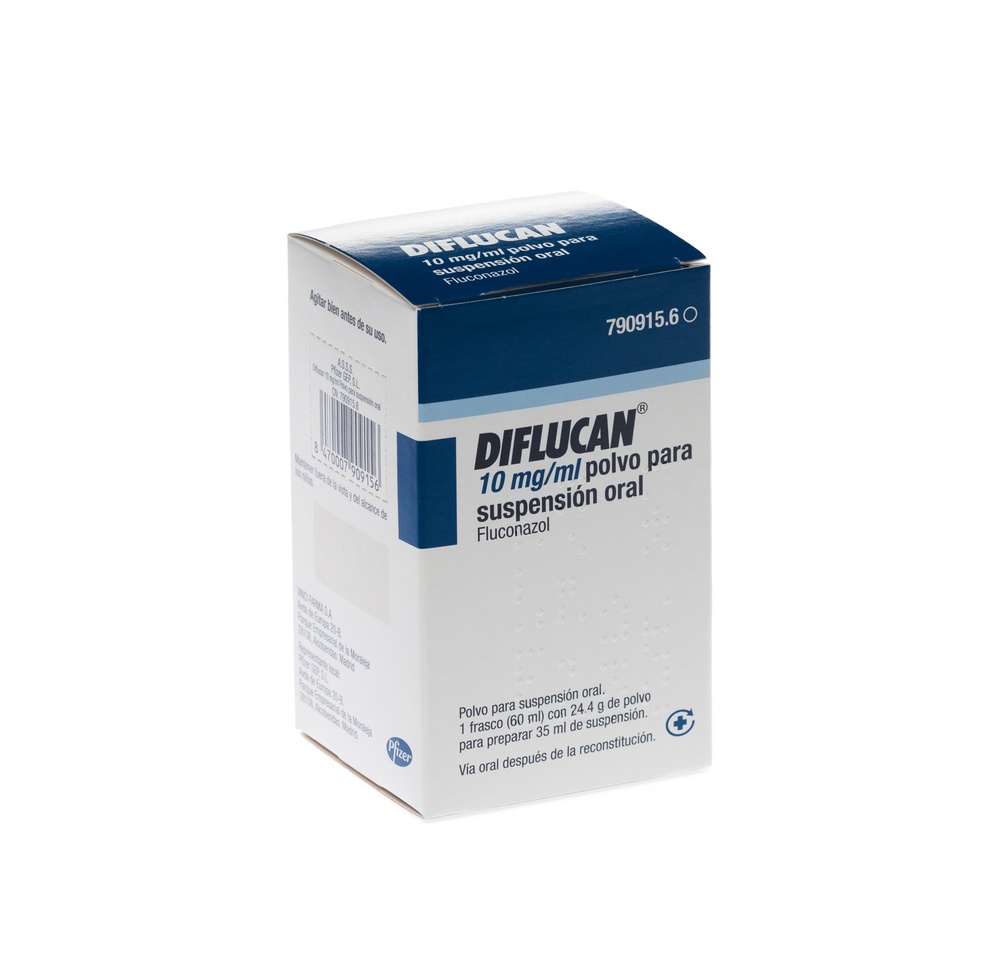
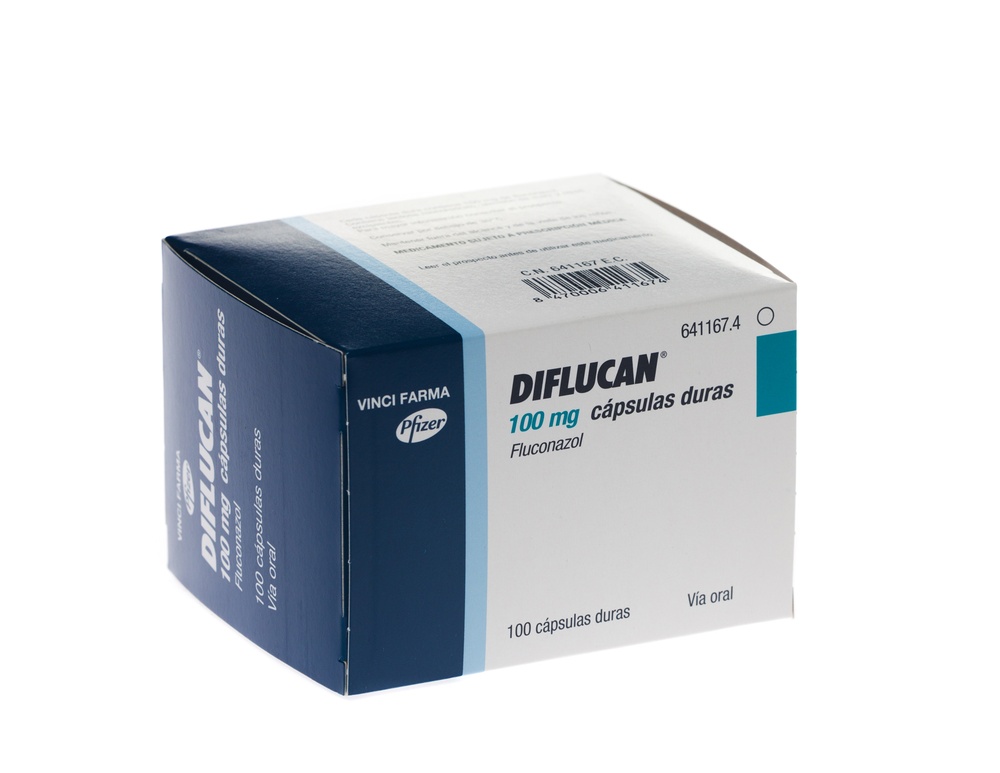
- Alternativas a FLUCONAZOL SANDOZ 200 MG CÁPSULAS DURAS EFGForma farmacéutica: CAPSULA, 150 mg fluconazolPrincipio activo: FluconazolFabricante: Arafarma Group S.A.Requiere recetaForma farmacéutica: SOLUCIÓN/SUSPENSIÓN ORAL, 10 mg/mlPrincipio activo: FluconazolFabricante: Vinci Farma, S.A.Requiere recetaForma farmacéutica: CAPSULA, 100 mgPrincipio activo: FluconazolFabricante: Vinci Farma, S.A.Requiere receta
Médicos online para FLUCONAZOL SANDOZ 200 MG CÁPSULAS DURAS EFG
Comenta la dosis, los posibles efectos secundarios, interacciones, contraindicaciones o la revisión de receta de FLUCONAZOL SANDOZ 200 MG CÁPSULAS DURAS EFG, sujeto a valoración médica y a la normativa local.











Preguntas frecuentes
