



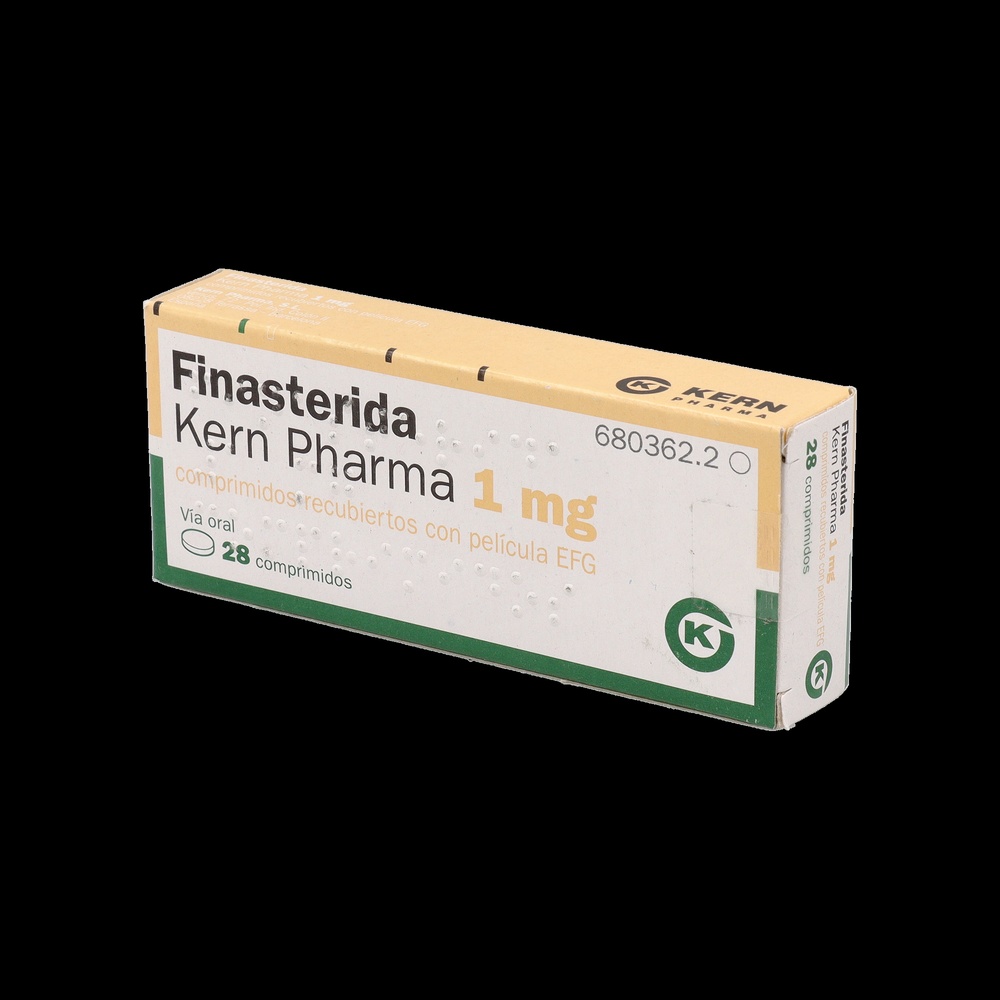
FINASTERIDA 1 mg Comprimidos Recubiertos Con Película

Revisión de receta online
Un médico revisará tu caso y determinará si la prescripción es médicamente apropiada.

Habla con un médico sobre este medicamento
Comenta tus síntomas y las opciones de tratamiento en una consulta online.



Cómo usar FINASTERIDA IFC 1 MG COMPRIMIDOS RECUBIERTOS CON PELICULA EFG
Contenido del prospecto
- Introducción
- Qué es Finasterida IFC 1 mg comprimidos y para qué se utiliza
- Qué necesita saber antes de empezar a tomar Finasterida IFC 1 mg comprimidos
- Cómo tomar Finasterida IFC 1 mg comprimidos
- Posibles efectos adversos
- Conservación de Finasterida IFC 1 mg comprimidos
- Contenido del envase e información adicional
Introducción
Prospecto: información para el usuario
Finasterida IFC1 mg comprimidos recubiertos con película EFG
Finasterida
Lea todo el prospecto detenidamente antes de empezar a tomar este medicamento, porque contiene información importante para usted.
- Conserve este prospecto, ya que puede tener que volver a leerlo.
- Si tiene alguna duda, consulte a su médico o farmacéutico.
- Este medicamento se le ha recetado solamente a usted,y no debe dárselo a otras personas, aunque tengan los mismos síntomas que usted, ya que puede perjudicarles.
- Si experimenta efectos adversos, consulte a su médico o farmacéutico, incluso si se trata de efectos adversos que no aparecen en este prospecto. Ver sección 4.
Contenido del prospecto:
- Qué es Finasterida IFC 1 mg comprimidos y para qué se utiliza
- Qué necesita saber antes de tomar Finasterida IFC 1 mg comprimidos
- Cómo tomar Finasterida IFC 1 mg comprimidos
- Posibles efectos adversos
- Conservación de Finasterida IFC 1 mg comprimidos
- Contenido del envase e información adicional
1. Qué es Finasterida IFC 1 mg comprimidos y para qué se utiliza
FINASTERIDA es para uso exclusivo en hombres y no debe ser tomado por mujeres o niños.
Finasterida IFC contiene un medicamento llamado finasterida. Finasterida IFC se utiliza para el tratamiento de las primeras fases de la pérdida de pelo de tipo masculino (también llamada alopecia androgenética) en hombres de 18-41 años. Si después de leer este prospecto, tiene alguna duda sobre la pérdida de pelo de tipo masculino, consulte a su médico.
La pérdida de pelo de tipo masculino es un trastorno común que se cree que es debido a la combinación de factores genéticos y a una hormona específica, llamada dihidrotestosterona (DHT). DHT contribuye a la reducción de la fase de crecimiento del pelo y al adelgazamiento del mismo.
Finasterida IFC disminuye los niveles de DHT en el cuero cabelludo mediante el bloqueo de una enzima (5-alfa reductasa tipo II) que convierte la testosterona en DHT. Solamente los hombres con pérdida de pelo de leve a moderada, pueden esperar beneficios del uso de Finasterida IFC pero no los que tengan pérdida completa de pelo o recesión bitemporal. En la mayoría de los hombres tratados con Finasterida IFC durante 5 años, la evolución de la pérdida de pelo fue lenta y al menos la mitad de ellos tuvieron algún tipo de mejoría en el crecimiento del pelo.

¿No estás seguro de si este medicamento es adecuado para ti?
Comenta tus síntomas y tratamiento con un médico online.
2. Qué necesita saber antes de empezar a tomar Finasterida IFC 1 mg comprimidos
No tome Finasterida IFC
- si es alérgico a finasterida o a cualquiera de los demás componentes de este medicamento (incluidos en la sección 6).
- si es un niño o adolescente (< 18 años).
- si es una mujer (ver también “embarazo y lactancia”). Se ha observado en ensayos clínicos que Finasterida IFC 1 mg comprimidos recubiertos con película no es eficaz para el tratamiento de la pérdida de pelo (alopecia androgenética) en mujeres.
Los hombres tratados con otros medicamentos que contengan finasterida, o cualquier otro inhibidor de la 5α-reductasa para la hiperplasia benigna de próstata o para cualquier otra enfermedad no deben tomar Finasterida.
Advertencias y precauciones
Las mujeres embarazadas o en edad de concebir no deben manipular los comprimidos rotos o partidos. Hay una posibilidad de que finasterida pueda absorberse a través de la piel, lo que puede afectar al desarrollo de los genitales externos de los embriones varones. Si las mujeres embarazadas deben manipular finasterida (el principio activo), tienen que informar a su médico.
Deberá comunicar inmediatamente a su médico cualquier cambio observado en el tejido de la mama, como bultos, dolor, agrandamiento de la mama o secreción del pezón, ya que pueden ser signos de una enfermedad grave como cáncer de mama.
Finasterida puede afectar a la fertilidad en los varones. Los pacientes varones que estén planeando tener un hijo deben considerar la interrupción del tratamiento.
Finasterida comprimidos puede afectar al resultado de un análisis en sangre llamado APE. Si le van a realizar un análisis de sangre para comprobar su próstata debe informar a su médico que está tomando finasterida.
La determinación del antígeno específico de próstata (APE) en suero, debe realizarse antes del inicio del tratamiento con finasterida y durante el mismo.
No se ha estudiado el efecto de la insuficiencia hepática sobre el metabolismo de la finasterida.
Alteraciones del estado de ánimo y depresión
Se han comunicado alteraciones del estado de ánimo, como estado de ánimo deprimido, depresión y, con menor frecuencia, ideas de suicidio en pacientes tratados con Finasterida IFC 1 mg comprimidos. Si experimenta cualquiera de estos síntomas, deje de tomar Finasterida IFC 1 mg comprimidos y consulte con su médico lo antes posible.
Uso de Finasterida IFC con otros medicamentos
Finasterida IFC puede tomarse normalmente con otros medicamentos.
No obstante, informe a su médico o farmacéutico si está utilizando o ha utilizado recientemente otros medicamentos, incluso los adquiridos sin receta.
No hay datos disponibles sobre el uso de Finasterida IFC junto con minoxidil por vía tópica (aplicación en piel) en varones con patrón masculino de pérdida de pelo.
Toma de Finasterida IFC con alimentos y bebidas
Finasterida IFC puede tomarse con o sin alimentos.
Embarazo y lactancia
Las mujeres no deben tomar Finasterida IFC. Las mujeres que estén o puedan estar embarazadas no deben manipular comprimidos de finasterida rotos o aplastados. Si una mujer embarazada de un feto masculino absorbe finasterida a través de la piel o tras haberla ingerido por vía oral, su hijo podría nacer con anomalías en los órganos sexuales. Los comprimidos están recubiertos para evitar el contacto con finasterida, siempre y cuando los comprimidos no estén rotos ni aplastados.
Cuando la pareja del paciente esté o puede quedarse embarazada, debe evitarle su exposición al semen (por ejemplo, mediante el uso de un preservativo) o interrumpir el tratamiento con finasterida.Consulte a su médico o farmacéutico antes de utilizar cualquier medicamento.
Conducción y uso de máquinas
No hay evidencias que sugieran que finasterida pueda afectar a la capacidad para conducir o manejar máquinas.
Finasterida IFC contiene lactosa
Si su médico le ha indicado que padece una intolerancia a ciertos azúcares, consulte con él antes de tomar este medicamento.
3. Cómo tomar Finasterida IFC 1 mg comprimidos
Siga exactamente las instrucciones de administración de Finasterida IFC indicadas por su médico. Consulte a su médico o farmacéutico si tiene dudas.
Toma de comprimidos:los comprimidos deben tragarse enteros con un poco de agua. No se deben romper o partir. Se pueden tomar con alimentos o con el estómago vacío.
A menos que su médico le indique lo contrario, la dosis habitual para todos los pacientes es de 1 comprimido al día.
Siga las instrucciones que le indique su médico. No cambie la dosis ni interrumpa el tratamiento sin consultar antes con su médico.
Finasterida IFC no actúa ni más rápido ni mejor, si lo toma más de una vez al día. Para conseguir aumentar la cantidad de pelo o disminuir la pérdida del mismo, debe tomar este medicamento todos los días durante 3-6 meses o más. Su médico y usted pueden valorar después si el tratamiento con Finasterida IFC ha sido eficaz. Durante el tratamiento con Finasterida IFC no es necesario cambiar los cuidados diarios del pelo.
Si considera el efecto de Finasterida IFC es demasiado débil o fuerte, informe a su médico o farmacéutico.
Si toma más Finasterida IFC del que debiera
Si toma accidentalmente demasiados comprimidos, informe a su médico o diríjase a un hospital para recibir consejo.
En caso de sobredosis o ingestión accidental, consulte inmediatamente a su médico o farmacéutico o llame al Servicio de Información Toxicológica, teléfono 91 562 04 20, indicando el medicamento y la cantidad administrada.
Si olvidó tomar Finasterida IFC
No tome una dosis doble para compensar las dosis olvidadas. Sólo tome el siguiente comprimido a la hora habitual.
Si interrumpe el tratamiento con Finasterida IFC
Con el fin de mantener la eficacia del tratamiento, se recomienda utilizar este medicamento de forma continua. Cualquier mejoría obtenida con respecto al aumento de la cantidad de pelo durante el tratamiento puede desaparecer a los 9-12 meses, si deja de tomar Finasterida IFC.
Si tiene cualquier duda sobre el uso de este producto, pregunte a su médico o farmacéutico.

¿Has empezado a tomar el medicamento y tienes preguntas?
Comenta tus síntomas y tratamiento con un médico online.
4. Posibles efectos adversos
Al igual que todos los medicamentos, este medicamento puede producir efectos adversos, aunque no todas las personas los sufran.
Los efectos adversos de Finasterida IFC son en general de carácter leve y temporales.
Los efectos adversos durante el tratamiento continuo son habitualmente temporales y desaparecen cuando se interrumpe el tratamiento.
Poco frecuentes (puede afectar hasta 1 de cada 100 personas):
- disminución del deseo sexual
- dificultad para tener una erección
- problemas en la eyaculación como una disminución de la cantidad de semen.
- depresión
De frecuencia no conocida (no puede estimarse a partir de los datos disponibles):
- reacciones alérgicas como erupción, picor, hinchazón de la piel (urticaria), de los labios y de la cara.
- aumento de las mamas o dolor.
- dolor en los testículos.
- estado de ánimo deprimido.
- latido rápido del corazón.
- dificultad persistente para tener una erección después de la interrupción del tratamiento.
- se ha notificado infertilidad en hombres que han tomado finasterida durante un largo periodo de tiempo y que tienen otros factores de riesgo que pueden afectar a la infertilidad. Tras la interrupción del tratamiento se ha notificado la normalización o mejoría en cuanto a la calidad del semen. No se han realizado estudios clínicos a largo plazo en hombres sobre el efecto de finasterida en la fertilidad.
- incremento de las enzimas hepáticas.
- cáncer de mama en varones (ver también sección 2. Advertencias y precauciones).
- disfunción sexual persistente (disminución de la líbido, disfunción eréctil y trastornos en la eyaculación) tras la interrupción del tratamiento con finasterida.
- ansiedad.
Deje de tomar Finasterida IFC e informe inmediatamente a su médico si aparece cualquiera de los siguientes síntomas:
- hinchazón de la cara, de la lengua o de la garganta.
- dificultar al tragar.
- hinchazón de la piel (urticaria).
- dificultar al respirar.
Si considera que alguno de los efectos adversos que sufre es grave o si aprecia cualquier efecto adverso no mencionado en este prospecto, informe a su médico o farmacéutico.
Comunicación de efectos adversos:
Si experimenta cualquier tipo de efecto adverso, consulte a su médico o farmacéutico incluso si se tratan de posibles efectos adversos que no aparecen en este prospecto. También puede comunicarlos directamente a través del Sistema Español de Farmacovigilancia de Medicamentos de Uso Humano: https://www.notificaram.es . Mediante la comunicación de efectos adversos usted puede contribuir a proporcionar más información sobre la seguridad de este medicamento.
5. Conservación de Finasterida IFC 1 mg comprimidos
Mantener fuera de la vista y del alcance de los niños.
No utilice Finasterida IFC después de la fecha de caducidad que aparece en el estuche, después de “CAD”. La fecha de caducidad es el último día del mes que se indica.
Este medicamento no requiere condiciones especiales de conservación.
Los medicamentos no se deben tirar por los desagües ni a la basura. Deposite los envases y los medicamentos que no necesita en el punto SIGRE de la farmacia. En caso de duda pregunte a su farmacéutico cómo deshacerse de los envases y de los medicamentos que no necesita. De esta forma ayudará a proteger el medio ambiente.
6. Contenido del envase e información adicional
Composición deFinasterida IFC1 mg comprimidos
- El principio activo es finasterida. Cada comprimido contiene 1 mg de finasterida.
- Los demás componentes son:
Núcleo del comprimido: lactosa monohidrato, celulosa microcristalina, almidón de maíz pregelatinizado, lauril macrogolglicéridos, almidón glicolato sódico – Tipo A (de patata), estearato de magnesio.
Recubrimiento del comprimido:hipromelosa, dióxido de titanio (E171), óxido de hierro amarillo (E172), óxido de hierro rojo (E172) y macrogol 6000.
Aspecto del producto y contenido del envase
Finasterida IFC 1 mg comprimidos recubiertos con película son comprimidos redondos biconvexos, de color marrón rojizo y llevan la marca “F1” en una de las caras.
Cada envase contiene 28, 56, 84 y 98 comprimidos. Puede que solamente estén comercializados algunos tamaños de envases.
Titular de la autorización de comercialización
Industrial Farmacéutica Cantabria, S.A.
Ctra. Cazoña-Adarzo, s/n
39011 Santander – (España)
Responsable de la fabricación
Actavis Group PTC ehf
Reykjavikurvegi 76-78
IS-220 Hafnarfjördur
Islandia
o
Zentiva k.s.
U Kabelovny 130
102 37 Praha 10
República Checa
Este medicamento está autorizado en los Estados Miembros del Espacio Económico Europeo con los nombres siguientes:
España Finasterida IFC 1 mg comprimidos recubiertos con película EFG
Italia Carefinast 1 mg compresse rivestite on film
Fecha de la última revisión de este prospecto: Agosto de 2018
La información detallada y actualizada de este medicamento está disponible en la página Web de la Agencia Española de Medicamentos y Productos Sanitarios (AEMPS) http://www.aemps.gob.es/
- País de registro
- Forma farmacéuticaCOMPRIMIDO, 1 MG
- Código ATCD11AX10
- Principio activo
- Requiere recetaSí
- Fabricante
- ComposiciónLACTOSA MONOHIDRATO (95.55 mg mg), CARBOXIMETILALMIDON SODICO (7.50 mg mg)
- Esta información es de carácter general y no sustituye la consulta con un profesional sanitario.
- Alternativas a FINASTERIDA IFC 1 MG COMPRIMIDOS RECUBIERTOS CON PELICULA EFGForma farmacéutica: COMPRIMIDO, 1 mgPrincipio activo: FinasteridaFabricante: Industrial Farmaceutica Cantabria S.A.Requiere recetaForma farmacéutica: LIQUIDO USO TOPICO, 2,275 mg/mlPrincipio activo: FinasteridaFabricante: Industrial Farmaceutica Cantabria S.A.Requiere recetaForma farmacéutica: COMPRIMIDO, 1 mg / comprimidoPrincipio activo: FinasteridaFabricante: Aurovitas Spain, S.A.U.Requiere receta
Médicos online para FINASTERIDA IFC 1 MG COMPRIMIDOS RECUBIERTOS CON PELICULA EFG
Comenta la dosis, los posibles efectos secundarios, interacciones, contraindicaciones o la revisión de receta de FINASTERIDA IFC 1 MG COMPRIMIDOS RECUBIERTOS CON PELICULA EFG, sujeto a valoración médica y a la normativa local.



Obtén una receta de FINASTERIDA IFC 1 MG COMPRIMIDOS RECUBIERTOS CON PELICULA EFG online
Rellena un formulario de 2 minutos
Cuéntanos tus síntomas, historial y el medicamento que necesitas.
Elige un médico o nosotros te asignamos uno
Escoge un especialista o te conectamos con el próximo médico disponible.
El médico revisa tu caso
Normalmente en 30 minutos. Puede hacerte preguntas adicionales por chat.
Recógela en cualquier farmacia
Receta electrónica enviada a tu correo, válida en toda España.
Preguntas frecuentes
FINASTERIDA IFC 1 MG COMPRIMIDOS RECUBIERTOS CON PELICULA EFG requiere receta en España. Puedes confirmarlo con un médico online según tu caso.
El principio activo de FINASTERIDA IFC 1 MG COMPRIMIDOS RECUBIERTOS CON PELICULA EFG es Finasterida. Esta información ayuda a identificar medicamentos con la misma composición pero con diferentes nombres comerciales.
FINASTERIDA IFC 1 MG COMPRIMIDOS RECUBIERTOS CON PELICULA EFG es fabricado por Industrial Farmaceutica Cantabria S.A.. La marca y el envase pueden variar según el distribuidor.
Los Médicos de familia, Psiquiatras, Dermatólogos, Cardiólogos, Endocrinólogos, Gastroenterólogos, Neumólogos, Nefrólogos, Reumatólogos, Hematólogos, Infectólogos, Alergólogos, Geriatras, Pediatras, Oncólogos pueden valorar la prescripción de FINASTERIDA IFC 1 MG COMPRIMIDOS RECUBIERTOS CON PELICULA EFG cuando esté clínicamente indicado. Puedes reservar una videoconsulta para comentar tu caso y las opciones de tratamiento.
España cuenta con una infraestructura sanitaria bien desarrollada en ciudades principales como Madrid, Barcelona, Valencia y Sevilla. Las farmacias están ampliamente disponibles y operan bajo estrictas regulaciones, garantizando el acceso a medicamentos con receta.
Puedes comprar FINASTERIDA IFC 1 MG COMPRIMIDOS RECUBIERTOS CON PELICULA EFG en Madrid, Barcelona, Sevilla o Valencia en cualquier farmacia local con una receta válida.
Para obtener una receta, puedes utilizar Oladoctor:
Otros medicamentos con el mismo principio activo (Finasterida) incluyen ALOCARE 1 MG COMPRIMIDOS RECUBIERTOS CON PELICULA EFG, ALOCARE 2,275 MG/ML SOLUCION PARA PULVERIZACION CUTANEA, FINASTERIDA AUROVITAS 1 MG COMPRIMIDOS RECUBIERTOS CON PELICULA EFG. Pueden tener diferentes nombres comerciales o formulaciones, pero contienen el mismo componente terapéutico. Consulta siempre con un médico antes de cambiar o iniciar un nuevo medicamento.
