



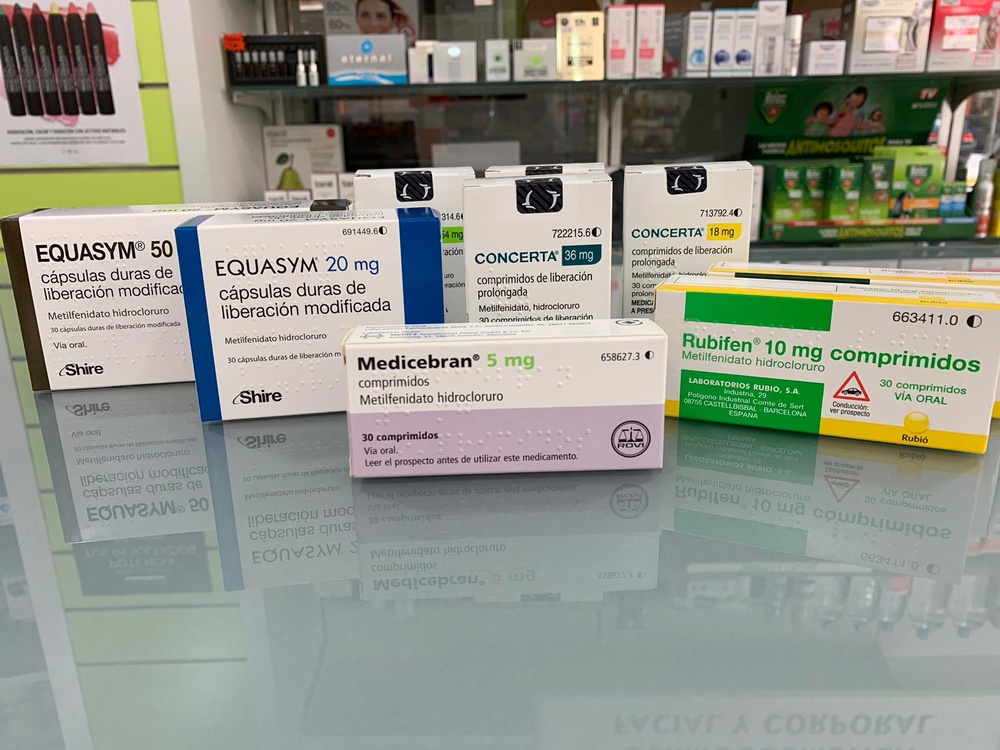
EQUASYM 20 mg Cápsulas Duras De Liberación Modificada

Revisión de receta online
Un médico revisará tu caso y determinará si la prescripción es médicamente apropiada.

Habla con un médico sobre este medicamento
Comenta tus síntomas y las opciones de tratamiento en una consulta online.



Cómo usar EQUASYM 20 mg CAPSULAS DURAS DE LIBERACION MODIFICADA
Contenido del prospecto
- Introducción
- Qué es Equasym y para qué se utiliza
- Qué necesita saber antes de que usted o su hijo empiecen a tomar Equasym.
- Cómo tomar Equasym
- Posibles efectos adversos
- Conservación de Equasym
- Contenido del envase e información adicional
Introducción
Prospecto: información para el usuario
Equasym 10 mg,20mg, 30mg, 40mg y 50mgcápsulas duras de liberación modificada
metilfenidato hidrocloruro
El nombre de este medicamento es Equasym, contiene el principio activo ‘metilfenidato hidrocloruro’. En este prospecto se utilizará también el nombre ‘metilfenidato’.
Lea todo el prospecto detenidamente antes de que usted o su hijo empiecen a tomar este medicamento,porque contiene información importante para ustedo para su hijo.
- Conserve este prospecto, ya que puede tener que volver a leerlo.
- Si tiene alguna duda, consulte a su médico o farmacéutico.
- Este medicamento se le ha recetado solamente a usted o su hijo, y no debe dárselo a otras personas aunque tengan los mismos síntomas que usted o su hijo, ya que puede perjudicarles.
- Si experimenta efectos adversos, consulte a su médico o farmacéutico incluso si se trata de efectos adversos que no aparecen en este prospecto. Ver sección 4.
Contenido del prospecto
- Qué es Equasym y para qué se utiliza
- Qué necesita saber antes de que usted o su hijo empiecen a tomar Equasym
- Cómo tomar Equasym
- Posibles efectos adversos
- Conservación de Equasym
- Contenido del envase e información adicional
1. Qué es Equasym y para qué se utiliza
Para qué se utiliza
Equasym se utiliza para tratar el trastorno por déficit de atención con hiperactividad (TDAH).
- Se utiliza en niños y adolescentes de edades comprendidas entre 6 a 18 años.
- Se utiliza únicamente tras haber intentado tratamientos no farmacológicos, como por ejemplo asistencia psicológica y terapia de comportamiento.
Equasym no se utiliza para tratar el TDAH en niños menores de 6 años ni en adultos. Se desconoce si es seguro o si beneficia a estas personas.
Cómofunciona
Equasym mejora la actividad de ciertas partes del cerebro con baja actividad. El medicamento puede ayudar a mejorar la atención (tiempo de atención) y la concentración, y reduce los comportamientos impulsivos.
El medicamento se administra como parte de un programa de tratamiento, que normalmente incluye terapia:
- psicológica,
- educacional y
- social.
Eltratamientoconmetilfenidatoúnicamentedebeserinstauradoporunespecialistaentrastornosdel comportamientodelainfanciay/oadolescenciayhadeemplearsebajosusupervisiónperiódica.
El TDAH se puede controlar utilizando programas de tratamiento.
Sobre el TDAH
Los niños y adolescentes con TDAH tienen:
- dificultad para permanecer sentados quietos y
- dificultad para concentrarse.
No es culpa de ellos el no poder hacer estas cosas.
Muchos niños y adolescentes se esfuerzan para hacer estas cosas. Sin embargo, al tener TDAH, pueden tener problemas en la vida cotidiana. Los niños y adolescentes con TDAH pueden tener dificultades para aprender y hacer los deberes. Les cuesta mucho portarse bien en casa, en el colegio o en otros lugares.
El TDAH no afecta a la inteligencia de un niño o adolescente.

¿No estás seguro de si este medicamento es adecuado para ti?
Comenta tus síntomas y tratamiento con un médico online.
2. Qué necesita saber antes de que usted o su hijo empiecen a tomar Equasym.
No tome Equasym si usted o su hijo:
- es alérgico al metilfenidato o a alguno de los demás componentes de este medicamento
(incluidos en la sección 6);
- tiene un problema de tiroides;
- tiene la presión ocular elevada (glaucoma);
- tiene un tumor de la glándula suprarrenal (feocromocitoma);
- tiene un trastorno alimenticio en el que no tiene hambre ni quiere comer (p. ej.,anorexia nerviosa);
- tiene tensión arterial muy alta o un estrechamiento de los vasos sanguíneos, que puede causar dolor en brazos y piernas,
- ha tenido en algún momento problemas cardiacos (p. ej., parada cardiaca, latido cardiaco irregular, dolor y molestias en el pecho, insuficiencia cardiaca, enfermedad cardiaca o un problema cardiaco de nacimiento);
- ha tenido un problema en los vasos sanguíneos del cerebro (p. ej., ictus, dilatación y debilitamiento de parte de un vaso sanguíneo (aneurisma), vasos sanguíneos estrechos o bloqueados, o inflamación de los vasos sanguíneos (vasculitis);
- toma actualmente o ha tomado en los últimos 14 días un antidepresivo (llamado inhibidor de la monoaminooxidasa) – ver Uso de otros medicamentos;
- tiene problemas de salud mental como:
- un problema ‘psicopático’ o ‘trastorno límite de la personalidad’,
- pensamientos o visiones anormales o una enfermedad denominada ‘esquizofrenia’;
- signos de un problema severo del estado de ánimo como:
- pensamientos suicidas;
- depresión severa, cuando tiene sentimientos de tristeza, inutilidad y desesperanza;
- manía, cuando se siente anormalmente excitable, hiperactivo y desinhibido.
No tome metilfenidato si alguno de los puntos anteriores es aplicable a usted o a su hijo. Si tiene alguna duda, consulte a su médico o farmacéutico antes de que usted o su hijo tomen metilfenidato. Esto se debe a que el metilfenidato puede empeorar estos problemas.
Advertencias y precauciones
Consulte a su médico o farmacéutico antes de empezar a tomar Equasymsi usted o su hijo:
- tiene problemas de hígado o riñón;
- ha tenido ataques epilépticos (crisis epilépticas, convulsiones, epilepsia) o cualquier anomalía en una exploración cerebral (EEG);
- ha abusado o tenido dependencia del alcohol, de los medicamentos recetados o drogas ilegales;
- es mujer y ha empezado a tener la menstruación (ver la sección ‘Embarazo y lactancia’ a continuación);
- tiene tics repetitivos y difíciles de controlar en cualquier parte del cuerpo o repite sonidos o palabras;
- tiene tensión arterial alta;
- tiene un problema cardiaco que no está en la sección anterior ‘No tome metilfenidato’;
- tiene un problema de salud mental que no está en la sección anterior ‘No tome metilfenidato’. Otros problemas de salud mental incluyen:
- cambios del estado de ánimo (de maníaco a deprimido, lo que se denomina ‘trastorno bipolar’);
- comenzar a ser agresivo u hostil, o la agresividad empeora;
- ver, oír o sentir cosas que no son reales (alucinaciones);
- creer cosas que no son verdad (delirios);
- sentirse inusualmente desconfiado (paranoia);
- sentirse agitado, ansioso o tenso;
- sentirse deprimido o culpable.
Antes de empezar el tratamiento, informe a su médico o farmacéutico si usted o su hijo presentan alguno de los problemas mencionados anteriormente. Esto se debe a que el metilfenidato puede empeorar estos problemas. El médico querrá supervisar la forma en la que el medicamento le afecta a usted o a su hijo.
Comprobaciones que realizará el médico antes de que usted o su hijo comiencen a tomar metilfenidato
Estas comprobaciones se realizan para decidir si el metilfenidato es el medicamento correcto para usted o su hijo. Su médico hablará con usted sobre:
- cualquier otro medicamento que tome usted o su hijo;
- si tiene antecedentes familiares de muerte súbita sin explicar;
- cualquier otro problema médico (como problemas cardiacos) que tenga usted o su familia;
- cómo se siente usted o su hijo, como por ejemplo si se siente eufórico o deprimido, si tiene pensamientos raros o si ha tenido alguno de estos pensamientos en el pasado;
- si tiene antecedentes familiares de ‘tics’ (espasmos repetitivos y difíciles de controlar en cualquier parte del cuerpo o repetición de sonidos o palabras);
- cualquier problema de salud mental o de conducta que haya tenido usted, su hijo u otros familiares. Su médico le informará si usted o su hijo corre riesgo de tener alteraciones en el estado de ánimo (de maníaco a deprimido, lo que se denomina ‘trastorno bipolar’). Comprobará los antecedentes de salud mental de usted o su hijo y comprobará si alguno de sus familiares tiene antecedentes de suicidio, trastorno bipolar o depresión.
Es importante que aporte la mayor cantidad de información posible. Esto ayudará a su médico a decidir si el metilfenidato es el medicamento correcto para usted o su hijo. Su médico puede decidir si son necesarias otras pruebas médicas antes de empezar a tomar este medicamento.
Uso de Equasym con otros medicamentos
Informe a su médico o farmacéutico si está tomando, ha tomado recientemente o pudiera tener que tomar cualquier otro medicamento.
No tome metilfenidato si usted o su hijo:
- toma un medicamento conocido como ‘inhibidor de la monoaminooxidasa’ (IMAO) utilizado para la depresión, o ha tomado un IMAO en los últimos 14 días. Si toma un IMAO con metilfenidato, puede producirse un aumento repentino de la tensión arterial.
Si usted o su hijo toman otros medicamentos, el metilfenidato puede afectar a su eficacia o puede causar efectos adversos. Si usted o su hijo toman alguno de los siguientes medicamentos, consulte con su médico o farmacéutico antes de tomar metilfenidato:
- otros medicamentos para la depresión,
- medicamentos para problemas de salud mental graves,
- medicamentos para la epilepsia,
- medicamentos utilizados para reducir o aumentar la tensión arterial,
- algunos tratamientos para la tos y los resfriados que contengan medicamentos que pueden afectar a la tensión arterial. Es importante consultar con el farmacéutico cuando compre algunos de estos medicamentos,
- medicamentos que impiden la formación de coágulos de sangre.
Si tiene alguna duda sobre si alguno de los medicamentos que toma usted o su hijo está incluido en la lista anterior, consulte a su médico o farmacéutico antes de tomar metilfenidato.
Informe a su médico o farmacéutico si usted o su hijo están utilizando o han utilizado recientemente otros medicamentos, incluso los adquiridos sin receta.
Someterse a una intervención quirúrgica
Informe a su médico si usted o su hijo van a someterse a una intervención quirúrgica. No se debe tomar metilfenidato el día de la cirugía si se utiliza un tipo concreto de anestésico. Esto se debe a que existe la posibilidad de un aumento repentino de la tensión arterial durante la intervención.
Análisis de drogas
Este medicamento puede dar un resultado positivo en el análisis de drogas. Esto incluye las pruebas utilizadas en el deporte.
Toma de Equasym con alcohol
No beba alcohol mientras tome este medicamento. El alcohol puede empeorar los efectos adversos de este medicamento. Recuerde que algunos alimentos y medicamentos contienen alcohol.
Embarazo, lactancia y fertilidad
Los datos disponibles no sugieren un aumento del riesgo de anomalías congénitas totales, aunque no se pudo descartar un pequeño aumento del riesgo de malformaciones cardiacas durante su uso en los tres primeros meses de embarazo. Su médico le dará más información sobre este riesgo. Informe a su médico o farmacéutico antes de utilizar metilfenidato si usted o su hija:
- tiene relaciones sexuales. Su médico les hablará sobre el uso de anticonceptivos;
- está embarazada o puede estar embarazada. Su médico decidirá si debe tomar metilfenidato;
- está en periodo de lactancia o tiene previsto dar el pecho. Es posible que el metilfenidato pase a la leche materna. Por lo tanto, su médico decidirá si usted o su hija deben dar el pecho mientras tome metilfenidato.
Erecciones prolongadas
Durante el tratamiento, niños y adolescentes puede experimentar inesperadamente erecciones prolongadas. Puede que esto sea doloroso, y puede ocurrir en cualquier momento. Es importante que usted o su hijo se comuniquen de inmediato con su médico si la erección dura más de dos horas, particularmente si es dolorosa.
Conducción y uso de máquinas
Usted o su hijo pueden sentirse mareados, tener problemas para enfocar o tener visión borrosa cuando tomen metilfenidato. Si esto ocurre, puede ser peligroso realizar tareas como conducir, utilizar máquinas, montar en bicicleta o a caballo, o trepar a los árboles.
Equasymcontiene sacarosa (un tipo de azúcar)
Si su médico le ha indicado que usted o su hijo tienen intolerancia a ciertos azúcares, consulte con él antes de tomar este medicamento.
Equasymcontiene sodio
Este medicamento contiene menos de 23 mg de sodio (1mmol) por cápsula; esto es, esencialmente “exento de sodio”.
3. Cómo tomar Equasym
Cuánto se debe tomar
Siga exactamente las instrucciones de administración de este medicamento indicadas por su médico. En caso de duda, consulte de nuevo a su médico o farmacéutico.
- Equasym es una forma de metilfenidato de “liberación modificada” que libera el medicamento de forma gradual durante un periodo de tiempo que corresponde a la jornada escolar (8 horas). Pretende sustituir la misma dosis diaria total de metilfenidato tradicional (de liberación inmediata) tomada con el desayuno y la comida.
- Si usted o su hijo ya toman metilfenidato tradicional (de liberación inmediata), su médico podrá recetarles una dosis equivalente de Equasym.
- Si usted o su hijo no han tomado metilfenidato antes, su médico normalmente comenzará el tratamiento con comprimidos de metilfenidato tradicional (de liberación inmediata). Si su médico lo considera necesario, el tratamiento con metilfenidato podrá comenzar con Equasym 10 mg una vez al día antes del desayuno.
- Su médico normalmente comenzará el tratamiento con una dosis baja y la aumentará gradualmente según proceda.
- La dosis diaria máxima es de 60 mg.
Cómo tomarlo
- Equasym se debe tomar por la mañana antes del desayuno. Las cápsulas se pueden tragar enteras con agua, o de forma alternativa, se puede abrir la cápsula y verter el contenido sobre una pequeña cantidad (una cucharada) de compota de manzana, y tomar inmediatamente sin guardar para usar más adelante. Si se toma el medicamento con alimentos de textura blanda, se debe tomar algo de líquido después, como agua.
Si usted o su hijo no se sienten mejor después de 1 mes de tratamiento
Si usted o su hijo no se sienten mejor, informe a su médico. Puede decidir que necesita otro tratamiento diferente.
Uso inadecuado de Equasym
Si no se usa correctamente Equasym, se podrán producir comportamientos anormales. Puede asimismo significar que usted o su hijo empiezan a depender del medicamento. Informe a su médico si usted o su hijo han abusado o tenido dependencia alguna vez del alcohol, de los medicamentos recetados o drogas ilegales.
Este medicamento se le ha recetado a usted o a su hijo y no deben dárselo a otras personas, aunque tengan los mismos síntomas.
Si usted o su hijo toman más Equasym del que debieran
Si usted o su hijo toman una cantidad excesiva del medicamento, consulte a un médico o llame una ambulancia inmediatamente. Infórmele cuánto ha tomado. También puede consultar al Servicio de Información Toxicológica. Teléfono 91 5620420.
Los signos de sobredosis pueden incluir: vómitos, sensación de agitación, temblores, aumento de movimientos incontrolados, espasmos musculares, ataques epilépticos (pueden ir seguidos de coma), sensación de gran felicidad, confusión, ver, oír o sentir cosas que no son reales (alucinaciones o psicosis), sudoración, sofocos, dolor de cabeza, fiebre alta, cambios en el latido del corazón (lento, rápido o irregular), tensión arterial alta, pupilas dilatadas y sequedad de nariz y boca.
Si usted o su hijo olvidaron tomar Equasym
No tome una dosis doble para compensar las dosis olvidadas. Si usted o su hijo olvidan una dosis, esperen el momento de la siguiente dosis.
Si usted o su hijo interrumpen el tratamiento con Equasym
Si usted o su hijo dejan repentinamente de tomar este medicamento, podrán volver los síntomas del TDAH o aparecer efectos adversos no deseados como la depresión. Su médico posiblemente querrá reducir gradualmente la cantidad de medicamento que toma cada día, antes de dejarlo por completo. Consulte a su médico antes de dejar Equasym. Si tiene cualquier otra duda sobre el uso de este medicamento, pregunte a su médico, farmacéutico o enfermero.
Cosas que realizará su médico mientras usted o su hijo reciben el tratamiento
Su médico les realizará algunas pruebas
- antes de que usted o su hijo comiencen el tratamiento, para asegurarse de que Equasym es seguro y beneficioso.
- después de que usted o su hijo comiencen el tratamiento, se realizarán al menos cada 6 meses, pero posiblemente con mayor frecuencia. Se realizarán asimismo cuando se cambie la dosis.
- estas pruebas incluirán:
- comprobar el apetito;
- determinar la altura y el peso;
- determinar la tensión arterial y la frecuencia cardiaca;
- evaluar problemas del estado de ánimo o del estado mental, o cualquier otra sensación inusual, o si estos han empeorado mientras toma Equasym.
Tratamiento a largo plazo
No es necesario tomar Equasym indefinidamente. Si usted o su hijo toman Equasym durante un periodo largo, su médico debe suspender el tratamiento temporalmente, al menos una vez al año. Esto se puede hacer durante las vacaciones escolares. Así se comprobará si el medicamento sigue siendo necesario.
Si tiene cualquier otra duda sobre el uso de este producto, pregunte a su médico o farmacéutico.

¿Has empezado a tomar el medicamento y tienes preguntas?
Comenta tus síntomas y tratamiento con un médico online.
4. Posibles efectos adversos
Al igual que todos los medicamentos, este medicamento puede producir efectos adversos, aunque no todas las personas los sufran. Aunque algunas personas sufren efectos adversos, la mayoría sienten que el metilfenidato les ayuda. Su médico tratará estos efectos adversos con usted.
Algunos de los efectos adversos podrían ser graves. Si usted o su hijo presentan alguno de los efectos adversos que aparecen a continuación, consulte a un médico inmediatamente:
Frecuentes (afectan a menos de 1 persona de cada 10)
- latido cardiaco irregular (palpitaciones);
- cambios o alteraciones en el estado de ánimo o cambios en la personalidad.
Poco frecuentes (afectan a menos de 1 persona de cada 100)
- pensamientos suicidas o querer suicidarse;
- ver, oír o sentir cosas que no son reales, estos son signos de psicosis;
- habla y movimientos corporales no controlados (síndrome de Tourette);
- signos de alergia como erupción, picor o urticaria de la piel, hinchazón de la cara, labios, lengua u otras partes del cuerpo, falta de aliento, pitos o dificultad respiratoria.
Raras (afectan a menos de 1 persona de cada 1.000)
- sentirse anormalmente excitado, más activo de lo normal y desinhibido (manía).
Muy raras (afectan a menos de 1 persona de cada 10.000)
- parada cardiaca;
- ataques epilépticos (crisis epilépticas, convulsiones, epilepsia);
- descamación de la piel o zonas de color morado rojizo;
- espasmos musculares que no puede controlar y que afectan a los ojos, cabeza, cuello, cuerpo y sistema nervioso. Se deben a una falta temporal de riego sanguíneo en el cerebro;
- parálisis o problemas con el movimiento y la visión, dificultad para hablar (estos pueden ser signos de problemas con los vasos sanguíneos en el cerebro);
- reducción o aumento del número de células sanguíneas (glóbulos rojos, glóbulos blancos y plaquetas) que podría hacer que sea más propenso a las infecciones, y hacer que los sangrados y los moratones se produzcan con mayor facilidad;
- aumento repentino de la temperatura corporal, tensión arterial muy alta y convulsiones graves (‘síndrome neuroléptico maligno’). No es seguro que este efecto adverso se deba al metilfenidato o a otros medicamentos que se pueden tomar junto con metilfenidato.
Otros efectos adversos (frecuencia no conocida)
- pensamientos no deseados que vuelven repetidamente;
- desmayo sin explicar, dolor de pecho, falta de aliento (pueden ser signos de problemas cardiacos).
Si presenta alguno de los efectos adversos mencionados anteriormente, consulte a un médico inmediatamente.
Otros efectos adversos incluyen los siguientes. Si considera que alguno es grave, informe a su médico o farmacéutico:
Muy frecuentes (afectan a más de 1 persona de cada 10)
- dolor de cabeza;
- sensación de nerviosismo;
- dificultad para dormir.
Frecuentes (afectan a menos de 1 persona de cada 10)
- dolor en las articulaciones;
- sequedad de boca;
- temperatura alta (fiebre);
- pérdida o debilitamiento inusual del cabello;
- sensación inusual de sueño o somnolencia;
- pérdida de apetito o disminución del apetito;
- picor, erupción o sarpullido rojo abultado que pica (urticaria);
- tos, dolor de garganta o irritación de nariz y garganta;
- tensión arterial alta, latido cardiaco rápido (taquicardia);
- mareos, movimientos descontrolados, actividad fuera de lo normal;
- agresividad, agitación, ansiedad, depresión, irritabilidad y comportamiento anormal;
- rechinar de dientes excesivo (bruxismo).
Poco frecuentes (afectan a menos de 1 persona de cada 100)
- estreñimiento;
- molestias en el pecho;
- sangre en la orina;
- temblores o tembleque;
- visión doble o visión borrosa;
- dolor muscular, espasmos musculares;
- falta de aliento o dolor de pecho;
- aumentos de las enzimas hepáticas en las pruebas hepáticas (observados en un análisis de sangre)
- ira, sensación de impaciencia o ganas de llorar, prestar excesiva atención a lo que ocurre alrededor, problemas para dormir.
Raras (afectan a menos de 1 persona de cada 1.000)
- cambios en el apetito sexual;
- sensación de desorientación;
- pupilas dilatadas, problemas para ver;
- hinchazón de las mamas en los hombres;
- sudoración excesiva, enrojecimiento de la piel, erupción cutánea con manchas rojas abultadas.
Muy raras (afectan a menos de 1 persona de cada 10.000)
- parada cardiaca;
- muerte súbita;
- calambres musculares;
- pequeñas marcas rojas en la piel;
- inflamación u obstrucción de las arterias en el cerebro;
- función hepática anormal, que incluye insuficiencia hepática y coma;
- cambios en los resultados de las pruebas, incluidas las pruebas hepáticas y los análisis de sangre;
- intento de suicidio, suicidio consumado, pensamientos anormales, falta de sensación o de emoción, hacer cosas una y otra vez, obsesionarse con una cosa;
- entumecimiento de los dedos de manos y pies, hormigueo y cambios de color con el frío (de blanco a azul, luego rojo) (‘fenómeno de Raynaud’).
Otros efectos adversos (se desconoce su frecuencia)
- migraña;
- locuacidad excesiva;
- fiebre muy alta;
- latidos cardiacos lentos, rápidos o adicionales;
- sangrado de nariz
- crisis epiléptica grave (‘crisis tónico-clónicas’);
- creer cosas que no son verdad, confusión;
- dolor de estómago intenso, a menudo con mareos y vómitos;
- erecciones prolongadas, en ocasiones dolorosas, o un aumento en la cantidad de erecciones;
- incapacidad de desarrollar o mantener una erección;
- problemas con los vasos sanguíneos del cerebro (ictus, arteritis cerebral u oclusión cerebral).
- moretones
- incapacidad de controlar la excreción de orina (incontinencia)
- espasmo de los músculos de la mandíbula que dificulta la apertura de la boca (trismus)
- tartamudez
Efectos en el crecimiento
Si se utiliza durante más de un año, el metilfenidato puede disminuir el crecimiento en algunos niños. Esto afecta a menos de 1 de cada 10 niños.
- Puede impedir el aumento de peso o de estatura,
- Su médico observará de cerca la altura y el peso de usted o de su hijo, así como su alimentación;
- Si usted o su hijo no crecen de la forma esperada, se podrá suspender el tratamiento con metilfenidato durante un periodo breve.
Comunicación de efectos adversos
Si experimenta cualquier tipo de efecto adverso, consulte a su médico o farmacéutico, incluso si se trata de posibles efectos adversos que no aparecen en este prospecto. También puede comunicarlos directamente a través del Sistema Español de Farmacovigilancia de Medicamentos de Uso Humano: www.notificaRAM.es. Mediante la comunicación de efectos adversos usted puede contribuir a proporcionar más información sobre la seguridad de este medicamento.
5. Conservación de Equasym
Mantener este medicamento fuera de la vista y del alcance de los niños.
No utilice este medicamento después de la fecha de caducidad que aparece en el blíster y en la caja después de CAD. La fecha de caducidad es el último día del mes que se indica.
Conservar por debajo de 25°C.
No utilice este medicamento si observa que las cápsulas parecen deterioradas.
Los medicamentos no se deben tirar por los desagües ni a la basura. Deposite los envases y los medicamentos que no necesita en el Punto SIGRE de la farmacia. En caso de duda pregunte a su farmacéutico cómo deshacerse de los envases y de los medicamentos que no necesita. De esta forma, ayudará a proteger el medio ambiente.
6. Contenido del envase e información adicional
Composición de Equasym
El principio activo es metilfenidato hidrocloruro.
- Cada cápsula de 10 mg contiene 10 mg de metilfenidato hidrocloruro que corresponde a 8,65 mg de metilfenidato.
- Cada cápsula de 20 mg contiene 20 mg de metilfenidato hidrocloruro que corresponde a 17,30 mg de metilfenidato.
- Cada cápsula de 30 mg contiene 30 mg de metilfenidato hidrocloruro que corresponde a 25,94 mg de metilfenidato.
- Cada cápsula de 40 mg contiene 40 mg de metilfenidato hidrocloruro que corresponde a 34,59 mg de metilfenidato.
- Cada cápsula de 50 mg contiene 50 mg de metilfenidato hidrocloruro que corresponde a 43,24 mg de metilfenidato.
Los demás componentes son:
- Contenido de la cápsula: esferas de azúcar (sacarosa y almidón de maíz), povidona K29-K32, Opadry YS-1-7006 claro (hipromelosa, macrogol 400 y macrogol 8000), dispersión acuosa de etilcelulosa y sebacato de dibutilo.
- Cuerpo de la cápsula: gelatina, dióxido de titanio (E171),
- La cápsula de 10 mg también contiene índigo carmín (E132), Óxido de hierro amarillo (E172)
- La cápsula de 20 mg también contiene índigo carmín (E132)
- La cápsula de 30 mg también contiene índigo carmín (E132), Óxido de hierro rojo (E172)
- La cápsula de 40 mg también contiene Óxido de hierro amarillo (E172)
- La cápsula de 50 mg también contiene índigo carmín (E132), Óxido de hierro rojo (E172)
- Tinta de impresión blanca (sólo en las cápsulas de 10, 20, 30 y 50 mg): goma laca, propilenglicol, hidróxido de sodio, povidona K16 y dióxido de titanio (E171).
- Tinta de impresión negra: contiene barniz de goma laca al 45% (20% esterificado) en etanol, propilenglicol, hidróxido de amonio 28% y óxido de hierro negro (E172).
Aspecto del producto y contenido del envase
Cápsulas duras de liberación modificada.
Las cápsulas duras de liberación modificada de 10 mg tienen una tapa opaca verde oscura con “S544” impreso en blanco y un cuerpo opaco blanco con “10 mg” impreso en negro.
Las cápsulas duras de liberación modificada de 20 mg tienen una tapa opaca azul con “S544” impreso en blanco y un cuerpo opaco blanco con “20 mg” impreso en negro.
Las cápsulas duras de liberación modificada de 30 mg tienen una tapa opaca marron-rojiza con “S544” impreso en blanco y un cuerpo opaco blanco con “30 mg” impreso en negro.
Las cápsulas duras de liberación modificada de 40 mg tienen una tapa opaca amarilla marfil con “S544” impreso en negro y un cuerpo opaco blanco con “40 mg” impreso en negro.
Las cápsulas duras de liberación modificada de 50 mg tienen una tapa opaca morada con “S544” impreso en blanco y un cuerpo opaco blanco con “50 mg” impreso en negro.
Tamaños de envases:
Dosis de 10 mg, 20 mg y 30 mg - 10, 28, 30, 60 o 100* cápsulas duras de liberación modificada (sólo cápsulas de 10 mg y 20 mg) .
Dosis de 40 mg, 50 mg, 60 mg - 28 o 30 cápsulas duras de liberación modificada.
Puede que solamente estén comercializados algunos tamaños de envases o dosis.
Titular de la autorización de comercialización y responsable de la fabricación
Titular de la autorización de comercialización:
Takeda Pharmaceuticals International AG Ireland Branch
Block 2 Miesian Plaza
50 – 58 Baggot Street Lower
Dublín 2, D02 HW68
Irlanda
Responsable de la fabricación:
Shire Pharmaceuticals Ireland Limited
Block 2 & 3 Miesian Plaza
50-58 Baggot Street Lower
Dublín 2
Irlanda
Takeda Pharmaceuticals International AG Ireland Branch
Block 2 Miesian Plaza
50 – 58 Baggot Street Lower
Dublín 2,
D02 HW68
Irlanda
Representante local:
Takeda Farmacéutica España S.A.
Calle Albacete, 5, planta 9ª,
Edificio Los Cubos
28027 Madrid
España
Tel: +34 91 790 42 22
Este medicamento está autorizado en los estados miembros del Espacio Económico Europeo y en el Reino Unido (Irlanda del Norte) con los siguientes nombres:
Alemania Equasym Retard
Bélgica Equasym XR
Dinamarca Equasym Depot
España Equasym
Finlandia Equasym Retard
Francia Quasym
Islandia Equasym Depot
Irlanda Equasym XL
Italia Equasym
Luxemburgo Equasym XR
Noruega Equasym Depot
Países Bajos Equasym XL
Portugal Quasym
Reino Unido (Irlanda del Norte) Equasym XL
Este prospecto ha sido aprobado enEnero 2024
La información detallada y actualizada de este medicamento está disponible en la página Web de la Agencia Española de Medicamentos y Productos Sanitarios (AEMPS) http://www.aemps.gob.es/
- País de registro
- Forma farmacéuticaCAPSULA LIBERACION MODIFICADA, 20 mg
- Código ATCN06BA04
- Precio medio en farmacia11.11 EUR
- Principio activo
- Requiere recetaSí
- Fabricante
- ComposiciónAZUCAR , ESFERAS DE (109.02 mg mg), ALCOHOL ETILICO (ETANOL) (- - mg), PROPILENGLICOL (- - mg), HIDROXIDO DE SODIO (E 524) (- - mg), PROPILENGLICOL (- - mg)
- Esta información es de carácter general y no sustituye la consulta con un profesional sanitario.
- Alternativas a EQUASYM 20 mg CAPSULAS DURAS DE LIBERACION MODIFICADAForma farmacéutica: COMPRIMIDO LIBERACION MODIFICADA, 18 mgPrincipio activo: methylphenidateFabricante: Exeltis Healthcare S.L.Requiere recetaForma farmacéutica: COMPRIMIDO LIBERACION MODIFICADA, 27 mgPrincipio activo: methylphenidateFabricante: Exeltis Healthcare S.L.Requiere recetaForma farmacéutica: COMPRIMIDO LIBERACION MODIFICADA, 36 mgPrincipio activo: methylphenidateFabricante: Exeltis Healthcare S.L.Requiere receta
Médicos online para EQUASYM 20 mg CAPSULAS DURAS DE LIBERACION MODIFICADA
Comenta la dosis, los posibles efectos secundarios, interacciones, contraindicaciones o la revisión de receta de EQUASYM 20 mg CAPSULAS DURAS DE LIBERACION MODIFICADA, sujeto a valoración médica y a la normativa local.









Obtén una receta de EQUASYM 20 mg CAPSULAS DURAS DE LIBERACION MODIFICADA online
Rellena un formulario de 2 minutos
Cuéntanos tus síntomas, historial y el medicamento que necesitas.
Elige un médico o nosotros te asignamos uno
Escoge un especialista o te conectamos con el próximo médico disponible.
El médico revisa tu caso
Normalmente en 30 minutos. Puede hacerte preguntas adicionales por chat.
Recógela en cualquier farmacia
Receta electrónica enviada a tu correo, válida en toda España.
Preguntas frecuentes
EQUASYM 20 mg CAPSULAS DURAS DE LIBERACION MODIFICADA requiere receta en España. Puedes confirmarlo con un médico online según tu caso.
El principio activo de EQUASYM 20 mg CAPSULAS DURAS DE LIBERACION MODIFICADA es methylphenidate. Esta información ayuda a identificar medicamentos con la misma composición pero con diferentes nombres comerciales.
El precio medio en farmacia de EQUASYM 20 mg CAPSULAS DURAS DE LIBERACION MODIFICADA es de aproximadamente 11.11 EUR. Puede variar según el fabricante y la forma farmacéutica.
EQUASYM 20 mg CAPSULAS DURAS DE LIBERACION MODIFICADA es fabricado por Takeda Pharmaceuticals International Ag Ireland Branch. La marca y el envase pueden variar según el distribuidor.
Los Médicos de familia, Psiquiatras, Dermatólogos, Cardiólogos, Endocrinólogos, Gastroenterólogos, Neumólogos, Nefrólogos, Reumatólogos, Hematólogos, Infectólogos, Alergólogos, Geriatras, Pediatras, Oncólogos pueden valorar la prescripción de EQUASYM 20 mg CAPSULAS DURAS DE LIBERACION MODIFICADA cuando esté clínicamente indicado. Puedes reservar una videoconsulta para comentar tu caso y las opciones de tratamiento.
España cuenta con una infraestructura sanitaria bien desarrollada en ciudades principales como Madrid, Barcelona, Valencia y Sevilla. Las farmacias están ampliamente disponibles y operan bajo estrictas regulaciones, garantizando el acceso a medicamentos con receta.
Puedes comprar EQUASYM 20 mg CAPSULAS DURAS DE LIBERACION MODIFICADA en Madrid, Barcelona, Sevilla o Valencia en cualquier farmacia local con una receta válida.
Para obtener una receta, puedes utilizar Oladoctor:
Otros medicamentos con el mismo principio activo (methylphenidate) incluyen ATENZA 18 MG COMPRIMIDOS DE LIBERACION PROLONGADA EFG, ATENZA 27 MG COMPRIMIDOS DE LIBERACION PROLONGADA EFG, ATENZA 36 MG COMPRIMIDOS DE LIBERACION PROLONGADA EFG. Pueden tener diferentes nombres comerciales o formulaciones, pero contienen el mismo componente terapéutico. Consulta siempre con un médico antes de cambiar o iniciar un nuevo medicamento.
