






Cómo usar DOXICLAT 100 mg COMPRIMIDOS RECUBIERTOS CON PELICULA
Traducción generada por IA
Este contenido ha sido traducido automáticamente y se ofrece solo con fines informativos. No sustituye la consulta con un profesional sanitario.
Ver originalContenido del prospecto
Introducción
Prospecto: información para el usuario
DOXICLAT 100 mg comprimidos recubiertos con película
Doxiciclina
Lea todo el prospecto detenidamente antes de empezar a tomar este medicamento, porque contiene información importante para usted.
- Conserve este prospecto, ya que puede tener que volver a leerlo.
- Si tiene alguna duda, consulte a su médico o farmacéutico.
- Este medicamento se le ha recetado solamente a usted, y no debe dárselo a otras personas aunque presenten los mismos síntomas de enfermedad que usted, ya que puede perjudicarles.
- Si experimenta efectos adversos, consulte a su médico o farmacéutico, incluso si se trata de efectos adversos que no aparecen en este prospecto. Ver sección 4.
Contenido del prospecto
- Qué es Doxiclat y para qué se utiliza
- Qué necesita saber antes de empezar a tomar Doxiclat
- Cómo tomar Doxiclat
- Posibles efectos adversos
- Conservación de Doxiclat
- Contenido del envase e información adicional

1. Qué es Doxiclat y para qué se utiliza
Doxiciclina pertenece a un grupo de medicamentos llamados tetraciclinas, que son antibióticos de amplio espectro. Es activa frente a una gran variedad de bacterias causantes de numerosas infecciones.
Los antibióticos se utilizan para tratar infecciones bacterianas y no sirven para tratar infecciones víricas como la gripe o el catarro. Es importante que siga las instrucciones relativas a la dosis, el intervalo de administración y la duración del tratamiento indicadas por su médico. No guarde ni reutilice este medicamento. Si una vez finalizado el tratamiento le sobra antibiótico, devuélvalo a la farmacia para su correcta eliminación. No debe tirar los medicamentos por el desagüe ni a la basura.
Doxiclat está indicado en adultos y adolescentes, en el tratamiento de ciertas infecciones causadas por microorganismos sensibles y que son de origen y localización variada tales como:
- Neumonía atípica.
- Psitacosis, que es una enfermedad transmitida al hombre por ciertas aves que cursa con fiebre y tos.
- Enfermedades de transmisión sexual, como: uretritis (inflamación de la uretra), cervicitis (inflamación del cuello del útero), proctitis (inflamación del recto), enfermedad inflamatoria pélvica, infecciones no gonocócicas no complicadas, linfogranuloma venéreo (enfermedad que inicialmente se caracteriza por úlceras en los genitales seguidas de inflamación de los ganglios), granuloma inguinal (ulceración de los genitales), orquiepididimitis aguda (inflamación de los testículos), etapas primarias y secundarias de la sífilis, así como sífilis de aparición tardía y latente en pacientes alérgicos a la penicilina.
- Infecciones causadas por un grupo de microorganismos que reciben el nombre de rickettsiasy que incluyen infecciones como la fiebre manchada de las Montañas Rocosas, la fiebre mediterránea, el tifus endémico, tifus de la maleza y fiebre Q.
- Brucelosis (fiebre de Malta).
- Cólera (una enfermedad infecciosa que cursa con diarrea grave, deshidratación y vómitos).
- Estadíos iniciales (estadios 1 y 2) de la enfermedad de Lyme (infección transmitida por garrapatas).
- Fiebres recurrentes transmitidas por piojos y por garrapatas.
- Malaria en zonas de resistencia a cloroquina (una enfermedad infecciosa que cursa con escalofríos y sudoración, que se transmite por la picadura de un mosquito infectado que introduce el parásito de la malaria en la sangre).
Además, la doxiciclina podría considerarse como tratamiento alternativo en otras infecciones como carbunco, tularemia (enfermedad de los roedores parecida a la peste), listeriosis (enfermedad infecciosa que puede afectar al feto durante el embarazo, al recién nacido y al adulto), bartonelosis (enfermedad infecciosa que se presenta con anemia grave y fiebre) y actinomicosis (enfermedad infecciosa que causa inflamación de los ganglios linfáticos de la boca junto con otras complicaciones internas).
Doxiclat está también indicado en la prevención de la malaria en áreas con resistencia a antipalúdicos (medicamentos para tratamiento para la malaria) y en la prevención del carbunco.
Por último, Doxiclat está indicado en el tratamiento del acné vulgar grave junto con otros medicamentos y de la rosácea (afección inflamatoria crónica de la piel que con mayor frecuencia afecta la cara).
2. Qué necesita saber antes de empezar a tomar Doxiclat
No tome Doxiclat
- si es alérgico a la doxiciclina, a otras tetraciclinas o a cualquiera de los demás componentes de este medicamento (incluidos en la sección 6);
- en combinación con retinoides orales (medicamento utilizado para el acné) (ver otros medicamentos y Doxiclat);
- si está embarazada o cree que podría estar embarazada.
- durante la lactancia.
Doxiclat no debe utilizarse en niños en periodo de dentición (embarazo, lactantes y niños menores de 8 años de edad) porque puede producir decoloración permanente de los dientes (de gris parduzco a amarillento) o afectar al desarrollo apropiado de los dientes.
Puede haber circunstancias (p. ej., situaciones graves o que amenazan la vida), en las que su médico puede decidir que los beneficios superan el riesgo en niños menores de 8 años y se debe utilizar Doxiclat.
Advertencias y precauciones
Consulte a su médico o farmacéutico antes de empezar a tomar Doxiclat.
Este medicamento debe utilizarse según las indicaciones de su médico:
- Durante el tratamiento con Doxiclat, se debe evitar la exposición directa al sol o a la radiación UV, Deje de tomar este medicamento si experimenta enrojecimiento de la piel (fotosensibilización) (ver sección 4 posibles efectos adversos).
- Si padece lupus eritematoso sistémico (trastorno crónico del tejido conectivo en el que puede haber erupción cutánea, artritis, problemas renales y anemia, entre otros problemas) debe evitar el uso de este medicamento (ver sección 4 posibles efectos adversos).
- Si padece miastenia gravis (una forma de debilidad muscular) consulte a su médico antes de tomar este medicamento.
- Si padece una enfermedad de hígado o de riñón, consulte a su médico, quien le realizará controles periódicos de sangre y de la función del riñón y del hígado.
- Debido a la presencia de lactosa, si su médico la ha indicado que padece una intolerancia a ciertos azúcares, consulte con él antes de tomar este medicamento (ver sección Doxiclat contiene).
- Si sufre reacciones cutáneas graves, como ampollas en la piel y las mucosas (boca, nariz, ojos y genitales) y/o descamación generalizada de la piel, una vez iniciado el tratamiento con doxiciclina, deje de tomar este medicamento e informe a su médico inmediatamente. Estos pueden ser síntomas de una afección conocida como síndrome de Steven-Johnson o dermatitis exfoliativa y pueden ser graves y una amenaza potencial para la vida (ver sección 4 posibles efectos adversos).
- Si sufre fiebre, escalofríos, dolores musculares o empeoramiento de una erupción cutánea. Podrían ser signos de una reacción llamada Jarisch-Herxheimer que puede ocurrir después de iniciar el tratamiento con doxiciclina por una infección bacteriana específica (infecciones por espiroquetas, por ejemplo, enfermedad de Lyme). Deje de tomar este medicamento e informe a su médico inmediatamente.
- Si sufre reacciones cutáneas graves, como el desarrollo de máculas redondeadas/ovaladas, eritematosas bien definidas en la piel y/o mucosas asociadas con sensación de picor y ardor, una vez iniciado el tratamiento con doxiciclina, deje de tomar este medicamento e informe a su médico inmediatamente. Estos pueden ser síntomas de una afección conocida como erupción fija medicamentosa (ver sección 4 posibles efectos adversos).
- Si padece fiebre, inflamación de los ganglios linfáticos o erupción cutánea, una vez iniciado el tratamiento con doxiciclina, deje de tomar este medicamento e informe a su médico inmediatamente. Estos pueden ser síntomas de una afección conocida como DRESS (erupción por medicamentos con eosinofilia y síntomas sistémicos) y pueden ser graves y potencialmente mortales (ver sección 4 posibles efectos adversos).
- Si presenta diarrea intensa y duradera puede ser debido a un tipo especial de colitis, llamada colitis pseudomembranosa, que puede ser grave. En estos casos su médico decidirá si se debe suspender la administración de doxiciclina e instaurar un tratamiento adecuado.
- Si padece dolor de cabeza, náuseas y vómitos, mareos, zumbido de oídos y alteraciones visuales, una vez ha comenzado el tratamiento con doxiciclina, deje de tomar este medicamento e informe a su médico inmediatamente. Si durante el tratamiento aparecen alteraciones visuales, debe realizar una evaluación oftalmológica, ya que podrían ser síntomas de hipertensión intracraneal benigna (proceso que afecta al cerebro debido a un aumento de la presión dentro del cráneo). En el caso de niños de corta edad puede producirse un abombamiento de las fontanelas (espacio sin osificar del cráneo en niños de corta edad). Estas alteraciones desaparecen al interrumpir el tratamiento (ver sección 4 posibles efectos adversos).
- Debido al riesgo de daño esofágico, es importante respetar las recomendaciones sobre la forma de administrar el medicamento (ver sección método de administración y sección 4 posibles efectos adversos).
- El uso de antibióticos puede aumentar el riesgo de padecer infecciones por microorganismos que no son sensibles al tratamiento, incluyendo hongos, por lo que su médico vigilará la aparición de cualquier posible signo de infección.
Niños y adolescentes
(ver sección 3 Cómo tomar Doxiclat)
Doxiclat no debe utilizarse en niños en periodo de dentición (embarazo, lactantes y niños menores de 8 años de edad) porque puede producir decoloración permanente de los dientes (de gris parduzco a amarillento) o afectar al desarrollo apropiado de los dientes.
Puede haber circunstancias (p. ej., situaciones graves o que amenazan la vida), en las que su médico puede decidir que los beneficios superan el riesgo en niños menores de 8 años y se debe utilizar Doxiclat.
El uso de doxiciclina para el tratamiento de infecciones agudas en niños de 8 a 12 años debe justificarse cuidadosamente en situaciones en las que otros fármacos no están disponibles, es probable que no sean eficaces o estén contraindicados.
Otros medicamentos y Doxiclat
Informe a su médico o farmacéutico si está utilizando o ha utilizado recientemente o podría tener que utilizar cualquier otro medicamento.
- Se debe evitar la penicilina debido a una posible interferencia de Doxiclat en la acción de la penicilina.
- Retinoides debe evitarse su uso, ya que puede aumentar el riesgo de hipertensión intracraneal benigna (aumento de la presión del líquido cefalorraquídeo en el cerebro).
- Diuréticos, metoxiflurano y otros medicamentos tóxicos para el riñón, ya que puede aumentar el riesgo de toxicidad en el riñón. Por lo tanto, no es recomendable la utilización de tetraciclinas en tratamientos preoperatorios.
- Litio debido a que Doxiclat puede disminuir la eliminación de Litio por el riñón.
- Anticonceptivos orales, debido a que Doxiclat puede disminuir la eficacia de estos.
- Anticonvulsivos y rifampicina, ya que pueden reducir la eficacia de Doxiclat.
- Sales de hierro y zinc, bismuto y gastrointestinales tópicos, ya que pueden disminuir la absorción de Doxiclat. Debe separar la administración de estos medicamentos y Doxiclat como mínimo 2 horas.
- Estroncio, por disminución de la absorción de estroncio, debe separar la administración de este medicamento y Doxiclat como mínimo 2 horas.
- Anticoagulantes orales, ya que puede aumentar el riesgo de sangrado.
- Digoxina, teofilina, alcaloides de la vinca y metotrexato porque la tetraciclina puede aumentar los potenciales efectos tóxicos de estos productos.
Uso deDoxiclat con alimentos y bebidas
El efecto de la doxiciclina puede verse reducido si se consumen bebidas alcohólicas durante el tratamiento.
Por tanto, se debe evitar el consumo de alcohol durante el tratamiento con doxiciclina.
Debe tomarse Doxiclat con alimentos o agua para evitar la irritación del esófago (ver apartado 3, Cómo tomar Doxiclat).
Embarazo y lactancia
No utilice Doxiclat durante el embarazo y la lactancia (riesgo de crecimiento dental anormal o decoloración de los dientes en niños) (ver “no utilizar Doxiclat”).
Si está embarazada o en periodo de lactancia, cree que podría estar embarazada o tiene intención de quedarse embarazada, consulte a su médico o farmacéutico antes de utilizar este medicamento.
Conducción y uso de máquinas
Doxiclat no altera la capacidad de conducir vehículos o manejar maquinaria.
Doxiclat contiene
Cada comprimido recubierto con película contiene 60,2 mg de lactosa (como monohidrato). Si su médico le ha indicado que padece una intolerancia a ciertos azúcares, consulte con él antes de tomar este medicamento.
Este medicamento contiene menos de 1 mmol de sodio (23 mg) por comprimido recubierto con película; esto es, esencialmente “exento de sodio”.

3. Cómo tomar Doxiclat
Siga exactamente las instrucciones de administración de este medicamento indicadas por su médico o farmacéutico. En caso de duda, consulte de nuevo a su médico o farmacéutico.
Su médico le indicará la dosis y la duración de su tratamiento más adecuada para usted, de acuerdo a su estado y a la respuesta al tratamiento. No suspenda el tratamiento antes ya que, aunque usted se encuentre mejor, su enfermedad podría empeorar o volver a aparecer.
Si por su patología necesita una dosis y/o duración diferente a la dosis recomendada, su médico le indicará la dosis y/o duración del tratamiento a seguir en su caso. Como norma general, la dosis recomendada de medicamento y la frecuencia de administración es la siguiente:
Adultos y adolescentes (de 12 años a menores de 18 años):
La dosis recomendada de doxiciclina es de 200 mg el primer día de tratamiento (un comprimido por la mañana y un comprimido por la noche tomados con un intervalo de 12 horas aproximadamente) y desde el segundo día 100 mg (un comprimido) al día. Para el tratamiento de infecciones más graves se debe administrar 200 mg al día durante todo el periodo de tratamiento. La duración del tratamiento depende del tipo de infección a tratar.
Casos específicos:
- Acné vulgar grave: 100 mg cada 24 horas durante 12 semanas.
- Rosácea: 100 mg cada 24 horas durante 12 semanas.
Profilaxis de la malaria: 100 mg al día.
La profilaxis debe iniciarse 1 o 2 días antes de viajar a zonas endémicas, continuarse diariamente durante todo el viaje a la zona endémica y mantenerse durante 4 semanas después de abandonar la zona endémica.
Uso en niños y adolescentes
Niños desde el nacimiento hasta los 8 años.
Doxiclat no debe utilizarse en niños menores de 8 años debido al riesgo de decoloración de los dientes o hipoplasia del esmalte.
En algunas circunstancias (por ejemplo, condiciones graves o potencialmente mortales), su médico puede decidir que los beneficios superan este riesgo en niños menores de 8 años y se debe prescribir Doxiclat.
Niños de 8 años a menores de 12 años:
En niños de 8 años a menores de 12 años se debe utilizar Doxiclat sólo cuando esté cuidadosamente justificado en situaciones donde otros medicamentos no están disponibles, están contraindicados, no son efectivos o no deban usarse. En estas circunstancias la dosis recomendada es:
- En niños de 45 kg de peso o menos:
Primer día: 4,4 mg por cada kg de peso corporal (en dosis única o divididos en dos dosis) y luego, desde el segundo día, 2,2 mg por cada kg de peso corporal (en dosis única o divididos en dos dosis). La duración del tratamiento depende del tipo de infección a tratar.
En infecciones más graves, se debe administrar hasta 4,4 mg por cada kg de peso corporal durante el tratamiento.
- En niños de más de 45 kg de peso:
Se utilizará la dosis recomendada para unadulto; 200 mg el primer día, luego desde el segundo día 100 mg al día. Para el tratamiento de infecciones más graves se debe administrar 200 mg al día durante todo el periodo de tratamiento. La duración del tratamiento depende del tipo de infección a tratar.
Los comprimidos no están recomendados para niños con un peso menor de 45 kg porque no permiten una dosificación precisa. Para la administración en niños con un peso menor de 45 kg y en pacientes que no pueden tragar los comprimidos pueden utilizarse otras formas farmacéuticas más adecuadas.
Profilaxis de la malaria:
2,2 mg/kg administrados como dosis única diaria sin exceder la dosis de adulto (100 mg al día).
La profilaxis debe comenzar 1-2 días antes de viajar a zonas endémicas, continuarse diariamente durante todo el viaje a la zona endémica y mantenerse durante 4 semanas después de abandonar la zona endémica.
Pacientes de edad avanzada:
No es necesario el ajuste de dosis.
Pacientes con la función del riñón reducida:
A diferencia de lo que ocurre con otras tetraciclinas, la doxiciclina no necesita ajuste de dosis en pacientes con alteración de la función renal.
Pacientes con alteración de la función hepática:
La doxiciclina debe ser administrada con precaución en pacientes con la función hepática alterada.
Método de administración
Vía oral
IMPORTANTE:
Este medicamento debe tomarse en el transcurso de una comida, acompañado de un vaso grande de agua.
Es importante que, después de tomar el medicamento, deje transcurrir al menos una hora antes de tumbarse o acostarse para dormir.
Las recomendaciones anteriores tratan de prevenir la aparición de problemas digestivos, especialmente úlcera en el esófago.
Si toma más Doxiclat del que debe
Interrumpa inmediatamente el tratamiento y consulte a su médico o farmacéutico.
En caso de sobredosis o ingestión accidental, consulte inmediatamente a su médico o farmacéutico o acuda a un centro médico inmediatamente o llame al Servicio de Información Toxicológica. Tel. 91 562 04 20, indicando el medicamento y la cantidad ingerida.
Si olvidó tomar Doxiclat
No tome una dosis doble para compensar las dosis olvidadas. Si olvida tomar una dosis, tome la siguiente cuando le toque.
Si interrumpe el tratamiento con Doxiclat
No debe interrumpir el tratamiento y seguir la pauta que le haya indicado el médico. Si lo interrumpe sin haber finalizado el mismo, puede provocar que la infección reaparezca.
Si tiene cualquier otra duda sobre el uso de este medicamento, pregunte a su médico o farmacéutico.
4. Posibles efectos adversos
Al igual que todos los medicamentos, este medicamento puede producir efectos adversos, aunque no todas las personas los sufran.
Deje de tomar este medicamento e informe a su médico inmediatamentesi experimenta alguno de los siguientes efectos adversos graves después de tomar este medicamento.
Efectos adversos con frecuencia no conocida (no puede estimarse a partir de los datos disponibles):
- Sibilancias repentinas, dificultad para respirar, dolor en el pecho, fiebre, hinchazón de párpados, cara o labios, erupción o picor (que afectan especialmente a todo el cuerpo) o manchas rojas en la piel asociadas a artritis y dolor abdominal. Estos pueden ser síntomas de reacciones alérgicas generalizadas graves (angioedema, reacción anafiláctica, enfermedad del suero o púrpura de Henoch Schonlein).
- Malestar estomacal, pérdida de apetito, diarrea intensa, persistente o con sangre (esto puede ocurrir hasta dos o tres meses después de la última dosis y puede estar asociado con dolor de estómago o fiebre). Esto puede ocurrir después del tratamiento con antibióticos y puede ser un signo de inflamación intestinal grave.
- Fiebre, ganglios linfáticos inflamados o erupción cutánea. Estos pueden ser síntomas de una afección conocida como DRESS (reacción al medicamento con eosinofilia y síntomas sistémicos) y pueden ser graves y poner en peligro la vida.
- Enfermedad grave con ampollas graves generalizadas en la piel, boca, ojos y genitales. Estos pueden ser síntomas de una afección conocida como síndrome de Stevens-Johnson.
- Enfermedad grave con erupción generalizada y descamación de la piel (dermatitis exfoliativa).
- Aparición de máculas eritematosas bien definidas, redondas/ovaladas, en piel y/o mucosas asociadas a sensación de picor y ardor (Erupción fija por medicamentos).
- En caso de dolor de cabeza, náuseas, vómitos, mareos, tinnitus o alteraciones visuales a veces graves, porque existe riesgo de hipertensión intracraneal benigna (aumento de la presión dentro del cráneo) en adultos y niños.
Si se produce alguno de los efectos adversos que se enumeran a continuación, informe a su médico lo antes posible:
Efecto adverso con frecuencia no conocida (no puede estimarse a partir de los datos disponibles):
- Reacción de Jarisch-Herxheimer que provoca fiebre, escalofríos, dolor de cabeza, dolores musculares y erupción cutánea que suele remitir de forma espontánea. Esto ocurre poco después de iniciar el tratamiento con doxiciclina para infecciones por espiroquetas como la enfermedad de Lyme.
- Inflamación y/o úlceras de la garganta/esófago con mayor riesgo si el paciente se acuesta poco después de tomar este medicamento o cuando se toma sin acompañarse de una suficiente cantidad de agua. (ver sección 3).
- Posibles cambios en el recuento sanguíneo: degradación excesiva de los glóbulos rojos (anemia hemolítica), disminución de las plaquetas y los glóbulos blancos, aumento del recuento de eosinófilos.
- Fotosensibilización (una reacción de la piel tras la exposición al sol o a los rayos ultravioleta).
- Reacciones alérgicas cutáneas: urticaria, erupciones cutáneas, picor.
- Exacerbación de lupus eritematoso preexistente.
- Fotoonicólisis (Separación de la placa ungueal del lecho ungueal y decoloración de las uñas inducida por la luz ultravioleta).
- Hiperpigmentación de la piel (manchas oscuras en la piel).
- Trastorno cardíaco: inflamación de la membrana que rodea el corazón (pericarditis), presión arterial baja (hipotensión).
- Pancreatitis (inflamación del páncreas).
- Pueden producirse alteraciones digestivas: dificultad para tragar, dolor de esófago, náuseas, dolor en la parte superior del estómago, diarrea, pérdida de apetito, inflamación de la lengua, inflamación del intestino (enterocolitis), aftas anales o genitales (infección por hongos causada por Candida) (candidiasis).
- Trastornos de la función hepática y hepatitis (inflamación del hígado).
- Aumento del nitrógeno ureico en sangre.
- Artralgia, mialgia y aumento de la debilidad muscular en pacientes con miastenia gravis.
- Obstrucción bronquial.
- Decoloración del tejido tiroideo cuando se administra durante períodos prolongados. El medicamento no altera la función tiroidea.
- Decoloración y/o falta de crecimiento de los dientes.
Comunicación de efectos adversos:
Si experimenta cualquier tipo de efecto adverso, consulte a su médico o farmacéutico incluso si se trata de posibles efectos adversos que no aparecen en este prospecto. También puede comunicarlos directamente a través del Sistema Español de Farmacovigilancia de medicamentos de Uso Humano: https://www.notificaram.es. Mediante la comunicación de efectos adversos usted puede contribuir a proporcionar más información sobre la seguridad de este medicamento.
5. Conservación de Doxiclat
Mantener este medicamento fuera de la vista y del alcance de los niños.
Conservar por debajo de 30 °C.
No utilice Doxiclat después de la fecha de caducidad que aparece en el envase. La fecha de caducidad es el último día del mes que se indica.
Los medicamentos no se deben tirar por los desagües ni a la basura. Deposite los envases y los medicamentos que no necesita en el Punto SIGRE de la farmacia. En caso de duda pregunte a su farmacéutico cómo deshacerse de los envases y de los medicamentos que no necesita. De esta forma, ayudará a proteger el medio ambiente.
6. Contenido del envase e información adicional
Composición de Doxiclat
- El principio activo es la doxiciclina (como monohidrato). Cada comprimido contiene doxiciclina monohidrato en cantidad equivalente a 100 mg de doxiciclina anhidra.
- Los demás componentes son:
Núcleo del comprimido: croscarmelosa sódica, povidona, talco, estearato de magnesio, lactosa monohidrato.
Recubrimiento del comprimido: Sepifilm LP 010 (hipromelosa, celulosa microcristalina, ácido esteárico), dióxido de titanio (E171), laurilsulfato sódico, glicerol (E422).
Aspecto del producto y contenido del envase
Comprimido recubierto, redondo, blanco y ranurado.
Doxiclat se presenta en envases de 14 y 42 comprimidos.
Titular de la autorización de comercialización y responsable de la fabricación
Titular de la autorización de comercialización
PIERRE FABRE IBÉRICA, S.A.
C/ Ramón Trias Fargas, 7-11
08005 Barcelona (España).
Responsable de la fabricación
PIERRE FABRE MEDICAMENT PRODUCTION,
Site Progipharm,
Rue du Lycée
45500 Gien, Francia
Fecha de la última revisión de este prospecto: abril 2025
“La información detallada y actualizada de este medicamento está disponible en la página web de la Agencia Española de Medicamentos y Productos Sanitarios (AEMPS) https://www.aemps.gob.es”
-

- País de registro
- Forma farmacéuticaCOMPRIMIDO, 100 mg
- Código ATCJ01AA02
- Precio medio en farmacia2.5 EUR
- Principio activo
- Requiere recetaSí
- Fabricante
- Esta información es de carácter general y no sustituye la consulta con un profesional sanitario.
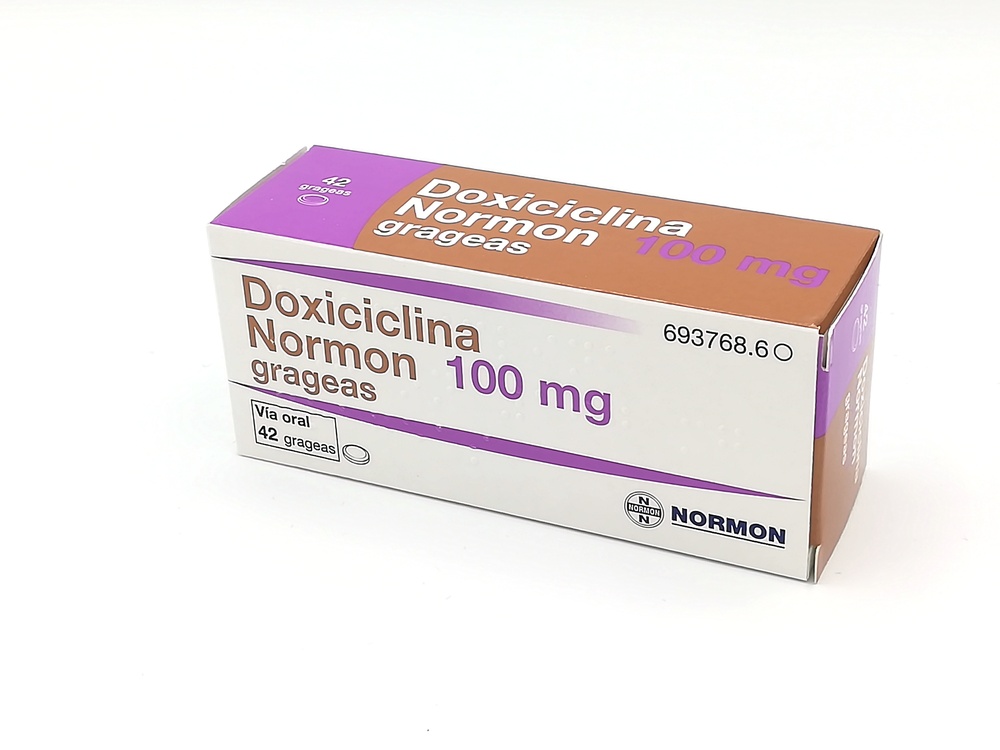
- Alternativas a DOXICLAT 100 mg COMPRIMIDOS RECUBIERTOS CON PELICULAForma farmacéutica: CAPSULA, 100 mgPrincipio activo: DoxiciclinaFabricante: Laboratorios Llorens S.L.Requiere recetaForma farmacéutica: COMPRIMIDO, 100 mgPrincipio activo: DoxiciclinaFabricante: Laboratorios Normon S.A.Requiere recetaForma farmacéutica: CAPSULA, 100 mgPrincipio activo: DoxiciclinaFabricante: Laboratorio Reig Jofre, S.A.Requiere receta

Médicos online para DOXICLAT 100 mg COMPRIMIDOS RECUBIERTOS CON PELICULA
Comenta la dosis, los posibles efectos secundarios, interacciones, contraindicaciones o la revisión de receta de DOXICLAT 100 mg COMPRIMIDOS RECUBIERTOS CON PELICULA, sujeto a valoración médica y a la normativa local.









Obtén una receta de DOXICLAT 100 mg COMPRIMIDOS RECUBIERTOS CON PELICULA online
Rellena un formulario de 2 minutos
Cuéntanos tus síntomas, historial y el medicamento que necesitas.
Elige un médico o nosotros te asignamos uno
Escoge un especialista o te conectamos con el próximo médico disponible.
El médico revisa tu caso
Normalmente en 30 minutos. Puede hacerte preguntas adicionales por chat.
Recógela en cualquier farmacia
Receta electrónica enviada a tu correo, válida en toda España.
Preguntas frecuentes
DOXICLAT 100 mg COMPRIMIDOS RECUBIERTOS CON PELICULA requires receta en España. Puedes confirmarlo con un médico online según tu caso.
El principio activo de DOXICLAT 100 mg COMPRIMIDOS RECUBIERTOS CON PELICULA es Doxiciclina. Esta información ayuda a identificar medicamentos con la misma composición pero con diferentes nombres comerciales.
El precio medio en farmacia de DOXICLAT 100 mg COMPRIMIDOS RECUBIERTOS CON PELICULA es de aproximadamente 2.5 EUR. Puede variar según el fabricante y la forma farmacéutica.
DOXICLAT 100 mg COMPRIMIDOS RECUBIERTOS CON PELICULA es fabricado por Pierre Fabre Iberica S.A.. La marca y el envase pueden variar según el distribuidor.
Los Médicos de familia, Psiquiatras, Dermatólogos, Cardiólogos, Endocrinólogos, Gastroenterólogos, Neumólogos, Nefrólogos, Reumatólogos, Hematólogos, Infectólogos, Alergólogos, Geriatras, Pediatras, Oncólogos pueden valorar la prescripción de DOXICLAT 100 mg COMPRIMIDOS RECUBIERTOS CON PELICULA cuando esté clínicamente indicado. Puedes reservar una videoconsulta para comentar tu caso y las opciones de tratamiento.
España cuenta con una infraestructura sanitaria bien desarrollada en ciudades principales como Madrid, Barcelona, Valencia y Sevilla. Las farmacias están ampliamente disponibles y operan bajo estrictas regulaciones, garantizando el acceso a medicamentos con receta.
Puedes comprar DOXICLAT 100 mg COMPRIMIDOS RECUBIERTOS CON PELICULA en Madrid, Barcelona, Sevilla o Valencia en cualquier farmacia local con una receta válida.
Para obtener una receta, puedes utilizar Oladoctor:
Otros medicamentos con el mismo principio activo (Doxiciclina) incluyen DOSIL 100 MG CÁPSULAS DURAS, DOXICICLINA NORMON 100 MG COMPRIMIDOS RECUBIERTOS, DOXIPIL 100 mg CAPSULAS DURAS. Pueden tener diferentes nombres comerciales o formulaciones, pero contienen el mismo componente terapéutico. Consulta siempre con un médico antes de cambiar o iniciar un nuevo medicamento.
