







Cómo usar DOTAREM 0,5 mmol/ml SOLUCION INYECTABLE EN JERINGA PRECARGADA
Traducción generada por IA
Este contenido ha sido traducido automáticamente y se ofrece solo con fines informativos. No sustituye la consulta con un profesional sanitario.
Ver originalContenido del prospecto
Introducción
Prospecto: información para el usuario
DOTAREM 0,5 mmol/ml solución inyectable en jeringa precargada
Acido Gadotérico
Lea todo el prospecto detenidamente antes de empezar a usar este medicamento, porque contiene información importante para usted.
- Conserve este prospecto, ya que puede tener que volver a leerlo.
- Si tiene alguna duda, consulte a su médico o farmacéutico.
- Si experimenta efectos adversos, consulte a su médico o farmacéutico, incluso si se trata de efectos adversos que no aparecen en este prospecto. Ver sección 4.
Contenido del prospecto
- Qué es Dotarem y para qué se utiliza
- Qué necesita saber antes de que se le administre Dotarem
- Cómo se le administrará Dotarem
- Posibles efectos adversos
- Conservación de Dotarem
- Contenido del envase e información adicional
1. Qué es Dotarem y para qué se utiliza
Este medicamento es únicamente para uso diagnóstico.
Dotarem es un medio de contraste utilizado en adultos y niños. Pertenece al grupo de los medios de contraste utilizados para imagen por resonancia magnética (IRM).Dotarem se utiliza en exploraciones de imagen por resonancia magnética (RM) para realzar el contraste de la imagen. El realce mejora el exámen de algunas zonas del cuerpo.

2. Qué necesita saber antes de empezar a usar Dotarem
No se le debe administrar Dotarem:
- si es alérgico al principio activo o a cualquiera de los demás componentes de este medicamento ( incluidos en la sección 6).
- si es alérgico a los medicamentos que contienen gadolinio (como otros agentes de contraste utilizados en la imagen por resonancia magnética).
Adevertencias y precauciones
Informe a su médico o radiólogo en los siguientes casos:
- Si ha tenido una reacción a medios de contraste durante un examen previamente.
- Si tiene asma
- Si tiene antecedentes de alergia (tales como alergia al marisco, urticaria, fiebre del heno)
- Si tiene tratamiento con un beta-bloqueante (medicamentos utilizados para problemas de corazón, presión sanguínea alta, tales como metoprolol)
- Si sus riñones no funcionan correctamente
- Si recientemente se le ha realizado, o pronto se le va a realizar, un transplante de hígado
- si padece enfermedad que afecte al corazón o a los vasos sanguíneos
- Si ha tenido convulsiones o tiene tratamiento para la epilepsia.
En todos estos casos su médico o radiólogo valorará el balance beneficio-riesgo y decidirá si se le debe administrar Dotarem .
Si le administra Dotarem, su médico o radiólogo tomará las precauciones necesarias y la administración de Dotarem será cuidadosamante supervisada.
Su médico o radiólogo puede decidir realizarle un análisis de sangre para comprobar el correcto funcionamiento de sus riñones antes de decidir el uso de Dotarem, especialmente si usted tiene 65 años o es mayor.
Recién nacidos y lactantes
Debido a la inmadurez de la función renal en recién nacidos de hasta 4 semanas de edad y en lactantes de hasta 1 año de edad, el ácido gadotérico debe emplearse únicamente tras lavaloración del médico.
Quitese todos los objetos metálicos que usted lleva antes del examen. Informe a su médico si usted tiene:
- un marcapasos
- un clip vascular
- una bomba de infusión
- un estimulador nervioso
- un implante coclear (implante en el interior del oído)
- cualquier cuerpo extraño metálico sospechoso, en particular en el ojo.
Esto es importante porque pueden causar problemas serios, debido a que los equipos de imagen por resonancia magnética utilizan campos magnéticos muy fuertes.
Uso de Dotarem conotros medicamentos
Informe a su médico o radiólogo si está tomando, ha tomado recientemente o pudiera tener que tomar cualquier otro medicamento. En particular, por favor informe a su médico, radiólogo o farmacéutico si usted está tomando o ha tomado recientemente medicamentos para el corazón o alteraciones de la presión arterial tales como beta- bloqueantes, sustancias vasoactivas, inhibidores de la enzima convertidora de angiotensina y antagonistas del receptor de angiotensina II..
Uso de Dotarem con los alimentos y bebidas
No existen interacciones de Dotarem con comida o bebida. Sin embargo, por favor consulte a su médico, radiólogo o farmacéutico si es necesario no comer ni beber antes de la prueba.
Embarazo y lactancia
Si está embarazada o en periodo de lactancia, cree que podría estar embarazada o tiene intención de quedarse embarazada, consulte a su médico o radiólogo antes de utilizar este medicamento.
Embarazo:
El ácido gadotérico puede atravesar la placenta. Se desconoce si afecta al feto. Dotarem no debe utilizarse durante el embarazo a menos que sea estrictamente necesario.
Lactancia:
Su médico o radiólogo valorará si usted debe continuar la lactancia o si debe interrumpirla por un periodo de 24 horas después de la administración de Dotarem.
Conducción y uso de máquinas
No existen datos disponibles sobre los efectos de Dotarem en la capacidad de conducir o usar máquinas. Si usted se siente indispuesto después de la prueba, siente como náuseas (sensación de malestar), usted no debe conducir o utilizar máquinas.
3. Cómo usar Dotarem
Dotarem se administra por vía intravenosa.
Durante el examen,usted estará bajo supervisión de un médico o radiólogo. Se le dejará una aguja de plástico en su vena; esto permitirá al médico inyectarle medicamentos apropiados de emergencia, si fuera necesario. Si usted experimenta una reacción alérgica, se parará la administración de Dotarem.
Dotarem se puede administrar manualmente o mediante un inyector automático. En recién nacidos y lactantes, el medicamento debe ser administrado manualmente.
El procedimiento se realizará en un hospital o clínica. El personal sanitario conoce las precauciones que tienen que ser tomadas para el examen.También conocen cualquier posible complicación que puede aparacer.
Dosis
Su médico o radiólogo determinará la dosis que usted recibirá y supervisará la inyección.
Posología en poblaciones especiales
El uso de Dotarem no está recomendado en pacientes con problemas renales graves o en pacientes a los que recientemente se les haya, o pronto se les va a realizar, un transplante de hígado. Sin embargo, si se requiere el uso, durante una exploración sólo se le debe administrar una dosis de Dotarem y no debe administrársele una segunda inyección hasta que hayan transcurrido al menos 7 días.
Neonatos, lactantes, niños y adolescentes
Debido a la inmadurez de la función renal en recién nacidos de hasta 4 semanas de edad y en lactantes de hasta 1 año de edad, el ácido gadotérico deber emplearse únicamente tras la valoración del médico.
Los niños sólo deben recibir una dosis de Dotarem durante el escáner y no deben recibir una segunda dosis hasta al menos transcurridos 7 días.
El uso para angiografía no está recomendado en niños menores de 18 años.
Pacientes de edad avanzada
Si usted tiene 65 años o es mayor no es necesario que se le ajuste la dosis pero podría realizársele un análisis de sangre para comprobar el correcto funcionamiento de sus riñones.
Si se le ha administrado demasiado Dotarem
Es altamente improbable que le administren una sobredosis. Le administrarán Dotarem tras el ajuste médico por una persona entrenada. En el verdadero caso de sobredosis, Dotarem puede ser eliminado del cuerpo por hemodiálisis (la limpieza de sangre).
En caso de sobredosis o ingestión accidental, consultar al Servicio de Información Toxicológica. Teléfono 91 562 04 20.
Al final de este prospecto existe información adicional sobre el uso y manejo de este medicamento por el médico o profesional sanitario.
Consulte a su médico o radiólogo en caso de duda sobre el uso de este medicamento.

4. Posibles efectos adversos
Al igual que todos los medicamentos, este medicamento puede producir efectos adversos, aunque no todas las personas los sufran.
Después de la administración, estará bajo observación durante al menos media hora. La mayor parte de efectos secundarios ocurren inmediatamente o en ocasiones se pueden retrasar. Algunos efectos pueden ocurrir hasta siete días después de la inyección de Dotarem.
Hay un pequeño riesgo de que usted pueda tener una reacción alérgica a Dotarem. Tales reacciones pueden ser severas y pueden causar en un shock (caso de reacción alérgica que podría poner su vida en peligro). Los siguiente síntomas pueden ser los primeros signos de un shock. Informe inmediatamente a su médico, radiólogo o profesional sanitario si usted experimenta cualquiera de ellos:
- hinchazón de la cara, la boca o la garganta que puede causarle dificultades en tragar o respirar
- hinchazón de manos y piés
- mareo(hipotensión)
- Dificultad para respirar
- silbidos al respirar
- tos
- picor
- moqueo
- estornudos
- irritación de ojos
- habones
- erupción cutanea.
Efectos adversos poco frecuentes (pueden afectar hasta 1 de cada 100 pacientes)
- hipersensibilidad
- dolor de cabeza
- sabor en la boca inusual
- mareo
- somnolencia
- sensación de hormigueo, calor, frío y/o dolor
- subida o bajada de la presión arterial
- náuseas (sentirse indispuesto)
- dolor de estómago
- erupción
- sensación de calor, sensación de frío
- astenia
- molestias en el lugar de la inyección, reacción en el lugar de la inyección, frío en el lugar de la inyección, inflamación en el lugar de la inyección, difusión del medicamento fuera del vaso sanguíneo, que puede originar una inflamación (enrojecimiento y dolor local)
Efectos adversos raros (pueden afectar hasta 1 de cada 1.000 pacientes)
- ansiedad, desmayos (mareo y sensación de pérdida inminente de consciencia)
- inflamación de los párpados
- palpitaciones
- estornudos
- vómitos (estar indispuesto)
- diarrea
- aumento de la secreción salivar
- habones, picor, sudoración
- dolor de pecho, escalofríos
Efectos adversos muy raros (pueden afectar hasta 1 de cada 10.000 pacientes)
- reacciones anafilácticas o reacción tipo anafiláctico
- agitación
- coma, convulsiones, síncope (breve pérdida de conciencia), alteración del olfato (percepción de olores a menudo desagradables), temblor
- conjuntivitis, ojos rojos, visión borrosa, aumento de la secreción lagrimal
- parada del latido del corazón, latido rápido o lento del corazón, latido irregular del corazón, dilatación vascular, palidez
- parada respiratoria, edema pulmonar, dificultad al respirar, silbidos, congestión nasal, tos, garganta seca, contracción de la garganta con sensación de ahogo, espasmos respiratorios, inflamación de la garganta
- eccema, enrojecimiento de la piel, inflamación de los labios y localizada en la boca
- calambres musculares, debilidad muscular, dolor de espalda
- malestar, malestar de pecho, fiebre, inflamación de la cara, difusión del medicamento fuera de los vasos sanguíneos que puede dar lugar a la muerte del tejido en el lugar de la inyección, inflamación de una vena
- disminución del nivel de oxígeno en sangre.
Se han notificado casos de fibrosis nefrogénica sistémica (que provoca un endurecimiento de la piel y puede afectar también a los tejidos blandos y los órganos internos), la mayoría de los cuales fueron en pacientes a los que se les administró Dotarem conjuntamente con otros medios de contraste de gadolinio.
Si, durante las semanas después de la pruebade imagen por resonancia magnética (IRM), usted nota cambios del color y/o espesor de su piel en cualquier parte de su cuerpo, informe al radiólogo que realizó la prueba.
Si experimenta efectos adversos, consulte a su médico o farmacéutico, incluso si se trata de efectos adversos que no aparecen en este prospecto.
Comunicación de efectos adversos:
Si experimenta cualquier tipo de efecto adverso, consulte a su médico o radiólogo, incluso si se trata de posibles efectos adversos que no aparecen en este prospecto. También puede comunicarlos directamente a través del sistema de notificación nacional: Sistema Español de Farmacovigilancia de medicamentos de Uso Humano: www.notificaram.es. Mediante la comunicación de efectos adversos usted puede contribuir a proporcionar más información sobre la seguridad de este medicamento.
5. Conservación de Dotarem
Mantener este medicamento fuera de la vista y del alcance de los niños.
No congelar las jeringas precargadas.
No utilice Dotarem después de la fecha de caducidad que aparece en la jeringa después de “CAD”. La fecha de caducidad es el último día del mes que se indica.
Los medicamentos no se deben tirar por los desagües ni a la basura. Deposite los envases y los medicamentos que no necesita en el Punto SIGREde la farmacia. En caso de duda pregunte a su farmacéutico cómo deshacerse de los envases y de los medicamentos que no necesita. De esta forma ayudará a proteger el medio ambiente.
6. Contenido del envase e información adicional
Composición de Dotarem
El principio activo es ácido gadotérico.
Los excipientes son meglumina y agua para preparación de inyectables.
1 ml de solución inyectable contiene 376,4 mg de gadoterato de meglumina (equivalente a 0,5 mmol) que contienen 279,32 mg de ácido gadotérico y que contiene 78,6 mg de gadolinio.
Los demás componentes son meglumina y agua para preparaciones inyectables.
5 ml de solución inyectable contienen 1.882 mg de gadoterato de meglumina (equivalente a 2,5 mmol) que contienen 1396,6 mg de ácido gadotérico y que contiene 393 mg de gadolinio
10 ml de solución inyectable contienen 3.764 mg de gadoterato de meglumina (equivalente a 5 mmol) que contienen 2.793,2 mg de ácido gadotérico y que contiene 786 mg de gadolinio
15 ml de solución inyectable contienen 5.646 mg de gadoterato de meglumina (equivalente a 7,5 mmol) que contienen 4.189,8 mg de ácido gadotérico y que contiene 1.179 mg de gadolinio
20 ml de solución inyectable contienen 7.528 mg de gadoterato de meglumina (equivalente a 10 mmol) que contienen 5.586,4 mg de ácido gadotérico y que contiene 1.572 mg de gadolinio
60 ml de solución inyectable contienen 22.583 mg de gadoterato de meglumina (equivalente a 30 mmol) que contienen 16.759,2 mg de ácido gadotérico y que contiene 4.716 mg de gadolinio
100ml de solución inyectable contienen 37.639 mg de gadoterato de meglumina (equivalente a 50 mmol) que contienen 27.932 mg de ácido gadotérico y que contiene 7.860 mg de gadolinio
Aspecto del producto y contenido del envase
Dotarem es una solución transparente de incolora a amarilla para inyección intravenosa.
El envase de Dotarem contiene un vial de 5, 10, 15, 20, formato unidosis, un frasco de 60 o 100 formato multidosis.
Puede que solamente estén comercializados algunos tamaños de envase.
Titular de la autorización de comercialización
Guerbet
BP 57400
95943 Roissy CdG cedex
France
Tel.: +33 1 45 91 50 00
Responsable de la fabricación
Guerbet
16-24 rue Jean Chaptal
93600 Aulnay-sous-Bois
France
Para cualquier información sobre esta medicamento, por favor póngase en contacto con el representante local del Titular de Autorización:
Laboratorios Farmacéuticos Guerbet, S.A.
Pº de la Castellana, 91, 3ª planta
28046 Madrid
+ (34) 91 504 50 00
Este medicamento está autorizado en los estados miembros del Espacio Económico Europeo con el siguiente nombre: Dotarem
Fecha de la última revisión de este prospecto: Mayo 2024
Otras fuentes de información
La información detallada y actualizada de este medicamento está disponible en la página Web de la Agencia Española de Medicamentos y Productos Sanitarios (AEMPS) http://www.aemps.gob.es/.
_____________________________________________________________________________
Esta información está destinada únicamente para el médico o el profesional sanitario:
Posología y forma de administración:
Debe utilizarse la dosis más baja que proporcione realce suficiente para fines diagnósticos. La dosis debe calcularse en función del peso corporal del paciente y no debe superar la dosis recomentada por kilogramo de peso indicada en esta sección.
La dosis recomendada es de 0,1 mmol/kg de peso corporal (es decir 0,2 ml/kg de peso corporal) en todas las indicaciones autorizadas.
Sólo si se considera necesario, se podría administrar una dosis más elevada exclusivamente en las siguientes indicaciones:
- Para la detección y/o caracterización de tumores cerebrales primarios y secundarios (conocidos o sospechados) puede administrarse una dosis de 0,3 mmol/kg de peso corporal (es decir, de 0,6 ml/kg de peso corporal), en forma de dos inyecciones intravenosas consecutivas en embolada: una primera inyección de 0,1 mmol/kg de peso corporal, seguida 20 minutos después de otra inyección de 0,2 mmol/kg de peso corporal.
- En angiografía por RM para estudio arterial (excepto de arterias coronarias) se puede justificar una segunda inyección consecutiva de 0,1 mmol/kg de peso corporal administrada en las mismas condiciones que la primera, sólo en circunstancias excepcionales (por ejemplo ante la imposibilidad de obtener imágenes satisfactorias con la primera dosis porque el momento de la adquisición de la imagen no ha sido perfecto, el territorio vascular es demasiado extenso o existe lateralización de las alteraciones hemodinámicas en territorios vasculares bilaterales). Sin embargo, si se presume que se van a administrar dos dosis consecutivas de DOTAREM antes de comenzar la arteriografía de ciertas regiones (como pulmón o extremidades inferiores) es conveniente administrar sólo 0,05 mmol/kg de peso corporal para cada dosis, dependiendo del equipo de RM que se va a utilizar para obtener las imágenes.
Población pediátrica (0-18 años)
La máxima dosis recomendada es de 0,1 mmol/kg de peso corporal (es decir 0,2 ml/kg de peso corporal) en todas las indicaciones autorizadas, excepto para angiografía por RM para estudio arterial. No se debe utilizar más de una dosis durante el escáner.
- Debido a la inmadurez de la función renal en recién nacidos de hasta 4 semanas de edad y en lactantes de hasta 1 año de edad, Dotarem debe emplearse únicamente en estos pacientes tras haber sido considerado cautelosamente, con una dosis que no sobrepase 0,1 mmol/kg de peso corporal. No se debeemplear más de una dosis durante el escáner. Debido a la falta de información sobre una administración consecutiva, las inyecciones de Dotarem no deben repetirse a menos que el intervalo entre inyecciones sea de al menos 7 días.
- Ácido Gadoterico no está recomendado para angiografía por RM para estudio arterial en niños menores de 18 años de edad, porque los datos de seguridad y eficacia en esta indicación son insuficientes.
Pacientes de edad avanzada (población mayor de 65 años de edad)
No se considera necesario ajustar la dosis. Debe tenerse precaución en los pacientes de edad avanzada.
Antes de la administración deDotarem, se recomienda evaluar a todos los pacientes para detectar una posible disfunción renal mediante pruebas de laboratorio.
Se han notificado casos de fibrosis nefrogénica sistémica (FNS) asociados a la utilización de algunos medios de contraste de gadolinio en pacientes con insuficiencia renal grave aguda o crónica (TFG o tasa de filtración glomerular < 30 ml/min/1,73 m2). Los pacientes sometidos a trasplante hepático tienen un riesgo especial ya que la incidencia de un fallo renal agudo es elevada en este grupo. Puesto que existe la posibilidad de que pueda ocurrir una FNS con Dotarem, éste solo debe utilizarse en pacientes con insuficiencia renal grave y en pacientes en el periodo perioperatorio de un trasplante hepático tras una valoración cuidadosa del riesgo/beneficio y si la información diagnóstica es imprescindible y no puede obtenerse mediante RM sin contraste. Si es necesario el uso de Dotarem, la dosis no debe exceder 0,1 mmol/kg de peso corporal. Durante una exploración no debe administrarse más de una dosis. Debido a la ausencia de información sobre la administración repetida, la administración de Dotarem no debe repetirse a no ser que haya transcurrido un intervalo entre inyecciones de al menos 7 días.
Dado que la eliminación renal del ácido gadotérico puede estar reducida en los pacientes de edad avanzada, es especialmente importante evaluar los pacientes de 65 años o mayores para detectar una posible disfunción renal.
La hemodiálisis poco después de la administración de Dotarem puede resultar útil para la eliminación corporal de Dotarem. No hay evidencia que apoye el inicio de la hemodiálisis para la prevención o tratamiento de la FNS en pacientes que no están sometidos a hemodiálisis.
No debe utilizarse Dotarem durante el embarazo a no ser que la situación clínica de la mujer requiera tratamiento con ácido gadotérico.
La continuación o la interrupción de la lactancia 24 horas después de la administración de ácido gadotérico, quedará a discreción del médico y de la madre en periodo de lactancia.
Formas de administración:
Cuando utilice Dotarem han de observarse las normas de seguridad habituales en RM.
No debe administrarse Dotarem mediante inyección intratecal (subaracnoidea) o epidural. Vía de administración: estrictamente intravenosa.
Mientras se realiza el examen, es preciso vigilancia médica, así como el mantenimiento de una vía de acceso venoso para realizar cualquier terapia sintomática que pueda ser requerida, así como otras medidas de precaución específicas (ver apartado “ Antes de usar Dotarem”)
El paciente deberá permanecer en ayunas desde 2 horas antes de la exploración para evitar aspiraciones, deberá disponerse del equipo y de los fármacos adecuados para tratar una posible reacción anafilactoide. Además, la administración intravascular del medio de contraste deberá realizarse, si es posible, con el paciente tumbado. Después de la administración, el paciente deberá permanecer en observación como mínimo media hora, ya que la experiencia demuestra que la mayoría de los efectos adversos ocurren durante ese tiempo.
Dependiendo de la cantidad de ácido gadotérico que se le administra al niño, es preferible emplear viales de ácido gadotérico con una jeringuilla de un sólo uso con un volumen adaptado a esta cantidad para que la precisión del volumen inyectado sea mayor.
En recién nacidos y lactantes, la dosis requerida debe ser administrada manualmente.
Instrucciones de uso:
Dotarem es una solución inyectable que se presenta en viales con tapón de elastómero de 5, 10, 15, 20 ml y en frascos de 60 y 100 ml para empleo con inyector.
Uso de los viales de 5, 10, 15 y 20 ml:
La preparación del medio de contraste requiere levantar el disco de plástico del frasco, limpiar el tapón con alcohol y punzar con una aguja incorporada en una jeringuilla, y extraer la cantidad de producto necesaria para la prueba.
Uso de los frascos de 60 ml y 100 ml para empleo con inyector:
El medio de contraste debe ser administrado por medio de un inyector automático, el uso del cual está prohibido en niños menores de 2 años.
El tapón de goma debe ser punzado únicamente con un dispositivo de extracción adecuado (spike). En general el dispositivo de extracción debe tener las siguientes características: trocar, filtro de aire estéril, cierre luer con tapón protector y sistemas antirreflujo.
El tubo del inyector al paciente (tubo de paciente) debe ser cambiado después de cada examen. El medio de contraste que quede en el frasco, los tubos conectores y todas las partes fungibles del sistema de inyección deben ser desechadas al final de cada sesión de exploración. Cualquier instrucción específica del fabricante del equipo debe ser también seguida.
Toda solución para inyección debe ser inspeccionada visualmente antes de su uso. Utilizar únicamente soluciones transparentes y libres de partículas visibles.
La etiqueta separable de los viales/frascos debe pegarse en la historia del paciente a fin de permitir un registro preciso del medio de contraste de gadolinio utilizado. También se debe registrar la dosis utilizada. Si se utiliza la historia electrónica del paciente, se debe incluir el nombre del medicamento, número de lote y la dosis en la misma.
- País de registro
- Forma farmacéuticaINYECTABLE, 0,05 mmol acido gadoterico/ml
- Código ATCV08CA02
- Principio activo
- Requiere recetaSí
- Fabricante
- Esta información es de carácter general y no sustituye la consulta con un profesional sanitario.
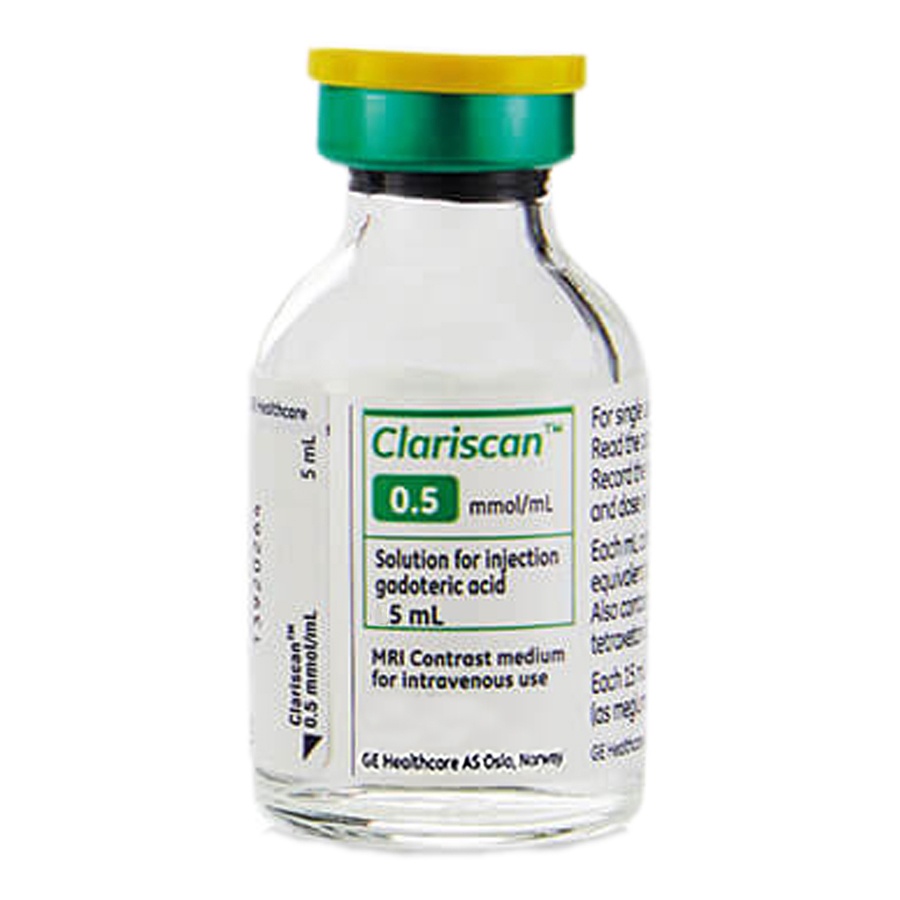
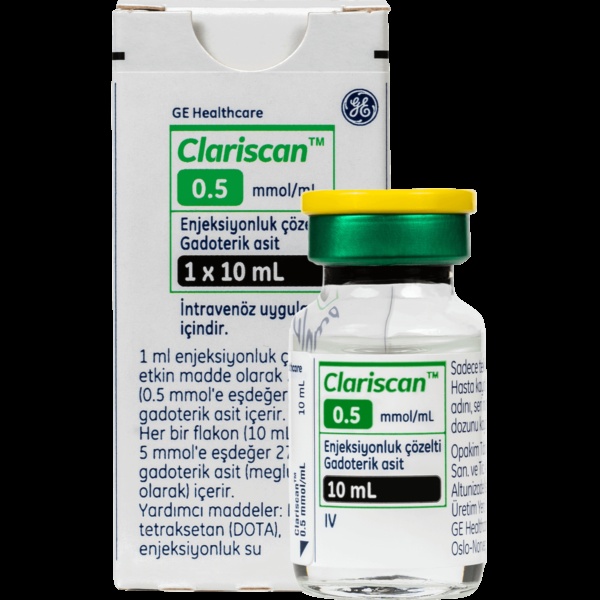
- Alternativas a DOTAREM 0,5 mmol/ml SOLUCION INYECTABLE EN JERINGA PRECARGADAForma farmacéutica: INYECTABLE, 0,5 mmol/mlPrincipio activo: Gadoterico acidoFabricante: Ge Healthcare Bio-Sciences, S.A.U.Requiere recetaForma farmacéutica: INYECTABLE, 0,5 mmol/mlPrincipio activo: Gadoterico acidoFabricante: Ge Healthcare Bio-Sciences, S.A.U.Requiere recetaForma farmacéutica: INYECTABLE, 0,5 mmol/mlPrincipio activo: Gadoterico acidoFabricante: Sanochemia Pharmazeutika GmbhRequiere receta

Médicos online para DOTAREM 0,5 mmol/ml SOLUCION INYECTABLE EN JERINGA PRECARGADA
Comenta la dosis, los posibles efectos secundarios, interacciones, contraindicaciones o la revisión de receta de DOTAREM 0,5 mmol/ml SOLUCION INYECTABLE EN JERINGA PRECARGADA, sujeto a valoración médica y a la normativa local.









Obtén una receta de DOTAREM 0,5 mmol/ml SOLUCION INYECTABLE EN JERINGA PRECARGADA online
Rellena un formulario de 2 minutos
Cuéntanos tus síntomas, historial y el medicamento que necesitas.
Elige un médico o nosotros te asignamos uno
Escoge un especialista o te conectamos con el próximo médico disponible.
El médico revisa tu caso
Normalmente en 30 minutos. Puede hacerte preguntas adicionales por chat.
Recógela en cualquier farmacia
Receta electrónica enviada a tu correo, válida en toda España.
Preguntas frecuentes
DOTAREM 0,5 mmol/ml SOLUCION INYECTABLE EN JERINGA PRECARGADA requires receta en España. Puedes confirmarlo con un médico online según tu caso.
El principio activo de DOTAREM 0,5 mmol/ml SOLUCION INYECTABLE EN JERINGA PRECARGADA es Gadoterico acido. Esta información ayuda a identificar medicamentos con la misma composición pero con diferentes nombres comerciales.
DOTAREM 0,5 mmol/ml SOLUCION INYECTABLE EN JERINGA PRECARGADA es fabricado por Guerbet. La marca y el envase pueden variar según el distribuidor.
Los Médicos de familia, Psiquiatras, Dermatólogos, Cardiólogos, Endocrinólogos, Gastroenterólogos, Neumólogos, Nefrólogos, Reumatólogos, Hematólogos, Infectólogos, Alergólogos, Geriatras, Pediatras, Oncólogos pueden valorar la prescripción de DOTAREM 0,5 mmol/ml SOLUCION INYECTABLE EN JERINGA PRECARGADA cuando esté clínicamente indicado. Puedes reservar una videoconsulta para comentar tu caso y las opciones de tratamiento.
España cuenta con una infraestructura sanitaria bien desarrollada en ciudades principales como Madrid, Barcelona, Valencia y Sevilla. Las farmacias están ampliamente disponibles y operan bajo estrictas regulaciones, garantizando el acceso a medicamentos con receta.
Puedes comprar DOTAREM 0,5 mmol/ml SOLUCION INYECTABLE EN JERINGA PRECARGADA en Madrid, Barcelona, Sevilla o Valencia en cualquier farmacia local con una receta válida.
Para obtener una receta, puedes utilizar Oladoctor:
Otros medicamentos con el mismo principio activo (Gadoterico acido) incluyen CLARISCAN 0,5 MMOL/ML SOLUCION INYECTABLE EFG, CLARISCAN 0,5 MMOL/ML SOLUCION INYECTABLE EN JERINGA PRECARGADA EFG, CYCLOLUX 0,5 MMOL/ML SOLUCION INYECTABLE EFG. Pueden tener diferentes nombres comerciales o formulaciones, pero contienen el mismo componente terapéutico. Consulta siempre con un médico antes de cambiar o iniciar un nuevo medicamento.
