






Cómo usar DOLQUINE 200 mg COMPRIMIDOS RECUBIERTOS
Traducción generada por IA
Este contenido ha sido traducido automáticamente y se ofrece solo con fines informativos. No sustituye la consulta con un profesional sanitario.
Ver originalContenido del prospecto
Introducción
Prospecto: información para el usuario
Dolquine 200 mg comprimidos recubiertos
sulfato de hidroxicloroquina
Lea todo el prospecto detenidamente antes de empezar a tomar este medicamento, porque contiene información importante para usted.
- Conserve este prospecto, ya que puede tener que volver a leerlo.
- Si tiene alguna duda, consulte a su médico o farmacéutico.
- Este medicamento se le ha recetado solamente a usted, y no debe dárselo a otras personas, aunque tengan los mismos síntomas que usted, ya que puede perjudicarles.
- Si experimenta efectos adversos, consulte a su médico, o farmacéutico, incluso si se trata de efectos adversos que no aparecen en este prospecto. Ver sección 4.
Contenido del prospecto:
- Qué es Dolquine y para qué se utiliza
- Qué necesita saber antes de empezar a tomar Dolquine
- Cómo tomar Dolquine
- Posibles efectos adversos
- Conservación de Dolquine
- Contenido del envase e información adicional
1. Qué es Dolquine y para qué se utiliza
Dolquine pertenece al grupo de medicamentos denominados antipalúdicos.
Dolquine está indicado en:
Adultos
- Tratamiento de artritis reumatoide aguda o crónica.
- Tratamiento de lupus eritematoso sistémico y discoide crónico.
- Prevención y tratamiento de malaria (paludismo) no complicada causada por especies de plasmodio sensibles (parásitos que causan la malaria), cuando no resulten adecuados o no estén disponibles los tratamientos de primera elección.
Adolescentes (de 12 años de edad y mayores) y niños(de9 a11 años de edad de peso corporal superior a31 kg)
- Prevención y tratamiento de malaria (paludismo) no complicada causada por especies de plasmodio sensibles (parásitos que causan la malaria), cuando no resulten adecuados o no estén disponibles los tratamientos de primera elección.

2. Qué necesita saber antes de empezar a tomar Dolquine
No tome Dolquine
- si es alérgico a hidroxicloroquina o a alguno de los demás componentes de este medicamento (incluidos en la sección 6).
- si padece alguna alteración de la retina.
- en tratamientos largos en niños.
- si la malaria está causada por un parásito resistente a cloroquina no se puede utilizar Dolquine para prevención ni tratamiento.
- si está tomando alguno de los siguientes medicamentos:
- Arteméter/lumefantrina y mefloquina (usados para tratar la malaria).
- Natalizumab (usado para tratar la esclerosis múltiple).
- Vacunas de virus vivos atenuados.
- Pimecrolimús y Tacrolimús (usados para tratar inflamación de la piel (eccema)).
- Moxifloxacino (antibiótico).
- Agalsidasa alfa y beta (usado para tratar un trastorno hereditario denominado enfermedad de Fabry).
Si no está seguro, hable con su médico o farmacéutico antes de tomar este medicamento.
Algunas personas tratadas con Dolquine pueden experimentar problemas de salud mental como pensamientos irracionales, ansiedad, alucinaciones, confusión o depresión, incluidos pensamientos de autolesión o suicidio, incluso aquellas que nunca antes han tenido problemas similares. Si usted u otras personas a su alrededor notan alguno de estos efectos adversos (ver sección 4) consulte con un médico inmediatamente.
Advertencias y precauciones
Consulte a su médico o farmacéutico antes de empezar a tomar Dolquine
- si padece:
- alteraciones de la piel como psoriasis,
- enfermedades graves del riñón,
- deficiencia de un enzima denominado glucosa-6-fosfatodeshidrogenasa (anemia hemolítica),
- alguna enfermedad del hígado,
- miastenia gravis (enfermedad autoinmune que cursa con debilidad muscular y fatiga),
- alcoholismo.
- si los parásitos causantes de malaria son Plasmodium vivaxy Plasmodium ovalehay que administrar también primaquina para evitar recaídas,
- si se está tratando con Dolquine y padece porfiria (una enfermedad metabólica hereditaria) se puede agravar el cuadro,
- si padece alteraciones neurológicas (epilepsia),
- si es un paciente de edad avanzada deberá tener especial precaución para poder distinguir las alteraciones visuales propias de la enfermedad o la edad, de las provocadas por el medicamento,
- si padece alteraciones visuales. Antes de iniciar un tratamiento prolongado con Dolquine su médico le realizará un examen de los ojos y, luego, realizará exámenes periódicos. Consulte a su médico en cuanto advierta cualquier alteración visual.
- si tiene una infección crónica inactiva por el virus de la hepatitis B.
Evite exponerse al sol (aun estando nublado) y a lámpara de rayos ultravioleta (UVA), mientras use este medicamento.
Si toma Dolquine durante un periodo largo probablemente su médico le realizará revisiones periódicas. Debe informar de cualquier síntoma y circunstancia nueva o inusual siempre que visite a su médico.
La hidroxicloroquina puede causar disminución del nivel de glucosa en sangre. Por favor, consulte a su médico por los signos y síntomas de niveles bajos de glucosa en sangre. Puede ser necesario comprobar el nivel de glucosa en sangre.
Se han notificado erupciones cutáneas graves con el uso de hidroxicloroquina (ver sección 4 posibles efectos adversos). Con frecuencia, la erupción puede consistir en úlceras en la boca, garganta, nariz, genitales y conjuntivitis (ojos rojos e inflamados). Estas erupciones cutáneas graves van precedidas a menudo de síntomas de tipo gripal, como fiebre, dolor de cabeza y dolor corporal. La erupción cutánea puede progresar a ampollas generalizadas y descamación de la piel. Si presenta estos síntomas cutáneos, deje de tomar hidroxicloroquina y póngase en contacto con su médico inmediatamente.
Otros medicamentos y Dolquine
Informe a su médico o farmacéutico si está utilizando, ha utilizado recientemente o pudiera tener que utilizar cualquier otro medicamento.
Tenga en cuenta que estas instrucciones pueden ser también de aplicación a medicamentos que se hayan utilizado antes o puedan utilizarse después.
Dolquine puede afectar al mecanismo de acción de algunos medicamentos y algunos medicamentos pueden afectar a Dolquine.
Informe a su médico o farmacéutico si está tomando alguno de los siguientes medicamentos ya que puede ser necesario modificar la dosis de alguno de ellos:
- Caolín y antiácidos.
- Medicamentos para tratar la diabetes como insulina.
- Antihelmínticos (usados para eliminar los gusanos intestinales).
- Antipsicóticos: fenotiazinas (usados para tratar trastornos mentales).
- Medicamentos utilizados para el corazón (digoxina y algún beta bloqueante).
Alguno de los medicamentos puede aumentar el número de efectos secundarios causados por Dolquine o disminuir sus efectos, éstos incluyen:
- Dapsona (usado para el tratamiento de la lepra y algunas enfermedades de la piel).
- Vacunas (inactivadas).
- Equinácea (medicamento tradicional a base de plantas para el tratamiento de apoyo del resfriado común).
- Trastuzumab (usado para tratar algunos tipos de cánceres).
Informe a su médico o farmacéutico si está tomando alguno de los siguientes medicamentos:
- Antibióticos aminoglucósidos.
- Cimetidina (reduce la producción de ácido en el estómago).
- Neostigmina y piridostigmina (para la debilidad muscular grave).
- Tacrolimús (en caso de trasplante de órganos).
- Fenilbutazona (antiinflamatorio no esteroideo).
- Fármacos hepatotóxicos.
- Medicamentos que puedan causar irritación de la piel, que puedan dañar el hígado o los ojos.
- Bupropión (usado para tratar la depresión).
- Leflunomida (antirreumático).
Toma de Dolquine con alimentos y bebidas
Se recomienda tomar Dolquine con comida o leche.
Embarazo y lactancia
Si está embarazada o en periodo de lactancia, cree que podría estar embarazada o tiene intención de quedarse embarazada, consulte a su médico o farmacéutico antes de utilizar este medicamento.
Embarazo
Dolquine puede estar asociado con un pequeño aumento del riesgo de malformaciones importantes y no debe usarse durante el embarazo a menos que su médico considere que los beneficios superan los riesgos.
Lactancia
Dolquine pasa a leche materna. Dolquine no debe usarse durante la lactancia a menos que su médico considere que los beneficios superan los riesgos.
Consulte a su médico o farmacéutico antes de tomar cualquier medicamento si está embarazada o en periodo de lactancia. Su médico le indicará si Dolquine es adecuado para usted.
Conducción y uso de máquinas
No conduzca ni maneje herramientas o máquinas hasta saber cómo le afecta este medicamento. Pueden aparecer efectos adversos tales como mareo y alteraciones visuales.
3. Cómo tomar Dolquine
Siga exactamente las instrucciones de administración de este medicamento indicadas por su médico. En caso de duda, consulte de nuevo a su médico o farmacéutico.
Dolquine se administra por vía oral. Ingiera los comprimidos sin masticar durante las comidas o con un vaso de leche. La ranura sirve únicamente para partir el comprimido si le resulta difícil tragarlo entero.
Las dosis recomendadas se indican a continuación:
Adultos
- Tratamiento de artritis reumatoide
- Dosis inicial: 2 a 3 comprimidos (400 a 600 mg) al día según la respuesta del paciente al medicamento. Si aparecen efectos adversos se debe disminuir la dosis inicial para posteriormente (5-10 días) aumentarla de forma gradual.
- Dosis de mantenimiento: una vez se ha obtenido una respuesta adecuada (generalmente 4-12 semanas), se continuará con una dosis de mantenimiento de 1 o 2 comprimidos (200-400 mg) al día.
La dosis máxima diaria para tratamiento de larga duración es de 6,5 mg/kg de peso corporal ideal.
- Tratamiento de lupus eritematoso
- Dosis inicial: 2 comprimidos (400 mg) al día o 1 comprimido (200 mg) cada 12 horas, según la respuesta del paciente.
- Dosis de mantenimiento: 1 o 2 comprimidos (200 a 400 mg) al día.
La dosis máxima diaria para tratamiento de larga duración es de 6,5 mg/kg de peso corporal ideal.
- Prevención y tratamiento de malaria no complicada
Debe contarse con el asesoramiento de un experto. Antes de iniciar el tratamiento, se debe haber identificado la especie de plasmodio mediante pruebas fiables y conocer su sensibilidad.
Prevención de malaria no complicada:2 comprimidos (400 mg) una vez por semana, exactamente el mismo día de cada semana.
La prevención deberá iniciarse dos semanas antes de la exposición y continuar hasta 4 semanas después de dejar la zona endémica. Si no se comenzó la prevención antes de la exposición, puede administrarse una dosis inicial doble (4 comprimidos) en dos tomas separadas 6 horas y continuar según lo indicado anteriormente hasta 8 semanas después de dejar la zona endémica.
Tratamiento del ataque agudo de malaria no complicada:
Primera dosis: 4 comprimidos (800 mg).
Segunda dosis: 2 comprimidos (400 mg), 6 horas después de la primera dosis.
Tercera dosis: 2 comprimidos (400 mg), 24 horas después de la primera dosis.
Cuarta dosis: 2 comprimidos (400 mg), 48 horas después de la primera dosis.
La dosis máxima total es de 10 comprimidos (2000 mg).
Adolescentes (de 12 años de edad y mayores) y niños (de 9 a 11 años de edad de peso corporal superior a 31 kg)
- Prevención y tratamiento de malaria no complicada
Prevención de malaria no complicada:6,5 mg /Kg de peso corporal ideal una vez por semana, sin exceder la dosis recomendada para adultos.
La prevención deberá iniciarse dos semanas antes de la exposición y continuar hasta 4 semanas después de dejar la zona endémica. Si no se comenzó la prevención antes de la exposición, puede administrarse una dosis inicial doble en dos tomas separadas 6 horas y continuar según lo indicado anteriormente hasta 8 semanas después de dejar la zona endémica.
Tratamiento del ataque agudo de malaria no complicada:
Primera dosis: 13 mg/kg, sin exceder 4 comprimidos (800 mg).
Segunda dosis: 6,5 mg/kg sin exceder 2 comprimidos (400 mg), 6 horas después de la primera dosis.
Tercera dosis: 6,5 mg/kg sin exceder 2 comprimidos (400mg), 24 horas después de la primera dosis.
Cuarta dosis: 6,5 mg/kg sin exceder 2 comprimidos (400 mg), 48 horas después de la primera dosis.
La dosis máxima total para el tratamiento completo no superará los 30 mg/kg de peso corporal ideal, sin exceder la dosis recomendada para adultos.
Uso en pacientes con problemas de hígado o riñón:
Su médico decidirá si es necesario ajustar la dosis si tiene problemas de hígado o riñón.
Si toma más Dolquine del que debe
Si toma más Dolquine del que le haya indicado su médico podrá tener dolor de cabeza, sueño, alteraciones visuales, colapso circulatorio, convulsiones y parada cardiorrespiratoria.
En caso de sobredosis o ingestión accidental consulte inmediatamente a su médico o farmacéutico o llame al Servicio de Información Toxicológica, teléfono: 91 562 04 20, indicando el medicamento y la cantidad ingerida.
Si olvidó tomar Dolquine
Si olvidó tomar una dosis, tómela en cuanto se acuerde. No obstante, si queda poco tiempo para la toma siguiente, sáltese la dosis olvidada.
No tome una dosis doble para compensar las dosis olvidadas.
Si interrumpe el tratamiento con Dolquine
Consulte con su médico antes de suspender el tratamiento.
Si ha olvidado tomar varias dosis consulte a su médico para que le indique la pauta de dosificación a seguir hasta alcanzar su dosis de mantenimiento.
Si tiene cualquier otra duda sobre el uso de este medicamento, pregunte a su médico o farmacéutico.

4. Posibles efectos adversos
Al igual que todos los medicamentos, este medicamento puede producir efectos adversos, aunque no todas las personas los sufran.
Los efectos adversos pueden ocurrir con determinadas frecuencias, que se definen tal y como se indica a continuación:
Frecuentes(pueden afectar a entre 1 y 10 de cada 100 pacientes)
- Dolor de cabeza.
- Problemas en la córnea (una parte del ojo) que pueden causar visión borrosa, ver halos o molestia por la luz y pérdida de agudeza visual.
- Náuseas, diarrea, dolor abdominal, pérdida de apetito y vómitos.
- Pérdida de peso.
Poco frecuentes(pueden afectar a entre 1 y 10 de cada 1.000 pacientes)
- Cambios emocionales, sensación de nerviosismo, ver, sentir, u oír cosas que no son reales son síntomas de psicosis.
- Convulsión, movimiento incontrolable de los ojos.
- Sordera, zumbido en los oídos y sensación de que todo da vueltas (vértigo).
- Erupciones de la piel de varios tipos.
- Cambios en el color de la piel y mucosas.
- Picor.
- Alteración en el color del pelo (encanecimiento).
- Caída del cabello (alopecia).
- Erupción en la piel con la exposición a la luz solar.
- Enfermedad muscular.
Raros(pueden afectar a entre 1 y 10 de cada 10.000 pacientes)
- Insuficiencia de la médula ósea (tejido del interior del hueso que genera células sanguíneas).
- Enfermedades de la retina (una parte del ojo) que pueden llegar a producir pérdida de visión.
- Enfermedad del músculo del corazón.
- Debilidad muscular.
Muy raros(pueden afectar a menos de 1 de cada 10.000 pacientes)
- Función anormal del hígado e insuficiencia hepática.
- Psoriasis (una enfermedad de la piel).
Frecuencia no conocida(no puede estimarse a partir de los datos disponibles)
- Disminución del número de células de la sangre (anemia, leucopenia, trombocitopenia), disolución de glóbulos rojos (en individuos con deficiencia de Glucosa-6-fosfato deshidrogenasa) y agranulocitosis (falta de glóbulos blancos).
- Pesadillas.
- Incapacidad de coordinar movimientos.
- Parálisis del músculo extraocular.
- Sensación repentina de respiración dificultosa (broncoespasmo) e insuficiencia respiratoria.
- Urticaria.
- Agravamiento o precipitación de porfiria (enfermedad metabólica familiar).
- Irritabilidad y fatiga.
- Pérdida del reflejo foveal (afectación de la retina (una parte del ojo)).
- Disminución del nivel de glucosa en sangre.
- Depresión o pensamientos de autolesión o suicidio.
- Alucinaciones.
- Nerviosismo o ansiedad.
- Confusión.
- Agitación.
- Dificultad para dormir.
- Euforia o sobreexcitación.
Deje de tomar Dolquine y acuda a un médico inmediatamente si advierte alguno de los siguientes efectos adversos graves; es posible que necesite tratamiento médico urgente:
- Problemas hepáticos. Los síntomas pueden incluir una sensación general de malestar, con o sin ictericia (coloración amarillenta de la piel y los ojos), orina oscura, náuseas, vómitos y/o dolor abdominal. Se han observado casos raros de insuficiencia hepática (incluidos casos mortales).
- Reacciones cutáneas graves (ver sección 2, Advertencias y precauciones) como:
- erupción con fiebre y síntomas de tipo gripal y aumento del tamaño de los ganglios linfáticos. Podría tratarse de una enfermedad llamada reacción medicamentosa con eosinofilia y síntomas sistémicos (DRESS).
- ampollas, piel escamosa generalizada, manchas con pus junto con fiebre. Podría tratarse de una enfermedad llamada pustulosis exantemática generalizada aguda (PEGA).
- ampollas o descamación de la piel alrededor de los labios, ojos, boca, nariz y genitales, síntomas de tipo gripal y fiebre. Podría tratarse de una enfermedad llamada síndrome de Stevens-Johnson (SSJ).
- lesiones cutáneas múltiples, picor de la piel, dolores articulares, fiebre y sensación general de malestar. Podría tratarse de una enfermedad llamada necrólisis epidérmica tóxica (NET).
- reacción cutánea, incluidas úlceras de color ciruela, elevadas y dolorosas, especialmente en los brazos, las manos, los dedos, la cara y el cuello, que también pueden ir acompañadas de fiebre. Podría tratarse de una enfermedad llamada síndrome de Sweet.
Si considera que alguno de los efectos adversos que sufre es grave o si aprecia cualquier efecto adverso no mencionado en este prospecto, informe a su médico o farmacéutico.
Comunicación de efectos adversos
Si experimenta cualquier tipo de efecto adverso, consulte a su médico, incluso si se trata de posibles efectos adversos que no aparecen en este prospecto. También puede comunicarlos directamente a través del Sistema Español de Farmacovigilancia de Medicamentos de Uso Humano: www.notificaRAM.es. Mediante la comunicación de efectos adversos usted puede contribuir a proporcionar más información sobre la seguridad de este medicamento.
5. Conservación de Dolquine
Mantener este medicamento fuera de la vista y del alcance de los niños.
No utilice este medicamento después de la fecha de caducidad que aparece en el envase, después de CAD. La fecha de caducidad es el último día del mes que se indica.
No conservar a temperatura superior a 30 ºC.
Los medicamentos no se deben tirar por los desagües ni a la basura. Deposite los envases y los medicamentos que no necesita en el Punto SIGRE de la farmacia. En caso de duda pregunte a su farmacéutico cómo deshacerse de los envases y de los medicamentos que no necesita. De esta forma ayudará a proteger el medio ambiente.
6. Contenido del envase e información adicional
Composición de Dolquine
- El principio activo es sulfato de hidroxicloroquina. Cada comprimido recubierto contiene 200 mg de sulfato de hidroxicloroquina (equivalentes a 155 mg de hidroxicloroquina base).
- Los demás componentes son:
- Núcleo:
- celulosa microcristalina (E 460i),
- hidrógeno fosfato de calcio dihidrato,
- crospovidona,
- estearato de magnesio (E 470b).
- Recubrimiento: Opadry Y-1-7000 White, cuyos componentes son: hipromelosa (E 464), macrogol y dióxido de titanio (E 171).
Aspecto del producto y contenido del envase
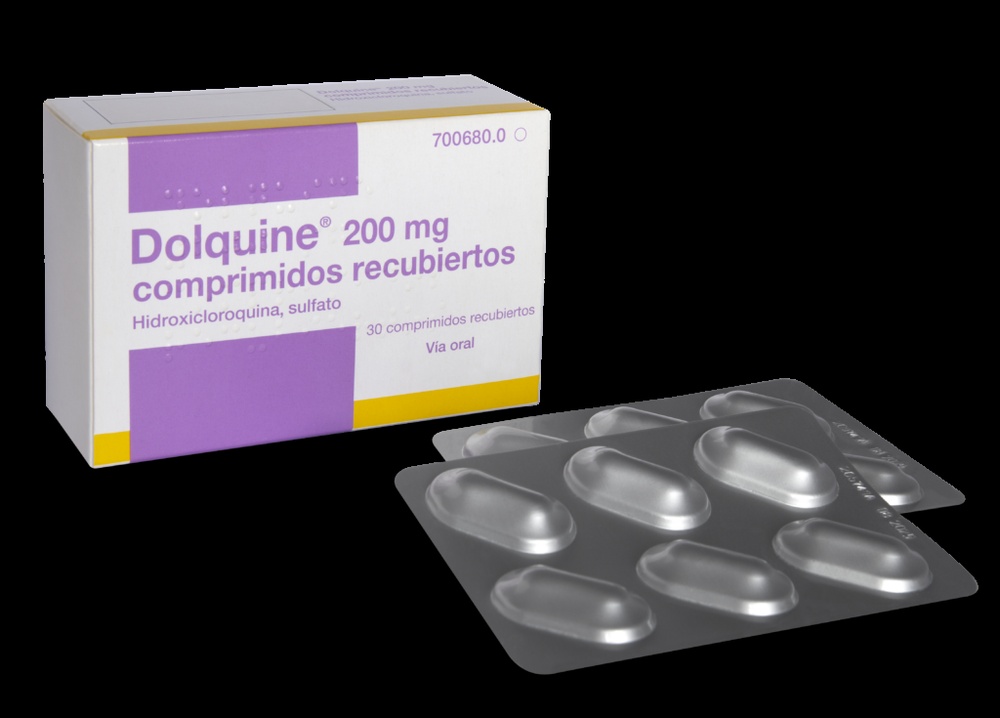
Comprimidos recubiertos oblongos, de color blanco, ranurados.
Se presenta en envases de 30 y 60 comprimidos.
Puede que solamente estén comercializados algunos tamaños de envases.
Titular de la autorización de comercialización y responsable de la fabricación
Titular de la autorización de comercialización
PRODUCTS AND TECHNOLOGY, S.L
C/ Industria, 29
Polígono Industrial Comte de Sert
08755 Castellbisbal
Barcelona- España
Representante local
LABORATORIOS RUBIÓ, S.A.
C/ Industria, 29
Polígono Industrial Comte de Sert
08755 Castellbisbal
Barcelona- España
Responsable de la fabricación
LABORATORIOS RUBIÓ, S.A.
C/ Industria, 29
Polígono Industrial Comte de Sert
08755 Castellbisbal
Barcelona- España
Fecha de la última revisión de este prospecto:
Octubre 2023
La información detallada y actualizada de este medicamento está disponible en la página web de la Agencia Española de Medicamentos y Productos Sanitarios (AEMPS) http://aemps.gob.es/
-

- País de registro
- Forma farmacéuticaCOMPRIMIDO, 200 mg
- Código ATCP01BA02
- Precio medio en farmacia12.16 EUR
- Principio activo
- Requiere recetaSí
- Fabricante
- Esta información es de carácter general y no sustituye la consulta con un profesional sanitario.
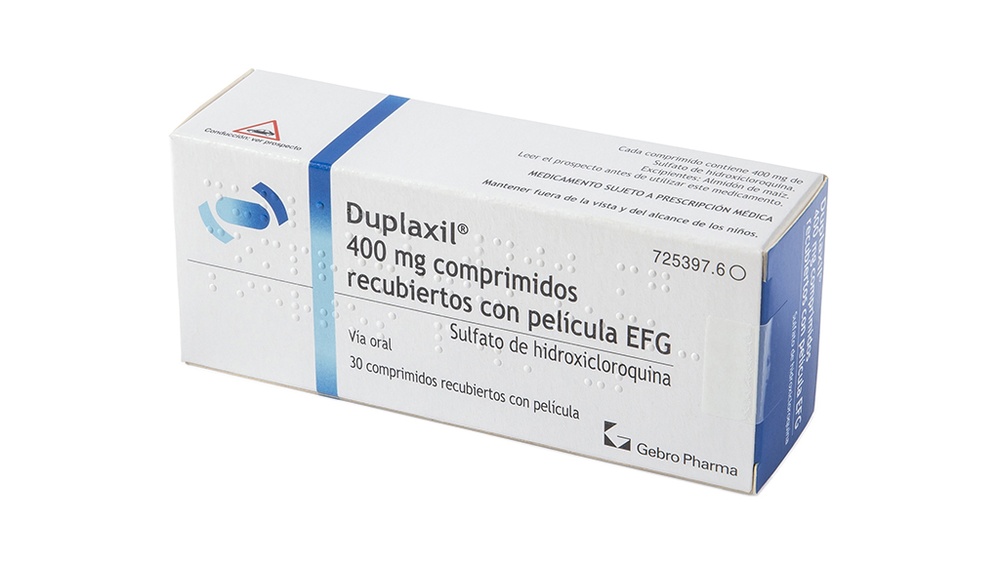
- Alternativas a DOLQUINE 200 mg COMPRIMIDOS RECUBIERTOSForma farmacéutica: COMPRIMIDO, 300 mgPrincipio activo: hydroxychloroquineFabricante: Products And Technology S.L.Requiere recetaForma farmacéutica: COMPRIMIDO, 200 mgPrincipio activo: hydroxychloroquineFabricante: Laboratorios Gebro Pharma S.A.Requiere recetaForma farmacéutica: COMPRIMIDO, 400 mgPrincipio activo: hydroxychloroquineFabricante: Laboratorios Gebro Pharma S.A.Requiere receta

Médicos online para DOLQUINE 200 mg COMPRIMIDOS RECUBIERTOS
Comenta la dosis, los posibles efectos secundarios, interacciones, contraindicaciones o la revisión de receta de DOLQUINE 200 mg COMPRIMIDOS RECUBIERTOS, sujeto a valoración médica y a la normativa local.









Obtén una receta de DOLQUINE 200 mg COMPRIMIDOS RECUBIERTOS online
Rellena un formulario de 2 minutos
Cuéntanos tus síntomas, historial y el medicamento que necesitas.
Elige un médico o nosotros te asignamos uno
Escoge un especialista o te conectamos con el próximo médico disponible.
El médico revisa tu caso
Normalmente en 30 minutos. Puede hacerte preguntas adicionales por chat.
Recógela en cualquier farmacia
Receta electrónica enviada a tu correo, válida en toda España.
Preguntas frecuentes
DOLQUINE 200 mg COMPRIMIDOS RECUBIERTOS requires receta en España. Puedes confirmarlo con un médico online según tu caso.
El principio activo de DOLQUINE 200 mg COMPRIMIDOS RECUBIERTOS es hydroxychloroquine. Esta información ayuda a identificar medicamentos con la misma composición pero con diferentes nombres comerciales.
El precio medio en farmacia de DOLQUINE 200 mg COMPRIMIDOS RECUBIERTOS es de aproximadamente 12.16 EUR. Puede variar según el fabricante y la forma farmacéutica.
DOLQUINE 200 mg COMPRIMIDOS RECUBIERTOS es fabricado por Products And Technology S.L.. La marca y el envase pueden variar según el distribuidor.
Los Médicos de familia, Psiquiatras, Dermatólogos, Cardiólogos, Endocrinólogos, Gastroenterólogos, Neumólogos, Nefrólogos, Reumatólogos, Hematólogos, Infectólogos, Alergólogos, Geriatras, Pediatras, Oncólogos pueden valorar la prescripción de DOLQUINE 200 mg COMPRIMIDOS RECUBIERTOS cuando esté clínicamente indicado. Puedes reservar una videoconsulta para comentar tu caso y las opciones de tratamiento.
España cuenta con una infraestructura sanitaria bien desarrollada en ciudades principales como Madrid, Barcelona, Valencia y Sevilla. Las farmacias están ampliamente disponibles y operan bajo estrictas regulaciones, garantizando el acceso a medicamentos con receta.
Puedes comprar DOLQUINE 200 mg COMPRIMIDOS RECUBIERTOS en Madrid, Barcelona, Sevilla o Valencia en cualquier farmacia local con una receta válida.
Para obtener una receta, puedes utilizar Oladoctor:
Otros medicamentos con el mismo principio activo (hydroxychloroquine) incluyen DOLQUINE 300 MG COMPRIMIDOS RECUBIERTOS, DUPLAXIL 200 MG COMPRIMIDOS RECUBIERTOS CON PELICULA EFG, DUPLAXIL 400 MG COMPRIMIDOS RECUBIERTOS CON PELICULA EFG. Pueden tener diferentes nombres comerciales o formulaciones, pero contienen el mismo componente terapéutico. Consulta siempre con un médico antes de cambiar o iniciar un nuevo medicamento.
