



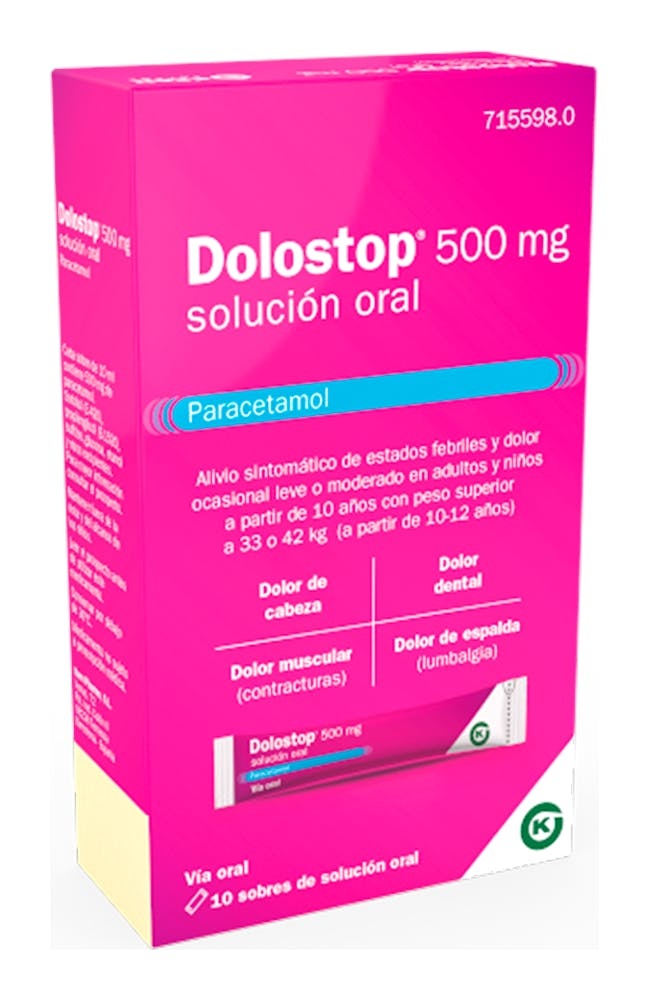
ДОЛОСТОП 500 mg ОРАЛЬНИЙ РОЗЧИН

Запит на рецепт онлайн
Лікар проаналізує вашу ситуацію та визначить, чи є призначення рецепта клінічно доцільним.

Поговоріть з лікарем про ці ліки
Обговоріть свої скарги та можливий план дій під час короткого онлайн-прийому.



Інструкція із застосування ДОЛОСТОП 500 МГ ОРАЛЬНИЙ РОЗЧИН
Зміст інструкції
- Введення
- Що таке Долостоп і для чого він використовується
- Що вам потрібно знати перед початком прийому Долостопу
- Як приймати Долостоп
- Можливі побічні ефекти
- Збереження Долостопу
- Зміст упаковки та додаткова інформація
Введення
Опис: Інформація для користувача
Долостоп 500 мг пероральна суспензія
Парацетамол
Перш ніж почати приймати цей препарат, уважно прочитайте весь опис, оскільки він містить важливу інформацію для вас.
Слідуйте точно інструкціям щодо застосування препарату, наведеним у цьому описі або вказаним вашим лікарем, фармацевтом чи медсестрою.
- Збережіть цей опис, оскільки вам може знадобитися знову його прочитати.
- Якщо вам потрібна порада або додаткова інформація, проконсультуйтеся з фармацевтом.
- Якщо ви відчуваєте побічні ефекти, проконсультуйтеся з лікарем, фармацевтом чи медсестрою, навіть якщо це побічні ефекти, які не наведені в цьому описі. Див. розділ 4.
- Вам потрібно проконсультуватися з лікарем, якщо симптоми погіршуються або якщо лихоманка триває більше 3 днів або біль більше 5 днів.
Зміст опису
- Що таке Долостоп і для чого він використовується
- Що вам потрібно знати перед початком прийому Долостопу
- Як приймати Долостоп
- Можливі побічні ефекти
- Збереження Долостопу
- Зміст упаковки та додаткова інформація
1. Що таке Долостоп і для чого він використовується
Долостоп містить парацетамол. Парацетамол ефективний для зменшення болю та лихоманки.
Він використовується для полегшення періодичного легкого або помірного болю, такого як головний біль, зубний біль, м'язовий біль (спазми) або біль у спині (люмбаго), а також у випадках лихоманки у дорослих та дітей з вагою понад 33 кг (10-12 років, приблизно).

Не впевнені, чи підходить вам цей препарат?
Обговоріть скарги та можливі варіанти терапії з лікарем у дистанційному форматі.
2. Що вам потрібно знати перед початком прийому Долостопу
Не приймайте Долостоп
- Якщо ви алергічні на парацетамол або будь-який інший компонент цього препарату (наведений у розділі 6).
Попередження та обережність
Проконсультуйтеся з лікарем, фармацевтом чи медсестрою перед початком прийому препарату.
- Не приймайте більшу кількість препарату, ніж рекомендовано у розділі 3. Як приймати Долостоп.
- Слід уникати одночасного використання цього препарату з іншими препаратами, які містять парацетамол, наприклад, препаратами від грипу та кашлю, оскільки високі дози можуть призвести до пошкодження печінки. Не використовуйте більше одного препарату, який містить парацетамол, без консультації з лікарем.
- Хронічні алкоголіки повинні бути обережними та не приймати більше 2 г/добу парацетамолу.
- Пацієнти з захворюваннями нирок, печінки, серця або легень та пацієнти з анемією (зниження рівня гемоглобіну в крові, внаслідок або не внаслідок зниження рівня червоних кров'яних тілець), або ті пацієнти, які страждають на хронічну недоїдання або дегідратاسیون, повинні проконсультуватися з лікарем перед прийомом цього препарату.
- Коли ви перебуваєте на лікуванні деякими препаратами для лікування епілепсії, вам потрібно проконсультуватися з лікарем перед прийомом цього препарату, оскільки при одночасному використанні знижується ефективність та підвищується гепатотоксичність парацетамолу, особливо при високих дозах.
- Пацієнти з бронхіальною астмою, чутливі до ацетилсаліцилової кислоти, повинні проконсультуватися з лікарем перед прийомом цього препарату.
Під час лікування Долостопом повідомте своєму лікареві негайно, якщо:
Якщо у вас є серйозні захворювання, такі як важка ниркова недостатність або сепсис (коли бактерії та їх токсини циркулюють у крові, що призводить до пошкодження органів), або якщо ви страждаєте на недоїдання, хронічний алкоголізм або приймаєте флуклоксацилін (антибіотик). Було повідомлено про серйозне захворювання, яке називається метаболічною ацидозою (аномалія у крові та рідинах) у пацієнтів у цих ситуаціях, коли парацетамол використовується у звичайних дозах протягом тривалого періоду або коли парацетамол приймається разом з флуклоксациліном. Симптоми метаболічної ацидози можуть включати: важку дихальну недостатність з глибоким та швидким диханням, сонливість, відчуття нездоров'я (нудота) та блювоту.
Діти та підлітки
У дітей та підлітків молодших 10-12 років проконсультуйтеся з лікарем або фармацевтом, оскільки можуть існувати інші форми випуску з дозами, які підходять для цих пацієнтів.
Інші препарати та Долостоп
Повідомте своєму лікареві або фармацевту, якщо ви приймаєте, нещодавно приймали або можете приймати будь-який інший препарат.
Особливо, якщо ви використовуєте деякі з наступних препаратів, оскільки може бути необхідне коригування дози деяких з них або переривання лікування:
- Препарати для профілактики кров'яних згортань: пероральні антикоагулянти (аценокумарол, варфарин).
- Препарати для лікування епілепсії: антиепілептичні препарати (ламотриджин, фенітоїн або інші гідантоїни, фенобарбітал, метилфенобарбітал, прімідон, карбамазепін).
- Препарати для лікування туберкульозу (ізоніазид, рифампіцин).
- Препарати для лікування депресії та конвульсій: барбітурати (використовуються як гіпнотики, седативні та антиконвульсивні засоби).
- Препарати для зниження рівня холестерину в крові (холестирамін).
- Препарати, які використовуються для збільшення виділення сечі (діуретики петлі, наприклад, фуросемід).
- Препарати, які використовуються для лікування подагри (пробенецид та сульфінпіразон).
- Препарати, які використовуються для профілактики нудоти та блювоти: метоклопрамід та домперидон.
- Препарати, які використовуються для лікування артеріальної гіпертензії та порушень серцевого ритму (аритмій): пропранолол.
- Флуклоксацилін (антибіотик), через ризик серйозного порушення крові та рідин (метаболічної ацидози з високим аніонним розривом), яке повинно бути терміново лікуване (див. розділ 2).
Не використовуйте з іншими анальгетиками (засобами, які знижують біль) без консультації з лікарем.
Як правило, для будь-якого препарату рекомендується систематично повідомляти лікареві або фармацевту, якщо ви перебуваєте на лікуванні іншим препаратом. У разі лікування антикоагулянтами перорально можна інколи застосовувати як анальгетик вибору.
Вплив на лабораторні тести
Якщо вам будуть проводити лабораторні тести (включно з аналізами крові, сечі тощо), повідомте своєму лікареві, що ви приймаєте цей препарат, оскільки він може змінити результати.
Парацетамол може змінити значення аналітичних визначень сечовини та глюкози.
Вживання Долостопу з їжею, напоями та алкоголем
Вживання парацетамолу у пацієнтів, які регулярно споживають алкоголь (три або більше алкогольних напоїв на день – пиво, вино, лікер тощо), може призвести до пошкодження печінки.
Вживання цього препарату з їжею не впливає на його ефективність.
Вагітність, лактація та фертильність
Якщо ви вагітні або перебуваєте у період лактації, вважаєте, що можете бути вагітні або плануєте вагітність, проконсультуйтеся з лікарем або фармацевтом перед прийомом цього препарату.
Вживання препаратів під час вагітності може бути небезпечним для ембріона або плода, і повинно бути контролюване лікарем.
Парацетамол проникає у грудне молоко, тому жінки під час лактації повинні проконсультуватися з лікарем або фармацевтом перед прийомом цього препарату.
Водіння транспортних засобів та використання машин
Вплив парацетамолу на здатність водити транспортні засоби та використовувати машини є нульовим або незначним.
Долостоп містить сорбітол (Е-420), пропіленгліколь (Е-1520), сульфіти, глюкозу та етанол
Цей препарат містить 2 000 мг сорбітолу в кожному пакеті. Якщо ваш лікар сказав вам (або вашій дитині), що ви страждаєте на непереносимість деяких цукрів, або якщо вам діагностовано спадкову непереносимість фруктози (СНФ), рідкісне генетичне захворювання, при якому пацієнт не може розщеплювати фруктозу, проконсультуйтеся з лікарем перед прийомом цього препарату. Сорбітол може призвести до нездоров'я шлунково-кишкового тракту та легкого лаксативного ефекту.
Цей препарат містить 2 500 мг пропіленгліколю в кожному пакеті.
Якщо ви вагітні або перебуваєте у період лактації, не приймайте цей препарат, якщо тільки він не рекомендований вашим лікарем. Ваш лікар може провести додаткові огляди, поки ви приймаєте цей препарат.
Якщо ви страждаєте на недостатність печінки або нирок, не приймайте цей препарат, якщо тільки він не рекомендований вашим лікарем. Ваш лікар може провести додаткові огляди, поки ви приймаєте цей препарат.
Цей препарат може призвести до серйозних алергічних реакцій та бронхоспазму (відчуття раптового задухи) через вміст сульфітового карамелю.
Цей препарат містить глюкозу (у мальтодекстрині, отриманій з картоплі). Якщо ваш лікар сказав вам, що ви страждаєте на непереносимість деяких цукрів, проконсультуйтеся з ним перед прийомом цього препарату.
Цей препарат містить 0,2% етанолу (алкоголю), що відповідає 18,2 мг на пакет.
3. Як приймати Долостоп
Слідуйте точно інструкціям щодо застосування препарату, наведеним у цьому описі або вказаним вашим лікарем. У разі сумнівів проконсультуйтеся з лікарем, фармацевтом чи медсестрою.
Рекомендована доза:
Дорослі:
Прійміть 1 пакет (500 мг парацетамолу) кожні 4-6 годин, за необхідності. Якщо потрібно, можна прийняти 2 пакети кожні 8 годин.
Не приймайте більше 3 г (6 пакетів) за 24 години. Прийоми повинні бути віддалені на відстань не менше 4 годин.
Завжди приймайте мінімальну ефективну дозу.
Прийом цього препарату залежить від появи болю або лихоманки. Коли вони зникають, лікування повинно бути припинено.
Слід уникати використання високих добових доз парацетамолу протягом тривалого періоду, оскільки це збільшує ризик побічних ефектів, таких як пошкодження печінки.
Якщо біль триває більше 5 днів, лихоманка більше 3 днів або якщо біль чи лихоманка погіршуються, або якщо з'являються інші симптоми, лікування повинно бути припинено, і ви повинні проконсультуватися з лікарем.
Для болю в горлі не приймайте препарат більше 2 днів підряд без консультації з лікарем.
Пацієнти з захворюваннями нирок:
Перед прийомом цього препарату вони повинні проконсультуватися з лікарем.
Прійміть не більше 1 пакету на прийом.
Залежно від захворювання ваш лікар призначить вам приймати препарат з мінімальним інтервалом 6 або 8 годин.
Пацієнти з захворюваннями печінки:
Перед початком прийому цього препарату вони повинні проконсультуватися з лікарем.
Вони повинні приймати кількість препарату, призначену лікарем, з мінімальним інтервалом між прийомами 8 годин.
Не повинні приймати більше 2 г парацетамолу (4 пакети) за 24 години, розділені на кілька прийомів.
Діти:
Рекомендована добова доза парацетамолу становить приблизно 60 мг/кг/добу, розділену на 4-6 добових прийомів, тобто 15 мг/кг кожні 6 годин або 10 мг/кг кожні 4 години.
Необхідно дотримуватися посологій, визначених залежно від ваги.
- Діти вагою від 33 кг до 42 кг (від 10 до 12 років, приблизно): 1 пакет на прийом, кожні 6 годин, до максимальної кількості 4 пакетів на добу.
- Діти вагою від 42 кг до 50 кг (від 12 до 14 років, приблизно): 1 пакет на прийом, кожні 4-6 годин за необхідності, до максимальної кількості 5 пакетів на добу.
Не використовуйте в дітей більше 3 днів підряд без оцінки клінічної ситуації.
Не використовуйте в дітей вагою менше 33 кг (10-12 років, приблизно). Рекомендується використання інших форм випуску, більш підходящих для лікування цієї групи пацієнтів.
Форма застосування
Цей препарат приймається перорально.
Зміст пакету можна приймати, розбавлений у рідині, переважно воді, або безпосередньо.
Після відкриття пакету споживайте весь його вміст.
Якщо ви прийняли більше Долостопу, ніж потрібно
Ви повинні негайно проконсультуватися з лікарем або фармацевтом. У разі передозування або випадкового прийому зверніться негайно до медичного центру або зателефонуйте до служби токсикологічної інформації (телефон 91 562 04 20), вказавши препарат та кількість, прийняту.
Симптоми передозування можуть бути: головокружіння, блювота, зниження апетиту, жовтушність шкіри та очей (жовтяниця) та біль у животі.
Якщо ви прийняли передозування, ви повинні негайно звернутися до медичного центру, навіть якщо ви не відчуваєте симптомів, оскільки вони часто не проявляються до проходження 3 днів після прийому передозування, навіть у випадках важкої інтоксикації.
Лікування передозування є більш ефективним, якщо його розпочато протягом 4 годин після прийому препарату.
Пацієнти, які приймають барбітурати або хронічні алкоголіки, можуть бути більш сприйнятливими до токсичності передозування парацетамолу.
Якщо ви забули прийняти Долостоп
Не приймайте подвійну дозу для компенсації пропущених доз.

Виникли запитання під час прийому ліків?
Розкажіть лікарю про свої скарги та поточне лікування під час онлайн-прийому.
4. Можливі побічні ефекти
Як і всі препарати, цей препарат може призвести до побічних ефектів, хоча не всі люди їх відчувають.
Рідкі побічні ефекти, які можуть вплинути на до 1 особи з 1 000, включають: нездоров'я, зниження артеріального тиску (гіпотензія) та підвищення рівня трансаміназ у крові.
Дуже рідкі побічні ефекти, які можуть вплинути на до 1 особи з 10 000, включають: захворювання нирок, мутна сеча, алергічна дерматит (skineruption), жовтяниця (жовтушність шкіри), порушення крові (агранулоцитоз, лейкопенія, нейтропенія, гемолітична анемія) та гіпоглікемія (зниження рівня цукру у крові) та серйозні реакції на шкірі.
Побічні ефекти з невідомою частотою (не можуть бути оцінені на основі доступних даних): серйозне захворювання, яке може призвести до того, що кров стане більш кислотною (метаболічна ацидоз), у пацієнтів з серйозними захворюваннями, які приймають парацетамол (див. розділ 2).
Парацетамол може пошкодити печінку, якщо приймається у високих дозах або протягом тривалого періоду.
Звіт про побічні ефекти
Якщо ви відчуваєте будь-які побічні ефекти, проконсультуйтеся з лікарем або фармацевтом, навіть якщо це побічні ефекти, які не наведені в цьому описі. Ви також можете повідомити про них безпосередньо через систему моніторингу безпеки лікарських засобів для людини: www.notificaRAM.es. Інформуючи про побічні ефекти, ви можете допомогти надати більше інформації про безпеку цього препарату.
5. Збереження Долостопу
Тримайте цей препарат поза зоною досяжності дітей.
Зберігайте при температурі нижче 30°C.
Не використовуйте цей препарат після закінчення терміну придатності, вказаного на упаковці після "CAD". Термін придатності – останній день місяця, який вказано.
Лікарські засоби не повинні викидатися у водопровідні труби чи сміття. Відкладайте упаковки та лікарські засоби, які вам не потрібні, у пункті збору(SIGRE) аптеки. У разі сумнівів проконсультуйтеся з фармацевтом, як позбутися упаковок та лікарських засобів, які вам не потрібні. Таким чином, ви допоможете захистити довкілля.
6. Зміст упаковки та додаткова інформація
Склад Долостопу
- Активний інгредієнт – парацетамол. Кожен пакет містить 500 мг парацетамолу.
- Інші компоненти: пропіленгліколь (Е1520), макрогол 400, повідона К12, сорбітол (Е420), карамель сульфітового амонію (Е150-d) (містить мальтодекстрин кукурудзи), маскуючий SC274292 (містить сукралозу (Е955), мальтодекстрин (з картоплі) та гліциризинат моноамонію), неогесперидин дигідрохалкон (Е959), аромат апельсину (містить етанол), цитринова кислота моногідрат (для регулювання pH) та очищена вода.
Вигляд Долостопута зміст упаковки
Пероральна суспензія коричневого кольору, упакована у пакети для одноразового використання.
Кожна упаковка містить 10 та 20 пакетів, упаковані у термосварені пакети, виготовлені з комплексу алюмінію (поліестер/алюміній/поліетилен, поліестер та поліетилен).
Можливо, що тільки деякі розміри упаковок будуть випускатися.
Власник дозволу на продаж та відповідальний за виробництво
Kern Pharma, S.L.
Venus, 72 - Пол. Інд. Колон II
08228 Террасса - Барселона
Іспанія
Дата останнього перегляду цього опису: Лютий 2025
Детальна та актуальна інформація про цей препарат доступна на сайті Іспанського агентства лікарських засобів та медичних виробів (AEMPS) http://www.aemps.gob.es/
- Країна реєстрації
- Лікарська формаОРАЛЬНИЙ РОЗЧИН/СУСПЕНЗІЯ, 500 мг
- Код АТХN02BE01
- Наявність в аптекахПроблеми з постачанням
- Діюча речовина
- Потрібен рецептНі
- Виробник
- СкладPROPILENGLICOL (2.500 mg mg), SORBITOL LIQUIDO NO CRISTALIZABLE (E420) (2.000 mg mg), CARAMELO DE SULFITO AMONICO (2,94 mg mg)
- Ці дані наведені виключно для ознайомлення і не є медичною рекомендацією. Усі рішення щодо терапії ухвалює лікар.
- Альтернативи до ДОЛОСТОП 500 МГ ОРАЛЬНИЙ РОЗЧИНЛікарська форма: ТАБЛЕТКА, 1 гДіюча речовина: ПарацетамолВиробник: Uxa Farma S.A.Потрібен рецептЛікарська форма: ТАБЛЕТКА, 1 гДіюча речовина: ПарацетамолВиробник: Laboratorios Cinfa S.A.Рецепт не потрібенЛікарська форма: ТАБЛЕТКА, 1 гДіюча речовина: ПарацетамолВиробник: Laboratorios Cinfa S.A.Рецепт не потрібен
Лікарі онлайн щодо ДОЛОСТОП 500 МГ ОРАЛЬНИЙ РОЗЧИН
Питання застосування, безпеки та можливості виписки рецепта — за підсумками клінічної оцінки.









Отримайте рецепт на ДОЛОСТОП 500 МГ ОРАЛЬНИЙ РОЗЧИН онлайн
Заповніть форму за 2 хвилини
Опишіть скарги, медичну історію та бажаний препарат.
Оберіть лікаря або ми призначимо
Виберіть конкретного фахівця або ми запропонуємо найближчого доступного лікаря.
Лікар розглядає ваш випадок
Як правило, протягом 30 хвилин. За потреби може поставити уточнювальні запитання в чаті.
Отримайте в будь-якій аптеці
Електронний рецепт надходить на вашу пошту — дійсний в усіх аптеках Іспанії.
Часті запитання
ДОЛОСТОП 500 МГ ОРАЛЬНИЙ РОЗЧИН не потребує рецепта в Іспанія. Ви можете обговорити з лікарем в онлайн-форматі, чи підходить цей препарат для вашого випадку.
Активний компонент ДОЛОСТОП 500 МГ ОРАЛЬНИЙ РОЗЧИН — Парацетамол. Це дозволяє знайти препарати з ідентичним складом під іншими торговими марками.
ДОЛОСТОП 500 МГ ОРАЛЬНИЙ РОЗЧИН випускається компанією Kern Pharma S.L.. Торгова назва та дизайн упаковки можуть відрізнятися залежно від дистрибʼютора.
Фахівці, зокрема Сімейні лікарі, Психіатри, Дерматологи, Кардіологи, Ендокринологи, Гастроентерологи, Пульмонологи, Нефрологи, Ревматологи, Гематологи, Інфекціоністи, Алергологи, Геріатри, Педіатри, Онкологи, можуть оцінити доцільність призначення ДОЛОСТОП 500 МГ ОРАЛЬНИЙ РОЗЧИН з урахуванням вашого стану здоров'я та чинних правил. Забронюйте онлайн-прийом, щоб обговорити скарги та визначити подальший план дій.
Польща має добре розвинену систему охорони здоров'я у великих містах, таких як Варшава, Краків, Вроцлав і Гданськ. Аптеки широко доступні та працюють відповідно до чинного законодавства, забезпечуючи доступ до рецептурних препаратів.
Ви можете придбати ДОЛОСТОП 500 МГ ОРАЛЬНИЙ РОЗЧИН у Варшаві, Кракові, Вроцлаві або Гданську в будь-якій аптеці за наявності дійсного рецепта.
Щоб отримати рецепт, ви можете скористатися Oladoctor:
Інші препарати з тим самим активним компонентом (Парацетамол) — АБЕЗЕН 1 г ТАБЛЕТКИ, ПОКРИТІ ПЛІВКОВОЮ ОБОЛОНКОЮ, АНТИДОЛ 1 Г ТАБЛЕТКИ, ПОКРИТІ ПЛІВКОЮ, АНТИДОЛ 1 Г ТАБЛЕТКИ. Вони можуть відрізнятися за торговою назвою чи формою випуску, але містять однаковий терапевтичний інгредієнт. Перед заміною або початком нового препарату рекомендується порадитися з лікарем.
