






Cómo usar DESVENLAFAXINA STADA 50 MG COMPRIMIDOS DE LIBERACION PROLONGADA EFG
Traducción generada por IA
Este contenido ha sido traducido automáticamente y se ofrece solo con fines informativos. No sustituye la consulta con un profesional sanitario.
Ver originalContenido del prospecto
- Introducción
- Qué es Desvenlafaxina Stada y para qué se utiliza
- Qué necesita saber antes de empezar a tomar Desvenlafaxina Stada
- Cómo tomar Desvenlafaxina Stada
- Posibles efectos adversos
- Conservación de Desvenlafaxina Stada
- Mantener este medicamento fuera de la vista y del alcance de los niños.
- Contenido del envase e información adicional
Introducción
Prospecto: información para el paciente
Desvenlafaxina Stada 50 mg comprimidos de liberación prolongada EFG
Desvenlafaxina Stada 100 mg comprimidos de liberación prolongada EFG
Lea todo el prospecto detenidamente antes de empezar a tomar este medicamento, porque contiene información importante para usted.
- Conserve este prospecto, ya que puede tener que volver a leerlo.
- Si tiene alguna duda, consulte a su médico o farmacéutico.
- Este medicamento se le ha recetado solamente a usted y no debe dárselo a otras personas, aunque tengan los mismos síntomas que usted, ya que puede perjudicarles.
- Si experimenta efectos adversos, consulte a su médico o farmacéutico, incluso si se trata de efectos adversos que no aparecen en este prospecto. Ver sección 4.
Contenido del prospecto:
- Qué es Desvenlafaxina Stada y para qué se utiliza
- Qué necesita saber antes de empezar a tomar Desvenlafaxina Stada
- Cómo tomar Desvenlafaxina Stada
- Posibles efectos adversos
- Conservación de Desvenlafaxina Stada
- Contenido del envase e información adicional
1. Qué es Desvenlafaxina Stada y para qué se utiliza
Desvenlafaxina Stada es un antidepresivo que pertenece a un grupo de medicamentos denominados inhibidores de la recaptación de la serotonina y la noradrenalina (IRSN). Este grupo de medicamentos se utiliza para tratar la depresión. Las personas con depresión pueden presentar niveles bajos de serotonina y noradrenalina (también conocida como norepinefrina) en el cerebro. No se conoce completamente cómo funcionan los antidepresivos, pero pueden ayudar a aumentar los niveles de serotonina y noradrenalina en el cerebro. Desvenlafaxina es un tratamiento para adultos.

2. Qué necesita saber antes de empezar a tomar Desvenlafaxina Stada
No tome Desvenlafaxina Stada:
- si es alérgico a desvenlafaxina, a venlafaxina o a alguno de los demás componentes de este medicamento (incluidos en la sección 6).
- si también está tomando o ha tomado durante los últimos 14 días, algún medicamento conocido como inhibidor de la monoaminooxidasa (IMAO) utilizado para tratar la depresión, infecciones o la enfermedad de Parkinson. Tomar un IMAO (por ejemplo, linezolid o azul de metileno) junto con otros medicamentos como desvenlafaxina, puede producir efectos adversos graves o incluso potencialmente mortales. Además, debe esperar al menos 7 días una vez que deje de tomar desvenlafaxina antes de tomar cualquier IMAO (consulte también las secciones “Síndrome serotoninérgico” y “Otros medicamentos”).
Advertencias y precauciones
Consulte a su médico si ha padecido alguno de los siguientes trastornos antes de empezar a tomar desvenlafaxina o si aparecen durante el tratamiento con desvenlafaxina:
- si usted o alguien de su familia tiene antecedentes o ha tenido manía (estado de sobreexcitación, sensación de euforia o hiperirritabilidad) o trastorno bipolar (cambios extremos del estado de ánimo, por ejemplo, paso de depresión a euforia).
- si tiene antecedentes de comportamiento agresivo.
- si tiene problemas en los ojos, tales como ciertos tipos de glaucoma (aumento de la presión en el ojo).
- si tiene antecedentes de hipertensión o tensión arterial alta.
- si tiene antecedentes de problemas cardíacos o infarto.
- si tiene antecedentes de ataques (convulsiones).
- si tiene antecedentes de alteraciones hemorrágicas (tendencia a desarrollar cardenales), o si está embarazada (ver sección Embarazo, lactancia y fertilidad) o si está usando antiinflamatorios no esteroideos (AINE), aspirina y otros medicamentos que puedan aumentar el riesgo de hemorragia cuando se usan al mismo tiempo que desvenlafaxina.
- si tiene antecedentes de problemas renales.
- si tiene antecedentes de niveles bajos de sodio en la sangre (hiponatremia).
- si tiene antecedentes de colesterol elevado, o si sus niveles de colesterol aumentan.
- si padece los efectos secundarios siguientes: agitación (excitabilidad e inquietud), alteración de la consciencia, confusión, coma, palpitaciones, aumento de la tensión arterial, elevación de la temperatura corporal, sudoración excesiva, falta de coordinación, espasmos musculares o rigidez, temblores, náuseas, vómitos y diarrea. Póngase en contacto con su médico inmediatamente, ya que podría estar sufriendo síndrome serotoninérgico (un trastorno que puede ser grave y, en raras ocasiones, potencialmente mortal).
- si se interrumpe el tratamiento de forma brusca pueden aparecer síntomas de retirada (p. ej., cambios de humor, irritabilidad, agitación, mareos, ansiedad, confusión, dolor de cabeza, alteraciones del sueño, acúfenos (zumbido de oídos), ataques (convulsiones), problemas visuales e hipertensión). Por lo tanto, es importante reducir la dosis de desvenlafaxina gradualmente y bajo supervisión médica, siempre que usted y su médico decidan interrumpir el tratamiento.
Algunos medicamentos del grupo al que pertenece desvenlafaxina (llamados ISRS/IRSN) pueden causar síntomas de disfunción sexual (ver sección 4). En algunos casos, estos síntomas persisten después de suspender el tratamiento.
Pensamientos suicidas y empeoramiento de su depresión o trastorno de ansiedad
Si está deprimido y/o padece trastornos de ansiedad, en ocasiones puede haber pensado en hacerse daño o suicidarse. Estos pensamientos pueden aumentar al comenzar a tomar antidepresivos, puesto que estos medicamentos tardan tiempo en actuar, normalmente unas dos semanas, pero a veces más tiempo.
Puede tener más probabilidades de pensar de esta forma:
- Si ha tenido previamente pensamientos de suicidio o de hacerse daño.
- Si es un adulto joven. La información de los ensayos clínicos ha demostrado un aumento del riesgo de comportamiento suicida en adultos jóvenes (menos de 25 años de edad) con enfermedades psiquiátricas que se trataron con antidepresivos.
Si tiene pensamientos de hacerse daño o suicidarse en cualquier momento, póngase en contacto con su médico o acuda a un hospital directamente.
Puede encontrar útil contarle a un familiar o amigocercano que está deprimido o que tiene un trastorno de ansiedad, y pedirles que lean este prospecto. Podría pedirles también que le digan si piensan que su depresión o ansiedad está empeorando, o si están preocupados acerca de los cambios en su conducta.
Sequedad de boca
Se ha informado de sequedad bucal en el 18% de pacientes tratados con desvenlafaxina. Esto puede incrementar el riesgo de caries. Por tanto, debe tener cuidado con su higiene bucal.
Pacientes de edad avanzada
En algunos pacientes de edad avanzada no puede descartarse una mayor sensibilidad a la desvenlafaxina.
Niños y adolescentes
Desvenlafaxina no debe usarse normalmente en niños y adolescentes. Además, debe saber que, en los pacientes menores de 18 años existe un mayor riesgo de efectos adversos como intentos de suicidio, hostilidad (predominantemente agresión, comportamiento de confrontación e irritación) cuando ingieren esta clase de medicamentos. Pese a esto, el doctor que le corresponda puede prescribir este medicamento a pacientes menores de 18 años, cuando decida que es lo más conveniente para el paciente. Si el médico que le corresponda ha prescrito este medicamento a un paciente menor de 18 años y desea discutir esta decisión, por favor, vuelva a su médico. Debe informar a su médico si se desarrollan o empeoran alguno de los síntomas enumerados anteriormente cuando estos pacientes menores de 18 años están tomando desvenlafaxina. Además, todavía no se han demostrado los efectos a largo plazo por lo que a la seguridad se refiere y los relativos al crecimiento, la madurez y el desarrollo cognitivo y conductual de este medicamento.
Uso de Desvenlafaxina Stada con otros medicamentos
Informe a su médico o farmacéutico si está utilizando, ha utilizado recientemente o podría tener que utilizar cualquier otro medicamento.
Es especialmente importante que informe a su médico si está tomando alguno de los medicamentos siguientes:
- inhibidores de la monoaminooxidasa (IMAO), por ejemplo, medicamentos que contienen linezolid (un antibiótico usado para tratar infecciones) y azul de metileno (consulte la sección “No tome Desvenlafaxina Stada”).
- otros medicamentos que contengan venlafaxina o desvenlafaxina (también pueden utilizarse en el tratamiento de la depresión).
- triptanos (usados para la migraña).
- medicamentos para tratar la depresión, por ejemplo los antidepresivos tricíclicos, anfetaminas, el litio, los inhibidores selectivos de la recaptación de serotonina (ISRSs) o los inhibidores de la recaptación de serotonina y noradrenalina (IRSNs).
- medicamentos que contienen sibutramina (usado para la pérdida de peso).
- medicamentos para el dolor, por ejemplo opioides como tramadol, fentanilo y sus análogos, tapentadol, meperidina, metadona (también usado para tratamiento del síndrome de abstinencia a los narcóticos y la dependencia a opiáceos) y pentazocina.
- medicamentos que contienen dextrometorfano (usado para la tos).
- productos que contienen Hierba de San Juan (también denominada “Hypericum perforatum”, un remedio natural o a base de hierbas usado para tratar la depresión leve).
- productos que contienen triptófano (usados para problemas tales como sueño y depresión).
- medicamentos que contienen ketoconazol (un antifúngico).
- Además, si está siendo tratado por otros profesionales sanitarios, infórmeles de que está tomando desvenlafaxina.
Síndrome serotoninérgico o reacciones parecidas al Síndrome Neuroléptico Maligno (SNM)
Con frecuencia rara puede producirse un trastorno denominado síndrome serotoninérgico o reacciones parecidas al SNM que pueden causar cambios importantes en el funcionamiento del cerebro, los músculos y el sistema digestivo debido a niveles elevados de serotonina en el organismo. Este estado, potencialmente mortal, puede producirse al tomar medicamentos como desvenlafaxina, en particular si se toman junto con otros medicamentos mencionados anteriormente.
Consulte el apartado “Advertencias y precauciones” o los posibles efectos adversos relacionados con el síndrome serotoninérgico o reacciones parecidas al SNM.
Cambio de antidepresivo
Cuando se cambia el tratamiento de otro antidepresivo a desvenlafaxina han aparecido síntomas de retirada del antidepresivo inicial. Su médico puede reducirle gradualmente la dosis de su medicación antidepresiva inicial para ayudar a disminuir estos síntomas.
Interacciones con pruebas de laboratorio
Pueden producirse falsos positivos para algunas sustancias como fenilciclina (PCP) y anfetaminas, en análisis de orina de pacientes que están tomando o han estado tomando desvenlafaxina, incluso varios días tras la interrupción del tratamiento.
Toma de Desvenlafaxina Stada con alimentos, bebidas y alcohol
Los comprimidos de desvenlafaxina pueden tomarse con o sin alimentos.
Debe evitar tomar alcohol mientras está usando desvenlafaxina.
Embarazo, lactancia y fertilidad
Si está embarazada o en periodo de lactancia o cree que podría estar embarazada o tiene intención de quedarse embarazada, consulte a su médico antes de utilizar este medicamento.
Si toma desvenlafaxina en la etapa final del embarazo puede producirse un mayor riesgo  de sangrado vaginal abundante poco después del parto, especialmente si tiene antecedentes de alteraciones hemorrágicas. Su médico o matrona deben saber que usted está tomando desvenlafaxina para poderle aconsejar. Cuando se toman durante el embarazo medicamentos similares (ISRS), se puede aumentar el riesgo de un efecto grave para el bebé denominado hipertensión pulmonar persistente del recién nacido (HPPRN), provocando que el bebé respire más rápido y se ponga morado. Estos síntomas normalmente comienzan durante las primeras 24 horas una vez que el bebé haya nacido. Si su bebé tiene estos síntomas debe ponerse inmediatamente en contacto con su médico y/o comadrona.
Informe a su médico antes de interrumpir el tratamiento con desvenlafaxina durante el embarazo, ya que puede experimentar una recaída de la depresión.
Si toma desvenlafaxina durante la mitad del embarazo hasta el final del mismo, puede aumentar el riesgo de sufrir presión arterial elevada y de aparición de proteínas en la orina (preeclampsia). También puede aumentar el riesgo de hemorragia después del parto (hemorragia posparto).
Si toma desvenlafaxina durante el embarazo, informe a su médico y/o comadrona, puesto que su bebé podría presentar síntomas de retirada cuando nazca. Estos síntomas pueden aparecer justo después del parto y pueden requerir hospitalización. Entre los síntomas se incluyen dificultad para mamar o problemas respiratorios. Si su bebé tiene éstos u otros síntomas cuando nazca y está preocupada, póngase en contacto con su médico y/o comadrona.
La desvenlafaxina pasa a la leche materna. Existe un riesgo de efecto para el bebé. Por tanto, no utilice desvenlafaxina durante el período de lactancia a menos que su médico se lo indique específicamente.
Conducción y uso de máquinas
Desvenlafaxina puede causar mareos, somnolencia y visión borrosa. No conduzca ni maneje herramientas o máquinas hasta que sepa cómo le afecta este medicamento.
Desvenlafaxina Stada 100 mg contiene amarillo anaranjado S (E110).
Este medicamento puede producir reacciones alérgicas porque contiene amarillo anaranjado S (E110). Puede provocar asma, especialmente en pacientes alérgicos al ácido acetilsalicílico.

3. Cómo tomar Desvenlafaxina Stada
Siga exactamente las instrucciones de administración de este medicamento indicadas por su médico. En caso de duda, consulte de nuevo a su médico.
La dosis recomendada es de 50 mg una vez al día. Su médico puede aumentarle la dosis hasta 100 mg una vez al día o incluso hasta un máximo de 200 mg una vez al día en caso necesario.
Si tiene problemas renales, o antecedentes de problemas renales, consulte a su médico dado que puede que deba tomar una dosis diferente de desvenlafaxina.
Desvenlafaxina debe tomarse por vía oral, aproximadamente a la misma hora cada día. Los comprimidos deben tragarse enteros con líquido, sin dividirlos, machacarlos, masticarlos ni disolverlos.
No se preocupe si observa la estructura de un comprimido en sus heces después de tomar desvenlafaxina.A medida que el comprimido viaja a lo largo de su tracto gastrointestinal, el principio activo desvenlafaxina se libera lentamente. La estructura del comprimido no se disuelve y se elimina en las heces. Por lo tanto, a pesar de que, es posible que aparezca la estructura del comprimido en sus heces, usted habrá absorbido su dosis de desvenlafaxina.
Si toma más Desvenlafaxina Stada del que debe
Póngase en contacto inmediatamente con su médico o farmacéutico si toma más cantidad de desvenlafaxina que la que le ha recetado su médico.
En caso de sobredosis o ingestión accidental, consulte inmediatamente a su médico, farmacéutico o llame al Servicio de Información Toxicológica. Teléfono 91 562 04 20 indicando el medicamento y la cantidad tomada. Se recomienda llevar el envase y el prospecto del medicamento al profesional sanitario.
Si olvidó tomar Desvenlafaxina Stada
Si no se ha tomado una dosis, tómela en cuanto lo recuerde. Sin embargo, si ya es la hora de su siguiente
dosis, sáltese la dosis perdida y tome únicamente una dosis, como habitualmente. No tome una dosis doble para compensar la dosis olvidada.
Si interrumpe el tratamiento con Desvenlafaxina Stada
No deje de tomar desvenlafaxina, ni cambie la dosis, sin que se lo haya indicado su médico, aunque se encuentre mejor. Su médico preferirá reducir gradualmente la dosis de desvenlafaxina para evitar que se produzcan efectos adversos. Se sabe que los pacientes experimentan efectos adversos cuando dejan de tomar desvenlafaxina, especialmente si han tomado una dosis elevada y durante un periodo de tiempo prolongado. Algunos de estos efectos adversos son: mareos, náuseas, dolor de cabeza, fatiga, irritabilidad, diarrea, ansiedad, pesadillas y sudoración excesiva. Por lo tanto, la dosis debe reducirse lentamente, y bajo supervisión médica, en caso de que usted y su médico decidan interrumpir el tratamiento con desvenlafaxina. Si experimenta cualquiera de éstos u otros síntomas que le resulten molestos, consulte a su médico (consulte la sección “Advertencias y precauciones”). En algunos pacientes la interrupción total del medicamento puede necesitar meses o incluso más tiempo.
Si tiene cualquier otra duda sobre el uso de este medicamento, pregunte a su médico o farmacéutico.
4. Posibles efectos adversos
Al igual que todos los medicamentos, desvenlafaxina puede producir efectos adversos, aunque no todas las personas los sufran.
Efectos adversos graves
Si nota cualquiera de los signos siguientes comuníqueselo a su médico inmediatamente o acuda al hospital más cercano:
- problemas del corazón, como frecuencia cardiaca rápida, aumento de la tensión arterial o dolor en el pecho.
- problemas en los ojos, como visión borrosa.
- problemas nerviosos, como mareos, entumecimiento y hormigueo, trastorno del movimiento (p. ej., movimientos musculares involuntarios, inquietud), convulsiones o ataques.
- problemas psiquiátricos, como hiperactividad y euforia.
- alergia a medicamentos, como erupción cutánea, hinchazón de la garganta o problemas para respirar.
Lista de posibles efectos adversos
Los efectos adversos y frecuencia (probabilidad de que se produzcan) que se mencionan a continuación han sido observados en pacientes. En general, estos efectos adversos se produjeron con mayor frecuencia durante la primera semana de tratamiento.
Muy frecuentes afectan a más de 1 de cada 10 pacientes
Frecuentes afectan a entre 1 y 10 de cada 100 pacientes
Poco frecuentes afectan a entre 1 y 10 de cada 1.000 pacientes
Raros afectan a entre 1 y 10 de cada 10.000 pacientes
Frecuencia no conocida (no puede estimarse la frecuencia a partir de los datos disponibles)
Trastornos del sistema inmunológico
Poco frecuentes: reacción alérgica.
Trastornos del metabolismo y de la nutrición
Frecuentes: pérdida de apetito.
Raras: hiponatremia (concentración disminuida de sodio en sangre).
Trastornos psiquiátricos
Muy frecuentes: insomnio.
Frecuentes: síndrome de abstinencia, ansiedad, nerviosismo, sueños raros, irritabilidad, disminución de la libido, ausencia de orgasmo.
Poco frecuentes: distorsión de la imagen propia y de la realidad, orgasmo anormal.
Raras: manía (estado de sobreexcitación, sensación de euforia o hiperirritabilidad), hipomanía (estado de excitación y actividad exagerada) y alucinaciones.
Trastornos del sistema nervioso
Muy frecuentes: dolor de cabeza, mareos, somnolencia.
Frecuentes: temblores, entumecimiento y hormigueo, déficit de atención, alteración del sentido del gusto.
Poco frecuentes: pérdida de consciencia, movimientos anormales (discinesia).
Raras: síndrome serotoninérgico (caracterizado por síntomas como agitación (excitabilidad e inquietud), alteración de la consciencia, confusión, coma, palpitaciones, aumento de la tensión arterial, elevación de la temperatura corporal, sudoración excesiva, falta de coordinación, espasmos musculares o rigidez, temblores, náuseas, vómitos y diarrea), convulsiones (ataques), alteraciones del movimiento (p. ej., movimientos musculares involuntarios, inquietud).
Trastornos oculares
Frecuentes: visión borrosa, dilatación de las pupilas.
Trastornos del oído y del laberinto
Frecuentes: zumbidos, sensación de vértigo.
Trastornos cardiacos
Frecuentes: frecuencia cardiaca rápida, palpitaciones (sensación de latido rápido, irregular o fuerte).
Raras:problemas en el corazón a menudo provocados por situaciones estresantes (miocardiopatía de Takotsubo)
Trastornos vasculares
Frecuentes: tensión arterial alta, sofocos.
Poco frecuentes: tensión arterial baja al cambiar de posición, frialdad periférica.
Trastornos respiratorios
Frecuentes: bostezos.
Poco frecuentes: hemorragias nasales.
Trastornos gastrointestinales
Muy frecuentes: náuseas, sequedad de boca, estreñimiento.
Frecuentes: diarrea, vómitos.
Raras: pancreatitis aguda (inflamación del páncreas).
Trastornos de la piel y del tejido subcutáneo
Muy frecuentes: sudoración excesiva.
Frecuentes: erupción cutánea.
Poco frecuentes: pérdida total o parcial del pelo.
Raras: síndrome de Stevens-Johnson (eritema multiforme consistente en una reacción de hipersensibilización que afecta la piel y las membranas mucosas), hinchazón bajo la piel, sensibilidad a la luz.
Trastornos musculoesqueléticos
Frecuentes: rigidez muscular.
Trastornos renales y urinarios
Poco frecuentes: retención de orina, dificultad al orinar, proteínas en la orina.
Trastornos del aparato reproductor
Frecuentes: disfunción eréctil, eyaculación retardada, insuficiencia eyaculatoria.
Poco frecuentes: trastorno de la eyaculación, disfunción sexual.
Frecuencia no conocida: sangrado vaginal abundante poco después del parto (hemorragia posparto), ver “Embarazo, lactancia y fertilidad” en la sección 2 para más información.
Trastornos generales
Frecuentes: cansancio, debilidad, escalofríos, sensación de inquietud.
Pruebas y evaluaciones médicas
Frecuentes: alteración de las pruebas hepáticas, aumento de peso, pérdida de peso, tensión arterial alta.
Poco frecuentes: aumento de los niveles de colesterol en la sangre, aumento de los valores de triglicéridos en la sangre, aumento de los valores de hormona prolactina en la sangre.
Comunicación de efectos adversos
Si experimenta cualquier tipo de efecto adverso, consulte a su médico o farmacéutico, incluso si se trata de posibles efectos adversos que no aparecen en este prospecto. También puede comunicarlos directamente a través del Sistema Español de Farmacovigilancia de Medicamentos de Uso Humano: www.notificaRAM.es. Mediante la comunicación de efectos adversos usted puede contribuir a proporcionar más información sobre la seguridad de este medicamento.
5. Conservación de Desvenlafaxina Stada
Mantener este medicamento fuera de la vista y del alcance de los niños.
No utilice este medicamento después de la fecha de caducidad que aparece en la caja y en el blíster después de CAD. La fecha de caducidad es el último día del mes que se indica.
Este medicamento no requiere condiciones especiales de conservación.
Los medicamentos no se deben tirar por los desagües ni a la basura. Deposite los envases y los medicamentos que no necesita en el Punto SIGRE de la farmacia. En caso de duda pregunte a su farmacéutico cómo deshacerse de los envases y de los medicamentos que no necesita. De esta forma, ayudará a proteger el medio ambiente.
6. Contenido del envase e información adicional
Composición de Desvenlafaxina Stada
- El principio activo es desvenlafaxina (como benzoato).
Cada comprimido de Desvenlafaxina Stada 50 mg contiene 50 mg de desvenlafaxina (como benzoato).
Cada comprimido de Desvenlafaxina Stada 100 mg contiene 100 mg de desvenlafaxina (como benzoato).
- Los demás componentes son: hipromelosa (E464), celulosa microcristalina (E460), talco (E553b), ácido esteárico (E570), estearato de magnesio (E470b) y sílice coloidal anhidra (E551).
La película de recubrimiento de Desvenlafaxina Stada 50 mg contiene: poli (alcohol vinílico) (E1203), dióxido de titanio (E171), macrogol (E1521), talco (E553b), óxido de hierro amarillo (E172) y óxido de hierro rojo (E172).
La película de recubrimiento de Desvenlafaxina Stada 100 mg contiene: poli (alcohol vinílico) (E1203), dióxido de titanio (E171), macrogol (E1521), talco (E553b), óxido de hierro rojo (E172) y amarillo anaranjado S (E110).
Aspecto del producto y contenido del envase
Desvenlafaxina Stada 50 mg son comprimidos de color rosa claro, biconvexos y redondos, con un diámetro aproximado de 9,6 mm ± 0,2 mm.
Desvenlafaxina Stada 100 mg son comprimidos de color naranja rojizo, biconvexos y redondos, con un diámetro aproximado de 10,1 mm ± 0,2 mm.
Ese medicamento está disponible en blísteres y blísteres unidosis de Aluminio-OPA/Alu/PVC y
Aluminio-PVC/PE/PVdC en envases de 28 comprimidos.
Titular de la autorización de comercialización y responsable de la fabricación
Titular de la autorización de comercialización
Laboratorio STADA, S.L.
Frederic Mompou, 5
08960 Sant Just Desvern (Barcelona)
España
Responsable de la fabricación
PharOS MT Ltd.
HF62X, Hal Far Industrial Estate,
Birzebbugia BBG3000,
Malta
Fecha de la última revisión de este prospecto:septiembre 2024
La información detallada de este medicamento está disponible en la página Web de la Agencia Española de Medicamentos y Productos Sanitarios (AEMPS) http://www.aemps.gob.es/.
-

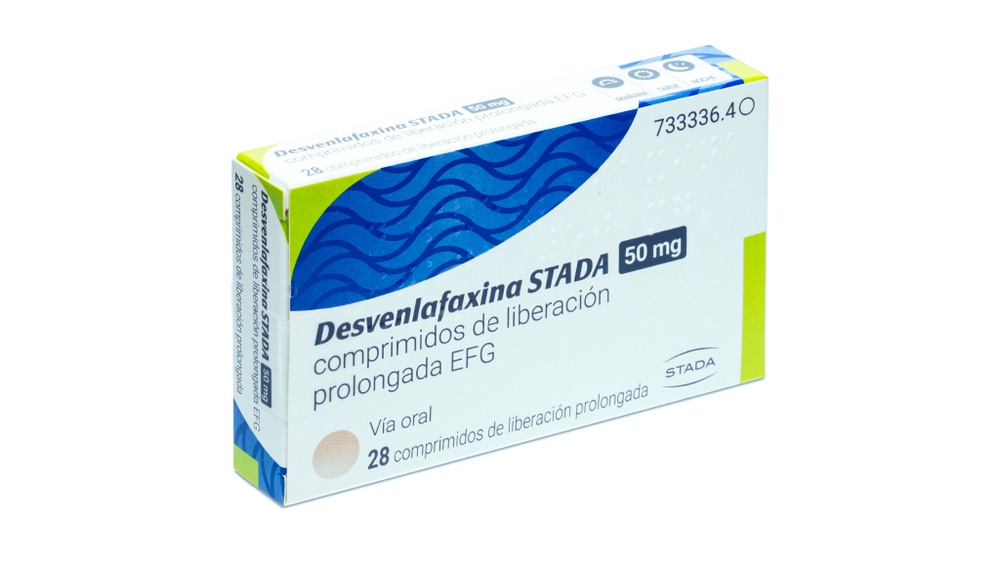
- País de registro
- Forma farmacéuticaCOMPRIMIDO LIBERACION MODIFICADA, 50 mg
- Código ATCN06AX23
- Precio medio en farmacia10.19 EUR
- Principio activo
- Requiere recetaSí
- Fabricante
- Esta información es de carácter general y no sustituye la consulta con un profesional sanitario.
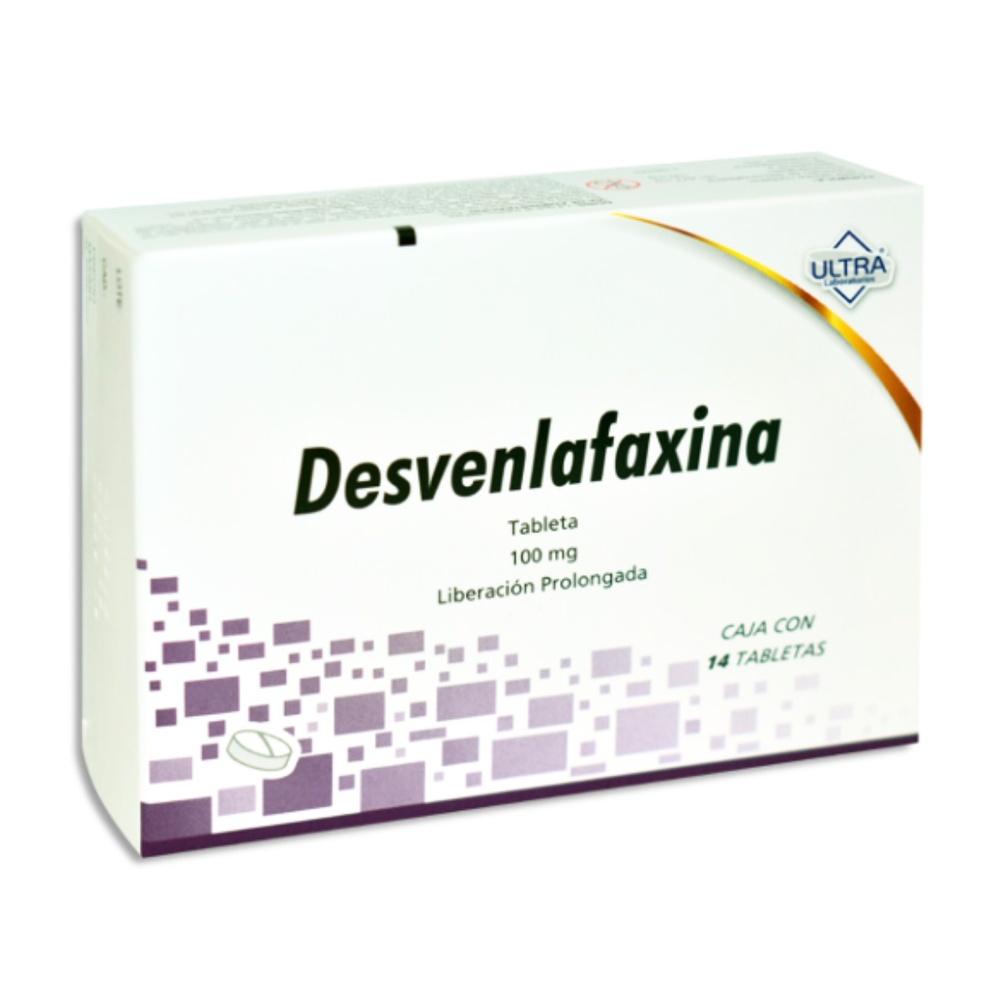
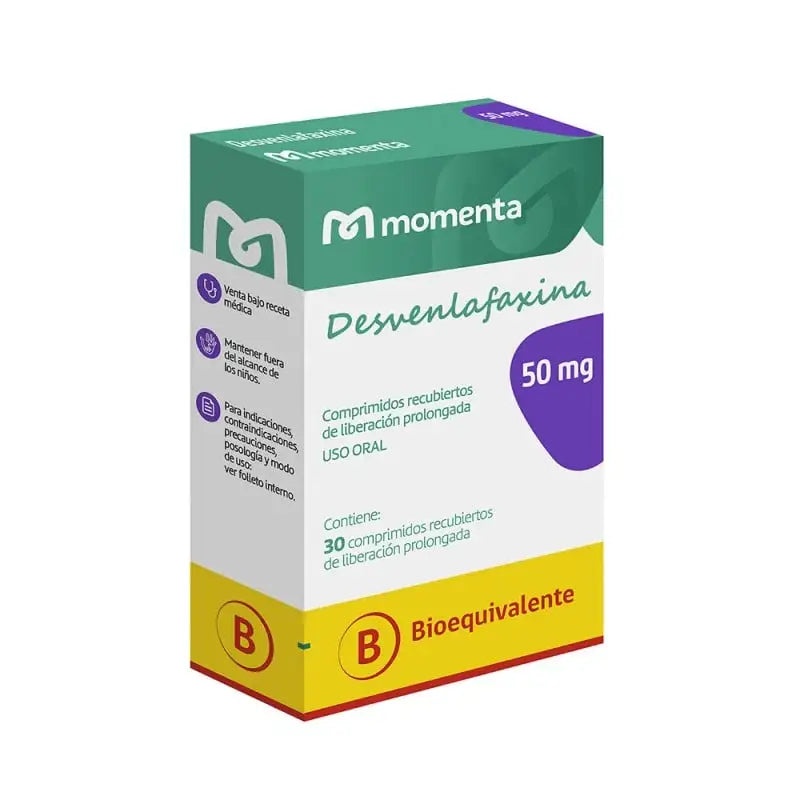
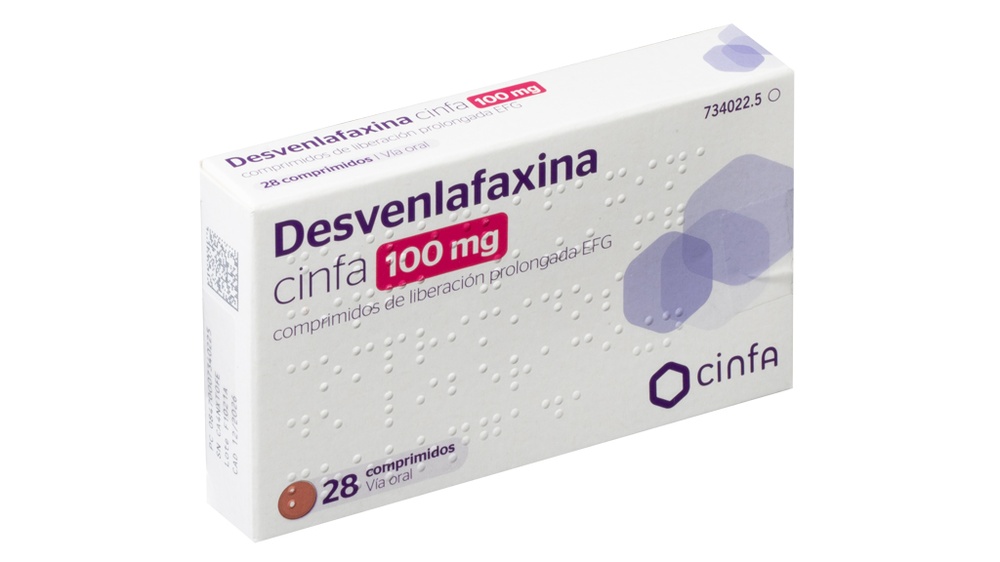
- Alternativas a DESVENLAFAXINA STADA 50 MG COMPRIMIDOS DE LIBERACION PROLONGADA EFGForma farmacéutica: COMPRIMIDO LIBERACION MODIFICADA, 100 mgPrincipio activo: desvenlafaxineFabricante: Laboratorios Alter S.A.Requiere recetaForma farmacéutica: COMPRIMIDO LIBERACION MODIFICADA, 50 mgPrincipio activo: desvenlafaxineFabricante: Laboratorios Alter S.A.Requiere recetaForma farmacéutica: COMPRIMIDO LIBERACION MODIFICADA, 100 mgPrincipio activo: desvenlafaxineFabricante: Laboratorios Cinfa S.A.Requiere receta
Médicos online para DESVENLAFAXINA STADA 50 MG COMPRIMIDOS DE LIBERACION PROLONGADA EFG
Comenta la dosis, los posibles efectos secundarios, interacciones, contraindicaciones o la revisión de receta de DESVENLAFAXINA STADA 50 MG COMPRIMIDOS DE LIBERACION PROLONGADA EFG, sujeto a valoración médica y a la normativa local.






Obtén una receta de DESVENLAFAXINA STADA 50 MG COMPRIMIDOS DE LIBERACION PROLONGADA EFG online
Rellena un formulario de 2 minutos
Cuéntanos tus síntomas, historial y el medicamento que necesitas.
Elige un médico o nosotros te asignamos uno
Escoge un especialista o te conectamos con el próximo médico disponible.
El médico revisa tu caso
Normalmente en 30 minutos. Puede hacerte preguntas adicionales por chat.
Recógela en cualquier farmacia
Receta electrónica enviada a tu correo, válida en toda España.
Preguntas frecuentes
DESVENLAFAXINA STADA 50 MG COMPRIMIDOS DE LIBERACION PROLONGADA EFG requires receta en España. Puedes confirmarlo con un médico online según tu caso.
El principio activo de DESVENLAFAXINA STADA 50 MG COMPRIMIDOS DE LIBERACION PROLONGADA EFG es desvenlafaxine. Esta información ayuda a identificar medicamentos con la misma composición pero con diferentes nombres comerciales.
El precio medio en farmacia de DESVENLAFAXINA STADA 50 MG COMPRIMIDOS DE LIBERACION PROLONGADA EFG es de aproximadamente 10.19 EUR. Puede variar según el fabricante y la forma farmacéutica.
DESVENLAFAXINA STADA 50 MG COMPRIMIDOS DE LIBERACION PROLONGADA EFG es fabricado por Laboratorio Stada S.L.. La marca y el envase pueden variar según el distribuidor.
Los Médicos de familia, Psiquiatras, Dermatólogos, Cardiólogos, Endocrinólogos, Gastroenterólogos, Neumólogos, Nefrólogos, Reumatólogos, Hematólogos, Infectólogos, Alergólogos, Geriatras, Pediatras, Oncólogos pueden valorar la prescripción de DESVENLAFAXINA STADA 50 MG COMPRIMIDOS DE LIBERACION PROLONGADA EFG cuando esté clínicamente indicado. Puedes reservar una videoconsulta para comentar tu caso y las opciones de tratamiento.
España cuenta con una infraestructura sanitaria bien desarrollada en ciudades principales como Madrid, Barcelona, Valencia y Sevilla. Las farmacias están ampliamente disponibles y operan bajo estrictas regulaciones, garantizando el acceso a medicamentos con receta.
Puedes comprar DESVENLAFAXINA STADA 50 MG COMPRIMIDOS DE LIBERACION PROLONGADA EFG en Madrid, Barcelona, Sevilla o Valencia en cualquier farmacia local con una receta válida.
Para obtener una receta, puedes utilizar Oladoctor:
Otros medicamentos con el mismo principio activo (desvenlafaxine) incluyen DESVENLAFAXINA ALTER 100 MG COMPRIMIDOS DE LIBERACION PROLONGADA EFG, DESVENLAFAXINA ALTER 50 MG COMPRIMIDOS DE LIBERACION PROLONGADA EFG, DESVENLAFAXINA CINFA 100 MG COMPRIMIDOS DE LIBERACION PROLONGADA EFG. Pueden tener diferentes nombres comerciales o formulaciones, pero contienen el mismo componente terapéutico. Consulta siempre con un médico antes de cambiar o iniciar un nuevo medicamento.
