


DESMOPRESINA SANDOZ 120 MICROGRAMOS COMPRIMIDOS SUBLINGUALES EFG
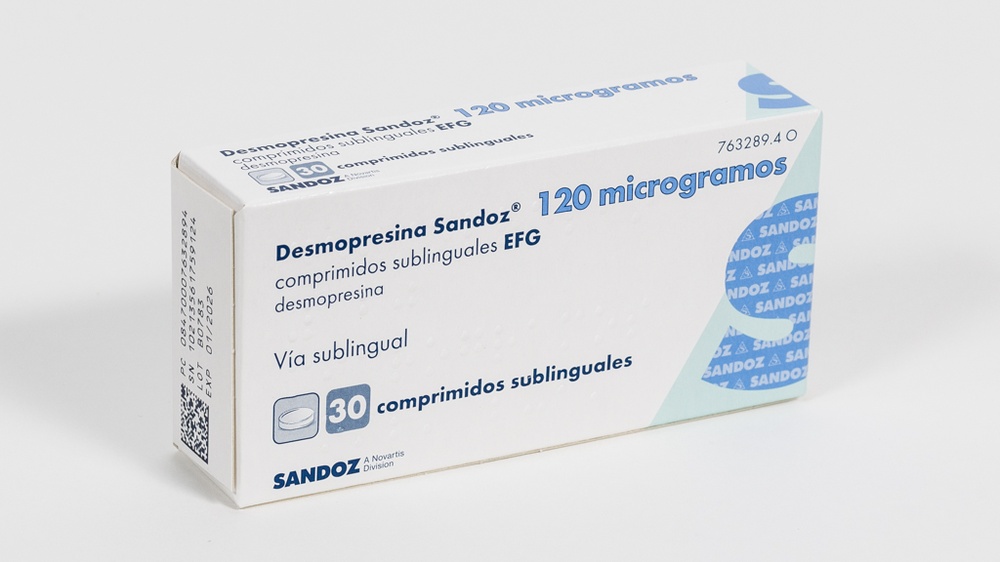



Cómo usar DESMOPRESINA SANDOZ 120 MICROGRAMOS COMPRIMIDOS SUBLINGUALES EFG
Traducción generada por IA
Este contenido ha sido traducido automáticamente y se ofrece solo con fines informativos. No sustituye la consulta con un profesional sanitario.
Ver originalContenido del prospecto
Introducción
Prospecto:información para el usuario
Desmopresina Sandoz 120 microgramos comprimidos sublinguales EFG
Lea todo el prospecto detenidamente antes de empezar a tomar este medicamento,porque contiene información importante para usted.
- Conserve este prospecto, ya que puede tener que volver a leerlo.
- Si tiene alguna duda, consulte a su médico o farmacéutico.
- Este medicamento se le ha recetado solamente a usted, y no debe dárselo a otras personas aunque tengan los mismos síntomas que usted, ya que puede perjudicarles.
- Si experimenta efectos adversos, consulte a su médico o farmacéutico, incluso si se trata de efectos adversos que no aparecen en este prospecto. Ver sección 4.
Contenido del prospecto
- Qué es Desmopresina Sandoz y para qué se utiliza
- Qué necesita saber antes de empezar a usar Desmopresina Sandoz
- Cómo tomar Desmopresina Sandoz
- Posibles efectos adversos
5 Conservación de Desmopresina Sandoz
- Contenido del envase e información adicional
1. Qué es Desmopresina Sandoz y para qué se utiliza
Desmopresina Sandoz contiene el principio activo desmopresina que reduce la cantidad de orina producida por los riñones.
Desmopresina se utiliza para tratar:
- una enfermedad crónica denominada diabetes insípida, que provoca sed extrema y una producción constante de grandes cantidades de orina diluida. Importante: no se debe confundir con la diabetes mellitus.
- enuresis(incontinencia urinaria durante la noche) en pacientes mayores de 5 años con capacidad normal de concentrar la orina.

2. Qué necesita saber antes de empezar a tomar Desmopresina Sandoz
No tome Desmopresina Sandoz si:
- es alérgico a desmopresina o a alguno de los demás componentes de este medicamento (incluidos en la sección 6),
- bebe grandes cantidades inusuales de líquidos,
- padece problemas de corazónu otras enfermedadesque necesiten tratamiento con medicamentos que aumentan la secreción de orina a través de los riñones,
- tiene una función renal moderada o gravementereducida,
- sabe que tiene bajos niveles de sodioen la sangre,
- sufre síndrome de secreción inadecuada de la hormona antidiurética denominada SIADH.
Advertencias y precauciones
Consulte a su médico o farmacéutico antes de empezar a tomar Desmopresina Sandoz:
- respecto a la ingesta de líquidos, beba lo menos posibledesde 1 hora antesde tomar el comprimido hasta 8 horasdespués de tomarlo,
- si es un paciente de edad avanzada,
- si tiene un problema médico que cause desequilibrio de líquidos y/o de electrolitos en el cuerpo, como una infección, fiebre o malestar del estómago,
- si padece problemas graves de vejigao disminución de la producción de orina,
- si padece asma, epilepsia, fibrosis quísticao migraña,
- si tiene riesgo de sufrir un aumento de la presión intracraneal (enfermedad de la que le informará su médico).
Otros medicamentos y Desmopresina Sandoz
Informe a su médico o farmacéutico si está tomando, ha tomado recientemente o pudiera tener que tomar cualquier otro medicamento.
El efecto de desmopresina se puede incrementar y aumentar el riesgo de retención anómala de líquidos en el cuerpo si ya toma otros medicamentos:
- medicamentos para tratar la depresión denominados antidepresivos tricíclicos o ISRS,
- carbamazepina(para tratar la epilepsia),
- clorpromazina(para tratar la psicosis o esquizofrenia),
- medicamentos para tratar la diabetes denominados sulfonilureas,
- loperamida(para tratar la diarrea),
- medicamentos para tratar el dolor y/o la inflamación, denominados antiinflamatorios no esteroideos, como indometacina, ibuprofeno.
El efecto de desmopresina se puede reducir si ya toma ciertos medicamentos:
- dimeticona(para tratar los síntomas de gases en el estómago).
Toma deDesmopresina Sandoz con alimentosy bebidas
- Antes de comenzar a tomar este medicamento, su médico debe darle consejos sobre la ingesta de líquidos, incluidas las bebidas alcohólicas.
- Si está tomando este medicamento para la enuresis, beba lo menos posible desde 1 horaantes de tomar el comprimido hasta 8 horasdespués.
- Si bebe demasiado se puede producir una retención de líquidos, diluyendo la sal en el organismo. Esto puede suceder con o sin advertencias o síntomas, que pueden incluir:
- dolor de cabeza intenso o prolongado inusual,
- náuseas o vómitos,
- aumento de peso inexplicable,
- en casos graves, convulsiones y pérdida del conocimiento.
Si tiene cualquiera de estos síntomas, interrumpa el tratamiento y consulte a su médico inmediatamente.
Embarazo ylactancia
Desmopresina se puede utilizar durante el embarazo y la lactancia, pero sólo si está prescrito por un médico. Existe solo una experiencia limitada sobre el uso de desmopresina en mujeres embarazadas con diabetes insípida.
Desmopresina se puede utilizar durante la lactancia. Desmopresina pasa a la leche materna, pero es improbable que afecte a los bebés durante la lactancia.
Si está embarazada o en periodo de lactancia, cree que podría estar embarazada o tiene intención de quedarse embarazada, consulte a su médico o farmacéutico antes de utilizar este medicamento.
Conducción y uso de máquinas
No hay evidencias que sugieran que desmopresina afecta a la capacidad para conducir o usar máquinas.
Desmopresina Sandoz contienelactosa y sodio
Si su médico la ha indicado que padece una intolerancia a ciertos azúcares, consulte con él antes de tomar este medicamento.
Este medicamento contiene menos de 1 mmol de sodio (23 mg) por comprimido sublingual; esto es, esencialmente “exento de sodio”.
3. Cómo tomar Desmopresina Sandoz
Siga exactamente las instrucciones de administración de este medicamento indicadas por su médico o farmacéutico. En caso de duda, consulte de nuevo a su médico o farmacéutico.
La dosis la establece su médico y la ajustará individualmente para usted.
La dosis recomendada es:
- Diabetes insípida
Adultos y niños- 60 microgramos tres veces al día. Su médico puede aumentar la dosis, dependiendo de lo bien controlados que estén sus síntomas.
- Enuresis (micción involuntaria por la noche)
Adultos y niños a partir de 5 años- 120 microgramos al acostarse y después de vaciar la vejiga. Su médico puede aumentar la dosis a 240 microgramos al acostarse, dependiendo de lo bien controlada que esté la enuresis. Comprobar cada 3 meses la necesidad de continuar el tratamiento mediante el establecimiento de un periodo libre de tratamiento de al menos una semana.
Uso en edad avanzada
Desmopresina no se debe iniciar hasta que se haya establecido que el valor de sodio en sangre sea normal. Se debe medir los niveles de sodio en sangre antes y tres días después de comenzar el tratamiento y si se aumenta la dosis o en cualquier momento que su médico lo considere oportuno.
Si está tomando este medicamento para la enuresis nocturna, beba lo menos posibledesde 1 horaantes de tomar un comprimido hasta 8 horasdespués.
Instruccionesdeuso
El comprimido se debe colocar debajo de la lengua donde se disuelve sin agua.
Si toma más Desmopresina Sandoz del que debe
Si toma más desmopresina del que debe póngase en contacto inmediatamente con su médico, farmacéutico u hospital más cercano.
Una sobredosis puede prolongar el efecto del acetato de desmopresina y aumentar el riesgo de retención de líquidos en el organismo y niveles bajos de sodio en la sangre. Los síntomas de una retención de líquidos grave incluyen convulsiones y pérdida del conocimiento.
En caso de sobredosis o ingestión accidental consulte inmediatamente a su médico o farmacéutico o llame al Servicio de Información Toxicológica, teléfono: 91 562 04 20, indicando el medicamento y la cantidad ingerida.
Si olvidó tomar Desmopresina Sandoz
No tome una dosis doble para compensar las dosis olvidadas.
Si interrumpe el tratamiento con Desmopresina Sandoz
Sólo debe cambiar o interrumpir el tratamiento si su médico se lo aconseja.
Si tiene cualquier otra duda sobre el uso de este medicamento, pregunte a su médico o farmacéutico.

4. Posibles efectos adversos
Al igual que todos los medicamentos, este medicamento puede producir efectos adversos, aunque no todas las personas los sufran.
Interrumpa el tratamiento y acuda a su médico inmediatamente si presenta alguno de los siguientes efectos adversos graves:
- síntomas múltiples o graves de retención de líquidos. A continuación se enumeran los efectos adversos marcados con un asterisco (*),
- reacciones alérgicastales como erupción cutánea, picor, fiebre, hinchazón de la boca, lengua o vías respiratorias qcausando dificultades para tragar o respirar.
Efectos adversos observados en adultos:
- Muy frecuentes(pueden afectar a más de 1 de cada 10 personas):
- dolor de cabeza*.
- Frecuentes(pueden afectar hasta a 1 de cada 10 personas):
- nivel bajo de sodio en sangre,
- mareos,
- presión arterial alta,
- náuseas*,
- dolor de estómago*,
- diarrea,
- estreñimiento,
- vómitos*,
- problemas para orinar (micción frecuente y anómala durante el día),
- hinchazón de los tejidos de las manos, brazos, pies o piernas,
- fatiga.
- Poco frecuentes(puede afectar hasta a 1 de cada 100 personas):
- dificultades para dormir,
- somnolencia,
- torpeza,
- alteraciones visuales,
- vértigo*,
- sensación de aumento de los latidos del corazón,
- presión arterial baja al levantarse desde una posición tumbada,
- falta de aliento,
- malestares estomacales (indigestión, acidez, flatulencia, hinchazón) ,
- sudoración,
- picor,
- erupciones cutáneas,
- urticaria,
- espasmos musculares,
- dolor muscular,
- trastornos urinarios (como micción urgente),
- malestar *,
- dolor torácico,
- síntomas gripales,
- aumento de peso *,
- aumento de las enzimas hepáticas ,
- bajo nivel de potasio en sangre.
- Raros(pueden afectar hasta 1 de cada 1.000 personas):
- confusión*,
- reacción alérgica cutánea.
- Frecuencia no conocida(no puede estimarse a partir de los datos disponibles):
- reacción alérgica grave,
- convulsiones,
- deshidratación,
- debilidad muscular,
- coma,
- niveles altos de sodio en sangre.
Efectos adversos observados en niños de hasta 18 años:
- Frecuentes(pueden afectar hasta 1 de cada 10 personas):
- dolor de cabeza*.
- Poco frecuentes (pueden afectar hasta 1 de cada 100 personas):
- problemas emocionales,
- agresividad,
- dolor de estómago*,
- náuseas*,
- vómitos*,
- diarrea,
- hinchazón de los tejidos de manos, brazos, pies o piernas,
- fatiga.
- Raros(pueden afectar hasta 1 de cada 1.000 personas):
- ansiedad,
- somnolencia,
- tensión arterial alta,
- irritabilidad,
- pesadillas,
- alteraciones del estado de ánimo.
- Frecuencia no conocida(no puede estimarse a partir de los datos disponibles):
- reacción alérgica grave,
- bajada de sodio en sangre,
- comportamiento anómalo,
- depresión,
- alucinaciones,
- insomnio (dificultad para conciliar el sueño/mantenerse dormido),
- reducción de la atención,
- aumento de los movimientos musculares,
- convulsiones*,
- sangrado nasal,
- reacción alérgica cutánea,
- sarpullido,
- sudoración,
- urticaria.
Comunicación de efectos adversos
Si experimenta cualquier tipo de efecto adverso, consulte a su médico o farmacéutico, incluso si se trata de posibles efectos adversos que no aparecen en este prospecto. También puede comunicarlos directamente a través del Sistema Español de Farmacovigilancia de medicamentos de Uso Humano: https://www.notificaram.es. Mediante la comunicación de efectos adversos usted puede contribuir a proporcionar más información sobre la seguridad de este medicamento.
5. Conservación de Desmopresina Sandoz
Mantener este medicamento fuera de la vista y del alcance de los niños.
No utilice este medicamento después de la fecha de caducidad que aparece en el envase después de CAD/EXP. La fecha de caducidad es el último día del mes que se indica.
Conservar en el blíster original para protegerlo de la humedad. Este medicamento no requiere ninguna temperatura especial de conservación.
Los medicamentos no se deben tirar por los desagües ni a la basura. Deposite los envases y los medicamentos que no necesita en el Punto SIGRE de la farmacia. En caso de duda pregunte a su farmacéutico cómo deshacerse de los envases y de los medicamentos que no necesita. De esta forma, ayudará a proteger el medio ambiente.
6. Contenido del envase e información adicional
Composición de Desmopresina Sandoz 120 microgramos comprimidos sublinguales
- El principio activo es desmopresina. Cada comprimido sublingual contiene 120 microgramos de desmopresina (como acetato de desmopresina).
- Los demás excipientes son: lactosa monohidrato, almidón de maíz, ácido cítrico (E330), croscarmelosa sódica (E468), estearato de magnesio (E470b).
Aspecto del producto y contenido del envase
Comprimido sublingual.
Comprimido octogonal blanco o casi blanco, redondeado en las caras superior e inferior, con la inscripción "II" en relieve en una cara y liso en la otra, de 6,5 mm de longitud y 2 mm de grosor.
Blísteres de aluminio/alumino con capa desecante integrada.
Tamaños de envase
30 comprimidos sublinguales
Titular de la autorización de comercialización y responsable de la fabricación
Titular de la autorización de comercialización
Sandoz Farmacéutica, S.A.
Centro Empresarial Parque Norte
Edificio Roble
C/ Serrano Galvache, 56
28033 Madrid
España
Responsable de la fabricación
Haupt Pharma M?nster GmbH
Schleebrüggenkamp 15
D-48159 Münster
Alemania
ó
Lek Pharmaceuticals d.d.
Verovškova ulica 57
1526 Ljublijana
Eslovenia
ó
Adalvo Ltd.
Malta Life Sciences Park
Building 1, Level 4
Sir Temi Zammit Buildings
San Gwann, SGN 3000
Malta
Fechade la última revisión de este prospecto:junio 2023
La información detallada de este medicamento está disponible en la página web de la Agencia Española de Medicamentos y Productos Sanitarios (AEMPS) http://www.aemps.gob.es/
- País de registro
- Forma farmacéuticaCOMPRIMIDO SUBLINGUAL, 120 microgramos
- Código ATCH01BA02
- Precio medio en farmacia34.16 EUR
- Disponibilidad en farmacias
Problema de suministro reportado
Los datos de la Agencia Española de Medicamentos y Productos Sanitarios (AEMPS) indican un problema de suministro que afecta a este medicamento.<br><br>La disponibilidad puede ser limitada en algunas farmacias.<br><br>Para actualizaciones o alternativas, consulte a su farmacéutico. - Principio activo
- Requiere recetaSí
- Fabricante
- Esta información es de carácter general y no sustituye la consulta con un profesional sanitario.
- Alternativas a DESMOPRESINA SANDOZ 120 MICROGRAMOS COMPRIMIDOS SUBLINGUALES EFGForma farmacéutica: SOLUCIÓN/SUSPENSIÓN ORAL, 360mcg/ml desmopresina(base anhidra)Principio activo: DesmopresinaFabricante: Laboratorio Reig Jofre, S.A.Requiere recetaForma farmacéutica: COMPRIMIDO SUBLINGUAL, 120 microgramosPrincipio activo: DesmopresinaFabricante: Aristo Pharma GmbhRequiere recetaForma farmacéutica: COMPRIMIDO SUBLINGUAL, 240 microgramosPrincipio activo: DesmopresinaFabricante: Aristo Pharma GmbhRequiere receta

Médicos online para DESMOPRESINA SANDOZ 120 MICROGRAMOS COMPRIMIDOS SUBLINGUALES EFG
Comenta la dosis, los posibles efectos secundarios, interacciones, contraindicaciones o la revisión de receta de DESMOPRESINA SANDOZ 120 MICROGRAMOS COMPRIMIDOS SUBLINGUALES EFG, sujeto a valoración médica y a la normativa local.



Preguntas frecuentes
