


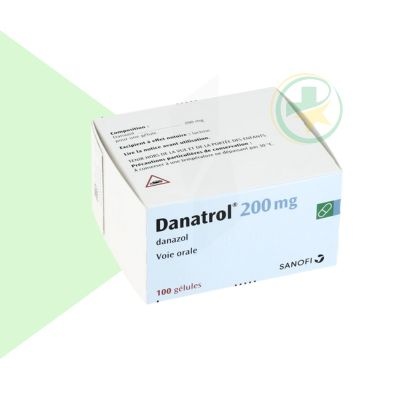
Danatrol 200 mg cápsulas

Revisión de receta online
Un médico revisará tu caso y determinará si la prescripción es médicamente apropiada.

Habla con un médico sobre este medicamento
Comenta tus síntomas y las opciones de tratamiento en una consulta online.



Cómo usar DANATROL 200 mg CAPSULAS
Contenido del prospecto
- Introducción
- Danatrol 200 mg cápsulas
- Qué es Danatrol y para qué se utiliza
- Qué necesita saber antes de empezar a tomar Danatrol
- Cómo tomar Danatrol
- Posibles efectos adversos
- Conservación de Danatrol
- Contenido del envase e información adicional
Introducción
Prospecto: información para el usuario
Danatrol 200 mg cápsulas
danazol
Lea todo el prospecto detenidamente antes de empezar a tomar este medicamento, porque contiene información importante para usted.
- Conserve este prospecto, ya que puede tener que volver a leerlo.
- Si tiene alguna duda, consulte a su médico o farmacéutico.
- Este medicamento se le ha recetado a usted, y no debe dárselo a otras personas aunque tengan los mismos síntomas que usted, ya que puede perjudicarles.
- Si experimenta efectos adversos, consulte a su médico o farmacéutico, incluso si se trata de efectos adversos que no aparecen en este prospecto. Ver sección 4.
Contenido del prospecto:
- Qué es Danatrol y para qué se utiliza
- Qué necesita saber antes de empezar a tomar Danatrol
- Cómo tomar Danatrol
- Posibles efectos adversos
- Conservación de Danatrol
- Contenido del envase e información adicional

¿No estás seguro de si este medicamento es adecuado para ti?
Comenta tus síntomas y tratamiento con un médico online.
1. Qué es Danatrol y para qué se utiliza
Danatrol es un medicamento hormonal eficaz en el tratamiento de la endometriosis (crecimiento de la mucosa que recubre el interior del útero fuera del mismo).
Asimismo previene eficazmente las crisis en pacientes que padecen edema angioneurótico (acumulación de líquido debajo de la piel) hereditario.
2. Qué necesita saber antes de empezar a tomar Danatrol
No tomeDanatrol
- si es alérgico a danazol o a cualquiera de los demás componentes de este medicamento (incluidos en la sección 6),
- si está embarazada o en periodo de lactancia materna,
- si padece porfiria (trastorno relacionado con los glóbulos rojos),
- si padece alteraciones importantes que afectan a los riñones (renales), al hígado (hepáticas) o al corazón (cardíacas),
- si padece o ha padecido trombosis (aparición de un coágulo dentro del torrente circulatorio), o una enfermedad tromboembólica,
- si padece algún tipo de tumor cuyo crecimiento se vea afectado por agentes hormonales,
- si padece un sangrado vaginal anormal que no ha sido diagnosticado,
- no debe tomar Danatrol al mismo tiempo que simvastatina.
Advertencias y precauciones
Consulte a su médico o farmacéutico antes de empezar a tomar Danatrol.
Advertencias
Informe a su médico si padece o ha padecido reacciones previas a medicamentos, especialmente a medicamentos esteroides.
Su médico puede indicarle la realización de analíticas sanguíneas periódicas para controlar el funcionamiento del hígado y los niveles de las células sanguíneas.
Se debe interrumpir el tratamiento si aparecen efectos adversos clínicamente importantes y particularmente si hay alguna evidencia de:
- masculinización (virilización),
- inflamación del nervio óptico (papiledema), dolor de cabeza, alteraciones de la visión u otros signos o síntomas de aumento de la presión intracraneal,
- coloración amarilla en la piel o cualquier otra indicación de alteraciones del hígado,
- problemas vasculares como trombosis o tromboembolismo.
Se debe tener en cuenta que:
- dada la relación de danazol con los esteroides, pueden producirse trastornos del hígado debidos al tratamiento prolongado o repetido,
- el uso de danazol aumenta el riesgo de padecer cáncer de ovario en pacientes tratadas de endometriosis,
- en caso de tener que repetir un ciclo de tratamiento con Danatrol, el médico debe realizarle un seguimiento estricto.
Precauciones
Debido a sus efectos adversos y a las interacciones con otros medicamentos, debe informar a su médico si presenta alguna de las siguientes enfermedades:
- enfermedad hepática o renal,
- problemas cardiovasculares,
- presión arterial elevada,
- cualquier situación que pueda exacerbarse por la retención de líquidos,
- diabetes,
- trastornos lipoproteicos (alteración en los niveles normales de las lipoproteínas en sangre),
- epilepsia,
- trastorno sanguíneo denominado policitemia (aumento de la proporción de glóbulos rojos por volumen sanguíneo),
- antecedentes de reacción androgénica marcada o persistente a un tratamiento previo con esteroides gonadales,
- migraña.
Antes de empezar el tratamiento, se debe excluir la presencia de un carcinoma dependiente de hormona, así como la persistencia o el aumento de nódulos en las mamas durante el tratamiento.
Se debe iniciar el tratamiento durante la menstruación. Las mujeres en edad fértil deben utilizar un tratamiento anticonceptivo no hormonal efectivo durante el tratamiento con Danatrol.
Este medicamento puede aumentar la sensibilidad de la piel a los rayos solares. Evite exponerse al sol (aun estando nublado) y a lámparas de rayos ultravioleta (UVA), mientras use este medicamento.
Uso en deportistas
Este medicamento contiene danazol que puede producir un resultado positivo en las pruebas de control de dopaje.
Uso de Danatrol con otros medicamentos
Comunique a su médico o farmacéutico si está tomando, ha tomado recientemente o pudiera tener que tomar cualquier otro medicamento. Su médico decidirá qué medicación debe abandonar o si debe modificarse la dosis.
Especialmente, informe a su médico si está tomando actualmente:
- anticonvulsivantes (para tratar las convulsiones),
- antidiabéticos (para el tratamiento de la diabetes),
- anticoagulantes orales como la warfarina (medicamentos que ayudan a evitar la formación de coágulos en la sangre),
- antihipertensivos (medicamentos que reducen la presión arterial),
- ciclosporina o tacrolimus (utilizados en trasplantes),
- esteroides (medicamentos relacionados con la hormona sexual masculina),
- alfacalcidol (medicamento para tratar la hipocalcemia),
- estatinas (medicamentos para reducir el colesterol). No debe tomar Danatrol al mismo tiempo que simvastatina (ver sección “No tome Danatrol”).
Debido a las posibles interacciones con las pruebas de laboratorio para la determinación de testosterona o de proteínas plasmáticas, informe a su médico que está tomando Danatrol.
Embarazo y lactancia
Si está embarazada o en periodo de lactancia, cree que podría estar embarazada o tiene intención de quedarse embarazada, consulte a su médico o farmacéutico antes de tomar este medicamento.
Embarazo:
Dado que el uso de danazol está contraindicado durante el embarazo debido al riesgo de virilización (masculinización) del feto femenino, se deben tomar las medidas apropiadas en las mujeres en edad fértil para excluir la posibilidad de un embarazo durante el tratamiento.
En caso de embarazo, no se debe tomar Danatrol. Debe informar a su médico si está embarazada o pretende estarlo antes de iniciar el tratamiento con este medicamento. Si cree que se ha quedado embarazada durante el tratamiento con Danatrol, debe interrumpir el tratamiento y consultar con su médico.
Ya que es importante asegurar que usted no está embarazada, se debe iniciar el tratamiento con Danatrol durante la menstruación y utilizar un método contraceptivo no hormonal efectivo durante el tratamiento con este medicamento.
Lactancia:
Danazol puede, teóricamente, producir efectos androgénicos (masculinizantes) en los lactantes y por lo tanto, se debe interrumpir el tratamiento con danazol o la lactancia. Si está dando el pecho a su hijo no debe tomar este medicamento.
Conducción y uso de máquinas
La influencia de Danatrol sobre la capacidad para conducir y utilizar máquinas es poco probable.
Danatrol contiene lactosa
Este medicamento contiene lactosa. Si su médico le ha indicado que padece una intolerancia a ciertos azúcares, consulte con él antes de tomar este medicamento.

¿Has empezado a tomar el medicamento y tienes preguntas?
Comenta tus síntomas y tratamiento con un médico online.
3. Cómo tomar Danatrol
Siga exactamente las instrucciones de administración de este medicamento indicadas por su médico. En caso de duda, consulte de nuevo a su médico o farmacéutico.
Danatrol debe administrarse por vía oral.
Si usted es una mujer en edad fértil, debe iniciar el tratamiento durante la menstruación, para eliminar la posibilidad de iniciarlo estando embarazada. Debe utilizar un método contraceptivo no hormonal durante el tratamiento con Danatrol.
La dosis normal es de 200 a 800 mg de danazol al día (sin exceder de 800 mg al día), repartidos en 2 a 4 tomas por vía oral.
La dosis puede ser mayor o menor a la indicada, dependiendo de la respuesta obtenida.
Se debe administrar siempre la dosis efectiva más baja.
Este medicamento no debe ser tomado por niños ni por pacientes de edad avanzada.
Si toma másDanatroldel que debe
Como con otros medicamentos, una sobredosis puede resultar peligrosa.
En caso de sobredosis o ingestión accidental, consulte inmediatamente a su médico o farmacéutico o llame al Servicio de Información Toxicológica, teléfono 91 562 04 20 indicando el medicamento y la cantidad ingerida. Se recomienda llevar el envase y prospecto del medicamento al profesional sanitario.
Debe permanecer en observación por si aparecen reacciones tardías.
Si olvidó tomarDanatrol
Lo más recomendable es tomar la dosis olvidada cuanto antes. No tome la siguiente dosis hasta que hayan transcurrido al menos 4 horas, manteniendo a continuación la pauta indicada por su médico.
No tome una dosis doble para compensar las dosis olvidadas.
4. Posibles efectos adversos
Al igual que todos los medicamentos, Danatrol puede producir efectos adversos, aunque no todas las personas los sufran.
Las reacciones adversas se presentan agrupadas según la clasificación de órganos y sistemas y según su frecuencia:
Muy frecuentes: pueden afectar a más de 1 de cada 10 pacientes
Frecuentes: pueden afectar hasta 1 de cada 10 pacientes
Poco frecuentes: pueden afectar hasta 1 de cada 100 pacientes
Raros: pueden afectar hasta 1 de cada 1.000 pacientes
Muy raros: pueden afectar hasta 1 de cada 10.000 pacientes
Frecuencia no conocida: no puede estimarse a partir de los datos disponibles.
Trastornos de la sangre y del sistema linfático
- Raros: aumento de la proporción de glóbulos rojos por volumen sanguíneo (policitemia), disminución del número de leucocitos (leucopenia) y disminución del número de plaquetas (trombocitopenia).
- Muy raros: elevación del número de eosinófilos en sangre (eosinofilia), enfermedad del bazo (peliosis esplénica).
Trastornos del metabolismo y de la nutrición
- Aumento de la resistencia a la insulina, tolerancia anormal a la glucosa.
- Frecuentes: aumento del apetito.
- Raros: retención de fluidos.
Trastornos psiquiátricos
- Frecuentes: alteración de la manifestación de la afectividad, ansiedad, estado depresivo, nerviosismo, cambios en el deseo sexual.
Trastornos del sistema nervioso
- Frecuentes: dolor de cabeza, temblores musculares, contracciones musculares.
- Raros: mareos, hipertensión intracraneal benigna.
- Muy raros: empeoramiento de la epilepsia, aparición de migraña, dolor en las muñecas y dedos (síndrome del túnel carpiano).
Trastornos oculares
- Raros: trastornos visuales como visión borrosa, dificultad para enfocar los objetos, molestias para llevar lentes de contacto y alteraciones en la refracción que requieran corrección.
Trastornos del oído y del laberinto
- Raros: vértigo.
Trastornos cardíacos
- Raros: palpitaciones y taquicardia. También se han notificado casos de infarto de miocardio.
Trastornos vasculares
- Frecuentes: sofocos.
- Raros: hipertensión. También se han observado efectos causados por la presencia de un coágulo en algún vaso sanguíneo (incluyendo trombosis del seno sagital, trombosis cerebrovascular así como trombosis arterial).
Trastornos respiratorios, torácicos y mediastínicos
- Frecuentes: cambio en la voz.
- Muy raros: engrosamiento y cicatrización de los pulmones (neumonitis intersticial), dolor en el pecho.
Trastornos gastrointestinales
- Frecuentes: náuseas.
- Raros: inflamación del páncreas (pancreatitis).
- Muy raros: dolor en la parte superior del estómago.
Trastornos hepatobiliares
- Raros: piel amarillenta (ictericia colestásica), tumor en el hígado benigno (adenoma hepático benigno).
- Muy raros: en casos de uso prolongado se han observado trastornos en el hígado (tumor maligno en el hígado y peliosis hepática).
- Frecuencia no conocida: daño en las células del hígado, deterioro de la función del hígado, coloración amarilla de la piel y/o de las mucosas debido a una lesión de las células del hígado (ictericia hepatocelular), tumor en el hígado benigno (hiperplasia nodular focal hepática).
Trastornos de la piel y del tejido subcutáneo
- Frecuentes: erupciones cutáneas que pueden ir acompañadas de fiebre. También se han notificado hinchazón de la cara (edema facial) y aumento de la sensibilidad de la piel a los rayos solares (fotosensibilidad). Acné, piel grasa (seborrea), aumento considerable del vello facial o corporal (hirsutismo), caída del cabello.
- Poco frecuentes: ronchas rojizas, elevadas que aparecen en la superficie de la piel (urticaria).
- Muy raros: enfermedad inflamatoria de la piel (nódulo eritematoso inflamatorio), trastornos en la pigmentación de la piel, dermatitis exfoliativa y reacción alérgica que afecta a la piel (eritema multiforme).
Trastornos musculoesqueléticos y del tejido conjuntivo
- Frecuentes: dolor de espalda, calambres musculares, a veces acompañados de aumento de los niveles de la creatina fosfoquinasa, dolor en las extremidades, dolor e inflamación articulares.
Trastornos renales y urinarios
- Muy raros: presencia de sangre en la orina con el uso prolongado en los casos de angioedema hereditario.
Trastornos del aparato reproductor y de la mama
- Frecuentes: trastornos en el ciclo menstrual, sangrado entre menstruaciones, ausencia de menstruación, sequedad vaginal, irritación vaginal.
- Poco frecuentes: disminución del tamaño de las mamas.
- Raros: aumento del tamaño del clítoris.
- Muy raros: disminución de la producción de esperma.
Trastornos generales
- Raros: fatiga.
Exploraciones complementarias
- Aumento del nivel plasmático de glucagón, aumento del colesterol LDL, disminución del colesterol HDL y descenso en el nivel de apolipoproteínas AI y AII.
Otros cambios metabólicos incluyen la inducción de la ALA sintetasa (ácido aminolevulínico sintetasa) y la disminución de la globulina fijadora del tiroides y de la T4 con un incremento de la absorción de T3, pero sin alteración de la hormona estimulante de tiroides o del índice de tiroxina libre.
- Frecuentes: aumento de peso.
- Poco frecuentes: aumentos aislados de los niveles de las enzimas del hígado (transaminasas) en sangre.
- Raros: aumento del número de células rojas y plaquetas.
Comunicación de efectos adversos
Si experimenta cualquier tipo de efecto adverso, consulte a su médico o farmacéutico, incluso si se trata de posibles efectos adversos que no aparecen en este prospecto. También puede comunicarlos directamente a través del Sistema Español de Farmacovigilancia de medicamentos de Uso Humano: https://www.notificaram.es. Mediante la comunicación de efectos adversos usted puede contribuir a proporcionar más información sobre la seguridad de este medicamento.
5. Conservación de Danatrol
Mantener fuera de la vista y del alcance de los niños.
Conservar por debajo de 30ºC.
No utilice este medicamento después de la fecha de caducidad que aparece en el envase después de CAD. La fecha de caducidad es el último día del mes que se indica.
Los medicamentos no se deben tirar por los desagües ni a la basura. Deposite los envases y los medicamentos que no necesita en el Punto SIGRE de la farmacia. En caso de duda pregunte a su farmacéutico cómo deshacerse de los envases y de los medicamentos que no necesita. De esta forma, ayudará a proteger el medio ambiente.
6. Contenido del envase e información adicional
Composición de Danatrol
- El principio activo es danazol. Cada cápsula contiene 200 mg de danazol.
- Los demás componentes son lactosa, almidón de maíz, talco y estearato de magnesio.
Cápsula: gelatina, dióxido de titanio (E171), óxido de hierro rojo (E172), óxido de hierro amarillo (E172).
Aspecto del producto y contenido del envase
Cápsulas con el cuerpo de color blanco opaco y la tapa de color naranja opaco, con la inscripción D200.
Cada envase contiene 60 cápsulas en blíster de PVC/Aluminio.
Titular de la autorización de comercialización y responsable de la fabricación
Titular
Laboratorios Fidia Farmacéutica S.L.U.
Parque Empresarial de la Moraleja - Edificio Torona
Avenida de Europa, 24 - Edificio A - 1 B
28108 Alcobendas - Madrid - España
Responsable de la fabricación
Zentiva, k.s.
U Kabelovny 130
102 37 Praga 10
República Checa
Fecha de la última revisión de este prospecto: Junio 2017
La información detallada y actualizada de este medicamento está disponible en la página Web de la Agencia Española de Medicamentos y Productos Sanitarios (AEMPS) http://www.aemps.gob.es/
- País de registro
- Forma farmacéuticaCÁPSULA, 200 mg
- Código ATCG03XA01
- Precio medio en farmacia39.34 EUR
- Principio activo
- Requiere recetaSí
- Fabricante
- ComposiciónLACTOSA (76,6 mg mg)
- Esta información es de carácter general y no sustituye la consulta con un profesional sanitario.
- Alternativas a DANATROL 200 mg CAPSULASForma farmacéutica: CAPSULA, 100 mgPrincipio activo: danazolFabricante: Laboratorios Fidia Farmaceutica S.L.Requiere recetaForma farmacéutica: CAPSULA, 50 mg danazolPrincipio activo: danazolFabricante: Laboratorios Fidia Farmaceutica S.L.Requiere recetaForma farmacéutica: COMPRIMIDO, 20 mgPrincipio activo: bazedoxifeneFabricante: Pfizer Europe Ma EeigRequiere receta
Médicos online para DANATROL 200 mg CAPSULAS
Comenta la dosis, los posibles efectos secundarios, interacciones, contraindicaciones o la revisión de receta de DANATROL 200 mg CAPSULAS, sujeto a valoración médica y a la normativa local.

Preguntas frecuentes
DANATROL 200 mg CAPSULAS requiere receta en España. Puedes confirmarlo con un médico online según tu caso.
El principio activo de DANATROL 200 mg CAPSULAS es danazol. Esta información ayuda a identificar medicamentos con la misma composición pero con diferentes nombres comerciales.
El precio medio en farmacia de DANATROL 200 mg CAPSULAS es de aproximadamente 39.34 EUR. Puede variar según el fabricante y la forma farmacéutica.
DANATROL 200 mg CAPSULAS es fabricado por Laboratorios Fidia Farmaceutica S.L.. La marca y el envase pueden variar según el distribuidor.
Los Médicos de familia, Psiquiatras, Dermatólogos, Cardiólogos, Endocrinólogos, Gastroenterólogos, Neumólogos, Nefrólogos, Reumatólogos, Hematólogos, Infectólogos, Alergólogos, Geriatras, Pediatras, Oncólogos pueden valorar la prescripción de DANATROL 200 mg CAPSULAS cuando esté clínicamente indicado. Puedes reservar una videoconsulta para comentar tu caso y las opciones de tratamiento.
La receta la emite un médico tras valorar tu estado de salud. En España, DANATROL 200 mg CAPSULAS se dispensa en las farmacias con esa receta médica. Una consulta online no garantiza su emisión: la decisión corresponde siempre al médico.
Para solicitar una valoración puedes usar Oladoctor:
Otros medicamentos con el mismo principio activo (danazol) incluyen DANATROL 100 mg CAPSULAS, DANATROL 50 mg CAPSULAS, CONBRIZA 20 MG COMPRIMIDOS RECUBIERTOS CON PELICULA. Pueden tener diferentes nombres comerciales o formulaciones, pero contienen el mismo componente terapéutico. Consulta siempre con un médico antes de cambiar o iniciar un nuevo medicamento.
