


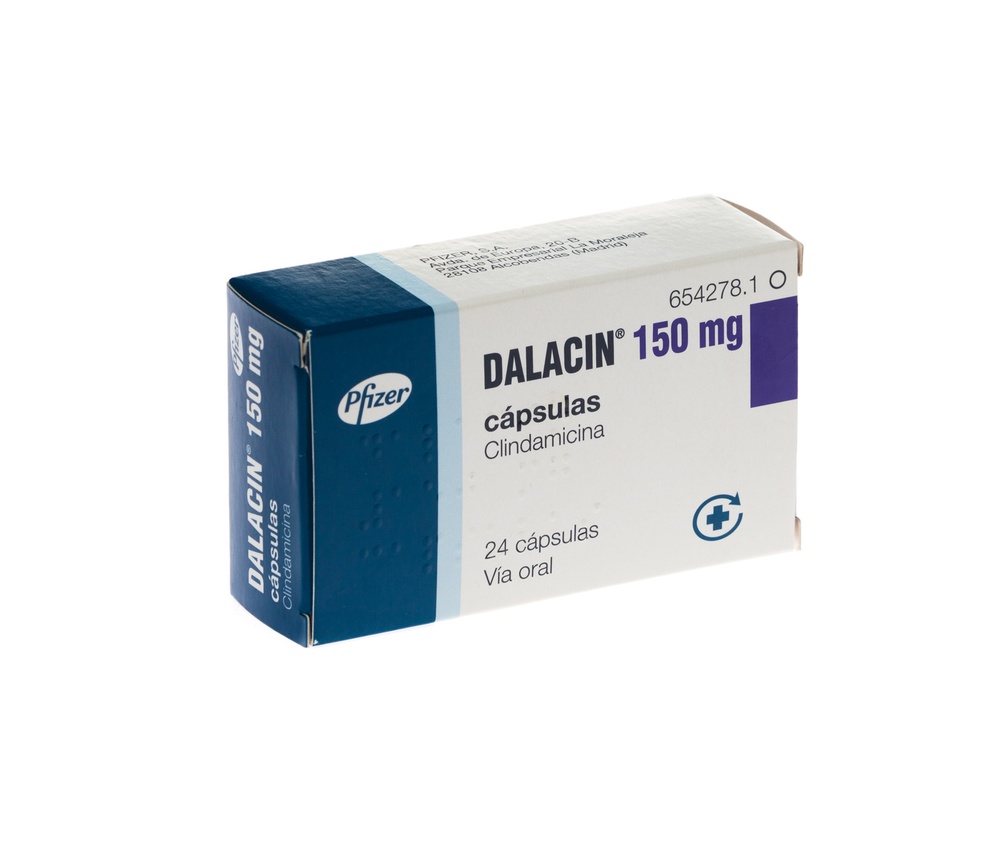
Dalacin 150 mg cápsulas duras

Solicitud de receta online
Un médico revisará tu caso y determinará si la prescripción es médicamente apropiada.

Habla con un médico sobre este medicamento
Comenta tus síntomas y las opciones de tratamiento en una consulta online.



Cómo usar DALACIN 150 mg CAPSULAS DURAS
Contenido del prospecto
- Introducción
- Qué es Dalacin cápsulas duras y para qué se utiliza
- Qué necesita saber antes de empezar a usar Dalacin cápsulas duras
- Cómo tomar Dalacin cápsulas duras
- Posibles efectos adversos
- Conservación de Dalacin cápsulas duras
- Información adicional
Introducción
Prospecto: información para el paciente
Dalacin 150 mg cápsulas duras
Clindamicina
Lea todo el prospecto detenidamente antes de empezar a usar este medicamento porque contiene información importante para usted.
- Conserve este prospecto, ya que puede tener que volver a leerlo.
- Si tiene alguna duda, consulte a su médico o farmacéutico.
- Este medicamento se le ha recetado solamente a usted y no debe dárselo a otras personas, aunque tengan los mismos síntomas que usted, ya que puede perjudicarles.
- Si experimenta efectos adversos, consulte a su médico o farmacéutico, incluso si se trata de efectos adversos que no aparecen en este prospecto. Ver sección 4.
Contenido del prospecto:
- Qué es Dalacin cápsulas duras y para qué se utiliza
- Qué necesita saber antes de empezar a usar Dalacin cápsulas duras
- Cómo usar Dalacin cápsulas duras
- Posibles efectos adversos
- Conservación de Dalacin cápsulas duras
- Contenido del envase e información adicional
1. Qué es Dalacin cápsulas duras y para qué se utiliza
Este medicamento pertenece a un grupo de antibióticos llamado lincosamidas.
Los antibióticos se utilizan para tratar infecciones bacterianas y no sirven para tratar infecciones víricas como la gripe o el catarro.
Es importante que siga las instrucciones relativas a la dosis, las tomas y la duración del tratamiento indicadas por su médico.
No guarde ni reutilice este medicamento. Si una vez finalizado el tratamiento le sobra antibiótico, devuélvalo a la farmacia para su correcta eliminación. No debe tirar los medicamentos por el desagüe ni a la basura.
Se utiliza para el tratamiento de infecciones causadas por bacterias en diferentes partes del cuerpo, en adultos.
Además, este medicamento se utiliza para el tratamiento de sinusitis aguda (infección de los senos paranasales), en niños mayores de 1 mes y menores de 18 años.

¿No estás seguro de si este medicamento es adecuado para ti?
Comenta tus síntomas y tratamiento con un médico online.
2. Qué necesita saber antes de empezar a usar Dalacin cápsulas duras
No use Dalacin cápsulas duras
- Si es alérgico a clindamicina, lincomicina o a cualquiera de los demás componentes de este medicamento (incluidos en la sección 6).
- Si en el pasado ha padecido una colitis asociada al uso de antibióticos
Advertencias y precauciones
- Durante el tratamiento pueden aparecer reacciones de tipo alérgico o reacciones cutáneas graves, en cuyo caso, debe interrumpirse el tratamiento con Dalacin e instaurar el tratamiento adecuado.
- Durante el tratamiento con este medicamento o después de éste, pueden aparecer síntomas que sugieran colitis (diarrea) asociada a antibióticos. Si es así el tratamiento debe suspenderse y su médico le pondrá el tratamiento que considere más adecuado.
- Si padece una enfermedad intestinal inflamatoria, como la enfermedad de Crohn o la colitis ulcerosa, coméntelo con su médico para que le confirme si debe de utilizar este medicamento.
- La administración prolongada de este medicamento puede provocar el crecimiento de otros microorganismos, sobre todo hongos.
- Si está en tratamiento con bloqueantes neuromusculares (usados para producir parálisis en el músculo, tales como pancuronio, tubocurarina), comuníqueselo a su médico, puesto que clindamicina puede potenciar la acción de estos medicamentos.
- Si el tratamiento con Dalacin es largo, deberán realizarle periódicamente análisis de sangre y pruebas para valorar el recuento sanguíneo y la función del hígado y del riñón.
- Pueden producirse trastornos renales agudos. Informe a su médico de cualquier medicamento que esté tomando actualmente y si tiene algún problema de riñón. Si experimenta disminución de la producción de orina, retención de líquidos que provoca hinchazón de piernas, tobillos o pies, falta de aliento o náuseas, debe contactar inmediatamente con su médico.
- Debido al riesgo de inflamación del esófago (esofagitis) y úlcera esofágica, es importante tomar siempre Dalacin cápsulas como se indica en la sección 3.
Niños y adolescentes
Este medicamento no es adecuado para niños que no sean capaces de tragar las cápsulas enteras.
La dosis recomendada en niños mayores de 1 mes es de 8 a 25 mg/kg/día dividido en 3 o 4 dosis iguales, ver más adelante sección 3.
Uso de Dalacin cápsulas duras con otros medicamentos
Informe a su médico o farmacéutico si está utilizando o ha utilizado recientemente otros medicamentos, incluso los adquiridos sin receta.
Debe avisar a su médico si está recibiendo alguno de los siguientes medicamentos:
- La warfarina y otros medicamentos similares, se utilizan para hacer que la sangre sea más fluida y así no se produzcan trombos. Existe mayor probabilidad de sufrir una hemorragia cuando se toman medicamentos con warfarina, por ello puede resultar necesario que su médico le realice regularmente análisis de sangre para ver su estado de coagulación.
- Agente bloqueante neuromuscular (tales como pancuronio, tubocurarina), dado que su efecto se puede ver potenciado con el uso de este medicamento.
- Vacuna oral contra el tifus ya que ésta se inactiva con la administración concomitante de agentes antibacterianos; no se debe administrar Dalacin en los 3 días anteriores o posteriores a la vacunación.
- Medicamentos que potencien o inhiban el funcionamiento de los isoenzimas CYP3A4 y CYP3A5 ya que su efecto puede aumentar o disminuir la eficacia de este medicamento (como por ejemplo la rifampicina).
Toma de Dalacin cápsulas duras con alimentos y bebidas
Las cápsulas pueden tomarse con alimentos, ya que, la ingestión de alimentos no modifica la absorción de Dalacin. Se recomienda la ingestión de las cápsulas con un vaso grande de agua para evitar la posible irritación esofágica.
Embarazo, lactancia y fertilidad
Embarazo
Si está embarazada o en período de lactancia, cree que podría estar embarazada o tiene intencion de quedarse embarazada, consulte a su médico o farmacéutico antes de utilizar este medicamento.
Clindamicina atraviesa la barrera placentaria en humanos. En estudios clínicos con mujeres embarazadas, la administración sistémica de clindamicina durante el segundo y el tercer trimestre no se ha asociado con un aumento de la frecuencia de anormalidades congénitas. No existen estudios suficientes y bien controlados con mujeres embarazadas durante el primer trimestre del embarazo.
Por tanto, no debe utilizarse clindamicina durante el embarazo a menos que sea estrictamente necesario.
Lactancia
Clindamicina se excreta en la leche materna tras la administración por vía oral o intravenosa. Debido a las potenciales reacciones adversas graves en el lactante, tales como diarrea, sangre en heces o erupción, está contraindicado el uso de clindamicina durante la lactancia.
Conducción y uso de máquinas
La influencia de este medicamento sobre la capacidad de conducir o utilizar máquinas es nula o insignificante.
Dalacin cápsulas durascontienelactosa
Este medicamento contiene lactosa. Si su médico le ha indicado que padece una intolerancia a ciertos azúcares, consulte con él antes de tomar este medicamento.
3. Cómo tomar Dalacin cápsulas duras
Siga exactamente las instrucciones de administración del medicamento contenidas en este prospecto o las indicadas por su médico. En caso de duda, consulte a su médico o farmacéutico.
Este medicamento se administra de forma oral.
Su médico establecerá la dosis y duración del tratamiento más adecuada para usted, de acuerdo a su estado y a la respuesta al tratamiento.
Adultos
La dosis recomendada en adultos es de 600 a 1.800 mg al día divididos en 2, 3 o 4 dosis iguales en función de la gravedad, del lugar de la infección y de la sensibilidad del microorganismo. Su médico le indicará la pauta a seguir.
La duración del tratamiento se debe determinar en función del tipo de infección y la respuesta, y deberá ser lo más corta posible, en general, de 7 a 14 días.
La posología habitual en faringoamigdalitis aguda y en ciertas neumonías es de 300 mg, 2 veces al día durante 10 días.
Enfermedad inflamatoria pélvica: tras el tratamiento intravenoso administrado por un profesional sanitario, 450-600 mg de clindamicina cada 6 horas por vía oral hasta completar 10 - 14 días (tratamiento completo (administración intravenosa y oral).
Neumonía a en pacientes con infección por VIH: 300 - 450 mg de clindamicina cada 6 horas por vía oral durante 21 días. El tratamiento se realiza en terapia combinada con primaquina (15 - 30 mg/día por vía oral).
Encefalitis toxoplásmica en pacientes con infección por VIH: 600-1.200 mg de clindamicina cada 6 horas por vía intravenosa o por vía oral durante 2 semanas.
Tras este periodo, se administran 300-600 mg cada 6 horas por vía oral durante a 8 - 10 semanas. El tratamiento se realiza en terapia combinada con pirimetamina (25 - 75 mg/día por vía oral) y ácido folínico (10 - 20 mg/día) con las dosis más altas de pirimetamina.
Uso en personas de edad avanzada
No se precisa ajuste de dosis en personas de edad avanzada con función hepática y renal normales.
Uso en pacientes con insuficiencia renal
En pacientes con insuficiencia renal no se precisa ajuste de dosis.
Uso en pacientes con insuficiencia hepática
En pacientes con insuficiencia hepática no se precisa ajuste de dosis.
Uso en niños
La dosis recomendada en niños mayores de 1 mes es de 8 a 25 mg/kg/día dividido en 3 o 4 dosis iguales. La dosis de clindamicina se calcula según el peso corporal total, independientemente de la obesidad. Este medicamento está indicado solo en niños que puedan tragar cápsulas. Las cápsulas deben tomarse enteras, lo que deberá tenerse en cuenta a la hora de administrar el medicamento dado que puede no ser adecuado para proporcionar la dosis exacta necesaria para el tratamiento en niños.
Forma de Administración
Dalacin cápsulas duras deben tomarse enteras con un vaso grande de agua y como mínimo 30 minutos antes de tumbarse para evitar la posible irritación del esófago.
Si toma más Dalacin cápsulas duras del que debe
En caso de sobredosis, podría experimentar náuseas, vómitos, diarrea o reacciones alérgicas.
En caso de sobredosis o de ingestión accidental, consulte inmediatamente a su médico o farmacéutico o llame al Servicio de Información Toxicológica en el 91 562 04 20 indicando el medicamento y la cantidad ingerida.
Información para el profesional sanitario
En caso de sobredosis, la diálisis peritoneal o la hemodiálisis no son efectivas para eliminar el medicamento. Se puede realizar un lavado gástrico. Se recomienda el tratamiento con carbón activo y la implantación de tratamiento sintomático adecuado.
En caso de que ocurra una reacción de tipo alérgico, debe aplicarse el tratamiento habitual de emergencia incluyendo corticoesteroides, adrenalina y antihistamínicos.
Si olvidó tomar Dalacin
En caso de olvido de una dosis utilice el medicamento lo antes posible continuando con el tratamiento de la forma prescrita. Sin embargo, si está próxima la siguiente dosis, es mejor que no tome la dosis olvidada y espere a la siguiente. No tome una dosis doble para compensar la dosis olvidada. Continúe usando Dalacin tal y como le ha indicado su médico.
Si interrumpe el tratamiento con Dalacin
Si abandona el tratamiento con Dalacin antes de lo que su medico le ha recomendado, los síntomas pueden empeorar o reaparecer.
Si tiene cualquier otra duda sobre el uso de este producto, pregunte a su médico o farmacéutico.

¿Has empezado a tomar el medicamento y tienes preguntas?
Comenta tus síntomas y tratamiento con un médico online.
4. Posibles efectos adversos
Al igual que todos los medicamentos, Dalacin puede tener efectos adversos, aunque no todas las personas los sufran.
Informe a su médico inmediatamente si experimenta:
- retención de líquidos que provoca hinchazón en piernas, tobillos o pies, dificultad para respirar o náuseas.
La frecuencia de aparición de efectos adversos durante los ensayos clínicos fue:
Frecuentes: pueden afectar hasta de 1 de cada 10 personas
- Colitis pseudomembranosa.
- Diarrea, dolor en el abdomen.
- Alteraciones de las pruebas de la función del hígado.
Poco frecuentes: pueden afectar hasta 1 de cada 100 personas
- Vómitos, náuseas.
- Sarpullido de color rojizo en la piel con pequeños granos (máculas o pápulas) (erupción maculopapular), lesiones de la piel rojizas, elevadas y con picor (urticaria).
Frecuencia no conocida (no puede estimarse a partir de los datos disponibles)
- Colitis producida por Clostridioides difficile, infección vaginal.
- Disminución de glóbulos blancos (agranulocitosis, neutropenia, leucopenia), disminución de plaquetas (trombocitopenia), aumento de un tipo glóbulos blancos (eosinofilia).
- Reacciones de tipo alérgico (Shock anafiláctico), reacción alérgica (reacción anafilactoide y reacción anafiláctica), hipersensibilidad.
- Alteración del sentido del gusto (disgeusia).
- Úlcera del esófago*, inflamación del esófago*.
- Coloración amarillenta de piel y mucosas (ictericia).
- Reacciones adversas de la piel que en algunos casos pueden ser graves: enfermedad de la piel y mucosas que produce exfoliación masiva y toxicidad sistémica (necrólisis epidérmica tóxica), enfermedad de la piel que provoca ampollas y llagas dolorosas en la piel y las membranas mucosas (síndrome de Stevens-Johnson), reacción al medicamento con aumento de un tipo de glóbulos blancos (eosinofilia) y síntomas generalizados (compromiso multiorgánico) (síndrome DRESS), lesiones enrojecidas en la piel, angioedema (hinchazón bajo la piel), erupciones de la piel con ampollas y descamación (dermatitis exfoliativa, dermatitis bullosa), ampollas en las mucosas (eritema multiforme), picor, erupción cutánea generalizada de forma, extensión y distribución variable (erupción morbiliforme).
*Efectos adversos que es más probable que ocurran si Dalacin cápsulas duras se toman en posición tumbada y/o con poca cantidad agua.
Comunicación de efectos adversos
Si experimenta cualquier tipo de efecto adverso, consulte a su médico o farmacéutico, incluso si se trata de posibles efectos adversos que no aparecen en este prospecto. También puede comunicarlos directamente a través del Sistema Español de Farmacovigilancia de Medicamentos de Uso Humano: www.notificaram.es.
Mediante la comunicación de efectos adversos usted puede contribuir a proporcionar más información sobre la seguridad de este medicamento.
5. Conservación de Dalacin cápsulas duras
Conservar por debajo de 30ºC.
Conservar en el embalaje original.
Mantener fuera de la vista y del alcance de los niños.
No use este medicamento después de la fecha de caducidad que aparece en el envase. La fecha de caducidad es el último día del mes que se indica.
Los medicamentos no se deben tirar por los desagües ni a la basura. Deposite los envases y los medicamentos que no necesita en el Punto SIGRE de la farmacia. En caso de duda, pregunte a su farmacéutico cómo deshacerse de los envases y de los medicamentos que no necesita. De esta forma ayudará a proteger el medio ambiente.
6. Información adicional
Composición
- El principio activo es clindamicina. Cada cápsula contiene 150 mg de clindamicina (como hidrocloruro).
- Los demás componentes son: contenido de la cápsula (lactosa monohidrato, almidón de maíz, talco y estearato de magnesio) y los componentes de la cápsula (gelatina y dióxido de titanio [E171]).
Aspecto del producto y contenido del envase
Se presenta como cápsulas duras de color blanco grabadas con “CLIN 150” en el cuerpo y el logo de Pfizer en la tapa, acondicionadas en blísteres. Cada envase contiene 24 o 500 cápsulas duras.
Titular de la Autorización de Comercialización y responsable de la fabricación
Titular de la autorización de comercialización
Pfizer, S.L.
Avda. de Europa, 20 B.
Parque Empresarial La Moraleja.
28108, Alcobendas (Madrid). España.
Responsable de la fabricación
Fareva Amboise.
Zone Industrielle, 29 route des Industries.
37530, Pocé-sur-Cisse. Francia.
Fecha de la última revisión de este prospecto: Septiembre 2024
La información detallada y actualizada de este medicamento está disponible en la página Web de la Agencia Española de Medicamentos y Productos Sanitarios (AEMPS) http://www.aemps.es/
- País de registro
- Forma farmacéuticaCAPSULA, 150 mg clindamicina hidrocloruro
- Código ATCJ01FF01
- Precio medio en farmacia3.29 EUR
- Principio activo
- Requiere recetaSí
- Fabricante
- ComposiciónLACTOSA (450 mg mg)
- Esta información es de carácter general y no sustituye la consulta con un profesional sanitario.
- Alternativas a DALACIN 150 mg CAPSULAS DURASForma farmacéutica: INYECTABLE, 150 mg/mlPrincipio activo: clindamicinaFabricante: Kalceks AsRequiere recetaForma farmacéutica: INYECTABLE, -Principio activo: clindamicinaFabricante: Laboratorios Normon S.A.Requiere recetaForma farmacéutica: INYECTABLE, 600 mgPrincipio activo: clindamicinaFabricante: Laboratorios Normon S.A.Requiere receta
Médicos online para DALACIN 150 mg CAPSULAS DURAS
Comenta la dosis, los posibles efectos secundarios, interacciones, contraindicaciones o si una receta es apropiada para DALACIN 150 mg CAPSULAS DURAS, sujeto a valoración médica y a la normativa local.









Preguntas frecuentes
DALACIN 150 mg CAPSULAS DURAS requiere receta en España. Puedes confirmarlo con un médico online según tu caso.
El principio activo de DALACIN 150 mg CAPSULAS DURAS es clindamicina. Esta información ayuda a identificar medicamentos con la misma composición pero con diferentes nombres comerciales.
El precio medio en farmacia de DALACIN 150 mg CAPSULAS DURAS es de aproximadamente 3.29 EUR. Puede variar según el fabricante y la forma farmacéutica.
DALACIN 150 mg CAPSULAS DURAS es fabricado por Pfizer S.L.. La marca y el envase pueden variar según el distribuidor.
Los Médicos de familia, Psiquiatras, Dermatólogos, Cardiólogos, Endocrinólogos, Gastroenterólogos, Neumólogos, Nefrólogos, Reumatólogos, Hematólogos, Infectólogos, Alergólogos, Geriatras, Pediatras, Oncólogos pueden valorar la prescripción de DALACIN 150 mg CAPSULAS DURAS cuando esté clínicamente indicado. Puedes reservar una videoconsulta para comentar tu caso y las opciones de tratamiento.
La receta la emite un médico tras valorar tu estado de salud. En España, DALACIN 150 mg CAPSULAS DURAS se dispensa en las farmacias con esa receta médica. Una consulta online no garantiza su emisión: la decisión corresponde siempre al médico.
Para solicitar una valoración puedes usar Oladoctor:
Otros medicamentos con el mismo principio activo (clindamicina) incluyen CLINDAMICINA KALCEKS 150 MG/ML SOLUCION INYECTABLE Y PARA PERFUSION EFG, CLINDAMICINA NORMON 300 mg/2 ml SOLUCION INYECTABLE EFG, CLINDAMICINA NORMON 600 mg/4 ml SOLUCION INYECTABLE EFG. Pueden tener diferentes nombres comerciales o formulaciones, pero contienen el mismo componente terapéutico. Consulta siempre con un médico antes de cambiar o iniciar un nuevo medicamento.
