






Cómo usar CODINEX 1 MG/ML + 1 MG/ML + 6,67 MG/ML JARABE
Traducción generada por IA
Este contenido ha sido traducido automáticamente y se ofrece solo con fines informativos. No sustituye la consulta con un profesional sanitario.
Ver originalContenido del prospecto
Introducción
Prospecto: información para el paciente
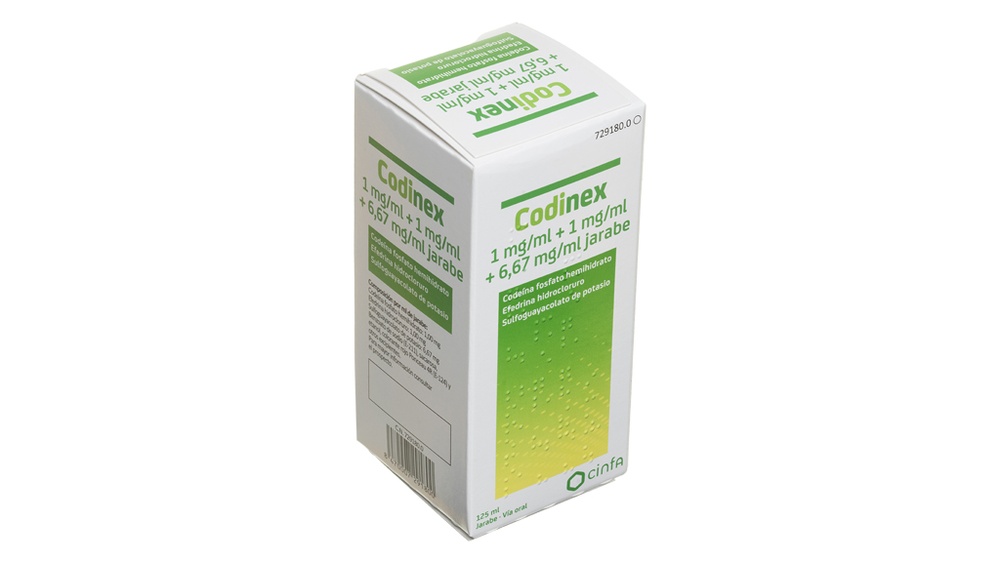
Codinex 1 mg/ml + 1 mg/ml + 6,67 mg/ml jarabe
Codeína fosfato hemihidrato / Efedrina hidrocloruro / Sulfoguayacolato de potasio
Lea todo el prospecto detenidamente antes de empezar a tomar este medicamento, porque contiene información importante para usted.
- Conserve este prospecto, ya que puede tener que volver a leerlo.
- Si tiene alguna duda, consulte a su médico o farmacéutico.
- Este medicamento se le ha recetado solamente a usted, y no debe dárselo a otras personas aunque tengan los mismos síntomas que usted, ya que puede perjudicarles.
- Si experimenta efectos adversos, consulte a su médico o farmacéutico, incluso si se trata de efectos adversos que no aparecen en este prospecto. Ver sección 4.
Contenido del prospecto
- Qué es Codinex y para qué se utiliza
- Qué necesita saber antes de empezar a tomar Codinex
- Cómo tomar Codinex
- Posibles efectos adversos
- Conservación de Codinex
- Contenido del envase e información adicional
1. Qué es Codinex y para qué se utiliza
Codinex es una asociación de fosfato de codeína, antitusivo para el alivio de la tos, clorhidrato de efedrina, que alivia la congestión nasal y sulfoguayacolato potásico, que facilita la eliminación de las secreciones respiratorias
Codinex está indicado en adultos para el tratamiento sintomático de afecciones respiratorias que se acompañan de tos, especialmente tos seca (no acompañada de mucosidad), y de congestión nasal.

2. Qué necesita saber antes de empezar a tomar Codinex
No tome Codinex:
- Si es alérgico al fosfato de codeína, al clorhidrato de efedrina, al sulfoguayacolato potásico o a alguno de los demás componentes de este medicamento (incluidos en la sección 6).
- Si tiene menos de 12 años de edad.
- Si está embarazada o en periodo de lactancia.
- Si sabe que es un metabolizador muy rápido la codeína.
- Si sufre alguno de los siguientes trastornos o enfermedades:
- Problemas respiratorios tales como enfermedad pulmonar obstructiva crónica (EPOC), ataques agudos de asma o depresión respiratoria.
- Obstrucción intestinal (íleo paralítico) o se encuentra en riesgo de tenerlo.
- Diarrea asociada a colitis pseudomembranosa (inflamación del colon) causada por medicamentos antibióticos o diarrea causada por intoxicación.
- Problemas de tiroides u otras enfermedades que produzcan un exceso de hormonas del tiroides (hipertiroidismo o tirotoxicosis).
- Próstata aumentada de tamaño (hipertrofia prostática).
- Presión en los ojos elevada (glaucoma de ángulo cerrado).
- Enfermedad grave del corazón, alteraciones graves en la circulación o la tensión arterial alta (hipertensión).
- Si está o ha estado en tratamiento con algún medicamento inhibidor de la monoaminooxidasa, (IMAO) durante las últimas dos semanas. Ver apartado “Toma de Codinex con otros medicamentos”.
- Si está tomando otros medicamentos de la familia de la efedrina como fenilpropanolamina, pseudoefedrina, metilfenidato o fenilefrina.
Advertencias y precauciones
Consulte a su médico o farmacéutico antes de empezar a tomar Codinex.
Codinex debe usarse con precaución en las siguientes condiciones:
- Si es una persona de edad avanzada, ya que puede ser más sensible a los efectos y reacciones adversas de este medicamento, tanto por su contenido en codeína (especialmente a la depresión respiratoria) como en efedrina (efectos cardiovasculares).
- Si padece alguna enfermedad o trastorno del riñón o del hígado.
- Si tiene retención urinaria o un estrechamiento (estenosis) en la uretra.
- Si tiene glándulas suprarrenales poco activas (enfermedad de Addison).
- Si tiene una función reducida de la glándula tiroidea (hipotiroidismo).
- Si tiene debilidad o fatiga muscular (esclerosis múltiple o miastenia gravis).
- Si padece colitis ulcerosa crónica.
- Si tiene problemas de vesícula biliar.
- Si tiene alguna enfermedad pulmonar con disminución de la capacidad respiratoria.
- Si tiene tensión arterial baja o cuadro de shock.
- Si tiene alguna enfermedad inflamatoria intestinal (colitis aguda, colitis pseudomembranosa), o divertículos.
- Si ha padecido movimientos musculares bruscos involuntarios (convulsiones).
- Si tiene antecedentes de abuso o dependencia de drogas (incluyendo alcoholismo).
- Si ha sido sometido a una cirugía de estómago, intestino o del aparato urinario.
- Si tiene un tumor en la glándula suprarrenal como el feocromocitoma.
- Si es diabético.
- Si tiene antecedentes de aumento de la presión en los ojos (glaucoma de ángulo cerrado).
No se recomienda tomar este medicamento durante más de tres días.
La administración prolongada y excesiva de este medicamento puede ocasionar dependencia y/o tolerancia.
La codeína se transforma en morfina en el hígado por una enzima. Algunas personas tienen una variante de esta enzima que puede afectarles de manera distinta. En algunas personas (una pequeña parte de la población), no se produce morfina o se produce en cantidades muy bajas, y no producirá efecto sobre sus síntomas de la tos. En otras personas (una pequeña proporción de la población europea) se puede producir una cantidad muy elevada de morfina y son por tanto más propensas a sufrir reacciones adversas. Si sufre alguno de los siguientes efectos, debe dejar de tomar este medicamento y debe buscar ayuda médica inmediatamente: respiración lenta o superficial, confusión, somnolencia, pupilas contraídas, náuseas, vómitos, estreñimiento o falta de apetito.
Niños y adolescentes
Los niños menores de 12 años de edad no deben tomar este medicamento ya que presentan un mayor riesgo de sufrir reacciones adversas tras la administración de codeína. Estas reacciones pueden resultar muy graves en los niños que degradan la codeína en gran cantidad o rápidamente (metabolizadores extensos o ultrarrápidos). Ver apartado “Otros efectos adversos en niños y adolescentes”.
No se recomienda el uso de este medicamento en adolescentes de 12 a 18 años, especialmente si tienen problemas respiratorios. Ver apartado “Otros efectos adversos en niños y adolescentes”.
Toma de Codinex con otros medicamentos
Informe a su médico o farmacéutico si está tomando, ha tomado recientemente o pudiera tener que tomar cualquier otro medicamento.
Esta información es especialmente importante con los siguientes medicamentos, ya que puede ser necesario modificar la dosis de alguno de ellos o interrumpir el tratamiento:
- Medicamentos IMAOs: medicamentos para la depresión como tranilcipromina y moclobemida, medicamentos para la enfermedad de Parkinson como selegilina, anticancerosos como procarbazina o antiinfecciosos como linezolida ya que pueden provocar un aumento grave de la tensión arterial, fiebre muy alta y dolor de cabeza. Ver apartado “No tome Codinex”. Se debe separar la administración un mínimo de 15 días.
Además, el uso simultáneo de IMAOs con este medicamento potenciar tanto los efectos adversos de efedrina y codeína como los de estos medicamentos.
- Otros medicamentos de la familia de la efedrina como fenilpropanolamina, pseudoefedrina, fenilefrina, metilfenidato, ya que pueden provocar un aumento grave de la tensión arterial, fiebre muy alta y dolor de cabeza. Ver apartado “No tome Codinex”.
- Otros medicamentos que se unen a los mismos receptores que la codeína como buprenorfina o nalbufina, pentazocina o naltrexona, pueden modificar los efectos de la codeína y producir síntomas de abstinencia.
- Medicamentos usados para la depresión como los antidepresivos tricíclicos ya que pueden tener un efecto aumentado.
- Medicamentos usados para el tratamiento de los trastornos del ritmo del corazón (arritmias) como mexiletina o quinidina.
- Anticolinérgicos u otros medicamentos con actividad anticolinérgica usados para el alivio de espasmos o contracciones del estómago, intestino y vejiga, pueden aumentar la retención de orina y el estreñimiento produciendo una obstrucción del movimiento intestinal (íleo paralítico).
- Los medicamentos cimetidina (para la acidez del estómago), ciprofloxacino o ritonavir (antiinfecciosos) pueden incrementar los efectos de la codeína.
- Medicamentos usados para tratar los vómitos (metoclopramida y domperidona) pueden producir el efecto contrario debido al contenido en codeína de este medicamento.
- Medicamentos que producen depresión sobre el Sistema Nervioso Central (SNC) empleados para el insomnio, alergia o la ansiedad (como ansiolíticos, hipnóticos, antipsicóticos, antihistamínicos H1 sedantes), pueden aumentar el efecto depresor del SNC y producir depresión respiratoria.
- Medicamentos que modifiquen la acidez de la orina (como cloruro de amonio o bicarbonato de sodio) ya que pueden alterar el efecto de la efedrina.
- Anestésicos inhalados, ya que pueden aumentar el riesgo de problemas del ritmo del corazón (arritmias) y producir aumento de tensión arterial tras una cirugía.
- Medicamentos para la migraña (como ergotamina o metisergida) pueden provocar amento de la presión arterial y gangrena.
- Algunos medicamentos para bajar la tensión arterial como los alfa-bloqueantes, metildopa, la reserpina y algunos diuréticos, pueden disminuir la eficacia de la efedrina.
- Medicamentos beta-bloqueantes porque su uso con efedrina puede producir aumento de la tensión arterial y enlentecimiento del ritmo cardiaco.
- Levodopa, utilizado en el tratamiento del Parkinson, puede aumentar el riesgo de arritmias.
- La oxitocina utilizada para aumentar las contracciones del útero, puede subir la presión arterial
- Teofilina, usada para tratar el asma, puede aumentar los efectos adversos (nauseas, nervosismo e insomnio) de ambos medicamentos.
- Glucósidos cardíacos utilizados para el tratamiento de problemas de corazón, pueden producir alteraciones en el ritmo del corazón.
- Dexametasona, usada como antiinflamatorio, puede tener un efecto aumentado en personas asmáticas.
Toma deCodinexcon alcohol
No tome bebidas alcohólicas mientras dure el tratamiento porque podría producirse hipotensión y depresión respiratoria grave además de darse síntomas de sobredosis..
Embarazo y lactancia
Si está embarazada o en periodo de lactancia, cree que podría estar embarazada o tiene intención de quedarse embarazada, consulte a su médico o farmacéutico antes de utilizar este medicamento.
Embarazo
No tome de Codinex durante el embarazo. Su uso puede causar dependencia física y cambios en el latido del feto. En el recién nacido puede producir síndrome de abstinencia y depresión respiratoria.
Lactancia
No tome este medicamento si está en periodo de lactancia. Alguno de los componentes de este medicamento y sus metabolitos pasan a la leche materna y pueden ser perjudiciales para el lactante.
Conducción y uso de máquinas
Codinex puede producir somnolencia alterando la capacidad mental y/o física. Evite conducir vehículos o utilizar máquinas si nota estos efectos.
Deportistas
Este medicamento contiene componentes que pueden inducir resultados positivos en los controles antidopaje.
Codinexcontiene benzoato de sodio (E-211)
Este medicamento contiene 2 mg de benzoato de sodio en cada ml de jarabe.
El benzoato de sodio puede aumentar el riesgo de ictericia (coloración amarillenta de la piel y los ojos) en los recién nacidos (hasta de 4 semanas de edad).
Codinexcontiene etanol
Este medicamento contiene 0,17% mg de etanol (alcohol), esta pequeña cantidad se corresponde con 25,5 mg por cada 15 ml.
Codinexcontiene sacarosa
Si su médico le ha indicado que padece una intolerancia a ciertos azúcares, consulte con él antes de tomar este medicamento.
Los pacientes con diabetes mellitus deben tener en cuenta que este medicamento contiene 11,5 g de sacarosa por cada 15 ml.
Codinex contiene colorante rojo Ponceau 4R (E-124)
Este medicamento puede producir reacciones alérgicas porque contiene colorante rojo Ponceau 4R (E-124). Puede provocar asma, especialmente en pacientes alérgicos al ácido acetilsalicílico.
Codinex contiene sodio
Este medicamento contiene menos de 23 mg de sodio (1 mmol) por ml; esto es, esencialmente “exento de sodio”.
3. Cómo tomar Codinex
Siga exactamente las instrucciones de administración de este medicamento indicadas por su médico o farmacéutico. En caso de duda, consulte de nuevo a su médico o farmacéutico.
Debe usarse la dosis más baja que sea eficaz para controlar los síntomas. El tratamiento se prolongará durante el menor tiempo posible.
Si al cabo de tres días no se tiene alivio de los síntomas, deberá consultar al médico. Ver apartado “Advertencias y Precauciones”.
La dosis habitualmente recomendada es:
Adultos: 15 ml cada 6 horas o más (máximo de 4 tomas al día).
Pacientes de edad avanzada:
Su médico puede recomendarle dosis menores o intervalos de dosificación más largos que los pacientes más jóvenes. Ver apartado “Advertencias y Precauciones”.
Pacientes con insuficiencia renal y/o hepática:
Su médico puede recomendarle dosis más bajas que las habituales. Ver apartado “Advertencias y Precauciones”.
Uso en niños y adolescentes
Ver el apartado “Niños y adolescentes” en la sección 2.
Si toma másCodinexdel que debe
La toma de dosis muy elevadas de este medicamento o su toma junto con sedantes o bebidas alcohólicas, puede producir somnolencia y una respiración lenta que puede ser grave.
También pueden producirse, náuseas y vómitos, alteraciones en la tensión arterial y en el latido del corazón, fiebre, inquietud y convulsiones. Podrían producirse alteraciones de la percepción como, delirios o alucinaciones.
En caso de sobredosis o ingestión accidental consulte inmediatamente a su médico o farmacéutico o llame al Servicio de Información Toxicológica, teléfono 91 562 04 20, indicando el medicamento y la cantidad ingerida.
Si olvidó tomarCodinex
No tome una dosis doble para compensar las dosis olvidadas.
Si interrumpe el tratamiento conCodinex
En caso de tomar este medicamento de forma prolongada (ver apartado “Advertencias y Precauciones”), la administración debe suspenderse gradualmente.
Si tiene cualquier otra duda sobre el uso de este medicamento, pregunte a su médico o farmacéutico.

4. Posibles efectos adversos
Al igual que todos los medicamentos, este medicamento puede producir efectos adversos, aunque no todas las personas los sufran.
Se han observado los siguientes efectos adversos cuya frecuencia no se ha establecido con exactitud (frecuencia no conocida)
Reacciones adversas debidas a la codeína
- Erupción en la piel, picor, dificultad para respirar, aumento de la sudoración, enrojecimiento facial.
- Cambios en el estado de ánimo, alucinaciones, síntomas de excitación, disminución del estado de alerta, pesadillas.
- Confusión, somnolencia, vértigo, mareos, movimientos musculares involuntarios, dolor de cabeza, aumento de la presión dentro del cráneo, dependencia (*).
- Contracción de las pupilas, visión borrosa o visión doble.
- Alteraciones en el ritmo del corazón, palpitaciones (sensación de alteración del latido del corazón).
- Disminución de la tensión arterial y disminución de la tensión al ponerse de pie.
- Respiración lenta y dificultad para respirar
- Estreñimiento, dolor en el abdomen, náuseas, vómitos, boca seca.
- Rigidez muscular.
- Dolor lumbar y en zona genital, disminución de la cantidad de orina producida, dificultad al orinar.
- Disminución del deseo sexual y de la potencia sexual.
- Malestar general, cansancio, descenso de la temperatura corporal, tolerancia (*).
*El uso prolongado regular de este medicamento puede producir tolerancia y la interrupción del tratamiento debe de hacerse de manera gradual para evitar que ocurra un síndrome de abstinencia. (Ver apartado “Advertencias y Precauciones”). Pueden darse inquietud e irritabilidad pueden aparecer cuando se detiene el tratamiento.
Reacciones adversas debidas a la efedrina
- Dolor de cabeza, temblor, dependencia.
- Ansiedad, inquietud e insomnio.
- Alteración del ritmo del corazón (taquicardia y arritmias), infarto de miocardio.
- Aumento de la tensión arterial (hipertensión), alteración de la circulación en brazos y piernas.
- Náuseas, boca seca.
- Tolerancia.
Reacciones adversas debidas a sulfoguayacolato potásico
- A dosis muy elevadas, se sospecha que puede producir piedras en el riñón o en las vías urinarias.
Otros efectos adversos en niños y adolescentes
Los menores de 12 años de edad presentan un mayor riesgo de sufrir reacciones adversas tras la administración de este medicamento; estas reacciones pueden ser muy graves en aquellos niños que degradan muy rápido la codeína.
En los niños, la toma de este medicamento puede tener efecto estimulante con incontinencia urinaria durante la noche y causar insomnio, aunque también puede tener efecto sedante en algunos niños.
Los síntomas de toxicidad por la codeína podrían ser de mayor gravedad en adolescentes (de 12 a menos de 18 años) con problemas respiratorios, por lo que no se recomienda su uso en esta población.
Comunicación de efectos adversos
Si experimenta cualquier tipo de efecto adverso, consulte a su médico o farmacéutico, incluso si se trata de posibles efectos adversos que no aparecen en este prospecto. También puede comunicarlos directamente a través del Sistema Español de Farmacovigilancia de Medicamentos de Uso Humano: https://www.notificaram.es. Mediante la comunicación de efectos adversos usted puede contribuir a proporcionar más información sobre la seguridad de este medicamento.
5. Conservación de Codinex
Mantener este medicamento fuera de la vista y del alcance de los niños.
No utilice este medicamento después de la fecha de caducidad que aparece en el envase después de CAD. La fecha de caducidad es el último día del mes que se indica.
Los medicamentos no se deben tirar por los desagües ni a la basura. Deposite los envases y los medicamentos que no necesita en el Punto SIGRE de la farmacia. En caso de duda pregunte a su farmacéutico cómo deshacerse de los envases y de los medicamentos que no necesita. De esta forma, ayudará a proteger el medio ambiente.
6. Contenido del envase e información adicional
Composición deCodinex
- Los principios activos son: codeína fosfato hemihidrato, efedrina hidrocloruro y sulfoguayacolato de potasio. Cada ml de jarabe contiene 1 mg codeína fosfato hemihidrato, 1 mg de efedrina hidrocloruro y 6,67 mg de sulfoguayacolato de potasio.
- Los demás componentes (excipientes) son: benzoato de sodio (E-211), sacarosa, mentol, vainillina, color naranja (compuesto por: amarillo de quinoleína [E-104], colorante rojo Ponceau 4R [E-124], índigo carmín [E-132] y cloruro de sodio), citrato de sodio (E-331), ácido cítrico anhidro (E-330), etanol y agua purificada.
Aspecto del producto y contenido del envase
Codinex es un jarabe transparente de color marrón anaranjado con aroma característico.
El medicamento se presenta en:
- Frasco de vidrio de color topacio, con un contenido en jarabe de 125 ml y con tapón a prueba de niños.
- Frascos de polietilentereftalato de color topacio, con un contenido en jarabe de 125 ml y con tapón a prueba de niños.
Cada envase está provisto de una cucharilla dosificadora.
Titular de la autorización de comercialización y responsable de la fabricación
Laboratorios Cinfa, S.A
Carretera Olaz-Chipi, 10. Polígono Industrial Areta.
31620 Huarte (Navarra) - España
Fecha de la última revisión de este prospecto: Septiembre2020
La información detallada de este medicamento está disponible en la página web de la Agencia Española de Medicamentos y Productos Sanitarios (AEMPS) http://www.aemps.gob.es/
-

- País de registro
- Forma farmacéuticaSOLUCIÓN/SUSPENSIÓN ORAL, 1 mg/ml + 1 mg/ml + 6.67 mg/ml
- Código ATCR05FA02
- Principio activo
- Requiere recetaSí
- Fabricante
- Esta información es de carácter general y no sustituye la consulta con un profesional sanitario.
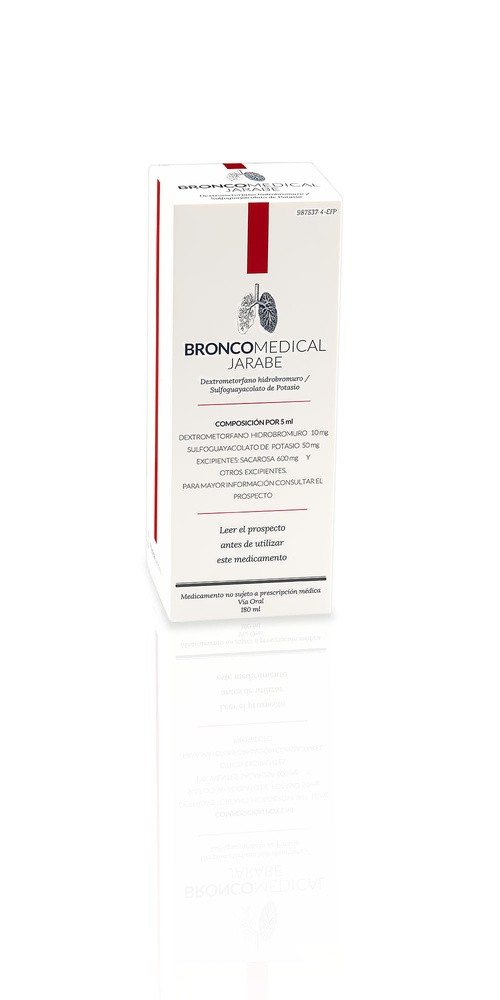
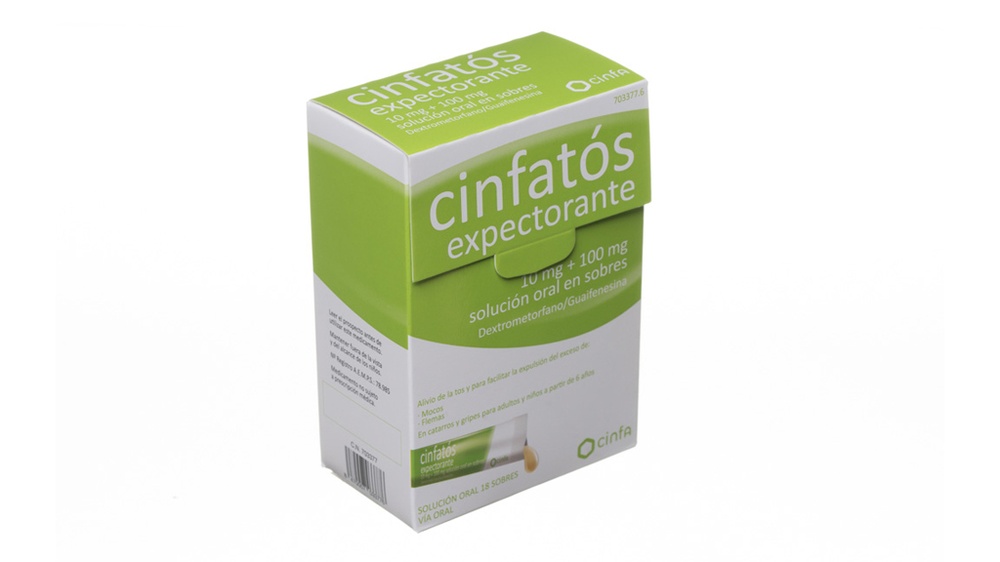
- Alternativas a CODINEX 1 MG/ML + 1 MG/ML + 6,67 MG/ML JARABEForma farmacéutica: SOLUCIÓN/SUSPENSIÓN ORAL, 10/100 mg/mgPrincipio activo: opium derivatives and expectorantsFabricante: Medical S.A.No requiere recetaForma farmacéutica: SOLUCIÓN/SUSPENSIÓN ORAL, 50 mg / 10 mgPrincipio activo: opium derivatives and expectorantsFabricante: Medical S.A.No requiere recetaForma farmacéutica: SOLUCIÓN/SUSPENSIÓN ORAL, 10 mg/100 mgPrincipio activo: opium derivatives and expectorantsFabricante: Laboratorios Cinfa S.A.No requiere receta

Médicos online para CODINEX 1 MG/ML + 1 MG/ML + 6,67 MG/ML JARABE
Comenta la dosis, los posibles efectos secundarios, interacciones, contraindicaciones o la revisión de receta de CODINEX 1 MG/ML + 1 MG/ML + 6,67 MG/ML JARABE, sujeto a valoración médica y a la normativa local.









Obtén una receta de CODINEX 1 MG/ML + 1 MG/ML + 6,67 MG/ML JARABE online
Rellena un formulario de 2 minutos
Cuéntanos tus síntomas, historial y el medicamento que necesitas.
Elige un médico o nosotros te asignamos uno
Escoge un especialista o te conectamos con el próximo médico disponible.
El médico revisa tu caso
Normalmente en 30 minutos. Puede hacerte preguntas adicionales por chat.
Recógela en cualquier farmacia
Receta electrónica enviada a tu correo, válida en toda España.
Preguntas frecuentes
CODINEX 1 MG/ML + 1 MG/ML + 6,67 MG/ML JARABE requires receta en España. Puedes confirmarlo con un médico online según tu caso.
El principio activo de CODINEX 1 MG/ML + 1 MG/ML + 6,67 MG/ML JARABE es opium derivatives and expectorants. Esta información ayuda a identificar medicamentos con la misma composición pero con diferentes nombres comerciales.
CODINEX 1 MG/ML + 1 MG/ML + 6,67 MG/ML JARABE es fabricado por Laboratorios Cinfa S.A.. La marca y el envase pueden variar según el distribuidor.
Los Médicos de familia, Psiquiatras, Dermatólogos, Cardiólogos, Endocrinólogos, Gastroenterólogos, Neumólogos, Nefrólogos, Reumatólogos, Hematólogos, Infectólogos, Alergólogos, Geriatras, Pediatras, Oncólogos pueden valorar la prescripción de CODINEX 1 MG/ML + 1 MG/ML + 6,67 MG/ML JARABE cuando esté clínicamente indicado. Puedes reservar una videoconsulta para comentar tu caso y las opciones de tratamiento.
España cuenta con una infraestructura sanitaria bien desarrollada en ciudades principales como Madrid, Barcelona, Valencia y Sevilla. Las farmacias están ampliamente disponibles y operan bajo estrictas regulaciones, garantizando el acceso a medicamentos con receta.
Puedes comprar CODINEX 1 MG/ML + 1 MG/ML + 6,67 MG/ML JARABE en Madrid, Barcelona, Sevilla o Valencia en cualquier farmacia local con una receta válida.
Para obtener una receta, puedes utilizar Oladoctor:
Otros medicamentos con el mismo principio activo (opium derivatives and expectorants) incluyen BRONCOMEDICAL CON GUAIFENESINA 10 mg/100 mg SOLUCION ORAL, BRONCOMEDICAL CON SULFOGUAYACOL 2MG/ML + 10MG/ML JARABE, CINFATOS EXPECTORANTE 10 mg + 100 mg solución oral en sobres. Pueden tener diferentes nombres comerciales o formulaciones, pero contienen el mismo componente terapéutico. Consulta siempre con un médico antes de cambiar o iniciar un nuevo medicamento.
