


CLARITROMICINA SUN 500 mg COMPRIMIDOS RECUBIERTOS EFG
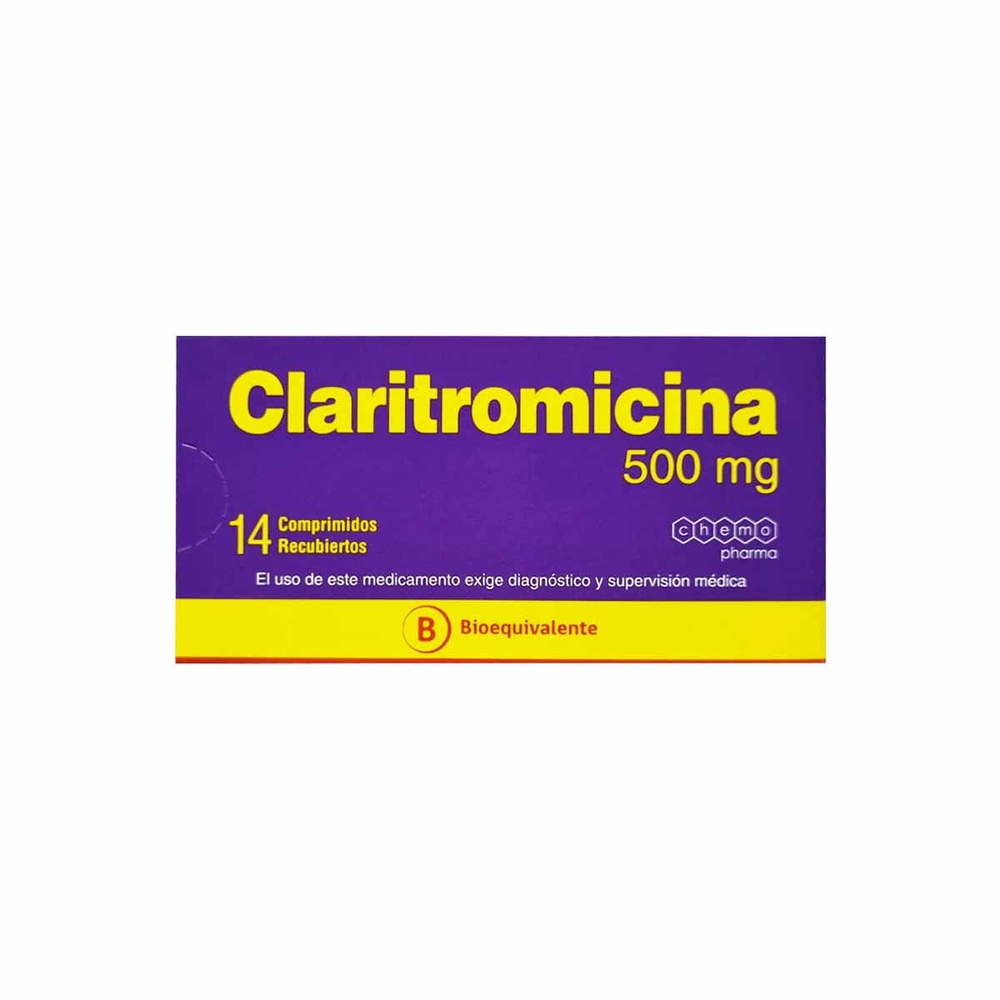



Cómo usar CLARITROMICINA SUN 500 mg COMPRIMIDOS RECUBIERTOS EFG
Traducción generada por IA
Este contenido ha sido traducido automáticamente y se ofrece solo con fines informativos. No sustituye la consulta con un profesional sanitario.
Ver originalContenido del prospecto
- Introducción
- Qué es Claritromicina SUN 500 mg comprimidos y para qué se utiliza
- Qué necesita saber antes de empezar a tomar Claritromicina SUN 500 mg comprimidos
- Cómo tomar Claritromicina SUN 500 mg comprimidos
- Posibles efectos adversos
- Conservación de Claritromicina SUN 500 mg comprimidos
- Contenido del envase e información adicional
Introducción
Prospecto: información para el usuario
Claritromicina SUN 500 mg comprimidos recubiertos con película EFG
Lea todo el prospecto detenidamente antes de empezar a tomar este medicamento, porque contiene información importante para usted.
- Conserve este prospecto, ya que puede tener que volver a leerlo.
- Si tiene alguna duda, consulte a su médico o farmacéutico.
- Este medicamento se le ha recetado solamente a usted, y no debe dárselo a otras personas aunque tengan los mismos síntomas que usted, ya que puede perjudicarles.
- Si experimenta efectos adversos, consulte a su médico o farmacéutico, incluso si se trata de efectos adversos que no aparecen en este prospecto. Ver sección 4.
Contenido del prospecto:
- Qué es Claritromicina SUN 500 mg comprimidos y para qué se utiliza
- Qué necesita saber antes de empezar a tomar Claritromicina SUN 500 mg comprimidos
- Cómo tomar Claritromicina SUN 500 mg comprimidos
- Posibles efectos adversos
- Conservación de Claritromicina SUN 500 mg comprimidos
- Contenido del envase e información adicional

1. Qué es Claritromicina SUN 500 mg comprimidos y para qué se utiliza
Claritromicina SUN es un antibiótico del grupo de los macrólidos. Los antibióticos detienen el crecimiento de ciertas bacterias.

Claritromicina SUN se utiliza para el tratamiento de las infecciones causadas por gérmenes sensibles en adultos y adolescentes (de 12 años de edad y mayores)
- Infecciones de garganta y sinusitis
- Infecciones del tracto respiratorio, tales como bronquitis y neumonía Infecciones de la piel y tejidos blandos,
- Úlceras gástricas causadas por la bacteria Helicobacter pylori
2. Qué necesita saber antes de empezar a tomar Claritromicina SUN 500 mg comprimidos
No tome Claritromicina SUN
- ?Si es alérgico a claritromicina, otros antibióticos macrólidos como eritromicina o azitromicina o a alguno de los demás componentes de este medicamento (incluídos en la sección 6).
- Si tiene un aclaramiento de creatinina menor de 30 ml/min.
- Si tiene un ritmo cardíaco irregular.
- Si padece graves problemas de riñón e hígado.
- Si está tomando ergotamina o dihidroergotamina o utiliza inhaladores de ergotamina para la migraña mientras está tomando claritromicina. Consulte a su médico para que le aconseje medicamentos alternativos.
- Si está tomando medicamentos denominados terfenadina, astemizol (medicamento para la fiebre del heno o alergias), cisaprida o domperidona (utilizado para problemas de estómago) o pimozida (medicamento que se usa para tratar ciertas enfermedades psiquiátricas) ya que tomar estos medicamentos con claritromicina puede provocar graves alteraciones del ritmo cardíaco. Consulte a su médico para que le aconseje medicamentos alternativos.
- Si está tomando ticagrelor (para impedir la formación de trombos en sus venas y utilizado en infartos y otros problemas de corazón), ivabradina o ranolazina (para la angina de pecho o para reducir el riesgo de infarto de miocardio o ictus).
- Si está tomando otros medicamentos que se sabe que causan graves alteraciones del ritmo cardíaco.
- Si está en tratamiento con midazolam oral (para la ansiedad o para ayudar a conciliar el sueño)
- Si tiene unos niveles anormalmente bajos de potasio o magnesio en la sangre (hipopotasemia o hipomagnesemia).
- Si usted o alguien de su familia tiene antecedentes de trastornos en el ritmo cardíaco (arritmia cardíaca ventricular, incluyendo Torsade de Pointes) o anormalidades en el electrocardiograma (ECG, registro eléctrico del corazón) llamado “síndrome de prolongación de QT”.
- Si está tomando medicamentos denominados lovastatina o simvastatina (para disminuir los niveles de colesterol), ya que la combinación de estos medicamentos puede aumentar la aparición de efectos adversos. Consulte a su médico para que le aconseje medicamentos alternativos.
- Si está tomando colchicina (para la gota).
- Si está tomando un medicamento con lomitapida.
Advertencias y precauciones
Consulte a su médico o farmacéutico antes de empezar a tomar Claritromicina SUN:
- Si tiene problemas de corazón, renales o hepáticos.
- Si tiene o es propenso a las infecciones por hongos (por ejemplo aftas).
- Si está embarazada o en período de lactancia
- Si está tomando medicamentos conocidos como colchicina, triazolam, midazolam (para la ansiedad o insomnio), lovastatina, simvastatina.
- Si es diabético y está tomando hipoglucemiantes (medicamentos para bajar el nivel de azúcar como nateglinida, pioglitazona, rosiglitazona y repaglinida, sulfonilureas o insulina) y claritromicina puede bajar demasiado el nivel de glucosa. Se recomienda un control cuidadoso de la glucosa.
- Si está tomando un medicamento llamado warfarina (anticoagulante sanguíneo).
- Si presenta miastenia gravis, una condición por la que sus músculos se debilitan y se cansa con facilidad.
- Si desarrolla una diarrea grave o prolongada, durante o después de tomar claritromicina, consulte a su médico de inmediato.
- Si está tomando un medicamento llamado cloroquina (antiparasitario como antipalúdico)
Si le afecta cualquiera de estas situaciones, consulte con su médico antes de tomar claritromicina.
Uso de Claritromicina SUN con otros medicamentos
Informe a su médico o farmacéutico si está utilizando, ha utilizado recientemente o podría tener que utilizar cualquier otro medicamento, incluso los adquiridos sin receta.
Los medicamentos citados a continuación no deben tomarse junto con Claritromicina SUN
? astemizol y terfenadina (para la alergia), cisaprida, domperidona (para problemas gastrointestinales) y pimozida (para trastornos psiquiátricos), ya que dichos medicamentos si se administran junto con claritromicina pueden aumentar el riesgo de problemas cardíacos graves.
- lovastatina y simvastatina (para bajar el colesterol), ya que si se administran junto con claritromicina puede tener problemas musculares.
- ergotamina o dihidroergotamina ya que si los toma junto con claritromicina puede padecer una toxicidad aguda caracterizada por vasoespasmo (contracción de las paredes de las arterias que hace difícil el paso de la sangre por ellas) e isquemia (falta de oxígeno) de las extremidades y otros tejidos, incluyendo el sistema nervioso central.
- Midazolam oral.
- Ticagrelor o ranolazina
- Colchicina
Los medicamentos siguientes debe tomarlos con precaución durante el tratamiento con claritromicina y consultarlo antes con su médico ya que puede verse afectada la actividad de estos medicamentos, de claritromicina, o de ambos. Puede ser necesario un cambio de la dosis y un estrecho seguimiento:
? Anticoagulantes orales: acenocumarol, warfarina u otro anticoagulante, por ejemplo dabigatrán, rivaroxabán, apixabán, edoxabán (utilizados para diluir la sangre). Puede verse incrementado el riesgo de sangrado. Su médico debe hacerle controles.
? Medicamentos para bajar el colesterol como atorvastatina y rosuvastatina. Se aumenta el riesgo de problemas en los músculos. Puede que su médico tenga que bajarle la dosis de estos medicamentos o cambiárselos temporalmente.
- Antibióticos del gupo de los aminoglucósidos.? Antiepilépticos, para tratar la epilepsia: fenitoína, carbamazepina, valproato. Podrían reducir la acción de claritromicina y aumentar los efectos adversos de los antiepilépticos.
? Digoxina, quinidina o disopiramida (para tratar problemas del corazón)
? Teofilina (para el asma).
? Algunos inmunosupresores, que se utilizan por ejemplo después de un trasplante de órganos: ciclosporina, tacrolimus y sirolimus.
? Ibrutinib o vinblastina, para el tratamiento del cáncer.
? Benzodiacepinas, para la ansiedad y el insomnio: alprazolam, triazolam o midazolam intravenosos u oromucoso.
- Medicamentos para el tratamiento de la angina de pecho y la hipertensión, como verapamilo, amlodipino y diltiazem.
? Antifúngicos, para infecciones producidas por hongos: fluconazol, itraconazol.
? Antiretrovirales, para la infección por VIH: zidovudina, ritonavir, atazanavir, saquinavir, nevirapina, etravirina o efavirenz. Consulte con su médico cómo debe tomar estos medicamentos si empieza un tratamiento con claritromicina. En ningún caso debe interrumpirlos si su médico no se lo indica.
? Metilprednisolona (corticosteroide), cilostazol (para tratar la claudicación intermitente)
? Rifampicina, rifabutina y rifapentina (antibióticos usados para tratar algunas infecciones).
- Sildenafilo, tadalafilo y vardenafilo (medicamentos para tratar la impotencia y la hipertensión pulmonar) y tolterodina (para aliviar las dificultades urinarias
- Medicamentos para la diabetes (utilizados para reducir su nivel de glucosa en sangre) como la insulina, glibenclamida, nateglinida o repaglinida. Pueden producirse una concentración anormalmente baja de glucosa en sangre.
? Omeprazol (para trastornos digestivos como úlcera y reflujo gastroesofágico)
- Quetiapina (para esquizofrenia u otras situaciones psiquiátricas)
- Hierba de San Juan o hipérico (para la depresión).
Informe a su médico o farmacéutico si está utilizando o ha utilizado recientemente otros medicamentos, incluso los adquiridos sin receta.
Esto también es importante si toma medicamentos llamados:
- hidroxicloroquina o cloroquina (utilizados para tratar enfermedades como la artritis reumatoide, o para tratar o prevenir la malaria). Tomar estos medicamentos al mismo tiempo que claritromicina puede aumentar la posibilidad de sufrir ritmos cardíacos anormales y otras reacciones adversas graves que afectan al corazón.
- corticoesteroides, administrados por vía oral, mediante inyección o inhalados (utilizados para suprimir el sistema inmunitario; esto es útil en el tratamiento de una gran variedad de enfermedades)
Toma de Claritromicina SUN con los alimentos y bebidas
Los comprimidos de Claritromicina SUN pueden tomarse antes, durante o después de las comidas, ya que la presencia de alimentos en el tubo digestivo no modifica la actividad del medicamento.
Embarazo y lactancia
- No ha sido establecida la seguridad del uso de claritromicina durante el embarazo. Si está embarazada o cree que puede estarlo no tome Claritromicina SUN sin consultarlo antes con su médico y él decidirá si debe tomarlo o no.
- No ha sido establecida la seguridad del uso claritromicina durante la lactancia. Claritromicina pasa a la leche materna. Si está en periodo de lactancia no tome este medicamento.
- Si está embarazada o en periodo de lactancia, cree que podría estar embarazada o tiene intención de quedarse embarazada, consulte con su médico o farmacéutico antes de utilizar este medicamento,
Conducción y uso de máquinas
Claritromicina puede producir somnolencia, mareo o confusión. Si le ocurre no conduzca vehículos o utilice maquinaria.
Claritromicina SUN 500 mg comprimidos recubiertos contiene sodio
Este medicamento contiene menos de 1 mmol de sodio (23 mg) por comprimido; esto es, esencialmente “exento de sodio”.

3. Cómo tomar Claritromicina SUN 500 mg comprimidos
Claritromicina SUN se administra por vía oral.
Claritromicina puede administrarse independientemente de las comidas.
Siga exactamente las instrucciones de administración de este medicamento indicadas por su médico. En caso de duda, consulte de nuevo a su médico o farmacéutico.
Adultos y en adolescentes ( de 12 años de edad y mayores): en pacientes con úlcera péptica asociada a Helicobacter pylorilos tratamientos recomendados son:
- Terapia triple: un comprimido de Claritromicina SUN dos veces al día, con 1.000 mg de amoxicilina dos veces al día y 20 mg de omeprazol una vez al día, durante 10 días, ó un comprimido de Claritromicina SUN con 1.000 mg de amoxicilina y 20 mg de omeprazol, administrados todos ellos dos veces al día, durante 7 días.
- Terapia doble: un comprimido de Claritromicina SUN, tres veces al día, con 40 mg de omeprazol, una vez al día, durante 2 semanas. Para asegurar la cicatrización en pacientes con úlcera duodenal con mala respuesta terapéutica, se puede prolongar el tratamiento con 40 mg de omeprazol hasta 4 semanas.
La dosis media recomendada para la prevención y el tratamiento de las infecciones producidas por micobacterias es de un comprimido de Claritromicina SUN, cada 12 horas. La duración del tratamiento debe ser establecida por el médico.
En el tratamiento de las infecciones del aparato respiratorio, de la piel y de los tejidos blandos, la duración del mismo debe establecerla el médico y depende de la gravedad y del tipo de infección. Oscila entre 6 y 14 días. El paciente debe seguir rigurosamente las instrucciones del médico aunque desaparezcan las molestias. La dosis habitual recomendada para adultos puede ser un comprimido de Claritromicina 250 mg ó Claritromicina SUN 500 mg, cada 12 horas, dependiendo del tipo y de la severidad de la infección.
Uso en niños
Niños menores de 12 años: No se recomienda el uso de Claritromicina comprimidos en niños menores de 12 años. Deberá usarse la formulación de Claritromicina en suspensión pediátrica.
Pacientes de edad avanzada:Misma dosificación que los adultos.
Recuerde tomar su medicamento. Tome los comprimidos a la misma hora todos los días.
Su médico le indicará la duración de su tratamiento. No suspenda el tratamiento antes, ya que aunque usted ya se encuentre mejor, su enfermedad podría empeorar o volver a aparecer.
Si tiene la impresión de que el efecto de Claritromicina SUN es demasiado fuerte o demasiado débil, consulte a su médico o farmacéutico.
Si toma más Claritromicina SUN del que debe
Si ha tomado más Claritromicina SUN de lo que debe, cabe esperar la aparición de trastornos digestivos y consulte inmediatamente a su médico o a su farmacéutico puesto que deberán tratar de eliminar rápidamente la claritromicina que todavía no ha absorbido su organismo. No sirve la hemodiálisis ni la diálisis peritoneal.
En caso de sobredosis o ingestión accidental, consultar al Servicio de Información Toxicológica, teléfono 91.562.04.20, indicando el medicamento y la cantidad ingerida.
Si olvidó tomar Claritromicina SUN
No tome una dosis doble para compensar las dosis olvidadas. Tome el comprimido tan pronto como sea posible y continúe tomándolo cada día a esa misma hora.
Si interrumpe el tratamiento conClaritromicinaSUN
No suspenda el tratamiento antes, ya que aunque usted ya se encuentre mejor, su enfermedad podría empeorar o volver a aparecer. Si tiene cualquier otra duda sobre el uso de este medicamento, pregunte a su médico o farmacéutico.
4. Posibles efectos adversos
Al igual que todos los medicamentos, Claritromicina SUN puede tener efectos adversos, aunque no todas las personas los sufran.
Los efectos adversos se clasifican en muy frecuentes (pueden afectar a más de 1 de cada 10 pacientes), frecuentes (pueden afectar hasta 1 de cada 10 pacientes), poco frecuentes (pueden afectar hasta 1 de cada 100 pacientes), raros (pueden afectar hasta 1 de cada 1.000 pacientes)) y de frecuencia no conocida (no puede estimarse a partir de los datos disponibles).
Las reacciones adversas frecuentes y más frecuentes relacionadas con el tratamiento con claritromicina, tanto en adultos como en niños, son dolor abdominal, diarrea, náuseas, vómitos y alteración del gusto. Estas reacciones adversas suelen ser de intensidad leve y coinciden con el perfil de seguridad conocido de los antibióticos macrólidos (ver debajo).
No hubo diferencias significativas en la incidencia de estas reacciones adversas gastrointestinales durante los ensayos clínicos entre la población de pacientes con o sin infecciones micobacterianas preexistentes.
Resumen de efectos adversos
Los afectos adversos se describen en orden de gravedad decreciente dentro de un mismo sistema corporal:
? Se ha observado muy frecuentemente (pueden afectar a más de 1 de cada 10 pacientes, con la formulación para inyección intravenosa): flebitis (inflamación de la vena) en el lugar de la inyección.
? Con todos los medicamentos que contienen claritromicina se han observado con frecuencia (pueden afectar hasta 1 de cada 10 pacientes) los siguientes:
- Sistema digestivo: diarrea, vómitos, trastorno gástrico que dificulta la digestión (dispepsia), náuseas, dolor abdominal.
- Sistema nervioso: alteración del sabor, dolor de cabeza, alteración del gusto.
- Piel: erupciones leves de la piel, producción excesiva de sudor.
- Trastornos psiquiátricos: insomnio.
- Trastornos vasculares: dilatación de los vasos sanguíneos del organismo (vasodilatación).
- Trastornos del hígado: pruebas de la función hepática anormales.
- Trastornos en el lugar de administración: dolor e inflamación en el lugar de la inyección (sólo con la formulación para inyección intravenosa).
Poco frecuentes (pueden afectar hasta 1 de cada 100 pacientes) se han observado los siguientes:
- Infecciones: celulitis (sólo con la formulación para inyección intravenosa), candidiasis (infección por un tipo de hongo), gastroenteritis (sólo con comprimidos de liberación prolongada), infección (sólo con el granulado para suspensión oral), infección vaginal.
- Alteraciones en la sangre: disminución de glóbulos blancos, disminución de neutrófilos (un tipo de glóbulos blancos, sólo con los comprimidos de liberación inmediata), aumento de plaquetas y, en menor medida, de glóbulos rojos y blancos en sangre (sólo con el granulado para suspensión oral), aumento de eosinófilos (un tipo de glóbulos blancos, sólo con los comprimidos de liberación inmediata).
- Sistema inmunitario: reacción anafilactoide (reacción alérgica generalizada, sólo con la formulación para inyección intravenosa), hipersensibilidad (reacción alérgica exagerada a agentes externos).
- Trastornos de la alimentación: anorexia, disminución del apetito.
- Trastornos psiquiátricos: ansiedad y nerviosismo (este último sólo con el granulado para suspensión oral).
- Sistema nervioso: pérdida de consciencia y dificultad para moverse (los dos efectos, sólo con la formulación para inyección intravenosa), mareo, somnolencia, temblores.
- Oído y equilibrio: vértigo, problemas auditivos, zumbido de oídos.
- Trastornos en el corazón: paro cardiaco y alteración del ritmo cardíaco (fibrilación auricular) (los dos efectos, sólo con la formulación para inyección intravenosa), prolongación del intervalo QT (indicador del electrocardiograma de que se pueden producir arritmias ventriculares), extrasístoles (adelanto de un latido respecto a la frecuencia cardíaca normal, sólo con la formulación para inyección intravenosa), palpitaciones (alteraciones en los latidos del corazón).
- Trastornos respiratorios: asma (dificultad para respirar, opresión torácica y tos nocturna o a primera hora de la mañana, sólo con la formulación para inyección intravenosa), hemorragias nasales (sólo con los comprimidos de liberación prolongada), embolia pulmonar (taponamiento de la arteria pulmonar que ocasiona dolor torácico en un solo lado, tos y dificultad para respirar, sólo con la formulación para inyección intravenosa).
- Trastornos gastrointestinales: inflamación del esófago (sólo con la formulación para inyección intravenosa), enfermedad del reflujo gastroesofágico (daño en el esófago que provoca sensación de quemazón, tos crónica, falta de aire y dificultad para tragar, sólo con los comprimidos de liberación prolongada), inflamación de la mucosa del estómago (gastritis), dolor en el ano y en el recto (sólo con los comprimidos de liberación prolongada), inflamación de la mucosa bucal, inflamación de la lengua, distensión abdominal (sólo con los comprimidos de liberación inmediata), estreñimiento, sequedad de boca, eructos, flatulencia.
- Trastornos en el hígado: disminución o supresión del flujo biliar hacia el intestino e inflamación del hígado (hepatitis) (los dos efectos, sólo con los comprimidos de liberación inmediata), incremento de la alanina aminotransferasa (enzima del hígado), de la aspartato aminotransferasa (otro enzima del hígado) y de la gamma-glutamiltransferasa (otro enzima del hígado, sólo con los comprimidos de liberación inmediata).
- Piel: dermatitis ampollosa (erupciones ampollosas, sólo con la formulación para inyección intravenosa), picor, urticaria (lesiones cutáneas edematosas, rojas y de mucho picor), erupción máculo-papular (lesión cutánea con una pápula o verruga sobre una mancha, sólo con el granulado para suspensión oral).
- Trastornos musculares: espasmos musculares (sólo con el granulado para suspensión oral), rigidez musculoesquelética (sólo con la formulación para inyección intravenosa), dolores musculares (sólo con los comprimidos de liberación prolongada).
- Trastornos en riñón: aumento de creatinina sérica y de urea sérica, (los dos efectos, que indican un peor funcionamiento del riñón, sólo con la formulación para inyección intravenosa).
- Trastornos generales: malestar (sólo con los comprimidos de liberación inmediata), dolor torácico, escalofríos y fatiga (estos tres últimos, sólo con los comprimidos de liberación inmediata).
- Análisis de laboratorio: proporción albúmina-globulina anormal (sólo con la formulación para inyección intravenosa), aumento de fosfatasa alcalina sérica y aumento de lactato deshidrogenasa en sangre (estos dos últimos, sólo con los comprimidos de liberación inmediata), aumento de la urea en sangre, aumento de la creatinina en sangre.
? Con frecuencia no conocida (su frecuencia no puede determinarse con los datos disponibles) se han observado los siguientes:
- Infecciones: colitis pseudomembranosa (diarrea que puede llegar a ser grave), erisipelas (enrojecimiento de la piel de extensión variable que puede causar dolor, picor y fiebre).
- Alteraciones en la sangre: disminución en el número de neutrófilos (un tipo de glóbulos blancos), disminución de plaquetas.
- Sistema inmunitario: reacción anafiláctica (reacción alérgica generalizada), angioedema (hinchazón bajo la piel).
- Trastornos psiquiátricos: trastorno psicótico, confusión, despersonalización, depresión, desorientación, alucinaciones, ensoñaciones (percepciones atenuadas de los estímulos exteriores).
- Sistema nervioso: convulsiones, disminución o pérdida del sentido del gusto, alteración del sentido del olfato, pérdida o disminución del sentido del olfato, sensación de hormigueo, adormecimiento o acorchamiento en manos, pies, brazos o piernas.
- Oído: sordera.
- Trastornos en el corazón: torsades de pointes (un tipo de taquicardia ventricular), taquicardia ventricular (aceleración de los latidos del corazón con más de 100 latidos/minuto con al menos 3 latidos irregulares consecutivos).
- Trastornos vasculares: hemorragia.
- Trastornos digestivos: pancreatitis aguda (inflamación aguda del páncreas), decoloración de la lengua, decoloración de los dientes.
- Trastornos en el hígado: fallo en la función del hígado, ictericia hepatocelular (coloración amarilla de la piel y ojos).
- Piel: síndrome de Stevens-Johnson (erupción generalizada con ampollas y descamación de la piel, que afecta principalmentea zonas genitales, bucales y en el tronco), pustulosis exantemática generalizada aguda (erupción generalizada escamosa de color rojo, con bultos debajo de la piel y ampollas, que se acompaña de fiebre. Se localiza, principalmente, en los pliegues cutáneos, el tronco y las extremidades superiores) y necrólisis epidérmica tóxica (erupción generalizada con ampollas y descamación de la piel, particularmente alrededor de la boca, nariz, ojos y genitales causando una descamación generalizada de la piel (más del 30% de la superficie corporal) síntomas de tipo gripal con erupción cutánea, fiebre, inflamación de glándulas y resultados anormales en los análisis de sangre (como aumento de los leucocitos (eosinofilia) y elevación de las enzimas hepáticas) [reacción a fármaco con eosinofilia y síntomas sistémicos (DRESS)] acné. En el caso de que aparezcan este tipo de reacciones, debe suspender inmediatamente el tratamiento con claritromicina y consultar a su médico para que le instaure un tratamiento adecuado.
- Trastornos musculares: rabdomiolisis (descomposición de los músculos que puede provocar daño en el riñón), miopatía (enfermedad muscular de múltiples causas).
- Trastorno en el riñón: fallo en el funcionamiento del riñón, nefritis intersticial (inflamación de los túbulos renales).
- Análisis de laboratorio: aumento de la razón normalizada internacional (cálculo para detectar la coagulación de la sangre), prolongación del tiempo de protrombina (indica un déficit en la coagulación de la sangre) y color anormal de la orina.
Efectos adversos específicos
Flebitis en el lugar de la inyección, dolor en el lugar de la inyección, dolor en el lugar de la punción venosa e inflamación en el lugar de la inyección son específicos de la formulación intravenosa de claritromicina.
Tras la comercialización del medicamento, se han recibido informes de efectos en el sistema nervioso central (p. ej. somnolencia y confusión) con el uso simultáneo de claritromicina y triazolam. Se sugiere monitorizar al paciente.
En algunos de los informes de rabdomiolisis, se administró claritromicina de manera concomitante con estatinas, fibratos, colchicina o alopurinol (ver No tome Claritromicina SUN 500 mg comprimidos recubiertos con película EFG y Advertencias y precauciones).
Ha habido raramente informes de que los comprimidos de claritromicina de liberación prolongada aparecen en las heces, muchos de estos casos han ocurrido en pacientes con trastornos gastrointestinales anatómicos [incluyendo ileostomía o colostomía (cirugía para expulsar los desechos del intestino de forma artificial desde el íleo o el colon)] o funcionales (trastornos causados por un defecto del organismo) con el tiempo de tránsito gastrointestinal acortado. En varios informes, los residuos de comprimidos han aparecido en el contexto de una diarrea. Se recomienda que los pacientes que presenten residuos de comprimidos en las heces y que no experimenten ninguna mejoría, cambien a otra formulación de claritromicina (p.ej. suspensión) o a otro antibiótico.
Efectos adversos en niños y adolescentes:
Se espera que la frecuencia, tipo y gravedad de las reacciones adversas en niños sean las mismas que en adultos.
Pacientes inmunocomprometidos
En pacientes con SIDA y en otros pacientes con el sistema inmunitario dañado, tratados con las dosis más altas de claritromicina durante largos periodos de tiempo por infecciones micobacterianas, a menudo es difícil distinguir los efectos adversos posiblemente asociados con la administración de claritromicina de los efectos provocados por la enfermedad o por otras enfermedades que pueda padecer el paciente junto con el SIDA.
En pacientes adultos tratados con dosis diarias totales de 1.000 mg y 2.000 mg de claritromicina, las reacciones adversas más frecuentes que aparecieron fueron: náuseas, vómitos, alteración del gusto, dolor abdominal, diarrea, erupción cutánea, flatulencia, dolor de cabeza, estreñimiento, alteraciones auditivas y elevaciones en las transaminasas (que puede indicar afectación del hígado, páncreas, corazón o músculos). Con menor frecuencia aparecieron dificultad respiratoria, insomnio y sequedad de boca. Las incidencias fueron similares en pacientes tratados con 1.000 mg y 2.000 mg, pero en general fueron de 3 a 4 veces más frecuentes en aquellos que recibieron una dosis diaria total de 4.000 mg de claritromicina.
En estos pacientes con el sistema inmunitario dañado alrededor del 2% al 3% que recibieron diariamente 1.000 mg ó 2.000 mg de claritromicina presentaron niveles elevados gravemente anormales de transaminasas, así como anormalmente bajos en los recuentos de glóbulos blancos y de plaquetas. Un menor porcentaje de pacientes de ambos grupos de dosificación tenían aumentados además los niveles en sangre de nitrógeno ureico (que puede indicar una disminución de la función renal). En pacientes que recibieron diariamente 4.000 mg se observaron incidencias ligeramente superiores de valores anormales en todos los parámetros, a excepción del recuento de glóbulos blancos.
Póngase en contacto con un médico cuanto antes si experimenta una reacción cutánea grave: una erupción roja y escamosa con bultos bajo la piel y ampollas (pustulosis exantemática). La frecuencia de este efecto adverso se considera como no conocida (no puede estimarse a partir de los datos disponibles).
Comunicación de efectos adversos:
Si experimenta cualquier tipo de efecto adverso, consulte a su médico o farmacéutico, incluso si se trata de posibles efectos adversos que no aparecen en este prospecto. También puede comunicarlos directamente a través del Sistema Español de Farmacovigilancia de medicamentos de Uso Humano: https://www.notificaram.es. Mediante la comunicación de efectos adversos usted puede contribuir a proporcionar más información sobre la seguridad de este medicamento.
5. Conservación de Claritromicina SUN 500 mg comprimidos
Mantener este medicamento fuera de la vista y del alcance de los niños.
No requiere condiciones especiales de conservación.
No utilice este medicamento después de la fecha de caducidad que aparece en el envase después de CAD. La fecha de caducidad es el último día del mes que se indica.
Los medicamentos no se deben tirar por los desagües ni a la basura. Deposite los envases y los medicamentos que no necesita en el Punto SIGRE de la farmacia. En caso de duda pregunte a su farmacéutico cómo deshacerse de los envases y de los medicamentos que no necesita. De esta forma, ayudará a proteger el medio ambiente.
6. Contenido del envase e información adicional
Composición de Claritromicina SUN 500 mg comprimidos
El principio activo es Claritromicina. Cada comprimido contiene 500 mg de claritromicina.
Los demás componentes (excipientes) son: celulosa microcristalina, croscarmelosa de sodio, povidona, estearato magnésico, talco, sílice coloidal anhidra, ácido esteárico, hipromelosa, propilenglicol, vainillina, dióxido de titanio (E 171), hidroxipropilcelulosa (E 463), amarillo quinolina (E 104).
Aspecto del producto y contenido del envase
Los comprimidos de Claritromicina SUN 500 mg son ovalados, biconvexos, de color amarillo claro, ranurados por ambas caras y grabados con “C” y “2” a cada lado de la ranura en una de las caras.
Los comprimidos se presentan en blisters termoformables de PVC /PVdC unidos a lámina de aluminio. Este medicamento se presenta en envases de 14 y 21 comprimidos.
Titular de la autorización de comercialización y responsable de la fabricación
Titular:
Sun Pharmaceutical Industries Europe B.V.,
Polarisavenue 87,
2132JH Hoofddorp,
Países Bajos
Responsable de la fabricación:
Sun Pharmaceutical Industries Europe B.V.,
Polarisavenue 87,
2132JH Hoofddorp,
Países Bajos
Terapia S.A.
Str. Fabricii nr. 124,
Cluj, Napoca,
Rumanía
Representante local
Sun Pharma Laboratorios, S.L.
Rambla de Catalunya 53-55
08007 Barcelona.
España
Tel.:+34 93 342 78 90
Fecha de la última revisión de este prospecto: febrero2024
La información detallada y actualizada de este medicamento está disponible en la página Web de la Agencia Española de Medicamentos y Productos Sanitarios (AEMPS) http://www.aemps.gob.es/ .
- País de registro
- Forma farmacéuticaCOMPRIMIDO, 500 MG
- Código ATCJ01FA09
- Precio medio en farmacia12.24 EUR
- Principio activo
- Requiere recetaSí
- Fabricante
- Esta información es de carácter general y no sustituye la consulta con un profesional sanitario.
- Alternativas a CLARITROMICINA SUN 500 mg COMPRIMIDOS RECUBIERTOS EFGForma farmacéutica: COMPRIMIDO, 500 mgPrincipio activo: ClaritromicinaFabricante: Accord Healthcare S.L.U.Requiere recetaForma farmacéutica: COMPRIMIDO, 500 mg claritromicinaPrincipio activo: ClaritromicinaFabricante: Almus Farmaceutica S.A.U.Requiere recetaForma farmacéutica: INYECTABLE PERFUSION, 500 MGPrincipio activo: ClaritromicinaFabricante: Altan Pharmaceuticals SaRequiere receta



Médicos online para CLARITROMICINA SUN 500 mg COMPRIMIDOS RECUBIERTOS EFG
Comenta la dosis, los posibles efectos secundarios, interacciones, contraindicaciones o la revisión de receta de CLARITROMICINA SUN 500 mg COMPRIMIDOS RECUBIERTOS EFG, sujeto a valoración médica y a la normativa local.







.jpg)



Preguntas frecuentes
