

CIPROFLOXACINO TARBIS 500 mg Comprimidos recubiertos con película





Cómo usar CIPROFLOXACINO TARBIS 500 mg COMPRIMIDOS RECUBIERTOS CON PELICULA EFG
Traducción generada por IA
Este contenido ha sido traducido automáticamente y se ofrece solo con fines informativos. No sustituye la consulta con un profesional sanitario.
Ver originalContenido del prospecto
Introducción
Prospecto: información para el usuario
Ciprofloxacino Tarbis 500 mg comprimidos recubiertos con película EFG
Lea todo el prospecto detenidamente antes de empezar a tomar este medicamento, porque contiene información importante para usted.
- Conserve este prospecto, ya que puede tener que volver a leerlo.
- Si tiene alguna duda, consulte a su médico o farmacéutico.
- Este medicamento se le ha recetado solamente a usted, y no debe dárselo a otras personas aunque tengan los mismos síntomas que usted, ya que puede perjudicarles.
- Si experimenta efectos adversos, consulte a su médico o farmacéutico, incluso si se trata de efectos adversos que no aparecen en este prospecto. Ver sección 4.
Contenido del prospecto
- Qué es Ciprofloxacino Tarbis y para qué se utiliza
- Qué necesita saber antes de empezar a tomar Ciprofloxacino Tarbis
- Cómo tomar Ciprofloxacino Tarbis
- Posibles efectos adversos
- Conservación de Ciprofloxacino Tarbis
- Contenido del envase e información adicional
1. Qué es Ciprofloxacino Tarbis y para qué se utiliza
Ciprofloxacino Tarbis es un antibiótico que pertenece a la familia de las fluoroquinolonas. El principio activo es ciprofloxacino. Ciprofloxacino actúa eliminando las bacterias que causan infecciones. Sólo actúa con cepas específicas de bacterias.
Los antibióticos se utilizan para tratar infecciones bacterianas y no sirven para tratar infecciones víricas como la gripe o el catarro.
Es importante que siga las instrucciones relativas a la dosis, el intervalo de administración y la duración del tratamiento indicadas por su médico.
No guarde ni reutilice este medicamento. Si una vez finalizado el tratamiento le sobra antibiótico, devuélvalo a la farmacia para su correcta eliminación. No debe tirar los medicamentos por el desagüe ni a la basura.
Adultos
Ciprofloxacino se utiliza en adultos para tratar las siguientes infecciones bacterianas:
- infecciones de las vías respiratorias
- infecciones del oído o sinusales de larga duración o recurrentes
- infecciones del tracto urinario
- infecciones del tracto genital masculino y femenino
- infecciones del tracto gastrointestinal e intrabdominales
- infecciones de la piel y tejidos blandos infecciones de los huesos y las articulaciones
- tratamiento de infecciones en pacientes con un recuento muy bajo de leucocitos (neutropenia)
- prevención de infecciones en pacientes con un recuento muy bajo de leucocitos (neutropenia)
- prevención de las infecciones causadas por la bacteria Neisseria meningitidis
- exposición por inhalación al carbunco
En caso de que sufra una infección grave o si la infección es causada por más de un tipo de bacteria, es posible que le administren un tratamiento antibiótico adicional, además de ciprofloxacino.
Niños y adolescentes
Ciprofloxacino se utiliza en niños y adolescentes, bajo supervisión médica especializada, para tratar las siguientes infecciones bacterianas:
- infecciones pulmonares y de bronquios en niños y adolescentes que padecen fibrosis quística
- infecciones complicadas de las vías urinarias, incluidas las infecciones que han alcanzado los riñones (pielonefritis)
- exposición por inhalación al carbunco
Ciprofloxacino también puede utilizarse para el tratamiento de infecciones graves en niños y adolescentes cuando se considere necesario.

2. Qué necesita saber antes de empezar a tomar Ciprofloxacino Tarbis
No tome Ciprofloxacino Tarbis:
- si es alérgico al ciprofloxacino, a otras quinolonas o a alguno de los demás componentes de este medicamento (incluidos en la sección 6)
- si toma tizanidina (ver sección 2: Toma de Ciprofloxacino Tarbis con otros medicamentos).
Advertencias y precauciones:
Antes de empezar a tomar este medicamento
No debe tomar medicamentos antibacterianos que contengan fluoroquinolonas o quinolonas, incluido Ciprofloxacino Tarbis, si ha experimentado alguna reacción adversa grave con anterioridad al tomar una quinolona o una fluoroquinolona. Si este es su caso, debe informar a su médico lo antes posible.
Consulte a su médico o farmacéutico antes de empezar a tomar este medicamento
- si ha tenido alguna vez problemas de riñón porque su tratamiento necesita ajustarse
- si sufre epilepsia u otras afecciones neurológicas
- si tiene antecedentes de problemas de los tendones durante el tratamiento previo con antibióticos como ciprofloxacino
- si es diabético ya que puede presentar un riesgo de hipoglucemia con ciprofloxacino.
- si sufre miastenia grave (un tipo de debilidad muscular)
- si tiene antecedentes de ritmos anormales del corazón (arritmias)
- si le han diagnosticado un aumento de tamaño o un «bulto» de un vaso sanguíneo de gran tamaño (aneurisma aórtico o aneurisma de un vaso de gran tamaño periférico).
- si ha sufrido un episodio previo de disección aórtica (desgarro de la pared de la aorta).
- si tiene antecedentes familiares de aneurisma aórtico o disección aórtica, enfermedad congénita de las válvulas cardíacas u otros factores de riesgo o trastornos predisponentes (p. ej., trastornos del tejido conjuntivo como el síndrome de Marfan o el síndrome vascular de Ehlers-Danlos, el síndrome de Turner o el síndrome de Sjögren (una enfermedad autoinmune inflamatoria), o trastornos vasculares como arteritis de Takayasu, arteritis de células gigantes, enfermedad de Behçet, hipertensión arterial o aterosclerosis conocida, artritis reumatoide (una enfermedad de las articulaciones) o endocarditis (una infección del corazón)).
- si se le ha diagnosticado una insuficiencia de la válvula cardíaca (regurgitación de las válvulas cardíacas).
- si usted o un familiar suyo padece una deficiencia comprobada a la glucosa-6-fosfato deshidrogenasa (G6PD), ya que puede presentar un riesgo de anemia con ciprofloxacino.
Durante el tratamiento con este medicamento
Informe inmediatamente a su médico si se produce cualquiera de las siguientes situaciones mientras toma Ciprofloxacino Tarbis. Su médico decidirá si es necesario interrumpir el tratamiento con ciprofloxacino.
- Reacción alérgica grave y súbita(una reacción o shock anafiláctico, angioedema). Hay una reducida posibilidad de que, incluso con la primera dosis, experimente una reacción alérgica grave, con los siguientes síntomas: opresión en el pecho, sensación de mareo, náuseas o desvanecimiento, o experimentar mareos al ponerse de pie. Si esto le ocurre, no tome más ciprofloxacino y contacte inmediatamente con su médico.
- Efectos adversos graves incapacitantes, de duración prolongada, y potencialmente irreversibles.Los medicamentos antibacterianos que contienen fluoroquinolonas o quinolonas, incluido ciprofloxacino, se han asociado a efectos adversos muy raros pero graves, algunos de ellos fueron de larga duración (persistentes durante meses o años), incapacitantes o potencialmente irreversibles. Esto incluye dolor en los tendones, los músculos y las articulaciones de las extremidades superiores e inferiores, dificultad para caminar, sensaciones anómalas tales como pinchazos, hormigueo, cosquilleo, entumecimiento o quemazón (parestesia), trastornos sensitivos tales como disminución de la visión, del gusto, del olfato y de la audición, depresión, disminución de la memoria, fatiga intensa y trastornos graves del sueño.
Si experimenta cualquiera de estos efectos adversos después de tomar Ciprofloxacino Tarbis, póngase en contacto de forma inmediata con su médico, antes de continuar con el tratamiento. Usted y su médico decidirán si continuar o no el tratamiento, considerando también el uso de un antibiótico de otra clase.
- En raras ocasiones pueden aparecer dolor e hinchazón de las articulaciones e inflamación o rotura de los tendones. El riesgo es mayor si usted es una persona de edad avanzada (mayor de 60 años), ha recibido un trasplante de un órgano, tiene problemas de riñón o está en tratamiento con corticoesteroides. La inflamación y la rotura de tendones se puede producir en las primeras 48 horas de tratamiento e incluso hasta varios meses después de la interrupir el tratamiento con ciprofloxacino. Al primer signo de dolor o inflamación de un tendón (por ejemplo, en el tobillo, la muñeca, el codo, el hombro o la rodilla), deje de tomar ciprofloxacino, póngase en contacto con su médico y mantenga en reposo la zona dolorosa. Evite cualquier ejercicio innecesario, ya que este podría aumentar el riesgo de rotura de un tendón.
- Si sufre epilepsiau otra afección neurológica, como isquemia o infarto cerebral, puede sufrir efectos adversos asociados al sistema nervioso central. Si esto ocurre, deje de tomar ciprofloxacino y contacte con su médico inmediatamente.
- En raras ocasiones, puede experimentar síntomas de lesión en los nervios(neuropatía)como dolor, quemazón, hormigueo, entumecimiento y/o debilidad, en especial en pies y piernas o en manos y brazos. Si esto sucede, deje de tomar ciprofloxacino e informe a su médico de forma inmediata para prevenir el desarrollo de un trastorno potencialmente irreversible.
- Puede sufrir reacciones psiquiátricasla primera vez que tome ciprofloxacino. Si sufre depresióno psicosis, sus síntomas pueden empeorar con el tratamiento con Ciprofloxacino Tarbis. Si esto ocurre, deje de tomar ciprofloxacino y contacte con su médico inmediatamente.
- Los antibióticos quinolona pueden causar un aumento de su nivel de azúcar en sangrepor encima de los niveles normales (hiperglucemia), o disminución de su nivel de azúcar en sangrepor debajo de los niveles normales, que en casos graves puede provocar una pérdida de conocimiento (coma hipoglucémico) (ver sección 4). Esto es importante para las personas que tengan diabetes. Si usted sufre de diabetes, su nivel de azúcar en sangre debe ser controlado cuidadosamente.
- Se puede desarrollar diarreamientras esté tomando antibióticos, incluido ciprofloxacino, o incluso varias semanas después de haber dejado de tomarlos. Si la diarrea se vuelve intensa o persistente, o si nota que las heces contienen sangre o mucosidades, interrumpa inmediatamente la administración de ciprofloxacino, ya que ello puede poner en peligro su vida. No tome medicamentos que detengan o retrasen los movimientos intestinales y consulte a su médico.
- Mientras esté tomando ciprofloxacino, informe de ello a su médico o al personal del laboratorio de análisis en caso que tenga que someterse a un análisis de sangre u orina.
- Ciprofloxacino puede causar lesiones en el hígado. Si observa que presenta síntomas tales como pérdida del apetito, ictericia (color amarillento de la piel), orina oscura, picor o dolor de estómago, deje inmediatamente de tomar ciprofloxacino y consulte inmediatamente a su médico.
- Ciprofloxacino puede causar una disminución del recuento de glóbulos blancos y tal vez disminuya su resistencia a las infecciones. Si sufre una infección con síntomas como fiebre y deterioro grave de su estado general, o fiebre con síntomas de infección local como dolor de garganta /faringe/ boca, o problemas urinarios, debe consultar inmediatamente a su médico. Le harán un análisis de sangre para examinar la posible disminución de glóbulos blancos (agranulocitosis). Es importante que informe a su médico acerca de su medicamento.
- Su piel se vuelve más sensible a laluz solar o ultravioleta (UV)cuando toma ciprofloxacino. Evite la exposición a la luz solar intensa o a la luz ultravioleta artificial como por ejemplo cabinas de bronceado.
- Si siente un dolor repentino e intenso en el abdomen, el pecho o la espalda, que pueden ser síntomas de disección o aneurisma aórticos, acuda inmediatamente al servicio de urgencias. Puede aumentar el riesgo si está recibiendo un tratamiento con corticoesteroides sistémicos.
- Si empieza a experimentar una aparición repentina de disnea, especialmente cuando se tumba en la cama, o si observa hinchazón en los tobillos, los pies o el abdomen o la aparición de palpitaciones cardíacas(sensación de latido cardíaco rápido o irregular), debe informar a su médico inmediatamente.
Toma de Ciprofloxacino Tarbis con otros medicamentos
Informe a su médico o farmacéutico si está tomando, ha tomado recientemente o pudiera tener que tomar cualquier otro medicamento.
No tome ciprofloxacino al mismo tiempo que tizanidina, porque esto podría causar efectos adversos, como presión arterial baja y somnolencia (ver sección 2: “No tome Ciprofloxacino Tarbis”).
Se sabe que los siguientes medicamentos interaccionan en su organismo con ciprofloxacino. Si se toma ciprofloxacino al mismo tiempo que estos medicamentos, esto puede influir en el efecto terapéutico de estos medicamentos. También puede incrementar la probabilidad de sufrir efectos adversos.
Informe al médico si está tomando:
- warfarina u otros anticoagulantes orales (para diluir la sangre)
- probenecid (para la gota)
- metotrexato (para ciertos tipos de cáncer, psoriasis, artritis reumatoide)
- teofilina (para problemas respiratorios)
- tizanidina (para la espasticidad muscular en la esclerosis múltiple)
- clozapina (un antipsicótico)
- ropinirol (para la enfermedad de Parkinson)
- fenitoína (para la epilepsia)
Ciprofloxacino puede aumentarlos niveles en sangre de los siguientes medicamentos:
- pentoxifilina (para trastornos circulatorios)
- cafeína
Algunos medicamentos disminuyenel efecto de ciprofloxacino. Informe a su médico si está tomando o desea tomar:
- antiácidos
- suplementos minerales
- sucralfato
- un quelante polimérico de fosfatos (por ejemplo, sevelamer)
- medicamentos o suplementos que contienen calcio, magnesio, aluminio o hierro
Si estos preparados son imprescindibles tome Ciprofloxacino Tarbis aproximadamente doshoras antes o cuatro horas despuésde que haya tomado estos preparados.
Toma de CiprofloxacinoTarbiscon alimentos y bebidas
Aunque tome ciprofloxacino con las comidas, no debe comer ni beber ningún producto lácteo (como leche o yogur) ni bebidas con calcio añadido cuando tome los comprimidos, ya que pueden afectar a la absorción del principio activo.
Embarazo y lactancia
Si está embarazada o en período de lactancia, cree que podría estar embarazada o tiene intención de quedarse embarazada, consulte a su médico o farmacéutico antes de utilizar este medicamento.
Es preferible evitar el uso de ciprofloxacino durante el embarazo. Informe a su médico si planea quedarse embarazada.
No tome ciprofloxacino durante el periodo de lactancia, ya que ciprofloxacino se excreta a través de la leche materna y puede producir daño en su bebé.
Conducción y uso de máquinas
Ciprofloxacino puede disminuir su estado de alerta. Pueden producirse algunos efectos neurológicos. Por tanto, asegúrese de saber cómo reacciona a Ciprofloxacino antes de conducir un vehículo o de utilizar una máquina. En caso de duda, consulte a su médico.
3. Cómo tomar Ciprofloxacino Tarbis
Siga exactamente las instrucciones de administración de este medicamento indicadas por su médico o farmacéutico. En caso de duda, consulte de nuevo a su médico o farmacéutico.
Su médico le explicará exactamente qué cantidad de ciprofloxacino deberá tomar, con qué frecuencia y durante cuánto tiempo. Esto dependerá del tipo de infección que padece y de su gravedad.
Informe a su médico si tiene problemas de los riñones porque quizás sea necesario ajustarle su dosis.
El tratamiento dura generalmente de 5 a 21 días, pero puede durar más para las infecciones graves. Tome los comprimidos exactamente tal y como le ha indicado su médico. Si tiene dudas acerca de cuántos comprimidos de ciprofloxacino y cómo debe tomarlos, pregunte a su médico o farmacéutico cuántos comprimidos debe tomar y cómo debe tomarlos.
- Tráguese los comprimidos con abundante cantidad de líquido. No debe masticar los comprimidos porque su sabor no es agradable.
- Intentar tomar los comprimidos a la misma hora cada día.
- Puede tomar los comprimidos con o entre las comidas. El calcio que tome como parte de una comida no afectará seriamente en la absorción del medicamento. Sin embargo, notome los comprimidos de ciprofloxacino con productos lácteos como la leche o el yogur, ni con zumos de frutas enriquecidos en minerales (por ejemplo, zumo de naranja enriquecido en calcio).
Recuerde beber una cantidad abundante de líquidos mientras tome este medicamento.
Si toma más CiprofloxacinoTarbisdel que debe
Si toma una cantidad mayor de la recetada, solicite ayuda médica inmediatamente. Si es posible, lleve consigo los comprimidos o la caja para mostrarlos al médico.
En caso de sobredosis o ingestión accidental, consulte inmediatamente a su médico o farmacéutico, o llame al Servicio de Información Toxicológica, teléfono: 91 562 04 20, indicando el medicamento y la cantidad ingerida.
Si olvidó tomar CiprofloxacinoTarbis
Tómese la dosis normal tan pronto como sea posible y, después, continúe el tratamiento tal como se le ha recetado. Sin embargo, si es casi la hora de su siguiente toma, no tome la dosis olvidada y continúe de la forma habitual. No tome una dosis doble para compensar las dosis olvidadas. Asegúrese de completar el ciclo de tratamiento.
Si interrumpe el tratamiento con CiprofloxacinoTarbis
Es importante que realice el tratamiento completo, incluso si empieza a sentirse mejor después de unos días. Si deja de tomar este medicamento demasiado pronto, puede que su infección no se haya curado completamente y los síntomas pueden volver a empeorar. Puede llegar a desarrollar resistencia al antibiótico.
Si tiene cualquier otra duda sobre el uso de este medicamento, pregunte a su médico o farmacéutico.

4. Posibles efectos adversos
Al igual que todos los medicamentos, este medicamento puede producir efectos adversos, aunque no todas las personas los sufran.
Si experimenta efectos adversos, consulte a su médico o farmacéutico, incluso si se trata de efectos adversos que no aparecen en este prospecto.
Efectos adversos frecuentes(pueden afectar hasta 1 de cada 10 personas):
- náuseas, diarrea
- dolor en las articulaciones en los niños
Efectos adversos poco frecuentes(pueden afectar hasta 1 de cada 100 personas):
- superinfecciones micóticas (por hongos)
- una concentración elevada de eosinófilos, un tipo de glóbulo blanco
- pérdida del apetito (anorexia)
- hiperactividad o agitación
- dolor de cabeza, mareos, problemas de sueño o trastornos del gusto
- vómitos, dolor abdominal, problemas digestivos como digestión lenta (indigestión/acidez) o flatulencia
- aumento de la cantidad de ciertas sustancias en la sangre (transaminasas y/o bilirrubina)
- erupción cutánea, picor o ronchas
- dolor de las articulaciones en los adultos
- función renal deficiente
- dolor en músculos y huesos, sensación de malestar (astenia) o fiebre
- aumento de la fosfatasa alcalina en sangre (una sustancia determinada de la sangre)
Efectos adversos raros(pueden afectar hasta 1 de cada 1.000 personas):
- inflamación del intestino (colitis) vinculada al uso de antibióticos (puede ser mortal en casos muy raros) (ver sección 2: Tenga especial cuidado con Ciprofloxacino Tarbis)
- cambios en el recuento de células de la sangre (leucopenia, leucocitosis, neutropenia, anemia), aumento o disminución de las cantidades del factor de la coagulación de la sangre (trombocitos)
- reacción alérgica, hinchazón (edema) o hinchazón rápida de la piel y las membranas mucosas (angioedema)
- aumento del azúcar en la sangre (hiperglucemia)
- confusión, desorientación, reacciones de ansiedad, sueños extraños, depresión o alucinaciones
- sensación de hormigueos y adormecimientos, sensibilidad poco habitual a los estímulos sensoriales, disminución de la sensibilidad cutánea, temblores, convulsiones (ver sección 2: Tenga especial cuidado con Ciprofloxacino Tarbis) o mareos
- problemas de la visión
- tinnitus (zumbido de oídos), pérdida de la audición, deterioro de la audición
- aumento de la frecuencia cardiaca (taquicardia)
- expansión de los vasos sanguíneos (vasodilatación), disminución de la presión arterial o desvanecimiento
- dificultad para respirar, incluidos síntomas asmáticos
- trastornos del hígado, ictericia (icterus colestático), hepatitis
- sensibilidad a la luz (ver sección 2: Tenga especial cuidado con Ciprofloxacino Tarbis)
- dolor muscular, inflamación de las articulaciones, aumento del tono muscular o calambres
- insuficiencia renal, sangre o cristales en la orina (ver sección 2: Tenga especial cuidado con Ciprofloxacino Tarbis), inflamación de las vías urinarias
- retención de líquidos o sudoración excesiva
- niveles anormales del factor de la coagulación (protrombina) o aumento de las concentraciones de la enzima amilasa
Efectos adversos muy raros(pueden afectar hasta 1 de cada 10.000 personas):
- un tipo especial de disminución del recuento de células de la sangre (anemia hemolítica), una disminución peligrosa de un tipo de glóbulos blancos de la sangre (agranulocitosis), una disminución de la cantidad de glóbulos blancos y rojos y plaquetas (pancitopenia), con riesgo de muerte, y depresión de la médula ósea, también con riesgo de muerte (ver sección 2: Tenga especial cuidado con Ciprofloxacino Tarbis).
- reacciones alérgicas graves (reacción anafiláctica o shock anafiláctico, con riesgo de muerte - enfermedad del suero) (ver sección 2: Tenga especial cuidado con Ciprofloxacino Tarbis).
- trastornos mentales (reacciones psicóticas) (ver sección 2: Tenga especial cuidado con Ciprofloxacino Tarbis).
- migraña, trastorno de la coordinación, inestabilidad al andar (trastornos de la marcha), trastornos en el sentido del olfato (trastornos olfativos); presión en el cerebro (presión intracraneal).
- distorsiones visuales de los colores.
- inflamación de la pared de los vasos sanguíneos (vasculitis)
- pancreatitis
- muerte de las células del hígado (necrosis hepática), que muy raramente lleva a insuficiencia hepática con riesgo de muerte
- hemorragias pequeñas puntuales debajo de la piel (petequias), diversas erupciones cutáneas o exantemas (por ejemplo, el síndrome Stevens-Johnson con riesgo de muerte o la necrólisis epidérmica tóxica).
- debilidad muscular, inflamación de los tendones, ruptura de los tendones –especialmente del tendón largo de la parte posterior del tobillo (tendón de Aquiles) (ver sección 2: Tenga especial cuidado con Ciprofloxacino Tarbis), empeoramiento de los síntomas de la miastenia grave (ver sección 2: Tenga especial cuidado con Ciprofloxacino Tarbis)
Frecuencia no conocida(no puede estimarse a partir de los datos disponibles)
- problemas asociados con el sistema nervioso tales como dolor, ardor, hormigueo, entumecimiento y/o debilidad en las extremidades
- anomalías graves del ritmo cardiaco, ritmo cardiaco irregular (Torsades de Pointes)
- síndrome asociado con la secreción deficiente de agua y concentraciones bajas de sodio (SIADH, por sus siglas en inglés)
- pérdida de conocimiento debido a una disminución severa de los niveles de azúcar en sangre (coma hipoglucémico). Ver sección 2.
La administración de antibióticos que contienen quinolonas y fluoroquinolonas se ha asociado a casos muy raros de reacciones adversas de larga duración (incluso meses o años) o permanentes, tales como inflamación de tendones, rotura de tendones, dolor en las articulaciones, dolor en las extremidades, dificultad para caminar, sensaciones anómalas tales como pinchazos, hormigueo, cosquilleo, quemazón, entumecimiento o dolor (neuropatía), depresión, fatiga, trastornos del sueño, disminución de la memoria y disminución de la audición, la visión, el gusto y el olfato, en algunos casos con independencia de la presencia de factores de riesgo preexistentes.
Se han notificado casos de aumento de tamaño y debilitamiento o desgarro de la pared aórtica (aneurismas y disecciones), lo que podría producir una rotura y llegar a ser mortal, e insuficiencia de válvulas cardíacas en pacientes que han recibido fluoroquinolonas. Ver también la sección 2.
Comunicación de efectos adversos
Si experimenta cualquier tipo de efecto adverso, consulte a su médico o farmacéutico, incluso si se trata de posibles efectos adversos que no aparecen en este prospecto. También puede comunicarlos directamente a través del Sistema Español de Farmacovigilancia de medicamentos de Uso Humano: https://www.notificaram.es. Mediante la comunicación de efectos adversos usted puede contribuir a proporcionar más información sobre la seguridad de este medicamento.
5. Conservación de Ciprofloxacino Tarbis
Mantener este medicamento fuera de la vista y del alcance de los niños.
No utilice este medicamento después de la fecha de caducidad que aparece en la caja o el blister después de CAD. La fecha de caducidad es el último día del mes que se indica.
Este medicamento no requiere condiciones especiales de conservación.
Los medicamentos no se deben tirar por los desagües ni a la basura. Deposite los envases y los medicamentos que no necesite en el Punto SIGRE de la farmacia. En caso de duda pregunte a su farmacéutico cómo deshacerse de los envases y de los medicamentos que no necesita. De esta forma ayudará a proteger el medio ambiente.
6. Contenido del envase e información adicional
Composición de Ciprofloxacino Tarbis
- El principio activo es ciprofloxacino. Cada comprimido contiene 500 mg de ciprofloxacino (como hidrocloruro).
- Los demás componentes son:
- Núcleo: almidón de maíz, celulosa microcristalina (E-460i), anhidrido silícico, crospovidona y estearato magnésico.
- Recubrimiento: hidroxipropilmetilcelulosa (E-464) y sepisperse M3180 vert, que contiene: dióxido de titanio (E 171), amarillo de quinoleína (E 104) y azul de indigotina (E 132).
Aspecto del producto y contenido del envase
Comprimidos recubiertos con película, los comprimidos son ovalados y de color verde claro.
Cada envase contiene 14 o 500 (envase clínico) comprimidos recubiertos con película.
Titular de la autorización de comercialización y responsable de la fabricación
Titular de la autorización de comercialización:
Tarbis Farma, S. L.
Gran Vía Carlos III, 94
08028 – Barcelona
España
Responsable de la fabricación:
Labiana Pharmaceuticals, S. L.
Casanova, 27-31
08757 Corbera de Llobregat (Barcelona)
España
Fecha de la última revisión de este prospecto:Diciembre 2020
La información detallada de este medicamento está disponible en la página Web de la Agencia Española de Medicamentos y Productos Sanitarios (AEMPS) http://www.aemps.gob.es/
Consejos /educación médica
Los antibióticos se emplean para curar las infecciones bacterianas. Éstos no son eficaces contra las infecciones víricas.
Si su médico le ha recetado antibióticos, los necesita precisamente para su enfermedad actual.
A pesar de los antibióticos, algunas bacterias pueden sobrevivir o crecer. Este fenómeno se conoce como resistencia: algunos tratamientos con antibióticos se vuelven ineficaces.
Un mal uso de los antibióticos aumenta la resistencia. Incluso usted puede ayudar a las bacterias a hacerse más resistentes y, por tanto, retrasar su curación o disminuir la eficacia de los antibióticos si no respeta:
- la dosis,
- el programa
- la duración del tratamiento
En consecuencia, a fin de mantener la eficacia de este medicamento:
- Use los antibióticos sólo cuando se los receten.
- Siga estrictamente la receta.
- No vuelva a utilizar un antibiótico sin receta médica, aunque desee tratar una enfermedad similar.
- No dé nunca su antibiótico a otra persona; tal vez no esté adaptado a su enfermedad.
- Después de finalizar un tratamiento, devuelva todos los medicamentos no utilizados a la farmacia, para asegurarse que se eliminen correctamente.
-


- País de registro
- Forma farmacéuticaCOMPRIMIDO, CIPROFLOXACINO HIDROCLORURO 500 mg
- Código ATCJ01MA02
- Principio activo
- Requiere recetaSí
- Fabricante
- Esta información es de carácter general y no sustituye la consulta con un profesional sanitario.
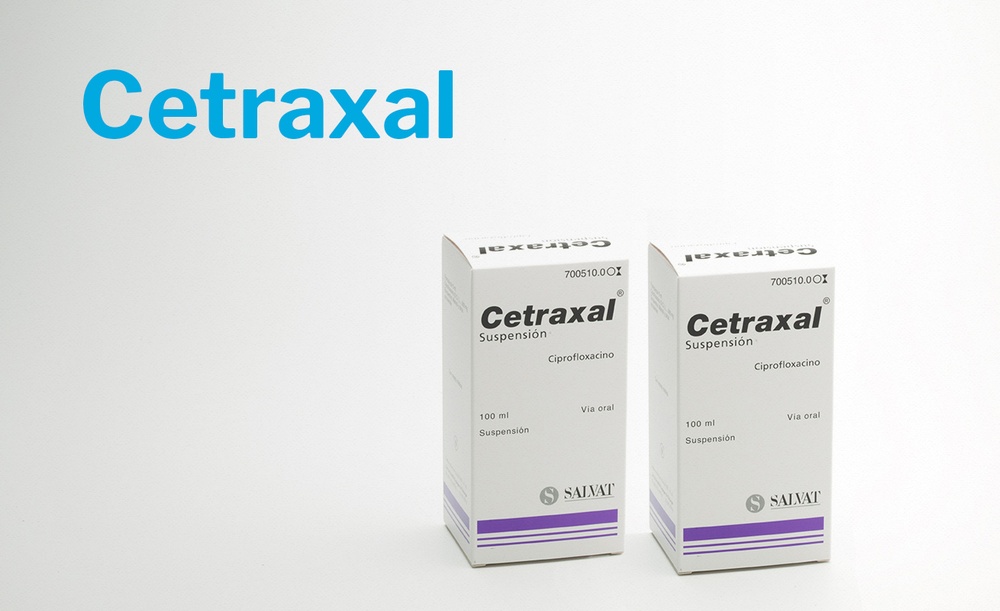
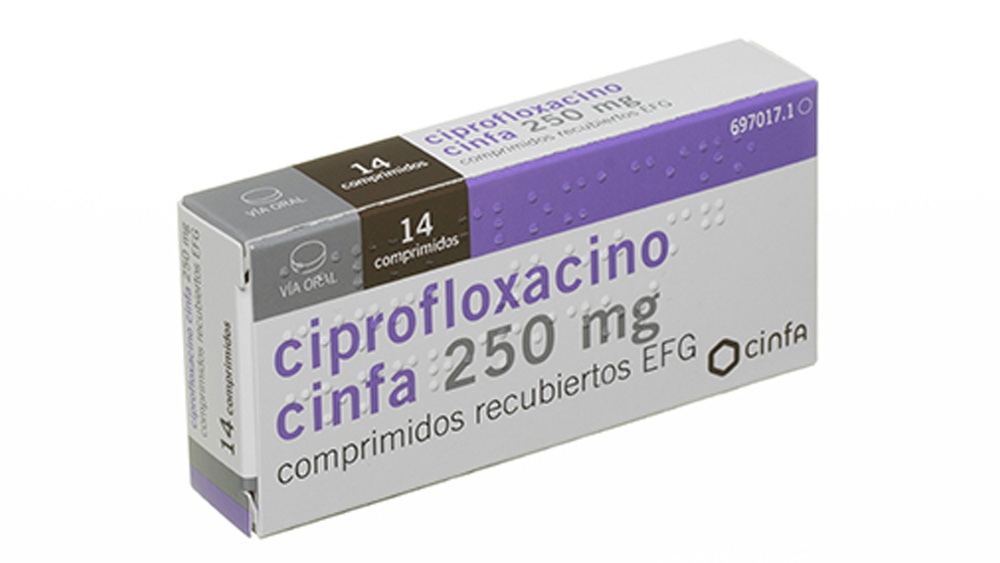
- Alternativas a CIPROFLOXACINO TARBIS 500 mg COMPRIMIDOS RECUBIERTOS CON PELICULA EFGForma farmacéutica: SOLUCIÓN/SUSPENSIÓN ORAL, 500 mg ciprofloxacino/5mlPrincipio activo: CiprofloxacinoFabricante: Laboratorios Salvat S.A.Requiere recetaForma farmacéutica: INYECTABLE PERFUSION, 2 MG/MLPrincipio activo: CiprofloxacinoFabricante: Altan Pharmaceuticals SaRequiere recetaForma farmacéutica: COMPRIMIDO, 250 mgPrincipio activo: CiprofloxacinoFabricante: Laboratorios Alter S.A.Requiere receta
Médicos online para CIPROFLOXACINO TARBIS 500 mg COMPRIMIDOS RECUBIERTOS CON PELICULA EFG
Comenta la dosis, los posibles efectos secundarios, interacciones, contraindicaciones o la revisión de receta de CIPROFLOXACINO TARBIS 500 mg COMPRIMIDOS RECUBIERTOS CON PELICULA EFG, sujeto a valoración médica y a la normativa local.









Obtén una receta de CIPROFLOXACINO TARBIS 500 mg COMPRIMIDOS RECUBIERTOS CON PELICULA EFG online
Rellena un formulario de 2 minutos
Cuéntanos tus síntomas, historial y el medicamento que necesitas.
Elige un médico o nosotros te asignamos uno
Escoge un especialista o te conectamos con el próximo médico disponible.
El médico revisa tu caso
Normalmente en 30 minutos. Puede hacerte preguntas adicionales por chat.
Recógela en cualquier farmacia
Receta electrónica enviada a tu correo, válida en toda España.
Preguntas frecuentes
¿Se requiere receta para CIPROFLOXACINO TARBIS 500 mg COMPRIMIDOS RECUBIERTOS CON PELICULA EFG?
CIPROFLOXACINO TARBIS 500 mg COMPRIMIDOS RECUBIERTOS CON PELICULA EFG requires receta en España. Puedes confirmarlo con un médico online según tu caso.
¿Cuál es el principio activo de CIPROFLOXACINO TARBIS 500 mg COMPRIMIDOS RECUBIERTOS CON PELICULA EFG?
El principio activo de CIPROFLOXACINO TARBIS 500 mg COMPRIMIDOS RECUBIERTOS CON PELICULA EFG es Ciprofloxacino. Esta información ayuda a identificar medicamentos con la misma composición pero con diferentes nombres comerciales.
¿Quién fabrica CIPROFLOXACINO TARBIS 500 mg COMPRIMIDOS RECUBIERTOS CON PELICULA EFG?
CIPROFLOXACINO TARBIS 500 mg COMPRIMIDOS RECUBIERTOS CON PELICULA EFG es fabricado por Tarbis Farma S.L.. La marca y el envase pueden variar según el distribuidor.
¿Qué médicos pueden recetar CIPROFLOXACINO TARBIS 500 mg COMPRIMIDOS RECUBIERTOS CON PELICULA EFG online?
Los Médicos de familia, Psiquiatras, Dermatólogos, Cardiólogos, Endocrinólogos, Gastroenterólogos, Neumólogos, Nefrólogos, Reumatólogos, Hematólogos, Infectólogos, Alergólogos, Geriatras, Pediatras, Oncólogos pueden valorar la prescripción de CIPROFLOXACINO TARBIS 500 mg COMPRIMIDOS RECUBIERTOS CON PELICULA EFG cuando esté clínicamente indicado. Puedes reservar una videoconsulta para comentar tu caso y las opciones de tratamiento.
¿Cómo comprar CIPROFLOXACINO TARBIS 500 mg COMPRIMIDOS RECUBIERTOS CON PELICULA EFG en España?
España cuenta con una infraestructura sanitaria bien desarrollada en ciudades principales como Madrid, Barcelona, Valencia y Sevilla. Las farmacias están ampliamente disponibles y operan bajo estrictas regulaciones, garantizando el acceso a medicamentos con receta.
Puedes comprar CIPROFLOXACINO TARBIS 500 mg COMPRIMIDOS RECUBIERTOS CON PELICULA EFG en Madrid, Barcelona, Sevilla o Valencia en cualquier farmacia local con una receta válida.
Para obtener una receta, puedes utilizar Oladoctor:
¿Cuáles son las alternativas a CIPROFLOXACINO TARBIS 500 mg COMPRIMIDOS RECUBIERTOS CON PELICULA EFG?
Otros medicamentos con el mismo principio activo (Ciprofloxacino) incluyen CETRAXAL 100mg/ml SUSPENSION ORAL, CIPROFLOXACINO ALTAN 2 MG/ML SOLUCION PARA PERFUSION EFG, CIPROFLOXACINO ALTER 250 mg COMPRIMIDOS RECUBIERTOS CON PELICULA EFG. Pueden tener diferentes nombres comerciales o formulaciones, pero contienen el mismo componente terapéutico. Consulta siempre con un médico antes de cambiar o iniciar un nuevo medicamento.
