



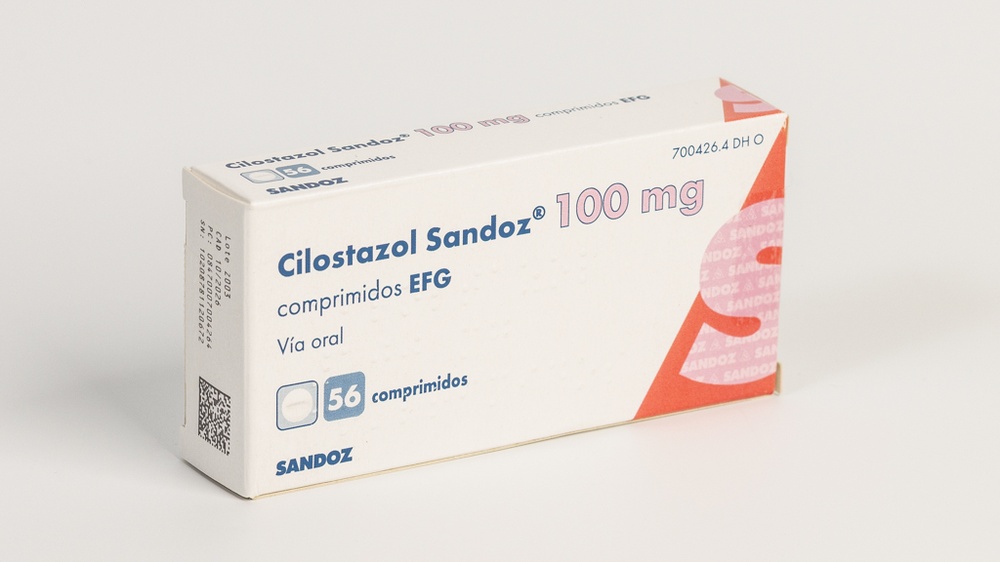
CILOSTAZOL 100 mg Tablets

Prescription review online
A doctor will review your case and decide whether a prescription is medically appropriate.

Talk to a doctor about this medicine
Discuss your symptoms and possible next steps in a quick online consultation.



How to use CILOSTAZOL SANDOZ 100 mg TABLETS
Contents of the leaflet
- Introduction
- What is Cilostazol Sandoz and what is it used for
- What you need to know before you take Cilostazol Sandoz
- How to take Cilostazol Sandoz
- Possible side effects
- Storing Cilostazol Sandoz
- Contents of the pack and other information
Introduction
Package Leaflet: Information for the User
Cilostazol Sandoz 100 mg Tablets EFG
Read all of this leaflet carefully before you start taking this medicine because it contains important information for you.
- Keep this leaflet, you may need to read it again.
- If you have any further questions, ask your doctor or pharmacist.
- This medicine has been prescribed for you only. Do not pass it on to others. It may harm them, even if their signs of illness are the same as yours.
- If you get any side effects, talk to your doctor or pharmacist. This includes any possible side effects not listed in this leaflet. See section 4.
Contents of the pack:
- What is Cilostazol Sandoz and what is it used for
- What you need to know before you take Cilostazol Sandoz
- How to take Cilostazol Sandoz
- Possible side effects
- Storing Cilostazol Sandoz
- Contents of the pack and other information
1. What is Cilostazol Sandoz and what is it used for
Cilostazol Sandoz contains the active substance cilostazol, which belongs to a group of medicines called phosphodiesterase type 3 inhibitors.
It has several actions including the dilation of some blood vessels and the reduction of the clotting activity (aggregation) of some blood cells, called platelets, within their vessels.
You have been prescribed Cilostazol Sandoz to treat your "intermittent claudication". Intermittent claudication is the cramp-like pain in your legs when you walk, which is caused by insufficient blood flow to your legs. Cilostazol Sandoz may help you to increase the distance you can walk without pain, as it improves blood flow to your legs. Cilostazol is only recommended for patients whose symptoms have not improved sufficiently after making lifestyle changes (e.g. stopping smoking and increasing physical exercise) and after other appropriate interventions. It is important that you continue to make lifestyle changes while you are taking cilostazol.

Not sure if this medicine is right for you?
Discuss your symptoms and treatment with a doctor online.
2. What you need to know before you take Cilostazol Sandoz
Do not take Cilostazol Sandoz:
- if you are allergic to cilostazol or any of the other ingredients of this medicine (listed in section 6),
- if you have heart failure,
- if you have persistent chest pain at rest, or have had a "heart attack" or heart surgery in the last 6 months,
- if you have fainted due to heart disease, or any severe disturbance of heart rhythm,
- if you know you have a condition that increases the risk of bleeding or bruising, such as:
- active stomach ulcers,
- stroke in the last 6 months,
- eye problems if you have diabetes,
- if your blood pressure is not well controlled,
- if you have severe kidney disease or moderate to severe liver impairment,
- if you are taking aspirin and clopidogrel, or any combination of two or more medicines that may increase the risk of bleeding (consult your doctor or pharmacist if you are not sure),
- if you are pregnant.
Warnings and precautions
Consult your doctor before taking Cilostazol Sandoz. Make sure your doctor knows:
- if you have a severe heart problem or any heart rhythm problems,
- if you have blood pressure problems.
During treatment with Cilostazol Sandoz you should know that:
- if you need to undergo surgery, including tooth extraction, inform your doctor or dentist that you are taking cilostazol,
- if you experience bruising or easy bleeding, stop taking cilostazol and inform your doctor.
Children and adolescents
Cilostazol Sandoz is not suitable for use in children.
Using Cilostazol Sandoz with other medicines
Tell your doctor or pharmacist if you are taking, have recently taken or might take any other medicines.
You should inform your doctor especially if you are taking medicines commonly used to treat painful and/or inflammatory conditions of muscles or joints or if you are taking medicines to reduce blood clotting. These medicines include:
- aspirin,
- clopidogrel,
- anticoagulant medicines (e.g. warfarin, dabigatran, rivaroxaban, apixaban or low molecular weight heparins).
If you are taking these medicines with cilostazol, your doctor may perform some routine blood tests.
Certain medicines may interfere with the effect of cilostazol when taken together. They may increase the side effects of cilostazol or make cilostazol less effective. Cilostazol may do the same to other medicines. Before you start taking Cilostazol Sandoz, tell your doctor if you are taking:
- erythromycin, clarithromycin or rifampicin (antibiotics),
- ketoconazole (for fungal infections),
- protease inhibitors (antivirals),
- omeprazole (for stomach acid excess),
- diltiazem (for high blood pressure or chest pain),
- cisapride (for stomach disorders),
- lovastatin, simvastatin or atorvastatin (for high blood cholesterol),
- halofantrine (for malaria),
- pimozide (for mental disorders),
- ergot derivatives (for migraine, e.g. ergotamine, dihydroergotamine),
- carbamazepine or phenytoin (for seizures),
- St. John's Wort (herbal medicine).
If you are not sure if this applies to the medicines you are taking, consult your doctor or pharmacist.
Before starting treatment with Cilostazol Sandoz, tell your doctor if you are taking medicines for high blood pressure, because cilostazol may have an additional blood pressure lowering effect. If your blood pressure drops too quickly, this may cause an increase in your heart rate. These medicines include:
- diuretics (e.g. hydrochlorothiazide, furosemide),
- calcium channel blockers (e.g. verapamil, amlodipine),
- ACE inhibitors (e.g. captopril, lisinopril),
- angiotensin II receptor blockers (e.g. valsartan, candesartan),
- beta blockers (e.g. labetalol, carvedilol).
However, it may be convenient to take the above-mentioned medicines with Cilostazol Sandoz. Your doctor will decide what is most suitable for you.
Pregnancy and breast-feeding
If you are pregnant or breast-feeding, think you may be pregnant or are planning to have a baby, ask your doctor or pharmacist for advice before taking this medicine.
Cilostazol Sandoz MUST NOTbe used during pregnancy.
IT IS NOT RECOMMENDEDto use Cilostazol Sandoz in breast-feeding mothers.
Driving and using machines
Cilostazol Sandoz may cause dizziness. If you feel dizzy after taking cilostazol tablets, DO NOTdrive or use tools or machines and inform your doctor or pharmacist.
3. How to take Cilostazol Sandoz
- Take Cilostazol Sandoz exactly as your doctor has told you. If you are not sure, ask your doctor or pharmacist.
- The recommended dose is one 100 mg tablet twice a day (in the morning and in the evening). This dose does not need to be changed in elderly people. However, your doctor may prescribe a lower dose if you are taking other medicines that may have effects on cilostazol.
- The tablet can be divided into two equal doses.
- Cilostazol Sandoz tablets should be taken 30 minutes before breakfast and dinner. Always take your tablets with a glass of water.
You may feel some beneficial effects of taking Cilostazol Sandoz within 4 to 12 weeks of treatment. Your doctor will assess your progress after 3 months of treatment and may recommend that you stop treatment with cilostazol if the effects are insufficient.
If you take more Cilostazol Sandoz than you should
If for any reason you take more cilostazol tablets than you should, you may experience signs and symptoms such as severe headache, diarrhoea, a rapid decrease in blood pressure and irregular heart rhythm.
If you have taken more Cilostazol Sandoz than you should, contact your doctor or pharmacist immediately or call the Toxicology Information Service, telephone: 91 562 04 20, indicating the medicine and the amount taken. Remember to take the package to clearly indicate what medicine you have taken.
If you forget to take Cilostazol Sandoz
If you forget to take a dose, do not worry; wait until your next dose to take your next tablet and continue with your usual treatment. DO NOTtake a double dose to make up for forgotten doses.
If you stop taking Cilostazol Sandoz
If you stop taking cilostazol, the pain in your legs may come back or get worse. Therefore, you should only stop taking cilostazol if you notice side effects that require urgent medical attention (see section 4) or if your doctor tells you to.
If you have any further questions on the use of this medicine, ask your doctor or pharmacist.

Started taking the medicine and have questions?
Discuss your symptoms and treatment with a doctor online.
4. Possible side effects
Like all medicines, this medicine can cause side effects, although not everybody gets them.
If you experience any of the following side effects, you may need urgent medical attention. Stop taking cilostazol and contact a doctor or go to the nearest hospital immediately.
- Allergic reactions,
- stroke,
- heart attack,
- heart problems that can cause difficulty breathing or swelling of the ankles,
- irregular heart rhythms (new or existing),
- visible bleeding,
- easy bruising,
- severe skin disease with blisters on the skin, mouth, eyes and genitals,
- yellowing of the skin or the whites of the eyes caused by liver or blood problems (jaundice).
You should inform your doctor immediately if you have fever or sore throat. You may need to have some blood tests before restarting treatment.
The following side effects have been reported for cilostazol. In such cases, you should inform your doctor as soon as possible:
Very common(may affect more than 1 in 10 people)
- headache,
- abnormal stools,
- diarrhoea.
Common(may affect up to 1 in 10 people)
- fast heart rate,
- heart palpitations,
- chest pain,
- dizziness,
- sore throat,
- runny nose (rhinitis),
- abdominal pain,
- indigestion,
- nausea or vomiting,
- loss of appetite (anorexia),
- excessive gas or belching (flatulence),
- swelling of the ankles, feet or face,
- skin rash or changes in skin appearance,
- itching,
- petechiae (small red or purple spots on the skin),
- general weakness.
Uncommon(may affect up to 1 in 100 people)
- heart attack,
- irregular heart rhythms (new or existing),
- heart problems that can cause difficulty breathing or swelling of the ankles,
- pneumonia,
- cough,
- chills,
- unexpected bleeding,
- tendency to bleeding (e.g. stomach, eye or muscle, nose and blood in saliva or urine),
- decrease in red blood cells,
- dizziness when standing up,
- fainting,
- anxiety,
- difficulty sleeping,
- strange dreams,
- allergic reactions,
- pain and discomfort,
- diabetes and high blood sugar levels,
- stomach pain (gastritis),
- discomfort.
There may be a higher risk of bleeding in the eye in people with diabetes.
Rare(may affect up to 1 in 1,000 people)
- tendency to bleed for longer than usual,
- increase in platelets in the blood,
- kidney problems.
Frequency not known(cannot be estimated from the available data)
- changes in blood pressure,
- decrease in red blood cells, white blood cells and platelets in your blood,
- difficulty breathing,
- difficulty moving,
- fever,
- hot flushes,
- eczema and other skin rashes,
- reduced skin sensitivity,
- tearful or sticky eyes (conjunctivitis),
- ringing in the ears (tinnitus),
- liver problems including hepatitis,
- changes in urine.
Reporting of side effects
If you experience any side effects, talk to your doctor or pharmacist. This includes any possible side effects not listed in this leaflet. You can also report side effects directly via the Spanish Medicines Agency's website: https://www.notificaram.es. By reporting side effects, you can help provide more information on the safety of this medicine.
5. Storing Cilostazol Sandoz
Keep this medicine out of the sight and reach of children.
Do not use this medicine after the expiry date which is stated on the carton and blister after "EXP". The expiry date refers to the last day of that month.
This medicine does not require any special storage conditions.
Medicines should not be disposed of via wastewater or household waste. Ask your pharmacist how to dispose of medicines no longer required. These measures will help protect the environment.
6. Contents of the pack and other information
Composition of Cilostazol Sandoz
- The active substance is cilostazol. Each tablet contains 100 mg of cilostazol.
- The other ingredients are maize starch, microcrystalline cellulose, calcium carbonate, hypromellose and magnesium stearate.
Appearance of Cilostazol Sandoz and contents of the pack
Cilostazol Sandoz 100 mg tablets are white, round, scored on one side, with a diameter of approximately 8 mm.
Your medicine is supplied in packs of 14, 20, 28, 30, 50, 56, 60, 84 and 100 tablets, in PVC/Aluminium blisters.
Not all pack sizes may be marketed.
Marketing authorisation holder and manufacturer
Marketing authorisation holder
Sandoz Farmacéutica, S.A.
Centro Empresarial Parque Norte
Edificio Roble
C/ Serrano Galvache, 56
28033 Madrid
Spain
Manufacturer
Salutas Pharma GmbH
Otto-von-Guericke-Allee 1,
39179 Barleben,
Germany
or
Noucor Health, S.A.
Avda. Camí Reial, 51-57
08184 Palau-solita i Plegamans (Barcelona),
Spain
or
Lek Pharmaceuticals d.d.
Verovskova ulica 57,
Ljubljana, 1526
Slovenia
or
Galenicum Health S.L.U.
Sant Gabriel, 50,
Esplugues de Llobregat,
08950 Barcelona
Spain
This medicine is authorised in the Member States of the European Economic Area under the following names:
Germany: Cilostazol HEXAL 100 mg Tabletten
Bulgaria: ?????????? ?????? 100 MG ????????
Estonia: Dilsatan, 100 mg tabletid
Italy: CILOSTAZOLO SANDOZ
Lithuania: Dilsatan 100 mg tabletes
Latvia: Dilsatan 100 mg tabletes
Malta: Cilostazol Sandoz 100mg Tablets
Poland: DECILOSAL, 100 MG, TABLETKI
Romania: CILOSTAZOL SANDOZ 100 mg comprimate
Date of last revision of this leaflet:July 2018
Detailed information on this medicine is available on the website of the Spanish Agency for Medicines and Health Products (AEMPS) http://www.aemps.gob.es/
- Country of registration
- Dosage formTABLET, 100 mg
- ATC codeB01AC23
- Active substance
- Prescription requiredYes
- Manufacturer
- This information is for reference only and does not constitute medical advice. Always consult a doctor before taking any medication. Oladoctor is not responsible for medical decisions based on this content.
- Alternatives to CILOSTAZOL SANDOZ 100 mg TABLETSDosage form: TABLET, 100 mgActive substance: cilostazolManufacturer: Aristo Pharma Iberia S.L.Prescription requiredDosage form: TABLET, 50 mgActive substance: cilostazolManufacturer: Aristo Pharma Iberia S.L.Prescription requiredDosage form: TABLET, 100 mgActive substance: cilostazolManufacturer: Laboratorios Cinfa S.A.Prescription required
Online doctors for CILOSTAZOL SANDOZ 100 mg TABLETS
Discuss questions about CILOSTAZOL SANDOZ 100 mg TABLETS, including use, safety considerations and prescription review, subject to medical assessment and local regulations.









Get CILOSTAZOL SANDOZ 100 mg TABLETS Prescription Online
Fill in a 2-min form
Tell us your symptoms, history, and what medicine you're requesting.
Pick a doctor or let us assign
Choose a specialist or we'll match you with the next available doctor.
Doctor reviews your case
Usually within 30 minutes. They may ask follow-up questions via chat.
Collect from any pharmacy
Electronic prescription sent to your email — valid across Spain.
Frequently Asked Questions
CILOSTAZOL SANDOZ 100 mg TABLETS requires a prescription in Spain. You can check with a doctor online whether this medicine may be appropriate for your situation.
The active ingredient in CILOSTAZOL SANDOZ 100 mg TABLETS is cilostazol. This information helps identify medicines with the same composition but different brand names.
CILOSTAZOL SANDOZ 100 mg TABLETS is manufactured by Sandoz Farmaceutica S.A.. Pharmacy brands and packaging may differ depending on the distributor.
Doctors such as Family doctors, Psychiatrists, Dermatologists, Cardiologists, Endocrinologists, Gastroenterologists, Pulmonologists, Nephrologists, Rheumatologists, Hematologists, Infectious disease physicians, Allergists, Geriatricians, Paediatricians, Oncologists may assess whether CILOSTAZOL SANDOZ 100 mg TABLETS is appropriate, depending on your situation and local regulations. You can book an online consultation to discuss your symptoms and possible next steps.
Spain has a well-developed healthcare infrastructure across major cities such as Madrid, Barcelona, Valencia, and Seville. Pharmacies are widely available and operate under strict regulations, ensuring access to prescribed medications.
You can buy CILOSTAZOL SANDOZ 100 mg TABLETS in Madrid, Barcelona, Seville, or Valencia at any local pharmacy with a valid prescription.
To obtain a prescription, you can use Oladoctor:
Other medicines with the same active substance (cilostazol) include CILOSTAZOL ARISTO 100 mg TABLETS, CILOSTAZOL ARISTO 50 mg TABLETS, CILOSTAZOL CINFA 100 mg TABLETS. These may have different brand names or formulations but contain the same therapeutic ingredient. Always consult a doctor before switching or starting a new medicine.
