






Cómo usar CEPTAVA 180 MG COMPRIMIDOS GASTRORRESISTENTES EFG
Traducción generada por IA
Este contenido ha sido traducido automáticamente y se ofrece solo con fines informativos. No sustituye la consulta con un profesional sanitario.
Ver originalContenido del prospecto
Introducción
Prospecto: información para el paciente
Ceptava 180 mgcomprimidos gastrorresistentes EFG
ácido micofenólico
Lea todo el prospecto detenidamente antes de empezar a tomar este medicamento, porque contiene información importante para usted.
- Conserve este prospecto, ya que puede tener que volver a leerlo.
- Si tiene alguna duda, consulte a su médico o farmacéutico.
- Este medicamento se le ha recetado solamente a usted, y no debe dárselo a otras personas aunque tengan los mismos síntomas que usted, ya que puede perjudicarles.
- Si experimenta efectos adversos, consulte a su médico o farmacéutico, incluso si se trata de efectos adversos que no aparecen en este prospecto. Ver sección 4.
Contenido del prospecto
- Qué es Ceptava y para qué se utiliza
- Qué necesita saber antes de empezar a tomar Ceptava
- Cómo tomar Ceptava
- Posibles efectos adversos
- Conservación de Ceptava
- Contenido del envase e información adicional

1. Qué es Ceptava y para qué se utiliza
Ceptava contiene una sustancia denominada ácido micofenólico. Pertenece a una clase de medicamentos conocidos como inmunosupresores.
Ceptava se utiliza para prevenir que el sistema inmune de su organismo rechace el riñón trasplantado. Se utiliza junto con otros medicamentos que contienen ciclosporina y corticosteroides.
2. Qué necesita saber antes de empezar a tomar Ceptava
ADVERTENCIA
Micofenolato causa defectos de nacimiento y aborto involuntario. Si es una mujer que puede quedarse embarazada, debe proporcionar una prueba de embarazo negativa antes de comenzar el tratamiento y debe seguir el consejo anticonceptivo indicado por su médico.
Su médico hablará con usted y le dará información por escrito, en particular sobre los efectos de micofenolato en los fetos. Lea esta información cuidadosamente y siga las instrucciones. Si no entiende completamente estas instrucciones, por favor, pídale a su médico que se las explique de nuevo antes de tomar micofenolato. Ver más información en las secciones "Advertencias y precauciones" y "Embarazo y lactancia".

No tome Ceptava:
- si es alérgico (hipersensible) a ácido micofenólico, micofenolato de sodio, micofenolato de mofetilo o a alguno de los demás componentes de este medicamento (incluidos en la sección 6),
- si es una mujer que podría estar embarazada y no ha proporcionado una prueba de embarazo negativa antes de su primera prescripción, ya que ácido micofenólico causa defectos de nacimiento y aborto involuntario,
- si está embarazada o planea quedarse embarazada o cree que puede estar embarazada,
- si no está usando un método anticonceptivo eficaz (ver “Anticoncepción en mujeres/hombres”),
- si está en periodo de lactancia (vea "Embarazo y lactancia").
Si alguna de las situaciones anteriores le aplica, consulte con su médico y no tome este medicamento.
Advertencias y precauciones
Consulte a su médico o farmacéutico antes de empezar a tomar Ceptava:
- si padece o ha padecido previamente trastornos digestivos graves, como úlcera gástrica,
- si presenta una deficiencia hereditaria rara de la enzima hipoxantina-guanina-fosforribosil-transferasa (HGPRT) como son los síndromes de Lesch-Nyhan y de Kelley-Seegmiller.
Asimismo debe ser consciente que:
- el ácido micofenólico disminuye el nivel de protección de su piel al sol, lo que aumenta el riesgo de contraer cáncer de piel. Debe limitar su exposición a la luz solar y a los rayos ultravioleta (UV) cubriendo las áreas de piel expuestas lo máximo posible y aplicando frecuentemente un filtro solar con un alto factor de protección. Consulte con su médico cómo protegerse del sol,
- si ya ha padecido hepatitis B o C, el ácido micofenólico puede incrementar el riesgo de reaparición de estas enfermedades. Su médico puede realizar análisis de sangre y comprobar los síntomas de estas enfermedades. Si experimenta algún síntoma (piel y ojos amarillentos, náuseas, pérdida de apetito, orina oscura), informe a su médico inmediatamente,
- si presenta tos persistente o falta de aliento, especialmente cuando tome otros inmunosupresores, informe a su médico inmediatamente,
- su médico puede querer comprobar su nivel de anticuerpos en sangre durante el tratamiento con ácido micofenólico, en particular cuando la infección recurre, especialmente si también está tomando otros inmunosupresores y le indicará si puede continuar el tratamiento con ácido micofenólico,
- si presenta cualquier síntoma de infección (como fiebre o inflamación de la garganta) o un hematoma o sangrado inesperados, póngase inmediatamente en contacto con su médico,
- su médico puede querer comprobar su número de glóbulos blancos en sangre durante el tratamiento con ácido micofenólico y le indicará si puede continuar tomando ácido micofenólico,
- el principio activo, ácido micofenólico, no es el mismo que otros medicamentos que suenan de manera similar como es el micofenolato de mofetilo. No debe intercambiar estos medicamentos a no ser que su médico así se lo indique,
- el uso de ácido micofenólico en el embarazo puede perjudicar al feto (ver también “Embarazo y lactancia”) e incrementar el riesgo de pérdida del feto (aborto espontáneo).
Otros medicamentos y Ceptava
Informe a su médico o farmacéutico si está tomando, ha tomado recientemente o pudiera tener que tomar cualquier otro medicamento, incluso los adquiridos sin receta.
En particular, debe informar a su médico si está tomando alguno de los siguientes medicamentos:
- otros medicamentos inmunosupresores como azatioprina o tacrolimus,
- medicamentos utilizados para tratar niveles elevados de colesterol en sangre como colestiramina,
- carbón activo utilizado para tratar trastornos digestivos, como diarrea, estómago alterado y gases,
- antiácidos que contienen magnesio y aluminio,
- medicamentos utilizados para tratar las infecciones causadas por virus como aciclovir o ganciclovir.
Asimismo debe informar a su médico si tiene previsto recibir alguna vacuna.
No debe donar sangre durante el tratamiento con ácido micofenólico y durante al menos 6 semanas después de interrumpir el tratamiento. Los hombres no deben donar semen durante el tratamiento con ácido micofenólico y durante al menos 90 días después de suspender el tratamiento.
Tomade Ceptava con alimentos y bebidas
Ceptava puede tomarse con o sin alimentos. Debe elegir si tomar sus comprimidos con o sin alimentos y a partir de aquí tomarlos siempre de la misma manera cada día. Esto es para asegurar que cada día se absorbe en su organismo la misma cantidad de su medicación.
Edad avanzada
Los pacientes de edad avanzada (a partir de 65 años de edad) pueden tomar ácido micofenólico sin la necesidad de ajustar la dosis normal recomendada.
Población pediátrica y adolescentes
Debido a la falta de datos, no se recomienda el uso de ácido micofenólico en niños y adolescentes.
Embarazo y lactancia
Si está embarazada o en periodo de lactancia, cree que podría estar embarazada o tiene intención de quedarse embarazada, consulte a su médico o farmacéutico antes de tomar este medicamento. Su médico hablará con usted acerca de los riesgos en caso de embarazo y las alternativas que puede tomar para prevenir el rechazo de su órgano trasplantado si:
- tiene intención de quedarse embarazada,
- tiene ausencia o cree haber perdido un periodo, o si tiene sangrado menstrual inusual, o sospecha que está embarazada,
- tiene relaciones sexuales sin usar un método anticonceptivo eficaz.
Si se queda embarazada durante el tratamiento con micofenolato, debe informar a su médico inmediatamente. Sin embargo, siga tomando micofenolato hasta que vea a su médico.
Embarazo
Micofenolato causa con una muy alta frecuencia abortos involuntarios (50%) y defectos congénitos graves (23 - 27%) en el feto. Los defectos de nacimiento que se han notificado incluyen malformaciones de las orejas, de los ojos, de la cara (labio leporino / paladar hendido), en el desarrollo de los dedos, del corazón, del esófago (tubo que conecta la garganta con el estómago), de los riñones y del sistema nervioso (p. ej.,, espina bífida (donde los huesos de la columna vertebral no se desarrollan correctamente)). Su hijo recién nacido puede verse afectado por uno o más de estos defectos.
Si es una mujer que puede quedarse embarazada, debe proporcionar un test de embarazo negativo antes de comenzar el tratamiento y debe seguir el consejo anticonceptivo que le ha dado su médico. Su médico puede solicitar más de una prueba para asegurarse de que no está embarazada antes de comenzar el tratamiento.
Lactancia
No tome este medicamento si está dando el pecho. Esto se debe a que pequeñas cantidades del medicamento pueden pasar a la leche materna.
Anticoncepción en mujeres que toman Ceptava
Si usted es una mujer que se puede quedar embarazada siempre debe usar un método anticonceptivo eficaz si está tomando ácido micofenólico . Esto incluye:
- Antes de empezar a tomar ácido micofenólico.
- Durante todo el tratamiento con ácido micofenólico.
- Durante 6 semanas después de haber dejado de tomar ácido micofenólico.
Consulte con su médico acerca de la anticoncepción más adecuada para usted. Ésta dependerá de su situación personal. Se recomienda utilizar dos métodos anticonceptivos ya que esto reducirá el riesgo de embarazo no intencionado.
Consulte con su médico tan pronto como sea posible, si considera que su anticonceptivo puede no haber sido eficaz o si ha olvidado tomar la píldora anticonceptiva.
Se considera que usted no es susceptible de quedarse embarazada, si su caso es uno de los siguientes:
- Si está en la post-menopausia, es decir tiene más de 50 años y su último periodo fue hace más de un año (si sus periodos se han interrumpido porque ha estado en tratamiento por cáncer, entonces puede que exista todavía alguna posibilidad de quedarse embarazada).
- Si sus trompas de Falopio o ambos ovarios han sido extirpados mediante cirugía (salpingo-oforectomia bilateral).
- Si su útero ha sido extirpado mediante cirugía (histerectomía).
- Si sus ovarios no funcionan (fallo ovárico prematuro, lo cual ha sido confirmado por un especialista en ginecología).
- Si ha nacido con alguna de las siguientes enfermedades raras que hacen que un embarazo sea imposible: Genotipo XY, Síndrome de Turner o agénesis uterina.
- Si es una niña o una adolescente que no ha comenzado a tener periodos.
Anticoncepción en hombres que toman Ceptava
La evidencia disponible no indica un mayor riesgo de malformaciones o aborto espontáneo si el padre toma micofenolato. Sin embargo, el riesgo no se puede excluir completamente. Como medida de precaución, se recomienda que usted y su pareja femenina usen métodos anticonceptivos fiables durante el tratamiento y hasta 90 días después de dejar de tomar Ceptava.
Si está planeando tener un hijo, consulte con su médico los posibles riesgos.
Conducción y uso de máquinas
Ácido micofenólico no ha demostrado que afecte a su capacidad para conducir y usar máquinas.
Ceptava contiene sodio y lactosa
Este medicamento contiene 12,93 mg de sodio (componente principal de la sal de mesa/para cocinar) en cada comprimido gastrorresistente. Esto equivale al 0,65% de la ingesta diaria máxima de sodio recomendada para un adulto.
Este medicamento contiene lactosa. Si su médico le ha indicado que padece una intolerancia a ciertos azúcares, consulte con él antes de tomar este medicamento.
3. Cómo tomar Ceptava
Siga exactamente las instrucciones de administración de este medicamento indicadas por su médico. Ceptava únicamente se lo puede prescribir un médico con experiencia en tratar pacientes trasplantados. En caso de duda, consulte de nuevo a su médico o farmacéutico.
Qué cantidad tomar
La dosis diaria recomendada de ácido micofenólico es de 1.440 mg (8 comprimidos de Ceptava 180 mg). Se debe tomar en 2 dosis separadas de 720 mg cada una (4 comprimidos de Ceptava 180 mg). Tome sus comprimidos por la mañana y por la noche.
La primera dosis de 720 mg se administrará en las 72 horas siguientes al trasplante.
Si tiene problemas graves de riñón
Su dosis diaria no debe ser superior a 1.440 mg (8 comprimidos de Ceptava 180 mg).
Toma de Ceptava
Trague los comprimidos enteros con un vaso de agua.
No rompa, ni triture los comprimidos.
No tome ningún comprimido roto o dividido.
Evite la inhalación o el contacto directo del polvo con la piel o membrana mucosa. Si esto sucediera, lávese a conciencia con agua y jabón y enjuáguese los ojos con abundante agua.
El tratamiento se debe continuar mientras se necesite una inmunosupresión para evitar que su organismo rechace su órgano trasplantado.
Si toma más Ceptava del que debe
En caso de sobredosis o ingestión accidental, consulte inmediatamente a un médico o farmacéutico o llame al Servicio de Información Toxicológica, teléfono: 91 562 04 20, indicando el medicamento y la cantidad ingerida. Lleve los comprimidos consigo y si los ha acabado, llévese el envase vacío.
Si olvidó tomar Ceptava
Si olvida tomar una dosis de ácido micofenólico, tómela tan pronto se acuerde a no ser que sea casi la hora de su próxima dosis. En este caso, tome la próxima dosis a su hora normal. Pida consejo a su médico. No tome una dosis doble para compensar las dosis olvidadas.
Si interrumpe el tratamiento con Ceptava
No interrumpa el tratamiento con este medicamento a no ser que su médico se lo indique. La interrupción del tratamiento puede incrementar el riesgo de que su organismo rechace su riñón trasplantado.
Si tiene cualquier otra duda sobre el uso de este medicamento, pregunte a su médico o farmacéutico.
4. Posibles efectos adversos
Al igual que todos los medicamentos, este medicamento puede producir efectos adversos, aunque no todas las personas los sufran.
Los pacientes de edad avanzada pueden experimentar más efectos adversos debido a que tienen una defensa inmunitaria reducida.
Los inmunosupresores, incluido el ácido micofenólico, disminuyen los mecanismos de defensa de su propio organismo previniendo el rechazo de su órgano trasplantado. Consecuentemente, su organismo no estará en condiciones normales para luchar contra las infecciones. Por lo tanto, si está tomando ácido micofenólico, puede contraer más infecciones de lo normal, como son infecciones de cerebro, piel, boca, estómago e intestinos, pulmones y tracto urinario.
Su médico le realizará análisis de sangre de forma regular para controlar cualquier cambio en el número de sus células sanguíneas o en los niveles de sustancias transportadas en su sangre, como es azúcar, grasa y colesterol.
Algunos efectos pueden ser graves:
- síntomas de infección incluyendo fiebre, escalofríos, sudoración, sensación de cansancio, somnolencia, o falta de energía. Si está tomando ácido micofenólico es posible que contraiga más infecciones víricas, bacterianas y fúngicas de lo normal, las cuales pueden afectar a distintos sistemas del organismo, siendo los más comúnmente afectados los riñones, la vejiga y las vías respiratorias altas y/o bajas,
- sangre en vómitos, heces oscuras o sanguinolentas, úlcera gástrica o intestinal,
- inflamación de sus glándulas, desarrollo de un nuevo engrosamiento de la piel o crecimiento de uno ya existente, o cambios en un lunar existente. Tal y como puede ocurrir en pacientes que están tomando inmunosupresores, un número muy pequeño de pacientes tratados con ácido micofenólico han desarrollado cáncer de piel o nódulos linfáticos.
Si experimenta alguno de los efectos mencionados anteriormente después de tomar este medicamento, informe a su médico inmediatamente.
Otros efectos adversos pueden incluir:
Muy frecuentes(pueden afectar a más de 1 de cada 10 personas)
- nivel reducido de glóbulos blancos,
- nivel reducido de calcio en la sangre (hipocalcemia),
- nivel reducido de potasio en la sangre (hipopotasemia),
- nivel elevado de ácido úrico en la sangre (hiperuricemia),
- presión arterial elevada (hipertensión),
- ansiedad,
- diarrea,
- dolor en articulaciones (artralgia).
Frecuentes(pueden afectar hasta a 1 de cada 10 personas)
- nivel reducido de glóbulos rojos que puede dar como resultado cansancio, falta de aliento y semblante pálido (anemia),
- nivel reducido de plaquetas en la sangre que puede dar como resultado sangrado y hematomas inesperados (trombocitopenia),
- nivel elevado de potasio en la sangre (hiperpotasemia),
- nivel reducido de magnesio en la sangre (hipomagnesemia),
- mareo,
- dolor de cabeza,
- tos,
- presión arterial reducida (hipotensión),
- falta de aliento (disnea),
- dolor abdominal o estomacal, inflamación de las paredes del estómago, distensión abdominal, estreñimiento, indigestión, gases (flatulencia), heces blandas, sensación de mareo (náuseas), mareo (vómitos),
- fatiga, fiebre,
- alteración en los resultados de las pruebas de la función hepática y renal,
- infecciones de las vías respiratorias,
- acné,
- debilidad (astenia),
- dolor muscular (mialgia),
- manos, tobillos o pies hinchados (edema periférico),
- picor.
Poco frecuentes(pueden afectar hasta a 1 de cada 100 personas)
- latidos rápidos del corazón (taquicardia) o latidos irregulares del corazón (extrasístoles ventriculares), fluido en los pulmones (edema pulmonar),
- un engrosamiento que parece un saco (quiste) conteniendo fluido (linfa) (linfocele),
- temblor, insomnio,
- enrojecimiento e hinchazón de los ojos (conjuntivitis), visión borrosa,
- respiración sibilante,
- eructos, mal aliento, obstrucción intestinal (íleo), úlceras labiales, pirosis, decoloración de la lengua, boca seca, inflamación de las encías, inflamación del páncreas dando lugar a un dolor fuerte en la parte superior del estómago (pancreatitis), obstrucción de las glándulas salivares, inflamación de las paredes internas del abdomen (peritonitis),
- infección de los huesos, sangre y piel,
- sangre en orina, alteración en los riñones, dolor y dificultad al orinar,
- pérdida de cabello, heridas en la piel,
- inflamación de las articulaciones (artritis), dolor de espalda, calambres musculares,
- pérdida de apetito, incremento de los niveles de lípidos (hiperlipidemia), azúcar (diabetes), colesterol (hipercolesterolemia), o disminución de los niveles de fosfato en sangre (hipofosfatemia),
- síntomas parecidos a la gripe (tales como fatiga, escalofríos, dolor de garganta, dolor en las articulaciones o músculos), hinchazón de tobillos y pies, dolor, rigores, sensación de sed o debilidad,
- pesadillas, creer en cosas que no son ciertas (delirios),
- incapacidad para tener o mantener una erección,
- tos, dificultad para respirar, dolor al respirar (posibles síntomas de enfermedad pulmonar intersticial).
Frecuencia no conocida(no puede estimarse a partir de los datos disponibles)
- erupción cutánea,
- fiebre, dolor de garganta, infecciones frecuentes (posibles síntomas de falta de glóbulos blancos en la sangre) (agranulocitosis).
Otros efectos adversos notificados con medicamentos similares a Ceptava
Se han notificado efectos adversos adicionales con el grupo de medicamentos al que pertenece Ceptava: inflamación del colon (intestino grueso), inflamación de la pared del estómago causada por citomegalovirus, desarrollo de una cavidad en la pared intestinal, dando como resultado dolor abdominal grave con posible sangrado, úlceras gástricas o duodenales, nivel reducido de glóbulos blancos específicamente o de todas las células sanguíneas, infecciones graves, tales como inflamación del corazón y sus válvulas y de la membrana que recubre el cerebro y médula espinal, falta de aliento, tos, que puede ser debido a bronquiectasias (una situación en la cual las vías respiratorias pulmonares están anormalmente dilatadas) y otras infecciones bacterianas menos comunes que normalmente dan como resultado una alteración pulmonar grave (tuberculosis e infección micobacteriana atípica). Consulte a su médico si desarrolla una tos persistente o falta de aliento.
Comunicación de efectos adversos
Si experimenta cualquier tipo de efecto adverso, consulte a su médico o farmacéutico, incluso si se trata de posibles efectos adversos que no aparecen en este prospecto. También puede comunicarlos directamente a través del Sistema Español de Farmacovigilancia de Medicamentos de Uso Humano (https://www.notificaram.es.). Mediante la comunicación de efectos adversos usted puede contribuir a proporcionar más información sobre la seguridad de este medicamento.
5. Conservación de Ceptava
Mantener este medicamento fuera de la vista y del alcance de los niños
No utilice este medicamento después de la fecha de caducidad que aparece en el envase y el blíster después de CAD/EXP. La fecha de caducidad es el último día del mes que se indica.
Este medicamento no requiere ninguna temperatura especial de conservación.
Conservar en el embalaje original para protegerlo de la humedad.
No utilice este medicamento si observa que el envase está dañado o muestra signos de haber sido manipulado.
Los medicamentos no se deben tirar por los desagües ni a la basura. Deposite los envases y los medicamentos que no necesita en el Punto SIGRE de la farmacia. En caso de duda pregunte a su farmacéutico cómo deshacerse de los envases y de los medicamentos que no necesita. De esta forma ayudará a proteger el medio ambiente.
6. Contenido del envase e información adicional
Composición de Ceptava
- El principio activo es ácido micofenólico (como micofenolato de sodio). Cada comprimido gastrorresistente contiene 180 mg de ácido micofenólico.
- Los demás componentes son:
Núcleo: lactosa anhidra, crospovidona (tipo A), povidona K 30, almidón de maíz, sílice coloidal anhidra/dióxido de sílice coloidal y estearato de magnesio.
Recubrimiento: ftalato de hipromelosa HP50, dióxido de titanio (E 171), óxido de hierro amarillo (E 172)/óxido férrico, indigotina (Carmín Índigo) FD&C azul Nº 2, laca de aluminio (E 132).
Aspecto del producto y contenido del envase
Comprimidos redondos, de color verde lima, recubiertos con película, con bordes biselados y con la inscripción “C” en una cara.
Dimensiones: aproximadamente 10,4 x 4,2 mm.
Blísteres de PA/AL/PVC-Aluminio.
Tamaños de envase: 20, 50, 100, 120 o 250 comprimidos gastrorresistentes.
Puede que solamente estén comercializados algunos tamaños de envases
Titular de la autorización de comercialización y Responsable de la fabricación
Titular de la autorización de comercialización
Sandoz Farmacéutica, S.A.
Centro Empresarial Parque Norte
Edificio Roble
C/ Serrano Galvache, 56
28033, Madrid
España
Responsable de la fabricación
Novartis Pharma GmbH
Roonstrasse 25
D-90429 Nürnberg, Bayern
Alemania
ó
Lek Pharmaceuticals d.d.
Verovskova 57
SLO-1526 Ljubljana
Eslovenia
ó
Salutas Pharma GmbH
Otto-von-Guericke-Allee 1
,
39179 Barleben
Alemania
ó
Lek Pharmaceuticals d.d.,
Trimlini 2D, 9220
Lendava,
Eslovenia
Este medicamento está autorizado en los Estados Miembros de la UE y en el Reino Unido (Irlanda del norte) con el nombre:
Austria:Mycophenolsäure Sandoz 180 mg magensaftresistente Tabletten
Chipre:Mycophenolate Sodium Sandoz
Francia:Acide Mycophenolique Sandoz 180mg comprimé gastro-résistant
Italia:Ceptava
Reino Unido (Irlanda del Norte):Ceptava 180 mg gastro-resistant tablets
Fecha de la última revisión de este prospecto:febrero 2022
La información detallada y actualizada de este medicamento está disponible en la página web de la Agencia Española de Medicamentos y Productos Sanitarios (AEMPS) http://www.aemps.gob.es./
-

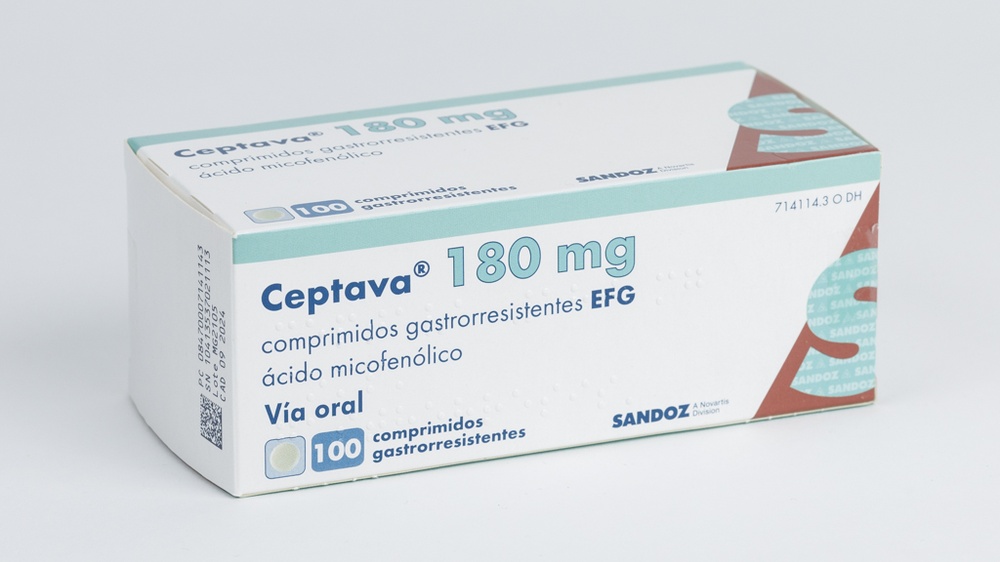
- País de registro
- Forma farmacéuticaCOMPRIMIDO, 180 mg
- Código ATCL04AA06
- Disponibilidad en farmacias
Problema de suministro reportado
Los datos de la Agencia Española de Medicamentos y Productos Sanitarios (AEMPS) indican un problema de suministro que afecta a este medicamento.<br><br>La disponibilidad puede ser limitada en algunas farmacias.<br><br>Para actualizaciones o alternativas, consulte a su farmacéutico. - Principio activo
- Requiere recetaSí
- Fabricante
- Esta información es de carácter general y no sustituye la consulta con un profesional sanitario.
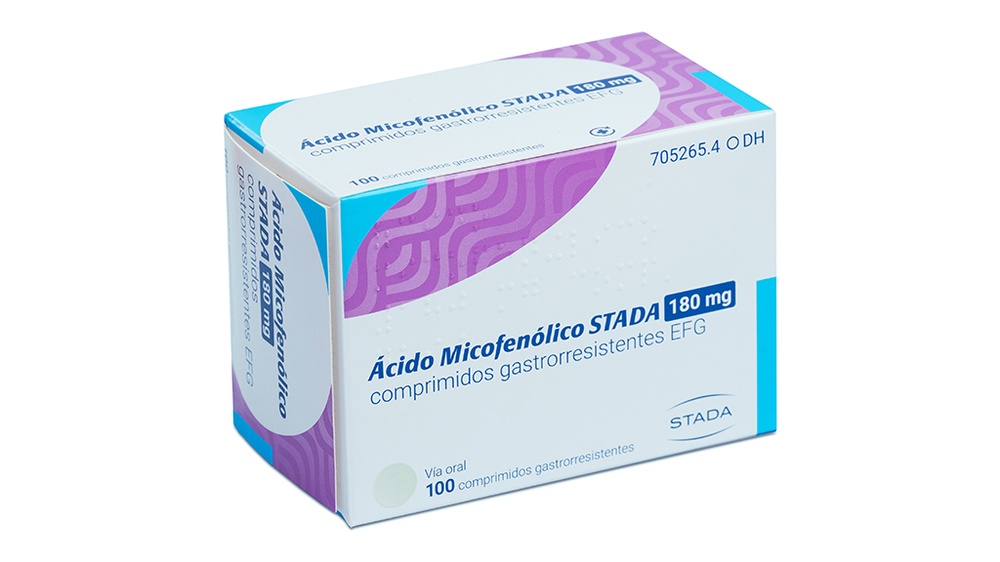
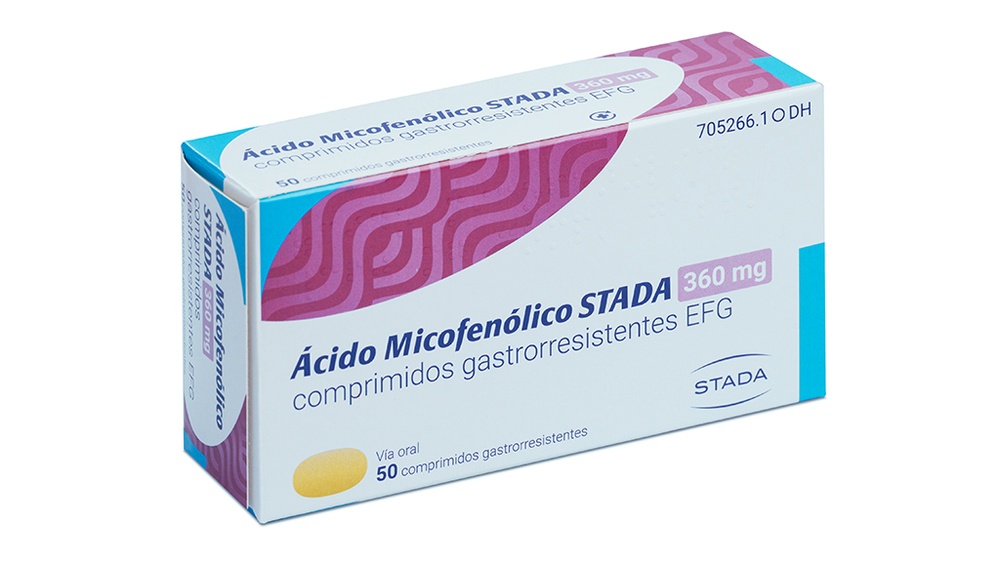
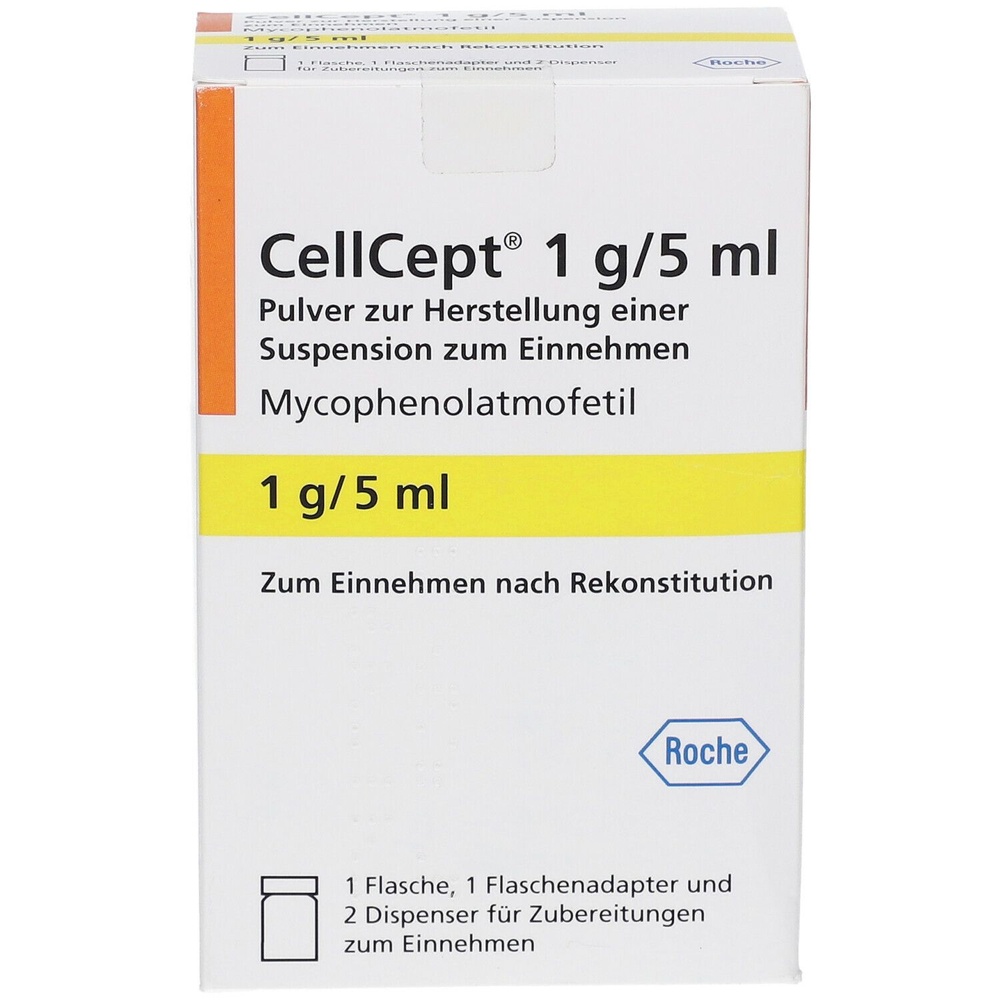
- Alternativas a CEPTAVA 180 MG COMPRIMIDOS GASTRORRESISTENTES EFGForma farmacéutica: COMPRIMIDO, 180 mgPrincipio activo: ácido micofenólicoFabricante: Laboratorio Stada S.L.Requiere recetaForma farmacéutica: COMPRIMIDO, 360 mgPrincipio activo: ácido micofenólicoFabricante: Laboratorio Stada S.L.Requiere recetaForma farmacéutica: SOLUCIÓN/SUSPENSIÓN ORAL, DeconocidaPrincipio activo: ácido micofenólicoFabricante: Roche Registration GmbhRequiere receta
Médicos online para CEPTAVA 180 MG COMPRIMIDOS GASTRORRESISTENTES EFG
Comenta la dosis, los posibles efectos secundarios, interacciones, contraindicaciones o la revisión de receta de CEPTAVA 180 MG COMPRIMIDOS GASTRORRESISTENTES EFG, sujeto a valoración médica y a la normativa local.
Obtén una receta de CEPTAVA 180 MG COMPRIMIDOS GASTRORRESISTENTES EFG online
Rellena un formulario de 2 minutos
Cuéntanos tus síntomas, historial y el medicamento que necesitas.
Elige un médico o nosotros te asignamos uno
Escoge un especialista o te conectamos con el próximo médico disponible.
El médico revisa tu caso
Normalmente en 30 minutos. Puede hacerte preguntas adicionales por chat.
Recógela en cualquier farmacia
Receta electrónica enviada a tu correo, válida en toda España.
Preguntas frecuentes
CEPTAVA 180 MG COMPRIMIDOS GASTRORRESISTENTES EFG requires receta en España. Puedes confirmarlo con un médico online según tu caso.
El principio activo de CEPTAVA 180 MG COMPRIMIDOS GASTRORRESISTENTES EFG es ácido micofenólico. Esta información ayuda a identificar medicamentos con la misma composición pero con diferentes nombres comerciales.
CEPTAVA 180 MG COMPRIMIDOS GASTRORRESISTENTES EFG es fabricado por Sandoz Farmaceutica S.A.. La marca y el envase pueden variar según el distribuidor.
Los Médicos de familia, Psiquiatras, Dermatólogos, Cardiólogos, Endocrinólogos, Gastroenterólogos, Neumólogos, Nefrólogos, Reumatólogos, Hematólogos, Infectólogos, Alergólogos, Geriatras, Pediatras, Oncólogos pueden valorar la prescripción de CEPTAVA 180 MG COMPRIMIDOS GASTRORRESISTENTES EFG cuando esté clínicamente indicado. Puedes reservar una videoconsulta para comentar tu caso y las opciones de tratamiento.
España cuenta con una infraestructura sanitaria bien desarrollada en ciudades principales como Madrid, Barcelona, Valencia y Sevilla. Las farmacias están ampliamente disponibles y operan bajo estrictas regulaciones, garantizando el acceso a medicamentos con receta.
Puedes comprar CEPTAVA 180 MG COMPRIMIDOS GASTRORRESISTENTES EFG en Madrid, Barcelona, Sevilla o Valencia en cualquier farmacia local con una receta válida.
Para obtener una receta, puedes utilizar Oladoctor:
Otros medicamentos con el mismo principio activo (ácido micofenólico) incluyen ACIDO MICOFENOLICO STADA 180 MG COMPRIMIDOS GASTRORRESISTENTES EFG, ACIDO MICOFENOLICO STADA 360 MG COMPRIMIDOS GASTRORRESISTENTES EFG, CELLCEPT 1 g/5 ml POLVO PARA SUSPENSION ORAL. Pueden tener diferentes nombres comerciales o formulaciones, pero contienen el mismo componente terapéutico. Consulta siempre con un médico antes de cambiar o iniciar un nuevo medicamento.
