


CAPSICIN 0,75 mg/g CREMA
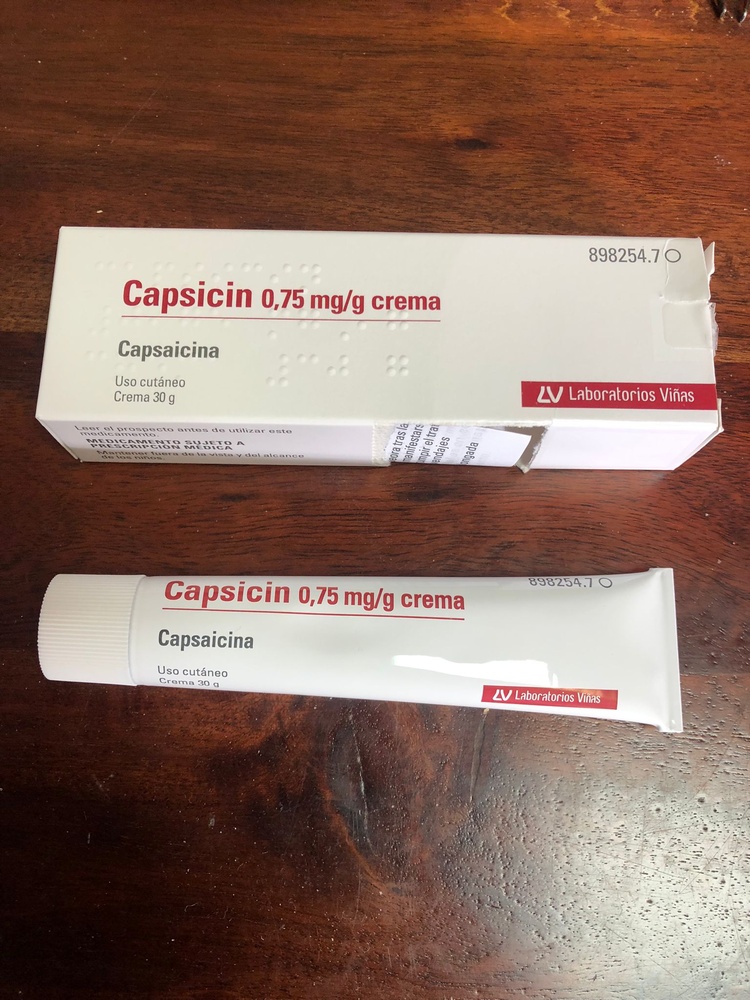



Cómo usar CAPSICIN 0,75 mg/g CREMA
Traducción generada por IA
Este contenido ha sido traducido automáticamente y se ofrece solo con fines informativos. No sustituye la consulta con un profesional sanitario.
Ver originalContenido del prospecto
Introducción
Prospecto información para el usuario
Capsicin 0,75 mg/g crema
Capsaicina
Lea todo el prospecto detenidamente antes de empezar a usar este medicamento, porque contiene información importante para usted.
- Conserve este prospecto, ya que puede tener que volver a leerlo.
- Si tiene alguna duda, consulte a su médico o farmacéutico.
- Este medicamento se le ha recetado solamente a usted y no debe dárselo a otras personas, aunque tengan los mismos síntomas, ya que puede perjudicarles.
- Si experimenta efectos adversos, consulte a su médico o farmacéutico, incluso si se trata de efectos adversos que no aparecen en este prospecto. Ver sección 4.
Contenido del prospecto
- Qué es Capsicin y para qué se utiliza
- Qué necesita saber antes de usar Capsicin
- Cómo usar Capsicin
- Posibles efectos adversos
- Conservación de Capsicin
- Contenido del envase e información adicional
1. Qué es Capsicin y para qué se utiliza
Capsicin es un medicamento en forma de crema para uso cutáneo cuyo principio activo, la capsaicina, es un principio activo analgésico de acción local.
Este medicamento está indicado en el alivio del dolor moderado a severo en la neuropatía diabética dolorosa que interfiera en las actividades diarias y que no haya respondido a otro tratamiento.

2. Qué necesita saber antes de usar Capsicin
No use Capsicin
Si es alérgico a la capsaicina o a alguno de los demás componentes de este medicamento (incluidos en la sección 6).
Advertencias y precaucionesConsulte a su médico o farmacéutico antes de empezar a usar Capsicin
- Este tratamiento debe ser instaurado y supervisado por el especialista que trate al paciente diabético.
- Este medicamento es sólo para uso cutáneo externo. Evitar el contacto con los ojos y mucosas.
- No use Capsicin sobre la piel dañada ni en heridas abiertas.
- El contacto con los ojos u otras mucosas puede causar una sensación de quemazón. En caso de producirse, se lavará la zona con abundante agua fría.
- Si el dolor persiste o empeora tras las primeras 2 semanas de tratamiento o bien desaparece y vuelve a manifestarse al cabo de pocos días, o aparece una irritación excesiva, interrumpir el tratamiento y consultar al médico.
- No aplicar calor ni vendajes apretados en la zona. No utilizar de forma prolongada ni en áreas extensas.
Otros medicamentos y Capsicin
Informe a su médico o farmacéutico si está utilizando, ha utilizado recientemente o pudiera tener que utilizar cualquier otro medicamento.
Las posibles interacciones de Capsicin con otros medicamentos tópicos no son conocidas.
Al tratarse de un producto tópico no se esperan interacciones con otros medicamentos sistémicos
Embarazo y lactancia
Si está embarazada o en periodo de lactancia, cree que podría estar embarazada o tiene intención de quedarse embarazada, consulte a su médico o farmacéutico antes de utilizar este medicamento.
Si usted está embarazada, su médico determinará la conveniencia de iniciar este tratamiento.
Asimismo, si está usted en período de lactancia será también su médico quien determine la conveniencia de iniciar el tratamiento con este medicamento.
Conducción y uso de máquinas
Capsicin no altera la capacidad para conducir ni para utilizar máquinas.
Capsicin contiene propilenglicol, alcohol cetílico, alcohol bencílico, parahidroxibenzoato de metilo, sal de sodio (E-219) y parahidroxibenzoato de propilo (E-216)
Este medicamento contiene 70 mg de propilenglicol en cada gramo de crema.
Puede producir reacciones locales en la piel (como dermatitis de contacto) porque contiene alcohol cetílico.
Este medicamento contiene 12 mg de alcohol bencílico en cada gramo de crema. El alcohol bencílico puede provocar reacciones alérgicas e irritación local moderada.
Puede producir reacciones alérgicas (posiblemente retardadas) porque contiene parahidroxibenzoato de metilo, sal de sodio (E-219) y parahidroxibenzoato de propilo (E-216).
3. Cómo usar Capsicin
Siga exactamente las instrucciones de administración de este medicamento indicadas por su médico. En caso de duda, consulte de nuevo a su médico o farmacéutico .
Capsicin es un medicamento de uso cutáneo exclusivamente externo. Se aplicará sobre las zonas doloridas de la piel.
Adultos y ancianos
- Aplicar la mínima cantidad de crema necesaria para cubrir la zona de piel afectada.
- Extender la crema con un suave masaje hasta su total absorción, evitando que queden restos.
- Lavar siempre bien las manos con agua fría y jabón inmediatamente después de cada aplicación y, a menos que lo indique el médico de forma expresa, se evitará la aplicación de la crema cerca de los ojos o en mucosas (por ejemplo, la boca).
- Cuando la zona tratada sean las manos, no se las lave como mínimo hasta 30 minutos después de la aplicación. Durante este tiempo, no se toque los ojos, la boca ni otras zonas sensibles.
- Es importante hacer 3 o 4 aplicaciones diariamente. La duración del tratamiento será de 8 semanas, después de las cuales el médico determinará la suspensión o continuación del mismo.
- Su médico le indicará la duración de su tratamiento con Capsicin.
Uso en niños
No recomendado.
Si usa más Capsicin del quedebe
La intoxicación aguda es prácticamente imposible con el uso adecuado del medicamento.
En caso de sobredosis o ingestión accidental, o contacto con los ojos, consulte inmediatamente a su médico o farmacéutico o llame al Servicio de Información Toxicológica, teléfono 91 562 04 20, indicando el medicamento y la cantidad utilizada.
Si olvidó usar Capsicin
No haga una aplicación doble para compensar las dosis olvidadas. Continúe el tratamiento con la posología recomendada.
Si interrumpe el tratamiento con Capsicin
En caso de interrumpir el tratamiento consulte a su médico o farmacéutico.
Si tiene cualquier otra duda sobre el uso de este medicamento, pregunte a su médico o farmacéutico.

4. Posibles efectos adversos
Al igual que todos los medicamentos, este medicamento puede producir efectos adversos, aunque no todas las personas los sufran.
Durante los primeros días de tratamiento, puede presentarse una sensación de quemazón o escozor cutáneo en la zona de aplicación en una proporción próxima al 50% de los casos. Esta reacción, conocida, es consecuencia de la acción farmacológica de la capsaicina, al liberar la sustancia P de las terminaciones nerviosas periféricas y acumularse en la sinapsis, y suele desaparecer o disminuir con el tiempo a medida que prosigue el tratamiento a la dosis recomendada, sin necesidad de interrumpirlo. Su duración e intensidad son variables pero pueden prolongarse si Capsicin se aplica menos de 3 o 4 veces al día. El agua caliente, la excesiva sudoración o la oclusión pueden intensificar dicha sensación. Otros posibles efectos adversos a nivel cutáneo pueden ser el eritema irritativo y la sequedad de piel en el lugar de aplicación.
Durante el tratamiento, también pueden aparecer, en mucha menor proporción, estornudos, lagrimeo o tos (menos del 2%), como consecuencia de la inhalación de residuos de crema seca. Por ello es importante aplicar la mínima cantidad necesaria de crema y evitar dejar restos en la piel, así como el lavado de las manos con agua fría y jabón tras su uso.
Comunicación de efectos adversos
Si experimenta cualquier tipo de efecto adverso, consulte a su médico o farmacéutico, incluso si se trata de posibles efectos adversos que no aparecen en este prospecto. También puede comunicarlos directamente a través del Sistema Español de Farmacovigilancia de medicamentos de Uso Humano: https://www.notificaRAM.es. Mediante la comunicación de efectos adversos usted puede contribuir a proporcionar más información sobre la seguridad de este medicamento.
5. Conservación de Capsicin
No requiere condiciones especiales de conservación.
Mantener este medicamento fuera de la vista y del alcance de los niños.
No utilice este medicamento después de la fecha de caducidad que aparece en el envase después de CAD. La fecha de caducidad es el último día del mes que se indica.
No utilice este medicamento si observa cambios en el aspecto de la crema.
Los medicamentos no se deben tirar por los desagües ni a la basura. Deposite los envases y los medicamentos que no necesita en el Punto SIGRE de la farmacia. En caso de duda pregunte a su farmacéutico cómo deshacerse de los envases y de los medicamentos que no necesita. De esta forma ayudará a proteger el medio ambiente.
6. Contenido del envase e información adicional
Composición de Capsicin
- El principio activo es la capsaicina. Cada gramo de crema contiene 0,75 mg de capsaicina.
- Los demás componentes (excipientes) son: miristato de isopropilo, ácido esteárico, propilenglicol, monomiristato de glicerina, hexadecil hidrogenofosfato de potasio, alcohol cetílico, alcohol bencílico, diazolidinilurea, parahidroxibenzoato de metilo, sal de sodio (E219), parahidroxibenzoato de propilo (E216) y agua purificada.
Aspecto del producto y contenido del envase
Capsicin se presenta en forma farmacéutica de crema para uso cutáneo, de color blanco, en tubos de aluminio de 30 y de 50 gramos.
Titular de la autorización de comercialización :
Titular de la autorización de comercialización:
Laboratorios Viñas, S.A.
Provenza, 386
08025 – Barcelona
España
Responsable de la fabricación:
Laboratorios Viñas, S.A.
Torrent d’en Vidalet, 29
08012 - Barcelona
España
Fecha de la última revisión de este prospecto:Noviembre 2020
La información detallada y actualizada de este medicamento está disponible en la página Web de la Agencia Española de Medicamentos y Productos Sanitarios (AEMPS) http://www.aemps.gob.es/
- País de registro
- Forma farmacéuticaCREMA, 0,075 g capssaicina
- Código ATCN01BX04
- Precio medio en farmacia12.91 EUR
- Principio activo
- Requiere recetaSí
- Fabricante
- Esta información es de carácter general y no sustituye la consulta con un profesional sanitario.
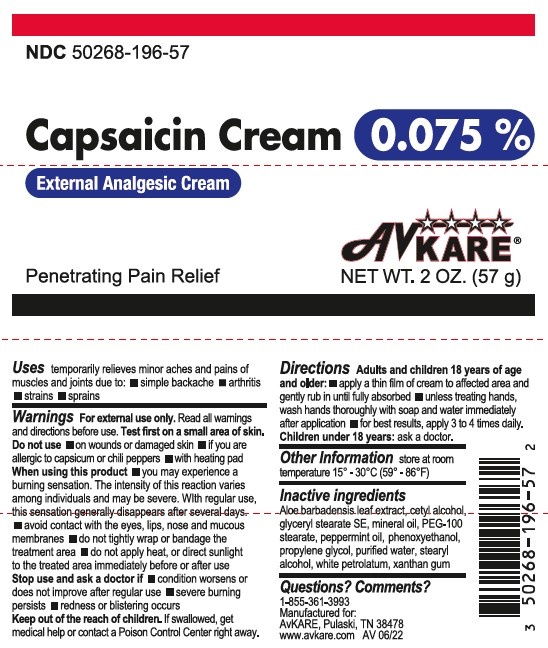
- Alternativas a CAPSICIN 0,75 mg/g CREMAForma farmacéutica: CREMA, 0.075% Capsaicina (30y 50 g crema)Principio activo: CapsaicinaFabricante: Alfasigma Espana S.L.Requiere recetaForma farmacéutica: CREMA, 75 MG CAPSAICINA / 100 G CREMAPrincipio activo: CapsaicinaFabricante: Arafarma Group S.A.Requiere recetaForma farmacéutica: CREMA, 75 mg capsaicina/ 100 g de cremaPrincipio activo: CapsaicinaFabricante: Angelini Pharma Espana S.L.Requiere receta

Médicos online para CAPSICIN 0,75 mg/g CREMA
Comenta la dosis, los posibles efectos secundarios, interacciones, contraindicaciones o la revisión de receta de CAPSICIN 0,75 mg/g CREMA, sujeto a valoración médica y a la normativa local.








Preguntas frecuentes
