






Cómo usar BUDENA 0,25 MG/ML SUSPENSION PARA INHALACION POR NEBULIZADOR
Traducción generada por IA
Este contenido ha sido traducido automáticamente y se ofrece solo con fines informativos. No sustituye la consulta con un profesional sanitario.
Ver originalContenido del prospecto
Introducción
Prospecto: información para el usuario
Budena 0,25 mg/ml suspensión para inhalación por nebulizador
Budesonida
Lea todo el prospecto detenidamente antes de empezar a tomar este medicamento, porque contiene información importante para usted.
- Conserve este prospecto, ya que puede tener que volver a leerlo.
- Si tiene alguna duda, consulte a su médico o farmacéutico.
- Este medicamento se le ha recetado solamente a usted,y no debe dárselo a otras personas aunque tengan los mismos síntomas que usted, ya que puede perjudicarles.
- Si experimenta efectos adversos, consulte a su médico o farmacéutico, incluso si se trata de efectos adversos que no aparecen en este prospecto. Ver sección 4.
Contenido del prospecto
- Qué es Budena y para qué se utiliza
- Qué necesita saber antes de empezar a usar Budena
- Cómo usar Budena
- Posibles efectos adversos
- Conservación de Budena
- Contenido del envase e información adicional
1. Qué es Budena y para qué se utiliza
Budena 0,25 mg/ml es una suspensión estéril para ser inhalada a través de un nebulizador (aparato de inhalación). Cuando respire a través de la boquilla o la mascarilla, el medicamento alcanzará los pulmones a través del aire inspirado.
Budena contiene budesonida. La budesonida pertenece a un grupo de medicamentos llamados glucocorticoides que se emplean para reducir la inflamación.
El asma está causada por una inflamación de las vías respiratorias. La budesónida reduce y previene esta inflamación.
Budena se emplea para el tratamiento de mantenimiento del asma y el tratamiento de laringitis subglótica muy grave en la que se requiera hospitalización. Debe emplearse de forma regular tal y como le indique su médico.

2. Qué necesita saber antes de empezar a usar Budena
No use Budena:
Si es alérgico a la budesonida o a cualquiera de los demás componentes de este medicamento (incluidos en la sección 6).
Advertencias y precauciones
Consulte a su médico o farmacéutico antes de empezar a tomar budesonida si cualquiera de las siguientes situaciones le afecta:
- Si tiene o ha tenido tuberculosis pulmonar o cualquier otra infección reciente.
- Si alguna vez ha tenido problemas de hígado.
- Si su médico le ha recetado budesonida y se encuentra bajo tratamiento con comprimidos tipo cortisona, puede reducirle la dosis de estos comprimidos gradualmente (durante un periodo de semanas o meses) y puede que interrumpa finalmente el tratamiento anterior. En ese caso, puede que reaparezcan temporalmente algunos síntomas como goteo nasal, urticaria o dolor en los músculos y articulaciones. Si alguno de estos síntomas le preocupa, o presenta algún otro como dolor de cabeza, cansancio, náuseas o vómitos, póngase en contacto con su médico.
- La budesonida le ha sido recetada para el tratamiento de mantenimiento del asma. Sin embargo, NO aliviará un ataque agudo de asma una vez iniciado éste.
- Póngase en contacto con su médico si presenta visión borrosa u otras alteraciones visuales.
Niños
- Si se administra a niños, su médico revisará periódicamente su crecimiento ya que este medicamento puede producir un retraso en el crecimiento.
Consulte con su médico si tiene cualquier otro problema de salud. No utilice este medicamento para otras afecciones sin que se lo haya indicado su médico. Nunca se lo dé a otra persona.
No todos los nebulizadores son apropiados para su uso con budesonida. NOdeben emplearse nebulizadores ULTRASONICOS con Budena 0,25 mg/ml suspensión para inhalación por nebulizador.
Uso de Budena con otros medicamentos:
Informe a su médico o farmacéutico si está usando, ha usado recientemente o podría tener que utilizar cualquier otro medicamento. Esto incluye los medicamentos adquiridos sin receta médica y las plantas medicinales. Algunos medicamentos pueden aumentar los efectos de budesonida, por lo que su médico le hará controles minuciosos si está tomando estos medicamentos. En particular, informe a su médico o farmacéutico si está usando algunos de los siguientes medicamentos:
- Medicamentos para tratar infecciones por hongos (como itraconazol y ketoconazol).
- Medicamentos para el VIH (como ritonavir o cobicistat).
- Cimetidina (medicamento para la acidez del estómago).
- Estrógenos y anticonceptivos esteroideos.
Uso en deportistas
Se informa a los deportistas que este medicamento contiene un componente que puede producir un resultado positivo en las pruebas de control de dopaje.
Embarazo y lactancia
Si está embarazada o en periodo de lactancia, cree que podría estar embarazada o tiene intención de quedarse embarazada, consulte a su médico o farmacéutico antes de utilizar este medicamento.
No existe evidencia de que budesonida pueda perjudicar a la madre o al niño cuando se utiliza en el embarazo o en el periodo de lactancia. No obstante, debe contactar con su médico lo antes posible si se queda embarazada durante el tratamiento con budesonida.
Budesonida pasa a la leche materna, pero en cantidades mínimas, que no tienen efecto en el lactante.
Uso en niños
La budesonida debe administrarse siempre bajo la supervisión de un adulto, con el fin de asegurar la correcta administración del medicamento.
Conducción y uso de máquinas
La influencia de la budesonida inhalada sobre la capacidad para conducir y utilizar máquinas es nula o insignificante.
3. Cómo usar Budena
Siga exactamente las instrucciones de administración del medicamento indicadas por su médico. En caso de duda, consulte de nuevo a su médico o farmacéutico.
Forma de uso y vía de administración
La budesonida sólo debe ser utilizado para su inhalación mediante un nebulizador. No utilice nebulizadores ultrasónicos, por no ser adecuados para la administración de este medicamento. Antes de iniciar el tratamiento deberá conocer el funcionamiento del nebulizador. Es importante que usted lea la información incluida en el apartado “Cómo usar Budena” y siga las instrucciones cuidadosamente.
Dosificación, frecuencia de administración y duración del tratamiento
La dosis de budesonida debe ser individualizada. Su médico le ajustará la dosis y le recetará la mínima que controle sus síntomas del asma o laringitis subglótica. Siga cuidadosamente las instrucciones de su médico.
Su médico le indicará la duración de su tratamiento con budesonida. No suspenda el tratamiento antes, ya que empeoraría su enfermedad gravemente. No se administre más dosis de las que su médico le ha indicado.
Si estima que la acción de budesonida es demasiado fuerte o débil, comuníqueselo a su médico o farmacéutico.
Asma
Dosis inicial recomendada:
Niños a partir de 6 meses: 0,25 – 1 mg al día. En casos muy graves, o en niños tratados con comprimidos tipo cortisona, se le puede administrar una dosis inicial mayor (hasta 2 mg diarios, equivalente a 4 ampollas). Posteriormente su médico puede considerar necesario ajustar la dosis. Las dosis diarias de hasta 1 mg (2 ampollas) pueden ser administradas como una sola toma.
Adultos y ancianos: 1- 2 mg al día (2 – 4 ampollas al día). En casos muy graves, se puede incrementar la dosis hasta 4 mg (8 ampollas). Posteriormente su médico puede considerar necesario ajustar la dosis. Las dosis diarias de hasta 1 mg (2 ampollas) pueden ser administradas como una sola toma.
Dosis de mantenimiento: Cuando hayan mejorado sus síntomas, su médico puede decidir reducirle la dosis hasta la dosis mínima que le permita estar libre de síntomas.
Es posible que budesonida le proporcione un alivio de los síntomas al cabo de pocos días de tratamiento, aunque pueden requerirse de 2 a 4 semanas antes de alcanzar un efecto completo. Por ello, es importante que no deje de utilizar budesonida incluso cuando ya se sienta bien.
Recuerde siempre que budesonida le ha sido recetado para el tratamiento de mantenimiento del asma. Sin embargo, NOaliviará un ataque agudo de asma una vez iniciado éste.
Laringitis subglótica
Lactantes y niños: 2 mg al día (equivalente a 4 ampollas). Pueden ser administrados en una sola toma o en dos tomas de 1 mg separadas por un intervalo de 30 minutos. Se puede repetir la administración cada 12 horas durante un máximo de 36 horas o hasta que su médico considere que sus síntomas han mejorado.
Cómo utilizar Budena 0,25 mg/ml suspensión para inhalación por nebulizador
|
|
| |
| |
|
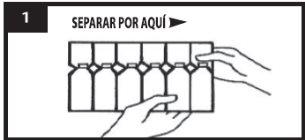
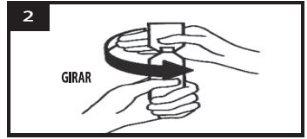
- Agite suavemente el depósito una vez más y comience la nebulización. Durante la nebulización, respire la niebla de la suspensión nebulizada de forma profunda y pausada.
- Cuando no salga más niebla por la boquilla o la mascarilla habrá finalizado el tratamiento.
- Cuando haya finalizado debe enjuagarse la boca con agua (no debe tragar el agua) y cepillarse los dientes. Si ha utilizado una mascarilla, debe lavarse la cara bien. Es importante hacerlo para reducir el riesgo de algunos efectos secundarios asociados con este medicamento.
- Después de cada utilización debe lavar bien el nebulizador. Lave el depósito del nebulizador y la boquilla o la mascarilla con agua templada utilizando un detergente suave siguiendo las instrucciones del fabricante. El nebulizador debe aclararse bien y secarse conectando el depósito al compresor o a la salida de aire.
Es importante que siga siempre las instrucciones del fabricante que vienen con el nebulizador. Si no está seguro de cómo usar el nebulizador consulte con su médico o farmacéutico.
Si usa más Budenadel que debe
Si usted usa una dosis de budesonida mayor de la que debe en una sola ocasión, no deben producirse efectos perjudiciales. Si usa demasiado budesonida durante un periodo largo (meses) es posible que aparezcan efectos adversos. En ese caso, consulte inmediatamente a su médico o a su farmacéutico.
Si ha usado más budesonida de lo que debe, consulte a su médico, farmacéutico o llame al Servicio de Información Toxicológica, teléfono 91 562 04 20, indicando el medicamento y la cantidad usada. Es recomendable llevar el envase y el prospecto del medicamento al profesional sanitario.
Es importante que emplee la dosis que se indica en el cartonaje (espacio reservado para el farmacéutico) o la que su médico le ha prescrito. No debe aumentar o disminuir su dosis sin consultar con su médico.
Si olvidó usar Budena
Si usted olvida usar alguna de las dosis de budesonida, no use una dosis doble para compensar las dosis olvidadas. Continúe con el tratamiento habitual tal y como se lo haya prescrito su médico.
Si tiene cualquier duda sobre el uso de este medicamento, pregunte a su médico o farmacéutico.

4. Posibles efectos adversos
Al igual que todos los medicamentos, este medicamento puede producir efectos adversos, aunque no todas las personas los sufran. Habitualmente no se producen efectos adversos durante el uso de budesonida. No obstante, comunique a su médico los siguientes efectos adversos que le resulten molestos o que no desaparezcan:
Efectos adversos frecuentes: Pueden afectar hasta 1 de cada 10 personas
- Irritación leve de garganta.
- Tos.
- Ronquera
- Infección por hongos de la boca y garganta.
Efectos adversos poco frecuentes:Pueden afectar hasta 1 de cada 100 personas
- Cataratas (pérdida de transparencia del cristalino en el ojo).
- Ansiedad.
- Depresión.
- Temblores.
- Calambres musculares.
- Visión borrosa.
Efectos adversos raros:Pueden afectar hasta 1 de cada 1000 personas
- Reacciones de tipo alérgico, incluyendo erupción cutánea, dermatitis de contacto, urticaria y angioedema (inflamación de la cara, labios y/o lengua con dificultad para tragar y respirar).
- Hematomas en la piel.
- Alteraciones del comportamiento (especialmente en niños).
- Inquietud.
- Nerviosismo.
- Igual que sucede con otros tratamientos inhalados, raramente se puede producir un broncoespasmo (es decir, una contracción de las vías respiratorias, que provoca “pitos”).
- Efectos sobre las glándulas suprarrenales (glándulas de pequeño tamaño situadas junto a los riñones).
- Retraso del crecimiento.
Efectos adversos de frecuencia desconocida que pueden incluir
- Trastornos del sueño, hiperactividad o agresividad.
- Glaucoma (aumento de la presión ocular).
Los corticoides inhalados pueden afectar a la producción normal de hormonas esteroides en el organismo, especialmente si se utilizan dosis elevadas durante mucho tiempo. Estos efectos incluyen:
- cambios en la densidad mineral ósea (disminución de los huesos).
Estos efectos son mucho menos probables con los corticoides inhalados que con los comprimidos de corticoides.
Si previamente estaba bajo tratamiento con comprimidos tipo cortisona, el paso al tratamiento con corticoides inhalados puede provocar la aparición de algunos síntomas como cansancio, dolor abdominal, debilidad o vómitos. En caso de aparición de estos síntomas, consulte inmediatamente a su médico.
En raras ocasiones, un tratamiento prolongado con altas dosis puede producir una reducción de la velocidad de crecimiento en niños, principalmente en pacientes tratados previamente con comprimidos tipo cortisona o especialmente sensibles.
Se ha observado irritación de la piel de la cara en algunos casos en los que se ha empleado un nebulizador con mascarilla facial. Para prevenir la irritación facial se debe lavar la cara con agua tras el uso de la máscara.
Si considera que alguno de los efectos adversos que sufre es grave o si aprecia cualquier efecto adverso no mencionado en este prospecto, informe a su médico o farmacéutico.
Comunicación de efectos adversos
Si experimenta cualquier tipo de efecto adverso, consulte a su médico o farmacéutico, incluso si se trata de posibles efectos adversos que no aparecen en este prospecto. También puede comunicarlos directamente a través del Sistema Español de Farmacovigilancia de Medicamentos de Uso Humano: www.notificaRAM.es. Mediante la comunicación de efectos adversos usted puede contribuir a proporcionar más información sobre la seguridad de este medicamento.
5. Conservación de Budena
Mantener este medicamento fuera de la vista y del alcance de los niños.
No utilice este medicamento después de la fecha de caducidad indicada en la caja o el sobre después de CAD. La fecha de caducidad es el último día del mes que se indica.
Conservar las ampollas en el envase original y en el sobre, protegido de la luz.
Una vez abierta una ampolla debe utilizarse en un plazo máximo de 24 horas. Transcurrido este tiempo se debe desechar cualquier cantidad no utilizada.
Una vez abierto un sobre, las ampollas deben emplearse en un plazo de 3 meses (es recomendable anotar la fecha de apertura en el sobre para ayudarle a recordarla)
Los medicamentos no se deben tirar por los desagües ni a la basura. Deposite los envases y los medicamentos que no necesita en el Punto Sigre de su farmacia habitual ó cualquier otro sistema de recogida de residuos de medicamentos. En caso de duda pregunte a su farmacéutico cómo deshacerse de los envases y de los medicamentos que no necesita. De esta forma ayudará a proteger el medio ambiente.
6. Contenido del envase e información adicional
Composición de Budena
El principio activo de Budena 0,25 mg/ml suspensión para inhalación por nebulizador es budesonida. Cada ampolla estéril de 2 ml contiene 0,50 mg de budesonida. Los demás componentes (excipientes) son: edetato de disodio, cloruro de sodio, polisorbato 80, ácido cítrico anhidro, citrato de sodio y agua para preparaciones inyectables.
Aspecto del productoy contenido del envase
Budena se presenta en ampollas de polietileno de baja densidad con 2 ml de suspensión blanca o blanquecina para ser nebulizada (convertida en una fina niebla para ser inhalada).
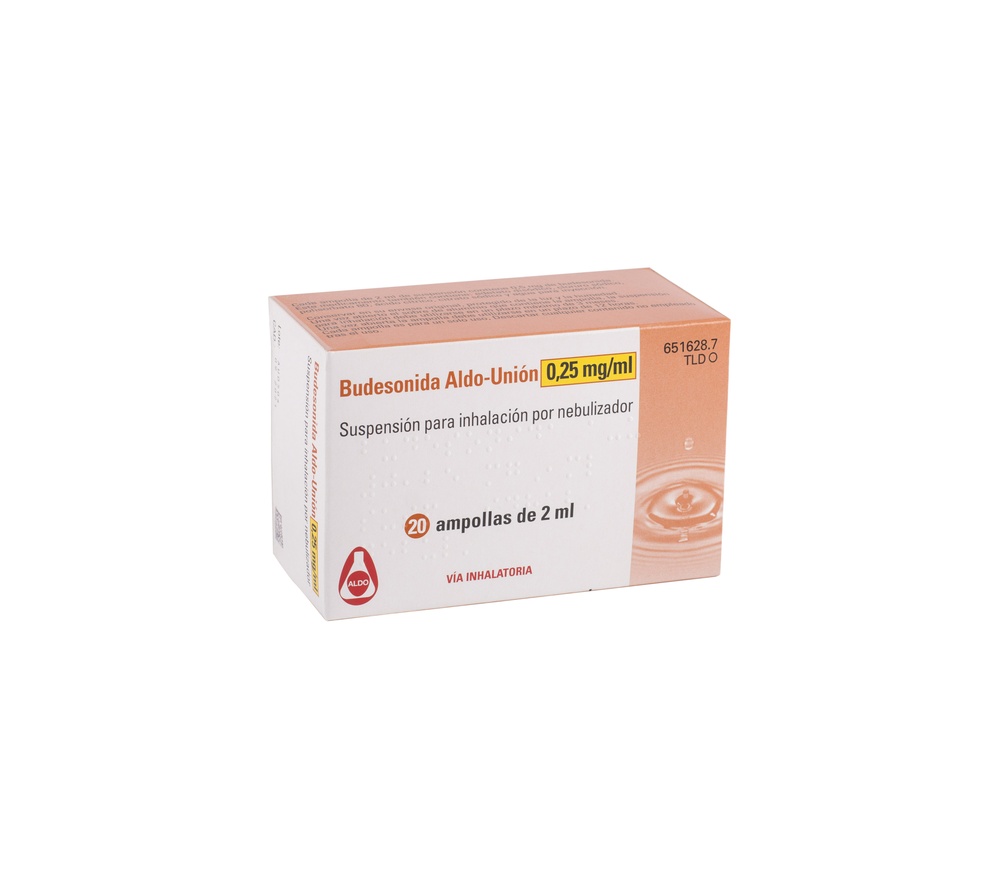
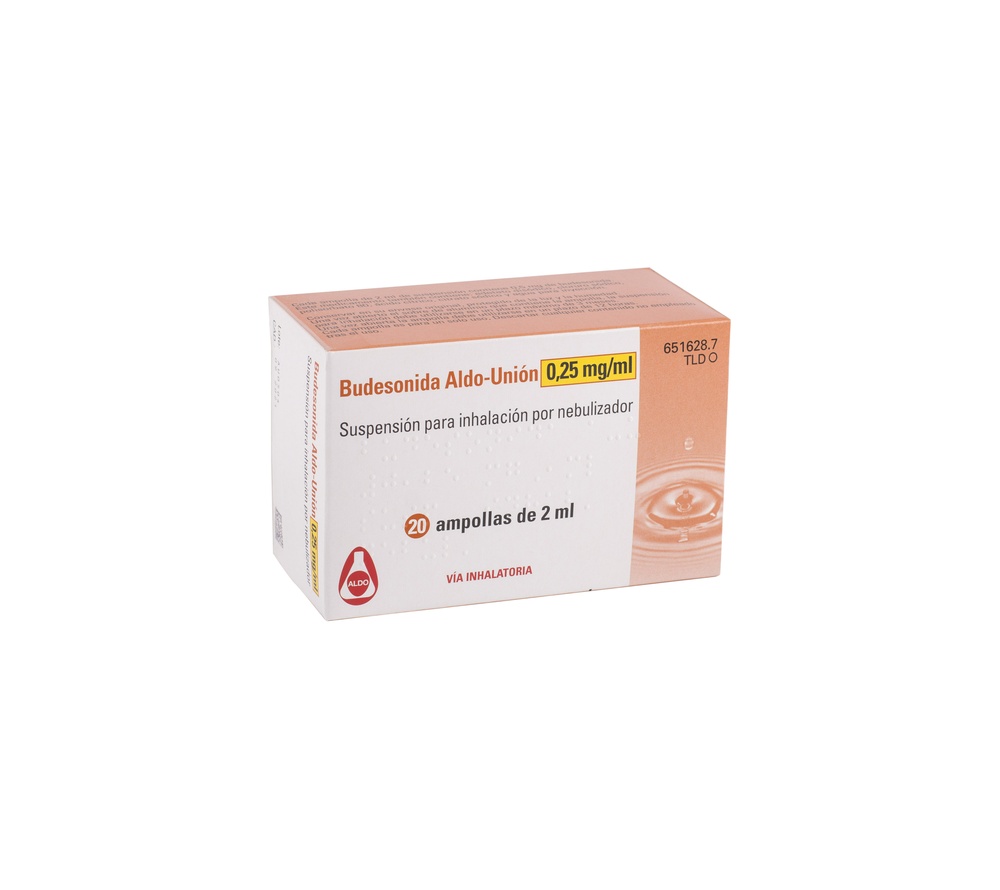
Las ampollas se envasan en tiras de 5 ampollas en un sobre de aluminio que a su vez se empaqueta en envases de cartón. Se dispone de envases que contienen 20 ampollas.
Titular de la Autorización de Comercialización:
Laboratorio Aldo-Unión, S.L.
Baronesa de Maldá , 73
08950 Esplugues de Llobregat, Barcelona
España
Responsable de la Fabricación:
Genetic S.p.A.
Nucleo Industriale, Contrada Canfora, 84084 Fisciano (SA)
Italia
Fecha de la última revisión de este prospecto:Junio 2020
La información detallada y actualizada de este medicamento está disponible en la página web de la Agencia Española del Medicamento y Productos Sanitarios (AEMPS) http://www.aemps.gob.es/
-

- País de registro
- Forma farmacéuticaINHALACIÓN PULMONAR, 0,25 mg/ml
- Código ATCR03BA02
- Precio medio en farmacia5.99 EUR
- Principio activo
- Requiere recetaSí
- Fabricante
- Esta información es de carácter general y no sustituye la consulta con un profesional sanitario.
- Alternativas a BUDENA 0,25 MG/ML SUSPENSION PARA INHALACION POR NEBULIZADORForma farmacéutica: INHALACIÓN PULMONAR, 0,5 mg/mlPrincipio activo: BudesonidaFabricante: Laboratorio Aldo Union S.L.Requiere recetaForma farmacéutica: INHALACIÓN PULMONAR, 0,04000 gPrincipio activo: BudesonidaFabricante: Laboratorio Aldo Union S.L.Requiere recetaForma farmacéutica: INHALACIÓN PULMONAR, 0,25 mg budesonida/mlPrincipio activo: BudesonidaFabricante: Laboratorio Aldo Union S.L.Requiere receta
Médicos online para BUDENA 0,25 MG/ML SUSPENSION PARA INHALACION POR NEBULIZADOR
Comenta la dosis, los posibles efectos secundarios, interacciones, contraindicaciones o la revisión de receta de BUDENA 0,25 MG/ML SUSPENSION PARA INHALACION POR NEBULIZADOR, sujeto a valoración médica y a la normativa local.



Obtén una receta de BUDENA 0,25 MG/ML SUSPENSION PARA INHALACION POR NEBULIZADOR online
Rellena un formulario de 2 minutos
Cuéntanos tus síntomas, historial y el medicamento que necesitas.
Elige un médico o nosotros te asignamos uno
Escoge un especialista o te conectamos con el próximo médico disponible.
El médico revisa tu caso
Normalmente en 30 minutos. Puede hacerte preguntas adicionales por chat.
Recógela en cualquier farmacia
Receta electrónica enviada a tu correo, válida en toda España.
Preguntas frecuentes
BUDENA 0,25 MG/ML SUSPENSION PARA INHALACION POR NEBULIZADOR requires receta en España. Puedes confirmarlo con un médico online según tu caso.
El principio activo de BUDENA 0,25 MG/ML SUSPENSION PARA INHALACION POR NEBULIZADOR es Budesonida. Esta información ayuda a identificar medicamentos con la misma composición pero con diferentes nombres comerciales.
El precio medio en farmacia de BUDENA 0,25 MG/ML SUSPENSION PARA INHALACION POR NEBULIZADOR es de aproximadamente 5.99 EUR. Puede variar según el fabricante y la forma farmacéutica.
BUDENA 0,25 MG/ML SUSPENSION PARA INHALACION POR NEBULIZADOR es fabricado por Laboratorio Aldo Union S.L.. La marca y el envase pueden variar según el distribuidor.
Los Médicos de familia, Psiquiatras, Dermatólogos, Cardiólogos, Endocrinólogos, Gastroenterólogos, Neumólogos, Nefrólogos, Reumatólogos, Hematólogos, Infectólogos, Alergólogos, Geriatras, Pediatras, Oncólogos pueden valorar la prescripción de BUDENA 0,25 MG/ML SUSPENSION PARA INHALACION POR NEBULIZADOR cuando esté clínicamente indicado. Puedes reservar una videoconsulta para comentar tu caso y las opciones de tratamiento.
España cuenta con una infraestructura sanitaria bien desarrollada en ciudades principales como Madrid, Barcelona, Valencia y Sevilla. Las farmacias están ampliamente disponibles y operan bajo estrictas regulaciones, garantizando el acceso a medicamentos con receta.
Puedes comprar BUDENA 0,25 MG/ML SUSPENSION PARA INHALACION POR NEBULIZADOR en Madrid, Barcelona, Sevilla o Valencia en cualquier farmacia local con una receta válida.
Para obtener una receta, puedes utilizar Oladoctor:
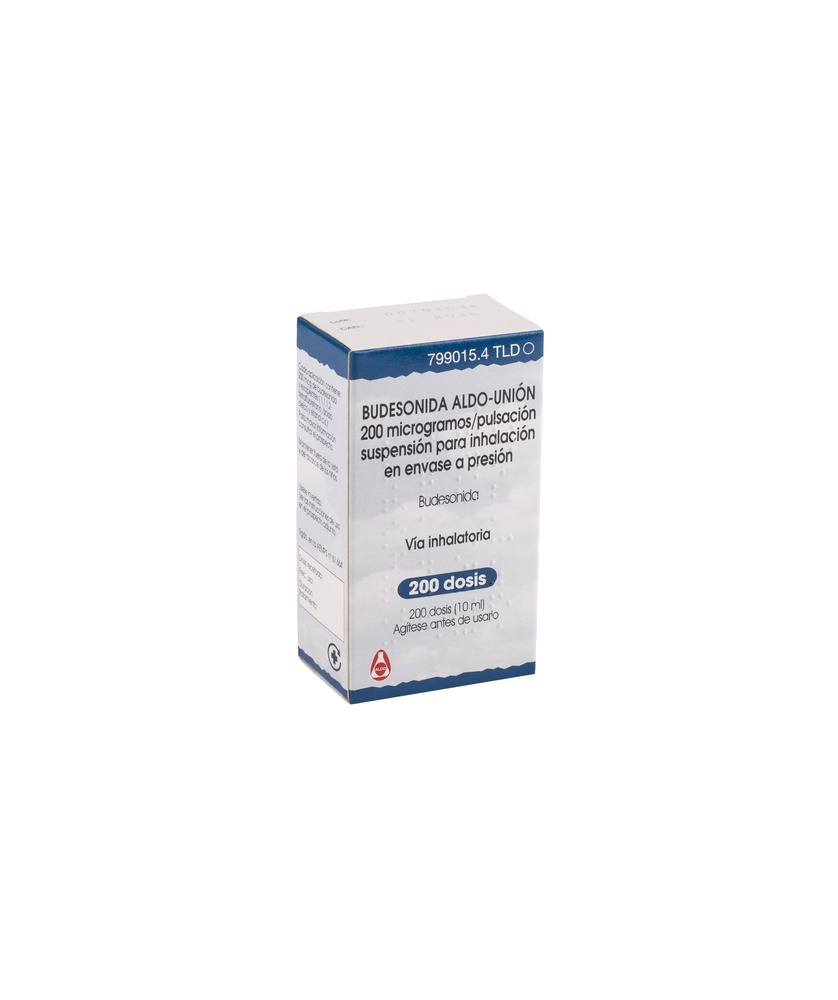
Otros medicamentos con el mismo principio activo (Budesonida) incluyen BUDENA 0,5 MG/ML SUSPENSION PARA INHALACION POR NEBULIZADOR, BUDESONIDA ALDO UNION 200 microgramos/pulsación SUSPENSIÓN PARA INHALACIÓN EN ENVASE A PRESIÓN, BUDESONIDA ALDO-UNION 0,25 mg/ml SUSPENSION PARA INHALACION POR NEBULIZADOR. Pueden tener diferentes nombres comerciales o formulaciones, pero contienen el mismo componente terapéutico. Consulta siempre con un médico antes de cambiar o iniciar un nuevo medicamento.
