







Cómo usar BRONSAL SOLUCION INYECTABLE
Traducción generada por IA
Este contenido ha sido traducido automáticamente y se ofrece solo con fines informativos. No sustituye la consulta con un profesional sanitario.
Ver originalContenido del prospecto
Introducción
Prospecto: información para el usuario
Bronsal solución inyectable
(Betametasona, Diprofilina, Guaifenesina)
Lea todo el prospecto detenidamente antes de empezar a tomar este medicamento, porque contiene información importante para usted.
- Conserve este prospecto, ya que puede tener que volver a leerlo.
- Si tiene alguna duda, consulte a su médico o farmacéutico.
- Este medicamento se le ha recetado solamente a usted, y no debe dárselo a otras personas aunque tengan los mismos síntomas que usted, ya que puede perjudicarles.
- Si experimenta efectos adversos, consulte a su médico o farmacéutico, incluso si se trata de efectos adversos que no aparecen en este prospecto. Ver sección 4.
Contenido del prospecto
- Qué es Bronsal solución inyectable y para qué se utiliza
- Qué necesita saber antes de empezar a Bronsal solución inyectable
- Cómo usar Bronsal solución inyectable
- Posibles efectos adversos
- Conservación de Bronsal solución inyectable
- Contenido del envase e información adicional
1. Qué es Bronsal solución inyectable y para qué se utiliza
Bronsal solución inyectable contiene los principios activos betametasona, diprofilina y guaifenesina.
Está indicado en la fase aguda de las enfermedades del aparato respiratorio que comprometan una adecuada ventilación pulmonar.
Este medicamento está concebido para el tratamiento sintomático de estos procesos agudos que deben resolverse en un periodo de tiempo corto (6-10 días). En las enfermedades crónicas debe continuarse con el tratamiento específico.

2. Qué necesita saber antes de empezar a usar Bronsal solución inyectable
No use Bronsal solución inyectable
- Si es alérgico a la betametasona, a la diprofilina, a la guaifenesina o a cualquiera de los demás componentes de este medicamento (incluidos en la sección 6).
- Si padece una infección micótica (producida por hongos).
- Si le han diagnosticado púrpura trombocitopénica idiopática (enfermedad de la sangre caracterizada por falta de plaquetas).
- Si padece insuficiencia hepática o renal grave.
- En niños menores de 2 años.
Advertencias y precauciones
Consulte a su médico o farmacéutico antes de empezar a usar Bronsal solución inyectable si se encuentra en cualquiera de las siguientes situaciones:
- Pacientes urémicos (la uremia es la concentración en la sangre de los productos de desecho que suelen ser eliminados por el riñón).
- Siempre que exista o se sospeche la existencia de un proceso infeccioso. Su médico le recetará antibióticos por vía oral o parenteral.
- Si se superasen los periodos de tratamiento recomendados podrían aparecer los efectos secundarios por el uso de corticoides sistémicos.
- Pacientes de edad avanzada.
- Pacientes con historia de tuberculosis.
- Pacientes con lesiones miocárdicas o coronarias graves, o hipertensión grave.
- Pacientes con hipertiroidismo.
- Pacientes con enfermedades hepáticas o renales.
- Pacientes con diabetes mellitus.
- Pacientes con úlcera gástrica.
- Pacientes con osteoporosis.
- Pacientes con epilepsia.
- Pacientes con miastenia gravis (enfermedad neuromuscular autoinmune y crónica caracterizada por grados variables de debilidad de los músculos esqueléticos (voluntarios) del cuerpo).
- Pacientes con glaucoma (enfermedad ocular en que se encuentra dañado el nervio óptico).
- Si presenta visión borrosa u otras alteraciones visuales.
- Si tiene feocromocitoma (un tumor de la glándula suprarrenal).
Este medicamento contiene betametasona que puede producir un resultado positivo en las pruebas de control de dopaje.
Uso de Bronsal solución inyectable con otros medicamentos
Informe a su médico o farmacéutico si está utilizando, ha utilizado recientemente o podría tener que utilizar cualquier otro medicamento, incluso los adquiridos sin receta.
Los siguientes medicamentos pueden interaccionar con Bronsal. Informe a su médico si está tomando alguno de ellos:
- Medicamentos del tipo xantinas (por ejemplo, teofilina), ya que pueden potenciar el efecto de Bronsal.
- Probenecid (medicamento utilizado en el tratamiento de la gota).
- Medicamentos inductores de las enzimas hepáticas (barbituratos, fenitoína y rifampicina).
- Inhibidores enzimáticos (de la enzima CYP3A4) como el ketoconazol e itraconazol (utilizado para las infecciones por hongos) pueden aumentar el efecto de los corticoides. Por lo que su médico le hará controles minuciosos si está tomando estos medicamentos (incluidos algunos para el VIH: ritonavir, cobicistat).
- Aspirina (salicilatos). Debe tenerse precaución si se usa de forma concomitante Bronsal con salicilatos en pacientes con hipoprotrombinemia (deficiencia de una sustancia (protrombina) necesaria para la coagulación de la sangre).
- Diuréticos que produzcan aumento de la eliminación de potasio.
- Isoproterenol (medicamento utilizado en el tratamiento del asma).
Embarazo y lactancia
Si está embarazada o en periodo de lactancia, cree que podría estar embarazada o tiene intención de quedarse embarazada, consulte a su médico o farmacéutico antes de utilizar este medicamento.
No se recomienda el uso de este medicamento durante el embarazo y lactancia, salvo expresa indicación médica.
Los bebés recién nacidos de madres que recibieron betametasona cerca del final del embarazo pueden tener niveles bajos de azúcar en sangre tras el nacimiento.
Conducción y uso de máquinas
No se han descrito.
Este medicamento contiene sodio, parahidroxibenzoato de metilo, parahidroxibenzoato de propilo y metabisulfito de sodio.
Puede producir reacciones alérgicas (posiblemente retardadas) y, excepcionalmente, broncoespasmo (sensación repentina de ahogo) porque contiene parahidroxibenzoato de metilo y parahidroxibenzoato de propilo.
Puede producir reacciones alérgicas graves o broncoespasmo (sensación repentina de ahogo) porque contiene metabisulfito de sodio.
Este medicamento contiene menos de 23 mg (1 mmol) de sodio por dosis, por lo que se considera esencialmente “exento de sodio”.
3. Cómo usar Bronsal solución inyectable
Siga exactamente las instrucciones de administración de Bronsal indicadas por su médico. Consulte a su médico o farmacéutico si tiene dudas.
La dosis recomendada en adultos es de un inyectable cada 12-24 horas por vía intramuscular.
Si usa más Bronsal solución inyectable del que debe
En caso de sobredosis o ingestión accidental, consulte inmediatamente a su médico o farmacéutico o llame al Servicio de Información Toxicológica, teléfono 91 562 04 20, indicando el medicamento y la cantidad ingerida.
Si olvidó usar Bronsal solución inyectable
No use una dosis doble para compensar las dosis olvidadas.
Si tiene cualquier otra duda sobre el uso de este medicamento, pregunte a su médico o farmacéutico.

4. Posibles efectos adversos
Al igual que todos los medicamentos, Bronsal puede producir efectos adversos, aunque no todas las personas los sufran.
La severidad de los efectos adversos asociados a un tratamiento prolongado aumenta con las dosis y la duración del tratamiento. Los tratamientos a corto plazo usualmente no suelen producir reacciones adversas.
Frecuentes (pueden afectar a entre 1 y 10 de cada 100 pacientes): trastornos gastrointestinales (náuseas, vómitos, dolor abdominal, diarreas), dolor de cabeza, excitación, insomnio o somnolencia, osteoporosis, fragilidad ósea, hiperglucemia, polifagia (aumento anormal de la necesidad de comer), retraso en la cicatrización de heridas, propensión a infecciones (candidiasis orofaríngea), signos de hiperactividad adrenal (Síndrome de Cushing), hirsutismo (crecimiento excesivo de vello en mujeres, en la cara y en el cuerpo), hiperpigmentación cutánea, úlcera gástrica.
Poco frecuentes (pueden afectar a entre 1 y 10 de cada 1.000 pacientes): edema (hinchazón), hipertensión, insuficiencia cardiaca, hipopotasemia (disminución de los niveles de potasio), amenorrea (ausencia temporal o permanente del flujo menstrual), sudoración, alteraciones neurológicas, hipertensión intracraneal, pancreatitis aguda (inflamación del páncreas), tromboembolismo, miastenia (enfermedad neuromuscular autoinmune y crónica caracterizada por grados variables de debilidad de los músculos esqueléticos (voluntarios) del cuerpo).
Frecuencia desconocida: hipo, visión borrosa (ver también sección 4.4).
Si experimenta efectos adversos, consulte a su médico o farmacéutico, incluso si se trata de efectos adversos que no aparecen en este prospecto.
5. Conservación de Bronsal solución inyectable
No requiere condiciones especiales de conservación.
Mantener este medicamento fuera de la vista y del alcance de los niños.
No utilice este medicamento después de la fecha de caducidad que aparece en el envase después de CAD. La fecha de caducidad es el último día del mes que se indica.
Los medicamentos no se deben tirar por los desagües ni a la basura. Deposite los envases y los medicamentos que no necesita en el Punto SIGRE de la farmacia. En caso de duda pregunte a su farmacéutico cómo deshacerse de los envases y de los medicamentos que no necesita. De esta forma, ayudará a proteger el medio ambiente.
6. Contenido del envase e información adicional
Composición de Bronsal solución inyectable
Los principios activos son (por ampolla de 4 ml): betametasona 2 mg (fosfato de betametasona y sodio), diprofilina 250 mg y guaifenesina 200 mg.
Los demás componentes son: metabisulfito de sodio (E-223), edetato de disodio, hidrógeno fosfato de disodio anhidro, parahidroxibenzoato de metilo (E-218), parahidroxibenzoato de propilo (E-216) y agua para preparaciones inyectables.
Aspecto del producto y contenido del envase
Bronsal es una solución transparente e incolora. Cada envase contiene 5 ampollas de 4 ml.
Titular de la autorización de comercialización y responsable de la fabricación
Titular
IONFARMA, S.L.U.
Perú, 228
08020 Barcelona. España.
Responsable de la fabricación
LABORATORIOS REIG JOFRÉ, S.A.
Gran Capitán, 10
08970 Sant Joan Despí, Barcelona. España.
Fecha de la última revisión de este prospecto:Abril 2022.
La información detallada y actualizada de este medicamento está disponible en la página Web de la Agencia Española de Medicamentos y Productos Sanitarios (AEMPS) http://www.aemps.gob.es/
- País de registro
- Forma farmacéuticaINYECTABLE, -
- Código ATCR03DA51
- Principio activo
- Requiere recetaSí
- Fabricante
- Esta información es de carácter general y no sustituye la consulta con un profesional sanitario.
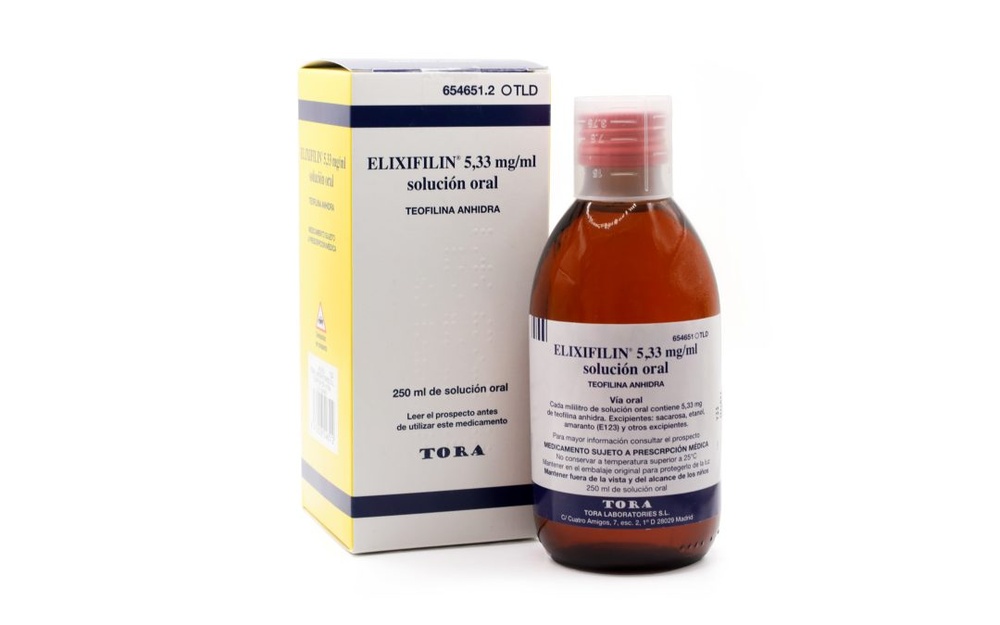
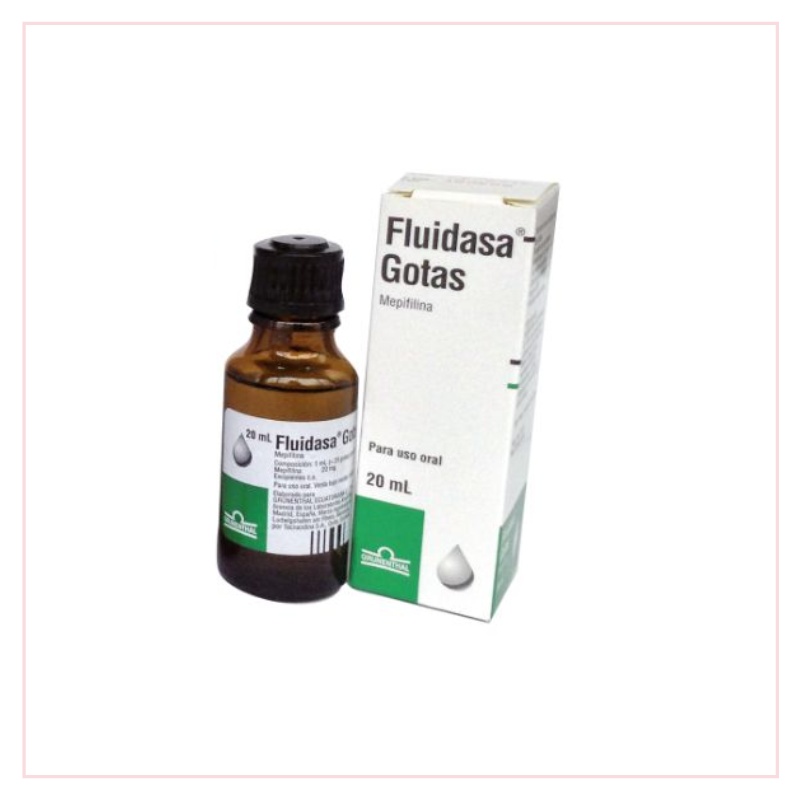
- Alternativas a BRONSAL SOLUCION INYECTABLEForma farmacéutica: SOLUCIÓN/SUSPENSIÓN ORAL, 5,33 mg teofilina anhidraPrincipio activo: teofilinaFabricante: Tora Laboratories S.L.U.Requiere recetaForma farmacéutica: CAPSULA, 150 mgPrincipio activo: mepyramine theophyllinacetateFabricante: Teofarma S.R.L.Requiere recetaForma farmacéutica: SOLUCION/SUSPENSION GOTAS ORALES, 20 mg/mlPrincipio activo: mepyramine theophyllinacetateFabricante: Teofarma S.R.L.Requiere receta

Médicos online para BRONSAL SOLUCION INYECTABLE
Comenta la dosis, los posibles efectos secundarios, interacciones, contraindicaciones o la revisión de receta de BRONSAL SOLUCION INYECTABLE, sujeto a valoración médica y a la normativa local.









Obtén una receta de BRONSAL SOLUCION INYECTABLE online
Rellena un formulario de 2 minutos
Cuéntanos tus síntomas, historial y el medicamento que necesitas.
Elige un médico o nosotros te asignamos uno
Escoge un especialista o te conectamos con el próximo médico disponible.
El médico revisa tu caso
Normalmente en 30 minutos. Puede hacerte preguntas adicionales por chat.
Recógela en cualquier farmacia
Receta electrónica enviada a tu correo, válida en toda España.
Preguntas frecuentes
BRONSAL SOLUCION INYECTABLE requires receta en España. Puedes confirmarlo con un médico online según tu caso.
El principio activo de BRONSAL SOLUCION INYECTABLE es diprophylline, combinations. Esta información ayuda a identificar medicamentos con la misma composición pero con diferentes nombres comerciales.
BRONSAL SOLUCION INYECTABLE es fabricado por Ionfarma S.L.. La marca y el envase pueden variar según el distribuidor.
Los Médicos de familia, Psiquiatras, Dermatólogos, Cardiólogos, Endocrinólogos, Gastroenterólogos, Neumólogos, Nefrólogos, Reumatólogos, Hematólogos, Infectólogos, Alergólogos, Geriatras, Pediatras, Oncólogos pueden valorar la prescripción de BRONSAL SOLUCION INYECTABLE cuando esté clínicamente indicado. Puedes reservar una videoconsulta para comentar tu caso y las opciones de tratamiento.
España cuenta con una infraestructura sanitaria bien desarrollada en ciudades principales como Madrid, Barcelona, Valencia y Sevilla. Las farmacias están ampliamente disponibles y operan bajo estrictas regulaciones, garantizando el acceso a medicamentos con receta.
Puedes comprar BRONSAL SOLUCION INYECTABLE en Madrid, Barcelona, Sevilla o Valencia en cualquier farmacia local con una receta válida.
Para obtener una receta, puedes utilizar Oladoctor:
Otros medicamentos con el mismo principio activo (diprophylline, combinations) incluyen ELIXIFILIN 5,33 MG/ML SOLUCION ORAL, FLUIDASA 150 mg CAPSULAS DURAS, FLUIDASA 20 mg/ml GOTAS ORALES EN SOLUCION. Pueden tener diferentes nombres comerciales o formulaciones, pero contienen el mismo componente terapéutico. Consulta siempre con un médico antes de cambiar o iniciar un nuevo medicamento.
