



BRINTELLIX 15 mg Comprimidos Recubiertos Con Pelicula

Revisión de receta online
Un médico revisará tu caso y determinará si la prescripción es médicamente apropiada.

Habla con un médico sobre este medicamento
Comenta tus síntomas y las opciones de tratamiento en una consulta online.



Cómo usar BRINTELLIX 15 MG COMPRIMIDOS RECUBIERTOS CON PELICULA
Contenido del prospecto
- Introducción
- Qué es Brintellix y para qué se utiliza
- Qué necesita saber antes de empezar a tomar Brintellix
- Cómo tomar Brintellix
- Siga exactamente las instrucciones de administración de este medicamento indicadas por su médico.
- Posibles efectos adversos
- Conservación de Brintellix
- Contenido del envase e información adicional
Introducción
Prospecto: Información para el paciente
Brintellix 15 mg comprimidos recubiertos con película
vortioxetina
Lea todo el prospecto detenidamente antes de empezar a tomar este medicamento, porque contiene información importante para usted.
- Conserve este prospecto, ya que puede tener que volver a leerlo.
- Si tiene alguna duda, consulte a su médico o farmacéutico.
- Este medicamento se le ha recetado solamente a usted, y no debe dárselo a otras personas aunque tengan los mismos síntomas que usted, ya que puede perjudicarles.
- Si experimenta efectos adversos, consulte a su médico o farmacéutico, incluso si se trata de efectos adversos que no aparecen en este prospecto. Ver sección 4.
Contenido del prospecto
- Qué es Brintellix y para qué se utiliza
- Qué necesita saber antes de empezar a tomar Brintellix
- Cómo tomar Brintellix
- Posibles efectos adversos
- Conservación de Brintellix
- Contenido del envase e información adicional
1. Qué es Brintellix y para qué se utiliza
Brintellix contiene el principio activo vortioxetina. Éste pertenece a un grupo de medicamentos llamados antidepresivos.
Brintellix se utiliza para tratar episodios de depresión mayor en adultos.
Se ha demostrado que Brintellix reduce el amplio abanico de síntomas depresivos, incluyendo tristeza, tensión interna (sensación de ansiedad), alteraciones del sueño (sueño disminuido), apetito disminuido, dificultad para concentrarse, sentimientos de inutilidad, pérdida de interés en las actividades placenteras, sensación de lentitud.

¿No estás seguro de si este medicamento es adecuado para ti?
Comenta tus síntomas y tratamiento con un médico online.
2. Qué necesita saber antes de empezar a tomar Brintellix
No tome Brintellix
- si es alérgico a vortioxetina o a cualquiera de los demás componentes de este medicamento (incluidos en la sección 6).
- si está tomando otros medicamentos para la depresión conocidos como inhibidores de la monoaminooxidasa o inhibidores selectivos de la MAO-A. Si tiene alguna duda, consulte a su médico.
Advertencias y precauciones
Consulte a su médico o farmacéutico antes de empezar a tomar Brintellix si:
- está tomando medicamentos con el llamado efecto serotoninérgico, como por ejemplo:
tramadol y medicamentos similares (analgésicos fuertes).
- sumatriptán y medicamentos similares, con nombres de principios activos terminados en “-triptán” (utilizados para tratar la migraña).
La toma de estos medicamentos junto con Brintellix puede aumentar el riesgo de síndrome serotoninérgico. Este síndrome se puede asociar a alucinaciones, sacudidas involuntarias, latido cardiaco acelerado, presión sanguínea alta, fiebre, náuseas y diarrea.
- ha sufrido convulsiones.
Su médico le tratará con precaución si tiene antecedentes de convulsiones o padece trastornos convulsivos inestables/epilepsia. Las convulsiones son un riesgo potencial de los medicamentos utilizados para tratar la depresión. El tratamiento se debe interrumpir en cualquier paciente que experimente convulsiones o un aumento en su frecuencia.
- ha padecido manía.
- tiene tendencia a sangrar o a que le aparezcan hematomas fácilmente o si está embarazada (ver «Embarazo, lactancia y fertilidad»).
- tiene niveles bajos de sodio en sangre.
- es una persona de 65 años o más.
- padece una enfermedad renal grave.
- padece una enfermedad hepática grave, o una enfermedad hepática llamada cirrosis.
- padece o ha padecido presión ocular aumentada o glaucoma. Si siente dolor en los ojos y presenta visión borrosa durante el tratamiento, póngase en contacto con su médico.
Si está recibiendo un tratamiento con antidepresivos, incluida la vortioxetina, también puede presentar sentimientos de agresión, agitación, reacción de ira e irritabilidad. Si esto sucede, debe consultar a su médico.
Pensamientos suicidas y empeoramiento de su depresión
Si usted se encuentra deprimido y/o sufre un trastorno de ansiedad, puede en algunas ocasiones tener pensamientos en los que se haga daño o se quite la vida. Éstos pueden ir aumentando al tomar antidepresivos por primera vez, puesto que todos estos medicamentos requieren un tiempo para empezar a hacer efecto, generalmente alrededor de unas dos semanas, aunque en algunos casos podría ser mayor el tiempo.
Usted sería más propenso a tener este tipo de pensamientos:
- Si usted previamente ha tenido pensamientos en los que se se quita la vida o se hace daño.
- Si usted es un adulto joven.
Información de ensayos clínicos ha demostrado un aumento del riesgo de conductas suicidas en adultos menores de 25 años con enfermedades psiquiátricas que fueron tratados con un antidepresivo.
Si en cualquier momento usted tiene pensamientos en los que se hace daño o se quita la vida, contacte con su médico o diríjase directamente a un hospital. Puede ser de ayuda para usted decirle a un pariente o un amigo cercano que usted está deprimido o que tiene un trastorno de ansiedad y pedirle que lea este prospecto. Puede preguntarles si piensan que su depresión o trastorno de ansiedad ha empeorado, o si están preocupados por los cambios en su actitud.
Niños y adolescentes
Brintellix no se debe utilizar en pacientes pediátricos (menores de 18 años) porque no se ha demostrado su eficacia. La seguridad de Brintellix en niños y adolescentes de 7 a 17 años se describe en la sección 4.
Toma de Brintellix con otros medicamentos
Informe a su médico o farmacéutico si está tomando, ha tomado recientemente o podría tener que tomar cualquier otro medicamento.
- Informe a su médico si está tomando alguno de los siguientes medicamentos:fenelzina, iproniazida, isocarboxazida, nialamida, tranilcipromina (medicamentos para tratar la depresión llamados inhibidores de la monoaminooxidasa no selectivos); no debe tomar ninguno de estos medicamentos con Brintellix. Si ha tomado alguno de estos medicamentos, debe esperar 14 días antes de empezar a tomar Brintellix. Después de suspender Brintellix, debe esperar 14 días antes de tomar cualquiera de estos medicamentos.
- moclobemida (medicamento para tratar la depresión).
- selegilina, rasagilina (medicamentos para tratar la enfermedad de Parkinson).
- linezolid (medicamento para tratar infecciones bacterianas).
- medicamentos con efecto serotoninérgico, por ejemplo, tramadol o medicamentos similares (analgésicos fuertes) y sumatriptán y medicamentos similares con nombres de principios activos terminados en “triptán” (administrados para tratar la migraña). Tomar estos medicamentos con Brintellix puede aumentar el riesgo de síndrome serotoninérgico (ver la sección advertencias y precauciones).
- litio (medicamento para tratar la depresión y los trastornos mentales) o triptófano.
- medicamentos que se sabe que causan disminución en los niveles de sodio.
- rifampicina (medicamento para tratar la tuberculosis y otras infecciones).
- carbamazepina, fenitoína (medicamento para tratar la epilepsia u otras enfermedades).
- warfarina, dipiridamol, fenprocumón, algunos antipsicóticos, fenotiazinas, antidepresivos tricíclicos, ácido acetilsalicílico a dosis bajas y antiinflamatorios no esteroideos (anticoagulantes y medicamentos utilizados para aliviar el dolor). Estos pueden aumentar la tendencia al sangrado.
Medicamentos que aumentan el riesgo de convulsiones:
- sumatriptán y medicamentos similares con nombres de principios activos terminados en “-triptán”.
- tramadol (un fuerte analgésico).
- mefloquina (medicamento para prevenir y tratar la malaria).
- bupropión (medicamento para tratar la depresión también utilizado para dejar de fumar).
- fluoxetina, paroxetina y otros medicamentos para tratar la depresión llamados ISRS/IRSN, tricíclicos.
- hierba de San Juan (Hypericum perforatum) (medicamento para tratar la depresión).
- quinidina (medicamento para tratar los trastornos del ritmo cardiaco).
- clorpromacina, clorprotixeno, haloperidol (medicamentos para tratar trastornos mentales pertenecientes a los grupos llamados fenotiazinas, tioxantenos o butirofenonas).
Por favor hable con su médico si usted está tomando alguno de los medicamentos mencionados, ya que su médico necesita saber si usted tiene riesgo de sufrir convulsiones.
Si se le realiza una prueba toxicológica en orina, tomar Brintellix puede causar resultados positivos para metadona cuando se usan algunos métodos de prueba, aunque usted no esté tomando metadona. Si sucediera esto, se puede realizar una prueba más específica.
Toma de Brintellix con alcohol
No se aconseja la combinación de este medicamento con alcohol.
Embarazo, lactancia y fertilidad
Si está embarazada o en periodo de lactancia, cree que podría estar embarazada o tiene intención de quedarse embarazada, consulte a su médico antes de utilizar este medicamento.
Embarazo
Brintellix no se debe utilizar durante el embarazo a menos que su médico lo considere absolutamente necesario.
Si toma medicamentos para tratar la depresión ,incluido Brintellix, durante los últimos 3 meses del embarazo, debe saber que se pueden observar los siguientes efectos en el recién nacido: problemas para respirar, piel azulada, convulsiones, cambios de la temperatura corporal, dificultad de alimentación, vómitos, azúcar bajo en sangre, músculos rígidos o flácidos, reflejos intensos, temblor, nerviosidad, irritabilidad, letargia, llanto continuo, tendencia al sueño y dificultades para dormir. Si su bebé presenta cualquiera de estos síntomas, contacte con su médico inmediatamente.
Asegúrese de que su matrona y/o médico sepa que usted está tomando Brintellix. Cuando se toman durante el embarazo, especialmente en los últimos 3 meses de embarazo, los medicamentos como Brintellix pueden aumentar el riesgo de una enfermedad grave en el bebé, llamada hipertensión pulmonar persistente del recién nacido (HPPN), haciendo que el bebé respire más rápido y adopte un color azulado. Estos síntomas comienzan normalmente durante las primeras 24 horas tras el nacimiento del bebé. Si esto le ocurre a su bebé, debe contactar con su matrona y/o médico inmediatamente.
Si toma Brintellix en la etapa final del embarazo puede producirse un mayor riesgo de sangrado vaginal abundante poco después del parto, especialmente si tiene antecedentes de alteraciones hemorrágicas. Su médico o matrona deben saber que usted está tomando Brintellix para poderle aconsejar.
Lactancia
Se prevé que los ingredientes de Brintellix pasen a la leche materna. Brintellix no debe usarse durante la lactancia. Su médico decidirá si debe interrumpir la lactancia o dejar de usar Brintellix, teniendo en cuenta el beneficio de la lactancia para el niño y el beneficio del tratamiento para usted.
Conducción y uso de máquinas
Brintellix tiene poca o nula influencia sobre la capacidad de conducir o utilizar máquinas. Sin embargo, ya que se han reportado efectos secundarios tales como mareos, se recomienda precaución durante este tipo de actividades al principio del tratamiento con Brintellix o al cambiar de dosis.
Brintellix contiene sodio
Este medicamento contiene menos de 1 mmol de sodio (23 mg) por comprimido, esto es, esencialmente “exento de sodio”.
3. Cómo tomar Brintellix

¿Has empezado a tomar el medicamento y tienes preguntas?
Comenta tus síntomas y tratamiento con un médico online.
Siga exactamente las instrucciones de administración de este medicamento indicadas por su médico.
En caso de duda, consulte de nuevo a su médico o farmacéutico.
La dosis recomendada de Brintellix es 10 mg de vortioxetina una vez al día en adultos menores de 65 años de edad. Su médico puede aumentar la dosis hasta un máximo de 20 mg de vortioxetina al día o reducirla hasta un mínimo de 5 mg de vortioxetina al día, en función de su respuesta al tratamiento.
Para pacientes de edad avanzada de 65 años de edad o mayores, la dosis inicial es de 5 mg de vortioxetina una vez al día.
Forma de administración
Tome un comprimido con un vaso de agua.
El comprimido se puede tomar con o sin alimentos.
Duración del tratamiento
Tome Brintellix durante el tiempo que le indique su médico.
Continúe tomando Brintellix aunque tarde cierto tiempo en empezar a notar una mejoría en su estado.
Debe continuar con el tratamiento durante al menos 6 meses después de sentirse bien de nuevo.
Si toma más Brintellix del que debe
Si toma más Brintellix del que se le ha indicado, consulte inmediatamente al médico o acuda al servicio de urgencias del hospital más próximo. Lleve el envase y los comprimidos restantes con usted. Haga esto aunque no experimente ninguna molestia. Los síntomas en caso de sobredosis son: mareo, náuseas, diarrea, molestias en el estómago, picor en todo el cuerpo, tendencia al sueño y rubefacción (enrojecimiento de la piel).
Tras la ingesta de dosis varias veces superiores a la dosis prescrita, se han notificado crisis (convulsiones) y una afección rara llamada síndrome serotoninérgico.
Si olvidó tomar Brintellix
Tome la siguiente dosis a la hora habitual. No tome una dosis doble para compensar las dosis olvidadas.
Si interrumpe el tratamiento con Brintellix
No deje de tomar Brintellix sin consultarlo a su médico.
Su médico puede decidir reducir su dosis antes de que deje definitivamente de tomar este medicamento.
Algunos pacientes que han dejado de tomar Brintellix han experimentado síntomas como mareos, dolor de cabeza, sensación de hormigueo o sensaciones parecidas a descargas eléctricas (sobre todo en la cabeza), incapacidad para dormir, náuseas o vómitos, sensación de ansiedad, irritabilidad o agitación, sensación de cansancio o temblores. Estos síntomas pueden aparecer en la primera semana después de dejar de tomar Brintellix.
Si tiene cualquier otra duda sobre el uso de este medicamento, pregunte a su médico o farmacéutico.
4. Posibles efectos adversos
Al igual que todos los medicamentos, este medicamento puede producir efectos adversos, aunque no todas las personas los sufran.
Los efectos adversos observados fueron en su mayoría leves o moderados y se produjeron en las primeras dos semanas de tratamiento. Estos efectos fueron, por lo general, transitorios y no requirieron la suspensión del tratamiento.
Se han observado los siguientes efectos adversos con las frecuencias que se indican:
Muy frecuentes: pueden afectar a más de 1 de cada 10 personas
- náuseas.
Frecuentes: pueden afectar hasta 1 de cada 10 personas
- diarrea, estreñimiento, vómitos.
- mareo.
- picor en todo el cuerpo.
- sueños anormales.
- aumento de la sudoración.
- indigestión.
Poco frecuentes: pueden afectar hasta 1 de cada 100 personas
- rubefacción (enrojecimiento de la piel).
- sudores nocturnos.
- visión borrosa.
- sacudidas involuntarias (temblor).
- alucinaciones (ver, oír o sentir cosas que no están ahí).
Raros: pueden afectar hasta 1 de cada 1.000 personas
- pupilas dilatadas (midriasis), lo que puede aumentar el riesgo de glaucoma (ver sección 2).
Frecuencia no conocida: no puede estimarse a partir de los datos disponibles
- niveles bajos de sodio en sangre (algunos de los síntomas pueden ser sensación de mareo, debilidad, confusión, somnolencia o mucho cansancio, o bien tener náuseas o vómitos; otros síntomas más graves son desmayos, convulsiones o caídas).
- síndrome serotoninérgico (ver sección 2).
- reacciones alérgicas, que pueden ser graves, y provocan hinchazón de la cara, los labios, la lengua o la garganta; dificultad para respirar o tragar, y/o descenso repentino de la presión arterial (que puede hacer que se sienta mareado o aturdido).
- habones.
- sangrado excesivo o inexplicable (incluyendo cardenales, hemorragia nasal, sangrado gastrointestinal y vaginal).
- erupción.
- trastornos del sueño (insomnio).
- agitación y agresión. Si presenta estos efectos adversos, póngase en contacto con su médico (ver sección 2).
- dolor de cabeza.
- aumento de una hormona llamada prolactina en la sangre.
- una necesidad constante de moverse (acatisia).
- rechinar los dientes (bruxismo).
- incapacidad para abrir la boca (trismo).
- síndrome de las piernas inquietas (impulsos de mover las piernas para detener
sensaciones dolorosas o extrañas, que a menudo se producen por la noche).
- secreción lechosa anormal de la mama (galactorrea).
Se ha notificado un mayor riesgo de disfunción sexual con la dosis de 20 mg, y en algunos pacientes este efecto secundario se observó con dosis inferiores.
Se ha observado un incremento del riesgo de frácturas óseas en pacientes que toman este tipo de medicamentos.
Otros efectos adversos en niños y adolescentes
Los efectos adversos observados con vortioxetina en niños y adolescentes fueron similares a los observados en adultos salvo por los acontecimientos relacionados con el dolor abdominal que se observaron con más frecuencia que en adultos e ideación suicida que se observó con más frecuencia en adolescentes que en adultos.
Comunicación de efectos adversos
Si experimenta cualquier tipo de efecto adverso, consulte a su médico o farmacéutico, incluso si se trata de posibles efectos adversos que no aparecen en este prospecto. También puede comunicarlos directamente a través del Sistema sistema nacional de notificación incluido en el Apéndice V. Mediante la comunicación de efectos adversos usted puede contribuir a proporcionar más información sobre la seguridad de este medicamento.
5. Conservación de Brintellix
Mantener este medicamento fuera de la vista y del alcance de los niños.
No utilice este medicamento después de la fecha de caducidad que aparece en el envase después de CAD. La fecha de caducidad es el último día del mes que se indica.
Este medicamento no requiere condiciones especiales de conservación.
Los medicamentos no se deben tirar por los desagües ni a la basura. Pregunte a su farmacéutico cómo deshacerse de los envases y de los medicamentos que ya no necesita. De esta forma, ayudará a proteger el medio ambiente.
6. Contenido del envase e información adicional
Composición de Brintellix
- El principio activo es vortioxetina. Cada comprimido recubierto contiene una cantidad de 15 mg de vortioxetina (como hidrobromuro).
- Los demás componentes son manitol (E421), celulosa microcristalina, hidroxipropilcelulosa, almidón glicolato sódico (tipo A), estearato de magnesio, hipromelosa, Macrogol 400, dióxido de titanio (E171), óxido de hierro amarillo (E172), óxido de hierro rojo (E172).
Aspecto del producto y contenido del envase
Comprimido recubierto con película (comprimido), de color naranja y forma almendrada (5 x 8,4 mm), grabado con “TL” en una cara y con “15” en la otra.
Brintellix 15 mg comprimidos recubiertos con película está disponible en blísters de 14, 28, 56, 56x1, 98, 98x1, 490 (5 x (98x1)) comprimidos y en envases de 100 y 200 comprimidos.
Los tamaños de envases de 56x1, 98x1 y 490 comprimidos recubiertos con película se presentan en blísters unidosis.
Puede que solamente estén comercializados algunos tamaños de envases.
Titular de la autorización de comercialización y responsable de la fabricación
- Lundbeck A/S
Ottiliavej 9
2500 Valby
Dinamarca
Puede solicitar más información respecto a este medicamento dirigiéndose al representante local del titular de la autorización de comercialización:
België/Belgique/Belgien Lundbeck S.A./N.V. Tél/Tel: +32 2 535 7979 | Lietuva
Tel: +45 36301311(Danija) |
| Luxembourg/Luxemburg Lundbeck S.A. Tél: +32 2 535 7979 |
Ceská republika Lundbeck Ceská republika s.r.o. Tel: +420 225 275 600 | Magyarország Lundbeck Hungaria Kft. Tel: +36 1 4369980 |
Danmark Lundbeck Pharma A/S Tlf: +45 4371 4270 | Malta
Tel: + 45 36301311 |
Deutschland Lundbeck GmbH Tel: +49 40 23649 0 | Nederland Lundbeck B.V. Tel: +31 20 697 1901 |
Eesti Lundbeck Eesti AS Tel: + 372 605 9350 | Norge
Tlf: +47 91 300 800 |
Ελλ?δα Lundbeck Hellas S.A. Τηλ: +30 210 610 5036 | Österreich Lundbeck Austria GmbH Tel: +43 1 253 621 6033 |
España Lundbeck España S.A. Tel: +34 93 494 9620 | Polska Lundbeck Poland Sp. z o. o. Tel.: + 48 22 626 93 00 |
France Lundbeck SAS Tél: + 33 1 79 41 29 00 | Portugal Lundbeck Portugal - Produtos Farmacêuticos, Unipessoal Lda Tel: +351 21 00 45 900 |
Hrvatska Lundbeck Croatia d.o.o. Tel.: + 385 1 6448263 | România Lundbeck Romania SRL Tel: +40 21319 88 26 |
Ireland Lundbeck (Ireland) Limited Tel: +353 1 468 9800 | Slovenija Lundbeck Pharma d.o.o. Tel.: +386 2 229 4500 |
Ísland Vistor hf. Tel: +354 535 7000 | Slovenská republika Lundbeck Slovensko s.r.o. Tel: +421 2 5341 42 18 |
Italia Lundbeck Italia S.p.A. Tel: +39 02 677 4171 | Suomi/Finland Oy H. Lundbeck Ab Puh/Tel: +358 2 276 5000 |
Κ?προς Lundbeck HellasA.E Τηλ.: +357 22490305 | Sverige
Tel: +46 4069 98200 |
Latvija
Tel: +45 36301311(Danija) |
Fecha de la última revisión de este prospecto:{MM/AAAA}
Otras fuentes de información
La información detallada de este medicamento está disponible en la página web de la Agencia Europea de Medicamentos: http://www.ema.europa.eu.
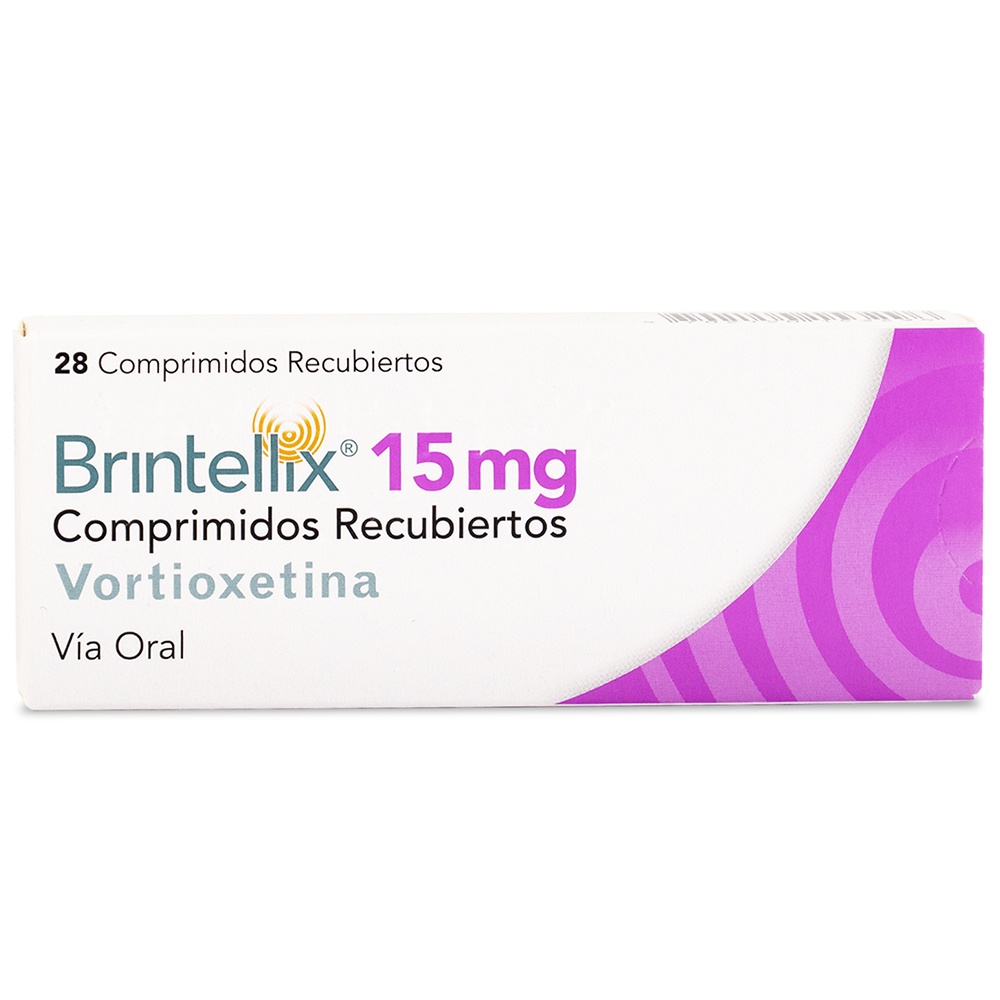
- País de registro
- Forma farmacéuticaCOMPRIMIDO, 15 mg
- Código ATCN06AX26
- Precio medio en farmacia44.32 EUR
- Principio activo
- Requiere recetaSí
- Fabricante
- ComposiciónMANITOL (E-421) (97,935 mg mg)
- Esta información es de carácter general y no sustituye la consulta con un profesional sanitario.
- Alternativas a BRINTELLIX 15 MG COMPRIMIDOS RECUBIERTOS CON PELICULAForma farmacéutica: COMPRIMIDO, 10 mgPrincipio activo: vortioxetineFabricante: H. Lundbeck A/SRequiere recetaForma farmacéutica: COMPRIMIDO, 20 mgPrincipio activo: vortioxetineFabricante: H. Lundbeck A/SRequiere recetaForma farmacéutica: SOLUCION/SUSPENSION GOTAS ORALES, 20 mg/mlPrincipio activo: vortioxetineFabricante: H. Lundbeck A/SRequiere receta
Médicos online para BRINTELLIX 15 MG COMPRIMIDOS RECUBIERTOS CON PELICULA
Comenta la dosis, los posibles efectos secundarios, interacciones, contraindicaciones o la revisión de receta de BRINTELLIX 15 MG COMPRIMIDOS RECUBIERTOS CON PELICULA, sujeto a valoración médica y a la normativa local.







Obtén una receta de BRINTELLIX 15 MG COMPRIMIDOS RECUBIERTOS CON PELICULA online
Rellena un formulario de 2 minutos
Cuéntanos tus síntomas, historial y el medicamento que necesitas.
Elige un médico o nosotros te asignamos uno
Escoge un especialista o te conectamos con el próximo médico disponible.
El médico revisa tu caso
Normalmente en 30 minutos. Puede hacerte preguntas adicionales por chat.
Recógela en cualquier farmacia
Receta electrónica enviada a tu correo, válida en toda España.
Preguntas frecuentes
BRINTELLIX 15 MG COMPRIMIDOS RECUBIERTOS CON PELICULA requiere receta en España. Puedes confirmarlo con un médico online según tu caso.
El principio activo de BRINTELLIX 15 MG COMPRIMIDOS RECUBIERTOS CON PELICULA es vortioxetine. Esta información ayuda a identificar medicamentos con la misma composición pero con diferentes nombres comerciales.
El precio medio en farmacia de BRINTELLIX 15 MG COMPRIMIDOS RECUBIERTOS CON PELICULA es de aproximadamente 44.32 EUR. Puede variar según el fabricante y la forma farmacéutica.
BRINTELLIX 15 MG COMPRIMIDOS RECUBIERTOS CON PELICULA es fabricado por H. Lundbeck A/S. La marca y el envase pueden variar según el distribuidor.
Los Médicos de familia, Psiquiatras, Dermatólogos, Cardiólogos, Endocrinólogos, Gastroenterólogos, Neumólogos, Nefrólogos, Reumatólogos, Hematólogos, Infectólogos, Alergólogos, Geriatras, Pediatras, Oncólogos pueden valorar la prescripción de BRINTELLIX 15 MG COMPRIMIDOS RECUBIERTOS CON PELICULA cuando esté clínicamente indicado. Puedes reservar una videoconsulta para comentar tu caso y las opciones de tratamiento.
España cuenta con una infraestructura sanitaria bien desarrollada en ciudades principales como Madrid, Barcelona, Valencia y Sevilla. Las farmacias están ampliamente disponibles y operan bajo estrictas regulaciones, garantizando el acceso a medicamentos con receta.
Puedes comprar BRINTELLIX 15 MG COMPRIMIDOS RECUBIERTOS CON PELICULA en Madrid, Barcelona, Sevilla o Valencia en cualquier farmacia local con una receta válida.
Para obtener una receta, puedes utilizar Oladoctor:
Otros medicamentos con el mismo principio activo (vortioxetine) incluyen Brintellix 10 mg comprimidos recubiertos con pelicula, Brintellix 20 mg comprimidos recubiertos con pelicula, BRINTELLIX 20 MG/ML GOTAS ORALES EN SOLUCION. Pueden tener diferentes nombres comerciales o formulaciones, pero contienen el mismo componente terapéutico. Consulta siempre con un médico antes de cambiar o iniciar un nuevo medicamento.
