



BOSUTINIB 100 mg Film-Coated Tablets

Prescription review online
A doctor will review your case and decide whether a prescription is medically appropriate.

Talk to a doctor about this medicine
Discuss your symptoms and possible next steps in a quick online consultation.



How to use BOSUTINIB STADA 100 mg FILM-COATED TABLETS
Contents of the leaflet
- Introduction
- What is Bosutinib Stada and what is it used for
- What you need to know before you take Bosutinib Stada
- Do not take Bosutinib Stada
- How to take Bosutinib Stada
- Possible Adverse Effects
- Storage of Bosutinib Stada
- Package Contents and Additional Information
Introduction
Package Leaflet: Information for the User
Bosutinib Stada 100 mg film-coated tablets EFG
Bosutinib Stada 400 mg film-coated tablets EFG
Bosutinib Stada 500 mg film-coated tablets EFG
Read all of this leaflet carefully before you start taking this medicine because it contains important information for you.
- Keep this leaflet, you may need to read it again.
- If you have any further questions, ask your doctor or pharmacist.
- This medicine has been prescribed for you only. Do not pass it on to others. It may harm them, even if their signs of illness are the same as yours.
- If you get any side effects, talk to your doctor or pharmacist. This includes any possible side effects not listed in this leaflet. See section 4.
Contents of the pack
- What is Bosutinib Stada and what is it used for
- What you need to know before you take Bosutinib Stada
- How to take Bosutinib Stada
- Possible side effects
- Storage of Bosutinib Stada
- Contents of the pack and other information
1. What is Bosutinib Stada and what is it used for
This medicine contains the active substance bosutinib. It is used to treat adult patients who have a type of leukemia called chronic myeloid leukemia (CML) with positive Philadelphia chromosome (Ph-positive) newly diagnosed or for whom previous medications for CML have not been effective or are not suitable. Ph-positive CML is a blood cancer that causes the body to produce too many of a specific type of white blood cell called granulocytes.
If you have any questions about how bosutinib works or why you have been prescribed this medicine, ask your doctor.

Not sure if this medicine is right for you?
Discuss your symptoms and treatment with a doctor online.
2. What you need to know before you take Bosutinib Stada
Do not take Bosutinib Stada
- if you are allergic to bosutinib or any of the other ingredients of this medicine (listed in section 6).
- if your doctor has told you that you have liver problems and that your liver is not working normally.
Warnings and precautions
Tell your doctor, pharmacist, or nurse before you start taking bosutinib:
- if you have, or have had in the past, liver problems.Tell your doctor if you have a history of liver problems, including any type of hepatitis (infection or inflammation of the liver) or a history of any of the following signs and symptoms of liver problems: itching, yellowing of the eyes or skin, dark urine, and pain or discomfort in the upper right side of the stomach. Your doctor should perform blood tests to check your liver function before starting treatment with bosutinib and during the first 3 months of treatment with bosutinib, or as clinically indicated.
- if you have diarrhea and vomiting.Tell your doctor if you experience any of the following signs and symptoms: increased number of bowel movements per day, increased number of episodes of vomiting, blood in the vomit, in the stool, or in the urine, or black, tarry stools. Tell your doctor if treatment for vomiting may lead to a higher risk of cardiac arrhythmias. In particular, tell your doctor if you want to use any medication that contains domperidone for the treatment of nausea and/or vomiting. Treatment of nausea or vomiting with medications of this type, if used with bosutinib, may increase the risk of dangerous cardiac arrhythmias.
- if you have bleeding problems.Tell your doctor if you experience any of the following signs and symptoms, such as abnormal bleeding or bruising without having had any injury.
- if you have an infection.Tell your doctor if you experience any of the following signs and symptoms, such as fever, problems with urination such as a burning sensation while urinating, new onset cough, or new onset sore throat.
- if you have fluid retention.Tell your doctor if you experience any of the following signs and symptoms of fluid retention during treatment with bosutinib, such as swelling of the ankles, feet, or legs; difficulty breathing, chest pain, or cough (all of which may be signs of fluid retention in the lungs or chest).
- if you have heart problems.Tell your doctor if you have any heart problems, such as arrhythmias or an abnormal electrical signal called "prolonged QT interval". These problems are always important, but even more so if you have frequent or prolonged diarrhea as indicated above. If you faint (lose consciousness) or experience irregular heartbeats during treatment with bosutinib, tell your doctor immediately, as they may be signs of a serious heart condition.
- if you have been told that you have kidney problems.Tell your doctor if you urinate more frequently and produce larger amounts of pale-colored urine, or if you urinate less frequently and produce smaller amounts of dark-colored urine. Also, tell your doctor if you lose weight or experience swelling of the feet, ankles, legs, hands, or face.
- if you have ever had or may currently have a hepatitis B virus infection.This is because bosutinib could cause hepatitis B to become active again, which can be fatal in some cases. Your doctor should carefully check for signs of this infection before starting treatment.
- if you have or have had pancreas problems in the past.Tell your doctor if you experience abdominal pain or discomfort.
- if you experience any of the following symptoms: severe skin rash.Tell your doctor if you experience any of the following signs and symptoms of a painful red or purple rash that spreads and if blisters and/or other lesions appear on the mucous membranes (e.g., the mouth and lips).
- if you notice any of the following symptoms: side pain, blood in the urine, or decreased urine output.If your disease is very severe, your body may not be able to eliminate all the waste products from the dying cancer cells. This is known as tumor lysis syndrome and can cause kidney failure and heart problems within 48 hours of the first dose of bosutinib. Your doctor will make sure you are properly hydrated and will give you other medications to help prevent it.
Sun/UV Protection
During treatment with bosutinib, you may be more sensitive to the sun or UV rays. It is important that you cover exposed skin areas and use sunscreen with a high sun protection factor (SPF).
Children and Adolescents
Bosutinib is not recommended for children under 18 years of age. This medicine has not been studied in children or adolescents.
Other Medicines and Bosutinib Stada
Tell your doctor or pharmacist if you are taking, have recently taken, or might take any other medicines, including those obtained without a prescription, vitamins, and herbal medicines. Some medicines may affect the levels of bosutinib in your body. You should tell your doctor if you are using medicines that contain the following active substances:
The following active substances may increase the risk of side effects with bosutinib:
- ketoconazole, itraconazole, voriconazole, posaconazole, and fluconazole, used to treat fungal infections.
- clarithromycin, telithromycin, erythromycin, and ciprofloxacin, used to treat bacterial infections.
- nefazodone, used to treat depression.
- mibefradil, diltiazem, and verapamil, used to lower blood pressure in people with high blood pressure.
- ritonavir, lopinavir/ritonavir, indinavir, nelfinavir, saquinavir, atazanavir, amprenavir, fosamprenavir, and darunavir, used to treat HIV/AIDS.
- boceprevir and telaprevir, used to treat hepatitis C.
- aprepitant, used to prevent and control nausea and vomiting.
- imatinib, used to treat a type of leukemia.
- crizotinib, used to treat a type of lung cancer called non-small cell lung cancer.
The following active substances may reduce the effectiveness of bosutinib:
- rifampicin, used to treat tuberculosis.
- phenytoin and carbamazepine, used to treat epilepsy.
- bosentan, used to lower high blood pressure in the lungs (pulmonary hypertension).
- nafcillin, an antibiotic used to treat bacterial infections.
- St. John's Wort (a herbal medicine that can be obtained without a prescription), used to treat depression.
- efavirenz and etravirine, used to treat HIV/AIDS.
- modafinil, used to treat certain types of sleep disorders.
You should avoid using these medicines during treatment with bosutinib. If you are using any of them, tell your doctor. It may be possible for your doctor to change the doses of these medicines, change the dose of bosutinib, or have you use a different medicine.
The following active substances may affect heart rate:
- amiodarone, disopyramide, procainamide, quinidine, and sotalol, used to treat heart disorders.
- chloroquine and halofantrine, used to treat malaria.
- clarithromycin and moxifloxacin, which are antibiotics used to treat bacterial infections.
- haloperidol, used to treat psychotic disorders such as schizophrenia.
- domperidone, used to treat nausea and vomiting, or to stimulate milk production.
- methadone, used to treat pain.
These medicines should be used with caution during treatment with bosutinib. If you are taking any of them, tell your doctor.
It is possible that the medicines listed in this leaflet are not the only ones that may interact with bosutinib.
Taking Bosutinib Stada with Food and Drink
Do not take bosutinib with grapefruit or grapefruit juice, as it may increase the risk of side effects.
Pregnancy, Breast-feeding, and Fertility
Bosutinib should not be used during pregnancy unless clearly necessary, as bosutinib may harm the fetus. If you are pregnant or think you may be pregnant, ask your doctor before taking bosutinib.
Women who take bosutinib should be advised to use effective contraceptive methods during treatment and for at least 1 month after the last dose. Vomiting and diarrhea may reduce the effectiveness of oral contraceptives.
Ask for information about sperm preservation before starting treatment, if you wish, given the risk that treatment with bosutinib may reduce fertility.
If you are breast-feeding, tell your doctor. Do not breast-feed during treatment with bosutinib, as it may harm the baby.
Driving and Using Machines
If you experience dizziness, have blurred vision, or feel unusual fatigue, do not drive or use machines until these side effects have disappeared.
Bosutinib Stada contains Sodium
This medicine contains less than 1 mmol of sodium (23 mg) per tablet; this is essentially "sodium-free".

Started taking the medicine and have questions?
Discuss your symptoms and treatment with a doctor online.
3. How to take Bosutinib Stada
Follow exactly the instructions of administration of this medicine given to you by your doctor. If you are not sure, ask your doctor or pharmacist again.
Bosutinib will only be prescribed for you by a doctor who has experience with the medicines used to treat leukemia.
Dose and Method of Administration
The recommended dose is 400 mg once a day for patients with newly diagnosed CML. The recommended dose is 500 mg once a day for patients whose previous medications for CML have not been effective or are not suitable. In case of moderate or severe kidney problems, your doctor will reduce the dose by 100 mg once a day for moderate kidney problems and by an additional 100 mg once a day for severe kidney problems. Your doctor may adjust the dose using the 100 mg tablets, based on your health status, according to the response to treatment and/or to the side effects you may experience. Take the tablet(s) once a day, with food. Swallow the tablet(s) whole with a little water.
If you take more Bosutinib Stada than you should
If you accidentally take too many bosutinib tablets or a higher dose than you need, go to a doctor immediately. If possible, show the doctor the pack or this leaflet. You may need medical attention.
In case of overdose or accidental ingestion, consult your doctor or pharmacist immediately or call the Toxicology Information Service, telephone: 91 562 04 20, indicating the medicine and the amount ingested.
If you forget to take Bosutinib Stada
If it has been less than 12 hours, take the recommended dose. If it has been more than 12 hours, take your next dose at the usual time the next day.
Do not take a double dose to make up for forgotten doses.
If you stop taking Bosutinib Stada
Do not stop taking bosutinib unless your doctor tells you to. If you are unable to take the medicine as directed by your doctor or think you no longer need it, consult your doctor immediately.
If you have any further questions on the use of this medicine, ask your doctor or pharmacist.
4. Possible Adverse Effects
Like all medicines, this medicine can cause adverse effects, although not all people suffer from them.
You should consult your doctor immediately if you suffer from any serious adverse effect (see also section 2 "What you need to know before starting to take Bosutinib Stada"):
Blood Disorders.Report immediately to your doctor if you have any of the following symptoms: bleeding, fever, or frequent bruising (you may have a blood or lymphatic system disorder).
Liver Disorders.Report immediately to your doctor if you have any of the following symptoms: itching, yellow eyes or skin, dark urine, and pain or discomfort in the upper right abdomen or fever.
Stomach/Intestinal Disorders.Inform your doctor if you experience stomach pain, heartburn, diarrhea, constipation, nausea, or vomiting.
Heart Problems.Inform your doctor if you have a heart condition, such as an abnormal electrical signal called "QT interval prolongation", or if you faint (lose consciousness) or have an irregular heartbeat during treatment with bosutinib.
Reactivation of Hepatitis B Virus.Recurrence (reactivation) of hepatitis B virus infection if you have had hepatitis B in the past (a liver infection).
Severe Skin Reactions.Inform your doctor immediately if you have any of these symptoms: painful red or purple rash that spreads and if blisters and/or other lesions appear on the mucous membrane (e.g., mouth and lips).
The adverse effects that may occur with bosutinib are:
Very Common Adverse Effects (may affect more than 1 in 10 patients):
- reduction in the number of platelets, red blood cells, and/or neutrophils (a type of white blood cell).
- diarrhea, vomiting, stomach pain, nausea.
- fever, swelling of the hands, feet, or face, fatigue, weakness.
- respiratory tract infection.
- nasopharyngitis.
- alteration of blood test results to check if bosutinib is affecting the liver and/or pancreas, kidneys.
- decreased appetite.
- joint pain, back pain.
- headache.
- skin rash, with itching of the skin and/or generalized.
- cough.
- difficulty breathing.
- feeling of instability (dizziness).
- fluid in the lungs (pleural effusion).
- itching.
Common Adverse Effects (may affect up to 1 in 10 patients):
- decrease in white blood cell count (leukopenia).
- stomach irritation (gastritis), bleeding in the stomach or intestine.
- chest pain, pain.
- toxic liver damage, abnormal liver function, including liver disorder.
- lung infection (pneumonia), flu, bronchitis.
- decrease in heart rate that predisposes to fainting, dizziness, and palpitations.
- increase in blood pressure.
- elevation of potassium in the blood, decrease of phosphorus in the blood, excessive loss of body fluids (dehydration).
- muscle pain.
- alteration of taste (dysgeusia).
- acute kidney failure, kidney failure, kidney deterioration.
- fluid around the heart (pericardial effusion).
- ringing in the ears (tinnitus).
- hives (urticaria), acne.
- photosensitivity reaction (sensitivity to UV rays from the sun and other light sources).
- allergic reaction.
- abnormally high blood pressure in the pulmonary arteries (pulmonary hypertension).
- acute pancreatitis (inflammation of the pancreas).
- respiratory failure.
Uncommon Adverse Effects (may affect up to 1 in 100 patients):
- fever associated with a low white blood cell count (febrile neutropenia).
- liver damage.
- life-threatening allergic reaction (anaphylactic shock).
- abnormal accumulation of fluid in the lungs (acute pulmonary edema).
- skin rash.
- inflammation of the heart or pericardium (pericarditis).
- significant decrease in the number of granulocytes (a type of white blood cell).
- severe skin disorder (erythema multiforme).
- nausea, difficulty breathing, irregular heartbeats, muscle cramps, convulsions, clouding of the urine, and fatigue related to abnormal test results (elevation of potassium, uric acid, and phosphorus in the blood and decrease of calcium in the blood) that can cause changes in kidney function and acute kidney failure (tumor lysis syndrome [TLS]).
Frequency Not Known (cannot be estimated from available data):
- severe skin disorder (Stevens-Johnson syndrome, toxic epidermal necrolysis) due to an allergic reaction, exfoliative rash (scaly, peeling).
- interstitial lung disease (disorders that cause scarring in the lungs): symptoms are cough, difficulty breathing, and painful breathing.
Reporting of Adverse Effects
If you experience any type of adverse effect, consult your doctor, pharmacist, or nurse, even if it is a possible adverse effect that is not listed in this prospectus. You can also report them directly through the Spanish Pharmacovigilance System for Human Use Medicines: www.notificaRAM.es. By reporting adverse effects, you can contribute to providing more information on the safety of this medicine.
5. Storage of Bosutinib Stada
Keep this medicine out of sight and reach of children.
Do not use this medicine after the expiration date that appears on the aluminum foil of the blister pack and on the packaging after "EXP". The expiration date is the last day of the month indicated.
This medicine does not require special storage conditions.
Do not use this medicine if you observe that the packaging is damaged or shows signs of having been tampered with.
Medicines should not be thrown away through wastewater or household waste. Deposit the packaging and medicines you no longer need at the SIGRE Point of the pharmacy. Ask your pharmacist how to dispose of the packaging and medicines you no longer need. This will help protect the environment.
6. Package Contents and Additional Information
- The active ingredient is bosutinib. Bosutinib Stada film-coated tablets are available in various doses.
Bosutinib Stada 100 mg: each film-coated tablet contains 100 mg of bosutinib.
Bosutinib Stada 400 mg: each film-coated tablet contains 400 mg of bosutinib.
Bosutinib Stada 500 mg: each film-coated tablet contains 500 mg of bosutinib.
- The other ingredients are: microcrystalline cellulose (E460), sodium croscarmellose (E468), anhydrous colloidal silica, magnesium stearate. The tablet coating contains poly(vinyl alcohol) (E1203), macrogol, talc (E553b), titanium dioxide (E171), and yellow iron oxide (E172, in Bosutinib Stada 100 mg and 400 mg) or red iron oxide (E172, in Bosutinib Stada 400 mg and 500 mg).
Appearance of the Product and Package Contents
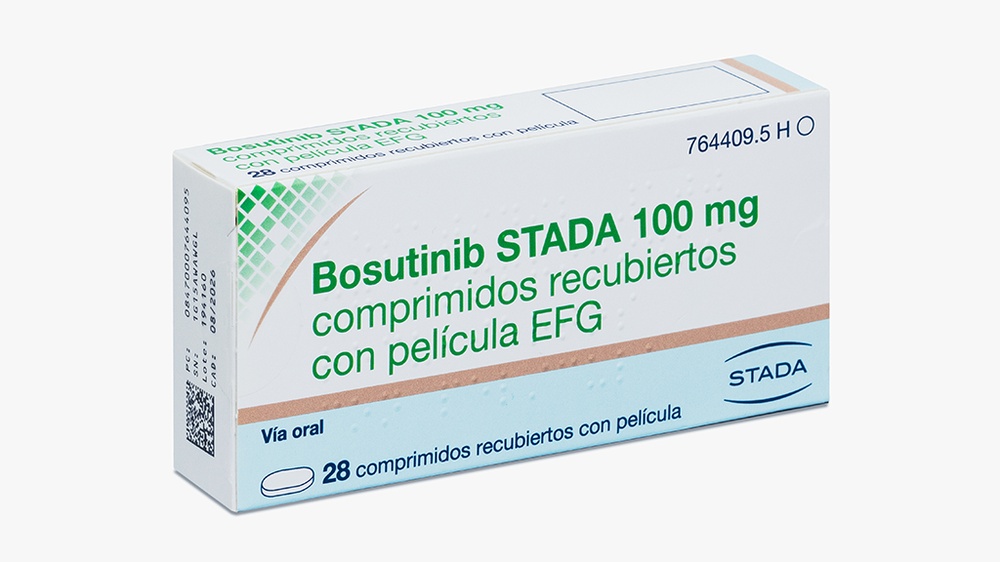
Bosutinib Stada 100 mg film-coated tablets are yellow and oval-shaped, biconvex, marked with the legend "C18" on one side.
Bosutinib Stada 100 mg is marketed in blisters containing 28 or 112 film-coated tablets and in single-dose precut blisters of 28x1 or 112x1 film-coated tablets.
Bosutinib Stada 400 mg film-coated tablets are orange and oval-shaped, biconvex, marked with the legend "C19" on one side.
Bosutinib Stada 400 mg is marketed in blisters containing 28 or 112 film-coated tablets and in single-dose precut blisters of 28x1 or 112x1 film-coated tablets.
Bosutinib Stada 500 mg film-coated tablets are pink and oval-shaped, biconvex, marked with the legend "C20" on one side.
Bosutinib Stada 500 mg is marketed in blisters containing 28 or 112 film-coated tablets and in single-dose precut blisters of 28x1 or 112x1 film-coated tablets.
Only some pack sizes may be marketed.
Marketing Authorization Holder
Laboratorio STADA, S.L.
Frederic Mompou, 5
08960 Sant Just Desvern (Barcelona)
Spain
Manufacturer
Coripharma ehf.
Reykjavikurvegur 78
IS -220 Hafnarfjordur
Iceland
or
STADA Arzneimittel AG
Stadastrasse 2 – 18
Dortweil, Bad Vilbel
61118 Hassia
Germany
or
Clonmel Healthcare Ltd.
Waterford Road
Gurtnafleur, Clonmel,
E91 D768, Co. Tipperary
Ireland
This medicine is authorized in the Member States of the European Economic Area under the following names:
Belgium Bosutinib EG 100 mg film-coated tablets
Bosutinib EG 400 mg film-coated tablets
Bosutinib EG 500 mg film-coated tablets
Denmark Bosutinib STADA
Finland Bosutinib STADA
France BOSUTINIB EG 100 mg, film-coated tablet
BOSUTINIB EG 400 mg, film-coated tablet
BOSUTINIB EG 500 mg, film-coated tablet
Germany Bosutinib STADA 100 mg film-coated tablets
Bosutinib STADA 400 mg film-coated tablets
Bosutinib STADA 500 mg film-coated tablets
Iceland Bosutinib STADA
Ireland Bosutinib Clonmel 100 mg film-coated tablets
Bosutinib Clonmel 400 mg film-coated tablets
Bosutinib Clonmel 500 mg film-coated tablets
Luxembourg Bosutinib EG 100 mg film-coated tablets
Bosutinib EG 400 mg film-coated tablets
Bosutinib EG 500 mg film-coated tablets
Netherlands Bosutinib CF 100 mg, film-coated tablets
Bosutinib CF 400 mg, film-coated tablets
Bosutinib CF 500 mg, film-coated tablets
Norway Bosutinib STADA
Poland Bosutinib Stada
Spain Bosutinib Stada 100 mg film-coated tablets EFG
Bosutinib Stada 400 mg film-coated tablets EFG
Bosutinib Stada 500 mg film-coated tablets EFG
Sweden Bosutinib STADA
Date of the Last Revision of this Prospectus:January 2024
Other Sources of Information.Detailed information about this medicine is available on the website of the Spanish Agency for Medicines and Health Products (AEMPS) (http://www.aemps.gob.es/)
- Country of registration
- Dosage formTABLET, 100 mg
- ATC codeL01EA04
- Active substance
- Prescription requiredYes
- Manufacturer
- CompositionCROSCARMELOSA SODICA (4,5 mg mg)
- This information is for reference only and does not constitute medical advice. Always consult a doctor before taking any medication. Oladoctor is not responsible for medical decisions based on this content.
- Alternatives to BOSUTINIB STADA 100 mg FILM-COATED TABLETSDosage form: CAPSULE, 100 mgActive substance: bosutinibManufacturer: Pfizer Europe Ma EeigPrescription requiredDosage form: TABLET, 100 mgActive substance: bosutinibManufacturer: Pfizer Europe Ma EeigPrescription requiredDosage form: TABLET, 400 mgActive substance: bosutinibManufacturer: Pfizer Europe Ma EeigPrescription required
Online doctors for BOSUTINIB STADA 100 mg FILM-COATED TABLETS
Discuss questions about BOSUTINIB STADA 100 mg FILM-COATED TABLETS, including use, safety considerations and prescription review, subject to medical assessment and local regulations.
Get BOSUTINIB STADA 100 mg FILM-COATED TABLETS Prescription Online
Fill in a 2-min form
Tell us your symptoms, history, and what medicine you're requesting.
Pick a doctor or let us assign
Choose a specialist or we'll match you with the next available doctor.
Doctor reviews your case
Usually within 30 minutes. They may ask follow-up questions via chat.
Collect from any pharmacy
Electronic prescription sent to your email — valid across Spain.
Frequently Asked Questions
BOSUTINIB STADA 100 mg FILM-COATED TABLETS requires a prescription in Spain. You can check with a doctor online whether this medicine may be appropriate for your situation.
The active ingredient in BOSUTINIB STADA 100 mg FILM-COATED TABLETS is bosutinib. This information helps identify medicines with the same composition but different brand names.
BOSUTINIB STADA 100 mg FILM-COATED TABLETS is manufactured by Laboratorio Stada S.L.. Pharmacy brands and packaging may differ depending on the distributor.
Doctors such as Family doctors, Psychiatrists, Dermatologists, Cardiologists, Endocrinologists, Gastroenterologists, Pulmonologists, Nephrologists, Rheumatologists, Hematologists, Infectious disease physicians, Allergists, Geriatricians, Paediatricians, Oncologists may assess whether BOSUTINIB STADA 100 mg FILM-COATED TABLETS is appropriate, depending on your situation and local regulations. You can book an online consultation to discuss your symptoms and possible next steps.
Spain has a well-developed healthcare infrastructure across major cities such as Madrid, Barcelona, Valencia, and Seville. Pharmacies are widely available and operate under strict regulations, ensuring access to prescribed medications.
You can buy BOSUTINIB STADA 100 mg FILM-COATED TABLETS in Madrid, Barcelona, Seville, or Valencia at any local pharmacy with a valid prescription.
To obtain a prescription, you can use Oladoctor:
Other medicines with the same active substance (bosutinib) include BOSULIF 100 mg HARD CAPSULES, BOSULIF 100 mg FILM-COATED TABLETS, BOSULIF 400 mg FILM-COATED TABLETS. These may have different brand names or formulations but contain the same therapeutic ingredient. Always consult a doctor before switching or starting a new medicine.
