



BESREMI 250 MICROGRAMOS/0,5 ML DE SOLUCIÓN PARA INYECCIÓN

Revisión de receta online
Un médico revisará tu caso y determinará si la prescripción es médicamente apropiada.

Habla con un médico sobre este medicamento
Comenta tus síntomas y las opciones de tratamiento en una consulta online.



Cómo usar BESREMI 250 MICROGRAMOS/0,5 ML DE SOLUCION PARA INYECCION EN PLUMA PRECARGADA
Contenido del prospecto
- Introducción
- Qué es Besremi y para qué se utiliza
- Qué necesita saber antes de empezar a usar Besremi
- Cómo usar Besremi
- Posibles efectos adversos
- Conservación de Besremi
- Contenido del envase e información adicional
Introducción
Prospecto: información para el usuario
Besremi 250microgramos/0,5ml solución inyectableen pluma precargada
ropeginterferón alfa-2b
Lea todo el prospecto detenidamente antes de empezar a usar este medicamento, porque contiene información importante para usted.
- Conserve este prospecto, ya que puede tener que volver a leerlo.
- Si tiene alguna duda, consulte a su médico o farmacéutico.
- Este medicamento se le ha recetado solamente a usted, y no debe dárselo a otras personas aunque tengan los mismos síntomas que usted, ya que puede perjudicarles.
- Si experimenta efectos adversos, consulte a su médico o farmacéutico, incluso si se trata de efectos adversos que no aparecen en este prospecto. Ver sección 4.
Contenido del prospecto
- Qué es Besremi y para qué se utiliza
- Qué necesita saber antes de empezar a usar Besremi
- Cómo usar Besremi
- Posibles efectos adversos
- Conservación de Besremi
- Contenido del envase e información adicional
1. Qué es Besremi y para qué se utiliza
Besremi contiene el principio activo ropeginterferón alfa-2b, que pertenece a la clase de medicamentos que se conoce como interferones. Su sistema inmunitario produce interferones para bloquear el crecimiento de las células cancerosas.
Besremi se utiliza como monoterapia para el tratamiento de la policitemia vera en adultos. La policitemia vera es un tipo de cáncer en el que la médula ósea produce un número excesivo de glóbulos rojos, de glóbulos blancos y de plaquetas (las células que ayudan a la sangre a coagularse).

¿No estás seguro de si este medicamento es adecuado para ti?
Comenta tus síntomas y tratamiento con un médico online.
2. Qué necesita saber antes de empezar a usar Besremi
No useBesremi
- si es alérgico al ropeginterferón alfa-2b o a alguno de los demás componentes de este medicamento (incluidos en la sección 6).
- si tiene una enfermedad del tiroides que no se controla con medicamentos.
- si tiene o ha tenido trastornos mentales graves (como depresión o ideas suicidas, o si ha intentado suicidarse).
- si ha tenido problemas cardiacos graves recientemente (como un infarto o un ictus).
- si tiene o ha tenido una enfermedad autoinmunitaria (como artritis reumatoide, psoriasis o enfermedad inflamatoria intestinal).
- si ha recibido un trasplante de un órgano y toma medicamentos para suprimir el sistema inmunitario.
- si toma telbivudina (un medicamento que se utiliza para tratar la infección por la hepatitis B).
- si padece una enfermedad del hígado avanzada y sin control.
- si tiene una enfermedad renal grave (que hace que sus riñones trabajen menos de un 15 % de lo normal).
Advertencias y precauciones
Consulte a su médico antes de empezar a usar Besremi:
- si tiene una enfermedad del tiroides.
- si tiene diabetes o hipertensión; puede que su médico le pida que se haga una exploración oftalmológica.
- si tiene problemas hepáticos se le harán análisis de sangre periódicos para comprobar el funcionamiento del hígado si lleva mucho tiempo recibiendo Besremi.
- si tiene problemas renales.
- si tiene psoriasis u otros problemas cutáneos, porque pueden empeorar durante el tratamiento con Besremi.
Una vez que haya iniciado el tratamiento con Besremi, hable con su médico:
- si desarrolla síntomas de depresión (como sensación de tristeza, depresión e ideas suicidas).
- si desarrolla signos de una reacción alérgica grave (como dificultad al respirar, sibilancias o urticaria) mientras utiliza; en este caso, debe buscar ayuda médica de inmediato.
- si desarrolla síntomas de resfriado o de otra infección respiratoria (como dificultad respiratoria, tos, fiebre y dolor torácico).
- si presenta cambios en la vista debe consultarlo con su médico, para que le haga una exploración oftalmológica inmediatamente. Pueden producirse problemas graves en los ojos durante el tratamiento con Besremi. Normalmente, su médico le explorará la vista antes de iniciar su tratamiento. Si tiene problemas de salud que puedan ocasionar problemas oculares, como diabetes o hipertensión, su médico también le explorará la vista durante el tratamiento. Si le empeora la vista puede que su médico decida suspender la administración del tratamiento.
Los medicamentos a base de interferones también pueden producir trastornos dentales y de las encías, con la posibilidad de que pierda algún diente. Asimismo, la sequedad de boca puede ser nociva para los dientes o para las mucosas de la boca durante el tratamiento de larga duración con Besremi. Debe cepillarse bien los dientes dos veces al día, y acudir a controles odontológicos periódicos.
Se tardará un tiempo en alcanzar su dosis óptima individual de Besremi. Su médico decidirá si es necesario tratarle con otro medicamento para lograr una reducción rápida del número de células en la sangre, a fin de impedir que se formen coágulos y hemorragias.
Niños y adolescentes
No administre este medicamento a niños ni a adolescentes, porque no se dispone de información sobre el uso de Besremi en este grupo de edad.
Otros medicamentos yBesremi
Informe a su médico o farmacéutico si está utilizando, ha utilizado recientemente o pudiera tener que utilizar cualquier otro medicamento.
No utilice Besremi si está tomando telbivudina (para el tratamiento de la hepatitis B), debido a que la combinación de estos medicamentos aumenta el riesgo de desarrollar neuropatía periféricas (sensación de entumecimiento, de hormigueo o de quemazón brazos y piernas). Informe a su médico si está recibiendo tratamiento con telbivudina.
Comunique especialmente a su médico si usted está tomando cualquiera de los siguientes medicamentos:
- teofilina (medicamento que se utiliza para tratar enfermedades respiratorias como el asma)
- metadona (medicamento que se utiliza para tratar el dolor o la dependencia de los opioides)
- vortioxetina o risperidona (medicamentos que se utilizan para tratar trastornos mentales)
- medicamentos contra el cáncer como los que detienen o ralentizan el crecimiento de las células de la sangre en la médula ósea (p. ej., hidroxicarbamida)
- medicamentos que actúan sobre el sistema nervioso central para aliviar el dolor, ayudarle a dormir o calmarse (p. ej. morfina, midazolam)
Embarazo y lactancia
Si está embarazada o en periodo de lactancia, cree que podría estar embarazada o tiene intención de quedarse embarazada, consulte a su médico o farmacéutico antes de utilizar este medicamento.
Embarazo
Se desconoce el efecto de Besremi durante el embarazo. Se desaconseja utilizar Besremi durante el embarazo. Si usted tiene posibilidad de quedar embarazada, su médico le explicará cuál es el método anticonceptivo eficaz que debe utilizar durante su tratamiento con Besremi.
Lactancia
Se desconoce si Besremi pasa a la leche materna. Su médico le ayudará a decidir si debe abandonar la lactancia mientras utilice este medicamento.
Conducción y uso de máquinas
No conduzca ni use máquinas si se nota mareado, somnoliento o confundido mientras usa Besremi.
Besremi contiene alcohol bencílico
Este medicamento contiene 5 mg de alcohol bencílico por cada 0,5 ml. El alcohol bencílico puede provocar reacciones alérgicas.
Consulte a su médico o farmacéutico:
- si está embarazada o en periodo de lactancia.
- si padece alguna enfermedad hepática o renal,
Esto es debido a que se pueden acumular en el organismo grandes cantidades de alcohol bencílico y provocar efectos adversos (acidosis metabólica).
Besremi contiene polisorbato80
Este medicamento contiene 0,025 mg de polisorbato 80 en cada 0,5 ml. Los polisorbatos pueden causar reacciones alérgicas. Informe a su médico si tiene cualquier alergia conocida.
Besremi contiene sodio
Este medicamento contiene menos de 1 mmol de sodio (23 mg) por ml; esto es, esencialmente “exento de sodio”.
3. Cómo usar Besremi
Siga exactamente las instrucciones de administración de este medicamento indicadas por su médico o farmacéutico. En caso de duda, consulte de nuevo a su médico o farmacéutico.
Su médico determinará la dosis que usted necesite de forma individual para su enfermedad. La dosis de inicio habitual de Besremi es de 100 microgramos cada 2 semanas. Posteriormente su médico le irá aumentando la dosis de forma escalonada y podrá modificarla durante el tratamiento. Si usted presenta problemas de riñón graves, la dosis de inicio que le administrará su médico se reducirá a 50 microgramos.
Este medicamento se administra por vía subcutánea, lo que significa que se inyecta en el tejido que hay debajo de la piel. No se debe inyectar en zonas de piel irritada, enrojecida, con hematomas, infectada o con cicatrices.
Si se autoinyecta este medicamento, le enseñarán cómo preparar el medicamento e inyectarlo.
Nunca comparta la pluma precargada Besremi con nadie, aunque le cambie de aguja, a fin de no contagiar enfermedades infecciosas.
Puede consultar los detalles de la preparación y la inyección de Besremi en el manual de instrucciones. Léalas antes de empezar a utilizar Besremi.
Si usa más Besremi del que debe
Consulte a su médico cuanto antes.
Si olvidó usarBesremi
Se debe inyectar la dosis en cuanto se acuerde. Pero si han pasado más de 2 días desde que omitió la dosis, sáltesela e inyéctese la siguiente cuando corresponda. No se inyecte una dosis doble para compensar las dosis olvidadas. En caso de duda, consulte de nuevo a su médico o farmacéutico.
Si interrumpe el tratamiento conBesremi
No deje de usar Besremi sin hablar antes con su médico.
Si tiene cualquier otra duda sobre el uso de este medicamento, pregunte a su médico o farmacéutico.

¿Has empezado a tomar el medicamento y tienes preguntas?
Comenta tus síntomas y tratamiento con un médico online.
4. Posibles efectos adversos
Al igual que todos los medicamentos, este medicamento puede producir efectos adversos, aunque no todas las personas los sufran.
Si experimenta cualquier de los siguientes efectos adversos graves durante su tratamiento con Besremi, póngase en contacto con su médico inmediatamente:
Efectos adversos frecuentes (pueden afectar hasta 1 de cada 10 personas):
- cambios en el latido cardiaco (cuando el corazón late muy deprisa o de forma irregular)
Efectos adversos poco frecuentes (pueden afectar hasta 1 de cada 100 personas):
- intento de suicidio, pensamientos sobre la posibilidad de suicidarse
- pérdida de vista, que se puede deber a una hemorragia en la retina (la retina es la capa del ojo que es sensible a la luz) o a la acumulación de grasa en la retina o debajo de ella.
Efectos adversos raros (pueden afectar hasta 1 de cada 1 000 personas):
- pérdida de vista, que puede deberse a una lesión en la retina (como la obstrucción de los vasos sanguíneos del ojo) o en el nervio óptico.
Efectos adversos muy raros (pueden afectar hasta 1 de cada 10 000 personas):
- ceguera
- problemas respiratorios como dificultad para respirar, tos y dolor torácico, que pueden deberse a infiltración pulmonar, neumonía (infección pulmonar), hipertensión arterial pulmonar (aumento de la presión arterial en los vasos que llevan la sangre del corazón a los pulmones) y fibrosis pulmonar (enfermedad pulmonar en la que se forman cicatrices en el tejido del pulmón)
Efectos adversos de frecuencia no conocida (no puede estimarse a partir de los dados disponibles):
- desprendimiento de retina (puede presentar problemas en los ojos y en la vista)
Otros efectos adversos
Efectos adversos muy frecuentes (pueden afectar a más de 1 de cada 10 personas):
- disminución del número de un tipo de glóbulo blanco (denominado leucocito) y de las células de la coagulación (que se denominan plaquetas)
- dolor articular o muscular
- síntomas pseudogripales, sensación de cansancio
- en los análisis de sangre: elevación de una enzima denominada gamma-glutamiltransferasa
Efectos adversos frecuentes (pueden afectar hasta 1 de cada 10 personas):
- infección de las vías respiratorias, goteo u obstrucción nasal, infecciones por hongos, gripe
- reducción del número o del tamaño de los glóbulos rojos
- aumento o reducción de la actividad del tiroides, aumento de la hormona estimuladora del tiroides, inflamación del tiroides
- elevación de los triglicéridos (un tipo de lípido) en la sangre, disminución del apetito
- conducta agresiva, sensación de depresión, sensación de ansiedad, problemas para quedarse dormido o para dormir sin interrupción, alteraciones del estado de ánimo, falta de energía corporal o de motivación
- dolor de cabeza, sensación de mareo, reducción del sentido del tacto o de la sensibilidad, sensación de sueño, sensación de hormigueo y parestesias
- sequedad ocular
- lesión de los capilares del cuerpo (vasos sanguíneos muy pequeños)
- problemas respiratorios
- diarrea, náuseas, dolor abdominal o malestar digestivo, estreñimiento, sequedad de boca
- trastorno hepático, aumento de determinadas enzimas hepática (en los análisis de sangre)
- picor, caída del cabello, exantema, enrojecimiento de la piel, piel seca y escamosa, acné, engrosamiento de la capa externa de la piel, aumento de la sudoración
- un trastorno que se denomina síndrome de Sjögren, por el que el sistema inmunitario del organismo ataca a las glándulas que producen líquidos (como las lágrimas y la saliva), artritis, dolor en brazos y piernas, dolor óseo, tirantez repentina y dolorosa de un músculo
- fiebre, debilidad, escalofríos, problemas de salud general, irritación o enrojecimiento en el punto de inyección, disminución del peso corporal
- en los análisis de sangre: anticuerpos producidos por el sistema inmunitario del organismo, aumento de una enzima denominada lactato deshidrogenasa
Efectos adversos poco frecuentes (pueden afectar hasta 1 de cada 100 personas):
- infección y reinfección por herpes, infecciones por bacterias
- aumento del número de plaquetas
- trastorno autoinmunitario del tiroides, sarcoidosis (zonas de tejido inflamado en diferentes partes del cuerpo)
- diabetes
- ataque de pánico, alucinación (ver, oír o notar cosas que no están), sensación de estrés, sensación de nerviosismo, fasta de interés en las actividades, pesadillas, irritabilidad, confusión
- lesión del sistema nervioso, migraña, trastorno mental (problema de salud que afecta al pensamiento, a las emociones o a la conducta), trastornos visuales o sensoriales, sequedad en las manos
- malestar ocular, eccema en los párpados
- hipoacusia, ruidos en el oído (acúfenos), sensación de que todo da vuelta (vértigo)
- trastornos cardiacos como bloqueo cardiaco (un trastorno de la actividad eléctrica del corazón),coágulos en los vasos sanguíneos del corazón, insuficiencia de la válvula aórtica
- presión arterial alta, reducción del suministro de sangre a determinadas partes del organismo, hematoma (acumulación de sangre debajo de la piel), sofocos
- inflamación del tejido pulmonar, tos, hemorragia nasal, dolor de garganta
- inflamación del estómago, trastorno de la pared abdominal, gas intestinal, indigestión, dolor al tragar, hemorragia en las encías
- inflamación del hígado, lesión hepática, aumento de tamaño del hígado
- sensibilidad a la luz del sol, descamación de la piel, trastornos de las uñas
- debilidad muscular, dolor cervical y dolor inguinal
- inflamación de la vejiga, micción dolorosa, aumento de la necesidad de orinar, incapacidad de orinar
- problemas sexuales
- dolor o picor en el punto de inyección, sensibilidad a los cambios del tiempo
- porfiria no aguda (trastorno hepático en el que se acumulan en la piel unas sustancias denominadas porfirinas que provocan daños locales en la piel, como sarpullidos, ampollas, llagas o molestias, al exponerse al sol)
- en los análisis: aumento del ácido úrico, anticuerpos producidos por el sistema inmunitario del organismo contra los glóbulos rojos
Efectos adversos raros (pueden afectar hasta 1 de cada 1 000 personas):
- trastornos bipolares (trastornos del estado de ánimo con episodios de tristeza y de nerviosismo), manía (excitación extrema o entusiasmo irrazonable)
- miocardiopatía (enfermedades que afectan al músculo cardiaco), angina de pecho (dolor torácico grave a consecuencia del bloqueo de los vasos del corazón)
- insuficiencia hepática
Efectos adversos muy raros (pueden afectar hasta 1 de cada 10 000 personas):
- púrpura trombocitopénica trombótica o idiopática (aumento de los hematomas y de las hemorragias, reducción del número de plaquetas, anemia y debilidad extrema)
- isquemia miocárdica (disminución del aflujo de sangre a su músculo cardiaco)
Efectos adversos de frecuencia no conocida (no puede estimarse a partir de los dados disponibles):
- enfermedad de Vogt-Koyanagi-Harada (enfermedad poco frecuente que puede ocasionar pérdida de visión, de audición y de la pigmentación de la piel), reacción alérgica grave
- cambio de color de la piel
- trastornos periodontales (que afectan a las encías) y dentales, cambio de color de la lengua
Comunicación de efectos adversos
Si experimenta cualquier tipo de efecto adverso, consulte a su médico, farmacéutico o enfermero, incluso si se trata de posibles efectos adversos que no aparecen en este prospecto. También puede comunicarlos directamente a través del sistema nacional de notificación incluido en el Apéndice V. Mediante la comunicación de efectos adversos usted puede contribuir a proporcionar más información sobre la seguridad de este medicamento.
5. Conservación de Besremi
Mantener este medicamento fuera de la vista y del alcance de los niños.
No utilice este medicamento después de la fecha de caducidad que aparece en la etiqueta y en la caja después de «CAD». La fecha de caducidad es el último día del mes que se indica.
Conservar en nevera (entre 2 °C y 8 °C).
No congelar.
Conservar la pluma precargada en su embalaje exterior para protegerla de la luz.
Una vez abierta, la pluma precargada puede guardarse en la nevera (entre 2 °C y 8 °C) durante un máximo de 30 días, si se guarda con el capuchón puesto y en la caja de cartón, que la protege de la luz.
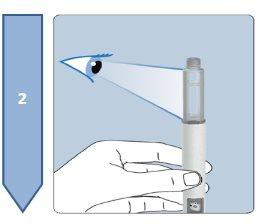
No utilice este medicamento si observa que la pluma precargada está dañada, que la solución no es transparente, que tiene partículas o copos, que no es incolora o que tiene un color distinto del amarillo claro.
Los medicamentos no se deben tirar por los desagües ni a la basura. Pregunte a su farmacéutico cómo deshacerse de los envases y de los medicamentos que ya no necesita. De esta forma, ayudará a proteger el medio ambiente.
6. Contenido del envase e información adicional
Composición de Besremi
- El principio activo es el ropeginterferón alfa-2b.
Cada pluma precargada con 0,5 ml de solución contiene 250 microgramos de ropeginterferón alfa-2b expresados en proteínas, que corresponden a 500 microgramos/ml.
- Los demás componentes son cloruro sódico, polisorbato 80, alcohol bencílico, acetato sódico anhidro, ácido acético glacial y agua para preparaciones inyectables. Con respecto al alcohol bencílico, al polisorbato 80 y al sodio, ver sección 2 «Besremi contiene alcohol bencílico», «Besremi contiene polisorbato 80» y «Besremi contiene sodio».
Aspecto del producto y contenido del envase
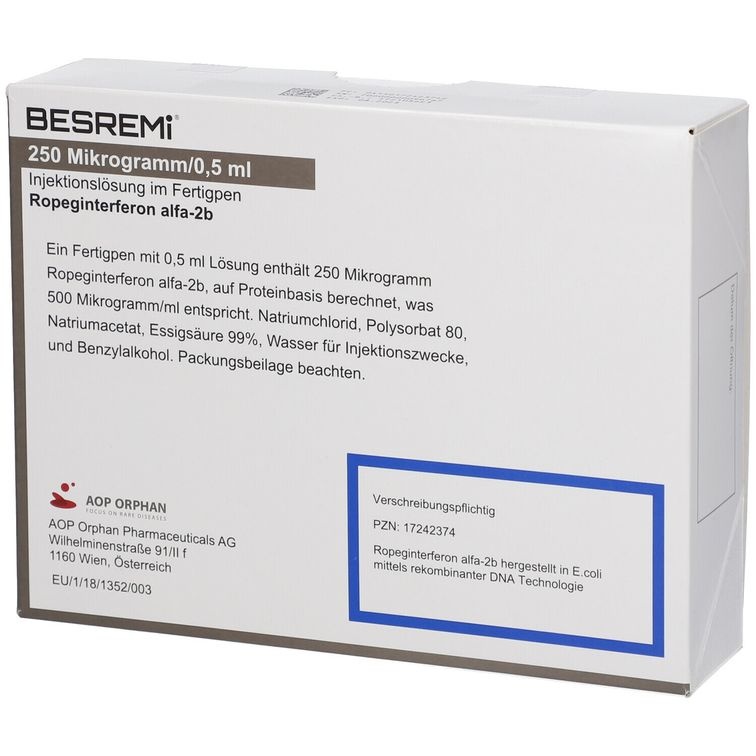
Besremi se presenta en una solución para inyección (inyección) en una pluma precargada. Cada pluma precargada contiene 0,5 ml de solución. Se comercializa en envases con:
- 1 pluma precargada y 2 agujas de inyección (tipo: mylife AutoProtect PRO 29G × 8 mm)
- 3 plumas precargadas y 6 agujas de inyección (tipo: mylife mylife AutoProtect PRO 29G × 8 mm ).
Titular de la autorización de comercialización y responsable de la fabricación
AOP Orphan Pharmaceuticals GmbH
Leopold-Ungar-Platz 2
1190 Viena
Austria
Pueden solicitar más información respecto a este medicamento dirigiéndose al representante local del titular de la autorización de comercialización:
België/Belgique/Belgien AOP Orphan Pharmaceuticals GmbH (Austria) Tél/Tel: +43 1 5037244 | Lietuva AOP Orphan Pharmaceuticals GmbH (Austrija) Tel: + 43 1 5037244 |
| Luxembourg/Luxemburg AOP Orphan Pharmaceuticals GmbH (Austria) Tél/Tel: + 43 1 5037244 |
Ceská republika AOP Orphan Pharmaceuticals GmbH (Rakousko) Tel: + 43 1 5037244 | Magyarország AOP Orphan Pharmaceuticals GmbH (Ausztria) Tel.: + 43 1 5037244 |
Danmark AOP Orphan Pharmaceuticals GmbH (Østrig) Tlf: + 43 1 5037244 | Malta AOP Orphan Pharmaceuticals GmbH (L-Awstrija) Tel: + 43 1 5037244 |
Deutschland AOP Orphan Pharmaceuticals Germany GmbH Tel: + 49 89 99 740 7600 | Nederland AOP Orphan Pharmaceuticals GmbH (Oostenrijk) Tel: + 43 1 5037244 |
Eesti AOP Orphan Pharmaceuticals GmbH (Austria) Tel: + 43 1 5037244 | Norge AOP Orphan Pharmaceuticals GmbH (Østerrike) Tlf: + 43 1 5037244 |
Ελλ?δα AOP Orphan Pharmaceuticals GmbH (Αυστρ?α) Τηλ: + 43 1 5037244 | Österreich AOP Orphan Pharmaceuticals GmbH Tel: + 43 1 5037244 |
España AOP Orphan Pharmaceuticals Iberia S.L.U. Tel: +34 91 449 19 89 | Polska AOP Orphan Pharmaceuticals GmbH (Austria) Tel.: + 43 1 5037244 |
France AOP Orphan Pharmaceuticals GmbH (Autriche) Tél: + 43 1 5037244 | Portugal AOP Orphan Pharmaceuticals Iberia S.L.U. Tel: + 34 91 449 19 89 |
Hrvatska AOP Orphan Pharmaceuticals GmbH (Austrija) Tel: + 43 1 5037244 | România AOP Orphan Pharmaceuticals GmbH (Austria) Tel: + 43 1 5037244 |
Ireland AOP Orphan Pharmaceuticals GmbH (Austria) Tel: + 43 1 5037244 | Slovenija AOP Orphan Pharmaceuticals GmbH (Avstrija) Tel: + 43 1 5037244 |
Ísland AOP Orphan Pharmaceuticals GmbH (Austurríki) Sími: + 43 1 5037244 | Slovenská republika AOP Orphan Pharmaceuticals GmbH (Rakúsko) Tel: + 43 1 5037244 |
Italia AOP Orphan Pharmaceuticals GmbH (Austria) Tel: + 43 1 5037244 | Suomi/Finland AOP Orphan Pharmaceuticals GmbH (Itävalta) Puh/Tel: + 43 1 5037244 |
Κ?προς AOP Orphan Pharmaceuticals GmbH (Αυστρ?α) Τηλ: + 43 1 5037244 | Sverige AOP Orphan Pharmaceuticals GmbH (Österrike) Tel: + 43 1 5037244 |
Latvija AOP Orphan Pharmaceuticals GmbH (Austrija) Tel: + 43 1 5037244 |

Fecha de la última revisión de este prospecto:
Otras fuentes de información
La información detallada de este medicamento está disponible en la página web de la Agencia Europea de Medicamentos: https://www.ema.europa.eu.
--------------------------------------------------------------------------------------------------------------------
Instrucciones
Lea atentamente este prospecto antes de utilizar la pluma precargada Besremi 250 microgramos. Si tiene alguna duda, consulte a su médico o farmacéutico.
Su médico o su farmacéutico le enseñarán a utilizar la pluma.
La pluma precargada Besremi 250 microgramos se puede utilizar para inyectar dosis dentro del intervalo de 50 a 250 microgramos. La misma pluma puede utilizarse dos veces, siempre que la suma de las dos dosis no supere los 250 microgramos. Su médico le indicará la dosis que usted necesita. Tome nota de las fechas y las dosis de las inyecciones que le indique su médico.
Si necesita una dosis de más de 250 microgramos, tendrá que utilizar dos plumas precargadas Besremi 250 microgramos. Cada una de ellas se debe inyectar en un punto diferente. Su médico o farmacéutico le explicarán cómo utilizar las dos plumas.
Conserve la pluma dentro del embalaje exterior en la nevera.
Saque la pluma de la nevera 15 minutos antes de la inyección para que alcance la temperatura ambiente.
Sitúese a una zona bien iluminada y tranquila para ponerse la inyección.
Para ponerse la inyección, necesitará lo siguiente:
- Pluma precargada Besremi
- Aguja (tipo: mylife AutoProtect PRO 29G × 8 )
- Toallita mojada con alcohol (no se incluye)
- Opcional: tirita adhesiva (no se incluye)
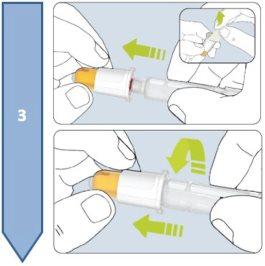
La pluma precargada Besremi se suministra con dos o seis agujas (dependiendo del tamaño del envase). Debe usar siempre una aguja nueva cada vez que se inyecte.
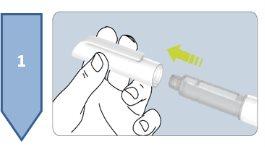
No utilice la pluma si parece dañada. Si al utilizar la pluma tiene la impresión de que puede haberla dañado (p. ej., se le ha caído o ha apretado demasiado), no la siga utilizando. Hágase con una nueva y empiece de nuevo.
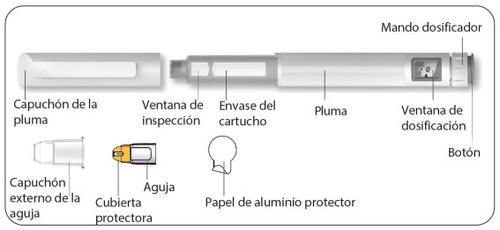
Descripción de la pluma precargada Besremi 250 microgramos
|
|
--------------------------------------------------------------------------------------------------------------------
|
|
--------------------------------------------------------------------------------------------------------------------
|
|
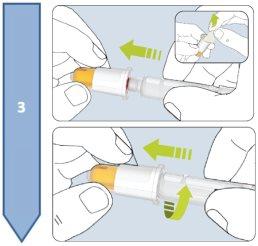
--------------------------------------------------------------------------------------------------------------------
|
|
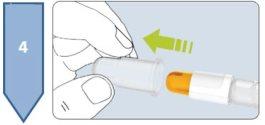
--------------------------------------------------------------------------------------------------------------------
|
|
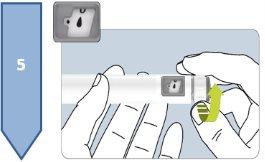
--------------------------------------------------------------------------------------------------------------------
|
|
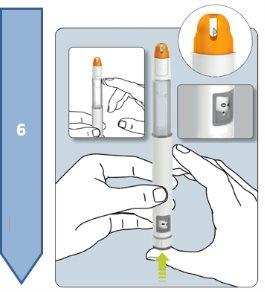
--------------------------------------------------------------------------------------------------------------------
|
|
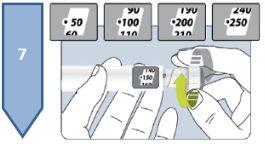
--------------------------------------------------------------------------------------------------------------------
|
No se inyecte de ningún modo en zonas de piel irritada, enrojecida, con hematomas, infectada o con cicatrices. |
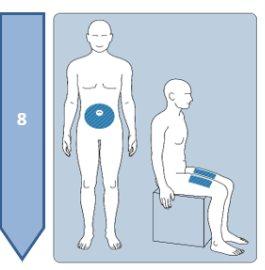
--------------------------------------------------------------------------------------------------------------------
|
|
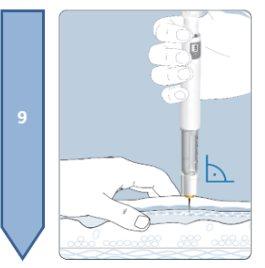
--------------------------------------------------------------------------------------------------------------------
|
|
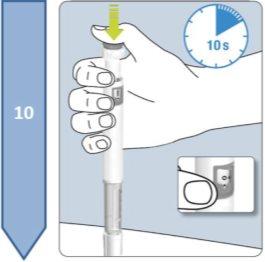
--------------------------------------------------------------------------------------------------------------------
|
Nota:
|
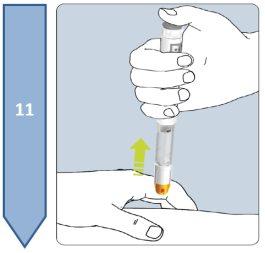
--------------------------------------------------------------------------------------------------------------------
|
Nota:
|
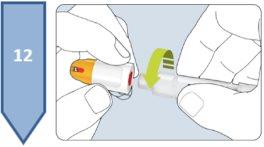
--------------------------------------------------------------------------------------------------------------------
| Nota:Vuelva a poner el capuchón de la pluma. Reutilización de la pluma:
Eliminación de la pluma y de la aguja:
|
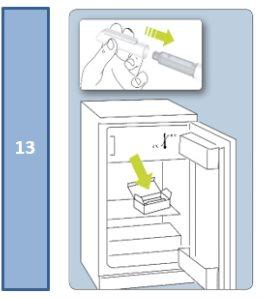
--------------------------------------------------------------------------------------------------------------------
- País de registro
- Forma farmacéuticaINYECTABLE, 250 microgramos/0,5 ml
- Código ATCL03AB15
- Principio activo
- Requiere recetaSí
- Fabricante
- ComposiciónCLORURO DE SODIO (8 mg/ml mg), ACETATO SODICO ANHIDRO (1,58 mg/ml mg), ALCOHOL BENCILICO (10 mg/ml mg), POLISORBATO 80 (0,05 mg/ml mg)
- Esta información es de carácter general y no sustituye la consulta con un profesional sanitario.
- Alternativas a BESREMI 250 MICROGRAMOS/0,5 ML DE SOLUCION PARA INYECCION EN PLUMA PRECARGADAForma farmacéutica: INYECTABLE, 30 µgPrincipio activo: Interferon beta-1aFabricante: Biogen Netherlands B.V.Requiere recetaForma farmacéutica: INYECTABLE, 30 µgPrincipio activo: Interferon beta-1aFabricante: Biogen Netherlands B.V.Requiere recetaForma farmacéutica: INYECTABLE, 300 µgPrincipio activo: Interferon beta-1bFabricante: Bayer AgRequiere receta
Médicos online para BESREMI 250 MICROGRAMOS/0,5 ML DE SOLUCION PARA INYECCION EN PLUMA PRECARGADA
Comenta la dosis, los posibles efectos secundarios, interacciones, contraindicaciones o la revisión de receta de BESREMI 250 MICROGRAMOS/0,5 ML DE SOLUCION PARA INYECCION EN PLUMA PRECARGADA, sujeto a valoración médica y a la normativa local.









Obtén una receta de BESREMI 250 MICROGRAMOS/0,5 ML DE SOLUCION PARA INYECCION EN PLUMA PRECARGADA online
Rellena un formulario de 2 minutos
Cuéntanos tus síntomas, historial y el medicamento que necesitas.
Elige un médico o nosotros te asignamos uno
Escoge un especialista o te conectamos con el próximo médico disponible.
El médico revisa tu caso
Normalmente en 30 minutos. Puede hacerte preguntas adicionales por chat.
Recógela en cualquier farmacia
Receta electrónica enviada a tu correo, válida en toda España.
Preguntas frecuentes
BESREMI 250 MICROGRAMOS/0,5 ML DE SOLUCION PARA INYECCION EN PLUMA PRECARGADA requiere receta en España. Puedes confirmarlo con un médico online según tu caso.
El principio activo de BESREMI 250 MICROGRAMOS/0,5 ML DE SOLUCION PARA INYECCION EN PLUMA PRECARGADA es ropeginterferon alfa-2b. Esta información ayuda a identificar medicamentos con la misma composición pero con diferentes nombres comerciales.
BESREMI 250 MICROGRAMOS/0,5 ML DE SOLUCION PARA INYECCION EN PLUMA PRECARGADA es fabricado por Aop Orphan Pharmaceuticals Gmbh. La marca y el envase pueden variar según el distribuidor.
Los Médicos de familia, Psiquiatras, Dermatólogos, Cardiólogos, Endocrinólogos, Gastroenterólogos, Neumólogos, Nefrólogos, Reumatólogos, Hematólogos, Infectólogos, Alergólogos, Geriatras, Pediatras, Oncólogos pueden valorar la prescripción de BESREMI 250 MICROGRAMOS/0,5 ML DE SOLUCION PARA INYECCION EN PLUMA PRECARGADA cuando esté clínicamente indicado. Puedes reservar una videoconsulta para comentar tu caso y las opciones de tratamiento.
España cuenta con una infraestructura sanitaria bien desarrollada en ciudades principales como Madrid, Barcelona, Valencia y Sevilla. Las farmacias están ampliamente disponibles y operan bajo estrictas regulaciones, garantizando el acceso a medicamentos con receta.
Puedes comprar BESREMI 250 MICROGRAMOS/0,5 ML DE SOLUCION PARA INYECCION EN PLUMA PRECARGADA en Madrid, Barcelona, Sevilla o Valencia en cualquier farmacia local con una receta válida.
Para obtener una receta, puedes utilizar Oladoctor:
Otros medicamentos con el mismo principio activo (ropeginterferon alfa-2b) incluyen AVONEX 30 microgramos/0,5 ml SOLUCION INYECTABLE EN PLUMA PRECARGADA, AVONEX 30 microgramos/0,5 ml SOLUCION INYECTABLE, BETAFERON 250 microgramos/ml, POLVO Y DISOLVENTE PARA SOLUCION INYECTABLE. Pueden tener diferentes nombres comerciales o formulaciones, pero contienen el mismo componente terapéutico. Consulta siempre con un médico antes de cambiar o iniciar un nuevo medicamento.
