






Cómo usar ATAZANAVIR STADA 300 MG CAPSULAS DURAS EFG
Traducción generada por IA
Este contenido ha sido traducido automáticamente y se ofrece solo con fines informativos. No sustituye la consulta con un profesional sanitario.
Ver originalContenido del prospecto
Introducción
Prospecto: información para el usuario
Atazanavir Stada 300 mg cápsulas duras EFG
Lea todo el prospecto detenidamente antes de empezar a tomar este medicamento, porque contiene información importante para usted.
- Conserve este prospecto, ya que puede tener que volver a leerlo.
- Si tiene alguna duda, consulte a su médico o farmacéutico.
- Este medicamento se le ha recetado solamente a usted, y no debe dárselo a otras personas aunque tengan los mismos síntomas que usted, ya que puede perjudicarles.
- Si experimenta efectos adversos, consulte a su médico o farmacéutico, incluso si se trata de efectos adversos que no aparecen en este prospecto. Ver sección 4.
Contenido del prospecto
- Qué es Atazanavir Stada y para qué se utiliza
- Qué necesita saber antes de empezar a tomar Atazanavir Stada
- Cómo tomar Atazanavir Stada
- Posibles efectos adversos
- Conservación de Atazanavir Stada
- Contenido del envase e información adicional
1. Qué es Atazanavir Stada y para qué se utiliza
Atazanavir Stada es un medicamento antiviral (o antirretroviral).Pertenece a un grupo de medicamentos denominado inhibidores de la proteasa. Estos medicamentos controlan la infección por el Virus de la Inmunodeficiencia Humana (VIH) bloqueando a una proteína que el VIH necesita para multiplicarse. Actúa reduciendo la cantidad de VIH en su organismo y esto a cambio fortalece su sistema inmunitario. De esta forma atazanavir reduce el riesgo de desarrollar enfermedades asociadas a la infección por VIH.
Atazanavir cápsulas puede ser utilizado por adultos y niños de 6 años de edad y mayores. Su médico le ha recetado atazanavir porque está infectado por el VIH que causa el Síndrome de Inmunodeficiencia Adquirida (SIDA). Normalmente se utiliza en combinación con otros medicamentos anti-VIH. Su médico determinará cual es la mejor combinación para usted de estos medicamentos con atazanavir.

2. Qué necesita saber antes de empezar a tomar Atazanavir Stada
NO TOME Atazanavir Stada
- si es alérgicoa atazanavir o a alguno de los demás componentes de este medicamento (incluidos en la sección 6).
- si tiene problemas de hígado de moderados a graves.Su médico evaluará la gravedad de su enfermedad de hígado antes de decidir si puede tomar atazanavir.
- si está tomando alguno de estos medicamentos:ver también “Otros medicamentos y Atazanavir Stada”.
- rifampicina (un antibiótico utilizado para el tratamiento de la tuberculosis)
- astemizol o terfenadina (utilizados frecuentemente para el tratamiento de los síntomas alérgicos, estos medicamentos pueden estar disponibles sin receta); cisaprida (utilizado para el tratamiento del reflujo gástrico, a veces llamado ardor de estómago); pimozida (utilizado para el tratamiento de la esquizofrenia); quinidina o bepridilo (utilizados para corregir el ritmo cardíaco); ergotamina, dihidroergotamina, ergonovina, metilergonovina (utilizados para el tratamiento de los dolores de cabeza); y alfuzosina (utilizado para el tratamiento del aumento de la glándula prostática)
- quetiapina (utilizada para el tratamiento de la esquizofrenia, el trastorno bipolar y el trastorno depresivo mayor)
- lurasidona (usado en el tratamiento de la esquizofrenia)
- medicamentos que contengan hierba de San Juan (Hypericum perforatum,una planta medicinal)
- triazolam y midazolam oral (administrado por la boca) (utilizados para inducir el sueño y/o aliviar la ansiedad)
- lomitapida. simvastatina y lovastatina (utilizados para disminuir el colesterol en sangre).
- productos que contienen grazoprevir, incluida la combinación a dosis fija de elbasvir/grazoprevir y la combinación a dosis fija de glecaprevir/pibrentasvir (utilizada para tratar la infección crónica por hepatitis C)
- apalutamida (utilizada para tratar el cáncer de próstata)
No tome sildenafilo con atazanavir cuando sildenafilo se utiliza para el tratamiento de la hipertensión arterial pulmonar. El sildenafilo también se utiliza para el tratamiento de la disfunción eréctil. Informe a su médico si está utilizando sildenafilo para el tratamiento de la disfunción eréctil.
Informe a su médico inmediatamente si se encuentra en alguna de estas situaciones.
Advertencias y precauciones
Atazanavir no es una cura para la infección por el VIH.Usted puede continuar desarrollando infecciones u otras enfermedades asociadas a la infección por VIH.
Algunas personas necesitarán un control especial antes o durante el tratamiento con atazanavir. Consulte a su médico o farmacéutico antes de empezar a tomar atazanavir y asegúrese de informar a su médico:
- si tiene hepatitis B o C
- si desarrolla signos o síntomas de piedras en la vesícula (dolor en el lado derecho de su estómago)
- si tiene hemofilia tipo A o B
- si necesita someterse a hemodiálisis
Atazanavir puede afectar al funcionamiento de los riñones.
Se han comunicado casos de piedras en el riñón en pacientes tratados con atazanavir. Si presenta signos o síntomas de piedras en el riñón (dolor de costado, sangre en la orina, dolor al orinar), por favor informe a su médico inmediatamente.
En algunos pacientes que presentan infección por VIH (SIDA) avanzada y antecedentes de infección oportunista, pueden aparecer signos y síntomas de inflamatorios como resultado de infecciones previas, poco después de iniciar el tratamiento anti-VIH. Se cree que estos síntomas son debidos a una mejoría en la respuesta inmune del organismo, permitiéndole combatir infecciones que estaban presentes pero que no producían ningún síntoma evidente. Si observa cualquier síntoma de infección, por favor informe a su médico inmediatamente. Además de las infecciones oportunistas, también pueden aparecer trastornos autoinmunes (son enfermedades en las que el sistema inmunitario ataca tejido corporal sano) después de que usted haya empezado a tomar medicamentos para el tratamiento de su infección por VIH. Los trastornos autoinmunitarios pueden aparecer muchos meses después del inicio del tratamiento. Si observa cualquier síntoma de infección u otros síntomas como por ejemplo debilidad muscular, debilidad que empieza en las manos y pies y que asciende hacia el tronco del cuerpo, palpitaciones, temblor o hiperactividad, por favor, informe a su médico inmediatamente para recibir el tratamiento necesario.
Algunos pacientes que reciben tratamiento antirretroviral combinado pueden desarrollar una enfermedad de los huesos llamada osteonecrosis (muerte de tejido óseo provocada por la pérdida de aporte de sangre al hueso). Entre los numerosos factores de riesgo para desarrollar esta enfermedad se encuentran la duración del tratamiento antirretroviral combinado, el uso de corticosteroides, el consumo de alcohol, la inmunodepresión grave y el índice de masa corporal elevado. Los síntomas de la osteonecrosis son rigidez en las articulaciones, dolor y molestias (especialmente en cadera, rodilla y hombro) y dificultad de movimiento. Si nota cualquiera de estos síntomas, por favor informe a su médico.
Se ha producido hiperbilirrubinemia (aumento del nivel de bilirrubina en sangre) en pacientes que reciben atazanavir. Los signos pueden ser una coloración ligeramente amarillenta de la piel o los ojos. Si nota alguno de estos síntomas, por favor informe a su médico.
Se ha observado erupción cutánea grave, incluyendo síndrome de Stevens-Johnson, en pacientes tratados con atazanavir. Informe a su médico inmediatamente si desarrolla una erupción.
Si nota un cambio en la manera de latir de su corazón (cambios de ritmo cardíaco), por favor informe a su médico. Los niños que estén recibiendo atazanavir pueden requerir que su corazón sea monitorizado. El médico de su hijo decidirá esto.
Niños
No administre este medicamento a niñosmenores de 3 meses de edad y que pesen menos de 5 kg. No se ha estudiado el uso de atazanavir en niños menores de 3 meses de edad y que pesan menos de 5 kg debido al riesgo de complicaciones graves.
Otros medicamentos y Atazanavir Stada
No debe tomar atazanavir con ciertos medicamentos.Estos se enumeran bajo el título “No tome Atazanavir Stada”, al comienzo de la Sección 2.
Existen otros medicamentos que no se pueden tomar con atazanavir. Informe a su médico o farmacéutico si está tomando, ha tomado recientemente, o pudiera tener que tomar cualquier otro medicamento. Es especialmente importante que mencione el uso de los siguientes:
- otros medicamentos para el tratamiento de la infección por VIH (p. ej., indinavir, nevirapina y efavirenz)
- sofosbuvir/velpatasvir/voxilaprevir (utilizado para el tratamiento de la hepatitis C)
- sildenafilo, vardenafilo, o tadalafilo (utilizados por los hombres para el tratamiento de la impotencia (disfunción eréctil))
- si está tomando un anticonceptivo oral ("la píldora") con atazanavir, para evitar el embarazo,asegúrese de tomarlo exactamente como le haya indicado su médico y no olvide ninguna dosis
- algunos medicamentos utilizados para el tratamiento de enfermedades relacionadas con la acidez estomacal (por ejemplo antiácidos que se deban administrar 1 hora antes de tomar atazanavir o 2 horas después de tomar atazanavir, bloqueantes-H2 como famotidina e inhibidores de la bomba de protones como omeprazol)
- medicamentos para reducir la presión sanguínea, bajar la frecuencia cardíaca o corregir el ritmo cardíaco (amiodarona, diltiazem, lidocaína sistémica, verapamilo)
- atorvastatina, pravastatina y fluvastatina (utilizados para disminuir el colesterol en sangre)
- salmeterol (utilizado para el tratamiento del asma)
- ciclosporina, tacrólimus y sirólimus (medicamentos para disminuir los efectos del sistema inmunitario del organismo)
- ciertos antibióticos (rifabutina, claritromicina)
- ketoconazol, itraconazol y voriconazol (antifúngicos)
- apixaban, dabigatran, edoxaban, rivaroxaban, warfarina, clopidogrel, prasugrel y ticagrelor (utilizados para reducir coágulos en la sangre)
- carbamazepina, fenitoína, fenobarbital y lamotrigina (antiepilépticos)
- encorafenib, ivosidenib e irinotecán (utilizado para el tratamiento del cáncer)
- elagolix (antagonistas de los receptores de la hormona liberadora de gonadotropina, utilizados para tratar el dolor intenso de la endometriosis)
- fostamatinib (utilizado para tratar la trombocitopenia inmunitaria crónica)
- agentes sedantes (p. ej., midazolam administrado mediante inyección)
- buprenorfina (utilizada para el tratamiento de la adicción a opiáceos y el dolor)
- corticosteroides (todas las vías de administración; incluida dexametasona)
Algunos medicamentos pueden interaccionar con ritonavir, un medicamento que se administra junto con atazanavir. Es importante que informe a su médico si está usando un corticoesteroide inhalado o nasal (administrado por vía nasal), fluticasona o budesonida (administrados para el tratamiento de síntomas alérgicos o asma).
Toma de Atazanavir Stada con alimentos y bebidas
Es importante que tome atazanavir con alimentos (una comida o merienda) ya que esto ayuda a la absorción del medicamento.
Embarazo y lactancia
Si está embarazada o cree que podría estar embarazada o tiene intención de quedarse embarazada, consulte a su médico antes de utilizar este medicamento.
Atazanavir, el principio activo de atazanavir, se excreta en la leche materna. Las pacientes no deben dar el pecho mientras toman atazanavir.
No se recomiendaque las mujeres que conviven con el VIH den el pecho porque la infección por VIH puede transmitirse al bebé a través de la leche materna.
Si está dando el pecho o piensa en dar el pecho, debe consultar consu médico lo antes posible.
Conducción y uso de máquinas
Si se siente mareado o aturdido, no conduzca ni use máquinas, y contacte con su médico inmediatamente.
Atazanavir Stada contiene lactosa.
Este medicamento contiene lactosa. Si su médico le ha indicado que padece una intolerancia a ciertos azúcares, consulte con él antes de tomar este medicamento.
3. Cómo tomar Atazanavir Stada
Siga exactamente las instrucciones de administración de este medicamento indicadas por su médico o farmacéutico. En caso de duda, consulte de nuevo a su médico o farmacéutico. De esta forma, puede estar seguro de que el tratamiento es totalmente eficaz y reduce el riesgo de que el virus desarrolle resistencia al tratamiento.
La dosis recomendada de atazanavir cápsulas para adultos es 300 mg junto con 100 mg de ritonavir una vez al día y con alimentos,en combinación con otros medicamentos anti-VIH. Su médico puede ajustar la dosis de atazanavir de acuerdo con su tratamiento anti-VIH.
Para niños (de 6 a 18 años de edad), el médico de su hijo decidirá la dosis correcta en función del peso de su niño.La dosis de atazanavir cápsulas para niños se calcula por el peso corporal y se toma una vez al día con alimentos y 100 mg de ritonavir como se muestra abajo:
Peso Corporal (kg) | Dosis de atazanavir una vez al día (mg) | Dosis de ritonavir* una vez al día (mg) |
15 hasta menos de 35 | 200 | 100 |
al menos 35 | 300 | 100 |
- Se puede usar ritonavir cápsulas, comprimidos o solución oral.
Otras formas de atazanavir pueden estar disponibles para su uso en niños de al menos 3 meses de edad y al menos 5 kg de peso. Se recomienda el cambio de otras formas de administración a cápsulas tan pronto como los pacientes sean capaces de tragar las cápsulas de manera adecuada.
Cuando se haga el cambio entre otras formas farmacéuticas y las cápsulas, puede ser necesario ajustar la dosis. Su médico decidirá la dosis correcta en función del peso de su niño.
No hay recomendaciones de dosis para atazanavir en pacientes pediátricos menores de 3 meses de edad.
Tome Atazanavir Stada cápsulas con alimentos(una comida o merienda). Trague las cápsulas enteras. No abrir las cápsulas.
Si toma más Atazanavir Stada del que debe
Si usted o su niño toman demasiado atazanavir, la piel y/o los ojos se pueden poner amarillentos (ictericia) y se pueden producir latidos cardíacos irregulares (prolongación QTc).
Si accidentalmente ha tomado más cápsulas de atazanavir de las que el médico le ha recetado, póngase en contacto con su médico inmediatamente o acuda al hospital más cercano para consulta o llame al Servicio de Información Toxicológica, teléfono 91.562.04.20, indicando el medicamento y la cantidad ingerida.
Si olvidó tomar Atazanavir Stada
Si ha olvidado una dosis, tómela lo antes posible con algún alimento y después tome la siguiente dosis programada a la hora habitual. Si ya es casi la hora de la siguiente dosis, no tome la dosis olvidada. Espere y tome la dosis siguiente a la hora habitual. No tome una dosis doble para compensar las dosis olvidadas.
Si interrumpe el tratamiento con Atazanavir Stada
No interrumpa el tratamiento con atazanavir antes de consultarlo con su médico.
Si tiene cualquier otra duda sobre el uso de este medicamento, pregunte a su médico.

4. Posibles efectos adversos
Al igual que todos los medicamentos, este medicamento puede producir efectos adversos, aunque no todas las personas los sufran. Durante el tratamiento de la infección por el VIH, no siempre es fácil identificar los efectos adversos causados por atazanavir, por cualquier otro medicamento que esté tomando, o por la propia infección por VIH. Informe a su médico de cualquier cambio que note en su estado de salud.
Durante el tratamiento del VIH puede haber un aumento en el peso y en los niveles de glucosa y lípidos en la sangre. Esto puede estar en parte relacionado con la recuperación de la salud y del estilo de vida, y en el caso del aumento de los lípidos en la sangre, algunas veces es debido a los mismos medicamentos para el VIH. Su médico analizará estos cambios.
Informe inmediatamente a su médico si presenta alguno de los siguientes efectos adversos graves:
- Erupción en la piel, y picor ocasionalmente graves (ambos fueron comunicados). La erupción por lo general desaparece en 2 semanas sin realizar ningún cambio en el tratamiento con atazanavir. La aparición de erupciónes cutáneas severas podría ir asociada a otros síntomas potencialmente graves. Interrumpa el tratamiento con atazanavir e informe a su médico inmediatamente si desarrolla una erupción grave o una erupción con síntomas parecidos a la gripe, ampollas, fiebre, llagas en la boca, dolor muscular o de las articulaciones, hinchazón en la cara, inflamación del ojo que causa rojez (conjuntivitis), bultos dolorosos, calientes o rojos (nódulos).
- Coloración amarillenta de la piel o de la parte blanca de los ojos causada por niveles altos de bilirrubina en sangre (fue comunicada con frecuencia). Este efecto adverso normalmente no es peligroso en adultos y niños mayores de 3 meses de edad; pero puede ser un síntoma de un problema grave. Si su piel o la parte blanca de sus ojos se vuelve amarilla, informe a su médico inmediatamente.
- Cambios en la manera de latir de su corazón -cambios en el ritmo cardíaco- se pueden producir de forma ocasional. Informe a su médico inmediatamente si se siente mareado, aturdido o si de repente se desmaya. Estos pueden ser síntomas de un problema de corazón grave.
- Problemas de hígado (se producen con poca frecuencia). Su médico debe realizarle análisis de sangre antes de iniciar el tratamiento con este medicamento y durante el tratamiento. Si tiene problemas de hígado, incluida infección por hepatitis B o C, puede experimentar un empeoramiento de sus problemas de hígado. Informe a su médico inmediatamente si su orina se vuelve oscura (color té), tiene picor, su piel o la parte blanca de sus ojos se vuelve amarillenta, tiene dolor alrededor del estómago, náuseas, heces de color blanco o amarillo-pálido.
- Problemas en la vesícula biliar en personas que toman atazanavir (se producen con poca frecuencia). Los síntomas que obedecen a problemas en la vesícula biliar pueden incluir dolor en la parte derecha o medio alta del estómago, náuseas, vómitos, fiebre o color amarillento de la piel o de la parte blanca de los ojos.
- Atazanavir puede afectar al funcionamiento de los riñones.
- Piedras en el riñón en personas que toman atazanavir (se producen con poca frecuencia). Informe a su médico inmediatamente si tiene síntomas de piedras en el riñón, que puede incluir dolor en la parte baja de la espalda o en la parte baja del estómago, sangre en la orina o dolor al orinar.
Otros efectos adversos comunicados en los pacientes tratados con atazanavir son los siguientes:
Frecuentes (pueden afectar hasta 1 de cada 10 personas):
- dolor de cabeza
- vómitos, diarrea, dolor abdominal (dolor de tipo malestar estomacal), náuseas, dispepsia (indigestión)
- fatiga (cansancio extremo)
Poco frecuentes (pueden afectar hasta 1 de cada 100 personas):
- neuropatía periférica (entumecimiento, debilidad, hormigueo o dolor en los brazos y las piernas)
- hipersensibilidad (reacción alérgica)
- astenia (cansancio inusual o debilidad)
- pérdida de peso, aumento de peso, anorexia (pérdida del apetito), aumento del apetito
- depresión, ansiedad, alteración del sueño
- desorientación, amnesia (pérdida de memoria), aturdimiento, somnolencia (adormecimiento), sueños anormales
- síncope (desfallecimiento), hipertensión (presión sanguínea elevada)
- disnea (dificultad respiratoria)
- pancreatitis (inflamación del páncreas), gastritis (inflamación del estómago), estomatitis aftosa (úlceras bucales y herpes labial), disgeusia (alteración del sentido del gusto), flatulencia (gases), sequedad de boca, distensión abdominal
- angioedema (hinchazón grave de la piel y otros tejidos generalmente los labios o los ojos)
- alopecia (pérdida anormal del cabello o debilitamiento), prurito (picores)
- atrofia muscular (contracción muscular), artralgia (dolor en las articulaciones), mialgia (dolor muscular)
- nefritis intersticial (inflamación del riñón), hematuria (sangre en la orina), proteinuria (exceso de proteína en la orina), polaquiuria (aumento de la frecuencia de evacuación de orina)
- ginecomastia (aumento de las mamas en los hombres)
- dolor en el pecho, malestar (sentirse enfermo), fiebre
- insomnio (dificultad para dormir)
Raros (pueden afectar hasta 1 de cada 1.000 personas):
- alteración de la marcha (forma de caminar anómala)
- edema (hinchazón)
- hepatoesplenomegalia (aumento del tamaño del hígado y del bazo)
- miopatía (dolor en los músculos, debilidad muscular, pérdida de la tensión muscular no causada por el ejercicio)
- dolor en los riñones
Comunicación de efectos adversos
Si experimenta cualquier tipo de efecto adverso, consulte a su médico o enfermero, incluso si se trata de posibles efectos adversos que no aparecen en este prospecto. También puede comunicarlos directamente a través del Sistema Español de Farmacovigilancia de Medicamentos de Uso Humano Website: www.notificaram.es. Mediante la comunicación de efectos adversos usted puede contribuir a proporcionar más información sobre la seguridad de este medicamento.
5. Conservación de Atazanavir Stada
Mantener este medicamento fuera de la vista y del alcance de los niños.
No utilice este medicamento después de la fecha de caducidad que aparece en el envase exterior, frasco o blíster después de CAD. La fecha de caducidad es el último día del mes que se indica.
No conservar a temperatura supeior a 30 ºC.
Para frascos:
Usar en 2 meses tras la primera apertura.
Los medicamentos no se deben tirar por los desagües ni a la basura. Deposite los envases y los medicamentos que no necesita en el Punto SIGRE de la farmacia. Pregunte a su farmacéutico cómo deshacerse de los envases y de los medicamentos que ya no necesita. De esta forma ayudará a proteger el medio ambiente.
6. Contenido del envase e información adicional
Composición de Atazanavir Stada
- El principio activo es atazanavir. Cada cápsula contiene 300 mg de atazanavir (como sulfato).
- Los demás componentes son lactosa monohidrato, crospovidona (tipo A) (E1202), sílice coloidal anhidra (E551), estearato de magnesio (E470b). La cubierta de la cápsula y la tinta de impresión contienen gelatina, dióxido de titanio (E171), indigotina (E132), óxido de hierro rojo (E172), laca y propilenglicol (E1520).
Aspecto del producto y contenido del envase
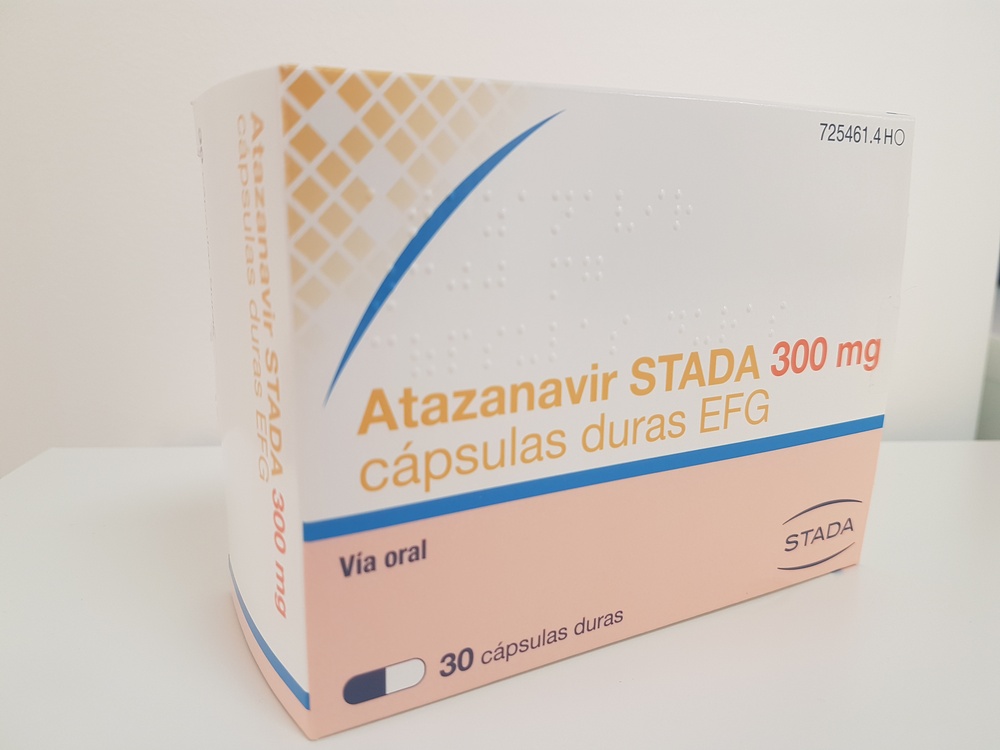
Atazanavir Stada 300 mg cápsulas duras son cápsulas opacas, rojas y azules, de tamaño 00 e impresa con tinta blanca, con "300 mg" en la tapa.
Atazanavir Stada 300 mg está disponible en:
- Blísteres precortados y unidosis de Al-OPA/Al/PVC que contienen 30 x 1 cápsulas duras.
- Blísteres de Al-OPA/Al/PVC que contienen 30 cápsulas duras.
- Envase múltiple que contiene 90 x 1 (3 paquetes de 30 x 1) cápsulas duras en blísteres precortados y unidosis de Al-OPA/Al/PVC.
- Envase múltiple que contiene 90 (3 paquetes de 30) cápsulas duras en blísteres de Aluminio-OPA/Alu/PVC.
- Frascos de polietileno de alta densidad (HDPE) cerrados con cierre de polipropileno a prueba de niños que contienen 30 cápsulas duras.
Puede que solamente estén comercializados algunos tamaños de envases.
Titular de la autorización de comercialización y responsable de la fabricación
Titular de la autorización de comercialización
Laboratorio STADA, S.L.
Frederic Mompou 5
08960 Sant Just Desvern (Barcelona)
España
Responsable de la fabricación
Remedica Ltd
Aharnon Street, Limassol Industrial Estate
3056 Limassol
Chipre
o
STADA Arzneimittel AG
Stadastrasse 2 – 18
61118 Bad Vilbel
Alemania
Este medicamento está autorizado en los Estados Miembros del Espacio Económico Europeo con los siguientes nombres:
Alemania: Atazanavir AL 300 mg Hartkapseln
Dinamarca: Atazanavir STADA
España: Atazanavir STADA 300 mg cápsulas duras EFG
Finlandia: Atazanavir STADA 300 mg kovat kapselit
Holanda: Atazanavir STADA 300 mg harde capsules
Islandia: Atazanavir STADA 300 mg hörð hylki
Italia: Atazanavir EG
Suecia: Atazanavir STADA 300 mg kapsel, hård
Fecha de la última revisión de este prospecto:febrero 2024
La información detallada de este medicamento está disponible en la página web de la Agencia Española de Medicamentos y Productos Sanitarios (AEMPS) (http://www.aemps.gob.es/).
-

- País de registro
- Forma farmacéuticaCAPSULA, 300 mg
- Código ATCJ05AE08
- Principio activo
- Requiere recetaSí
- Fabricante
- Esta información es de carácter general y no sustituye la consulta con un profesional sanitario.
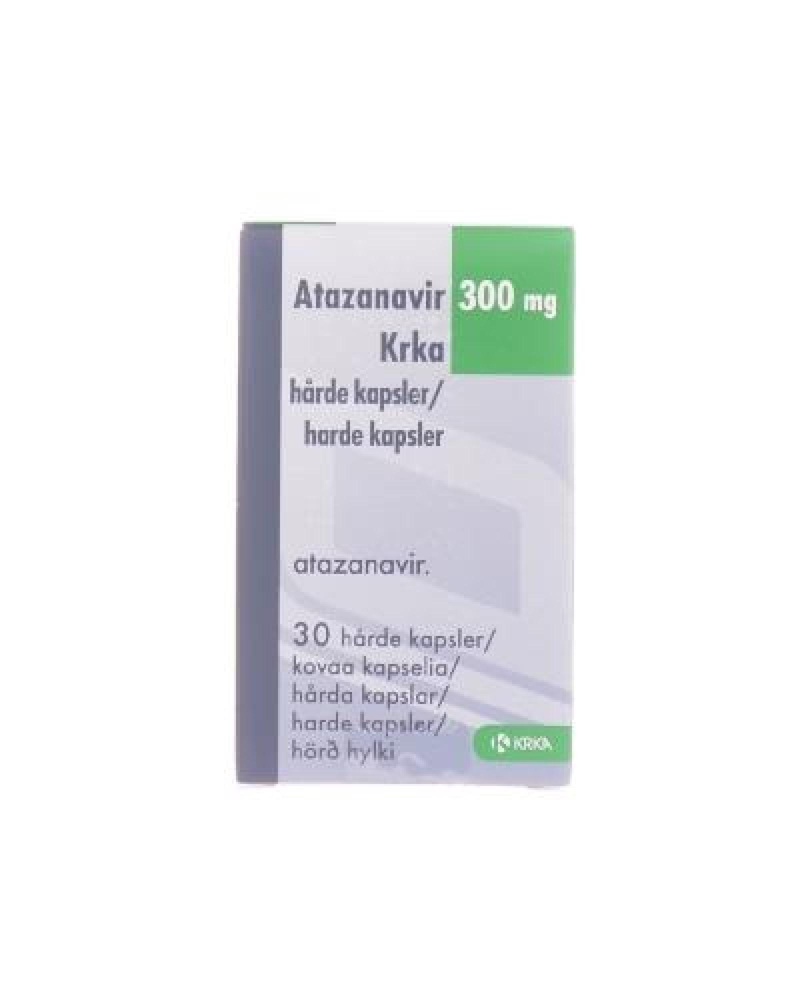
- Alternativas a ATAZANAVIR STADA 300 MG CAPSULAS DURAS EFGForma farmacéutica: CAPSULA, 150 mgPrincipio activo: atazanavirFabricante: Krka D.D. Novo MestoRequiere recetaForma farmacéutica: CÁPSULA, 200 mgPrincipio activo: atazanavirFabricante: Krka D.D. Novo MestoRequiere recetaForma farmacéutica: CAPSULA, 300 mgPrincipio activo: atazanavirFabricante: Krka D.D. Novo MestoRequiere receta

Médicos online para ATAZANAVIR STADA 300 MG CAPSULAS DURAS EFG
Comenta la dosis, los posibles efectos secundarios, interacciones, contraindicaciones o la revisión de receta de ATAZANAVIR STADA 300 MG CAPSULAS DURAS EFG, sujeto a valoración médica y a la normativa local.









Obtén una receta de ATAZANAVIR STADA 300 MG CAPSULAS DURAS EFG online
Rellena un formulario de 2 minutos
Cuéntanos tus síntomas, historial y el medicamento que necesitas.
Elige un médico o nosotros te asignamos uno
Escoge un especialista o te conectamos con el próximo médico disponible.
El médico revisa tu caso
Normalmente en 30 minutos. Puede hacerte preguntas adicionales por chat.
Recógela en cualquier farmacia
Receta electrónica enviada a tu correo, válida en toda España.
Preguntas frecuentes
ATAZANAVIR STADA 300 MG CAPSULAS DURAS EFG requires receta en España. Puedes confirmarlo con un médico online según tu caso.
El principio activo de ATAZANAVIR STADA 300 MG CAPSULAS DURAS EFG es atazanavir. Esta información ayuda a identificar medicamentos con la misma composición pero con diferentes nombres comerciales.
ATAZANAVIR STADA 300 MG CAPSULAS DURAS EFG es fabricado por Laboratorio Stada S.L.. La marca y el envase pueden variar según el distribuidor.
Los Médicos de familia, Psiquiatras, Dermatólogos, Cardiólogos, Endocrinólogos, Gastroenterólogos, Neumólogos, Nefrólogos, Reumatólogos, Hematólogos, Infectólogos, Alergólogos, Geriatras, Pediatras, Oncólogos pueden valorar la prescripción de ATAZANAVIR STADA 300 MG CAPSULAS DURAS EFG cuando esté clínicamente indicado. Puedes reservar una videoconsulta para comentar tu caso y las opciones de tratamiento.
España cuenta con una infraestructura sanitaria bien desarrollada en ciudades principales como Madrid, Barcelona, Valencia y Sevilla. Las farmacias están ampliamente disponibles y operan bajo estrictas regulaciones, garantizando el acceso a medicamentos con receta.
Puedes comprar ATAZANAVIR STADA 300 MG CAPSULAS DURAS EFG en Madrid, Barcelona, Sevilla o Valencia en cualquier farmacia local con una receta válida.
Para obtener una receta, puedes utilizar Oladoctor:
Otros medicamentos con el mismo principio activo (atazanavir) incluyen ATAZANAVIR KRKA 150 MG CAPSULAS DURAS EFG, ATAZANAVIR KRKA 200 MG CAPSULAS DURAS EFG, ATAZANAVIR KRKA 300 MG CAPSULAS DURAS EFG. Pueden tener diferentes nombres comerciales o formulaciones, pero contienen el mismo componente terapéutico. Consulta siempre con un médico antes de cambiar o iniciar un nuevo medicamento.
