






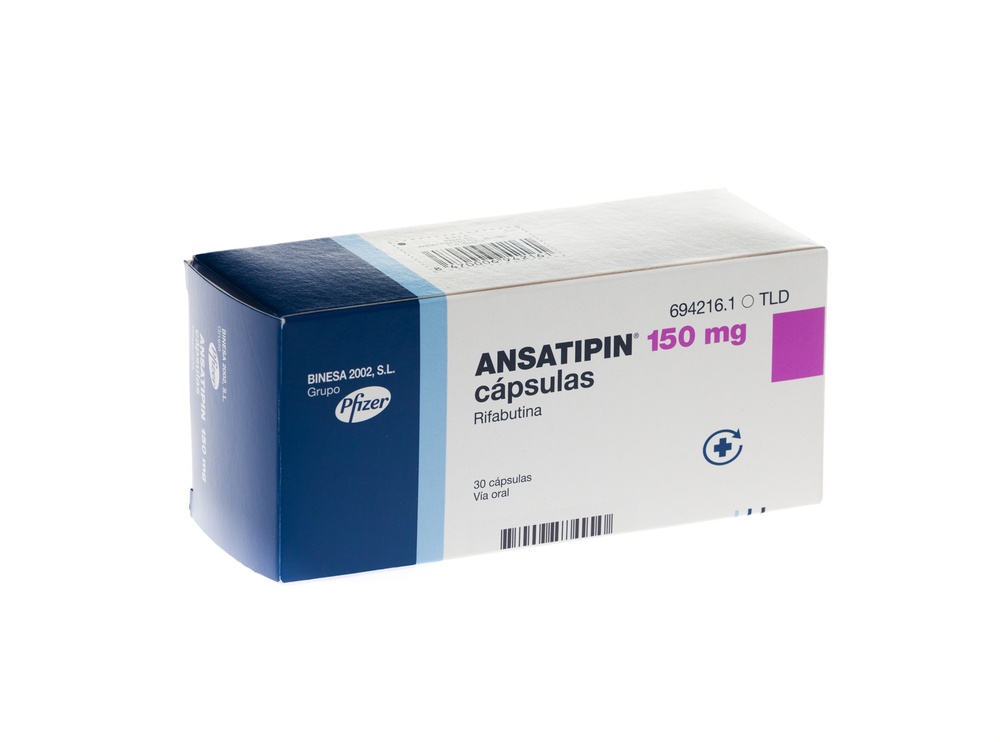
Cómo usar ANSATIPIN 150 MG CÁPSULAS DURAS
Traducción generada por IA
Este contenido ha sido traducido automáticamente y se ofrece solo con fines informativos. No sustituye la consulta con un profesional sanitario.
Ver originalContenido del prospecto
Introducción
Prospecto: información para el paciente
Ansatipin 150mg cápsulas duras
rifabutina
Lea todo el prospecto detenidamente antes de empezar a tomar este medicamento, porque contiene información importante para usted.
- Conserve este prospecto, ya que puede tener que volver a leerlo.
- Si tiene alguna duda, consulte a su médico o farmacéutico.
- Este medicamento se le ha recetado solamente a usted, y no debe dárselo a otras personas aunque tengan los mismos síntomas que usted, ya que puede perjudicarles.
- Si experimenta efectos adversos, consulte a su médico o farmacéutico, incluso si se trata de efectos adversos que no aparecen en este prospecto. Ver sección 4.
Contenido del prospecto
- Qué es Ansatipin 150 mg y para qué se utiliza
- Qué necesita saber antes de empezar a tomar Ansatipin 150 mg
- Cómo tomar Ansatipin 150 mg
- Posibles efectos adversos
- Conservación de Ansatipin 150 mg
- Contenido del envase e información adicional
1. Qué es Ansatipin 150 mg y para qué se utiliza
Ansatipin 150 mg es un antibiótico que pertenece al grupo de las rifamicinas.
Los antibióticos se utilizan para tratar infecciones bacterianas y no sirven para tratar infecciones víricas como la gripe o el catarro.
Es importante que siga las instrucciones relativas a la dosis, el intervalo de administración y la duración del tratamiento indicadas por su médico.
No guarde ni reutilice este medicamento. Si una vez finalizado el tratamiento le sobra antibiótico, devuélvalo a la farmacia para su correcta eliminación. No debe tirar los medicamentos por el desagüe ni a la basura.
Se utiliza en adultos para la prevención de las infecciones por Mycobacterium avium-intracellulare (MAC)en pacientes con infección por VIH (Virus de Inmunodeficiencia Humana), cuando sea clinicamente necesario.
Ansatipin también se utiliza en adultos para el tratamiento de las siguientes infecciones cuando otros tratamientos no sean adecuados:
- Tratamiento de la infección sintomática localizada o diseminada por micobacterias atípicas (tales como Mycobacterium aviumy otras especies), en pacientes con infección por VIH
- Tratamiento de la tuberculosis pulmonar (Mycobacterium tuberculosis) cuando el tratamiento con rifampicina no sea adecuado por riesgo de interacciones farmacológicas o en caso de resistencia a rifampicina y sensibilidad confirmada a rifabutina.
Para el tratamiento de micobacterias atípicas y de tuberculosis pulmonar, Ansatipin siempre se dará en combinación con otros fármacos activos frente a micobacterias.
Consulte a su médico si tiene alguna duda sobre cómo funciona Ansatipin o por qué se le ha recetado este medicamento.

2. Qué necesita saber antes de empezar a tomar Ansatipin 150 mg
No tome Ansatipin 150mg
- si es alérgico a rifabutina o a otros fármacos de su misma familia (rifamicinas) como la rifampicina o a cualquiera de los demás componentes de este medicamento (incluidos en la sección 6).
- si está recibiendo tratamiento con medicamentos que contienen rilpivirina y que se administran como una suspensión inyectable de liberación prolongada.
Advertencias y precauciones
Consulte a su médico o farmacéutico antes de empezar el tratamiento si:
- Tiene una enfermedad grave del riñón o el hígado, ya que su médico puede tener que ajustar la dosis de Ansatipin.
- Está tomando medicamentos para tratar el VIH, ya que pueden interaccionar con Ansatipin (ver sección Otros medicamentos y Ansatipin 150 mg).
- Está tomando anticonceptivos orales, ya que Ansatipin puede disminuir su eficacia anticonceptiva.
Consulte a su médico o farmacéutico si durante el tratamiento:
- Experimenta reacciones adversas de la piel graves tales como inflamación de la piel y las mucosas que pueden ser muy graves (síndrome de Stevens-Johnson), inflamación de la piel con ampollas (necrólisis epidérmica tóxica) o erupción medicamentosa con eosinofilia y síntomas sistémicos (DRESS, que incluye erupción cutánea, inflamación de los ganglios linfáticos y eosinófilos elevados [un tipo de glóbulos blancos] e inflamación de órganos internos [hígado, pulmones, corazón, riñones e intestino grueso]). En estos casos deberá consultar inmediatamente a su médico, quien decidirá si se debe suspender la administración de rifabutina.
- Le diagnostican una tuberculosis activa, ya que deberán administrarle fármacos contra la tuberculosis.
- Desarrolla una inflamación del ojo (uveítis). Debe consultar con su oftalmólogo y con su médico por si fuera necesario reducir la dosis o suspender el tratamiento con Ansatipin.
- Presenta diarrea, dolor abdominal o fiebre durante el tratamiento o una vez finalizado el mismo, ya que puede ser síntomas de una enfermedad grave del intestino. Comuníqueselo a su médico, el cual decidirá si se debe suspender el tratamiento con Ansatipin o aplicar otra medida terapéutica adecuada.
Ansatipin puede producir una coloración rojo-anaranjada de la orina, así como de la piel o de otras secreciones del cuerpo. Las lentillas pueden quedar teñidas de forma permanente.
Niños y adolescentes
No se ha establecido la seguridad y eficacia de Ansatipin en niños.
Otros medicamentos y Ansatipin 150mg
Informe a su médico o farmacéutico si está utilizando,ha utilizado recientemente o pudiera tener que utilizar cualquier otro medicamento.
Es posible que el tratamiento con Ansatipin haga necesario modificar las dosis de otros fármacos que se asocien al tratamiento o que el paciente tome de forma habitual debido a las interacciones entre ellos (aumento o disminución del efecto de los medicamentos).
Por ello, si inicia un tratamiento con Ansatipin puede ser necesario un seguimiento estrecho por parte de su médico, y/o un ajuste de las dosis de ciertos medicamentos que estaba tomando como:
- fármacos para evitar la coagulación de la sangre (warfarina)
- fármacos para tratar el dolor (analgésicos opioides como codeína y morfina)
- antiinflamatorios (corticosteroides)
- inmunosupresores, utilizados para evitar el rechazo a trasplantes (ciclosporina, tacrolimus)
- fármacos para tratar enfermedades del corazón (digoxina, quinidina, verapamilo, bloqueantes beta-adrenérgicos disopiramida o mexiletina)
- fármacos para tratar la diabetes (hipoglucemiantes orales)
- antiepilépticos (fenitoína y otros anticonvulsivantes)
- ansiolíticos o sedantes (diazepam y barbitúricos)
- fármacos para reducir triglicéridos en sangre (clofibrato)
- antibióticos para tratar infecciones bacterianas (dapsona, sulfametoxazol-trimetoprim, claritromicina y cloranfenicol)
- antifúngicos, para tratar infecciones por hongos (ketoconazol, fluconazol, voriconazol, posaconazol e itraconazol)
- antirretrovirales, para tratar el VIH (delavirdina, didanosina, dolutegravir, doravirina, elvitegravir/cobicistat, etravirina, indinavir, saquinavir, rilpivirina [para uso oral, p. ej., comprimidos], ritonavir, zidovudina, nelfinavir, amprenavir, bictegravir, combinaciones de atazanavir, darunavir, fosamprenavir, tipranavir y lopinavir con ritonavir)
- fármacos para tratar la hepatitis C (sofosbuvir)
- antituberculosos, para tratar la tuberculosis (bedaquilina, etambutol, isoniazida, rifampicina y ácido p-aminosalicílico). Si se administra rifabutina y ácido p-aminosalicílico, deberá espaciarse 12 horas la toma de ambos medicamentos, ya que este último puede alterar la absorción de Ansatipin.
- antiácidos. Si los toma, debe hacerlo tres horas después de la toma de Ansatipin
- anticonceptivos orales, ya que rifabutina puede disminuir su eficacia anticonceptiva (etinilestradiol / noretisterona)
Embarazo, lactancia y fertilidad
Consulte a su médico o farmacéutico antes de utilizar cualquier medicamento.
Si está embarazada o en periodo de lactancia, cree que podría estar embarazada o tiene intención de quedarse embarazada, consulte a su médico antes de utilizar este medicamento.
No debe utilizar Ansatipin durante el embarazo salvo que su médico lo considere necesario.
Consulte con su médico si utiliza anticonceptivos orales, ya que Ansatipin, puede disminuir su eficacia anticonceptiva.
Se desconoce si la rifabutina se excreta en leche materna. Si está en periodo de lactancia, consulte a su médico si es necesario interrumpir la lactancia o interrumpir el tratamiento con Ansatipin.
Conducción y uso de máquinas
La influencia de este medicamento sobre la capacidad de conducir o utilizar máquinas es nula o insignificante.
Ansatipin 150mg cápsulas duras contiene sodio
Este medicamento contiene menos de 1 mmol de sodio (23 mg) por cápsula; esto es, esencialmente “exento de sodio”.
3. Cómo tomar Ansatipin 150 mg
Siga exactamente las instrucciones de administración de este medicamento indicadas por su médico. En caso de duda, consulte de nuevo a su médico.
La dosis recomendada de Ansatipin se toma una vez al día en cualquier momento del día, independientemente de las comidas. En pacientes con náuseas, vómitos u otros problemas gastrointestinales, se recomienda la administración con comida.
Adultos
- Si toma Ansatipin como único tratamiento:
Indicación | Posología |
Prevención de la infección por Mycobacterium avium-intracellulare (MAC)en pacientes con infección por VIH | 300 mg (2 cápsulas) al día. |
- Si toma Ansatipin con otros tratamientos:
Indicación | Posología |
Infecciones causadas por micobacterias atípicas: | 450-600 mg (3 a 4 cápsulas) al día. |
Tuberculosis pulmonar | 150-450 mg (1 a 3 cápsulas) al día. |
Su médico decidirá la duración del tratamiento en función de la respuesta obtenida.
En pacientes con enfermedades del hígado o los riñones, su médico valorará si debe ajustar la dosis de Ansatipin.
Si toma más Ansatipin 150mg del que debe
En caso de sobredosis o de ingestión accidental, consulte inmediatamente a su médico o farmacéutico, o llame al Servicio de Información Toxicológica en el 91 562 04 20 indicando el medicamento y la cantidad ingerida.
Si olvidó tomar Ansatipin
No tome una dosis doble para compensar las dosis olvidadas.
Si interrumpe el tratamiento con Ansatipin
No interrumpa el tratamiento con Ansatipin antes de lo que su médico le ha indicado, ya que los síntomas pueden empeorar o reaparecer.
Si tiene cualquier otra duda sobre el uso de este medicamento, pregunte a su médico o farmacéutico.

4. Posibles efectos adversos
Al igual que todos los medicamentos, este medicamento puede producir efectos adversos, aunque no todas las personas los sufran.
Consulte inmediatamentea su médico si experimenta alguno de los siguientes efectos adversos:
- Reacciones alérgicas graves (shock anafiláctico) (frecuencia no conocida)
- Reacciones adversas graves de la piel (ver Advertencias y precauciones)(frecuencia no conocida)
A continuación se incluyen otros efectos adversos que se pueden producir:
Los efectos adversos muy frecuentes (al menos 1 de cada 10 pacientes)son:
- Disminución de los glóbulos blancos (leucopenia).
Los efectos adversos frecuentes (al menos 1 de cada 100 pacientes)son:
- Disminución del número de glóbulos rojos en la sangre (anemia).
- Erupción.
- Náuseas.
- Dolores en los músculos (mialgia).
- Fiebre.
Los efectos adversos poco frecuentes (al menos 1 de cada 1.000 pacientes)son:
- Disminución de todas las células de la sangre (pancitopenia).
- Disminución de los granulocitos, un tipo de células de la sangre (granulocitopenia o agranulocitosis).
- Disminución de los neutrófilos, un tipo de células de la sangre (neutropenia).
- Disminución de los linfocitos, un tipo de células de la sangre (linfopenia).
- Disminución de las plaquetas (trombocitopenia).
- Aumento de los eosinófilos, un tipo de células de la sangre (eosinofilia).
- Reacciones alérgicas (hipersensibilidad).
- Estrechamiento de las vías aéreas que dificulta el paso del aire a los pulmones (broncoespasmo).
- Inflamación del ojo (uveítis).
- Alteraciones del ojo (depósitos en la córnea).
- Vómitos.
- Color amarillo de la piel y mucosas (ictericia).
- Aumento de enzimas hepáticas.
- Cambio de color de la piel.
- Dolores en las articulaciones (artralgia).
Los efectos adversos con frecuencia no conocidason:
- Reacciones adversas de la piel: reacción a fármacos con eosinofilia y síntomas sistémicos (DRESS), necrólisis epidérmica tóxica (NET), síndrome de Stevens-Johnson (SSJ), pustulosis exantemática generalizada aguda (PEGA), eritema multiforme, dermatitis exfoliativa, dermatitis ampollar.
- Colitis por Clostridiodes difficile, una enfermedad grave del intestino.
- Cambio del color de la orina.
Comunicación de efectos adversos
Si experimenta cualquier tipo de efecto adverso, consulte a su médico, farmacéutico o enfermero, incluso si se trata de efectos adversos que no aparecen en este prospecto. También puede comunicarlos directamente a través del Sistema Español de Farmacovigilancia de Medicamentos de Uso Humano: www.notificaRAM.es. Mediante la comunicación de efectos adversos usted puede contribuir a proporcionar más información sobre la seguridad de este medicamento.
5. Conservación de Ansatipin
Conservar por debajo de 25ºC.
Mantener este medicamento fuera de la vista y del alcance de los niños.
No utilice este medicamento después de la fecha de caducidad que aparece en la caja después de CAD. La fecha de caducidad es el último día del mes que se indica.
No utilice este medicamento si observa que la caja está dañada o ha sido abierta.
Los medicamentos no se deben tirar por los desagües ni a la basura. Deposite los envases y los medicamentos que no necesita en el Punto SIGRE de la farmacia. En caso de duda pregunte a su farmacéutico cómo deshacerse de los envases y de los medicamentos que ya no necesita. De esta forma, ayudará a proteger el medio ambiente.
6. Contenido del envase e información adicional
Composición de Ansatipin
- El principio activo es rifabutina.
- Los demás componentes (excipientes) son: celulosa microcristalina (E460i), laurilsulfato de sodio (E487), estearato magnésico (E470b) y sílice coloidal. Los componentes de la cápsula son: gelatina, óxido de hierro rojo (E172) y dióxido de titanio (E171).
Aspecto del producto y contenido del envase
Ansatipin se presenta como cápsulas de gelatina dura, opacas y de color marrón-rojizo, acondicionadas en blísteres transparentes de PVC/Aluminio. Cada envase contiene 30 cápsulas duras.
Titular de la autorización de comercialización y responsable de la fabricación
Titular de la autorización de comercialización
Binesa 2002, S.L.
Avda. de Europa, 20-B
Parque Empresarial La Moraleja
28108 Alcobendas (Madrid), España
Representante local
Pfizer, S.L.
Avda. de Europa, 20-B
Parque Empresarial La Moraleja
28108 Alcobendas (Madrid), España
Responsable de la fabricación
Pfizer Italia S.r.L.
Via del Commercio
63046, Marino del Tronto, Ascoli-Piceno, Italia.
Fecha de la última revisión de este prospecto:junio 2024
La información detallada y actualizada de este medicamento está disponible en la página Web de la Agencia Española de Medicamentos y Productos Sanitarios (AEMPS) (http://www.aemps.gob.es/)
-

- País de registro
- Forma farmacéuticaCAPSULA, 150 mg
- Código ATCJ04AB04
- Precio medio en farmacia98.29 EUR
- Principio activo
- Requiere recetaSí
- Fabricante
- Esta información es de carácter general y no sustituye la consulta con un profesional sanitario.
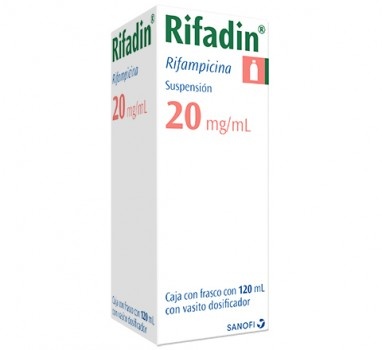
- Alternativas a ANSATIPIN 150 MG CÁPSULAS DURASForma farmacéutica: SOLUCIÓN/SUSPENSIÓN ORAL, 2%Principio activo: RifampicinaFabricante: Sanofi Aventis S.A.Requiere recetaForma farmacéutica: CAPSULA, 300 mgPrincipio activo: RifampicinaFabricante: Sanofi Aventis S.A.Requiere recetaForma farmacéutica: INYECTABLE PERFUSION, 600 mgPrincipio activo: RifampicinaFabricante: Sanofi Aventis S.A.Requiere receta

Médicos online para ANSATIPIN 150 MG CÁPSULAS DURAS
Comenta la dosis, los posibles efectos secundarios, interacciones, contraindicaciones o la revisión de receta de ANSATIPIN 150 MG CÁPSULAS DURAS, sujeto a valoración médica y a la normativa local.









Obtén una receta de ANSATIPIN 150 MG CÁPSULAS DURAS online
Rellena un formulario de 2 minutos
Cuéntanos tus síntomas, historial y el medicamento que necesitas.
Elige un médico o nosotros te asignamos uno
Escoge un especialista o te conectamos con el próximo médico disponible.
El médico revisa tu caso
Normalmente en 30 minutos. Puede hacerte preguntas adicionales por chat.
Recógela en cualquier farmacia
Receta electrónica enviada a tu correo, válida en toda España.
Preguntas frecuentes
ANSATIPIN 150 MG CÁPSULAS DURAS requires receta en España. Puedes confirmarlo con un médico online según tu caso.
El principio activo de ANSATIPIN 150 MG CÁPSULAS DURAS es rifabutin. Esta información ayuda a identificar medicamentos con la misma composición pero con diferentes nombres comerciales.
El precio medio en farmacia de ANSATIPIN 150 MG CÁPSULAS DURAS es de aproximadamente 98.29 EUR. Puede variar según el fabricante y la forma farmacéutica.
ANSATIPIN 150 MG CÁPSULAS DURAS es fabricado por Binesa 2002 S.L.. La marca y el envase pueden variar según el distribuidor.
Los Médicos de familia, Psiquiatras, Dermatólogos, Cardiólogos, Endocrinólogos, Gastroenterólogos, Neumólogos, Nefrólogos, Reumatólogos, Hematólogos, Infectólogos, Alergólogos, Geriatras, Pediatras, Oncólogos pueden valorar la prescripción de ANSATIPIN 150 MG CÁPSULAS DURAS cuando esté clínicamente indicado. Puedes reservar una videoconsulta para comentar tu caso y las opciones de tratamiento.
España cuenta con una infraestructura sanitaria bien desarrollada en ciudades principales como Madrid, Barcelona, Valencia y Sevilla. Las farmacias están ampliamente disponibles y operan bajo estrictas regulaciones, garantizando el acceso a medicamentos con receta.
Puedes comprar ANSATIPIN 150 MG CÁPSULAS DURAS en Madrid, Barcelona, Sevilla o Valencia en cualquier farmacia local con una receta válida.
Para obtener una receta, puedes utilizar Oladoctor:
Otros medicamentos con el mismo principio activo (rifabutin) incluyen RIFALDIN 20 mg/ml SUSPENSION ORAL, RIFALDIN 300 mg CAPSULAS, RIFALDIN 600 mg POLVO Y DISOLVENTE PARA SOLUCION PARA PERFUSION. Pueden tener diferentes nombres comerciales o formulaciones, pero contienen el mismo componente terapéutico. Consulta siempre con un médico antes de cambiar o iniciar un nuevo medicamento.
