






Cómo usar ALDOCUMAR 3 mg COMPRIMIDOS
Traducción generada por IA
Este contenido ha sido traducido automáticamente y se ofrece solo con fines informativos. No sustituye la consulta con un profesional sanitario.
Ver originalContenido del prospecto
Introducción
PROSPECTO: INFORMACIÓN PARA EL USUARIO
ALDOCUMAR 3 mg comprimidos
warfarina sódica
Lea todo el prospecto detenidamente antes de empezar a tomar este medicamento, porque contiene información importante para usted.
- Conserve este prospecto, ya que puede tener que volver a leerlo.
- Si tiene alguna duda, consulte a su médico o farmacéutico.
- Este medicamento se le ha recetado solamente a usted, y no debe dárselo a otras personas aunque tengan los mismos síntomas que usted, ya que puede perjudicarles.
- Si experimenta efectos adversos, consulte a su médico o farmacéutico, incluso si se trata de efectos adversos que no aparecen en este prospecto. Ver sección 4.
Contenido del prospecto
- Qué es ALDOCUMAR y para qué se utiliza
- Qué necesita saber antes de empezar a tomar ALDOCUMAR
- Cómo tomar ALDOCUMAR
- Posibles efectos adversos
- Conservación de ALDOCUMAR
- Contenido del envase e información adicional

1. Qué es ALDOCUMAR y para qué se utiliza
ALDOCUMARcontiene warfarina sódica como principio activo.
La warfarina es un anticoagulante oral que actúa inhibiendo la síntesis hepática de las formas activas de los factores de coagulación (II, VII, IX, X) compitiendo con la vitamina K. Administrada por vía oral, la warfarina induce una hipoprotrombinemia a las 36 a 72 horas. La acción anticoagulante puede persistir 4 ó 5 días después de finalizado el tratamiento.
Se utiliza en la profilaxis y/o tratamiento de trombosis venosas, y en el embolismo pulmonar. Profilaxis y/o tratamiento de las complicaciones tromboembólicas asociadas con fibrilación auricular y/o sustitución de válvulas cardíacas. También está indicado en la reducción del riesgo de muerte por infarto de miocardio recurrente así como por episodios tromboembólicos tales como ictus o embolización sistémica
2. Qué necesita saber antes de empezar a tomar ALDOCUMAR
No tomeALDOCUMAR
- Si es alérgico a la warfarina sódica o a alguno de los excipientes del preparado.
- Si está embarazada.
- Si no está dispuesto a tomar la medicación correctamente.
- En estados patológicos en los que el riesgo de una hemorragia sea mayor que el beneficio clínico posible, por ejemplo: diátesis hemorrágicas y/o discrasia hemática.
- En lesiones orgánicas susceptibles de sangrar.
- En intervenciones quirúrgicas recientes o previstas en el sistema nervioso central, operaciones oftalmológicas e intervenciones traumatizantes que pongan al descubierto grandes superficies de tejidos.
- En úlcera gastroduodenal o hemorragias manifiestas en los tractos gastrointestinal, urogenital o respiratorio, hemorragias cerebrovasculares, pericarditis y derrames pericardíacos, endocarditis lenta.
- En hipertensión grave; lesiones graves de los parénquimas hepático y renal.
- En actividad fibrinolítica aumentada (por ejemplo, después de operaciones de pulmón, próstata, etc.).
- Si utiliza dosis elevadas de AINEs, miconazol (vía general y gel bucal), fenilbutazona (vía general), dosis elevada de ácido acetilsalicílico y por extrapolación otros salicilatos a dosis elevadas.
Advertencias y precaucionesConsulte a su médico o farmacéutico antes de empezar a tomar ALDOCUMAR:
- Si padece insuficiencia renal o hepática moderada a grave.
- Si padece enfermedades infecciosas o alteraciones de la flora intestinal.
- Si padece trauma que puede resultar en hemorragia interna.
- Si padece cirugía o trauma de grandes superficies expuestas.
- Si utiliza catéteres.
- Si padece hipertensión grave a moderada.
- Si padece deficiencia conocida o sospechada en la respuesta anticoagulante mediada por proteína C, lo que puede ocasionar necrosis tisulares.
- Si es un paciente debilitado o de edad avanzada.
ALDOCUMARle ha sido recetado para el tratamiento de su actual dolencia. No tome este medicamento para otras afecciones sin que se lo haya indicado el médico.
- La determinación periódica del tiempo de protrombina (INR) es esencial. Numerosos factores, por sí solos o en combinación, estado físico o medicación concomitante pueden modificar la respuesta del paciente a los anticoagulantes. Generalmente es una buena práctica monitorizar la respuesta del paciente con determinaciones adicionales del INR en el período inmediatamente después de la salida del hospital, y cuando se empiecen, interrumpan o tomen irregularmente otras medicaciones.
- Es necesario seguir exactamente el esquema de dosificación propuesto por el médico.
- Evitar el consumo de alcohol.
- No tomar ALDOCUMARdurante el embarazo.
- Evitar cualquier actividad o deporte que pueda resultar en daño traumático.
- Llevar una identificación que indique el uso de un anticoagulante.
- Contactar con el médico si aparece cualquier enfermedad, tal como diarrea, infección o fiebre, o si se produce una hemorragia inusual.
- Si se interrumpe la terapia con ALDOCUMAR, debe tenerse en cuenta que los efectos anticoagulantes pueden persistir durante 2 a 5 días.
Toma de ALDOCUMAR con otros medicamentos
Se recomienda una monitorización más estrecha del INR para los pacientes que sustituyan las fracciones del comprimido de 10 mg por los comprimidos de 1, 3 y 5 mg, ya que éstos permiten una dosificación más precisa. |
Siempre que se instaure o suprima un tratamiento concomitante con ALDOCUMAR,deberán efectuarse determinaciones repetidas del tiempo de protrombina hasta obtener un valor estable.
Si usted va a tomar cualquier otro medicamento (incluso los adquiridos sin receta médica) consulte con su médico.
- Medicamentos y productos que pueden aumentar la respuesta a ALDOCUMAR: alopurinol, analgésicos (dextropropoxifeno, tramadol), antiarrítmicos (amiodarona), antibacterianos (ciprofloxacina, claritromicina, eritromicina, norfloxacino, cloranfenicol), antiulcerosos (cimetidina, omeprazol, ranitidina), cisaprida, disulfiram, estatinas (fluvastatina, lovastatina, simvastatina), fluconazol, fluorouracilo, fluvoxamina, interferon alfa y beta, itraconazol, metronidazol, tamoxifeno, virus gripales inactivos, ácido etacrínico, ácido nalidíxico, antiinflamatorios no esteroides (diclofenac, fenilbutazona, ibuprofeno, ketoprofeno, mefenámico, sulindac), miconazol, carnitina, hormonas tiroideas, neomicina, paracetamol, quinidina, vitamina E, cefalosporinas (cefamandol), clofibrato, estanozolol, piracetam, propranolol, salicilatos (ácido acetilsalicílico, diflunisal), tetraciclinas, ticlopidina, clindamicina.
- Medicamentos y productos que pueden disminuir la respuesta a ALDOCUMAR:aminoglutetimida, carbamazepina, fenazona, griseofulvina, barbitúricos, rifampicina, anticonceptivos a base de estrógenos, colestiramina, corticosteroides, diuréticos, mercaptopurina, vitamina K, sucralfato, ginseng, ácido ascórbico.
- Otros medicamentos y productos que pueden aumentar o disminuir la respuesta a ALDOCUMAR: alcohol, hidrato de cloral, disopiramida.
Informe a su médico o farmacéutico si está utilizando o ha utilizado recientemente cualquier otro medicamento, incluso los adquiridos sin receta médica.
Toma de ALDOCUMAR con los alimentos y bebidas
Se debe evitar el consumo de bebidas alcohólicas durante el tratamiento con ALDOCUMAR.
Los alimentos ricos en Vitamina K (cereales, brécol, col, zanahorias, menudillos de ave, etc.) pueden influir en el efecto de ALDOCUMAR.
Uso en niños
No existen datos clínicos suficientes que avalen el uso del preparado en niños.
Embarazo y lactancia
Embarazo:
Los anticoagulantes orales derivados de la cumarina, tales como la warfarina, atraviesan la placenta y no se recomienda su uso durante el embarazo. Se han descrito malformaciones congénitas y otros efectos adversos en el desarrollo fetal en niños nacidos de madres sometidas a esta medicación durante el primer trimestre. Los anticoagulantes orales atraviesan la placenta con riesgo de hemorragia fetal o placentaria cuando se administran semanas antes del parto. En caso de terapia anticoagulante imprescindible, se recomienda el uso de heparina, especialmente durante el primer trimestre, ya que ésta no atraviesa la placenta.
Informe a su médico tan pronto sospeche que puede estar embarazada o si desea quedarse embarazada. Consulte a su médico o farmacéutico antes de tomar un medicamento.
Lactancia:
Prácticamente no se detecta warfarina en la leche materna, por tanto no son de temer efectos indeseados en el lactante.
Informe a su médico en caso de que esté en periodo de lactancia. Consulte a su médico o farmacéutico antes de tomar un medicamento.
Conducción y uso de máquinas
No se han descrito.
Información importante sobre alguno de los componentes de ALDOCUMAR
Este medicamento contiene lactosa. Si su médico le ha indicado que padece una intolerancia a ciertos azúcares, consulte con él antes de tomar este medicamento.

3. Cómo tomar ALDOCUMAR
Siga exactamente las instrucciones de administración de ALDOCUMARindicadas por su médico. Consulte a su médico o farmacéutico si tiene dudas.
Antes de tomar el medicamento, comprobar la fecha de caducidad.
Los comprimidos de ALDOCUMARno deben sacarse de su envase hasta el momento de su administración.
La dosificación y administración de ALDOCUMARdebe individualizarse para cada paciente de acuerdo a la respuesta particular del paciente al fármaco.
Siga cuidadosamente las instrucciones del médico, las cuales pueden diferir de la información contenida en este prospecto.
Su médico le indicará la duración del tratamiento con ALDOCUMAR;no exceda la duración del tratamiento recomendada.
La dosificación debe ajustarse basándose en el valor de INR que se halla, en general, entre unos valores de INR de 2.0 y 3.5, según sea el cuadro clínico.
Valores de INR recomendados según las distintas patologías:
- Tromboembolismo venoso (incluyendo embolismo pulmonar): INR de 2.0-3.0
- Fibrilación auricular: INR de 2.0-3.0
- Tratamiento post infarto de miocardio: INR de 2.5-3.5
- Válvulas cardíacas mecánicas y bioprotésicas: INR de 2.5-3.5.
- Embolismo sistémico recurrente: En casos donde el riesgo de tromboembolismo es elevado, puede ser necesario un INR más elevado, pero no superior a 4.0.
El médico determinará los períodos de revisión del INR.
Dosificación inicial:
En general, se recomienda iniciar la terapia con 2 a 5 mg de warfarina al día realizando ajustes de dosis basados en los resultados de las determinaciones de INR.
Mantenimiento:
La mayoría de pacientes están satisfactoriamente mantenidos con una dosis de 2 a 10 mg diarios. La dosis individual y el intervalo deben ajustarse según la respuesta del paciente.
Duración de la terapia:
La duración de la terapia en cada paciente debe individualizarse. En general, la terapia anticoagulante debe continuarse hasta que haya pasado el peligro de trombosis y embolismo.
Si toma más ALDOCUMAR del que debe
Consulte a su médico o farmacéutico el seguimiento biológico de una sobredosificación sin repercusión clínica ya que necesita una reducción posológica adecuada y un control constante.
Los pasos a seguir son los siguientes, según haya o no complicaciones hemorrágicas:
- En caso de sobredosificación con INR < 6 y en ausencia de hemorragia: interrumpir temporalmente el anticoagulante y reiniciar la terapia con una dosis menor, en función del INR.
- En caso de sobredosificación con INR > 6 y en ausencia de hemorragia grave: administrar 0.5 mg de vitamina K1 inyectable en perfusión continua de 20 a 30 minutos. Aumentar la posología a 1 mg si el INR ? 10.
- En caso de sobredosificación con hemorragia grave: administrar 10 a 20 mg de vitamina K1 inyectable en perfusión lenta continua de 1 hora, junto con una transfusión de plasma reciente congelado o sangre completa o un complejo comercial de Factor IX.
En caso de sobredosis o ingestión accidental, consulte inmediatamente a su médico o farmacéutico o llame al Servicio de Información Toxicológica. Teléfono 915620420 indicando el medicamento y la cantidad ingerida.
Si olvidó tomar ALDOCUMAR
El efecto anticoagulante de ALDOCUMARpersiste más de 24 horas. Si olvidó tomar la dosis prescrita de ALDOCUMARen el tiempo determinado, debería tomar la dosis tan pronto como fuera posible en el mismo día.
No tome una dosis doble para compensar las dosis olvidadas, sino que debe consultar a su médico.
Si tiene cualquier otra duda sobre el uso de este medicamento, pregunte a su médico o farmacéutico.
4. Posibles efectos adversos
Al igual que todos los medicamentos, ALDOCUMARpuede producir efectos adversos, aunque no todas las personas los sufran.
Informe de inmediato a su médico si presenta alguno de estos efectos adversos. Las reacciones adversas que se han comunicado son:
Frecuentes (al menos 1 de cada 100 pacientes)
Hemorragia procedente de cualquier tejido u órgano y otras complicaciones hemorrágicas, como consecuencia del efecto anticoagulante. Los signos y síntomas variarán de acuerdo a la localización y grado o extensión de la hemorragia.
Poco frecuentes (al menos 1 de cada 1000 pacientes)
Problemas hepáticos (de hígado), reacciones alérgicas (hipersensibilidad), alopecia, dolor abdominal, náuseas, vómitos, diarrea y fatiga.
Muy raras (menos de 1 por cada 10.000 pacientes)
Necrosis de la piel, dermatitis y picor
Frecuencia no conocida
Una erupción cutánea dolorosa. En esporádicas ocasiones, la warfarina puede provocar problemas cutáneos graves, como la calcifilaxia, que puede empezar con una erupción cutánea dolorosa pero puede conducir a otras complicaciones graves. Esta reacción adversa se produce con más frecuencia en pacientes que padecen enfermedades renales crónicas.
Alteración de la función renal que se produce con una anticoagulación excesiva y presencia de sangre en la orina (nefropatía relacionada con anticoagulante).
Comunicación de efectos adversos
Si experimenta cualquier tipo de efecto adverso, consulte a su médico o farmacéutico, incluso si se trata de posibles efectos adversos que no aparecen en este prospecto. También puede comunicarlos a través del Sistema Español de Farmacovigilancia de Medicamentos de Uso Humano. https://www.notificaram.es. Mediante la comunicación de efectos adversos usted puede contribuir a proporcionar más información sobre la seguridad de ALDOCUMAR.
5. Conservación de ALDOCUMAR
Mantener ALDOCUMAR fuera de la vista y del alcance de los niños.
Conservar en el embalaje exterior para protegerlo de la luz.
Caducidad
No utilice ALDOCUMARdespués de la fecha de caducidad que aparece en el frasco después de Cad:. La fecha de caducidad es el último día del mes que se indica.
Los medicamentos no se deben tirar por los desagües ni a la basura. Deposite los envases y los medicamentos que no necesita en el Punto SIGRE de su farmacia habitual. En caso de duda pregunte a su farmacéutico cómo deshacerse de los envases y de los medicamentos que no necesita. De esta forma ayudará a proteger el medio ambiente.
6. Contenido del envase e información adicional.
Composición de ALDOCUMAR 3 mg comprimidos
El principio activo es warfarina sódica.
Los demás componentes (excipientes) son: lactosa monohidrato (61,63 mg/comprimido), celulosa microcristalina, carboximetil almidón sódico, dióxido de sílice coloidal, estearato magnésico y colorante azul patentado V. (E-131).
Aspecto del producto y contenido del envase
ALDOCUMAR 3 mgse presenta en estuche conteniendo 2 plaquetas blíster con 20 comprimidos cada una, de color azul, inodoros, con una ranura en una cara y el anagrama 3 en la otra cara.
Titular de la autorización de comercialización y responsable de la fabricación
Laboratorio Aldo-Unión, S.L.
Baronesa de Maldá, 73
08950 Esplugues de Llobregat
Barcelona - ESPAÑA
Fecha de la útlima revisión de este prospecto:Noviembre 2021.
La información detallada y actualizada de este medicamento está disponible en la página web de la Agencia Española del Medicamento y Productos Sanitarios (AEMPS) http://www.aemps.es/
-

- País de registro
- Forma farmacéuticaCOMPRIMIDO, 3 mg warfarina sodica
- Código ATCB01AA03
- Precio medio en farmacia3.15 EUR
- Principio activo
- Requiere recetaSí
- Fabricante
- Esta información es de carácter general y no sustituye la consulta con un profesional sanitario.
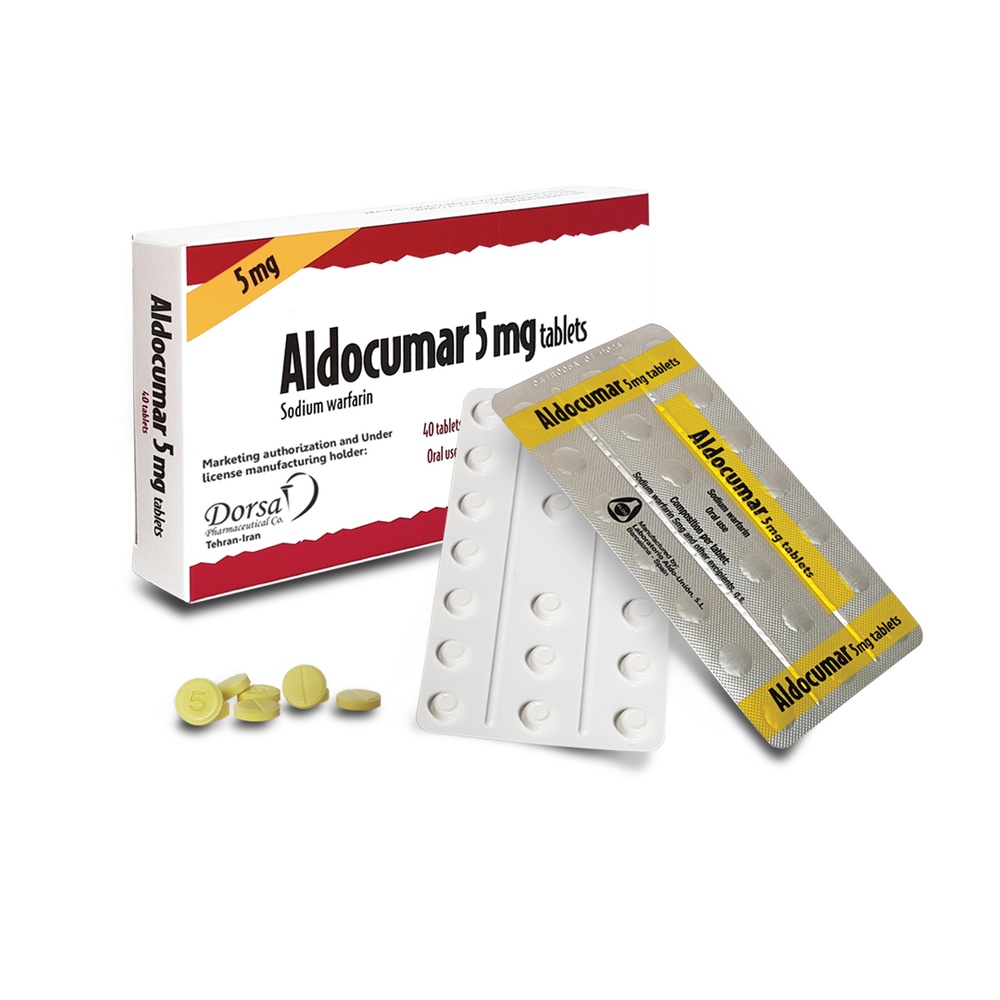
- Alternativas a ALDOCUMAR 3 mg COMPRIMIDOSForma farmacéutica: COMPRIMIDO, 1 mg warfarina sodicaPrincipio activo: warfarinFabricante: Laboratorio Aldo Union S.L.Requiere recetaForma farmacéutica: COMPRIMIDO, 10 mg warfarina sodicaPrincipio activo: warfarinFabricante: Laboratorio Aldo Union S.L.Requiere recetaForma farmacéutica: COMPRIMIDO, 5 mg warfarina sodicaPrincipio activo: warfarinFabricante: Laboratorio Aldo Union S.L.Requiere receta
Médicos online para ALDOCUMAR 3 mg COMPRIMIDOS
Comenta la dosis, los posibles efectos secundarios, interacciones, contraindicaciones o la revisión de receta de ALDOCUMAR 3 mg COMPRIMIDOS, sujeto a valoración médica y a la normativa local.









Obtén una receta de ALDOCUMAR 3 mg COMPRIMIDOS online
Rellena un formulario de 2 minutos
Cuéntanos tus síntomas, historial y el medicamento que necesitas.
Elige un médico o nosotros te asignamos uno
Escoge un especialista o te conectamos con el próximo médico disponible.
El médico revisa tu caso
Normalmente en 30 minutos. Puede hacerte preguntas adicionales por chat.
Recógela en cualquier farmacia
Receta electrónica enviada a tu correo, válida en toda España.
Preguntas frecuentes
ALDOCUMAR 3 mg COMPRIMIDOS requires receta en España. Puedes confirmarlo con un médico online según tu caso.
El principio activo de ALDOCUMAR 3 mg COMPRIMIDOS es warfarin. Esta información ayuda a identificar medicamentos con la misma composición pero con diferentes nombres comerciales.
El precio medio en farmacia de ALDOCUMAR 3 mg COMPRIMIDOS es de aproximadamente 3.15 EUR. Puede variar según el fabricante y la forma farmacéutica.
ALDOCUMAR 3 mg COMPRIMIDOS es fabricado por Laboratorio Aldo Union S.L.. La marca y el envase pueden variar según el distribuidor.
Los Médicos de familia, Psiquiatras, Dermatólogos, Cardiólogos, Endocrinólogos, Gastroenterólogos, Neumólogos, Nefrólogos, Reumatólogos, Hematólogos, Infectólogos, Alergólogos, Geriatras, Pediatras, Oncólogos pueden valorar la prescripción de ALDOCUMAR 3 mg COMPRIMIDOS cuando esté clínicamente indicado. Puedes reservar una videoconsulta para comentar tu caso y las opciones de tratamiento.
España cuenta con una infraestructura sanitaria bien desarrollada en ciudades principales como Madrid, Barcelona, Valencia y Sevilla. Las farmacias están ampliamente disponibles y operan bajo estrictas regulaciones, garantizando el acceso a medicamentos con receta.
Puedes comprar ALDOCUMAR 3 mg COMPRIMIDOS en Madrid, Barcelona, Sevilla o Valencia en cualquier farmacia local con una receta válida.
Para obtener una receta, puedes utilizar Oladoctor:
Otros medicamentos con el mismo principio activo (warfarin) incluyen ALDOCUMAR 1 mg COMPRIMIDOS, ALDOCUMAR 10 mg COMPRIMIDOS, ALDOCUMAR 5 mg COMPRIMIDOS. Pueden tener diferentes nombres comerciales o formulaciones, pero contienen el mismo componente terapéutico. Consulta siempre con un médico antes de cambiar o iniciar un nuevo medicamento.
