


DIAZEPAM QUALIGEN 5 MG COMPRIMIDOS EFG
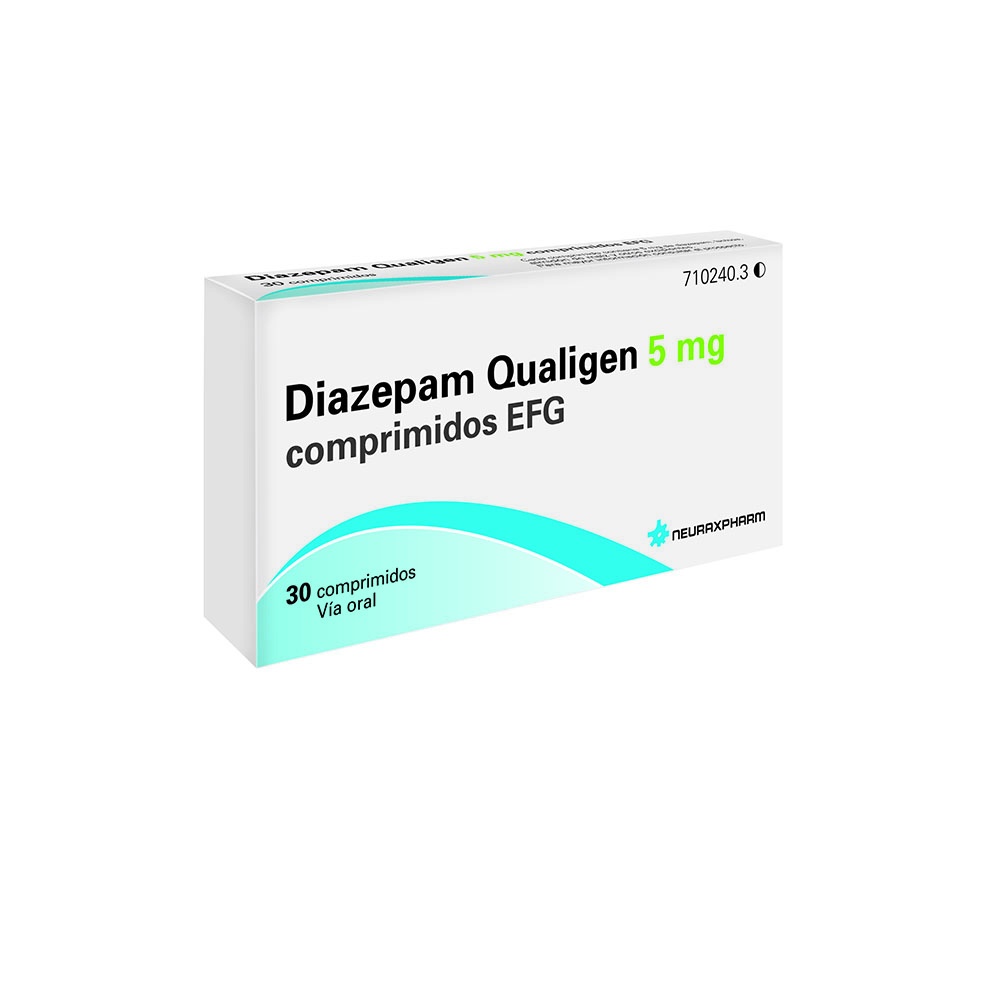



Cómo usar DIAZEPAM QUALIGEN 5 MG COMPRIMIDOS EFG
Traducción generada por IA
Este contenido ha sido traducido automáticamente y se ofrece solo con fines informativos. No sustituye la consulta con un profesional sanitario.
Ver originalContenido del prospecto
Introducción
Prospecto: información para el usuario
Diazepam Qualigen 5 mg comprimidos EFG
Lea todo el prospecto detenidamente antes de empezar a tomar este medicamento, porque contiene información importante para usted.
- Conserve este prospecto, ya que puede tener que volver a leerlo.
- Si tiene alguna duda, consulte a su médico o farmacéutico.
- Este medicamento se le ha recetado solamente a usted y no debe dárselo a otras personas, aunque tengan los mismos síntomas que usted, ya que puede perjudicarles.
- Si experimenta efectos adversos, consulte a su médico o farmacéutico, incluso si se trata de efectos adversos que no aparecen en este prospecto. Ver sección 4.
Contenido del prospecto:
1 Qué es Diazepam Qualigen y para qué se utiliza
- Qué necesita saber antes de empezar a tomar Diazepam Qualigen
- Cómo tomar Diazepam Qualigen
- Posibles efectos adversos
- Conservación de Diazepam Qualigen
- Contenido del envase e información adicional
1. Qué es Diazepam Qualigen y para qué se utiliza
Diazepam Qualigen contiene como principio activo diazepam, que pertenece al grupo de medicamentos denominados benzodiazepinas.
El diazepam tiene efectos tranquilizantes, sedantes, relajantes musculares y anticonvulsivantes.
Los médicos recetan diazepam a las personas que presentan síntomas de ansiedad, agitación y tensión psíquica producidos por estados psiconeuróticos y trastornos situacionales transitorios. Las benzodiazepinas sólo están indicadas para el tratamiento de un trastorno intenso, que limite su actividad o le someta a una situación de estrés importante.
También puede ser útil para el alivio de los síntomas de agitación aguda, temblor y alucinaciones en pacientes con síndrome de abstinencia al alcohol.
Diazepam contribuye al alivio del dolor muscular producido por espasmos o inflamación de músculos o articulaciones, traumas, etc. También puede utilizarse para combatir los espasmos originados por enfermedades como parálisis cerebral (grupo de trastornos que afecta la capacidad de una persona para moverse, mantener el equilibrio y la postura) y paraplejia (parálisis de la mitad inferior del cuerpo, que afecta a ambas piernas), así como en la atetosis (movimientos continuos, involuntarios, lentos y extravagantes de dedos y manos) y en el síndrome de rigidez generalizada.
Diazepam puede utilizarse como tratamiento coadyuvante (tratamiento que se administra después del tratamiento principal para aumentar las posibilidades de una curación) de los trastornos convulsivos (como epilepsia, convulsiones), pero no se ha demostrado útil como tratamiento único. En estos casos su médico evaluará periódicamente la utilidad del medicamento para su caso.

2. Qué necesita saber antes de empezar a tomar Diazepam Qualigen
No tome Diazepam Qualigen
- Si es alérgico a diazepam o a alguno de los demás componentes de este medicamento (incluidos en la sección 6).
- Si es alérgico (hipersensible) a otros medicamentos del grupo de las benzodiazepinas.
- Si padece dificultades respiratorias relacionadas o no con el sueñodesde hace tiempo.
- Si padece una enfermedad llamada “miastenia gravis”, que se caracteriza por debilidad y cansancio muscular.
- Si padece problemas respiratorios graves (Insuficiencia respiratoria grave).
- Si padece problemas de hígado graves (Insuficiencia hepática grave).
- Si sufre dependencia de drogas o alcohol, no debe tomar Diazepam Qualigen, a menos que su médico se lo indique formalmente.
Este medicamento no está recomendado para el tratamiento primario de trastornos psicóticos (trastornos mentales graves que causan ideas y percepciones anormales), ni debe ser utilizado como único tratamiento en pacientes con depresión, sola o asociada con ansiedad. Su médico probablemente le habrá recetado otro medicamento para estos casos.
No utilizar este medicamento en niños menores de 6 meses de edad.
Advertencias y precauciones
Consulte a su médico o farmacéutico antes de empezar a tomar Diazepam Qualigen.
- Si tiene alguna enfermedad de corazón, hígado o del riñón
- Si tiene dificultades respiratorias
- Si sufre debilidad muscular grave
- Si padece otras enfermedades
- Si tiene alergias
- Si tiene antecedentes o problemas de dependencia de drogas o depresores del Sistema Nervioso Central, incluido el alcohol
- Si está tomando otros medicamentos
Su médico decidirá la conveniencia de que tome una dosis inferior de Diazepam Qualigen o que no lo tome en absoluto.
En los pacientes con depresión, Diazepam Qualigen sólo actúa sobre el comportamiento ansioso, por lo que no constituye en sí mismo un tratamiento de la depresión y puede eventualmente desenmascarar algunos signos de la misma.
Si es epiléptico y está siguiendo un tratamiento de larga duración con Diazepam Qualigen, no se recomienda el uso del antagonista de las benzodiazepinas Anexate (flumazenilo) para revertir el efecto de Diazepam Qualigen, puesto que pueden aparecer convulsiones.
Su médico prestará especial atención por el elevado riesgo asociado si usted es paciente de edad avanzada o está muy debilitado.
Niños
La duración del tratamiento debe ser lo más corta posible.
Pacientes de edad avanzada
Los pacientes de edad avanzada pueden necesitar dosis inferiores de Diazepam Qualigen que los pacientes jóvenes. Los efectos farmacológicos de las benzodiazepinas en pacientes de edad avanzada parecen ser mayores que en la población más joven.
Si usted es paciente de edad avanzada, su médico le puede recetar una dosis inferior y comprobar su respuesta al tratamiento. Por favor, siga cuidadosamente las instrucciones de su médico.
Pacientes con alteraciones hepáticas
El efecto sedante del diazepam se incrementa en pacientes con cirrosis alcohólica.
Otros medicamentos y Diazepam Qualigen
Informe a su médico o farmacéutico si está tomando, ha tomado recientemente o pudiera tener que tomar cualquier otro medicamento. Esto es extremadamente importante porque el uso simultáneo de más de un medicamento puede aumentar o disminuir su efecto.
Por ejemplo, los tranquilizantes, inductores del sueño y medicamentos similares actúan sobre el cerebro y los nervios y pueden reforzar el efecto de Diazepam Qualigen.
Cisaprida, cimetidina, ketoconazol, fluconazol, voriconazol, fluvoxamina, fluoxetina, anticonceptivos hormonales, disulfiram, isoniazida, diltiazem, idelalisib, modafinilo, armodafinilo, esomeprazol y omeprazol aumentan temporalmente el efecto sedante de Diazepam Qualigen, lo que aumenta el riesgo de somnolencia. Lo mismo ocurre con el zumo de pomelo.
Por el contrario, medicamentos como rifampicina y carbamazepina producen una disminución de los efectos de Diazepam Qualigen.
Asimismo, el metabolismo de la fenitoína puede verse afectado si está tomando Diazepam Qualigen, por lo tanto, si está tomando este medicamento, su médico ajustará las dosis de los mismos.
Se puede incrementar el efecto sedante y la depresión cardiorrespiratoria al combinar Diazepam Qualigen con otros depresores del Sistema Nervioso Central, pudiendo provocar coma o muerte.
Las xantinas como teofilina y cafeína se oponen a los efectos sedantes de Diazepam Qualigen.
Por lo tanto, no debe usar Diazepam Qualigen con ningún otro medicamento, a menos que se lo haya permitido su médico.
Si necesita más información sobre esto, consulte con su médico o farmacéutico.
Toma de Diazepam Qualigen con alimentos, bebidas y alcohol
Las bebidas alcohólicas aumentan los efectos sedantes de Diazepam Qualigen, por tanto, evite el uso de bebidas alcohólicas durante el tratamiento. Si necesita información adicional consulte a su médico.
No se debe tomar diazepam en combinación con zumo de pomelo, ya que éste puede aumentar los niveles de diazepam en su cuerpo.
Los alimentos y los antiácidos pueden disminuir la velocidad, pero no disminuirán la absorción de diazepam del comprimido; esto puede conducir a efectos más leves después de una sola dosis, pero no afecta durante el tratamiento con dosis múltiples.
Los medicamentos procinéticos (medicamentos para mejorar el tránsito intestinal) aumentan la absorción de diazepam.
Riesgo de dependencia
El uso de benzodiazepinas y fármacos tipo benzodiazepinas puede conducir a una dependencia física y psicológica. Esto ocurre principalmente tras la toma de forma ininterrumpida del medicamento durante largo tiempo. Para reducir al máximo el riesgo de dependencia deben tenerse en cuenta estas precauciones:
- La toma de benzodiazepinas se hará solo bajo prescripción médica (nunca porque hayan dado resultado en otros pacientes), y nunca las aconseje a otras personas.
- No aumente en absoluto las dosis prescritas por su médico, ni prolongue el tratamiento más tiempo del recomendado.
- Consulte a su médico regularmente para que decida si debe continuar el tratamiento.
Embarazo y lactancia
Consulte a su médico o farmacéutico antes de utilizar cualquier medicamento.
Si está embarazada o en periodo de lactancia, cree que podría estar embarazada o tiene intención de quedarse embarazada, consulte a su médico o farmacéutico antes de utilizar este medicamento.
Si, por estricta exigencia médica, toma Diazepam Qualigen antes o durante el parto, pueden aparecer en el recién nacido hipotermia (temperatura corporal anormalmente baja), debilidad, hipotensión y dificultades respiratorias. Asimismo, se han dado casos de síndrome de abstinencia en los recién nacidos.
Las benzodiazepinas pasan a la leche materna, por lo que deberá consultar con su médico la toma o no de Diazepam Qualigen mientras esté en periodo de lactancia.
Conducción y uso de máquinas
No conduzca ni maneje herramientas o máquinas porque este medicamento puede producir sedación, amnesia, dificultad para concentrarse y debilidad muscular, lo que pueden afectar negativamente a la capacidad de conducir vehículos o manejar maquinaria. El médico debe decidir cuando se pueden retomar estas actividades. Este efecto se aumenta si, además, ha ingerido alcohol.
Diazepam Qualigen contiene lactosa
Este medicamento contiene lactosa. Si su médico le ha indicado que padece una intolerancia a ciertos azúcares, consulte con él antes de tomar este medicamento.
3. Cómo tomar Diazepam Qualigen
Siga exactamente las instrucciones de administración de este medicamento indicadas por su médico o farmacéutico. En caso de duda, consulte de nuevo a su médico o farmacéutico.
Dependiendo de la naturaleza de su enfermedad, su edad y peso, su médico le recetará la dosis más adecuada y le indicará la duración de su tratamiento con diazepam.
Recuerde tomar su medicamento.
Siga estas instrucciones a menos que su médico le haya dado otras indicaciones distintas:
Adultos:
Síntomas de ansiedad:2 a 10 mg, 2 a 4 veces al día, dependiendo de la gravedad de los síntomas.
Alivio sintomático en la deprivación alcohólica aguda:10 mg, 3 o 4 veces durante las primeras 24 horas, reduciendo a 5 mg 3 o 4 veces al día, según necesidad.
Coadyuvante para el alivio del espasmo músculo-esquelético:2 a 10 mg, 3 o 4 veces al día.
Coadyuvante en terapia anticonvulsiva: 2 a 10 mg, 2 o 4 veces al día.
Posología en poblaciones especiales
Uso en niños:2 a 2,5 mg, 1 o 2 veces al día, incrementándose gradualmente según necesidades y tolerancia; como norma general 0,1-0,3 mg/kg al día. Debido a la variedad de respuesta de los niños a los medicamentos que actúan sobre el SNC, debe iniciarse el tratamiento con la dosis más baja e incrementarse según se requiera. No utilizar en niños menores de 6 meses de edad.
En personas de edad avanzada o en presencia de enfermedades debilitantes:2 a 2,5 mg, 1 o 2 veces al día, aumentando luego gradualmente, según necesidad y tolerancia.
El tratamiento debe comenzarse con la dosis más baja. No debe excederse la dosis máxima.
Si estima que la acción de diazepam es demasiado fuerte o débil, comuníqueselo a su médico o farmacéutico.
En los pacientes de edad avanzada que padezcan algún trastorno de hígado o riñón, o bien debilidad muscular, en niños, en pacientes debilitados o que tengan un nivel de albúmina sérica bajo, el médico prescribirá una dosis inferior.
Normas para la correcta administración
No aumentar, en absoluto, las dosis prescritas por el médico.
Cada dosis individual no debe rebasar los límites indicados y la dosis diaria total tampoco, a menos que su médico le recete una dosis superior.
Los comprimidos de Diazepam Qualigen deben tomarse sin masticar, con un poco de agua o una bebida no alcohólica. El comprimido se puede partir en dosis iguales.
Los comprimidos se tomarán a las horas que sean más necesarias, normalmente por la tarde o noche. Nunca cambie usted mismo la dosis que se le ha recetado.
Duración del tratamiento
La duración del tratamiento debe ser la más corta posible y nunca superior a 2-3 meses. Consulte a su médico regularmente para que decida si debe continuarse el tratamiento.
No prolongue el tratamiento más tiempo del recomendado.
Para evitar síntomas de abstinencia, no debe dejar de tomar diazepam bruscamente, sobre todo si lo ha estado tomando durante largo tiempo.
Si toma más Diazepam Qualigen del que debe
En caso de sobredosis o ingestión accidental consulte inmediatamente a su médico o farmacéutico o llame al Servicio de Información Toxicológica. Teléfono: 91 562 04 20 indicando el medicamento y la cantidad ingerida.
Si olvidó tomar Diazepam Qualigen
No tome una dosis doble para compensar las dosis olvidadas. Por el contrario, debe continuar con la dosis normal.
Si interrumpe el tratamiento con Diazepam Qualigen
Al cesar la administración pueden aparecer inquietud, ansiedad, insomnio, falta de concentración, dolor de cabeza y sofocos. No se recomienda, en general, interrumpir bruscamente la medicación sino reducir gradualmente la dosis, de acuerdo con las instrucciones del médico.
Si tiene cualquier otra duda sobre el uso de este medicamento, pregunte a su médico o farmacéutico.

4. Posibles efectos adversos
Al igual que todos los medicamentos, este medicamento puede producir efectos adversos, aunque no todas las personas los sufran.
Si considera que alguno de los efectos adversos que sufre es grave o si aprecia cualquier efecto adverso no mencionado en este prospecto, informe a su médico o farmacéutico.
La mayoría de los pacientes toleran bien Diazepam Qualigen, pero los efectos adversos más frecuentes, que se dan especialmente al principio del tratamiento, son cansancio, debilidad muscular y somnolencia.
Ocasionalmente se han descrito otros efectos adversos del tipo de confusión, disminución del estado de alerta, pérdida de sensibilidad, mareo, trastornos afectivos, alteraciones emocionales y del humor, estreñimiento, depresión, diplopía (visión doble), ataxia (incapacidad para coordinar los movimientos musculares voluntarios), dificultad de articular las palabras, alteraciones digestivas, alteración del ritmo cardiaco, dolor de cabeza, hipotensión, alteraciones circulatorias, cambios en la libido (apetencia sexual), náuseas, sequedad de boca o hipersalivación (secreción salivar exagerada), incontinencia o retención urinaria, erupciones cutáneas, balbuceo, temblor, vértigo y visión borrosa. Las reacciones cutáneas más frecuentes son erupción (inflamación de la piel), urticaria (ronchas rojizas) y prurito (hormigueo o irritación incómoda de la piel que provoca el deseo de rascarse en el área afectada).
Muy raramente se ha informado de aumento de las transaminasas y de la fosfatasa alcalina, ictericia (aspecto amarillento de la piel y de los ojos), así como paro cardiaco.
Se ha observado un aumento del riesgo de caídas y fracturas en pacientes de edad avanzada y en pacientes que estén tomando a la vez otros medicamentos sedantes (incluidas las bebidas alcohólicas).
Puede ocurrir insuficiencia cardíaca, depresión respiratoria, incluyendo insuficiencia respiratoria.
Se sabe que cuando se utilizan benzodiazepinas pueden ocurrir efectos adversos sobre el comportamiento tales como inquietud, desorientación, agitación, irritabilidad, delirio (incoherencia de las ideas), ataques de ira, agresividad, nerviosismo, hostilidad, ansiedad, pesadillas, sueños anormales, alucinaciones, psicosis (pérdida de contacto con la realidad), hiperactividad o conducta inapropiada. Estas reacciones son más frecuentes en ancianos y en niños. Si le ocurren estos efectos, debe interrumpir el tratamiento y contactar inmediatamente con su médico.
Por otra parte, el uso de benzodiazepinas puede conducir a una dependencia, principalmente cuando se toma el medicamento de forma ininterrumpida durante largo tiempo. No se recomienda, en general, interrumpir bruscamente la medicación, de acuerdo siempre con las instrucciones del médico.
Puede aparecer amnesia anterógrada (dificultad para recordar hechos recientes) a dosis normales, el riesgo aumenta cuando se aumenta la dosis. Los efectos amnésicos pueden ir asociados a alteraciones del comportamiento.
Si se observa cualquier otra reacción no descrita en este prospecto, consulte a su médico o farmacéutico.
Comunicación de efectos adversos
Si experimenta cualquier tipo de efecto adverso, consulte a su médico o farmacéutico, incluso si se trata de posibles efectos adversos que no aparecen en este prospecto. También puede comunicarlos directamente a través del Sistema Español de Farmacovigilancia de Medicamentos de Uso Humano: www.notificaRAM.es. Mediante la comunicación de efectos adversos usted puede contribuir a proporcionar más información sobre la seguridad de este medicamento.
5. Conservación de Diazepam Qualigen
Mantener este medicamento fuera de la vista y del alcance de los niños.
No utilice este medicamento después de la fecha de caducidad que aparece en el envase después de CAD. La fecha de caducidad es el último día del mes que se indica.
Los medicamentos no se deben tirar por los desagües ni a la basura. Deposite los envases y los medicamentos que no necesita en el Punto SIGRE de la farmacia. Pregunte a su farmacéutico cómo deshacerse de los envases y de los medicamentos que ya no necesita. De esta forma, ayudará a proteger el medio ambiente.
6. Contenido del envase e información adicional
Composición de Diazepam Qualigen
- El principio activo es diazepam. Cada comprimido contiene 5 mg de diazepam.
- Los demás componentes son lactosa monohidrato, almidón de maíz y estearato de magnesio (E-572).
Aspecto del producto y contenido del envase
Diazepam Qualigen 5 mg comprimidos: comprimidos redondos, planos, biselados y ranurados, de color blanco o casi blanco, con la inscripción E en una cara.
Diazepam Qualigen 5 mg comprimidos está disponible en envases de 30 y 40 comprimidos.
Titular de la autorización de comercialización y responsable de la fabricación
Titular de la autorización de comercialización:
Neuraxpharm Spain, S.L.U.
Avda. Barcelona 69
08970 Sant Joan Despí
Barcelona – España
Responsable de la fabricación:
Neuraxpharm Pharmaceuticals, S.L.
Avda. Barcelona, 69
08970 Sant Joan Despí (Barcelona) - España
Fecha de la última revisión de este prospecto:febrero 2024
La información detallada de este medicamento está disponible en la página web de la Agencia Española de Medicamentos y Productos Sanitarios (AEMPS) http://www.aemps.gob.es/
- País de registro
- Precio medio en farmacia1.5 EUR
- Principio activo
- Requiere recetaSí
- Fabricante
- Esta información es de carácter general y no sustituye la consulta con un profesional sanitario.
- Alternativas a DIAZEPAM QUALIGEN 5 MG COMPRIMIDOS EFGForma farmacéutica: COMPRIMIDO, 10 mgPrincipio activo: diazepamFabricante: Aurovitas Spain, S.A.U.Requiere recetaForma farmacéutica: COMPRIMIDO, 2,5 mgPrincipio activo: diazepamFabricante: Aurovitas Spain, S.A.U.Requiere recetaForma farmacéutica: COMPRIMIDO, 5 mgPrincipio activo: diazepamFabricante: Aurovitas Spain, S.A.U.Requiere receta
Médicos online para DIAZEPAM QUALIGEN 5 MG COMPRIMIDOS EFG
Comenta la dosis, los posibles efectos secundarios, interacciones, contraindicaciones o la revisión de receta de DIAZEPAM QUALIGEN 5 MG COMPRIMIDOS EFG, sujeto a valoración médica y a la normativa local.







Preguntas frecuentes
