







Cómo usar CALODIS 1000 mg/880 UI COMPRIMIDOS EFERVESCENTES
Traducción generada por IA
Este contenido ha sido traducido automáticamente y se ofrece solo con fines informativos. No sustituye la consulta con un profesional sanitario.
Ver originalContenido del prospecto
Introducción
Prospecto: información para el usuario
Calodis 1000 mg / 880 UI comprimidos efervescentes
Calcio / colecalciferol
Lea todo el prospecto detenidamente antes de empezar a tomar este medicamento, porque contiene información importante para usted.
- Conserve este prospecto, ya que puede tener que volver a leerlo.
- Si tiene alguna duda, consulte a su médico o farmacéutico.
- Este medicamento se le ha recetado a usted, y no debe dárselo a otras personas aunque tengan los mismos síntomas que usted, ya que puede perjudicarles.
- Si experimenta efectos adversos, consulte a su médico o farmacéutico, incluso si se trata de efectos que no aparecen en este prospecto. Ver sección 4.
Contenido del prospecto
- Qué es Calodis y para qué se utiliza
- Qué necesita saber antes de empezar a tomar Calodis
- Cómo tomar Calodis
- Posibles efectos adversos
- Conservación de Calodis
- Contenido del envase e información adicional
1. Qué es Calodis y para qué se utiliza
Calodis contiene los principios activos calcio y vitamina D3.
Calodis está indicado:
- Para prevenir y tratar los estados carenciales de calcio y vitamina D en las personas de edad avanzada.
- Como coadyuvante a la terapia específica para el tratamiento de la osteoporosis (huesos frágiles) en pacientes con deficiencia o con alto riesgo de deficiencia combinada de vitamina D y calcio.

2. Qué necesita saber antes de empezar a tomar Calodis
No tome Calodis
- Si es alérgico a los principios activos o a alguno de los demás componentes de este medicamento (incluidos en la sección 6),
- si tiene niveles altos de calcio en sangre (hipercalcemia),
- si tiene niveles altos de calcio en orina (hipercalciuria),
- Si padece hiperactividad de las glándulas paratiroideas (hiperparatiroidismo),
- Si padece cáncer de médula ósea (mieloma),
- Si padece un cáncer que le ha afectado los huesos (metástasis óseas),
- si tiene limitación del movimiento de las extremidades (inmovilización prolongada) acompañada de hipercalciuria y/o hipercalcemia,
- si tiene cálculos renales (nefrolitiasis),
- si tiene depósitos de calcio en los riñones (nefrocalcinosis),
- si padece un exceso de vitamina D (hipervitaminosis D),
- si tiene problemas renales graves,
- si es menor de 18 años de edad.
Este medicamento contiene aceite de soja. No debe utilizarse en caso de alergia al cacahuete o a la soja.
Advertencias y precauciones:
Consulte a su médico o farmacéutico antes de empezar a tomar Calodis:
- Tratamiento prolongado
Durante el tratamiento prolongado, se deben monitorizar periódicamente los niveles de calcio en la sangre y orina y la función renal. Esto es especialmente importante si tiene una tendencia a desarrollar cálculos renales. Dependiendo de los niveles en sangre, el médico puede reducir la dosis o suspender el tratamiento.
- Si recibe tratamiento simultáneo con glucósidos cardiacos (medicamentos para tratar la insuficiencia cardíaca y ciertas irregularidades del ritmo cardíaco) o diuréticos tiazídicos (medicamentos que aumentan la excreción de orina)por problemas cardiacos, en este caso se deben monitorizar periódicamente los niveles de calcio en la sangre y orina y la función renal, especialmente si es un paciente de edad avanzada. Dependiendo de los niveles en sangre, el médico puede reducir la dosis o suspender el tratamiento.
- Problemas renales
Si tiene problemas renales, debe tomar Calodis con especial cuidado. Especialmente si está recibiendo otros medicamentos que contengan aluminio, ya que el ácido cítrico presente en Calodis puede aumentar la absorción de aluminio. Le deben vigilar los niveles de calcio en sangre y orina. Si tiene problemas renales graves, utilice otras formas de vitamina D que no sean colecalciferol.
- Toma de suplementos adicionales de calcio y vitamina D
Se requiere supervisión médica y su médico requerirá una monitorización frecuente de los niveles de calcio en su sangre y orina.
- Sarcoidosis(un trastorno inmunológico que puede afectar al hígado, los pulmones, la piel o a los ganglios linfáticos)
Tenga especial cuidado al tomar Calodis si padece sarcoidosis. Existe riesgo de que el efecto de este medicamento se vuelva demasiado fuerte, lo que puede dar lugar a una sobredosis de calcio en el organismo. Se deben monitorizar los niveles de calcio en la sangre y orina.
- Inmovilización y osteoporosis
En estos casos este medicamento se debe utilizar con especial cuidado, ya que podría aumentar el nivel de calcio en sangre.
Niños y adolescentes
Calodis no está indicado para el uso en niños y adolescentes menores de 18 años de edad, ver sección 2 “No tome Calodis”.
Otros medicamentos y Calodis
Informe a su médico o farmacéutico si está utilizando, ha utilizado recientemente o pudiera tener que utilizar cualquier otro medicamento.
- En caso de tratamiento simultáneo con glucósidos digitálicos(glucósidos cardiacos derivados de la planta digital), se pueden producir arritmias cardiacas. Por lo tanto, es necesario realizar una monitorización médica estricta que puede incluir un electrocardiograma para medir la actividad eléctrica del corazón (ECG) y un análisis de sangre para conocer el nivel de calcio en sangre.
- En caso de administración simultánea de diuréticos de la clase farmacológica de las tiazidas(también conocidos como medicamentos para aumentar la excreción de orina), se deberá monitorizar periódicamente el nivel de calcio en la sangre, ya que las tiazidas reducen la excreción de calcio en la orina.
- La absorción y, por lo tanto, la eficacia de ciertos antibióticos denominados tetraciclinasdisminuyen con la administración simultánea de Calodis. Estos medicamentos se deberán tomar al menos 2 horas antes o 4-6 horas después de Calodis.
- Puede haber una reducción del efecto de los antibióticos quinolónicossi se toman al mismo tiempo que el calcio. Tome los antibióticos quinolónicos al menos dos horas antes o seis horas después de tomar Calodis.
- Además, otros medicamentos como el floruro de sodio(utilizado para fortalecer el esmalte dental o para tratar la osteoporosis) y los medicamentos bifosfonatos(utilizados para tratar la osteoporosis) se ven afectados por interacciones. Por lo tanto, se deberán tomar estos medicamentos al menos 3 horas antes de Calodis.
- Se deberá dejar el intervalo más amplio posible entre la administración de la colestiramina(un medicamento para reducir los niveles altos de colesterol) o los laxantescomo la parafina líquida, y Calodis ya que de no ser así, la vitamina D no se absorberá adecuadamente.
- Orlistat(un medicamento utilizado para tratar la obesidad) puede afectar la absorción de vitamina D. Tome Calodis al menos 2 horas antes o después de tomar Orlistat.
- La administración simultánea de Calodis y rifampicina(un antibiótico), fenitoína(un medicamento para el tratamiento de la epilepsia) o barbitúricos(hipnóticos) puede dar lugar a una reducción del efecto de la vitamina D.
- La administración simultánea de Calodis y glucocorticoidespuede dar lugar a una reducción del efecto de la vitamina D y a una reducción del nivel de calcio en la sangre.
- Sólo se deberán administrar suplementos adicionales de calcio y vitamina Dbajo supervisión médica y se requerirá una monitorización frecuente de los niveles de calcio en la sangre y orina.
- El calcio puede reducir el efecto de la levotiroxina(se utiliza para tratar la insuficiencia tiroidea). Por este motivo, se deberá tomar la levotiroxinaal menos cuatro horas antes o cuatro horas después de Calodis.
- El calcio puede reducir la absorción de ranelato de hierro, zinc o estroncio. Tome estos medicamentos al menos dos horas antes o después de tomar Calodis.
- El calcio puede reducir la absorción de estramustin(un medicamento utilizado en quimioterapia). Tome esto medicamento al menos dos horas antes o después de tomar Calodis.
- La administración conjunta de Calodis con algún antirretroviral inhibidor de la integrasa(tales como raltegravir, dolutegravir, elvitegravir, cabotegravir o cualquier combinación asociada) puede disminuir su absorción y, por lo tanto, su eficacia. Su médico especialista le indicará la frecuencia de tomas dependiendo del antirretroviral.
Toma de Calodis con alimentos, bebidas y alcohol
Si toma este medicamento juntamente con alimentos y bebidas que contengan ácido oxálico (un compuesto presente en espinacas y ruibarbos) o ácido fítico (presente en el pan integral y cereales) y el fósforo que se encuentra en la leche, puede reducir la cantidad de calcio que se absorbe.. En las 2 horas antes o después de comer alimentos con alto contenido de ácido oxálico o ácido fítico usted no debe tomar medicamentos que contienen calcio.
Embarazo y lactancia
Si está embarazada o en periodo de lactancia, cree que podría estar embarazada o tiene intención de quedarse embarazada, consulte a su médico o farmacéutico antes de utilizar este medicamento.
Embarazo

Consulte a su médico antes de usar este medicamento.
Debido al contenido en vitamina D (880 UI) en Calodis, no está indicado su uso durante el embarazo ya que la dosis diaria recomendada de vitamina D no debe superar las 600 UI/día. Sin embargo, la utilización de Calodis en mujeres embarazadas en situación de deficiencia nutricional establecida de calcio y vitamina D queda bajo criterio médico.
Lactancia
Se puede utilizar Calodis durante la lactancia. No obstante, el calcio y la vitamina D3 pasan a la leche materna, y esto se debe tener en cuenta si se administra vitamina D adicional al niño. Consulte a su médico o farmacéutico antes de utilizar este medicamento.
Conducción y uso de máquinas
No se han descrito efectos sobre la conducción o uso de máquinas.
Calodis contiene sacarosa, sodio, lactosa y glucosa.
Este medicamento contiene sacarosa. Si su médico le ha indicado que padece una intolerancia a ciertos azúcares, consulte con él antes de tomar este medicamento. Puede producir caries. Este medicamento contiene 96,15 mg de sodio (componente principal de la sal de mesa/para cocinar) en cada comprimido. Esto equivale al 4,8 % de la ingesta diaria máxima de sodio recomendada para un adulto.
Este medicamento contiene lactosa. Si su médico le ha indicado que padece una intolerancia a ciertos azúcares, consulte con él antes de tomar este medicamento. Puede producir caries.
Este medicamento contiene glucosa (en maltodextrina procedente de maíz). Si su médico le ha indicado que padece una intolerancia a ciertos azúcares, consulte con él antes de tomar este medicamento. Puede producir caries.
3. Cómo tomar Calodis
Siga exactamente las instrucciones de administración de este medicamento indicadas por su médico o farmacéutico. En caso de duda, consulte de nuevo a su médico o farmacéutico.
La dosis recomendada es
En adultos y pacientes de edad avanzada, es de 1 comprimido efervescente (1000 mg de calcio y 880 UI de Vitamina D3) al día.
Uso en niños y adolescentes
No está indicado para el uso en niños y adolescentes menores de 18 años (ver sección 2 “No tome Calodis”).
Forma de administración
Este medicamento se administra por vía oral. Disolver el comprimido en un vaso de agua y beber inmediatamente.
Duración del tratamiento
Calodis deberá tomarse como tratamiento prolongado. Hable con su médico sobre la duración del tratamiento con Calodis (ver también la sección 2 “Advertencias y precauciones”).
Si toma más Calodis del que debe
Consulte a su médico o farmacéutico inmediatamente si sospecha que sufre una sobredosis. Tenga disponible el envase y cualquier comprimido sobrante.
La sobredosis de Calodis puede producir síntomas tales sentirse mareado (náuseas), vómitos, sed o sed excesiva, aumento de la cantidad de orina excretada, deshidratación o estreñimiento.
Si ha tomado más Calodis del que debe, consulte inmediatamente a su médico, a su farmacéutico o llame al Servicio de Información Toxicológica, teléfono: 91 562 04 20, indicando el medicamento y la cantidad ingerida.
Si olvidó tomar Calodis
Si olvidó tomar Calodis, tómelo en cuanto se acuerde a menos que sea el momento de tomar la siguiente dosis. En ese caso tome la siguiente dosis de la forma habitual.
No tome una dosis doble para compensar las dosis olvidadas.
Si interrumpe el tratamiento con Calodis
Si quiere interrumpir o suspender de forma prematura el tratamiento, consulte con su médico.
Si tiene cualquier otra duda sobre el uso de este medicamento, pregunte a su médico o farmacéutico.
4. Posibles efectos adversos
Al igual que todos los medicamentos, este medicamento puede producir efectos adversos, aunque no todas las personas los sufran.
Deje de tomar Calodis y consulte con un médico inmediatamente si presenta alguno de los siguientes efectos adversos graves:
Muy raros (pueden afectar hasta 1 de cada 10.000 pacientes):
- Síndrome de leche y alcalinos que suele ocurrir sólo en caso de dosificación excesiva y que consiste en micción frecuente, dolor de cabeza persistente, pérdida duradera del apetito, náuseas o vómitos, fatiga o debilidad inusual junto con niveles elevados de calcio en la sangre y problemas renales
Raros (pueden afectar hasta 1 de cada 1.000 pacientes):
- reacción alérgica grave: hinchazón de la cara, labios, lengua o garganta con dificultad respiratoria repentina y erupción cutánea grave.
- erupción cutánea, picor, urticaria
- sentirse indispuesto (náuseas), vómitos, diarrea, dolor abdominal, estreñimiento, gases, abotargamiento (distensión abdominal),
Poco frecuentes (pueden afectar hasta 1 de cada 100 pacientes):
- niveles altos de calcio en la sangre (hipercalcemia) u orina (hipercalciuria).
Si tiene insuficiencia renal, puede haber riesgo de tener niveles elevados de fosfatos en sangre, niveles elevados de calcio en los riñones y piedras renales.
Comunicación de efectos adversos
Si experimenta cualquier tipo de efecto adverso, consulte a su médico o farmacéutico, incluso si se trata de posibles efectos adversos que no aparecen en este prospecto. También puede comunicarlos directamente a través del Sistema Español de Farmacovigilancia de Medicamentos de Uso Humano: www.notificaRAM.es. Mediante la comunicación de efectos adversos usted puede contribuir a proporcionar más información sobre la seguridad de este medicamento.
5. Conservación de Calodis
Mantener este medicamento fuera de la vista y del alcance de los niños.
Conservar en su envase original.
No utilice este medicamento después de la fecha de caducidad que aparece en la caja y en el tubo después de CAD. La fecha de caducidad es el último día del mes que se indica.
Los medicamentos no se deben tirar por los desagües ni a la basura. Deposite los envases y los medicamentos que no necesita en el Punto SIGREde la farmacia. En caso de duda pregunte a su farmacéutico cómo deshacerse de los envases y de los medicamentos que no necesita. De esta forma, ayudará a proteger el medio ambiente.
6. Contenido del envase e información adicional
Composición de calodis
- Los principios activos son carbonato de calcio y colecalciferol (vitamina D3). Cada comprimido contiene 2500 mg de carbonato de calcio (equivalente a 1.000 mg de calcio) y 22 ?g de concentrado de colecalciferol en forma de polvo (equivalente a 880 UI de vitamina D3).
- Los demás componentes (excipientes) son: ácido cítrico anhidro, bicarbonato de sodio, lactosa monohidratada, povidona, sacarina sódica, ciclamato de sodio, macrogol 6000, aroma de naranja (contiene maltodextrina procedente de maíz), emulsión de simeticona (contiene dimeticona y sílice coloidal anhidra), metilcelulosa, ?-tocoferol, aceite de soja hidrogenado, gelatina, sacarosa, almidón de maíz, sílice coloidal anhidra.
Aspecto del producto y contenido del envase
Comprimidos efervescentes cilíndricos, de color blanco o blanquecino.
Se presenta en tubos de propileno, que contienen 15 comprimidos efervescentes cada uno. Cada envase contiene 2 tubos (30 comprimidos efervescentes).
Titular de la autorización de comercialización y responsable de la fabricación
Titular de la autorización de comercialización
Esteve Pharmaceuticals, S.A.
Passeig de la Zona Franca, 109
08038 Barcelona
España
Responsable de la fabricación
Losan Pharma GmbH
Otto-Hahn-Strasse 13
D-79395 Neuenburg
Alemania
Fecha de la última revisión de este prospecto: Mayo 2021
La información detallada y actualizada de este medicamento está disponible en la página Web de la Agencia Española de Medicamentos y Productos Sanitarios (AEMPS) http://www.aemps.gob.es/
- País de registro
- Forma farmacéuticaCOMPRIMIDO EFERVESCENTE, 2500 mg/0,0242 mg
- Precio medio en farmacia7.93 EUR
- Requiere recetaSí
- Fabricante
- Esta información es de carácter general y no sustituye la consulta con un profesional sanitario.
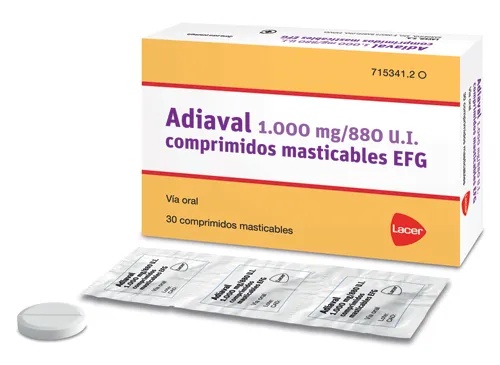
- Alternativas a CALODIS 1000 mg/880 UI COMPRIMIDOS EFERVESCENTESForma farmacéutica: COMPRIMIDO MASTICABLE, 1000 mg/880 U.I.Principio activo: Calcium, combinations with vitamin D and/or other drugsFabricante: Lacer S.A.Requiere recetaForma farmacéutica: COMPRIMIDO BUCODISPERSABLE/LIOTAB, 1500 mg calcio carbonato; 400 UI colecalciferolPrincipio activo: Calcium, combinations with vitamin D and/or other drugsFabricante: Itf Medilab Farma S.A.Requiere recetaForma farmacéutica: COMPRIMIDO BUCODISPERSABLE/LIOTAB, 1.500 mg carbonato calcico (600 mg Calcio) + 2.000 UI colecalciferolPrincipio activo: Calcium, combinations with vitamin D and/or other drugsFabricante: Italfarmaco S.A.Requiere receta
Médicos online para CALODIS 1000 mg/880 UI COMPRIMIDOS EFERVESCENTES
Comenta la dosis, los posibles efectos secundarios, interacciones, contraindicaciones o la revisión de receta de CALODIS 1000 mg/880 UI COMPRIMIDOS EFERVESCENTES, sujeto a valoración médica y a la normativa local.









Obtén una receta de CALODIS 1000 mg/880 UI COMPRIMIDOS EFERVESCENTES online
Rellena un formulario de 2 minutos
Cuéntanos tus síntomas, historial y el medicamento que necesitas.
Elige un médico o nosotros te asignamos uno
Escoge un especialista o te conectamos con el próximo médico disponible.
El médico revisa tu caso
Normalmente en 30 minutos. Puede hacerte preguntas adicionales por chat.
Recógela en cualquier farmacia
Receta electrónica enviada a tu correo, válida en toda España.
Preguntas frecuentes
CALODIS 1000 mg/880 UI COMPRIMIDOS EFERVESCENTES requires receta en España. Puedes confirmarlo con un médico online según tu caso.
El precio medio en farmacia de CALODIS 1000 mg/880 UI COMPRIMIDOS EFERVESCENTES es de aproximadamente 7.93 EUR. Puede variar según el fabricante y la forma farmacéutica.
CALODIS 1000 mg/880 UI COMPRIMIDOS EFERVESCENTES es fabricado por Esteve Pharmaceuticals S.A.. La marca y el envase pueden variar según el distribuidor.
Los Médicos de familia, Psiquiatras, Dermatólogos, Cardiólogos, Endocrinólogos, Gastroenterólogos, Neumólogos, Nefrólogos, Reumatólogos, Hematólogos, Infectólogos, Alergólogos, Geriatras, Pediatras, Oncólogos pueden valorar la prescripción de CALODIS 1000 mg/880 UI COMPRIMIDOS EFERVESCENTES cuando esté clínicamente indicado. Puedes reservar una videoconsulta para comentar tu caso y las opciones de tratamiento.
España cuenta con una infraestructura sanitaria bien desarrollada en ciudades principales como Madrid, Barcelona, Valencia y Sevilla. Las farmacias están ampliamente disponibles y operan bajo estrictas regulaciones, garantizando el acceso a medicamentos con receta.
Puedes comprar CALODIS 1000 mg/880 UI COMPRIMIDOS EFERVESCENTES en Madrid, Barcelona, Sevilla o Valencia en cualquier farmacia local con una receta válida.
Para obtener una receta, puedes utilizar Oladoctor:
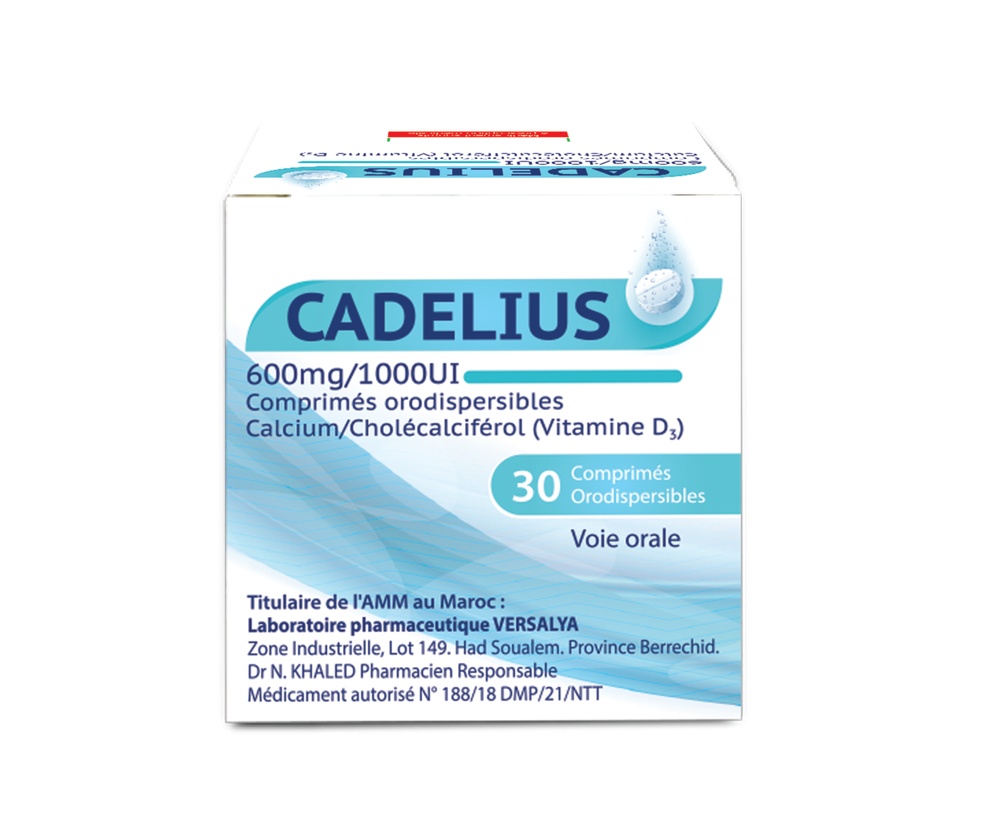
Otros medicamentos con el mismo principio activo () incluyen ADIAVAL 1.000 MG/880 UI COMPRIMIDOS MASTICABLES EFG, BONESIL D FLAS 1500 mg/400 UI COMPRIMIDOS BUCODISPERSABLES, CADELIUS D 600 MG/2000 UI COMPRIMIDOS BUCODISPERSABLES. Pueden tener diferentes nombres comerciales o formulaciones, pero contienen el mismo componente terapéutico. Consulta siempre con un médico antes de cambiar o iniciar un nuevo medicamento.
