



ZINDACLIN 1% GEL

Prescription review online
A doctor will review your case and decide whether a prescription is medically appropriate.

Talk to a doctor about this medicine
Discuss your symptoms and possible next steps in a quick online consultation.



How to use ZINDACLIN 1% GEL
Contents of the leaflet
- Introduction
- WHAT IS ZINDACLIN AND WHAT IS IT USED FOR
- BEFORE USING ZINDACLIN
- HOW TO USE ZINDACLIN:
- POSSIBLE SIDE EFFECTS
- STORAGE OF ZINDACLIN
- FURTHER INFORMATION
Introduction
PACKAGE LEAFLET: INFORMATION FOR THE USER
Zindaclin® 1% Gel
Clindamycin, phosphate
Read all of this leaflet carefully before you start using this medicine.
??Keep this leaflet. You may need to read it again.
??If you have any further questions, ask your doctor or pharmacist.
??This medicine has been prescribed for you. Do not pass it on to others. It may harm them, even if their symptoms are the same as yours.
??If you experience any side effects, talk to your doctor or pharmacist. This includes any possible side effects not listed in this leaflet.
In this leaflet:
- What is Zindaclin and what is it used for
- Before using Zindaclin
- How to use Zindaclin
- Possible side effects
- Storage of Zindaclin
- Further information
1. WHAT IS ZINDACLIN AND WHAT IS IT USED FOR
|
Zindaclin is used to treat mild to moderate acne (pimples). Zindaclin contains an antibiotic, clindamycin, which reduces the number of bacteria and prevents pores from becoming clogged, thereby preventing new pimples from forming. Zindaclin also helps reduce the redness of existing pimples.
Once you start using Zindaclin, it may take some time to notice an improvement in your acne.
What is acne?
Acne is a very common skin disorder during adolescence, but it is not limited to this period of life. During adolescence, the skin's glands produce excess oil in response to normal amounts of sex hormones in the body, which can cause pores to become clogged, leading to pimples. When this occurs, the pores become invaded by bacteria. The chemicals produced by these bacteria penetrate deeper layers of the skin, causing the redness and pus-filled pimples.

Not sure if this medicine is right for you?
Discuss your symptoms and treatment with a doctor online.
2. BEFORE USING ZINDACLIN
Do not use Zindaclin
??If you are allergic (hypersensitive) to the active ingredient clindamycin phosphate or any of its components (see section 6).
??If you are allergic (hypersensitive) to lincomycin, another type of antibiotic.
An allergic reaction may include a rash, skin redness, itching, swelling, or difficulty breathing.
Zindaclin should not be used in children under 12 years of age.
Be cautious when using Zindaclin:
??If you have any inflammatory bowel disease (such as colitis or Crohn's disease), consult your doctor before using Zindaclin. If you experience diarrhea after using Zindaclin, discontinue use immediately and inform your doctor promptly.
??If you are taking other antibiotics, consult your doctor before using Zindaclin.
Using other medications
Tell your doctor or pharmacist if you are taking or have recently taken any other medications, including those obtained without a prescription.
Interactions may occur with other antibiotics such as erythromycin, metronidazole, and antidiabetics.
Pregnancy and breastfeeding
Consult your doctor or pharmacist before taking or using any medication.
Inform your doctor if you are pregnant, think you may be pregnant, or are planning to become pregnant before using Zindaclin.
Clindamycin may pass into breast milk, even when applied to the skin, so you should not breastfeed your baby while using Zindaclin.
Important information about some of the components of Zindaclin
This medication contains:
- 200 mg of alcohol (ethanol) per gram, equivalent to 20% w/w. May cause a burning sensation on eroded skin.
- 400 mg of propylene glycol per gram, equivalent to 40% w/w. Propylene glycol may cause skin irritation.
3. HOW TO USE ZINDACLIN:
Zindaclin should not be ingested. For topical use only.
Follow the instructions for Zindaclin as indicated by your doctor. If in doubt, consult your doctor or pharmacist.
??You should use Zindaclin once a day. Wash your skin in the usual way, rinse thoroughly, and dry with gentle patting. Apply a small amount of gel in a thin layer to the entire area that usually has pimples.
??It is essential to replace the cap after using Zindaclin.
??Do not apply Zindaclin to areas where pimples do not usually appear.
??Do not use Zindaclin to prevent acne from appearing; it does not work that way.
??Do not apply Zindaclin to individual pimples.
??Do not apply a thick layer of Zindaclin to any particular area, as this will not make the pimples disappear faster.
??Do not cover Zindaclin with dressings (e.g., bandages and patches), as this may increase the risk of irritation.
Be careful not to apply Zindaclin to your eyes or the inside of your nose and mouth. If you accidentally apply the gel to these areas, rinse them immediately with plenty of water.
The effectiveness of acne treatment may take several months. You may not see results from the treatment for several weeks. After this, you should notice a gradual but definite improvement, although maximum effectiveness may take several months. Your doctor will schedule a follow-up appointment 6 to 8 weeks after starting treatment. Zindaclin should be used for a maximum of 12 weeks. You may need to use more than one tube of Zindaclin during each treatment period. Use Zindaclin for as long as your doctor indicates.
Do not try to touch or squeeze pimples, as this can worsen acne and even cause scarring.
If you use more Zindaclin than you should
Do not worry, wash the treated skin with plenty of water. Contact your doctor or local hospital if you are concerned.
If you forget to use Zindaclin
Use it as soon as you remember, and continue using it as your doctor has indicated. Do not use a double dose to make up for forgotten doses.
If you have any further questions about using this product, consult your doctor or pharmacist.

Started taking the medicine and have questions?
Discuss your symptoms and treatment with a doctor online.
4. POSSIBLE SIDE EFFECTS
Like all medications, Zindaclin can cause side effects, although not everyone gets them.
Frequent (Affects less than 1 in 10 but more than 1 in 100)
Dry skin
Redness of the skin
Feeling of warmth in the skin
Irritation around the eyes
Worsening of acne
Itching of the skin
Uncommon (Affects less than 1 in 100 but more than 1 in 1000)
Pain in the skin
Scaly rash
You can alleviate these side effects by using a non-greasy moisturizing cream on the affected area.
Administration of clindamycin (the active ingredient in Zindaclin) orally or by injection has produced cases of intestinal inflammation, which have led to diarrhea with blood and mucus. This reaction is extremely rare when clindamycin is applied to the skin. However, if you experience diarrhea with blood and mucus, discontinue use of Zindaclin immediately and inform your doctor promptly.
If you experience any side effects not listed in this leaflet, consult your doctor or pharmacist.
5. STORAGE OF ZINDACLIN
Keep out of the reach and sight of children.
No special storage conditions are required.
Do not use Zindaclin after the expiration date stated on the tube and carton after the abbreviation "Exp." The expiration date is the last day of the month indicated.
Medications should not be disposed of via wastewater or household waste. Place the packaging and any unused medications in the pharmacy's SIGRE collection point. If in doubt, ask your pharmacist how to dispose of the packaging and any unused medications. This will help protect the environment.
6. FURTHER INFORMATION
COMPOSITION OF ZINDACLIN
The name of the medication is Zindaclin 1% Gel.
Zindaclin contains the active ingredient clindamycin phosphate. Each gram of gel contains 10 mg of clindamycin (1% w/w), equivalent to 11.88 mg of clindamycin phosphate.
Zindaclin also contains propylene glycol, purified water, ethanol, zinc acetate, hydroxyethylcellulose, and sodium hydroxide.
APPEARANCE AND PACKAGING OF THE PRODUCT
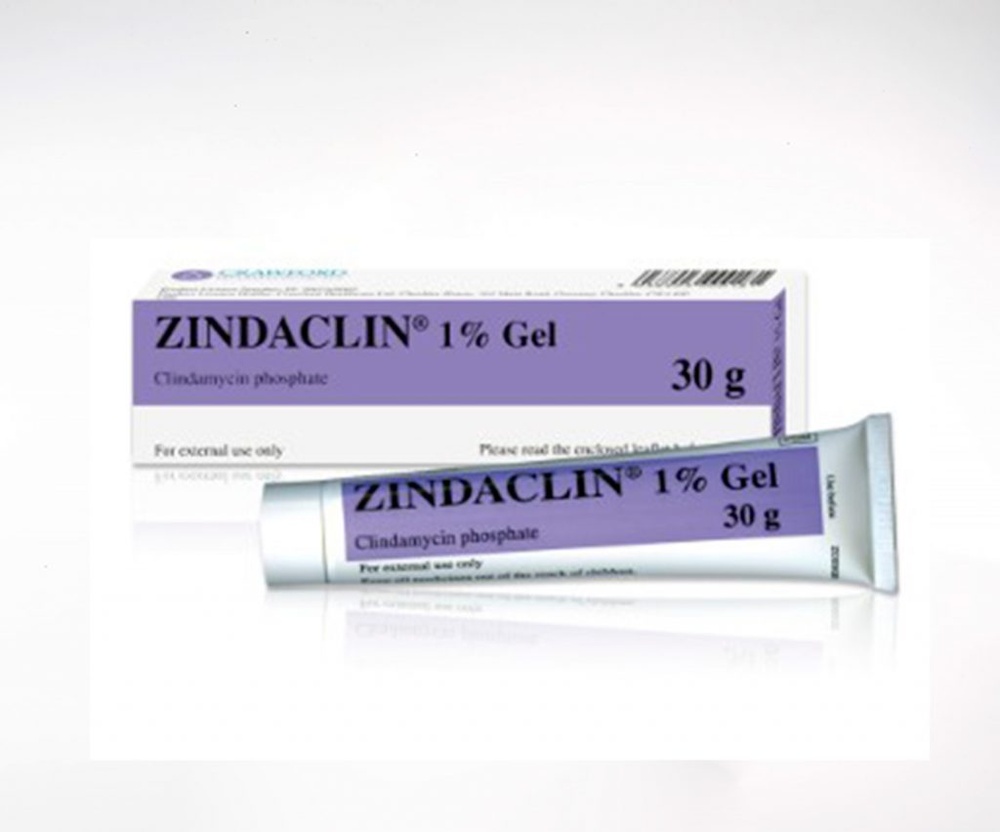
Zindaclin is a translucent white gel.
Zindaclin is available in laminated tubes of 15, 30, and 60 grams of gel, with a sealed opening and a screw cap.
MARKETING AUTHORIZATION HOLDER
INDUSTRIAL FARMACÉUTICA CANTABRIA, S.A.
Carretera de Cazoña-Adarzo, s/n.
39011 Santander
Spain
MANUFACTURER
Dr. August Wolf GmbH & Co. Arzneimittel
Sudbrackstrasse 56, 33611 Bielefeld, Germany
This leaflet was approved in December 2020
Detailed and updated information on this medication is available on the website of the Spanish Agency for Medicines and Health Products (AEMPS) http://www.aemps.gob.es/
- Country of registration
- Dosage formGEL, 1.2% Clindamycin Phosphate
- ATC codeD10AF01
- Availability in pharmaciesSupply issue reported
- Active substance
- Prescription requiredYes
- Manufacturer
- CompositionETANOL ANHIDRO (20,0 Porcentaje peso/peso mg), PROPILENGLICOL (40,0 Porcentaje peso/peso mg), HIDROXIDO DE SODIO (E 524) (CSP PH 7,5 - mg)
- This information is for reference only and does not constitute medical advice. Always consult a doctor before taking any medication. Oladoctor is not responsible for medical decisions based on this content.
- Alternatives to ZINDACLIN 1% GELDosage form: GEL, 1.188 g clindamycin phosphate / gActive substance: clindamycinManufacturer: Chiesi España S.A.U.Prescription requiredDosage form: TOPICAL SOLUTION, 30 mlActive substance: clindamycinManufacturer: Chiesi España S.A.U.Prescription requiredDosage form: EMULSION, 1% clindamycinActive substance: clindamycinManufacturer: Pfizer S.L.Prescription required
Online doctors for ZINDACLIN 1% GEL
Discuss questions about ZINDACLIN 1% GEL, including use, safety considerations and prescription review, subject to medical assessment and local regulations.



Get ZINDACLIN 1% GEL Prescription Online
Fill in a 2-min form
Tell us your symptoms, history, and what medicine you're requesting.
Pick a doctor or let us assign
Choose a specialist or we'll match you with the next available doctor.
Doctor reviews your case
Usually within 30 minutes. They may ask follow-up questions via chat.
Collect from any pharmacy
Electronic prescription sent to your email — valid across Spain.
Frequently Asked Questions
ZINDACLIN 1% GEL requires a prescription in Spain. You can check with a doctor online whether this medicine may be appropriate for your situation.
The active ingredient in ZINDACLIN 1% GEL is clindamycin. This information helps identify medicines with the same composition but different brand names.
ZINDACLIN 1% GEL is manufactured by Industrial Farmaceutica Cantabria S.A.. Pharmacy brands and packaging may differ depending on the distributor.
Doctors such as Family doctors, Psychiatrists, Dermatologists, Cardiologists, Endocrinologists, Gastroenterologists, Pulmonologists, Nephrologists, Rheumatologists, Hematologists, Infectious disease physicians, Allergists, Geriatricians, Paediatricians, Oncologists may assess whether ZINDACLIN 1% GEL is appropriate, depending on your situation and local regulations. You can book an online consultation to discuss your symptoms and possible next steps.
Spain has a well-developed healthcare infrastructure across major cities such as Madrid, Barcelona, Valencia, and Seville. Pharmacies are widely available and operate under strict regulations, ensuring access to prescribed medications.
You can buy ZINDACLIN 1% GEL in Madrid, Barcelona, Seville, or Valencia at any local pharmacy with a valid prescription.
To obtain a prescription, you can use Oladoctor:
Other medicines with the same active substance (clindamycin) include CLINWAS 10 mg/g GEL, CLINWAS 10 mg/ml CUTANEOUS SPRAY SOLUTION, DALACIN 10 MG SKIN EMULSION. These may have different brand names or formulations but contain the same therapeutic ingredient. Always consult a doctor before switching or starting a new medicine.
