


ARTINIBSA 40 mg/mL + 10 micrograms/mL Injectable Solution



How to use ARTINIBSA 40 mg/mL + 10 micrograms/mL Injectable Solution
Translated with AI
This page provides general information and does not replace a doctor’s consultation. Always consult a doctor before taking any medication. Seek urgent medical care if symptoms are severe.
Show originalContents of the leaflet
- Introduction
- What is ARTINIBSA 40mg/ml + 10 micrograms/ml and what is it used for
- What you need to know before you are given ARTINIBSA 40mg/ml + 10 micrograms/ml
- How to use ARTINIBSA 40mg/ml + 10 micrograms/ml
- Possible side effects
- Storage of Artinibsa 40 mg/ml + 0.01 mg/ml
- Container Content and Additional Information
Introduction
Package Leaflet: Information for the User
ARTINIBSA 40mg/ml + 10 micrograms/ml solution for injection
Articaine hydrochloride, / epinephrine (adrenaline)
Read all of this leaflet carefully before you start using this medicine because it contains important information for you.
- Keep this leaflet, you may need to read it again.
- If you have any further questions, ask your doctor or pharmacist.
- If you experience any side effects, talk to your dentist, doctor or pharmacist, even if they are not listed in this leaflet. See section 4.
Contents of the package leaflet:
- What is ARTINIBSA 40mg/ml + 10 micrograms/ml and what is it used for.
- What you need to know before you are given ARTINIBSA 40mg/ml + 10 micrograms/ml
- How to use ARTINIBSA 40mg/ml + 10 micrograms/ml
- Possible side effects.
- Storage of ARTINIBSA 40mg/ml + 10 micrograms/ml
- Contents of the pack and further information.
1. What is ARTINIBSA 40mg/ml + 10 micrograms/ml and what is it used for
ARTINIBSA 40mg/ml + 10 micrograms/ml is used to numb (anesthetize) the oral cavity during dental procedures.
This medicine contains two active substances:
- Articaine, a local anesthetic that prevents pain.
- Epinephrine, a vasoconstrictor that narrows the blood vessels at the injection site and, therefore, prolongs the effect of articaine. It also reduces bleeding during surgery.
Your dentist will administer ARTINIBSA 40mg/ml + 5 micrograms/ml or ARTINIBSA 40mg/ml + 10 micrograms/ml.
ARTINIBSA 40mg/ml + 10 micrograms/ml is indicated in children over 4 years old (approximately 20 kg body weight), adolescents, and adults.
Depending on the type of dental procedure performed, the dentist will choose one of the two medicines:
- ARTINIBSA 40mg/ml + 5 micrograms/ml is usually used for simple and brief dental procedures.
- ARTINIBSA 40mg/ml + 10 micrograms/ml is more suitable for longer procedures or with possible significant bleeding.

2. What you need to know before you are given ARTINIBSA 40mg/ml + 10 micrograms/ml
Do not useARTINIBSA 40mg/ml + 10 micrograms/mlif you have any of the following conditions:
- Allergy to articaine or epinephrine or any of the other components of this medicine (listed in section 6).
- Allergy to other local anesthetics.
- Uncontrolled epilepsy.
Warnings and precautions
Talk to your dentist before starting to use ARTINIBSA 40mg/ml + 10 micrograms/ml if you have any of the following conditions:
- Severe cardiac rhythm disorders (e.g., second and third degree AV block).
- Acute heart failure (sudden weakness of the heart, e.g., unexpected chest pain at rest or after a heart attack).
- Low blood pressure.
- Abnormally rapid heartbeats.
- Heart attack in the last 3-6 months.
- Coronary revascularization graft in the last 3 months.
- You are taking medications for high blood pressure called beta-blockers, such as propranolol. There is a risk of hypertensive crisis (very high blood pressure) or severe slowing of the pulse (see section "Use of ARTINIBSA 40mg/ml + 10 micrograms/ml with other medicines").
- Very high blood pressure.
- You are taking medications for depression and Parkinson's disease (tricyclic antidepressants). These medications can enhance the effects of epinephrine.
- Epilepsy.
- Lack of a natural chemical called cholinesterase in the blood (plasma cholinesterase deficiency).
- Kidney problems.
- Severe liver problems.
- A disease called Myasthenia Gravis that causes muscle weakness.
- Porphyria that causes both neurological complications and skin problems.
- If you are using other local anesthetics that cause reversible loss of sensitivity (including volatile anesthetics, such as halothane).
- If you are taking medications called antiplatelet or anticoagulant to prevent narrowing or hardening of blood vessels in arms and legs.
- If you are over 70 years old.
- You have or have had any heart problems.
- You have uncontrolled diabetes.
- A severe case of overactive thyroid (thyrotoxicosis).
- A tumor called pheochromocytoma.
- A disease called glaucoma that affects the eyes.
- Inflammation or infection of the area where you will receive the injection.
- Reduced oxygen levels in body tissues (hypoxia), high potassium levels in the blood (hyperkalemia), and metabolic disorders due to excessive acid in the blood (metabolic acidosis).
Use ofARTINIBSA 40mg/ml + 10 micrograms/mlwith other medicines
Tell your dentist if you are taking, have recently taken, or might take any other medicine.
It is very important to inform your dentist if you are taking any of the following medicines:
- Other local anesthetics that cause reversible loss of sensitivity (including volatile anesthetics, such as halothane).
- Sedatives (such as benzodiazepines, opioids), for example, to reduce anxiety before the dental procedure.
- Medicines for the heart and blood pressure (such as guanadrel, guanethidine, propranolol, nadolol).
- Tricyclic antidepressants for treating depression (such as amitriptyline, desipramine, imipramine, nortriptyline, maprotiline, and protriptyline).
- COMT inhibitors for treating Parkinson's disease (such as entacapone or tolcapone).
- MAO inhibitors for treating depressive or anxiety disorders (such as moclobemide, phenelzine, tranylcypromine, linezolid).
- Medicines for irregular heartbeats (such as digitalis, quinidine).
- Medicines for migraine attacks (such as methysergide or ergotamine).
- Sympathomimetic vasopressors (such as cocaine, amphetamines, phenylephrine, pseudoephedrine, oxymetazoline), used to raise blood pressure: if taken in the 24 hours prior to the planned dental treatment, it should be postponed.
- Neuroleptic drugs (such as phenothiazines).
Use ofARTINIBSA 40mg/ml + 10 micrograms/mlwith food
Avoid eating, even chewing gum, until you have regained normal sensitivity. Otherwise, there is a risk that you may bite your lips, cheeks, or tongue, especially in children.
Pregnancy, breastfeeding, and fertility
If you are pregnant or breastfeeding, think you may be pregnant, or plan to become pregnant, consult your dentist or doctor before using this medicine.
Your dentist or doctor will decide if you can take ARTINIBSA 40mg/ml + 10 micrograms/ml during pregnancy.
Breastfeeding can be resumed 5 hours after anesthesia.
No adverse effects on fertility are expected with the doses used in a dental procedure.
Driving and using machines
If you experience side effects, including dizziness, blurred vision, or fatigue, do not drive or operate machinery until you have recovered (usually within 30 minutes after the dental procedure).
ARTINIBSA 40mg/ml + 10 micrograms/mlcontains sodium metabisulfite and sodium
This medicine may cause severe allergic reactions and bronchospasm (sudden feeling of suffocation) because it contains sodium metabisulfite.
This medicine contains less than 23 mg of sodium (1 mmol) per dose unit; it is essentially "sodium-free".
Use in athletes
This medicine contains articaine and epinephrine (adrenaline) that may produce a positive result in doping tests.
If there is any risk of an allergic reaction, your dentist will choose another medicine for anesthesia.
3. How to use ARTINIBSA 40mg/ml + 10 micrograms/ml
Only doctors and dentists are trained to use ARTINIBSA 40mg/ml + 10 micrograms/ml.
Your dentist will choose between ARTINIBSA 40mg/ml + 5 micrograms/ml or ARTINIBSA 40mg/ml + 10 micrograms/ml and determine the appropriate dose based on your age, weight, general health, and dental procedure.
The lowest dose that provides effective anesthesia should be used.
This medicine is administered by slow injection into the oral cavity.
If you use moreARTINIBSA 40mg/ml + 10 micrograms/mlthan you should
It is unlikely that you will be given too much of this injection, but if you start to feel unwell, tell your dentist. Symptoms of an overdose include acute weakness, pale skin, headache, agitation or restlessness, disorientation, loss of balance, tremors or involuntary twitching, dilated pupils, blurred vision, speech disorders, dizziness, convulsions, stupor, loss of consciousness, coma, yawning, abnormally slow or rapid breathing that can lead to temporary respiratory arrest, heart failure.
In case of overdose or accidental ingestion, consult your doctor or pharmacist immediately or call the Toxicology Information Service at 91 562 04 20, indicating the medicine and the amount used.
If you have any further questions about the use of this product, ask your doctor or pharmacist.

4. Possible side effects
Like all medicines, this medicine can cause side effects, although not everybody gets them.
When you are in the dentist's office, the dentist will closely monitor the effects of ARTINIBSA 40mg/ml + 10 micrograms/ml.
Tell your dentist, doctor, or pharmacistimmediatelyif you experience any of the following serious side effects:
- Swelling of the face, tongue, or pharynx, difficulty swallowing, hives, or difficulty breathing (angioedema).
- Rash, itching, swelling of the throat, and difficulty breathing: may be symptoms of an allergic reaction (hypersensitivity).
- A combination of drooping eyelid and constricted pupil (Horner's syndrome).
These side effects are rare (may affect up to 1 in 1,000 people).
In other patients, other side effects not listed above may also occur.
Common side effects: may affect up to 1 in 10 people:
- Gingivitis.
- Neuropathic pain: pain due to nerve injury.
- Numbness or decreased sense of touch inside and around the mouth.
- Metallic taste, taste disturbances, or loss of taste function.
- Increased sense of touch, unpleasant or abnormal.
- Increased sensitivity to heat.
- Headache.
- Abnormally rapid heartbeats.
- Abnormally slow heartbeats.
- Low blood pressure.
- Swelling of the tongue, lips, and gums.
Uncommon side effects: may affect up to 1 in 100 people:
- Burning sensation.
- High blood pressure.
- Inflammation of the tongue and mouth.
- Nausea, vomiting, diarrhea.
- Rash, itching.
- Pain in the neck or at the injection site.
Rare side effects: may affect up to 1 in 1,000 people:
- Nervousness, anxiety.
- Facial nerve disorder (facial paralysis).
- Somnolence.
- Involuntary eye movement.
- Double vision, temporary blindness.
- Drooping eyelid and constricted pupil (Horner's syndrome).
- Sinking of the eyeball into the orbit (enoftalmia).
- Ringing in the ears, increased sensitivity of the ear.
- Palpitations.
- Hot flashes.
- Wheezing (bronchospasm, whistling), asthma.
- Difficulty breathing.
- Exfoliation and ulceration of the gums.
- Exfoliation at the injection site.
- Hives.
- Involuntary muscle contraction.
- Fatigue, weakness.
- Chills.
Very rare side effects: may affect up to 1 in 10,000 people:
- Persistent loss of sensitivity, extensive numbness, and loss of taste.
Frequency not known: cannot be estimated from the available data
- Extreme euphoria.
- Heart conduction disorders (conduction disorders, atrioventricular block).
- Increased blood flow to a part of the body, leading to congestion of blood vessels.
- Widening or narrowing of blood vessels.
- Hoarseness.
- Difficulty swallowing.
- Swelling of the cheeks and local swelling.
- Burning mouth syndrome.
- Redness of the skin (erythema).
- Abnormal increase in sweating.
- Worsening of neuromuscular symptoms of Kearns-Sayre syndrome.
- Feeling of heat or cold.
- Jaw locking.
Reporting of side effects
If you experience any side effects, talk to your doctor or pharmacist, even if they are not listed in this leaflet. You can also report them directly through the Spanish Pharmacovigilance System for Human Use Medicines: https://www.notificaram.es. By reporting side effects, you can help provide more information on the safety of this medicine.
5. Storage of Artinibsa 40 mg/ml + 0.01 mg/ml
Keep this medicine out of the sight and reach of children.
Do not use this medicine after the expiry date stated on the label and carton after EXP. The expiry date is the last day of the month indicated.
Do not use this medicine if you notice visible signs of deterioration.
Store at a temperature below 30°C, protected from light.
Do not use this medicine if you see that the solution is cloudy or has changed color.
The cartridges are for single use. Use immediately after opening the cartridge. Unused solution should be discarded.
Medicines should not be disposed of via wastewater or household waste. Your dentist will know how to dispose of unused medicines. This will help protect the environment.
6. Container Content and Additional Information
Composition ofARTINIBSA 40mg/ml + 10 micrograms/ml
The active ingredients are articaine hydrochloride and adrenaline tartrate.
- Each 1.8 ml cartridge of ARTINIBSA 40mg/ml + 10 micrograms/ml injectable solution contains 72 mg of articaine hydrochloride and 18 micrograms of adrenaline (as adrenaline tartrate).
- Each milliliter of ARTINIBSA 40mg/ml + 10 micrograms/ml contains 40 mg of articaine hydrochloride and 10 micrograms of adrenaline (as adrenaline tartrate).
The other components are: sodium metabisulfite, sodium chloride, hydrochloric acid (for pH adjustment), sodium hydroxide (for pH adjustment), citric acid monohydrate, water for injectable preparations.
Appearance of the Product and Container Content
ARTINIBSA 40mg/ml + 10 micrograms/ml is a colorless and translucent injectable solution.
Container containing 1 cartridge with a flat plunger of 1.8 ml for auto-aspiration.
Container containing 1 cartridge with a cavity plunger of 1.8 ml for manual aspiration.
Container containing 100 cartridges with a flat plunger of 1.8 ml for auto-aspiration.
Container containing 100 cartridges with a cavity plunger of 1.8 ml for manual aspiration.
Marketing Authorization Holder and Manufacturer
Marketing authorization holder and manufacturer:
Laboratorios Inibsa, S.A.
Ctra. Sabadell a Granollers, km 14.5
08185 Lliçà de Vall (Barcelona) Spain
Phone +34 938 609 500
Fax +34 938 439 695
The last revision of this prospectus was inFebruary 2020
Detailed and updated information on this medication is available on the website of the Spanish Agency for Medicines and Health Products (AEMPS) http://www.aemps.gob.es/
-------------------------------------------------------------------------------------------------------------------
This information is intended only for doctors or healthcare professionals:
Dosage
For all populations, the lowest dose that provides effective anesthesia should be used. The necessary dose must be determined individually.
For a routine procedure, the normal dose for adult patients is 1 cartridge, but the content of less than one cartridge may be sufficient for effective anesthesia. According to the dentist's judgment, more cartridges may be required for more extensive procedures, without exceeding the recommended maximum dose.
In the case of most routine dental procedures, it is preferable to use ARTINIBSA 40mg/ml + 5 micrograms/ml injectable solution.
For more complex procedures, such as pronounced hemostasis, it is preferable to use ARTINIBSA 40mg/ml + 10 micrograms/ml injectable solution.
Concomitant use of sedatives to reduce patient anxiety:
The maximum safe dose of the local anesthetic may be reduced in sedated patients due to an additive effect on central nervous system depression.
Adults and adolescents (between 12 and 18 years of age)
In adults and adolescents, the maximum dose of articaine is 7 mg/kg, with an absolute maximum dose of articaine of 500 mg. The maximum dose of articaine of 500 mg corresponds to a healthy adult weighing over 70 kg.
Children (between 4 and 11 years of age)
The safety of ARTINIBSA 40mg/ml + 10 micrograms/ml injectable solution has not been established in children under 4 years of age. No data are available.
The amount to be injected must be determined based on the child's age and weight and the magnitude of the operation. The effective median dose is 2 mg/kg and 4 mg/kg for simple and complex procedures, respectively. The lowest dose that provides effective dental anesthesia should be used. In children from 4 years (or from 20 kg (44 lbs) of body weight) and older, the maximum dose of articaine is only 7 mg/kg, with an absolute maximum dose of 385 mg of articaine for a healthy child weighing 55 kg.
Special populations
Elderly patients and patients with renal disorders:
Due to the lack of clinical data, special precautions should be taken to administer the lowest dose that provides effective anesthesia in elderly patients and in patients with renal disorders.
Elevated plasma levels of the medication may occur in these patients, especially after repeated use. In case of re-injection, the patient should be strictly monitored to identify any signs of relative overdose.
Patient with hepatic insufficiency
For patients with hepatic insufficiency, special precautions should be taken to administer the lowest dose that provides effective anesthesia, especially after repeated use, although 90% of articaine is first inactivated by non-specific plasma esterases of tissues and blood.
Patient with plasma cholinesterase deficiency
Elevated plasma levels of the medication may occur in patients with cholinesterase deficiency or under treatment with acetylcholinesterase inhibitors, since the product is 90% inactivated by plasma esterases. Therefore, the lowest dose that provides effective anesthesia should be used.
Method of Administration
Infiltration and perineural route in the oral cavity.
If there is inflammation and/or infection at the injection site, local anesthesia should be injected with caution. The injection rate should be very slow (1 ml/min).
Precautions to be taken before handling or administering the medication
This medication should only be used by a doctor or a dentist with sufficient training and familiar with the diagnosis and treatment of systemic toxicity, or under their supervision. Before inducing regional anesthesia with local anesthetics, it should be ensured that resuscitation equipment and adequate medication are available to provide immediate treatment for any respiratory or cardiovascular emergency. The patient's level of consciousness should be monitored after each injection of local anesthesia.
When using ARTINIBSA 40mg/ml + 10 micrograms/ml for infiltration or regional anesthetic block, the injection should always be administered slowly and with prior aspiration.
Special Warnings
Adrenaline reduces blood flow to the gums, which can cause local tissue necrosis.
Very rare cases of prolonged or irreversible nerve damage and taste loss have been reported after mandibular block anesthesia.
Precautions for Use
Risk associated with accidental intravascular injection:
An accidental intravascular injection can cause high levels of adrenaline and articaine in the systemic circulation. This may be associated with serious adverse reactions, such as convulsions, followed by central nervous system depression and cardiorespiratory arrest, which progresses to respiratory and circulatory arrest.
Therefore, to ensure that the needle does not penetrate a blood vessel during injection, aspiration should be performed before injecting the local anesthetic. However, the absence of blood in the syringe does not guarantee that intravascular injection has not occurred.
Risk associated with intraneural injection:
An accidental intraneural injection can cause the drug to move retrogradely through the nerve.
To avoid intraneural injection and prevent nerve damage when performing nerve blocks, the needle should be withdrawn slightly whenever the patient feels a sensation of discharge during injection or if the injection is particularly painful. If nerve damage occurs due to the needle, the neurotoxic effect may be worsened by the possible chemical neurotoxicity of articaine and the presence of adrenaline, as it may reduce perineural blood flow and prevent local elimination of articaine.
Overdose Treatment
Before administering regional anesthesia with local anesthetics, it should be ensured that resuscitation equipment and adequate medication are available to provide immediate treatment for any respiratory or cardiovascular emergency.
Depending on the severity of the overdose symptoms, the doctor or dentist should implement protocols that anticipate the need to protect the airways and provide assisted ventilation.
The patient's level of consciousness should be monitored after each injection of local anesthesia.
If signs of acute systemic toxicity appear, the injection of the local anesthetic should be stopped immediately. If necessary, the patient should be placed in a supine position.
Symptoms of CNS toxicity (convulsions, CNS depression) should be treated immediately with adequate respiratory support and administration of anticonvulsant medications.
Optimal oxygenation and ventilation, along with circulatory support and treatment of acidosis, can prevent cardiac arrest.
If cardiovascular depression (hypotension, bradycardia) occurs, appropriate treatment with intravenous fluids, vasopressors, or inotropic agents should be considered. Children should be administered doses according to their age and weight.
In case of cardiac arrest, cardiopulmonary resuscitation should be performed immediately.
Special Precautions for Elimination and Other Handling
This medication should not be used if the solution is turbid or has changed color.
To avoid the risk of infection (e.g., transmission of hepatitis), the syringe and needles used to prepare the solution should always be new and sterile.
The cartridges are for single use. If only part of the cartridge is used, the rest should be discarded.
The elimination of unused medication and all materials that have come into contact with it will be carried out in accordance with local regulations.
AUTO-ASPIRATION
To perform auto-aspiration, an automatic aspiration syringe is required. Auto-aspiration is performed by applying gentle pressure on the piston and releasing it immediately. The elastic spring of the cartridge membrane, which is initially pressed against the base axis of the syringe, creates a negative pressure inside the cartridge that guarantees aspiration.
MANUAL ASPIRATION
To perform manual aspiration, a syringe with a hook or harpoon is required. Manual aspiration is achieved when the harpoon is fixed to the anesthesia cartridge and the plunger is pulled back.
- Country of registration
- Active substance
- Prescription requiredYes
- Manufacturer
- This information is for reference only and does not constitute medical advice. Always consult a doctor before taking any medication. Oladoctor is not responsible for medical decisions based on this content.
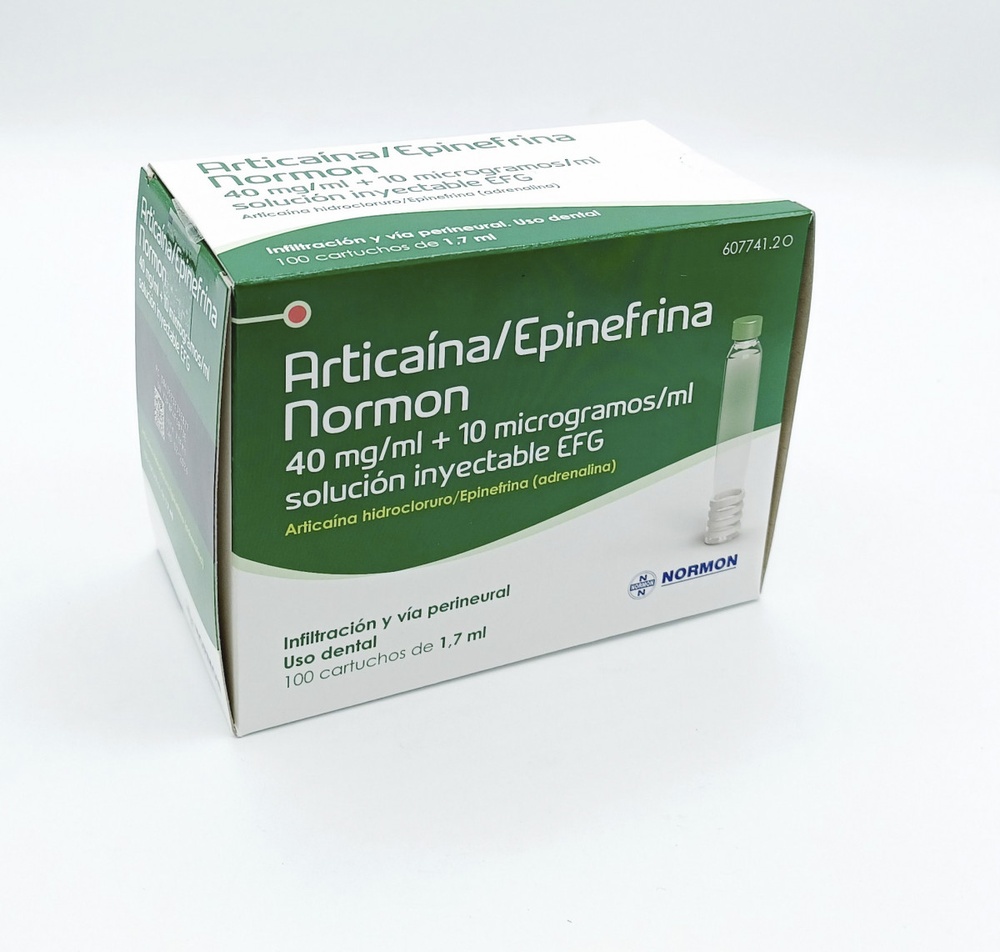
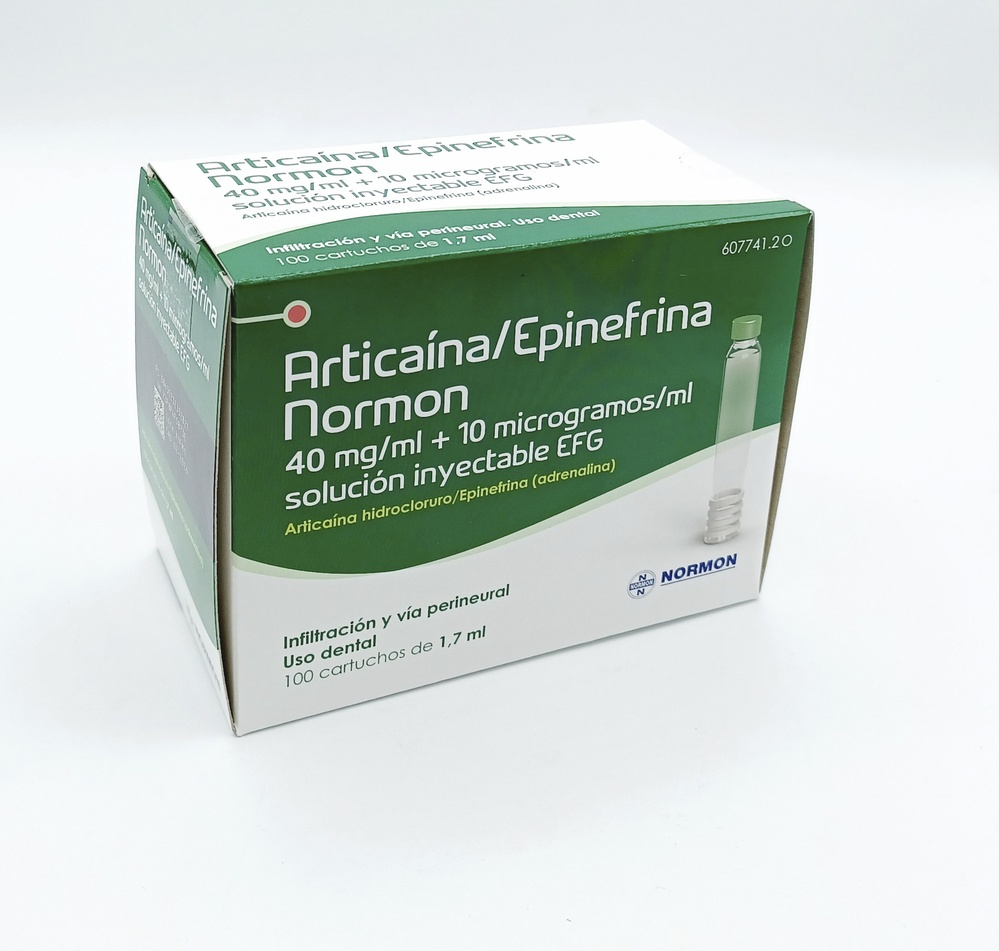
- Alternatives to ARTINIBSA 40 mg/mL + 10 micrograms/mL Injectable SolutionDosage form: INJECTABLE, 4%; articaine; 0.001% epinephrine bitartrateActive substance: articaine, combinationsManufacturer: Farmalider S.A.Prescription requiredDosage form: INJECTABLE, 4%; articaine; 0.0005% epinephrine bitartrateActive substance: articaine, combinationsManufacturer: Farmalider S.A.Prescription requiredDosage form: INJECTABLE, 40 mg/ml + 10 micrograms/mlActive substance: articaine, combinationsManufacturer: Laboratorios Normon S.A.Prescription required
Online doctors for ARTINIBSA 40 mg/mL + 10 micrograms/mL Injectable Solution
Discuss questions about ARTINIBSA 40 mg/mL + 10 micrograms/mL Injectable Solution, including use, safety considerations and prescription review, subject to medical assessment and local regulations.











Frequently Asked Questions
