



VELLOFENT 133 mcg Tablets

Prescription review online
A doctor will review your case and decide whether a prescription is medically appropriate.

Talk to a doctor about this medicine
Discuss your symptoms and possible next steps in a quick online consultation.



How to use Vellofent
Contents of the leaflet
- Leaflet accompanying the packaging: patient information
- Vellofent, 67 micrograms, sublingual tablets
- Vellofent, 133 micrograms, sublingual tablets
- Vellofent, 267 micrograms, sublingual tablets
- Vellofent, 400 micrograms, sublingual tablets
- Vellofent, 533 micrograms, sublingual tablets
- Vellofent, 800 micrograms, sublingual tablets
- What is Vellofent and what is it used for
- Important information before taking Vellofent
- When not to take Vellofent
- Warnings and precautions
- Vellofent contains the active substance in a quantity that can be fatal to a child, and therefore all tablets should always be kept out of sight and reach of children and persons for whom they have not been prescribed.
- Children and adolescents
- Other medicines and Vellofent
- Vellofent with food, drink, and alcohol
- Pregnancy and breastfeeding
- Driving and using machines
- Vellofent contains sodium
- How to take Vellofent
- Possible side effects
- How to store Vellofent
- Contents of the packaging and other information
- What Vellofent contains
- What Vellofent looks like and contents of the pack
- Marketing authorization holder
- Manufacturer
- This medicinal product is authorized in the Member States of the European Economic Area under the following names:
- Instructions for use of this product are available by scanning the QR code on the outer packaging with a smartphone/device or at the following URL:
Leaflet accompanying the packaging: patient information
Vellofent, 67 micrograms, sublingual tablets

Not sure if this medicine is right for you?
Discuss your symptoms and treatment with a doctor online.
Vellofent, 133 micrograms, sublingual tablets
Vellofent, 267 micrograms, sublingual tablets

Started taking the medicine and have questions?
Discuss your symptoms and treatment with a doctor online.
Vellofent, 400 micrograms, sublingual tablets
Vellofent, 533 micrograms, sublingual tablets
Vellofent, 800 micrograms, sublingual tablets
fentanyl
You should read the leaflet carefully before taking the medicine, as it contains important information for you.
- You should keep this leaflet, so you can read it again if you need to.
- You should consult your doctor or pharmacist if you have any further questions.
- This medicine has been prescribed specifically for you. Do not pass it on to others.
- The medicine may harm another person, even if their symptoms are the same as yours.
- If any of the side effects get worse, or if you notice any not listed in the leaflet, you should tell your doctor or pharmacist. See section 4.
Table of contents of the leaflet:
- 1. What is Vellofent and what is it used for
- 2. Important information before taking Vellofent
- 3. How to take Vellofent
- 4. Possible side effects
- 5. How to store Vellofent
- 6. Contents of the packaging and other information
1. What is Vellofent and what is it used for
Vellofent contains the active substance fentanyl, which belongs to a group of strong painkillers called opioids.
Vellofent is used to treat breakthrough pain in adult patients with cancer who are already taking other painkillers for their chronic (persistent) cancer pain.
Breakthrough pain is additional, sudden pain that occurs even though the patient is taking regular opioid painkillers.
2. Important information before taking Vellofent
When not to take Vellofent
- if you are allergic to fentanyl or any of the other ingredients of this medicine (listed in section 6);
- if you have severe breathing problems or severe lung disease;
- if you are currently taking monoamine oxidase inhibitors (MAOIs) for severe depression (or have taken them in the last 2 weeks);
- if you have not been taking a prescribed opioid painkiller regularly for at least one week to control your chronic pain, as directed by your doctor every day. If you have not been taking these medicines, you must nottake Vellofent,
as this medicine may increase the risk of dangerous release and/or shallow breathing, and even stop breathing;
- if you have short-term pain other than breakthrough pain;
- if you are currently taking medicines containing sodium hydroxymethanesulfonate.
Warnings and precautions
Vellofent contains the active substance in a quantity that can be fatal to a child, and therefore all tablets should always be kept out of sight and reach of children and persons for whom they have not been prescribed.
Tablets should be stored in a closed place, not stored after removal from the blister pack.
The medicine should be stored in a safe and protected place, where other people do not have access to it (for more information, see section 5, "How to store Vellofent").
You should talk to your doctor or pharmacist before starting treatment with Vellofent.
Before starting treatment, the patient should tell the doctor if they have or have recently had any of the following conditions, which the doctor should consider when prescribing the dose of the medicine:
- the painkiller they are currently taking for their chronic (24 hours a day) cancer pain is not working satisfactorily;
- any condition that makes breathing difficult (such as asthma, wheezing, or shortness of breath);
- head injury;
- heart problems, especially slow heart rate, irregular heartbeat, low blood volume, or low blood pressure;
- liver or kidney problems, as these organs are involved in the elimination (conversion and excretion) of the taken medicine;
- the patient is taking antidepressant or antipsychotic medicines, see "Other medicines and Vellofent".
You should consult your doctor if, while taking Vellofent, you:
- experience pain or increased sensitivity to pain (hyperalgesia) that does not respond to a higher dose of painkiller prescribed by your doctor;
- experience several of the following symptoms: nausea, vomiting, loss of appetite, fatigue, weakness, dizziness, and low blood pressure; these symptoms may be a sign of a potentially life-threatening condition called adrenal insufficiency, in which the adrenal glands do not produce enough hormones;
- have ever had adrenal insufficiency or a lack of sex hormones (androgen deficiency) while taking opioids.
Long-term use and tolerance
This medicine contains fentanyl, which is an opioid painkiller. Repeated use of opioid painkillers can lead to decreased effectiveness of the medicine (the patient becomes accustomed to it, which is known as tolerance to the medicine). While taking Vellofent, the patient's sensitivity to pain may also increase. This phenomenon is known as hyperalgesia. Increasing the dose of Vellofent may temporarily reduce the intensity of the pain, but it can also be harmful. If the patient notices a decrease in the effectiveness of the medicine, they should consult their doctor. The doctor will decide whether it is better for the patient to increase the dose or gradually reduce the use of Vellofent.
Dependence and addictive use
This medicine contains fentanyl, which is an opioid. It can cause dependence and/or addiction.
Repeated use of Vellofent can also lead to dependence, abuse, and addictive use, which can result in life-threatening overdose. The risk of these side effects may increase with increasing dose and duration of use. Dependence or addictive use can cause the patient to feel a loss of control over how much medicine to use or how often to take it. The patient may feel the need to continue using the medicine, even if it does not help alleviate their pain.
- The patient or someone in their family has ever abused or been dependent on alcohol, prescription drugs, or illegal substances ("addiction");
- The patient smokes tobacco;
- The patient has ever had mood disorders (depression, anxiety disorders, or personality disorders) or has been treated by a psychiatrist for other mental illnesses.
If, while taking Vellofent, the patient experiences any of the following symptoms, it may indicate dependence or addictive use.
- The patient must take the medicine for a longer period than prescribed by the doctor.
- The patient must take a higher dose than prescribed.
- The patient uses the medicine for reasons other than those for which the doctor prescribed it, such as "to calm down" or "to fall asleep".
- The patient has repeatedly tried to stop or control the use of the medicine but has been unsuccessful.
- After stopping the medicine, the patient feels unwell (e.g., experiences nausea, vomiting, diarrhea, anxiety, shivering, tremors, and excessive sweating), and their condition improves when they take the medicine again ("withdrawal effect").
If the patient notices any of these symptoms, they should discuss the best treatment strategy with their doctor, including determining when it is appropriate to stop treatment and how to safely stop treatment.
Respiratory disorders during sleep
Vellofent may cause sleep-related breathing disorders, such as sleep apnea (pauses in breathing during sleep) and sleep-related hypoxemia (low oxygen levels in the blood).
Symptoms may include pauses in breathing during sleep, nighttime awakenings due to shortness of breath, difficulty staying asleep, or excessive daytime sleepiness. If the patient or another person notices these symptoms, they should contact their doctor. The doctor may consider reducing the dose.
Children and adolescents
Vellofent is not indicated for use in children and adolescents under 18 years of age.
Other medicines and Vellofent
You should tell your doctor or pharmacist about all medicines you are currently taking or have recently taken, as well as any medicines you plan to take, especially the following groups of medicines:
- monoamine oxidase inhibitors (MAOIs) used in severe depression, see above "When not to take Vellofent". You should tell your doctor if you have taken such a medicine in the last 2 weeks,
- sleeping medicines, anxiolytics, antihistamines, antipsychotics, some muscle relaxants, or any other medicines that cause drowsiness (have a sedative effect), as well as some painkillers used in neuropathic pain (gabapentin and pregabalin),
- any medicines that may affect the action of Vellofent (through their effect on its elimination in the body), such as:
- medicines used to control HIV infection (such as ritonavir, indinavir, nelfinavir, saquinavir),
- medicines used to treat fungal infections (such as ketoconazole, itraconazole, or fluconazole),
- medicines used to treat bacterial infections (such as clarithromycin, erythromycin, telithromycin), including anti-tuberculosis medicines (such as rifabutin, rifampicin),
- medicines used to treat severe vomiting (such as aprepitant, dronabinol),
- medicines used to treat high blood pressure or heart disease (such as diltiazem or verapamil),
- antidepressant medicines (such as fluoxetine or St. John's wort),
- medicines for heartburn and indigestion (such as cimetidine),
- sleeping or sedative medicines (such as phenobarbital),
- medicines used to control seizures and epileptic fits (such as carbamazepine, phenytoin, oxcarbazepine),
- antiviral medicines (such as efavirenz, nevirapine),
- anti-inflammatory or immunosuppressive medicines (such as corticosteroids),
- medicines used to treat diabetes (such as pioglitazone),
- psychostimulant medicines (such as modafinil),
- certain types of strong painkillers called partial agonists/antagonists, e.g., buprenorphine, nalbuphine, and pentazocine (medicines used to treat pain). When taking these medicines, withdrawal symptoms may occur (nausea, vomiting, diarrhea, anxiety, shivering, tremors, and sweating). These medicines may reduce or eliminate the effect of Vellofent,
- the risk of side effects increases if the patient takes such medicines as certain antidepressants or antipsychotics. Vellofent may interact with these medicines, and the patient may experience changes in mental status (e.g., agitation, hallucinations, coma) and other effects, such as body temperature above 38°C, increased heart rate, unstable blood pressure, and enhanced reflexes, muscle stiffness, lack of coordination, and (or) gastrointestinal symptoms (e.g., nausea, vomiting, diarrhea). The doctor will tell the patient if Vellofent is suitable for them,
- concomitant use of Vellofent and sedative medicines, such as benzodiazepines or related medicines, increases the risk of drowsiness, breathing difficulties (respiratory depression), coma, and can be life-threatening. Therefore, concomitant use of Vellofent and sedative medicines should only be considered when other treatment options are not possible. However, if the doctor prescribes Vellofent together with sedative medicines, they should limit the dose and duration of concomitant treatment. You should inform your doctor about all sedative medicines you are taking and strictly follow the doctor's instructions. It may be helpful to inform friends or relatives to be aware of the above symptoms. If such symptoms occur, you should contact your doctor,
- concomitant use of medicines containing sodium hydroxymethanesulfonate and fentanyl is contraindicated (see section "When not to take Vellofent"). Treatment with sodium hydroxymethanesulfonate should be discontinued before starting treatment with Vellofent.
Vellofent with food, drink, and alcohol
- Vellofent can be taken before a meal or after finishing a meal, but not during a meal. You can take a sip of water before taking Vellofent to moisten your mouth, but you should not drink or eat anything while taking the medicine.
- While taking Vellofent, you should not drink grapefruit juice, as it may affect the elimination of the medicine from the body.
- You should not drink alcohol while taking Vellofent. This may increase the risk of serious side effects.
Pregnancy and breastfeeding
If you are pregnant, breastfeeding, or think you may be pregnant, you should consult your doctor or pharmacist before taking this medicine.
You should not take Vellofent during pregnancy without consulting your doctor. You should not take Vellofent during childbirth, as fentanyl may cause respiratory depression and withdrawal syndrome in the fetus or newborn.
Fentanyl may pass into breast milk and cause side effects in the breastfed baby. You should not take Vellofent while breastfeeding. Breastfeeding should not be started until at least 5 days after the last dose of Vellofent.
Driving and using machines
You should talk to your doctor about whether it is safe for you to drive or operate machines after taking Vellofent. You should not drive or operate machines if you experience drowsiness or dizziness, blurred or double vision, or difficulty concentrating. It is essential to know how your body reacts to Vellofent before deciding to drive or operate machines.
Vellofent contains sodium
The medicine contains less than 1 mmol of sodium (23 mg) per tablet, which means the medicine is considered "sodium-free".
3. How to take Vellofent
Before starting and regularly during treatment, your doctor will also discuss with you what to expect from taking Vellofent, when and for how long to take it, when to see a doctor, and when to stop taking the medicine (see also section 2).
The tablet should be placed under the tongue (sublingual administration).
This medicine should always be taken under the supervision of a doctor or a specialist and in accordance with their instructions. If you have any doubts, you should consult your doctor or pharmacist.
If your doctor has prescribed a change from your current medicine to Vellofent, you should not continue to take the previous medicine for breakthrough pain that contains fentanyl. You should dispose of the previous fentanyl-containing medicine. However, while taking Vellofent, you should continue to take your opioid painkiller for chronic (persistent) cancer pain.
Initial phase – Finding the right dose
To be effective, your doctor needs to determine the right dose of Vellofent to use for a single episode of breakthrough pain. Vellofent sublingual tablets are available in different strengths. To determine the right dose, you, in collaboration with your doctor, may take different strengths of Vellofent sublingual tablets in several episodes of breakthrough pain.
Your doctor will help you determine the right strength of the tablet for you.
If one tablet does not provide the desired pain relief, your doctor may instruct you to take two tablets to treat an episode of breakthrough pain. You should not take a second tablet without your doctor's instruction, as this may cause an overdose.
Your doctor will advise you on which strength of tablet to use.
You should always take the dose of Vellofent prescribed by your doctor– this dose may be different from the dose of other medicines you are taking for breakthrough pain.
Maintenance phase – Once the right dose is determined
After your doctor has determined the dose of Vellofent that controls your breakthrough pain, you should not take it more than four times a day. The dose of Vellofent may be more than one tablet.
If you think the dose of Vellofent you are taking is not enough to control your breakthrough pain, you should tell your doctor, as it may need to be adjusted.
You should not change the dose of Vellofent without consulting your doctor.
How to take the medicine
Vellofent should be taken sublingually. This means that the tablet should be placed under the tongue, where it will dissolve quickly, allowing fentanyl to be absorbed through the mucous membrane of the mouth.
In case of an episode of breakthrough pain, you should take the dose prescribed by your doctor, following the instructions below:
- If you feel dryness in your mouth, you can moisten it with a small amount of water. You can spit out or swallow the water.
- Take the tablet(s) out of the packaging immediately before taking the medicine.
- Remove the foil layer from the blister pack, as described on the blister pack, and gently remove the tablet. Do not push the sublingual tablet of Vellofent through the foil.
- Place the tablet under your tongue as far back as possible and allow it to dissolve completely.
- Vellofent will dissolve quickly under your tongue and be absorbed to provide pain relief. Therefore, it is essential not to suck, chew, or swallow the tablet.
- After 30 minutes - if there are any remaining undissolved pieces of the tablet - you can swallow them.
- You should not drink or eat anything until the tablet has completely dissolved under your tongue.
Taking a higher dose of Vellofent than prescribed
You should:
- remove any remaining tablet from your mouth,
- inform your caregiver or another person about the incident,
- the patient or caregiver should immediately contact a doctor, pharmacist, or the emergency department of the nearest hospital for information on what to do next.
Symptoms of overdose include: changes in mental status, loss of consciousness, increased drowsiness, slow and shallow breathing. If these symptoms occur, immediate medical attention is required. Overdose can also cause brain disorders called toxic leukoencephalopathy.
Information for caregivers
While waiting for the doctor to arrive:
- do not let the patient fall asleep - talk to them and shake them from time to time,
- make sure the patient has a clear airway and is breathing. If the patient suspects that someone else has accidentally taken Vellofent, they should immediately call for medical help.
Missing a dose of Vellofent
You should not take a double dose to make up for a missed tablet.
Stopping treatment with Vellofent
You should stop taking Vellofent when you no longer have breakthrough pain. However, you should continue to take your usual opioid painkillers to control your chronic cancer pain, as directed by your doctor. After stopping Vellofent, you may experience withdrawal symptoms similar to potential side effects associated with taking Vellofent. If you experience withdrawal symptoms or have concerns about pain relief, you should contact your doctor. The doctor will assess whether it is necessary to administer medicines to limit or eliminate withdrawal symptoms.
If you have any further questions about taking the medicine, you should consult your doctor or pharmacist.
4. Possible side effects
Like all medicines, Vellofent can cause side effects, although not everybody gets them.
The most serious side effects are:
- shallow and slow breathing (uncommon, may occur less often than in 1 in 100 people);
- low or very low blood pressure and shock.
If you experience extreme drowsiness and/or the above side effects, you should stop taking Vellofent, and you or your caregiver should immediately contact a doctor and seek medical help.
Additionally, the following side effects have been reported:
Very common(may occur in more than 1 in 10 people):
- nausea,
- constipation,
- drowsiness,
- calmness,
- dizziness.
Common(may occur in less than 1 in 10 people):
- confusion, anxiety, seeing or hearing things that do not exist (hallucinations), abnormal thinking,
- weakness,
- headache, muscle tremors, feeling of spinning, loss of consciousness,
- dry mouth, taste disorders,
- low blood pressure,
- vomiting, abdominal pain, indigestion,
- excessive sweating, skin itching,
- falls.
Uncommon(may occur in less than 1 in 100 people):
- decreased appetite, gas, abdominal bloating, tooth decay, intestinal obstruction,
- malaise,
- tingling or numbness, coordination difficulties, seizures (fits), coma,
- bad dreams, feeling of isolation, depression, mood changes, states of unnatural well-being,
- severe breathing difficulties,
- blurred or double vision,
- skin rash, increased or changed sensitivity to touch,
- urination difficulties.
Frequency not known(cannot be estimated from the available data):
- gum recession, tooth loss,
- sudden flushing of the face,
- feeling of intense heat,
- diarrhea,
- swelling of the hands or feet,
- fatigue,
- insomnia,
- fever,
- withdrawal syndrome (symptoms include nausea, vomiting, diarrhea, anxiety, shivering, tremors, and sweating),
- drug dependence (see section 2),
- drug abuse (see section 2),
- delirium (symptoms may include agitation, anxiety, disorientation, confusion, fear, seeing or hearing things that do not exist, sleep disturbances, nightmares),
- tolerance to the medicine (see section 2).
Long-term treatment with fentanyl during pregnancy may cause withdrawal syndrome in the newborn, which can be life-threatening (see section 2).
Reporting side effects
If you experience any side effects, including any possible side effects not listed in the leaflet, you should tell your doctor or pharmacist. Side effects can be reported directly to:
Department of Monitoring of Adverse Reactions to Medicinal Products, Office for Registration of Medicinal Products, Medical Devices, and Biocidal Products, Al. Jerozolimskie 181C, 02-222 Warsaw, tel. +48 22 49 21 301, fax: +48 22 49 21 309, website:
https://smz.ezdrowie.gov.pl
Side effects can also be reported to the marketing authorization holder.
Reporting side effects will help to gather more information on the safety of the medicine.
5. How to store Vellofent
The active substance in Vellofent has a very strong effect and can be life-threatening if accidentally ingested by a child. This medicine should be kept out of sight and reach of children.
The medicine should be stored in a safe and protected place, where other people do not have access to it. It can cause serious harm and lead to death if taken accidentally or intentionally by someone for whom it has not been prescribed.
Vellofent should be stored in a secure and closed place.
There are no special precautions for storing the medicine at a certain temperature.
Store in the original blister packaging to protect from light.
Do not store the tablet after removal from the blister pack.
Medicines should not be disposed of via wastewater or household waste. You should ask your pharmacist how to dispose of medicines that are no longer needed. This will help protect the environment.
6. Contents of the packaging and other information
What Vellofent contains
The active substance of Vellofent is fentanyl.
Each sublingual tablet contains 67, 133, 267, 400, 533, or 800 micrograms of fentanyl (as fentanyl citrate).
The medicine also contains: calcium hydrogen phosphate anhydrous, microcrystalline cellulose, disodium phosphate anhydrous, hypromellose, macrogol 6000, magnesium stearate, Opadry White 59L280000 [hypromellose, maltodextrin, titanium dioxide (E 171), triacetin, macrogol 8000], Opacode Monogramming Ink S-1-17860 Black [shellac, iron oxide black (E 172)].
What Vellofent looks like and contents of the pack
Vellofent 67 micrograms is a white, convex, triangular tablet with a height of 5.6 mm, with the inscription "0" in black ink on one side.
Vellofent 133 micrograms is a white, convex, triangular tablet with a height of 5.6 mm, with the inscription "1" in black ink on one side.
Vellofent 267 micrograms is a white, convex, triangular tablet with a height of 5.6 mm, with the inscription "2" in black ink on one side.
Vellofent 400 micrograms is a white, convex, triangular tablet with a height of 5.6 mm, with the inscription "4" in black ink on one side.
Vellofent 533 micrograms is a white, convex, triangular tablet with a height of 5.6 mm, with the inscription "5" in black ink on one side.
Vellofent 800 micrograms is a white, convex, triangular tablet with a height of 5.6 mm, with the inscription "8" in black ink on one side.
Vellofent sublingual tablets are packaged in child-resistant blister packs with a removable foil layer, in a cardboard box, and in blister packs with a foil layer, in a cardboard box. The packaging contains 3, 4, 15, or 30 tablets.
Not all pack sizes may be marketed.
Marketing authorization holder
Angelini Pharma Polska Sp. z o.o.
Aleje Jerozolimskie 181B
02-222 Warsaw
Manufacturer
ETHYPHARM
Chemin de la Poudrière
76120 Grand Quevilly
France
Aziende Chimiche Riunite Angelini Francesco A.C.R.A.F. S.p.A
Via Vecchia del Pinocchio 22
60131 Ancona
Italy
This medicinal product is authorized in the Member States of the European Economic Area under the following names:
Sweden: Vellofent
Bulgaria: Vellofent
Czech Republic: Vellofent
Greece: Vellofent
Spain: Avaric
Italy: Vellofent
Poland: Vellofent
Portugal: Vellofent
Date of last revision of the leaflet:08.05.2025
The leaflet in a format suitable for the blind or partially sighted is available at the marketing authorization holder's headquarters.
Instructions for use of this product are available by scanning the QR code on the outer packaging with a smartphone/device or at the following URL:
https://qrcode.angelinipharma.pl/sku001/001
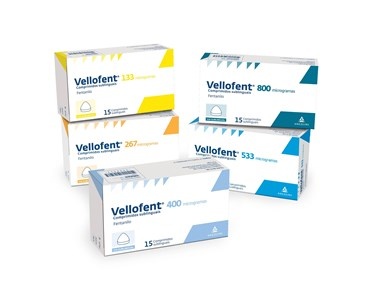
- Country of registration
- Dosage formTablets, 133 mcg
- ATC codeN02AB03
- Active substance
- Prescription requiredYes
- Manufacturer
- ImporterAziende Chimiche Riunite Angelini Francesco A.C.R.A.F. S.p.A. Etypharm
- This information is for reference only and does not constitute medical advice. Always consult a doctor before taking any medication. Oladoctor is not responsible for medical decisions based on this content.
- Alternatives to VellofentDosage form: Tablets, 200 mcgActive substance: fentanylPrescription required
Online doctors for Vellofent
Discuss questions about Vellofent, including use, safety considerations and prescription review, subject to medical assessment and local regulations.









Get Vellofent Prescription Online
Fill in a 2-min form
Tell us your symptoms, history, and what medicine you're requesting.
Pick a doctor or let us assign
Choose a specialist or we'll match you with the next available doctor.
Doctor reviews your case
Usually within 30 minutes. They may ask follow-up questions via chat.
Collect from any pharmacy
Electronic prescription sent to your email — valid across Spain.
Frequently Asked Questions
Vellofent requires a prescription in Poland. You can check with a doctor online whether this medicine may be appropriate for your situation.
The active ingredient in Vellofent is fentanyl. This information helps identify medicines with the same composition but different brand names.
Vellofent is manufactured by Aziende Chimiche Riunite Angelini Francesco A.C.R.A.F. S.p.A. Etypharm. Pharmacy brands and packaging may differ depending on the distributor.
Doctors such as Family doctors, Psychiatrists, Dermatologists, Cardiologists, Endocrinologists, Gastroenterologists, Pulmonologists, Nephrologists, Rheumatologists, Hematologists, Infectious disease physicians, Allergists, Geriatricians, Paediatricians, Oncologists may assess whether Vellofent is appropriate, depending on your situation and local regulations. You can book an online consultation to discuss your symptoms and possible next steps.
Spain has a well-developed healthcare infrastructure across major cities such as Madrid, Barcelona, Valencia, and Seville. Pharmacies are widely available and operate under strict regulations, ensuring access to prescribed medications.
You can buy Vellofent in Madrid, Barcelona, Seville, or Valencia at any local pharmacy with a valid prescription.
To obtain a prescription, you can use Oladoctor:
Other medicines with the same active substance (fentanyl) include Aurofena, Aurofena, Aurofena. These may have different brand names or formulations but contain the same therapeutic ingredient. Always consult a doctor before switching or starting a new medicine.
