



BERIATE 2000 IU Powder

Prescription review online
A doctor will review your case and decide whether a prescription is medically appropriate.

Talk to a doctor about this medicine
Discuss your symptoms and possible next steps in a quick online consultation.



How to use Beriate 2000
Contents of the leaflet
- LEAFLET INCLUDED IN THE PACKAGE: INFORMATION FOR
- THE USER
- Beriate
- What is Beriate and what is it used for
- Important information before using Beriate
- How to use Beriate
- Possible side effects
- How to store Beriate
- Contents of the pack and other information
- What Beriate contains The active substance of the medicine is:
- What Beriate looks like and contents of the pack
- Marketing authorisation holder and manufacturer
- This medicinal product is authorised in the Member States of the European Economic Area under the following names
- Date of last revision of the leaflet: September 2021
- Information intended for healthcare professionals only:
- Dosage
- Information on the pharmacological properties of VWF
LEAFLET INCLUDED IN THE PACKAGE: INFORMATION FOR
THE USER

Not sure if this medicine is right for you?
Discuss your symptoms and treatment with a doctor online.
Beriate
Beriate 250, 250 IU Powder and solvent for solution for injection or infusion
Beriate 500, 500 IU Powder and solvent for solution for injection or infusion
Beriate 1000, 1000 IU Powder and solvent for solution for injection or infusion
Beriate 2000, 2000 IU Powder and solvent for solution for injection or infusion
Human coagulation factor VIII
You should carefully read the contents of this leaflet before using the medicine, as it contains important information for the patient.
- You should keep this leaflet, so that you can read it again if you need to.
- If you have any further questions, ask your doctor or pharmacist.
- This medicine has been prescribed for you. Do not pass it on to others. It may harm them, even if their symptoms are the same as yours.
- If you experience any side effects, including those not listed in this leaflet, please inform your doctor or pharmacist. See section 4.
Table of contents of the leaflet:
- 1. What is Beriate and what is it used for
- 2. Important information before using Beriate
- 3. How to use Beriate
- 4. Possible side effects
- 5. How to store Beriate
- 6. Contents of the pack and other information
1. What is Beriate and what is it used for
What is Beriate?
Beriate consists of powder and solvent. The reconstituted solution is for intravenous injection or infusion.
Beriate is produced from human plasma (the liquid part of the blood) and contains human coagulation factor VIII. It is used for the prevention and treatment of bleeding caused by a lack of factor VIII (haemophilia type A) in the blood. It can also be used to treat acquired factor VIII deficiency.
What is Beriate used for?
Factor VIII is involved in the blood clotting process. Lack of factor VIII causes the blood to clot more slowly than it should, resulting in an increased tendency to bleed. Supplementing factor VIII with Beriate temporarily improves blood clotting mechanisms.

Started taking the medicine and have questions?
Discuss your symptoms and treatment with a doctor online.
2. Important information before using Beriate
The following sections contain information that you should consider before using Beriate.
When not to use Beriate
- If you are allergic (hypersensitive) to the active substance (human coagulation factor VIII) or any of the other ingredients of this medicine (listed in section 6).
Warnings and precautions
Identifiability
It is strongly recommended that each time you are given Beriate, the date of administration, batch number, and volume administered should be recorded in your treatment diary.
Before starting treatment with Beriate, discuss this with your doctor or pharmacist.
- It is possible to have allergic reactions. Patients should be informed by their doctor about early signs of allergic reactions, such as hives, generalised rash, tightness of the chest, wheezing, low blood pressure, and anaphylaxis (a severe allergic reaction that can cause serious breathing difficulties or dizziness). If such symptoms occur, patients should stop using the product and contact their doctor immediately.
- Formation of inhibitors(antibodies) is a known complication that can occur during treatment with all factor VIII products. These inhibitors, especially at high levels, can disrupt proper treatment, and the patient will be closely monitored for the development of these inhibitors. If bleeding in the patient is not properly controlled with Beriate, the doctor should be informed immediately.
- In case of existing heart disease or risk of heart disease, inform your doctor or pharmacist.
- If central venous access device (CVAD) is required for administration of Beriate, the doctor should consider the risk of complications associated with CVAD, including local infections, bacteria in the blood (bacteraemia), and blood clots (thrombosis) at the catheter insertion site.
The doctor should carefully weigh the benefits of treatment with Beriate against the risk of these complications.
Safety of use in terms of the possibility of transmitting viruses
In the case of medicines produced from human blood or plasma, appropriate preventive measures are taken to prevent the transmission of infectious diseases to patients.
These measures include careful selection of blood and plasma donors to exclude carriers of infectious diseases and testing each donation and plasma pool for viruses/infections.
Manufacturers of these products also include procedures in the production process that inactivate or remove viruses or other pathogens. Despite these measures, when administering medicines derived from human blood or plasma, it is not possible to completely exclude the possibility of transmitting infectious agents. This includes unknown or newly discovered viruses and other types of infections.
The safety measures used are considered effective against enveloped viruses, such as human immunodeficiency virus (HIV, the virus that causes AIDS), hepatitis B and C viruses, as well as against non-enveloped viruses, such as hepatitis A virus and parvovirus B19.
In the case of regular or repeated administration of products derived from human plasma (e.g., factor VIII), the doctor may recommend vaccination against hepatitis A and B.
Beriate and other medicines
- Tell your doctor or pharmacist about all the medicines you are taking or have recently taken, as well as any medicines you plan to take.
- Beriate should not be mixed with other medicinal products, diluents, and solvents, except those recommended by the manufacturer (see section 6).
Pregnancy, breastfeeding, and fertility
- If you are pregnant or breastfeeding, think you may be pregnant, or plan to have a child, consult your doctor or pharmacist before using this medicine.
- Beriate should be used during pregnancy and breastfeeding only if clearly necessary.
- Data on fertility are not available.
Driving and using machines
Beriate does not affect the ability to drive and use machines.
Beriate contains sodium
Beriate 250 IU and 500 IU contain less than 1 mmol of sodium (23 mg) per vial, so it can be considered "essentially sodium-free".
Beriate 1000 IU and 2000 IU contain 27.55 mg of sodium (the main component of common salt) per vial. This is equivalent to 1.4% of the recommended maximum daily intake of sodium for an adult.
3. How to use Beriate
This medicine should always be used as directed by your doctor or pharmacist. If you are unsure, consult your doctor or pharmacist.
Treatment of haemophilia A should be initiated and maintained under the supervision of a doctor experienced in the treatment of this type of disorder.
Recommended dose
The required amount of factor VIII and the duration of treatment depend on several factors, such as body weight, disease severity, location, and intensity of bleeding or the need to prevent bleeding during surgery or examination.
If it is recommended to use Beriate at home, the doctor should inform the patient about how to inject the medicine and what dose to use.
Follow the instructions given by your doctor or haemophilia treatment centre nurse.
Haemophilia treatment centre.
Use in children and adolescents
The dose is determined based on body weight, using the same principle as for adults.
Overdose of Beriate
No symptoms of factor VIII overdose have been reported.
Missed dose of Beriate
The next dose should be administered immediately and continued at regular intervals as directed by the doctor. Do not take a double dose to make up for a missed dose.
Reconstitution and administration General recommendations:
- The powder should be reconstituted (mixed) with the solvent (liquid part) and drawn from the vial under aseptic conditions.
- The reconstituted solution should be clear or slightly opalescent (it may shine when observed in light). Sometimes, single strands or particles may appear in the vial. The filter, part of the Mix2Vial device, removes solid particles. Filtration does not affect dose calculation. Before administration, after filtration and drawing into a syringe (see below), the solution should be visually inspected for the presence of small particles and discoloration. Do not use the solution if it is cloudy or contains sediment or particles in the syringe.
- After transfer to a syringe, the product should be used immediately. Do not store the product in a syringe.
- Any unused product or waste material should be disposed of in accordance with local regulations and the doctor's instructions.
Reconstitution:
Without opening the vials, warm the Beriate powder and solvent to room temperature or body temperature. This can be achieved by leaving the vials at room temperature for about an hour or by holding them in your hands for a few minutes.
DO NOT expose the vials to direct heat sources. The vial should not be heated to a temperature above body temperature (37°C).
Carefully remove the protective caps from the vials of powder and solvent, wipe the rubber stoppers with an alcohol swab, and let them dry before opening the Mix2Vial package, then follow the instructions below.
- 1. Open the Mix2Vial package by removing the cap. Do notremove the Mix2Vial from the blister!
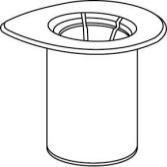
- 2. Place the vial of solventon a flat and clean surface and hold it firmly. Do not remove the Mix2Vial from the blister. Pressing the tip of the blue connector vertically downwardspierce the stopper of the solvent vial.
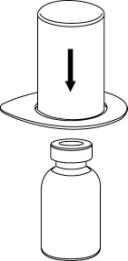
- 3. Carefully remove the blister from the Mix2Vial set by holding the edge and pulling verticallyupwards. Make sure to remove only the blister, not the entire Mix2Vial set.
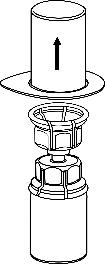
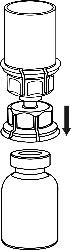
4 .Place the vial of product on a flat and hard surface.
Turn the vial of solvent with the attached Mix2Vial set upside down and, pressing the tip of the transparent connector vertically downwards, pierce the stopper of the vial of product. The solvent will flow into the vial of product.
- 5. Holding the vial of medicinal product attached to the Mix2Vial set with one hand and the vial of solvent also attached to the Mix2Vial set with the other hand, carefully unscrew the Mix2Vial set into two parts by twisting in the opposite direction to the arrow. Remove the vial of solvent with the attached blue connector of the Mix2Vial set.
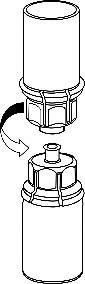
- 6. Bring the substance to complete dissolution by gently rotating the vial of product with the attached transparent connector. Do not shake.
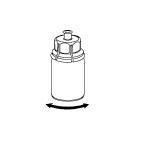
7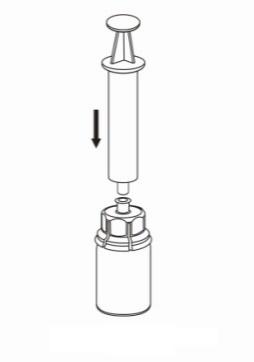 |
|
Withdrawal and administration:
- 8. Holding the plunger of the syringe in place, turn the entire set upside down and fill the syringe with the solution by slowly pulling back the plunger of the syringe.

- 9. The solution is now in the syringe. Holding the syringe cylinder (with the plunger facing downwards) firmly, detach the transparent connector of the Mix2Vial set from the syringe by twisting in the opposite direction to the arrow.

Insert the needle into a vein using the provided venipuncture set. Allow blood to flow into the end of the tubing. Attach the syringe to the threaded, securing end of the venipuncture set. According to the doctor's instructions, slowly injectthe reconstituted solution intravenously. The injection or infusion rate should not exceed 2 ml per minute. Make sure that blood does not enter the syringe containing the product.
If it is necessary to administer a larger volume, this can also be done by infusion. To do this, transfer the product after reconstitution to an approved infusion set. Perform the infusion according to the doctor's instructions.
Pay attention to the occurrence of any side effects. If such an effect may be related to the administration of Beriate, the injection or infusion should be discontinued (see also section 2).
If you have any further questions about the use of this medicine, ask your doctor or pharmacist.
4. Possible side effects
Like all medicines, this medicine can cause side effects, although not everybody gets them.
If you experience any of the following symptoms, inform your doctor or emergency services or the haemophilia treatment centre at the nearest hospital immediately:
- Symptoms of angioedema, such as
- swelling of the face, tongue, or throat
- difficulty swallowing
- hives and difficulty breathing The above side effects are very rare (may occur in less than 1 in 10,000 patients) and in some cases may lead to severe allergic reactions (anaphylaxis), including shock.
- Lack of effectiveness of treatment (persistent bleeding). In the case of previously untreated children with factor VIII products, inhibitory antibodies (see section 2) may occur very frequently (more than 1 in 10 patients). However, in patients who have previously been treated with factor VIII (more than 150 days of treatment), the risk is not very common (less than 1 in 100 patients). If this happens, the patient's medicines may stop working properly, and the patient may experience persistent bleeding. If this happens, inform your doctor immediately.
Other side effects:
- Allergic reactions (hypersensitivity), which may include:
- burning and stinging at the injection or infusion site
- chills, fever, generalised rash, blisters
- headache
- low blood pressure, anxiety, rapid heart rate, tightness in the chest, wheezing
- feeling of fatigue (lethargy)
- nausea, vomiting
- tingling The above side effects are very rare and in some cases may lead to severe allergic reactions (anaphylaxis), including shock.
- Very rarely, elevated body temperature has been observed.
Side effects in children and adolescents
The frequency, type, and severity of adverse reactions in children are comparable to those in adults.
Reporting side effects
If you experience any side effects, including those not listed in this leaflet, please inform your doctor or pharmacist or nurse.
Side effects can be reported directly to the Department of Adverse Reaction Monitoring of Medicinal Products, Medical Devices, and Biocidal Products
Al. Jerozolimskie 181C
02-222 Warsaw
Phone: +48 22 49 21 301
Fax: +48 22 49 21 309
Website: https://smz.ezdrowie.gov.pl
Side effects can also be reported to the marketing authorisation holder.
By reporting side effects, you can help provide more information on the safety of this medicine.
5. How to store Beriate
Do not use this medicine after the expiry date stated on the label and carton after EXP. The expiry date refers to the last day of that month.
The batch number is stated on the label and carton after Lot.
- Store in a refrigerator (2°C - 8°C).
- During the shelf life, Beriate may be stored at a temperature not above 25°C for a total period of 1 month. Individual periods of storage at room temperature should be recorded in the treatment record so that the total storage period at this temperature does not exceed 1 month.
- Beriate does not contain a preservative and should be administered immediately after reconstitution.
- If the reconstituted product is not administered immediately, its storage time in the vial should not exceed 8 hours at room temperature. After transfer to a syringe, the product should be used immediately.
- Do not freeze.
- Store the container in the outer packaging to protect from light.
- Medicines should be kept out of the sight and reach of children.
6. Contents of the pack and other information
What Beriate contains The active substance of the medicine is:
Beriate is available in powder form (containing nominally 250 IU, 500 IU, 1000 IU, or 2000 IU of human coagulation factor VIII per vial) and liquid part (solvent). The reconstituted solution is for injection or infusion.
Beriate 250/500/1000 reconstituted with 2.5 ml, 5 ml, and 10 ml of water for injection, respectively, contains approximately 100 IU/ml of human coagulation factor VIII.
Beriate 2000 should be reconstituted with 10 ml of water for injection, and the resulting solution contains approximately 200 IU/ml of human coagulation factor VIII.
Other ingredients are:
Glycine, calcium chloride, sodium hydroxide (in small amounts) to adjust pH, sucrose, sodium chloride. Solvent:water for injection 2.5 ml, 5 ml, and 10 ml, respectively.
What Beriate looks like and contents of the pack
Beriate is available as a white powder and is supplied with water for injection.
The reconstituted solution should be clear to slightly opalescent (it may shine when held in light), but it should not contain any visible particles.
Pack sizes:
Pack of 250 IU containing:
1 vial of powder
1 vial of water for injection 2.5 ml
1 Mix2Vial transfer system with filter
Administration set (inner packaging):
1 single-use syringe 5 ml
1 venipuncture set
2 alcohol swabs
1 non-sterile plaster
Pack of 500 IU containing:
1 vial of powder
1 vial of water for injection 5 ml
1 Mix2Vial transfer system with filter
Administration set (inner packaging):
1 single-use syringe 5 ml
1 venipuncture set
2 alcohol swabs
1 non-sterile plaster.
Pack of 1000 IU containing:
1 vial of powder
1 vial of water for injection 10 ml
1 Mix2Vial transfer system with filter
Administration set (inner packaging):
1 single-use syringe 10 ml
1 venipuncture set
2 alcohol swabs
1 non-sterile plaster.
Pack of 2000 IU containing:
1 vial of powder
1 vial of water for injection 10 ml
1 Mix2Vial transfer system with filter
Administration set (inner packaging):
1 single-use syringe 10 ml
1 venipuncture set
2 alcohol swabs
1 non-sterile plaster.
Not all pack sizes may be marketed.
Marketing authorisation holder and manufacturer
CSL Behring GmbH
Emil-von-Behring-Str. 76
35041 Marburg
Germany
This medicinal product is authorised in the Member States of the European Economic Area under the following names
Austria:
Beriate 100 IU/ml Powder and solvent for solution for injection or infusion (250 IU, 500 IU, 1000 IU)
Beriate 200 IU/ml Powder and solvent for solution for injection or infusion (2000 IU)
Bulgaria:
Beriate 250 IU Powder and solvent for solution for injection or infusion
Beriate 500 IU Powder and solvent for solution for injection or infusion
Beriate 1000 IU Powder and solvent for solution for injection or infusion
Beriate 2000 IU Powder and solvent for solution for injection or infusion
Croatia:
Beriate 250 IU powder and solvent for solution for injection or infusion
Beriate 500 IU powder and solvent for solution for injection or infusion
Beriate 1000 IU powder and solvent for solution for injection or infusion
Beriate 2000 IU powder and solvent for solution for injection or infusion
Czech Republic:
Beriate 250 IU, Beriate 500 IU, Beriate 1000 IU, Beriate 2000 IU
Estonia:
Beriate
Latvia:
Beriate 250 IU powder and solvent for solution for injection or infusion
Beriate 500 IU powder and solvent for solution for injection or infusion
Beriate 1000 IU powder and solvent for solution for injection or infusion
Beriate 2000 IU powder and solvent for solution for injection or infusion
Lithuania:
Beriate 250 IU powder and solvent for solution for injection or infusion
Beriate 500 IU powder and solvent for solution for injection or infusion
Beriate 1000 IU powder and solvent for solution for injection or infusion
Beriate 2000 IU powder and solvent for solution for injection or infusion
Germany:
Beriate 250, Beriate 500, Beriate 1000, Beriate 2000
Hungary:
BERIATE 100 NE/ml powder and solvent for solution for injection or infusion (250 IU, 500 IU, 1000 IU)
BERIATE 200 NE/ml powder and solvent for solution for injection or infusion (2000 IU)
Italy:
Beriate
Poland:
Beriate 250
Beriate 500
Beriate 1000
Beriate 2000
Portugal:
Beriate
Romania:
Beriate 250 IU powder and solvent for solution for injection or infusion
Beriate 500 IU powder and solvent for solution for injection or infusion
Beriate 1000 IU powder and solvent for solution for injection or infusion
Beriate 2000 IU powder and solvent for solution for injection or infusion
Spain:
Beriate 250 IU powder and solvent for solution for injection or infusion
Beriate 500 IU powder and solvent for solution for injection or infusion
Beriate 1000 IU powder and solvent for solution for injection or infusion
Beriate 2000 IU powder and solvent for solution for injection or infusion
Slovakia:
Beriate 250 IU
Beriate 500 IU
Beriate 1000 IU
Beriate 2000 IU
Slovenia:
Beriate 250 IU powder and solvent for solution for injection or infusion
Beriate 500 IU powder and solvent for solution for injection or infusion
Beriate 1000 IU powder and solvent for solution for injection or infusion
Beriate 2000 IU powder and solvent for solution for injection or infusion
Date of last revision of the leaflet: September 2021
Information intended for healthcare professionals only:
Dosage
Monitoring of treatment
During treatment, factor VIII levels should be properly determined to measure the appropriate dose to be administered to the patient and the frequency of repeated infusions.
Patient responses to factor VIII may vary, considering different recovery levels and half-lives. Dosing based on body weight may require adjustment in patients who are overweight or underweight. Especially in the case of major surgical procedures, it is necessary to closely monitor substitution therapy through coagulation control (factor VIII activity level in plasma).
Patients should be monitored for the development of factor VIII inhibitors. See also section 2.
The number of factor VIII units administered to the patient is expressed in international units (IU), which refer to the current WHO standards for factor VIII concentrates. Factor VIII activity in plasma is expressed as a percentage (relative to normal human plasma) or preferably in IU (relative to the international standard for factor VIII in plasma).
One international unit of factor VIII activity is equivalent to the activity of factor VIII contained in 1 ml of normal human plasma.
On-demand treatment
Calculating the required factor VIII dose is based on the empirical finding that 1 IU of factor VIII per kilogram of body weight increases the factor VIII activity in plasma by approximately 2% of normal activity (2 IU/dl). The required dose is calculated using the following formula:
Required dose (IU) = body weight (kg) x desired increase in factor VIII level (% or IU/dl) x 0.5.
The dose of the product and the frequency of administration should always be individually tailored, depending on the clinical efficacy in individual patients.
In the case of the following types of bleeding or surgical procedures, factor VIII activity should not fall below the specified values for activity in plasma (as a percentage of normal or IU/dl) during the corresponding time period. The following table shows possible dosing for bleeding and surgical procedures:
| Type of bleeding/ surgical procedure | Required factor VIII level (% or IU/dl) | Dosing frequency (hours) / treatment duration (days) |
| Bleeding | ||
| Mild haemarthrosis, muscle or oral bleeding | 20-40 | Repeat every 12 to 24 hours, for at least 1 day, until pain and bleeding have resolved or healed. |
| Major haemarthrosis, muscle or haematoma | 30-60 | Repeat infusion every 12-24 hours for 3 to 4 days or more, until pain and acute dysfunction have resolved. |
| Life-threatening bleeding | 60-100 | Repeat infusion every 8 to 24 hours, until the risk has resolved. |
| Surgical procedures | ||
| Minor surgical procedures, including tooth extraction | 30-60 | Every 24 hours, for at least 1 day, until healed. |
| Major surgical procedures | 80-100 (pre- and post-operative) | Repeat infusion every 8-24 hours until proper wound healing, then therapeutically for at least 7 days to maintain factor VIII activity at 30-60% (30-60 IU/dl, equivalent to 0.30-0.60 IU/ml). |
Prophylaxis
In long-term prophylactic treatment of patients with severe haemophilia A, 20 to 40 IU of factor VIII per kilogram of body weight are usually administered at intervals of 2 to 3 days. In some cases, especially in younger patients, more frequent administration of factor VIII or the use of higher doses may be necessary.
Children and adolescents
Dosing in children is based on body weight, using the same principle as for adults. The frequency of administration should always be individually tailored, depending on clinical efficacy. Cases of treatment of children under 6 years of age have been reported.
Information on the pharmacological properties of VWF
In addition to its role as a protective protein for factor VIII, von Willebrand factor mediates platelet adhesion at the site of vascular injury and plays a role in platelet aggregation.
- Country of registration
- Dosage formPowder, 2000 IU
- ATC codeB02BD02
- Active substance
- Prescription requiredYes
- Manufacturer
- ImporterCSL Behring GmbH
- This information is for reference only and does not constitute medical advice. Always consult a doctor before taking any medication. Oladoctor is not responsible for medical decisions based on this content.
- Alternatives to Beriate 2000Dosage form: Powder, 1000 IUActive substance: coagulation factor VIIIManufacturer: CSL Behring GmbHPrescription requiredDosage form: Powder, 250 IUActive substance: coagulation factor VIIIManufacturer: CSL Behring GmbHPrescription requiredDosage form: Powder, 500 IUActive substance: coagulation factor VIIIManufacturer: CSL Behring GmbHPrescription required
Online doctors for Beriate 2000
Discuss questions about Beriate 2000, including use, safety considerations and prescription review, subject to medical assessment and local regulations.









Get Beriate 2000 Prescription Online
Fill in a 2-min form
Tell us your symptoms, history, and what medicine you're requesting.
Pick a doctor or let us assign
Choose a specialist or we'll match you with the next available doctor.
Doctor reviews your case
Usually within 30 minutes. They may ask follow-up questions via chat.
Collect from any pharmacy
Electronic prescription sent to your email — valid across Spain.
Frequently Asked Questions
Beriate 2000 requires a prescription in Poland. You can check with a doctor online whether this medicine may be appropriate for your situation.
The active ingredient in Beriate 2000 is coagulation factor VIII. This information helps identify medicines with the same composition but different brand names.
Beriate 2000 is manufactured by CSL Behring GmbH. Pharmacy brands and packaging may differ depending on the distributor.
Doctors such as Family doctors, Psychiatrists, Dermatologists, Cardiologists, Endocrinologists, Gastroenterologists, Pulmonologists, Nephrologists, Rheumatologists, Hematologists, Infectious disease physicians, Allergists, Geriatricians, Paediatricians, Oncologists may assess whether Beriate 2000 is appropriate, depending on your situation and local regulations. You can book an online consultation to discuss your symptoms and possible next steps.
Spain has a well-developed healthcare infrastructure across major cities such as Madrid, Barcelona, Valencia, and Seville. Pharmacies are widely available and operate under strict regulations, ensuring access to prescribed medications.
You can buy Beriate 2000 in Madrid, Barcelona, Seville, or Valencia at any local pharmacy with a valid prescription.
To obtain a prescription, you can use Oladoctor:
Other medicines with the same active substance (coagulation factor VIII) include Beriate 1000, Beriate 250, Beriate 500. These may have different brand names or formulations but contain the same therapeutic ingredient. Always consult a doctor before switching or starting a new medicine.
