






How to use NEUROMADE Hard Capsules
Translated with AI
This page provides general information and does not replace a doctor’s consultation. Always consult a doctor before taking any medication. Seek urgent medical care if symptoms are severe.
Show originalContents of the leaflet
Introduction
PACKAGE LEAFLET: INFORMATION FOR THE USER
NEUROMADE hard capsules
Read the entire package leaflet carefully before starting to take the medicine.
- Keep this package leaflet, as you may need to read it again.
- If you have any further questions, ask your doctor or pharmacist.
- This medicine has been prescribed for you. Do not pass it on to others, as it may harm them, even if their symptoms are the same as yours.
- If you experience any side effects, consult your doctor or pharmacist. This includes any possible side effects not listed in this package leaflet.
Contents of the package leaflet:
- What Neuromade capsules are and what they are used for
- Before taking Neuromade capsules
- How to take Neuromade capsules
- Possible side effects
- Storage of Neuromade capsules
- Further information
1. What NEUROMADE CAPSULES are and what they are used for
Neuromade capsules are an association of the water-soluble vitamins of the B group: thiamine (vitamin B1), pyridoxine (vitamin B6), and cyanocobalamin (vitamin B12) for oral administration.
Vitamins are essential nutrients that are involved in numerous human metabolic processes.
Neuromade capsules are indicated in adults and patients over 14 years of age, in:
Treatment of states of deficiency of vitamins B1, B6, and B12, which could cause neuropathies (diseases of the peripheral nervous system) and could manifest in cases of back pain, such as lumbalgia. Convalescence. Insufficient diet.

2. Before taking NEUROMADE CAPSULES
Do nottake NEUROMADE capsules
- if you are allergic (hypersensitive) to the active substances, to cobalamins (e.g., hydroxocobalamin), to cobalt, or to any of the other components of the medicine (see section 6).
- if you are being treated with levodopa (a medicine for Parkinson's disease).
- if you have Leber's disease (hereditary optic nerve atrophy) or tobacco amblyopia (decreased visual acuity that can occur in people who abuse tobacco), as they may worsen.
Due to the doses of vitamins it contains, do not take this medicine:
- if you are pregnant or breastfeeding.
- children under 14 years of age.
Be careful with NEUROMADE capsules
- Do not take a higher dose than recommended or for a longer period than recommended. When high doses of pyridoxine (vitamin B6) are administered continuously, adverse neurological effects (headache, tingling sensation, etc.) may occur. Cases of dependence and withdrawal have been reported when taking 200 mg of pyridoxine for a month.
- As it contains vitamin B12, if you have a blood disease such as anemia, your doctor should check the cause before taking it.
- If you are prone to gout, due to the content of vitamin B12, your doctor should perform a special clinical check, as it may worsen.
- If you have kidney or liver disease, do not take this medicine, as the doses it contains exceed the recommended doses in these situations.
- If you have conditions such as uremia (accumulation of urea in the blood), infections, iron or folic acid deficiency, or are being treated with medicines that have a suppressive effect on the bone marrow (e.g., chloramphenicol), the therapeutic response to vitamin B12 may decrease.
- You should be careful with the sun or avoid exposure to it, as pyridoxine can cause photosensitivity with skin lesions.
- If you have previously suffered from an allergy to vitamin B1 on skin contact (contact dermatitis) for professional reasons, you may experience a relapse when taking this medicine.
- Interference with analytical tests: If you are going to undergo any diagnostic test (including blood tests, urine tests, skin tests that use allergens, etc.), inform your doctor that you are taking this medicine, as it may alter the results. In some determinations of urobilinogen, theophylline, and uric acid, false results may occur.
Use of other medicines
Tell your doctor or pharmacist if you are using or have recently used other medicines, including those obtained without a prescription.
Neuromade capsules may interact with the following medicines:
- Levodopa (medicines for the treatment of Parkinson's disease).
- Phenobarbital, phenytoin (medicines for epilepsy).
- Amiodarone (for the heart).
- Altretamine (for cancer treatment).
- Neuromuscular blocking agents (used in anesthesia for surgery).
- The following medicines may interfere with pyridoxine (vitamin B6) and may reduce its levels, including: antibiotics for tuberculosis (isoniazid, cycloserine, and ethionamide), penicillamine (for rheumatic diseases), hydralazine (for hypertension), immunosuppressants such as corticosteroids or cyclosporine and azathioprine (used in organ transplantation), cyclophosphamide (for cancer).
- Several medicines can decrease the absorption of cyanocobalamin (vitamin B12) or reduce its effect, such as: ascorbic acid (vitamin C) in high doses, aminoglycoside antibiotics, colchicine (for gout treatment), H2 antagonists (medicines against stomach acid or stomach ulcers, such as ranitidine, cimetidine, etc.), aminosalicylic acid (for intestinal diseases), omeprazole (for stomach ulcers), medicines for epilepsy, metformin (for diabetes), chloramphenicol (antibiotic), sustained-release potassium preparations, or cobalt radiation.
- Oral contraceptives may reduce the levels of both vitamin B6 and vitamin B12.
Taking NEUROMADE capsules with food and drinks
Alcoholic beverages decrease the effect of the vitamins.
Pregnancy and breastfeeding
Consult your doctor or pharmacist before using any medicine.
Due to the doses of vitamins B that this medicine contains, which are higher than those recommended during pregnancy and breastfeeding, it is contraindicated during these periods.
Thiamine, pyridoxine, and cyanocobalamin pass into breast milk.
Driving and using machines
This medicine may cause drowsiness in a few patients, who should not drive and/or use machines during treatment.
3. How to take NEUROMADE CAPSULES
Follow the administration instructions of Neuromade capsules indicated by your doctor.
Consult your doctor or pharmacist if you have any doubts.
The normal dose is:
It is recommended to take 1 capsule per day. In certain cases, the doctor may indicate taking 2 capsules per day.
Oral route.
The capsules are taken with the help of a sufficient amount of water.
In general, the treatment should not exceed 2 weeks, although the doctor may recommend administration for more than 15 days.
Use in children
This medicine is contraindicated in children under 14 years of age.
If you take more NEUROMADE capsules than you should
It is not expected that ingestion of high doses of Neuromade capsules will produce toxic effects.
If you have taken more Neuromade capsules than you should, you may experience symptoms such as: gastrointestinal disorders (diarrhea, nausea, and vomiting), nervous system disorders such as reduced sensitivity, tingling, numbness in feet and hands; you may also experience headache, increased sensitivity to sunlight with skin lesions; drowsiness, difficulty breathing, among other effects, depending on the dose. In rare cases, a severe allergic reaction (anaphylactic shock) may occur.
In children, accidental ingestion of very high doses of vitamin B6 may also cause deep sedation, weakness, and difficulty breathing.
In case of overdose or accidental ingestion, consult your doctor or pharmacist immediately or go to a medical center, or call the Toxicology Information Service, phone 91 562 04 20, indicating the medicine and the amount ingested.
If you forget to take NEUROMADE capsules
Do not take a double dose to make up for the forgotten doses.
If you have any further questions about the use of this product, ask your doctor or pharmacist.

4. Possible side effects
Like all medicines, Neuromade capsules can cause side effects, although not everyone gets them.
The assessment of side effects that may occur is based on the following frequencies:
uncommon (may affect between 1 and 10 in every 1,000 people).
Uncommonly, the following may appear: nausea, headache, effects on sensitivity (paresthesia) that manifest as a tingling sensation in arms and legs or alterations in touch, drowsiness, and skin rash (hypersensitivity reactions to vitamins B1, B6, and B12).
Other side effects that have been reported, with an unknown frequency, are: gastrointestinal disorders, diarrhea, photosensitivity with skin lesions such as blisters, dizziness, restlessness; disorder with reduced sensitivity and tingling, unsteady gait, numbness of feet or hands, which usually decrease when treatment is discontinued; a pyridoxine withdrawal syndrome more likely with higher doses and in treatments longer than a month; changes in urine color, swelling, and irritation in the eyes; occasionally anaphylactic reaction with itching, swelling, difficulty breathing, etc.; some cases of affection with nodules and pus on the face and neck.
If you experience any side effects, consult your doctor or pharmacist. This includes any possible side effects not listed in this package leaflet.
Reporting of side effects
If you experience any side effects, consult your doctor, pharmacist, or nurse, even if they are possible side effects not listed in this package leaflet. You can also report them directly through the Spanish Medicines Monitoring System for Human Use: https://www.notificaram.es. By reporting side effects, you can help provide more information on the safety of this medicine.
5. Storage of NEUROMADE CAPSULES
Keep out of the reach and sight of children.
Do not use Neuromade capsules after the expiration date stated on the packaging after CAD. The expiration date is the last day of the month indicated.
No special storage conditions are required. Store in the original packaging.
Medicines should not be disposed of via wastewater or household waste. Place the packaging and any unused medicines in the SIGRE collection point at the pharmacy. If in doubt, ask your pharmacist how to dispose of the packaging and any unused medicines. This will help protect the environment.
6. Further information
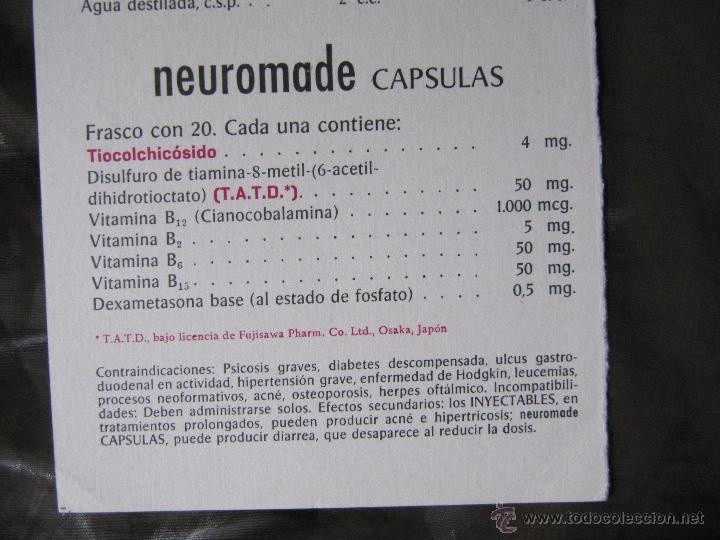
Composition of NEUROMADE capsules
- The active substances are: Thiamine hydrochloride (vitamin B1), Pyridoxine hydrochloride (vitamin B6), and Cyanocobalamin (Vitamin B12). Each capsule contains 50 mg of thiamine hydrochloride, 50 mg of pyridoxine hydrochloride, and 1,000 micrograms of cyanocobalamin.
- The other components (excipients) are: Microcrystalline cellulose, silicon dioxide, and magnesium stearate.
Appearance of the product and packaging content
Neuromade capsules are presented in packages of 20 hard capsules.
Marketing authorization holder and manufacturer
TEOFARMA Srl
Via F.lli Cervi, 8
27010 Valle Salimbene (PV) – Italy
This package leaflet was approved in September 2011.
Detailed and updated information on this medicine is available on the website of the Spanish Agency for Medicines and Health Products (AEMPS) http://www.aemps.gob.es/
-

- Country of registration
- Dosage formCAPSULE, 50 mg / 50 mg / 1 mg
- ATC codeA11DB91
- Active substance
- Prescription requiredYes
- Manufacturer
- This information is for reference only and does not constitute medical advice. Always consult a doctor before taking any medication. Oladoctor is not responsible for medical decisions based on this content.
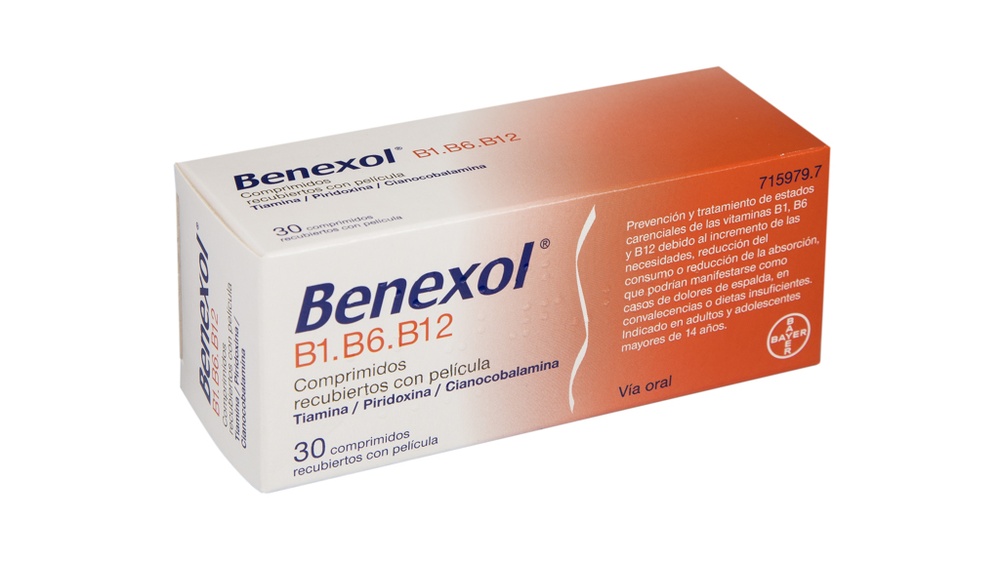
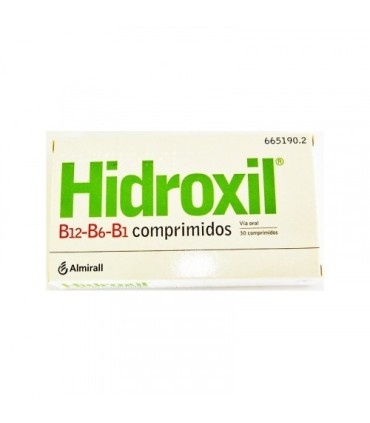
- Alternatives to NEUROMADE Hard CapsulesDosage form: TABLET, 250/250/1000 mg/mg/mgActive substance: Vitamin B1 in combination with vitamin B6 and/or vitamin B12Manufacturer: Bayer Hispania S.L.Prescription not requiredDosage form: TABLET, 250 mg/250 mg/500 microgramsActive substance: Vitamin B1 in combination with vitamin B6 and/or vitamin B12Manufacturer: Almirall S.A.Prescription not requiredDosage form: TABLET, 250 mg / 250 mg / 0.50 mgActive substance: Vitamin B1 in combination with vitamin B6 and/or vitamin B12Manufacturer: Laboratorios Normon S.A.Prescription not required

Online doctors for NEUROMADE Hard Capsules
Discuss questions about NEUROMADE Hard Capsules, including use, safety considerations and prescription review, subject to medical assessment and local regulations.









Get NEUROMADE Hard Capsules Prescription Online
Fill in a 2-min form
Tell us your symptoms, history, and what medicine you're requesting.
Pick a doctor or let us assign
Choose a specialist or we'll match you with the next available doctor.
Doctor reviews your case
Usually within 30 minutes. They may ask follow-up questions via chat.
Collect from any pharmacy
Electronic prescription sent to your email — valid across Spain.
Frequently Asked Questions
NEUROMADE Hard Capsules requires a prescription in Spain. You can check with a doctor online whether this medicine may be appropriate for your situation.
The active ingredient in NEUROMADE Hard Capsules is Vitamin B1 in combination with vitamin B6 and/or vitamin B12. This information helps identify medicines with the same composition but different brand names.
NEUROMADE Hard Capsules is manufactured by Teofarma S.R.L.. Pharmacy brands and packaging may differ depending on the distributor.
Doctors such as Family doctors, Psychiatrists, Dermatologists, Cardiologists, Endocrinologists, Gastroenterologists, Pulmonologists, Nephrologists, Rheumatologists, Hematologists, Infectious disease physicians, Allergists, Geriatricians, Paediatricians, Oncologists may assess whether NEUROMADE Hard Capsules is appropriate, depending on your situation and local regulations. You can book an online consultation to discuss your symptoms and possible next steps.
Spain has a well-developed healthcare infrastructure across major cities such as Madrid, Barcelona, Valencia, and Seville. Pharmacies are widely available and operate under strict regulations, ensuring access to prescribed medications.
You can buy NEUROMADE Hard Capsules in Madrid, Barcelona, Seville, or Valencia at any local pharmacy with a valid prescription.
To obtain a prescription, you can use Oladoctor:
Other medicines with the same active substance (Vitamin B1 in combination with vitamin B6 and/or vitamin B12) include BENEXOL B1-B6-B12 FILM-COATED TABLETS, HYDROXIL B1-B6-B12 FILM-COATED TABLETS, VITAGOBENS B1 B6 B12 FILM-COATED TABLETS. These may have different brand names or formulations but contain the same therapeutic ingredient. Always consult a doctor before switching or starting a new medicine.
