



MINOCIN 100 mg Hard Capsules

Prescription review online
A doctor will review your case and decide whether a prescription is medically appropriate.

Talk to a doctor about this medicine
Discuss your symptoms and possible next steps in a quick online consultation.



How to use MINOCIN 100 mg HARD CAPSULES
Contents of the leaflet
- Introduction
- What is Minocin and what is it used for
- What you need to know before you take Minocin
- How to Take Minocin
- Possible Side Effects
- Storage of Minocin
- Packaging Content and Additional Information
Introduction
Package Leaflet: Information for the User
Minocin 100 mg Hard Capsules
Minocycline Hydrochloride
Read all of this leaflet carefully before you start taking this medicine because it contains important information for you.
- Keep this leaflet, you may need to read it again.
- If you have any further questions, ask your doctor or pharmacist.
- This medicine has been prescribed for you only. Do not pass it on to others. It may harm them, even if their signs of illness are the same as yours.
- If you get any side effects, talk to your doctor or pharmacist. This includes any possible side effects not listed in this leaflet. See section 4.
Contents of the Package Leaflet
- What is Minocin and what is it used for
- What you need to know before you take Minocin
- How to take Minocin
- Possible side effects
- Storage of Minocin
- Contents of the pack and other information
1. What is Minocin and what is it used for
Minocin contains minocycline hydrochloride, an antibiotic belonging to the group of medicines called tetracyclines.
Antibiotics are used to treat bacterial infections and are not effective against viral infections such as the flu or the common cold.
It is essential that you follow the instructions regarding dosage, administration interval, and treatment duration as indicated by your doctor.
Do not store or reuse this medication. If you have any leftover antibiotic after completing treatment, return it to the pharmacy for proper disposal. Do not dispose of medications down the drain or in the trash.
Minocin is indicated for the treatment of the following infections in adults and children over 8 years of age:
- non-gonococcal, uncomplicated urethritis;
- respiratory infections such as tracheobronchitis;
- eye infections such as trachoma;
- sphilis, actinomycosis (an infectious disease that causes inflammation of the lymph nodes in the mouth along with other internal complications) or carbuncle (an infectious disease that affects the skin, intestine, or lungs) in patients allergic to penicillin.

Not sure if this medicine is right for you?
Discuss your symptoms and treatment with a doctor online.
2. What you need to know before you take Minocin
Do not take Minocin
- if you are allergic to the active substance, to any other tetracycline, or to any of the other components of this medicine (listed in section 6). Allergic reactions include: rash, itching, difficulty breathing, swelling of the face, lips, throat, or tongue;
- if you have severe kidney impairment;
- if you have severe liver impairment;
- if you are pregnant or think you may be pregnant;
- if you are breastfeeding.
Minocin should not be used in children under 8 years of age.
Warnings and precautions
Consult your doctor or pharmacist before starting Minocin.
Before starting this medication, inform your doctor if you have any of the following conditions:
- kidney or liver problems;
- Ménière's syndrome (symptoms are dizziness, visual disturbances, and tinnitus);
- history of allergic reactions to tetracyclines. Inform your doctor before starting treatment with minocycline.
If you are a woman of childbearing age, it is essential that you ensure you are not pregnant before starting treatment with Minocin.
The use of total sunblock creams and avoidance of sun exposure or ultraviolet radiation during treatment with Minocin is recommended. Rarely, skin rashes (red discoloration) may appear.
During long-term treatment, a deficiency of vitamin B may occur.
If you are going to undergo medical tests, inform your doctor that you are taking Minocin, as this medication may affect the results of some analytical tests.
Contact your doctor:
- if you experience severe sunburn reactions after exposure to sunlight or UV rays. Stop using Minocin immediately;
- if, while using Minocin, you experience other infections due to bacteria or other microorganisms insensitive to minocycline;
- if you start experiencing headaches and double vision. This could be due to an increase in blood pressure in the head;
- if, during treatment, you experience symptoms such as dizziness, involuntary eye movements, deafness in one ear, tinnitus, visual disturbances, hallucinations (seeing things that do not exist), or dark spots in the visual field;
- if the treatment lasts more than 6 months and you experience symptoms of a specific autoimmune disease (systemic lupus erythematosus, SLE). Typical symptoms of SLE are: extreme fatigue, hypersensitivity to light and sun, and inflammation of blood vessels, for example, in the skin;
- if you experience symptoms of liver inflammation. Typical symptoms of hepatitis are: stomach pain, nausea, fatigue, itching, jaundice;
- if you experience intense and prolonged diarrhea while being treated with minocycline, you may have a type of colitis associated with antibiotic use, which can be severe. In these cases, you should consult your doctor, who will decide whether to suspend the administration of minocycline and initiate appropriate treatment.
Children and Adolescents
Minocin should not be used in children during the teething period (second half of pregnancy, breastfeeding, and children under 8 years of age) because it may cause permanent discoloration of the teeth, as well as delayed development of the bones.
Minocin should only be prescribed to children between 8 and 12 years of age once all other treatment options have been exhausted.
Other Medicines and Minocin
Inform your doctor or pharmacist if you are taking, have recently taken, or might take any other medicines, including those obtained without a prescription.
Certain medicines may interact with Minocin. In these cases, it may be necessary to change the dose or interrupt treatment with one of the medicines. It is especially important that you inform your doctor if you are using any of the following medicines:
- penicillin, as Minocin may interfere with its effect,
- isotretinoin, as taking it with Minocin may produce benign intracranial hypertension,
- oral contraceptives, as Minocin may reduce their effectiveness,
- anticoagulants (such as warfarin) as Minocin may alter their effect,
- antacids (medicines used to calm stomach acidity) and other medicines that contain aluminum, calcium, magnesium, and medicines that contain iron or bismuth salts, as they may reduce the effect of Minocin,
- antiepileptics and barbiturics (medicines for severe insomnia and convulsions), as they may reduce the effect of Minocin,
- methoxyflurane (a medicine used for anesthesia), as when used in combination with antibiotics from the tetracycline group, such as Minocin, severe kidney toxicity may occur.
Taking Minocin with Food and Drinks
- It is essential to take Minocin during a meal, accompanied by a large glass of water or milk, and to wait at least one hour before lying down or going to bed, to avoid irritating the esophagus (see section 3).
Pregnancy and Breastfeeding
If you are pregnant or breastfeeding, think you may be pregnant, or plan to become pregnant, consult your doctor or pharmacist before using this medicine.
Pregnancy
Minocin should not be used during pregnancy, as it may harm the development of the fetus's bones and teeth.
It is essential that during treatment with Minocin, you use contraceptive methods to avoid becoming pregnant. Oral contraceptives (hormonal) may not be effective, as taking Minocin reduces the contraceptive effect, and therefore, it is recommended to use barrier methods.
Breastfeeding
Minocin should not be used during breastfeeding, as it may cause disorders in the development of the newborn/infant's bones and teeth. Your doctor will decide whether it is necessary to interrupt breastfeeding or interrupt treatment, considering the benefit of breastfeeding for the child and the benefit of treatment for the mother.
Driving and Using Machines
You may feel dizzy, vertigo, or that your vision or hearing is affected by this medicine, so it is not recommended that you drive or operate machines until you have checked that this medicine does not affect you.
Minocin contains Orange Yellow S (E-110)
This medicine contains Orange Yellow S (E-110), which may cause allergic reactions.
3. How to Take Minocin
Follow your doctor's instructions for taking this medicine exactly. If you are in doubt, consult your doctor or pharmacist again.
Adults
The recommended normal dose in adults is 200 mg (2 capsules) on the first day of treatment, administered in a single daily dose or as 100 mg (1 capsule) every 12 hours, followed by a maintenance dose of 100 mg (1 capsule) every 24 hours in mild infections or 100 mg (1 capsule) every 12 hours in severe infections.
In the case of non-gonococcal urethritis, the daily dose is 200 mg administered as 100 mg (1 capsule) every 12 hours, for 7 days.
Your doctor will indicate the dose to use and the duration of treatment based on the type of infection you have. In general, treatment should continue until at least 24 to 48 hours after the disappearance of symptoms. Do not suspend your treatment before the indicated time. Do not exceed the prescribed dose.
Elderly patients:
Your doctor will indicate the dose you should use, starting preferably with the lowest possible dose.
Use in Children and Adolescents
The recommended normal dose in children over 8 years of age is:
- in mild infections: 4 mg/kg body weight on the first day of treatment, continuing treatment with a dose of 2 mg/kg body weight every 24 hours (administered in a single daily dose).
Form of administration
Oral route.
The capsules should be swallowed whole, without chewing.
This medicine should be taken during a meal, accompanied by a large glass of water or milk, and waiting at least one hour before lying down or going to bed, to avoid digestive problems, especially esophageal ulcers.
If you take more Minocin than you should
If you have taken more Minocin than you should, consult your doctor or pharmacist immediately or go to the nearest hospital. If possible, show them the medicine package or this leaflet.
In case of overdose or accidental ingestion, consult your doctor or pharmacist immediately or call the Toxicology Information Service, phone: 91 562 04 20, indicating the medicine and the amount ingested.
If you forget to take Minocin
If you are sure you have forgotten to take a capsule, try to take it as soon as possible and continue with the medication normally. However, if it is almost time to take the next dose, skip the missed dose and take the next capsule at the usual time.
Do not take a double dose to make up for missed doses. In case of doubt, consult your doctor or pharmacist.
If you stop taking Minocin
Your doctor will indicate the duration of your treatment with Minocin. Do not stop treatment before the indicated time, as it may not have the desired effect.
If you have taken this medicine for a long time (such as six months or more), consult your doctor if you should continue taking it.
If you have any other questions about the use of this medicine, ask your doctor or pharmacist.

Started taking the medicine and have questions?
Discuss your symptoms and treatment with a doctor online.
4. Possible Side Effects
Like all medicines, this medicine can cause side effects, although not everybody gets them.
The following side effects have been observed in patients who have taken tetracyclines, including minocycline, ordered by their frequency of occurrence:
Common side effects(may affect up to 1 in 10 people):
Decrease in the number of platelets (thrombocytopenia), alteration in the number of white blood cells: decrease in the number of neutrophils (neutropenia) or increase in the number of eosinophils (eosinophilia), allergic reactions (including angioedema, urticaria).
Uncommon side effects(may affect up to 1 in 100 people):
Fever.
Rare side effects(may affect up to 1 in 1,000 people):
High destruction of red blood cells (hemolytic anemia), joint pain, severe allergic reactions (anaphylaxis), anaphylactoid purpura, inflammation around the heart (pericarditis) that may produce fever and chest pain, worsening of the condition called systemic lupus erythematosus, whose symptoms include: skin rash, hair loss, fever, joint pain, or weight loss, pulmonary infiltrates with eosinophils, transient syndrome similar to lupus, serum sickness-like reaction, and inflammation of blood vessels (vasculitis), bulging of the fontanelles (unossified space in the skull of young children) in children, increased pressure inside the skull (benign intracranial hypertension) in adults, accompanied by headache (reversible symptoms), paresthesia, convulsions, and sedation, anorexia, nausea, vomiting, diarrhea, esophageal inflammation, esophageal ulcers, inflammatory lesions in the anogenital area, anal pruritus, black tongue, stomatitis, alterations in analysis results (increase in liver enzyme levels), liver damage, liver inflammation (hepatitis), alopecia, pruritus, skin rashes (maculopapular and erythematous), widespread skin inflammation with scaling (exfoliative dermatitis), red and swollen skin lesions with a target-like shape (erythema multiforme), inflammation of the skin and mucous membranes that can be very severe (Stevens-Johnson syndrome), exaggerated skin reaction to sunlight or ultraviolet radiation, changes in skin, nail, and mucous membrane color (usually reversible), bone discoloration, elevated urea in blood, elevated nitrogenous compounds such as creatinine and urea in blood (azotemia) in patients with renal function alterations.
Very rare side effects(may affect up to 1 in 10,000 people):
Brown-black discoloration of the thyroid gland, changes in thyroid function, including inflammation of thyroid cells (thyroiditis), thyroid nodules, goiter, and thyroid carcinoma, inflammation of the tongue (glossitis), stomach pain (epigastric pain), dyspepsia, difficulty swallowing (dysphagia), enterocolitis, including staphylococcal enteritis, pancreatitis, alteration in the volume or fluidity of the stool (pseudomembranous colitis), liver damage, occasionally accompanied by pancreatitis, or liver or kidney dysfunction; liver failure in prolonged treatments and reversible acute kidney dysfunction.
Side effects of unknown frequency(cannot be estimated from the available data):
Increased non-sensitive microorganisms, including fungi, decreased white blood cells (leukopenia, pancytopenia, and agranulocytosis), reduced prothrombin activity, drug hypersensitivity syndrome with eosinophilia and systemic symptoms (DRESS syndrome), myocarditis, and pulmonary immunological reactions such as dyspnea, cough, fever, decreased vitamin B, ascorbic acid, and folic acid values, hallucinations, visual disturbances (scotoma, double vision), corneal, scleral, and retinal pigmentation, vestibular disturbances, vertigo, hearing problems or tinnitus, vasculitis, cough, dyspnea, breathing difficulties, or wheezing (bronchospasm), exacerbation of asthma, and pulmonary eosinophilia, decreased bile flow from the liver to the duodenum (hepatic cholestasis), hyperbilirubinemia, and jaundice, skin rash, urticaria, erythema nodosum, vasculitis, and toxic necrolysis, arthritis, and joint inflammation and stiffness, change in tooth color or maldevelopment of tooth enamel, which usually appears in long-term treatments, interstitial nephritis, vaginal discharge, vaginal inflammation (vaginitis), and penile inflammation (balanitis) due to yeast infection (Candida albicans) and discoloration of secretions.
If you experience any side effect that you think is serious or if you notice any side effect not mentioned in this leaflet, inform your doctor or pharmacist.
Reporting of side effects
If you experience any type of side effect, consult your doctor or pharmacist, even if it is a possible side effect that does not appear in this leaflet. You can also report them directly through the Spanish Pharmacovigilance System for Human Use Medicines: https://www.notificaRAM.es. By reporting side effects, you can contribute to providing more information on the safety of this medicine.
5. Storage of Minocin
Keep this medicine out of the sight and reach of children.
Do not use this medicine after the expiration date that appears on the package after CAD. The expiration date is the last day of the month indicated.
This medicine does not require special storage conditions.
Medicines should not be disposed of via wastewater or household waste. Deposit the packages and medicines you no longer need in the SIGRE collection point at the pharmacy. In case of doubt, ask your pharmacist how to dispose of packages and medicines you no longer need. This way, you will help protect the environment.
6. Packaging Content and Additional Information
Minocin Composition
- The active ingredient is minocycline in the form of hydrochloride. Each capsule contains 100 mg of minocycline (as hydrochloride).
- The other components are: gelatinized corn starch and magnesium stearate. The capsule components are: gelatin, orange yellow S (E-110), erythrosine (E-127), brilliant blue FCF (E-133), and titanium dioxide (E-171). The composition of the printing ink is: shellac (E-904) and titanium dioxide (E-171).
Product Appearance and Packaging Content
Minocin is presented in the form of hard capsules of orange and navy blue color.
Minocin is packaged in PVC/Aluminum blisters.
Standard package of 12 capsules.
Clinical package of 100 capsules.
Only some package sizes may be marketed.
Marketing Authorization Holder and Manufacturer
Marketing Authorization Holder
Teofarma S.r.l.
Via Fratelli Cervi, 8
27010 Valle Salimbene
Pavia – Italy
Manufacturer
Teofarma S.r.l.
Viale Certosa, 8/A
27100 Pavia, Italy
Date of the Last Revision of this Leaflet:March 2023
Other Sources of Information
Detailed information on this medicinal product is available on the website of the Spanish Agency for Medicines and Health Products (AEMPS) (http://www.aemps.gob.es/)
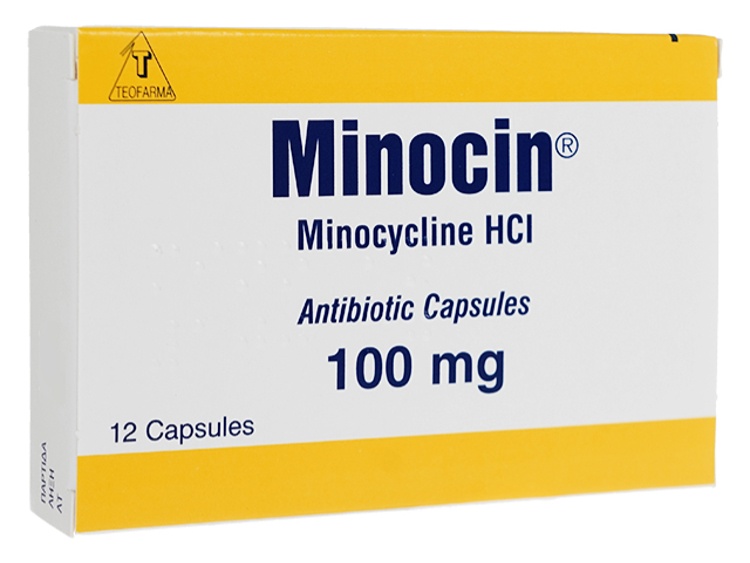
- Country of registration
- Dosage formCAPSULE, 100 mg
- ATC codeJ01AA08
- Average pharmacy price5.48 EUR
- Active substance
- Prescription requiredYes
- Manufacturer
- This information is for reference only and does not constitute medical advice. Always consult a doctor before taking any medication. Oladoctor is not responsible for medical decisions based on this content.
- Alternatives to MINOCIN 100 mg HARD CAPSULESDosage form: CAPSULE, 100 mgActive substance: doxycyclineManufacturer: Laboratorios Llorens S.L.Prescription requiredDosage form: TABLET, 100 mgActive substance: doxycyclineManufacturer: Laboratorios Normon S.A.Prescription requiredDosage form: TABLET, 100 mgActive substance: doxycyclineManufacturer: Pierre Fabre Iberica S.A.Prescription required
Online doctors for MINOCIN 100 mg HARD CAPSULES
Discuss questions about MINOCIN 100 mg HARD CAPSULES, including use, safety considerations and prescription review, subject to medical assessment and local regulations.









Get MINOCIN 100 mg HARD CAPSULES Prescription Online
Fill in a 2-min form
Tell us your symptoms, history, and what medicine you're requesting.
Pick a doctor or let us assign
Choose a specialist or we'll match you with the next available doctor.
Doctor reviews your case
Usually within 30 minutes. They may ask follow-up questions via chat.
Collect from any pharmacy
Electronic prescription sent to your email — valid across Spain.
Frequently Asked Questions
MINOCIN 100 mg HARD CAPSULES requires a prescription in Spain. You can check with a doctor online whether this medicine may be appropriate for your situation.
The active ingredient in MINOCIN 100 mg HARD CAPSULES is minocycline. This information helps identify medicines with the same composition but different brand names.
The average pharmacy price for MINOCIN 100 mg HARD CAPSULES is around 5.48 EUR. Prices may vary depending on the manufacturer and dosage form.
MINOCIN 100 mg HARD CAPSULES is manufactured by Teofarma S.R.L.. Pharmacy brands and packaging may differ depending on the distributor.
Doctors such as Family doctors, Psychiatrists, Dermatologists, Cardiologists, Endocrinologists, Gastroenterologists, Pulmonologists, Nephrologists, Rheumatologists, Hematologists, Infectious disease physicians, Allergists, Geriatricians, Paediatricians, Oncologists may assess whether MINOCIN 100 mg HARD CAPSULES is appropriate, depending on your situation and local regulations. You can book an online consultation to discuss your symptoms and possible next steps.
Spain has a well-developed healthcare infrastructure across major cities such as Madrid, Barcelona, Valencia, and Seville. Pharmacies are widely available and operate under strict regulations, ensuring access to prescribed medications.
You can buy MINOCIN 100 mg HARD CAPSULES in Madrid, Barcelona, Seville, or Valencia at any local pharmacy with a valid prescription.
To obtain a prescription, you can use Oladoctor:
Other medicines with the same active substance (minocycline) include DOSIL 100 mg HARD CAPSULES, DOXICICLINA NORMON 100 mg FILM-COATED TABLETS, DOXICLAT 100 mg FILM-COATED TABLETS. These may have different brand names or formulations but contain the same therapeutic ingredient. Always consult a doctor before switching or starting a new medicine.
