



MIDAZOLAM 1 mg /Ml Injectable Solution

Prescription review online
A doctor will review your case and decide whether a prescription is medically appropriate.

Talk to a doctor about this medicine
Discuss your symptoms and possible next steps in a quick online consultation.



How to use MIDAZOLAM AGUETTANT 1 mg/ml INJECTABLE SOLUTION IN PRE-FILLED SYRINGE
Contents of the leaflet
- Introduction
- What Midazolam Aguettant is and what it is used for
- What you need to know before you are given Midazolam Aguettant
- How to use Midazolam Aguettant
- Possible side effects
- Storage of Midazolam Aguettant
- Container Contents and Additional Information
Introduction
Leaflet: information for the patient
Midazolam Aguettant 1 mg/ml solution for injection in pre-filled syringe
Read all of this leaflet carefully before you start using this medicine, because it contains important information for you.
- Keep this leaflet, you may need to read it again.
- If you have any further questions, ask your doctor, pharmacist or nurse.
- If you experience any side effects, talk to your doctor, pharmacist or nurse, even if they are not listed in this leaflet. See section 4.
Contents of the pack
- What Midazolam Aguettant is and what it is used for
- What you need to know before you are given Midazolam Aguettant
- How to use Midazolam Aguettant
- Possible side effects
5 Storage of Midazolam Aguettant
- Contents of the pack and other information
1. What Midazolam Aguettant is and what it is used for
This medicine contains midazolam, which belongs to a group of medicines known as benzodiazepines.
This medicine works quickly and makes you feel sleepy or puts you to sleep. It will also calm and relax your muscles.
This medicine is used in adults:
- As a general anesthetic to induce sleep or to keep you asleep.
This medicine is also used in adults and children (from 12 years of age):
- To calm and make you feel sleepy if you are in the Intensive Care Unit. This is called "sedation".
- Before and during a medical procedure where you will be awake. Midazolam will calm and make you feel sleepy. This is called "conscious sedation".
- To calm and make you feel sleepy before anesthesia.

Not sure if this medicine is right for you?
Discuss your symptoms and treatment with a doctor online.
2. What you need to know before you are given Midazolam Aguettant
You should not be given Midazolam Aguettant if:
- You are allergic (hypersensitive) to midazolam or any of the other ingredients of this medicine (listed in section 6).
- You are allergic to other benzodiazepines, such as diazepam or nitrazepam.
- You have severe breathing difficulties and are going to have conscious sedation with midazolam.
You should not be given midazolam if any of the above applies to you. If you are not sure, talk to your doctor or nurse before you are given this medicine.
Warnings and precautions
Your medical history may affect how midazolam is given to you. Check with your doctor or nurse before you are given this medicine if you:
- Are over 60 years old.
- Have a long-term illness, such as chronic respiratory problems or kidney, liver or heart problems.
- Have a condition that makes you feel very weak, tired and without energy.
- Have a condition called myasthenia gravis where your muscles are weak.
- Suffer from "sleep apnea" (your breathing stops and restarts during sleep).
- Have ever had problems with alcohol.
- Have ever had problems with drugs.
If you are in any of these situations (or are unsure), talk to your doctor or nurse before you are given midazolam.
Children and adolescents
Midazolam can be given to children (from 12 years of age)
If your child (from 12 years of age) is going to be given this medicine:
- Tell your doctor or nurse if your child (from 12 years of age) is in any of the above situations.
- In particular, tell your doctor or nurse if your child has heart or breathing problems.
Other medicines and Midazolam Aguettant
Tell your doctor or pharmacist if you are taking, have recently taken or might take any other medicines. This can help your doctor choose the right dose of midazolam for you.
The following medicines may affect the effect of midazolam:
- Medicines for depression.
- Sleep-inducing medicines (hypnotics).
- Sedatives (make you feel calm or sleepy).
- Tranquilizers (to treat anxiety or to help you sleep).
- Carbamazepine or phenytoin (used to treat seizures or convulsions).
- Rifampicin (used to treat tuberculosis).
- Medicines used to treat HIV called "protease inhibitors" (such as saquinavir).
- Antibiotics called "macrolides" (such as erythromycin or clarithromycin).
- Medicines used to treat fungal infections (such as ketoconazole, voriconazole, fluconazole, itraconazole, posaconazole).
- Strong painkillers.
- Atorvastatin (used to treat high cholesterol).
- Antihistamines (used to treat allergic reactions).
- St. John's Wort (a herbal remedy used for depression).
- Medicines used to treat high blood pressure called "calcium channel blockers" (such as diltiazem).
If you are in any of these situations (or are unsure), talk to your doctor or nurse before you are given midazolam.
Using Midazolam Aguettant with drinks and alcohol
Do not drink alcohol if you have been given midazolam. This is because it can make you very sleepy and cause breathing problems.
Pregnancy and breastfeeding
If you are pregnant or breastfeeding, think you may be pregnant or are planning to have a baby, ask your doctor or pharmacist for advice before taking this medicine.
Your doctor will decide if this medicine is suitable for you.
After you have been given midazolam, do not breastfeed your baby for 24 hours. This is because midazolam can pass into breast milk.
Driving and using machines
After you have been given midazolam, do not drive or use tools or machines until your doctor tells you it is safe to do so.
This is because this medicine can make you feel sleepy or forgetful. It can also affect your concentration and coordination. This can affect your ability to drive or use tools and machines.
After treatment, you should be accompanied home by an adult who can take care of you.
Midazolam Aguettant contains sodium
This medicine contains less than 1 mmol of sodium (23 mg) per 5 ml pre-filled syringe; this is, essentially "sodium-free".
This medicine contains 33.00 mg of sodium (main component of table/cooking salt) in each 10 ml pre-filled syringe. This is equivalent to 1.7% of the maximum recommended daily intake of sodium for an adult.
3. How to use Midazolam Aguettant
This medicine should only be given by a doctor or nurse with experience. You will be given it in a place that is properly equipped for monitoring and treating any side effects. This could be a hospital, clinic or doctor's office. In particular, your breathing, heart and circulation will be monitored.
It is not recommended to use midazolam in children under 12 years of age.
How Midazolam Aguettant will be given to you
You will be given Midazolam Aguettant in one of the following ways:
- Slow injection into a vein (intravenous injection).
- Injection into a muscle (intramuscular injection).
How much Midazolam Aguettant will be given to you
The dose varies from person to person. Your doctor will decide the right dose for you. It will depend on your age, weight and physical condition. It will also depend on why you need the medicine, your response to treatment and if you are given other medicines at the same time.
After you have been given Midazolam Aguettant
After treatment, you should go home accompanied by an adult who can take care of you. This is because midazolam can make you feel sleepy or forgetful. It can also affect your concentration and coordination.
If you are given too much Midazolam Aguettant
This medicine should only be given by a doctor or nurse. This means it is unlikely that you will be given too much midazolam. However, if you are given too much by mistake, you may notice the following:
- You will feel sleepy and lose your coordination and reflexes.
- Problems speaking and unusual eye movements.
- Low blood pressure. This can make you feel dizzy or faint.
- Slowing down or stopping of breathing or heartbeat and being unconscious (coma).
In case of overdose or accidental ingestion, consult your doctor, pharmacist or call the Toxicology Information Service, phone 91 562 04 20, indicating the medicine and the amount ingested/used
Long-term use of Midazolam Aguettant for sedation in intensive care
If you are given midazolam for a long time, the following may happen:
- You may start to have less effect.
- You may become dependent on the medicine and have withdrawal symptoms when you stop using it (see "If you stop treatment with Midazolam Aguettant" in section 3)
If you stop treatment with Midazolam Aguettant
If you are given midazolam for a long time, for example in intensive care, you may have withdrawal symptoms when you stop taking midazolam. These symptoms can be:
- Mood changes.
- Seizures.
- Headache.
- Muscle pain.
- Difficulty sleeping (insomnia).
- Feeling very worried (anxious), tense, restless, confused or irritable.
- Seeing or possibly hearing things that do not exist (hallucinations).
Your doctor will gradually reduce your dose. This will help you avoid these withdrawal symptoms.

Started taking the medicine and have questions?
Discuss your symptoms and treatment with a doctor online.
4. Possible side effects
Like all medicines, this medicine can cause side effects, although not everybody gets them. The following side effects have been reported (frequency not known, cannot be estimated from the available data).
Stop taking Midazolam Aguettant and see your doctor immediately if you experience any of the following side effects. They can be life-threatening and may require urgent medical treatment:
- Severe allergic reaction (anaphylactic shock). Symptoms can include skin rash, itching or hives (urticaria), swelling of the face, lips, tongue or other parts of the body (angioedema).
- You may also have difficulty breathing, make noises while breathing or have difficulty breathing, or pale skin, weak and fast pulse, or feeling of loss of consciousness. Additionally, you may experience chest pain, which can be a sign of a potentially life-threatening allergic reaction called Kounis syndrome.
- Heart attack (cardiac arrest). Symptoms can include chest pain.
- Breathing problems, sometimes causing respiratory arrest.
- Suffocation and sudden blockage of the airway (laryngospasm).
Life-threatening side effects are more likely in adults over 60 years old, and in people who already have breathing or heart problems. These side effects are also more likely if the injection is given too quickly or in high doses.
Other possible side effects
Nervous system and psychiatric disorders
- Decreased alertness.
- Confusion.
- Feeling excessively happy or excited (euphoria).
- Changes in sexual behavior.
- Feeling tired, sleepy or sedated for a long time.
- Seeing or possibly hearing things that do not exist (hallucinations).
- Headache.
- Feeling dizzy.
- Difficulty coordinating muscles.
- Seizures in premature and newborn babies.
- Temporary loss of memory. The time it can last depends on the amount of Midazolam Aguettant given. Occasionally it can last a long time.
- Agitation, restlessness, hostility, anger or aggression. You may also experience muscle spasms or uncontrolled tremors of your muscles. These effects have been observed more frequently when high doses of Midazolam Aguettant have been given or when it has been given quickly. These effects occur more frequently in children and the elderly.
Cardiac and vascular disorders
- Fainting.
- Decreased heart rate.
- Flushing of the face and neck (flushing).
- Low blood pressure. This can make you feel dizzy or faint.
Respiratory, thoracic and mediastinal disorders
- Hiccup.
- Shortness of breath.
Gastrointestinal disorders
- Dry mouth.
- Constipation.
- Feeling sick or vomiting.
Skin and subcutaneous tissue disorders
- Itching.
- Skin rash, including hives (urticaria).
- Redness, pain, blood clots or inflammation of the skin at the injection site.
General disorders
- Allergic reactions including skin rash and breathing difficulties.
- Withdrawal symptoms (see "If you stop treatment with Midazolam Aguettant" in section 3).
- Falls and bone fractures. The risk is higher if you are also taking other medicines that cause sedation (such as painkillers or sleep-inducing medicines), or if you drink alcohol.
Use in elderly patients
- Elderly patients who take benzodiazepine medicines, such as Midazolam Aguettant, have a higher risk of falls and bone fractures.
- Life-threatening side effects are more likely in adults over 60 years old.
Reporting of side effects
If you experience any side effects, talk to your doctor, pharmacist or nurse, even if they are not listed in this leaflet. You can also report side effects directly through the Spanish Medicines Monitoring System for Human Use: www.notificaRAM.es/. By reporting side effects, you can help provide more information on the safety of this medicine.
5. Storage of Midazolam Aguettant
Keep this medicine out of the sight and reach of children.
Do not use this medicine after the expiry date which is stated on the carton after "EXP". The expiry date refers to the last day of that month.
Store in the original package to protect from light. Do not freeze.
Store the pre-filled syringe in its blister pack until use.
Once opened, the medicine should be used immediately.
Do not use this medicine if you notice visible signs of deterioration.
Medicines should not be disposed of via wastewater or household waste. Ask your pharmacist how to dispose of medicines no longer required. This will help protect the environment.
6. Container Contents and Additional Information
Composition of Midazolam Aguettant
- The active ingredient is midazolam.
Each ml of injectable solution contains 1 mg of midazolam.
Each 5 ml pre-filled syringe contains 5 mg of midazolam.
Each 10 ml pre-filled syringe contains 10 mg of midazolam.
- The other components are sodium chloride, sodium hydroxide, concentrated hydrochloric acid, and water for injectable preparations.
Appearance of the Product and Container Contents
Midazolam Aguettant is a colorless solution for injection in a 5 ml or 10 ml pre-filled syringe (polypropylene), with a plunger stopper (chlorobutyl), without a needle, with a graduated transparent self-adhesive label (sub-divisions of 0.2 ml from 0 to 5 ml or 10 ml). A cap (polypropylene) protects the tip of the syringe. Each pre-filled syringe is individually packaged in a blister pack. Cardboard box of 10 pre-filled syringes.
Marketing Authorization Holder and Manufacturer
LABORATOIRE AGUETTANT
1, rue Alexander Fleming
69007 Lyon
France
This medicinal product is authorized in the Member States of the European Economic Area under the following names:
Austria, Belgium, Denmark, Finland, France, Germany, Luxembourg, Italy, Netherlands, Norway, Spain, Sweden, Portugal: Midazolam Aguettant
Ireland: Midazolam
Poland: Midazolamum Aguettant
Date of the Last Revision of thisLeaflet: 04/2024
Detailed information on this medicinal product is available on the website of the Spanish Agency for Medicines and Health Products (AEMPS) http://www.aemps.gob.es.
----------------------------------------------------------------------------------------------------------------------------------
This information is intended only for healthcare professionals:
Please prepare the syringe carefully as follows
The pre-filled syringe is for single patient use. Discard the syringe after use. Do not reuse.
The contents of an unopened and undamaged blister are sterile, and the blister should not be opened until the syringe is ready for use.
The product should be visually inspected for particles and discoloration before administration. Only a clear and colorless solution without particles or precipitates should be used.
The product should not be used if the syringe's safety seal is broken.
Do not use this medicinal product if you observe visible signs of deterioration.
The outer surface of the syringe is sterile until the blister is opened. The blister should not be opened until use.
If handled according to an aseptic method, this medicinal product can be placed in a sterile field once removed from the blister.
The volume to be administered should be calculated based on the appropriate dosage.
- Remove the pre-filled syringe from the sterile blister.
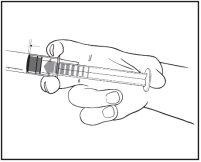
- Push the plunger to release the piston. The sterilization process may have caused the piston to stick to the body of the pre-filled syringe.
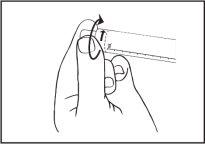
- Unscrew the cap to break the seal. Do not touch the exposed luer connection to avoid contamination.
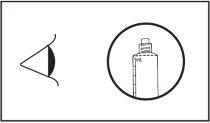
- Check that the tip of the syringe's seal has been completely removed. If not, replace the cap and unscrew it again.
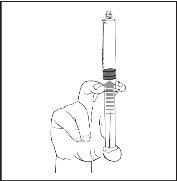
- Expel the excess air by gently pushing the plunger.
- Connect the syringe to the vascular access device using a luer/luer lock system. Slowly push the plunger to inject the required volume. Administer the product according to the appropriate route of administration.
The pre-filled syringe is a ready-to-administer product. The pre-filled syringe is not suitable for a syringe infusion pump.
No syringe that has been damaged or has been handled without respecting the conditions of sterility should be used.
Any unused medicinal product or waste material should be disposed of in accordance with local requirements.
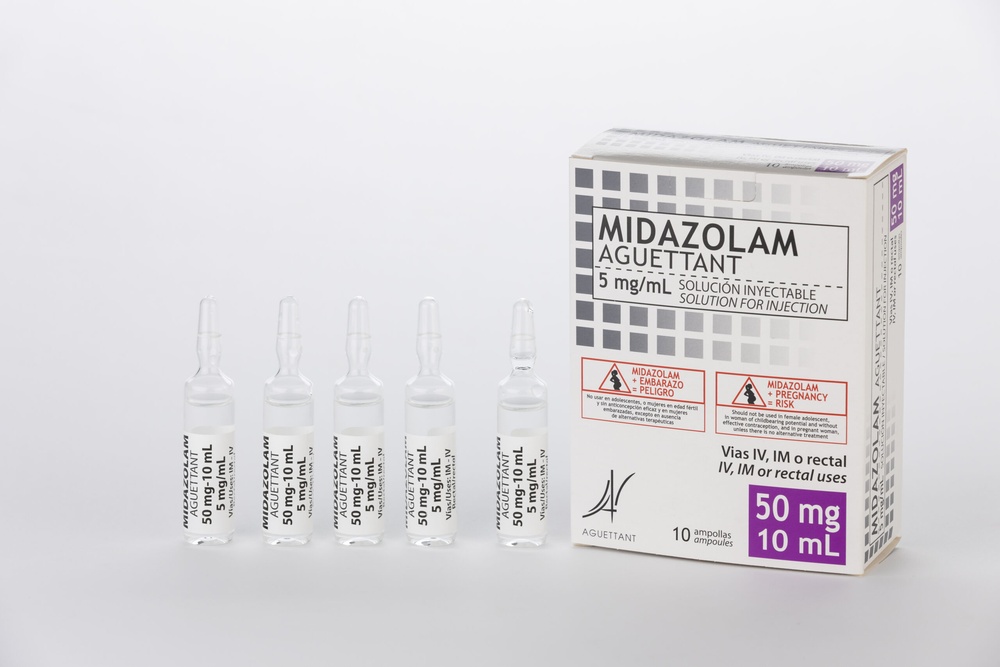
- Country of registration
- Dosage formINJECTABLE, 1 mg/ml
- ATC codeN05CD08
- Active substance
- Prescription requiredYes
- Manufacturer
- CompositionCLORURO DE SODIO (8,3 mg/ml mg), HIDROXIDO DE SODIO (E 524) (3-3,6 pH mg)
- This information is for reference only and does not constitute medical advice. Always consult a doctor before taking any medication. Oladoctor is not responsible for medical decisions based on this content.
- Alternatives to MIDAZOLAM AGUETTANT 1 mg/ml INJECTABLE SOLUTION IN PRE-FILLED SYRINGEDosage form: GEL/PASTE/ORAL LIQUID, 10 mg midazolam hydrochlorideActive substance: midazolamManufacturer: Neuraxpharm Pharmaceuticals S.L.Prescription requiredDosage form: GEL/PASTE/ORAL LIQUID, 2.5 mg midazolam hydrochlorideActive substance: midazolamManufacturer: Neuraxpharm Pharmaceuticals S.L.Prescription requiredDosage form: GEL/PASTE/ORAL LIQUID, 5 mg midazolam hydrochlorideActive substance: midazolamManufacturer: Neuraxpharm Pharmaceuticals S.L.Prescription required
Online doctors for MIDAZOLAM AGUETTANT 1 mg/ml INJECTABLE SOLUTION IN PRE-FILLED SYRINGE
Discuss questions about MIDAZOLAM AGUETTANT 1 mg/ml INJECTABLE SOLUTION IN PRE-FILLED SYRINGE, including use, safety considerations and prescription review, subject to medical assessment and local regulations.







Get MIDAZOLAM AGUETTANT 1 mg/ml INJECTABLE SOLUTION IN PRE-FILLED SYRINGE Prescription Online
Fill in a 2-min form
Tell us your symptoms, history, and what medicine you're requesting.
Pick a doctor or let us assign
Choose a specialist or we'll match you with the next available doctor.
Doctor reviews your case
Usually within 30 minutes. They may ask follow-up questions via chat.
Collect from any pharmacy
Electronic prescription sent to your email — valid across Spain.
Frequently Asked Questions
MIDAZOLAM AGUETTANT 1 mg/ml INJECTABLE SOLUTION IN PRE-FILLED SYRINGE requires a prescription in Spain. You can check with a doctor online whether this medicine may be appropriate for your situation.
The active ingredient in MIDAZOLAM AGUETTANT 1 mg/ml INJECTABLE SOLUTION IN PRE-FILLED SYRINGE is midazolam. This information helps identify medicines with the same composition but different brand names.
MIDAZOLAM AGUETTANT 1 mg/ml INJECTABLE SOLUTION IN PRE-FILLED SYRINGE is manufactured by Laboratoire Aguettant. Pharmacy brands and packaging may differ depending on the distributor.
Doctors such as Family doctors, Psychiatrists, Dermatologists, Cardiologists, Endocrinologists, Gastroenterologists, Pulmonologists, Nephrologists, Rheumatologists, Hematologists, Infectious disease physicians, Allergists, Geriatricians, Paediatricians, Oncologists may assess whether MIDAZOLAM AGUETTANT 1 mg/ml INJECTABLE SOLUTION IN PRE-FILLED SYRINGE is appropriate, depending on your situation and local regulations. You can book an online consultation to discuss your symptoms and possible next steps.
Spain has a well-developed healthcare infrastructure across major cities such as Madrid, Barcelona, Valencia, and Seville. Pharmacies are widely available and operate under strict regulations, ensuring access to prescribed medications.
You can buy MIDAZOLAM AGUETTANT 1 mg/ml INJECTABLE SOLUTION IN PRE-FILLED SYRINGE in Madrid, Barcelona, Seville, or Valencia at any local pharmacy with a valid prescription.
To obtain a prescription, you can use Oladoctor:
Other medicines with the same active substance (midazolam) include BUCCOLAM 10 mg ORAL SOLUTION, BUCCOLAM 2.5 mg ORAL SOLUTION, BUCCOLAM 5 mg ORAL SOLUTION. These may have different brand names or formulations but contain the same therapeutic ingredient. Always consult a doctor before switching or starting a new medicine.
