






How to use LINCOCIN 600 mg INJECTABLE
Translated with AI
This page provides general information and does not replace a doctor’s consultation. Always consult a doctor before taking any medication. Seek urgent medical care if symptoms are severe.
Show originalContents of the leaflet
- Introduction
- What Lincocin injectable solution is and what it is used for
- What you need to know before starting to use Lincocin injectable solution
- How to use Lincocin injectable solution
- Possible side effects
- Conservation of Lincocin injectable solution
- Contents of the package and additional information
Introduction
Leaflet:information for the user
Lincocin 600 mg injectable solution
Lincomycin
Read the entire leaflet carefully before starting to take this medication,as it contains important information for you.
- Keep this leaflet, as you may need to read it again.
- If you have any questions, consult your doctor or pharmacist.
- This medication has been prescribed to you only, and you should not give it to others, even if they have the same symptoms as you, as it may harm them.
- If you experience side effects, consult your doctor or pharmacist, even if they are side effects that do not appear in this leaflet. See section 4.
Contents of the leaflet
- What Lincocin injectable solution is and what it is used for
- What you need to know before starting to use Lincocin injectable solution
- How to use Lincocin injectable solution
- Possible side effects
5 Conservation of Lincocin injectable solution
- Contents of the package and additional information
1. What Lincocin injectable solution is and what it is used for
Lincocin is an antibiotic that belongs to the group of lincosamides.
Antibiotics are used to treat bacterial infections and are not effective in treating viral infections such as the flu or the common cold. It is essential that you follow the instructions regarding dosage, administration, and treatment duration indicated by your doctor. Do not store or use this medication. If you have any leftover antibiotic after finishing the treatment, return it to the pharmacy for proper disposal. Do not throw away medications down the drain or in the trash. |
It is used in adults for the treatment of infections caused by bacteria in different parts of the body.
In children over 1 month of age, it is used for the treatment of acute exacerbation of chronic bacterial sinusitis (infection in the paranasal sinuses).

2. What you need to know before starting to use Lincocin injectable solution
Do not take Lincocin:
- If you are allergic to the active ingredient (lincomycin), to clindamycin, or to any of the other components of this medication (listed in section 6).
- If you have meningitis.
- If you have had antibiotic-associated colitis in the past.
- During breastfeeding.
- In newborns under 1 month of age.
Warnings and precautions
- During treatment, allergic reactions (including anaphylactic reaction, shock) may occur. There have also been reports of severe skin reactions, which can be life-threatening, associated with lincomycin treatment, including Stevens-Johnson syndrome (SJS), toxic epidermal necrolysis (TEN), and acute generalized exanthematous pustulosis (AGEP).
Both SJS and TEN can initially appear as reddish spots similar to a target or circular spots, often with central blisters on the torso. Additionally, ulcers may occur in the mouth, throat, nose, genitals, and eyes (red and swollen eyes). These severe eruptions are often preceded by fever or flu-like symptoms. The eruptions can progress to widespread skin peeling and potentially fatal complications.
AGEP appears as a generalized scaly red rash, with bumps under the skin and blisters, accompanied by fever. The most frequent location is in skin folds, the trunk, and the upper limbs.
If you experience a severe rash or any of these skin symptoms, stop taking this medication and inform your doctor or seek immediate medical attention.
- During or after treatment with this medication, symptoms suggesting antibiotic-associated colitis (diarrhea) may appear. If this occurs, discontinue treatment with Lincocin and inform your doctor, who will provide appropriate treatment.
- If you have or have had an inflammatory gastrointestinal disease, such as Crohn's disease or ulcerative colitis, discuss this with your doctor to confirm whether you should use this medication.
- Prolonged administration of lincomycin may cause the growth of other microorganisms, especially fungi.
- If you are being treated with neuromuscular blockers (used to produce muscle paralysis, such as pancuronium, tubocurarine), inform your doctor, as lincomycin may enhance the action of these medications.
- During prolonged treatments, periodic blood tests and liver, kidney function tests, and blood counts should be performed. This medication should be used with caution in patients with renal and hepatic insufficiency.
- If you are going to undergo any diagnostic tests, as it may interfere with plasma levels of alkaline phosphatase.
Children and adolescents
This medication is not suitable for newborns under 1 month of age.
Other medications and Lincocin
Inform your doctor or pharmacist if you are taking, have recently taken, or may need to take any other medication.
Inform your doctor if you are taking any of the following medications:
- Neuromuscular blockers (such as pancuronium, tubocurarine), as lincomycin may enhance the action of these medications.
- Kaolin-pectin, as it decreases the gastrointestinal absorption of lincomycin. If kaolin is administered, there should be an interval of at least 2 hours before using lincomycin.
Pregnancy, breastfeeding, and fertility
If you are pregnant or breastfeeding, think you may be pregnant, or plan to become pregnant, consult your doctor or pharmacist before using this medication.
Pregnancy
Lincomycin crosses the placental barrier in humans. There are no sufficient and well-controlled studies in pregnant women.
Therefore, this medication should not be used during pregnancy unless it is strictly necessary.
This medication contains benzyl alcohol, which can cross the placenta (see section 3).
Breastfeeding
Lincomycin is excreted in breast milk after oral or intravenous administration. Due to the potential for serious adverse reactions in the breastfed infant, the use of lincomycin is contraindicated during breastfeeding.
Fertility
There is no data available on the effect of lincomycin on fertility in humans.
Driving and using machines
No studies have been conducted on the ability to drive and use machines.
Lincocin injectable solution contains benzyl alcohol
This medication contains 18.9 mg of benzyl alcohol in each vial, equivalent to 9.45 mg/ml.
Benzyl alcohol may cause allergic reactions.
Consult your doctor or pharmacist if you are pregnant or breastfeeding. This is because large amounts of benzyl alcohol can accumulate in your body and cause adverse effects (metabolic acidosis).
Consult your doctor or pharmacist if you have liver or kidney disease. This is because large amounts of benzyl alcohol can accumulate in the body and cause adverse effects (metabolic acidosis).
Benzyl alcohol has been associated with the risk of serious adverse effects, including respiratory problems ("gasping syndrome") in children.
Do not administer this medication to your newborn (up to 4 weeks of age) unless your doctor has recommended it.
This medication should not be used for more than one week in children under 3 years of age unless indicated by your doctor or pharmacist.
3. How to use Lincocin injectable solution
Follow the administration instructions for this medication exactly as indicated by your doctor, pharmacist, or nurse. If you have any doubts, ask your doctor, pharmacist, or nurse.
The duration of treatment should be determined based on the type of infection and response, and it should be as short as possible, generally 7 to 14 days. In infections caused by beta-hemolytic streptococci, treatment should be maintained for at least 10 days.
This medication will be administered by a doctor or other healthcare professional via intramuscular injection or by infusion (into a vein)
Adults
Intramuscular administration:
The recommended dose is 600 mg every 24 hours. In case of severe infections, the dose may be increased to 600 mg every 12 hours.
Intravenous infusion:
Lincocin should be diluted in 5% glucose, 5% glucose with 0.9% sodium chloride, or Ringer's solution and administered over a period of not less than 1 hour. After administration of the drug at a concentration and speed higher than recommended, severe cardiopulmonary reactions have occurred.
The recommended dose is 600 mg to 1 g every 8-12 hours. Depending on the severity of the infection, the dose may be increased up to a maximum recommended dose of 8 g of lincomycin. For more information on dilution and infusion rates, see the information for healthcare professionals at the end of this leaflet.
Use in patients with renal insufficiency
In patients with mild or moderate renal insufficiency, it should be used with caution, considering the possibility of reducing the administration frequency.
In patients with severe renal insufficiency, the appropriate dose is 25% to 30% of the recommended dose for patients with normal renal function.
Use in patients with hepatic insufficiency
In these patients, it should be considered to reduce the administration frequency.
Use in children and adolescents
Children from 1 month to 12 years of age and adolescents
Intramuscular administration:
The recommended dose is 10 mg/kg/day in a single intramuscular injection. In case of severe infections, the dose may be increased to 10 mg/kg/day every 12 hours.
Intravenous infusion:
The recommended dose is 10 to 20 mg/kg/day divided into administrations every 8-12 hours, depending on the severity of the infection (for more information on dilution and infusion rates, see the information for healthcare professionals at the end of this leaflet).
Children under 1 month
Safety and efficacy in children under 1 month have not been established. No data are available.
If you take more Lincocin injectable solution than you should
If you think you may have been given more Lincocin than you should, inform your doctor or nurse.
Hemodialysis and peritoneal dialysis do not effectively remove lincomycin from the blood.
In case of overdose or accidental ingestion, consult your doctor or pharmacist immediately or call the Toxicology Information Service at 91 562 04 20, indicating the medication and the amount ingested.
If you forget to take Lincocin injectable solution
Since this medication is administered under supervision, it is very unlikely that you will miss a dose. If you think a dose of the treatment has been forgotten, inform your doctor or nurse. Do not take a double dose to make up for the missed doses.
If you interrupt treatment with Lincocin injectable solution
If you stop treatment with this medication before your doctor recommends it, your symptoms may worsen or reappear.
If you have any other questions about the use of this medication, ask your doctor or pharmacist.

4. Possible side effects
Like all medications, this medication can cause side effects, although not everyone will experience them.
Frequent: may affect up to 1 in 10 people
- Diarrhea, nausea, vomiting.
Uncommon: may affect up to 1 in 100 people
- Vaginal infection.
- Skin rash, red, elevated, and itchy skin lesions (urticaria).
Rare: may affect up to 1 in 1,000 people
- Itching (pruritus).
Frequency not known (cannot be estimated from available data)
- Decrease in white blood cells (agranulocytosis, neutropenia, leucopenia), red blood cells, and platelets (pancytopenia), aplastic anemia (the bone marrow does not produce enough new blood cells), destruction of platelets (thrombocytopenic purpura).
- Allergic skin reactions of an anaphylactic type, skin swelling (angioedema), serum sickness.
- Cardiorespiratory arrest.
- Decrease in blood pressure, formation of clots that can block one or more veins (only after intravenous infusion).
- Abdominal discomfort, pseudomembranous colitis, ulcerative colitis (Clostridium difficile colitis).
- Yellowing of the skin and mucous membranes (jaundice), alterations in liver function tests.
- Skin diseases that can be severe: peeling of large areas of skin (toxic epidermal necrolysis), which causes blisters and painful sores on the skin and mucous membranes (Stevens-Johnson syndrome), a skin rash characterized by the rapid appearance of red spots with small blisters (acute generalized exanthematous pustulosis) (see section 2).
- Blisters on the skin (bullous dermatitis), skin eruptions with blisters and peeling (exfoliative dermatitis), red lesions on the skin and blisters on the mucous membranes (erythema multiforme).
- Abscess at the injection site, pain and/or irritation at the injection site after intramuscular injection.
Reporting side effects
If you experience any side effects, consult your doctor or pharmacist, even if they are side effects that do not appear in this leaflet. You can also report them directly through the Spanish Medicines and Healthcare Products Agency (AEMPS) website: www.notificaram.es. By reporting side effects, you can contribute to providing more information on the safety of this medication.
5. Conservation of Lincocin injectable solution
This medication does not require special storage conditions.
After dilution of the medication: this medication should be administered immediately; however, the diluted solutions should be kept below 30°C.
Keep this medication out of the sight and reach of children.
Do not use this medication after the expiration date shown on the packaging after EXP. The expiration date is the last day of the month indicated.
Medications should not be thrown away down the drain or in the trash. Deposit the packaging and medications you no longer need in the SIGRE collection point at the pharmacy. If you have any doubts, ask your pharmacist how to dispose of the packaging and medications you no longer need. This will help protect the environment.
6. Contents of the package and additional information
Composition of Lincocin injectable solution
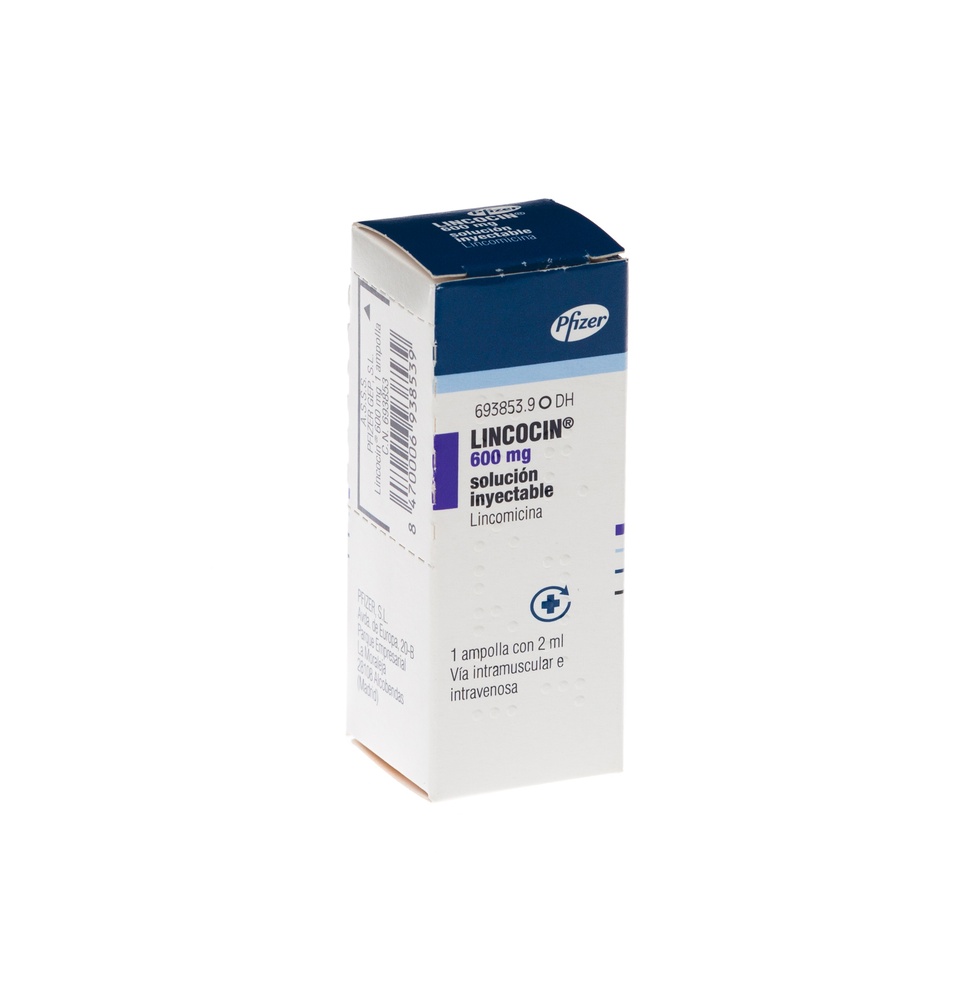
- The active ingredient is lincomycin. Each vial contains 600 mg of lincomycin (as hydrochloride).
- The other components are: benzyl alcohol (E1519) and water for injectable preparations.
Appearance of the product and contents of the package
Type I glass vial, colorless, with a capacity of 2 ml, with a bromobutyl rubber stopper and an aluminum cap with a "flip-off" polypropylene tab.
Each package contains 1 vial.
Marketing authorization holder and manufacturer
Marketing authorization holder
Pfizer, S.L.
Avda. de Europa 20-B
Parque Empresarial La Moraleja
28108 Alcobendas (Madrid)
Spain
Manufacturer
Pfizer Manufacturing Belgium N.V.
Rijksweg 12
2870 Puurs-Sint-Amands
Belgium.
Date of the last revision of this leaflet:06/2023
Detailed and updated information on this medication is available on the website of the Spanish Agency for Medicines and Healthcare Products (AEMPS) http://www.aemps.gob.es/.
Information for healthcare professionals:
Dilution and infusion rates of Lincocin injectable solution.
Dose | Volume of solvent | Time |
600 mg | 100 mL | 1 hour |
1 gram | 100 mL | 1 hour |
2 grams | 200 mL | 2 hours |
3 grams | 300 mL | 3 hours |
4 grams | 400 mL | 4 hours |
These doses can be repeated with the frequency required based on the severity of the infection, up to the maximum recommended daily dose of 8 grams of lincomycin.
-

- Country of registration
- Dosage formINJECTABLE, 600 mg lincomycin hydrochloride / 2 ml
- ATC codeJ01FF02
- Active substance
- Prescription requiredYes
- Manufacturer
- This information is for reference only and does not constitute medical advice. Always consult a doctor before taking any medication. Oladoctor is not responsible for medical decisions based on this content.
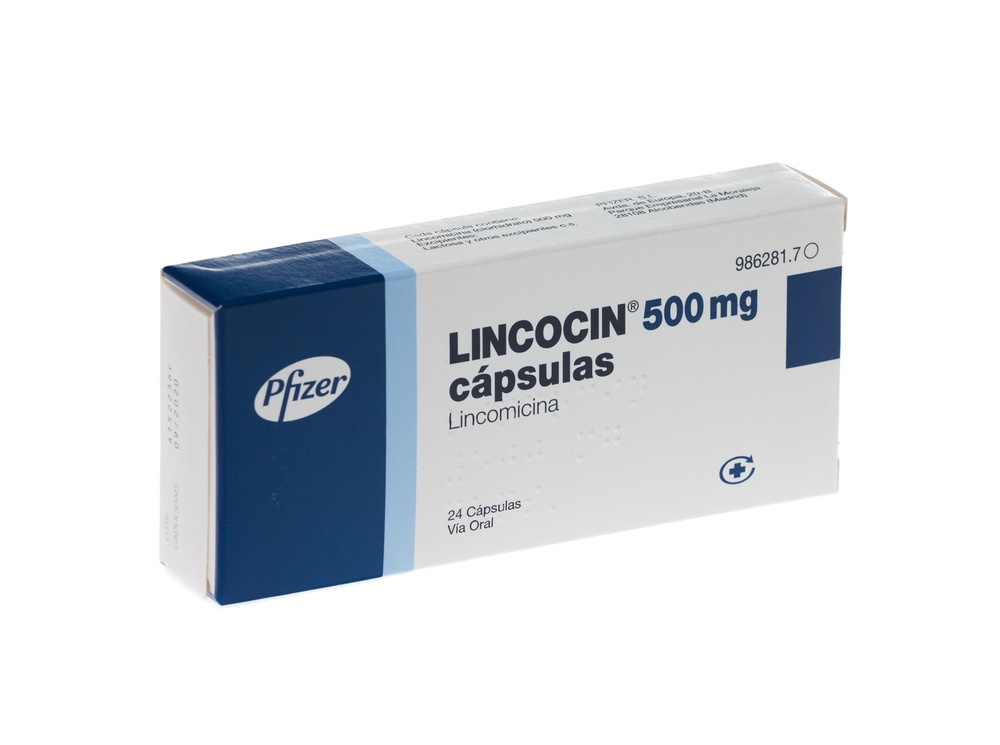
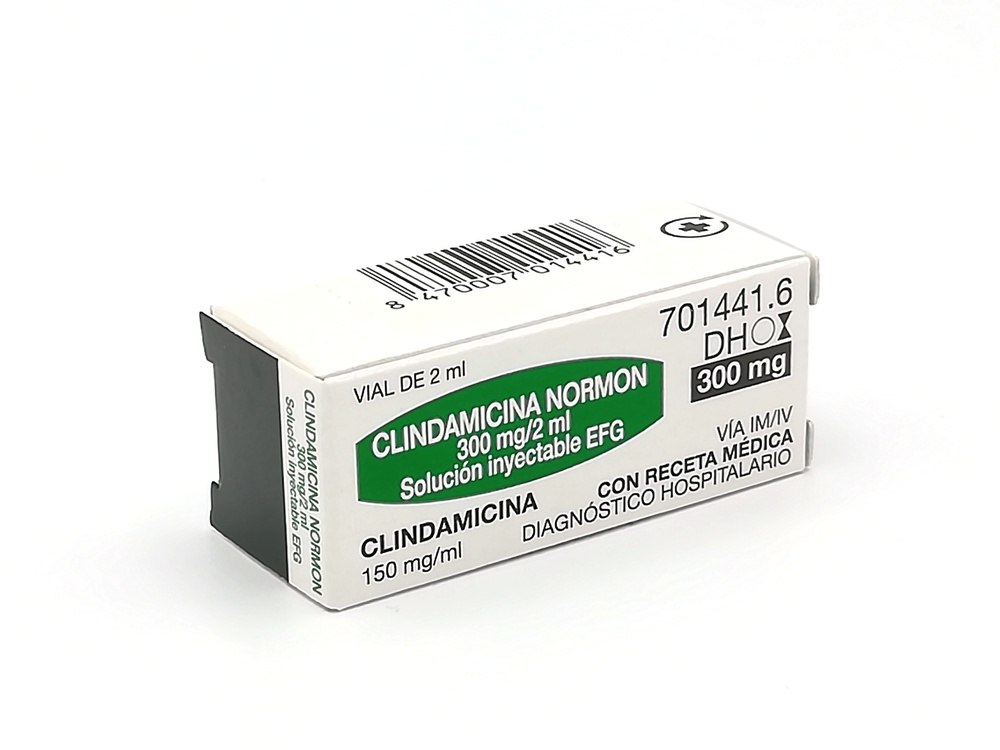
- Alternatives to LINCOCIN 600 mg INJECTABLEDosage form: CAPSULE, 500 mg lincomycin hydrochlorideActive substance: lincomycinManufacturer: Pfizer S.L.Prescription requiredDosage form: INJECTABLE, 150 mg/mlActive substance: clindamycinManufacturer: Kalceks AsPrescription requiredDosage form: INJECTABLE, -Active substance: clindamycinManufacturer: Laboratorios Normon S.A.Prescription required

Online doctors for LINCOCIN 600 mg INJECTABLE
Discuss questions about LINCOCIN 600 mg INJECTABLE, including use, safety considerations and prescription review, subject to medical assessment and local regulations.









Get LINCOCIN 600 mg INJECTABLE Prescription Online
Fill in a 2-min form
Tell us your symptoms, history, and what medicine you're requesting.
Pick a doctor or let us assign
Choose a specialist or we'll match you with the next available doctor.
Doctor reviews your case
Usually within 30 minutes. They may ask follow-up questions via chat.
Collect from any pharmacy
Electronic prescription sent to your email — valid across Spain.
Frequently Asked Questions
LINCOCIN 600 mg INJECTABLE requires a prescription in Spain. You can check with a doctor online whether this medicine may be appropriate for your situation.
The active ingredient in LINCOCIN 600 mg INJECTABLE is lincomycin. This information helps identify medicines with the same composition but different brand names.
LINCOCIN 600 mg INJECTABLE is manufactured by Pfizer S.L.. Pharmacy brands and packaging may differ depending on the distributor.
Doctors such as Family doctors, Psychiatrists, Dermatologists, Cardiologists, Endocrinologists, Gastroenterologists, Pulmonologists, Nephrologists, Rheumatologists, Hematologists, Infectious disease physicians, Allergists, Geriatricians, Paediatricians, Oncologists may assess whether LINCOCIN 600 mg INJECTABLE is appropriate, depending on your situation and local regulations. You can book an online consultation to discuss your symptoms and possible next steps.
Spain has a well-developed healthcare infrastructure across major cities such as Madrid, Barcelona, Valencia, and Seville. Pharmacies are widely available and operate under strict regulations, ensuring access to prescribed medications.
You can buy LINCOCIN 600 mg INJECTABLE in Madrid, Barcelona, Seville, or Valencia at any local pharmacy with a valid prescription.
To obtain a prescription, you can use Oladoctor:
Other medicines with the same active substance (lincomycin) include LINCOCIN 500 mg HARD CAPSULES, CLINDAMYCIN KALCEKS 150 mg/mL Injectable Solution and Perfusion Solution, CLINDAMYCIN NORMON 300 mg/2 ml INJECTABLE SOLUTION. These may have different brand names or formulations but contain the same therapeutic ingredient. Always consult a doctor before switching or starting a new medicine.
