


Famotidina Aristo 20 mg comprimidos

Prescription request online
A doctor will review your case and decide whether a prescription is medically appropriate.

Talk to a doctor about this medicine
Discuss your symptoms and possible next steps in a quick online consultation.



How to use FAMOTIDINE ARISTO 20 mg TABLETS
Contents of the leaflet
- Introduction
- What is Famotidine Aristo and what is it used for
- What you need to know before you take Famotidine Aristo
- How to take Famotidine Aristo
- Possible side effects
- Storage of Famotidine Aristo
- Contents of the pack and other information
Introduction
Package Leaflet: Information for the User
Famotidine Aristo 20 mg Tablets EFG
Read all of this leaflet carefully before you start taking this medicine because it contains important information for you.
- Keep this leaflet, you may need to read it again.
- If you have any further questions, ask your doctor or pharmacist.
- This medicine has been prescribed for you only. Do not pass it on to others. It may harm them, even if their signs of illness are the same as yours.
- If you get any side effects, talk to your doctor or pharmacist. This includes any possible side effects not listed in this leaflet. See section 4.
Contents of the pack
- What is Famotidine Aristo and what is it used for
- What you need to know before you take Famotidine Aristo
- How to take Famotidine Aristo
- Possible side effects
- Storage of Famotidine Aristo
- Contents of the pack and other information
1. What is Famotidine Aristo and what is it used for
Famotidine Aristo 20 mg tablets is an anti-ulcer medicine that belongs to a group called H2 antihistamines, with prolonged action.
Famotidine Aristo is available as tablets and comes in packs containing 20 and 28 tablets.
Famotidine Aristo 20 mg tablets is indicated for duodenal ulcer, benign gastric ulcer, hypersecretory syndromes such as Zollinger-Ellison syndrome, and for maintenance therapy to reduce the recurrence of duodenal and benign gastric ulcers. Symptomatic treatment of reflux disease that has not responded to hygienic-dietary measures and antacids. Esophagitis due to esophageal reflux.

Not sure if this medicine is right for you?
Discuss your symptoms and treatment with a doctor online.
2. What you need to know before you take Famotidine Aristo
Do not take Famotidine Aristo:
If you are allergic to famotidine or any of the other ingredients of this medicine (listed in section 6).
Warnings and precautions
Consult your doctor or pharmacist before taking Famotidine Aristo.
- If your doctor has not ruled out the existence of gastric neoplasia before starting treatment with Famotidine. Symptomatic relief of gastric ulcer during treatment does not rule out the presence of a malignant gastric ulcer.
- It should be used with caution in patients with moderate or severe hepatic or renal dysfunction. Adverse reactions on the central nervous system (CNS) have been reported in patients with moderate and severe renal impairment, and it may be necessary to extend the dosing interval or reduce the dose.
- Treatment discontinuation should always be gradual and under medical criteria to avoid relapses.
Children and adolescents
The safety and efficacy of Famotidine in children have not been established.
Elderly patients
There was no increase in the incidence or changes in the types of side effects when Famotidine was administered to elderly patients. No dose adjustment was required based on age. However, it may be necessary to adjust the dose in case of moderate or severe renal damage.
Other medicines and Famotidine Aristo
Tell your doctor or pharmacist if you are taking, have recently taken, or might take any other medicines.
- Calcium carbonate, when used to treat high blood phosphorus levels (hyperphosphatemia) in patients on dialysis.
- Famotidine Aristo may decrease the effect of the oral suspension of posaconazole (a medicine used to prevent and treat some fungal infections).
- Famotidine Aristo may decrease the effect of dasatinib, gefitinib, or pazopanib (medicines used to treat cancer).
No interactions with other drugs have been established. The studies carried out demonstrate that there are no significant interferences with the metabolism of compounds at the level of hepatic microsomal enzymes. In humans, it is unlikely that interactions with warfarin, propranolol, theophylline, and diazepam will occur. Additionally, studies with Famotidine have not shown increases in expected blood alcohol levels resulting from alcohol ingestion.
Pregnancy and breastfeeding
Pregnancy
If you are pregnant or breastfeeding, think you may be pregnant, or are planning to have a baby, ask your doctor or pharmacist for advice before taking this medicine.
Treatment with Famotidine is not recommended during pregnancy, it should only be prescribed if clearly necessary. Before using Famotidine in pregnant women, the potential benefits should be weighed against the possible risks.
Breastfeeding
Ask your doctor or pharmacist for advice before taking any medicine.
Famotidine has been detected in breast milk. Breastfeeding mothers should discontinue treatment with Famotidine or stop breastfeeding.
Driving and using machines
It is unlikely that Famotidine will have any effect on the ability to drive or operate machinery. However, caution is recommended until the response to therapy is well established.
Famotidine Aristo contains lactose and sodium
Famotidine Aristo contains lactose. If your doctor has told you that you have an intolerance to some sugars, consult them before taking this medicine.
This medicine contains less than 23 mg of sodium (1 mmol) per tablet; this is essentially "sodium-free".
3. How to take Famotidine Aristo
Follow exactly the administration instructions of this medicine indicated by your doctor. In case of doubt, consult your doctor or pharmacist again.
Remember to take your medicine.
Your doctor will indicate the duration of your treatment with Famotidine Aristo. Do not stop treatment before.
Famotidine Aristo is administered orally with the help of a little water. If you have difficulty taking the tablets, inform your doctor or pharmacist.
The recommended dose is:
Duodenal ulcer:The recommended daily dose of Famotidine Aristo is 2 tablets (40 mg of famotidine) at night. It can also be administered as 1 tablet (20 mg of famotidine) every 12 hours. Treatment should be maintained for 4 to 8 weeks, although it may be shortened if endoscopy reveals that the ulcer is healed. In most cases of duodenal ulcer, healing occurs within 4 weeks. If during this period the ulcer does not heal, treatment should be continued for another 4 weeks.
Maintenance therapy: To reduce the recurrence of duodenal ulcers, it is recommended to continue with a daily dose of 1 tablet (20 mg of famotidine) at night. However, it should be taken into account that no controlled studies have been conducted for periods longer than 1 year.
Benign gastric ulcer:The recommended dose is 2 tablets (40 mg of famotidine) daily, at night. Treatment should be continued for 4 to 8 weeks, but may be shortened if endoscopy reveals that the ulcer is healed.
Maintenance therapy: For the prevention of recurrences of benign gastric ulcers, the recommended dose is 1 tablet (20 mg of famotidine) administered at night, and may be administered for at least 1 year.
Gastroesophageal reflux disease:The recommended dosage for gastroesophageal reflux disease is 1 tablet (20 mg of famotidine) of Famotidine Aristo, twice a day.
For the treatment of esophagitis due to gastroesophageal reflux, the recommended dose is 2 tablets (40 mg of famotidine), twice a day. If no response is obtained after 4-8 weeks of treatment, it is advisable to perform endoscopic diagnosis.
Zollinger-Ellison syndrome:Treatment should be started in patients without previous antisecretory treatment at a dose of 1 tablet (20 mg of famotidine) every 6 hours. This dose should be adjusted to the individual needs of the patient and should be maintained for as long as clinically required. Doses of up to 800 mg daily have been used for 1 year without significant adverse effects. In patients with previous antisecretory treatment, the initial dose of famotidine should be higher than that recommended for initial cases, depending on the severity of the clinical picture and the dose of H2 antagonist used previously.
Dose adjustment in patients with moderate or severe renal impairment:In adult patients with moderate or severe renal impairment, the dose of famotidine may be reduced to half or the dosing interval extended to 36-48 hours according to their response.
If you think the action of Famotidine Aristo is too strong or too weak, tell your doctor or pharmacist.
If you take more Famotidine Aristo than you should
There is no experience of overdoses. Patients with hypersecretory syndromes have been given doses of up to 800 mg daily without serious adverse effects. In case of accidental overdose, the usual measures should be taken to remove the unabsorbed medicine from the gastrointestinal tract, the patient should be closely monitored, and supportive treatment should be used.
Contact your doctor or pharmacist or call the Toxicology Information Service. Telephone 91 562 04 20, indicating the medicine and the amount taken.
If you forget to take Famotidine Aristo
Do not take a double dose to make up for forgotten doses. Consult your doctor.
If you stop taking Famotidine Aristo
If you have any further questions on the use of this medicine, ask your doctor or pharmacist.

Started taking the medicine and have questions?
Discuss your symptoms and treatment with a doctor online.
4. Possible side effects
Like all medicines, this medicine can cause side effects, although not everybody gets them. The classification of side effects is based on the following frequencies:
Very common: may affect more than 1 in 10 people
Common: may affect up to 1 in 10 people
Uncommon: may affect up to 1 in 100 people
Rare: may affect up to 1 in 1,000 people
Very rare: may affect up to 1 in 10,000 people
Frequency not known: frequency cannot be estimated from the available data
Common (may affect up to 1 in 10 people):
- Headache
- Dizziness
- Diarrhea
- Constipation
Uncommon (may affect up to 1 in 100 people):
- Lack of appetite
- Fatigue
- Nausea
- Vomiting
- Abdominal discomfort or distension
- Dry mouth
- Rash
- Itching
- Joint pain
- Muscle cramps
- Reversible psychic disorders including depression, anxiety disorders, agitation, confusion, and hallucinations
- Excess gas
Rare (may affect up to 1 in 1,000 people):
- Cholestatic jaundice (yellowing of the skin and eyes due to bile secretion problems)
- Urticaria (skin patches)
- Anaphylaxis (unusual or exaggerated allergic reaction)
- Angioedema (severe allergic reaction with wheezing, urticaria, and swelling of the face, lips, tongue, throat, and even limbs with difficulty swallowing or breathing)
Very rare (may affect up to 1 in 10,000 people):
- Toxic epidermal necrolysis (skin peeling)
- Laboratory findings: liver enzyme anomalies
- Hair loss
Reporting of side effects
If you experience any side effects, talk to your doctor or pharmacist, even if they are not listed in this leaflet. You can also report side effects directly through the Spanish Medicines and Healthcare Products Agency (AEMPS) website: https://www.notificaram.es. By reporting side effects, you can help provide more information on the safety of this medicine.
5. Storage of Famotidine Aristo
Keep this medicine out of the sight and reach of children.
No special storage conditions are required.
Do not use this medicine after the expiry date which is stated on the carton after EXP. The expiry date refers to the last day of the month shown.
Medicines should not be disposed of via wastewater or household waste. Ask your pharmacist how to dispose of medicines no longer required. These measures will help protect the environment.
6. Contents of the pack and other information
Composition of Famotidine Aristo 20 mg
- The active substance is famotidine.
- The other excipients are: povidone, sodium croscarmellose, corn starch, magnesium stearate, lactose, colloidal silicon dioxide, microcrystalline cellulose.
Appearance of the product and pack contents
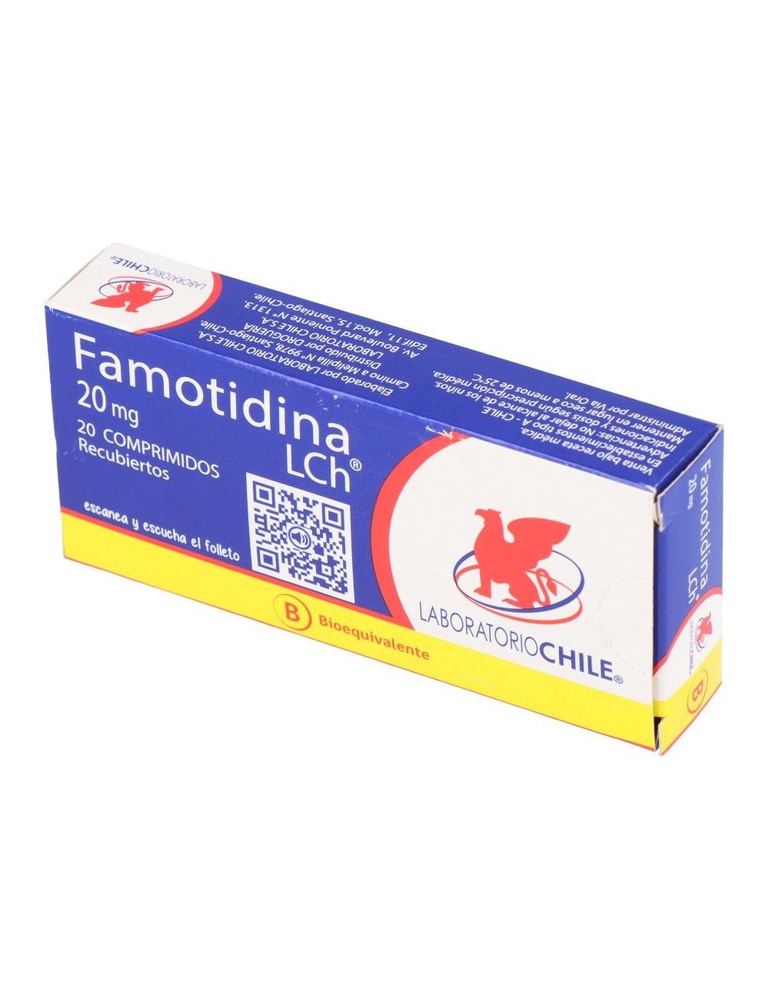
Famotidine Aristo 20 mg tablets are round, white tablets.
They come in aluminum/aluminum blisters inserted in cardboard boxes.
Packs of 20 and 28 tablets.
Clinical pack of 500 tablets.
Not all pack sizes may be marketed.
Marketing authorization holder and manufacturer
Marketing authorization holder
Aristo Pharma Iberia, S.L.
C/ Solana, 26
28850, Torrejón de Ardoz
Madrid, Spain
Manufacturer
Medinsa (Laboratorios Medicamentos Internacionales S.A.)
C/ Solana, 26
28850 Torrejón de Ardoz (Madrid)
Spain
Or
TEDEC-MEIJI FARMA, S.A.
Carretera M-300, Km 30,500
28802 Alcala de Henares (Madrid)
Spain
Date of last revision of this leaflet: July 2023
Detailed and updated information on this medicine is available on the website of the Spanish Agency for Medicines and Healthcare Products (AEMPS) http://www.aemps.gob.es/.
- Country of registration
- Dosage formTABLET, 20 mg
- ATC codeA02BA03
- Average pharmacy price2.5 EUR
- Active substance
- Prescription requiredYes
- Manufacturer
- CompositionCROSCARMELOSA SODICA (3,0 mg mg), LACTOSA (30,0 mg mg)
- This information is for reference only and does not constitute medical advice. Always consult a doctor before taking any medication. Oladoctor is not responsible for medical decisions based on this content.
- Alternatives to FAMOTIDINE ARISTO 20 mg TABLETSDosage form: TABLET, 40 mgActive substance: famotidineManufacturer: Aristo Pharma Iberia S.L.Prescription requiredDosage form: TABLET, 20 mg famotidineActive substance: famotidineManufacturer: Laboratorios Cinfa S.A.Prescription requiredDosage form: TABLET, 40 mg famotidineActive substance: famotidineManufacturer: Laboratorios Cinfa S.A.Prescription required
Online doctors for FAMOTIDINE ARISTO 20 mg TABLETS
Discuss questions about FAMOTIDINE ARISTO 20 mg TABLETS, including use, safety considerations and whether a prescription is appropriate, subject to medical assessment and local regulations.









Frequently Asked Questions
FAMOTIDINE ARISTO 20 mg TABLETS requires a prescription in Spain. You can check with a doctor online whether this medicine may be appropriate for your situation.
The active ingredient in FAMOTIDINE ARISTO 20 mg TABLETS is famotidine. This information helps identify medicines with the same composition but different brand names.
The average pharmacy price for FAMOTIDINE ARISTO 20 mg TABLETS is around 2.5 EUR. Prices may vary depending on the manufacturer and dosage form.
FAMOTIDINE ARISTO 20 mg TABLETS is manufactured by Aristo Pharma Iberia S.L.. Pharmacy brands and packaging may differ depending on the distributor.
Doctors such as Family doctors, Psychiatrists, Dermatologists, Cardiologists, Endocrinologists, Gastroenterologists, Pulmonologists, Nephrologists, Rheumatologists, Hematologists, Infectious disease physicians, Allergists, Geriatricians, Paediatricians, Oncologists may assess whether FAMOTIDINE ARISTO 20 mg TABLETS is appropriate, depending on your situation and local regulations. You can book an online consultation to discuss your symptoms and possible next steps.
The prescription is issued by a doctor after assessing your health. In Spain, FAMOTIDINE ARISTO 20 mg TABLETS is then dispensed in pharmacies with that prescription. An online consultation does not guarantee that a prescription will be issued: the decision always rests with the doctor.
To request an assessment, you can use Oladoctor:
Other medicines with the same active substance (famotidine) include FAMOTIDINE ARISTO 40 mg TABLETS, FAMOTIDINE CINFA 20 mg FILM-COATED TABLETS, FAMOTIDINE CINFA 40 mg FILM-COATED TABLETS. These may have different brand names or formulations but contain the same therapeutic ingredient. Always consult a doctor before switching or starting a new medicine.
