



EVICEL 50-90 mg/ml 800-1200 IU Tissue Adhesive

Prescription review online
A doctor will review your case and decide whether a prescription is medically appropriate.

Talk to a doctor about this medicine
Discuss your symptoms and possible next steps in a quick online consultation.



How to use EVICEL Tissue Adhesive Solution
Contents of the leaflet
- Introduction
- What is EVICEL and what is it used for
- What you need to know before you start using EVICEL
- How to use EVICEL
- Possible side effects
- Storage of EVICEL
- Package Contents and Additional Information
Introduction
Package Leaflet: Information for the Patient
EVICEL Tissue Adhesive Solutions
Human fibrinogen, human thrombin
Read all of this leaflet carefully before you start using this medicine because it contains important information for you.
- Keep this leaflet, you may need to read it again.
- If you have any further questions, ask your doctor or pharmacist.
- If you experience any side effects, talk to your doctor, pharmacist or nurse, even if they are not listed in this leaflet. See section 4.
Contents of the Package Leaflet:
- What is EVICEL and what is it used for
- What you need to know before you start using EVICEL
- How to use EVICEL
- Possible side effects
5 Storage of EVICEL
- Contents of the pack and further information
1. What is EVICEL and what is it used for
EVICEL is a human fibrin tissue adhesive presented in a package with two separate vials, each containing 1 ml, 2 ml or 5 ml of solution (human fibrinogen and human thrombin, respectively).
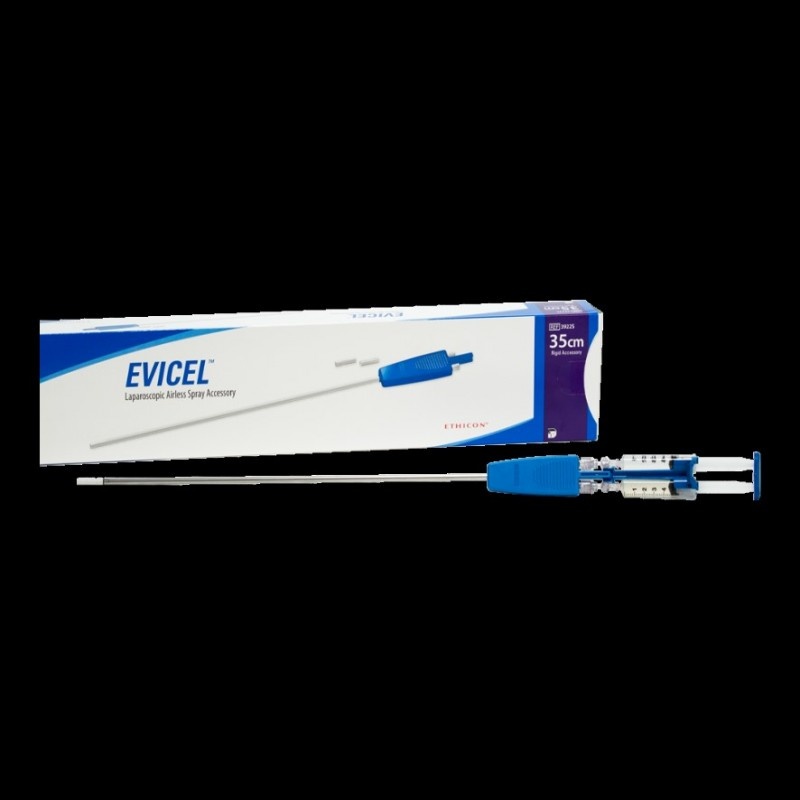
An applicator and suitable accessory tips are provided separately.
Fibrinogen is a concentrate of coagulable proteins and thrombin is an enzyme that causes the coagulable protein to clot. Therefore, when the two components are mixed, they clot immediately.
EVICEL is applied in adults during surgical interventions to reduce bleeding and exudate during and after surgery.
EVICEL can be used in vascular surgery and in surgical interventions on the posterior wall of the abdomen. EVICEL can also be used as support for the hermetic closure of cerebral covers (dura mater) during neurosurgery, when other surgical techniques are insufficient.
It is administered drop by drop or sprayed onto the cut tissue, where it forms a thin layer that seals the tissue and stops the bleeding.

Not sure if this medicine is right for you?
Discuss your symptoms and treatment with a doctor online.
2. What you need to know before you start using EVICEL
Do not use EVICEL
- If you are hypersensitive (allergic) to products derived from human blood or to any of the other components of EVICEL (listed in section 6). The signs of allergic reactions include hives, skin rash, chest tightness, wheezing, low blood pressure, and breathing difficulties. If these symptoms occur, the administration of the product will be stopped immediately.
- EVICEL must not be applied intravascularly.
- EVICEL must not be used in endoscopic surgery. For information on laparoscopy, see the recommendations below.
- EVICEL must not be used to seal the suture line in the dura mater if there are separations of more than 2 mm after suturing.
- EVICEL must not be used as a glue for fixing dural patches.
- EVICEL must not be used as an adhesive when the dura mater cannot be sutured.
Warnings and precautions
- To avoid the risk of potentially fatal air or gas embolism, EVICEL should be sprayed only using pressurized CO2 gas.
- Before applying EVICEL, the surface area of the wound should be dried using conventional techniques (e.g., intermittent application of compresses, swabs, and use of suction devices).
- When using EVICEL during an intervention, the surgeon must ensure that it is applied only to the surface of the tissue. EVICEL must not be injected into the tissue or blood vessels because clots can form that can be fatal.
- The use of EVICEL has not been studied in the following procedures, and therefore, there is no information indicating its possible efficacy for these procedures:
- glueing tissues
- brain or spinal cord surgery, except as support for a hermetic closure of cerebral covers (dura mater)
- controlling bleeding in the stomach or intestines by applying the product through an endoscope (tube)
- sealing surgical interventions in the intestines
- sealing in transsphenoidal and otoneurosurgical procedures
- It is unknown whether radiation therapy could affect the efficacy of the fibrin adhesive when used to seal suture lines during neurosurgery.
- The use of EVICEL during neurosurgery in patients who also receive treatment with implants or dural patches has not been evaluated in clinical studies.
- Before using EVICEL to seal the dural suture line, bleeding should be controlled.
- EVICEL will be applied as a thin layer. If the thickness of the clot is excessive, it may interfere negatively with the efficacy of the product and with the wound healing process.
There have been cases of potentially fatal air or gas embolism with the use of sprayers that use pressure regulators to administer EVICEL. This event appears to be related to the use of the sprayer at higher pressures than recommended and/or spraying very close to the tissue surface. EVICEL should be applied by spraying only when it is possible to accurately calculate the spraying distance, especially during laparoscopy. This spraying distance, as well as the pressure to be applied, should be within the range recommended by the manufacturer (see the table in the Instructions for use section). When applying EVICEL, changes in blood pressure, pulse, oxygen saturation, and final CO2 should be monitored, given the possibility of air or gas embolism. The sprayers and accessory tips come with instructions for use, with recommendations on pressure ranges and proximity to the tissue surface, which should be followed carefully.
- Protect the surrounding areas to ensure that EVICEL is applied only to the surface to be treated.
- As with any protein-based product, it is possible that allergic hypersensitivity reactions may occur. The signs of hypersensitivity reactions are hives, generalized urticaria, chest tightness, wheezing, low blood pressure, and anaphylaxis. If these symptoms occur, the administration of the product will be stopped immediately.
- When medicines are manufactured from human blood or plasma, certain measures are taken to prevent the transmission of infections to patients. These measures include careful selection of blood and plasma donors to ensure that those who may carry infections are excluded, and testing of each donation and plasma pools for signs of viruses and infections. The manufacturers of these products also include measures to inactivate or eliminate viruses during the processing of blood and plasma. Despite these measures, when medicines derived from human blood or plasma are administered, it is not possible to completely rule out the possibility of transmitting infections. This applies to unknown or new viruses, or other types of infections.
It is considered that the measures taken in the manufacture of fibrinogen and thrombin are effective against lipid-enveloped viruses, such as human immunodeficiency virus (HIV) and hepatitis B and C viruses, and against hepatitis A virus, which does not have an envelope. These measures may have little value against parvovirus B19. Infection with parvovirus B19 can be severe in pregnant women (fetal infection) and in individuals whose immune system is depressed or who have certain types of anemia (e.g., sickle cell anemia or hemolytic anemia).
Healthcare professionals will record the name and batch number of the medicine to enable any potential infectious outbreak to be traced.
Children and adolescents
There are limited data available on pediatric patients to support the efficacy and safety of EVICEL in this population.
Use of EVICEL with other medicines
Tell your doctor or pharmacist if you are taking, have recently taken, or might take any other medicines, including those obtained without a prescription.
Pregnancy and breastfeeding
There are no sufficient data to determine whether there is a specific risk associated with the use of EVICEL during pregnancy or breastfeeding. However, since EVICEL is used in surgical interventions, if you are pregnant or breastfeeding, you should discuss the general risks of the intervention with your doctor.
3. How to use EVICEL
The doctor treating you will administer EVICEL during surgery. During the operation, the doctor will apply drops of EVICEL or spray it onto the tissues using an applicator that allows the administration of the same amount of the two components of EVICEL at the same time, and ensures that they are mixed uniformly, which is important for the tissue adhesive to achieve its optimal effect.
The amount of EVICEL to be applied depends on the surface area of tissue to be treated during the operation. Drops should be applied to the tissue in very small amounts or sprayed in short cycles (0.1-0.2 ml) to produce a thin and uniform layer. If the application of a single layer of EVICEL does not completely stop the bleeding, a second layer should be applied.

Started taking the medicine and have questions?
Discuss your symptoms and treatment with a doctor online.
4. Possible side effects
Like all medicines, this medicine can cause side effects, although not everybody gets them. The following side effects that occurred during clinical studies were considered related to the use of EVICEL:
More serious side effects
- Watery liquid coming out of the wound or nose (CSF leak/rhinorrhea). This effect is common (may affect up to 1 in 10 people).
- Headache, nausea, and vomiting (due to subdural hygroma, which consists of the accumulation of cerebrospinal fluid in the subdural space). This effect is uncommon (may affect up to 1 in 100 people).
- Fever or prolonged constipation, flatulence (due to abdominal abscess). This effect is common (may affect up to 1 in 10 people).
- Accumulation of cerebrospinal fluid between the tissues surrounding the dural layer due to loss of the fluid that normally surrounds the brain (pseudomeningocele). This effect is uncommon (may affect up to 1 in 100 people).
- Numbness or pain in the limbs, change in skin color (due to graft occlusion or thrombosis). This effect is uncommon (may affect up to 1 in 100 people).
If you experience any of the above symptoms or any other related to the operation, contact your doctor or surgeon immediately. If you do not feel well, tell your doctor immediately, even if the symptoms you are experiencing are different from those described.
Other side effects
Other side effects reported as common during clinical trials with EVICEL (i.e., may affect up to 1 in 10 people) included meningitis, fever, difficulties in blood coagulation, and accumulation of cerebrospinal fluid in the brain cavities (hydrocephalus). These effects were common.
Uncommon side effects in clinical trials with EVICEL (i.e., effects that may affect up to 1 in 100 people) included infection, blood accumulation (hematoma), swelling, decrease in hemoglobin, and postoperative wound complications (including bleeding or infection).
EVICEL is a fibrin tissue adhesive. Fibrin tissue adhesives in general can cause an allergic reaction in rare cases (up to 1 patient in 1000). If you experience an allergic reaction, you may have one or more of the following symptoms: skin rash, hives or urticaria, chest tightness, chills, flushing, headache, low blood pressure, lethargy, nausea, restlessness, increased heart rate, tingling, vomiting, or wheezing. So far, no allergic reactions have been observed in patients treated with EVICEL.
There is also a theoretical possibility that you may develop antibodies against the proteins of EVICEL, which could interfere with blood coagulation. The frequency of this type of event is unknown (cannot be estimated from the available data).
Reporting of side effects
If you experience any side effects, talk to your doctor, pharmacist, or nurse, even if they are not listed in this leaflet. You can also report them directly through the national reporting system included in Appendix V. By reporting side effects, you can help provide more information on the safety of this medicine.
5. Storage of EVICEL
Keep this medicine out of the sight and reach of children.
Do not use this medicine after the expiry date which is stated on the label and on the carton, after "EXP". The expiry date is the last day of the month stated.
The vials should be stored upright.
Store in a freezer at -18 °C or below. Store the vials in the outer packaging to protect them from light. Do not re-freeze.
Once thawed, unopened vials can be stored at a temperature between 2 °C and 8 °C and protected from light for a maximum of 30 days, without being re-frozen during this period. The new expiry date between 2 °C and 8 °C should be indicated on the carton, but it should not exceed the expiry date printed by the manufacturer on the carton and on the label. At the end of this period, the medicine should be used or discarded.
Fibrinogen and thrombin are stable at room temperature for up to 24 hours. Do not refrigerate EVICEL once it has reached room temperature.
Once introduced into the application device, they should be used immediately. Discard the unused medicine after 24 hours at room temperature.
6. Package Contents and Additional Information
Composition of EVICEL
The active principles are as follows:
Component 1: Human coagulable protein containing mainly fibrinogen and fibronectin (50 - 90 mg/ml)
Component 2: Human thrombin (800 - 1200 UI/ml)
The other components are:
Component 1: arginine hydrochloride, glycine, sodium chloride, sodium citrate, calcium chloride, and water for injectable preparations.
Component 2: calcium chloride, human albumin, mannitol, sodium acetate, and water for injectable preparations.
Appearance of the Product and Package Contents
Package Size
EVICEL is a human fibrin tissue adhesive that comes in a package with two separate glass vials. Each vial contains 1 ml, 2 ml, or 5 ml of human fibrinogen and thrombin solution, respectively.
EVICEL is marketed in the following sizes: 2 x 1 ml, 2 x 2 ml, and 2 x 5 ml. Not all package sizes may be marketed in all countries.
An applicator and suitable accessory tips are supplied separately.
Marketing Authorization Holder and Manufacturer:
Omrix Biopharmaceuticals N.V.
Leonardo Da Vinci Laan 15
B-1831 Diegem
Belgium
Phone: + 32 2 746 30 00
Fax: + 32 2 746 30 01
Date of Last Revision of this Leaflet:
Other Sources of Information
Detailed information on this medicinal product is available on the European Medicines Agency website:
http://www.ema.europa.eu
The European Medicines Agency website provides this leaflet in all languages of the European Union/European Economic Area.
The following information is intended for healthcare professionals only.
INSTRUCTIONS FOR USE
Read this before opening the package
EVICEL comes in sterile packages and, therefore, it is essential to use onlyintact, unopened packages (they cannot be re-sterilized).
Storage
The approved shelf life of EVICEL is 2 years of storage at ≤ -18°C. Do not use the product after the expiration date shown on the package.
Within the 2-year shelf life, once thawed, unopened vials can be stored between 2°C and 8°C (in a refrigerator) and protected from light for up to 30 days.
Record the date of refrigeration on the space provided on the package. Do not re-freeze. The fibrinogen and thrombin components remain stable at room temperature for up to 24 hours, but once transferred to the applicator, they must be used immediately.
The vials should be stored in an upright position.
Do not use after the expiration date shown on the package and label.
Keep out of sight and reach of children.
The applicator should be stored at room temperature, separate from the fibrinogen and thrombin.
Thawing
The vials will thaw in one of the following ways:
2°C to 8°C(refrigerator): the vials will thaw in 1 day,
20°C to 25°C(room temperature): the vials will thaw in 1 hour,
37°C(e.g., water bath, using aseptic technique, or warming the vials with the hand): the vials should thaw in 10 minutes and should not remain at this temperature for more than 10 minutes or thaw completely. The temperature should not exceed 37°C.
Before use, the product must be at a temperature between 20°C and 30°C.
Preparation
EVICEL should only be administered with the EVICEL applicator marked with the CE mark, with the optional help of an accessory tip. The applicator and accessory tip packages include leaflets with detailed instructions for using EVICEL with the applicator device and optional accessory tips. The accessory tips should only be used by persons adequately trained in laparoscopic procedures, laparoscopically assisted, or open surgery. The product should only be reconstituted and administered according to the instructions and with the devices recommended for this product.
To avoid the risk of potentially fatal air or gas embolism, EVICEL should be sprayed onlyusing pressurized CO2.
The solutions should be transparent or slightly opalescent. Do not use cloudy solutions or those with deposits. Transfer the contents of the two vials to the applicator, following the instructions for use found in the applicator package. The two syringes should be filled with equal volumes and should not contain air bubbles. No needles are required to prepare EVICEL for administration.
Before applying EVICEL, the surface area of the wound should be dried using conventional techniques (e.g., intermittent application of compresses, swabs, and use of
suction devices).
Drop-by-Drop Application
Apply several drops to the treatment area, keeping the applicator tip as close as possible to the tissue surface, but without touching it during product administration. If the applicator tip becomes clogged, it can be cut 0.5 cm at a time.
Spray Application
EVICEL should be sprayed onlyusing pressurized CO2.
Connect the short tube of the applicator to the male Luer Lock end of the long gas tube. Connect the
Luer Lock female end of the gas tube (with the 0.2 μm bacteriostatic filter) to a pressure regulator.
The pressure regulator should be used according to the manufacturer's instructions.
When applying EVICEL with a sprayer, ensure that the pressure and distance to the tissue are within the recommended ranges by the manufacturer:
Surgery | Sprayer to use | Applicator tips to use | Pressure regulator to use | Recommended distance from target tissue | Recommended spray pressure | |
Open Surgery | EVICEL applicator device | Flexible 6 cm tip | Omrix pressure regulator | 10-15 cm (4-6 inches) | 20-25 psi/ 1.4-1.7 bar | |
Rigid 35 cm tip | ||||||
Flexible 45 cm tip | ||||||
Laparoscopic procedures | Rigid 35 cm tip | 4-10 cm (1.6- 4 inches) | 15-20 psi/ 1.0-1.4 bar | |||
Flexible 45 cm tip | 20 psi (1.4 bar) | |||||
The product should be sprayed onto the tissue surface in small quantities (0.1 to 0.2 ml) to form a thin, uniform layer. EVICEL forms a transparent film over the application area.
When applying EVICEL, changes in blood pressure, pulse, oxygen saturation, and end-tidal CO2 should be monitored due to the possibility of gas embolism.
Disposal
Disposal of unused medicinal products and all materials that have come into contact with them should be carried out in accordance with local regulations.
- Country of registration
- Dosage formTISSUE ADHESIVE, 50-90 mg/ml 800-1200 IU
- ATC codeB02BC30
- Active substance
- Prescription requiredYes
- Manufacturer
- CompositionCITRATO DE SODIO (E-331) (2,7 mg/ml mg), MANITOL (E-421) (19,5 mg/ml mg), ACETATO SODICO (2,6 mg/ml mg), CLORURO DE SODIO (7 mg/ml mg)
- This information is for reference only and does not constitute medical advice. Always consult a doctor before taking any medication. Oladoctor is not responsible for medical decisions based on this content.
- Alternatives to EVICEL Tissue Adhesive SolutionDosage form: TISSUE ADHESIVE, as needed based on the patient's clinical needsActive substance: combinationsManufacturer: Baxter S.L.Prescription requiredDosage form: TISSUE ADHESIVE, -Active substance: combinationsManufacturer: Corza Medical GmbhPrescription requiredDosage form: TISSUE ADHESIVE, -Active substance: combinationsManufacturer: Corza Medical GmbhPrescription required
Online doctors for EVICEL Tissue Adhesive Solution
Discuss questions about EVICEL Tissue Adhesive Solution, including use, safety considerations and prescription review, subject to medical assessment and local regulations.









Get EVICEL Tissue Adhesive Solution Prescription Online
Fill in a 2-min form
Tell us your symptoms, history, and what medicine you're requesting.
Pick a doctor or let us assign
Choose a specialist or we'll match you with the next available doctor.
Doctor reviews your case
Usually within 30 minutes. They may ask follow-up questions via chat.
Collect from any pharmacy
Electronic prescription sent to your email — valid across Spain.
Frequently Asked Questions
EVICEL Tissue Adhesive Solution requires a prescription in Spain. You can check with a doctor online whether this medicine may be appropriate for your situation.
The active ingredient in EVICEL Tissue Adhesive Solution is combinations. This information helps identify medicines with the same composition but different brand names.
EVICEL Tissue Adhesive Solution is manufactured by Omrix Biopharmaceuticals. Pharmacy brands and packaging may differ depending on the distributor.
Doctors such as Family doctors, Psychiatrists, Dermatologists, Cardiologists, Endocrinologists, Gastroenterologists, Pulmonologists, Nephrologists, Rheumatologists, Hematologists, Infectious disease physicians, Allergists, Geriatricians, Paediatricians, Oncologists may assess whether EVICEL Tissue Adhesive Solution is appropriate, depending on your situation and local regulations. You can book an online consultation to discuss your symptoms and possible next steps.
Spain has a well-developed healthcare infrastructure across major cities such as Madrid, Barcelona, Valencia, and Seville. Pharmacies are widely available and operate under strict regulations, ensuring access to prescribed medications.
You can buy EVICEL Tissue Adhesive Solution in Madrid, Barcelona, Seville, or Valencia at any local pharmacy with a valid prescription.
To obtain a prescription, you can use Oladoctor:
Other medicines with the same active substance (combinations) include ARTISS Tissue Adhesive Solution, Ultracold, TACHOSIL Adhesive Matrix, TACHOSIL Adhesive Matrix. These may have different brand names or formulations but contain the same therapeutic ingredient. Always consult a doctor before switching or starting a new medicine.
