


DEXAFREE 1 mg/ml EYE DROPS IN SOLUTION IN SINGLE-DOSE CONTAINERS
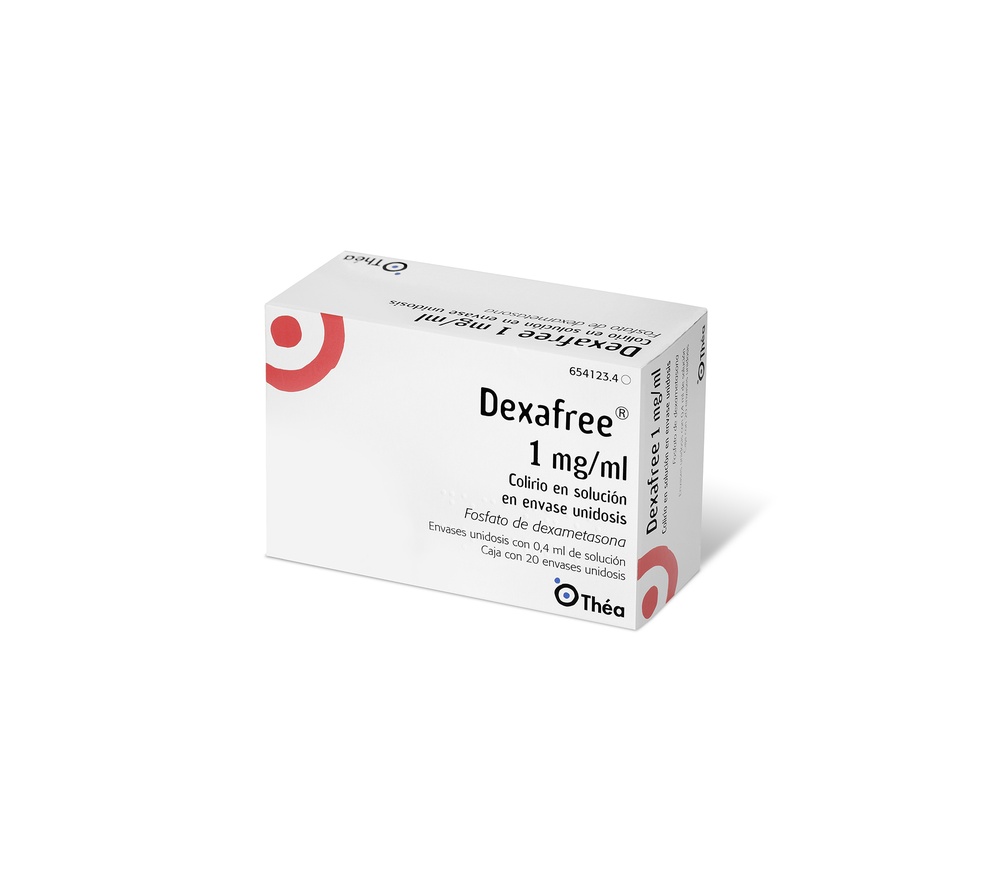



How to use DEXAFREE 1 mg/ml EYE DROPS IN SOLUTION IN SINGLE-DOSE CONTAINERS
Translated with AI
This page provides general information and does not replace a doctor’s consultation. Always consult a doctor before taking any medication. Seek urgent medical care if symptoms are severe.
Show originalContents of the leaflet
Introduction
Package Leaflet: Information for the User
DEXAFREE 1 mg/ml, eye drops solution in single-dose container
Dexamethasone phosphate
Read the entire package leaflet carefully before starting to use this medicine, as it contains important information for you.
- Keep this package leaflet, as you may need to read it again.
- If you have any questions, consult your doctor or pharmacist.
- This medicine has been prescribed to you only, and you should not give it to others, even if they have the same symptoms as you, as it may harm them.
- If you experience side effects, consult your doctor or pharmacist, even if they are not listed in this package leaflet. See section 4.
Contents of the Package Leaflet
- What Dexafree is and what it is used for
- What you need to know before starting to use Dexafree
- How to use Dexafree
- Possible side effects
- Storage of Dexafree
- Contents of the pack and further information
1. What Dexafree is and what it is used for
Dexafree is an eye drop solution in single-dose containers containing a substance called dexamethasone. This substance is a corticosteroid that inhibits inflammatory symptoms.
Dexafree is indicated for the treatment of eye inflammation.
The eye should not be infected (red eye, discharge, tearing, ...); otherwise, this medicine should be combined with specific treatment for the infection (see section 2).

2. What you need to know before starting to use Dexafree
Do not use Dexafree:
• If you have an eye infectionthat may be bacterial (acute purulent infection), fungal, viral (herpes virus, vaccinia virus, varicella-zoster virus), or amoebic.
• If you have corneal damage(perforation, ulcers, or lesions associated with incomplete healing).
• If you have high intraocular pressurecaused by glucocorticosteroids (corticosteroid family)
• If you are allergic(hypersensitive) to dexamethasone phosphateor any of the other components of Dexafree.
Warnings and precautions
Consult your doctor or pharmacist before starting to use Dexafree
DO NOT INJECT, DO NOT INGEST
Avoid contact between the tip of the dispenser and the eye or eyelids.
- If you use Dexafree, you should be under strict control by your ophthalmologist in any case, and in particular:
- For children and the elderly, more frequent ophthalmological monitoring is recommended.
- If you have an eye infection, you should only use Dexafree if the infection is controlled through anti-infectious treatment.
- If you have a corneal ulcer, do not use local treatment with dexamethasone or Dexafree unless the inflammation is the cause of delayed healing.
- If you have high intraocular pressure or have reacted with an increase in intraocular pressure after previous treatment with steroids, you are at risk of increased intraocular pressure if treated with Dexafree.
- If you have glaucoma.
- Children: Avoid prolonged treatment.
- Severe allergic conjunctivitis: If you have severe allergic conjunctivitis that does not respond to standard therapy, you should use Dexafree only for short periods.
- Diabetes: If you are diabetic, inform your ophthalmologist.
- Red eye: Do not use Dexafree in case of undiagnosed red eye.
- Contact lenses: You should avoid wearing contact lenses during treatment with Dexafree.
Consult your doctor if you experience swelling and weight gain around the trunk and face, as these are usually the first signs of a syndrome called Cushing's syndrome. Suppression of adrenal gland function may occur after intensive or long-term treatment with Dexafree. Consult your doctor before interrupting treatment on your own. These risks are especially important in children and patients treated with a medicine called ritonavir or cobicistat.
Contact your doctor if you experience blurred vision or other visual disturbances.
Using Dexafree with other medicines:
In case of treatment with another eye drop solution, space out the instillations by 15 minutes.
Inform your doctor if you are taking ritonavir or cobicistat, as this may cause an increase in the amount of dexamethasone in the blood. Calcium phosphate deposits have been described in the cornea during combined use of corticosteroids and topical beta-blockers.
Tell your doctor or pharmacist if you are using or have recently used any other medicines.
Pregnancy and breastfeeding
There is not enough data on the use of Dexafree in pregnant women to assess potential harmful effects.
For this reason, Dexafree is not recommended during pregnancy.
It is not known whether this medicine is excreted in breast milk. However, the total dose of dexamethasone is low.
Therefore, Dexafree can be used during breastfeeding.
If you are pregnant or breastfeeding, think you may be pregnant, or plan to become pregnant, consult your doctor or pharmacist before using this medicine.
Driving and using machines:
As with all eye drops, transient blurred vision or other visual disturbances may affect the ability to drive or use machines. If blurred vision occurs, the patient should wait until vision is clear before driving or using machines.
Athletes
Athletes are informed that this medicine contains a component that may result in a positive analytical result in doping tests.
Dexafree contains phosphates
This medicine contains 80 micrograms of phosphates per drop.
3. How to use DEXAFREE
Dosage
Follow the instructions for administration of this medicine exactly as indicated by your doctor. If in doubt, consult your doctor or pharmacist again
The recommended dose is 1 drop, 4 to 6 times a day in the affected eye. In severe cases, treatment may be started with 1 drop every hour and should be reduced to 1 drop every 4 hours when a favorable response is observed. Gradual discontinuation of treatment is recommended to avoid relapse.
Use in elderly patients
In elderly patients, no dose adjustment is necessary.
Use in children and adolescents
In children, prolonged use should be avoided.
Method of administration
Ophthalmic use: this medicine is for administration in the eye.
?Wash yourhandscarefully before using the product.
?Tilt your head back slightly with your gaze directed upwards.
Pull the lower eyelid down with your index finger, creating a pocket.
Carefully apply one drop into the conjunctival sac.
?After application, gently presson the lacrimal duct for a few minutes (to reduce the risk of systemic reactions and increase penetration of the active substance into the eye).
?Discardeach single-dose container after use. Do not save it for later use.
Frequency of administration
4 to 6 times a day.
Duration of treatment
The duration of treatment may vary from several days to a maximum of 14 days.
If you use more Dexafree than you should:
If too much product has been instilled in your eye and you notice persistent irritation, rinse your eye with sterile water.
Contact your doctor or pharmacist immediately.
If you forget to use Dexafree:
Do not use a double dose to make up for the forgotten dose.
If you stop treatment with Dexafree:
Do not stop treatment abruptly. Always consult your doctor if you decide to stop treatment.
If you have any further questions on the use of this medicine, ask your doctor or pharmacist.

4. Possible side effects
Like all medicines, this medicine can cause side effects, although not everybody gets them.
Endocrine disorders
- Frequency not known: cannot be estimated from available data.
- Hormonal problems: excessive growth of body hair (especially in women), weakness and muscle wasting, purple striae on the skin, high blood pressure, irregular or absent menstrual periods, changes in protein and calcium levels in the body, delayed growth in children and adolescents, and swelling and weight gain in the body and face (Cushing's syndrome) (see section 2, "Warnings and precautions").
Eye disorders:
- Very common: may affect more than 1 in 10 people
- Increased intraocular pressure after 2 weeks of treatment.
- Common: may affect up to 1 in 10 people
- Discomfort, irritation, burning, itching, stinging, and blurred vision after instillation.
These symptoms are usually transient and mild
- Uncommon: may affect up to 1 in 100 people
- Allergic reactions and hypersensitivity to any of the components of the eye drops,
- delayed wound healing,
- cataract (opacity of the lens),
- infections,
- glaucoma
- Rare: may affect up to 1 in 10,000 people.
- conjunctivitis (inflammation of the conjunctiva)
- pupil dilation (mydriasis)
- facial swelling (edema)
- eyelid drooping (ptosis)
- inflammation of the iris (uveitis)
- corneal calcification
- corneal inflammation (crystalline keratopathy)
- changes in corneal thickness
- corneal edema
- corneal ulceration
- corneal perforation
If you have severe damage to the transparent layer of the front of the eye (cornea), treatment with phosphates may, in very rare cases, cause cloudy patches in the cornea due to calcium.
Reporting of side effects
If you experience any side effects, consult your doctor or pharmacist, even if they are not listed in this package leaflet. You can also report them directly through the Spanish Pharmacovigilance System for Human Use Medicines: www.notificaRAM.es. By reporting side effects, you can help provide more information on the safety of this medicine.
5. Storage of Dexafree
Keep this medicine out of the sight and reach of children.
Do not use this medicine after the expiration date stated on each single-dose container after EXP. The expiration date is the last day of the month indicated.
After opening the blister pack: use the single-dose container within 15 days of opening.
After opening the single-dose container: use immediately and discard the single-dose container after use.
Store the single-dose containers in the blister pack to protect them from light.
Medicines should not be disposed of via wastewater or household waste. Dispose of the containers and any unused medicines in the pharmacy's SIGRE collection point. If in doubt, ask your pharmacist how to dispose of the containers and any unused medicines. This will help protect the environment.
6. Contents of the pack and further information
Composition of Dexafree
The active substance is dexamethasone phosphate.
Each ml of solution contains 1 mg of dexamethasone phosphate (as dexamethasone phosphate and sodium).
The other components are disodium edetate, disodium hydrogen phosphate dodecahydrate, sodium chloride, and water for injectable preparations.
Appearance of the product and pack contents
Dexafree is an eye drop solution in a colorless or slightly brown solution presented in single-dose containers.
Each single-dose container contains 0.4 ml of solution. The box contains 10, 20, 30, 50, or 100 single-dose containers packaged in blisters.
Marketing authorization holder and manufacturer
Holder: Laboratoires Théa S.A.
12, rue Louis Blériot
63017 Clermont-Ferrand Cedex 2
(France)
Local representative:
Laboratorios Thea S.A.
C/ Enric Granados, nº 86-88, 2ª planta
, 08008 Barcelona
Manufacturer:
EXCELVISION
Rue de la Lombardière, 07100 Annonay, (France)
Or
Laboratoires UNITHER
1 rue de l’Arquerie,
50200 Coutances
(France)
This medicine is authorized in the Member States of the European Economic Area under the following names:
Bulgaria, Cyprus, France, Greece, Ireland, Poland, Portugal, Spain, and the United Kingdom …………………………………………………… DEXAFREE
Belgium, Netherlands, and Luxembourg ……………….. MONOFREE DEXAMETHASON
Germany and Austria ………………………………………… MONODEX
Italy and Slovenia ………………………………………… DEXAMONO
Denmark, Finland, Norway, and Sweden ………………. MONOPEX
Date of the last revision of this package leaflet: August 2018
Detailed information on this medicine is available on the website of the Spanish Agency for Medicines and Health Products (AEMPS)
http://www.aemps.es
- Country of registration
- Dosage formEYEDROP, 1mg/ml
- ATC codeS01BA01
- Active substance
- Prescription requiredYes
- Manufacturer
- This information is for reference only and does not constitute medical advice. Always consult a doctor before taking any medication. Oladoctor is not responsible for medical decisions based on this content.
- Alternatives to DEXAFREE 1 mg/ml EYE DROPS IN SOLUTION IN SINGLE-DOSE CONTAINERSDosage form: EYEDROP, 1 mg/mlActive substance: dexamethasoneManufacturer: Pharmaselect International Beteiligungs GmbhPrescription requiredDosage form: EYE DROP, 0.1 %Active substance: dexamethasoneManufacturer: Fidia Farmaceutici S.P.A.Prescription requiredDosage form: EYEDROP, 1 mg/mlActive substance: dexamethasoneManufacturer: Brill Pharma S.L.Prescription required

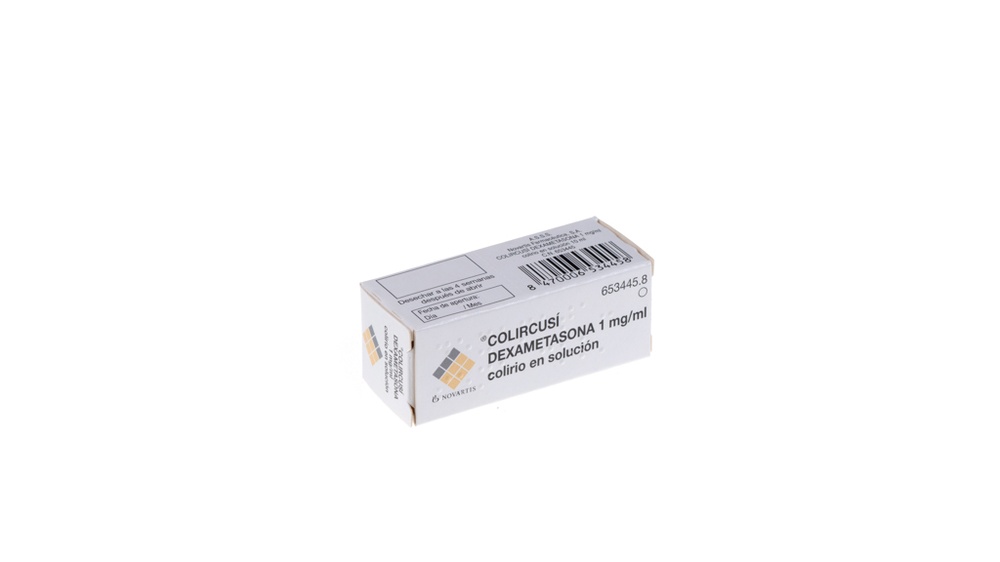
Online doctors for DEXAFREE 1 mg/ml EYE DROPS IN SOLUTION IN SINGLE-DOSE CONTAINERS
Discuss questions about DEXAFREE 1 mg/ml EYE DROPS IN SOLUTION IN SINGLE-DOSE CONTAINERS, including use, safety considerations and prescription review, subject to medical assessment and local regulations.











Frequently Asked Questions
