



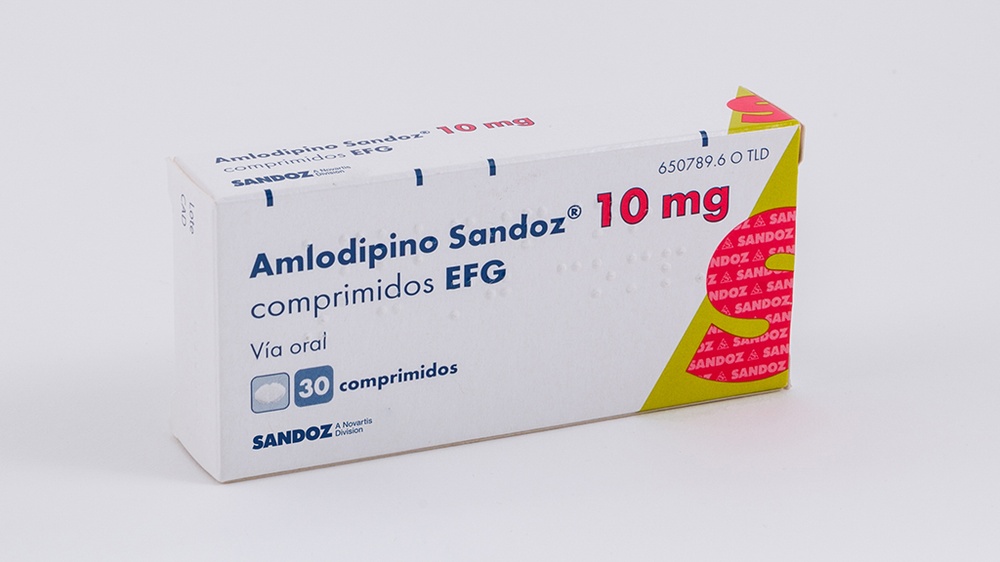
AMLODIPINO 10 mg Tablets

Prescription review online
A doctor will review your case and decide whether a prescription is medically appropriate.

Talk to a doctor about this medicine
Discuss your symptoms and possible next steps in a quick online consultation.



How to use AMLODIPINE SANDOZ 10 mg TABLETS
Contents of the leaflet
- Introduction
- What is Amlodipine Sandoz and what is it used for
- What you need to know before you take Amlodipine Sandoz
- How to take Amlodipine Sandoz
- Possible side effects
- Storage of Amlodipine Sandoz
- Contents of the pack and further information
Introduction
Package Leaflet: Information for the Patient
Amlodipine Sandoz 5 mg Tablets EFG
Amlodipine Sandoz 10 mg Tablets EFG
Read all of this leaflet carefully before you start taking this medicine because it contains important information for you.
- Keep this leaflet, you may need to read it again.
- If you have any further questions, ask your doctor or pharmacist.
- This medicine has been prescribed for you only. Do not pass it on to others. It may harm them, even if their signs of illness are the same as yours.
- If you get any side effects, talk to your doctor or pharmacist. This includes any possible side effects not listed in this leaflet. See section 4.
Contents of the pack and other information:
- What is Amlodipine Sandoz and what is it used for
- What you need to know before you take Amlodipine Sandoz
- How to take Amlodipine Sandoz
- Possible side effects
- Storage of Amlodipine Sandoz
- Contents of the pack and further information
1. What is Amlodipine Sandoz and what is it used for
Amlodipine belongs to a group of medicines known as calcium antagonists.
Amlodipine Sandoz is used to treat:
- high blood pressure (hypertension),
- a certain type of chest pain called angina, which includes a rare type called Prinzmetal's or variant angina.
In patients with high blood pressure, this medicine works by relaxing blood vessels, so that blood passes through them more easily.
In patients with angina, amlodipine improves blood supply to the heart muscle, which reduces the frequency and severity of angina attacks, thereby increasing exercise tolerance.

Not sure if this medicine is right for you?
Discuss your symptoms and treatment with a doctor online.
2. What you need to know before you take Amlodipine Sandoz
Do not take Amlodipine Sandoz
- if you are allergic to amlodipine, to other calcium antagonists, or to any of the other ingredients of this medicine (listed in section 6). These may cause itching, redness of the skin, or difficulty breathing,
- if you have very low blood pressure (hypotension),
- if you have a narrowing of the aortic valve (aortic stenosis) or cardiogenic shock (a condition where the heart is unable to pump enough blood to the body),
- if you suffer from heart failure after a heart attack.
Warnings and precautions
Consult your doctor or pharmacist before taking amlodipine.
Tell your doctor or pharmacist if you have or have had any of the following conditions:
- recent heart attack,
- heart failure,
- severe increase in blood pressure (hypertensive crisis),
- liver disease,
- you are an elderly patient and your dose needs to be increased.
Children and adolescents
Amlodipine has not been studied in children under the age of 6 years. Amlodipine should only be used to treat high blood pressure in children and adolescents from 6 to 17 years of age (see section 3).
For more information, consult your doctor.
Other medicines and Amlodipine Sandoz
Tell your doctor or pharmacist if you are taking, have recently taken, or might take any other medicines.
Amlodipine may affect or be affected by other medicines, such as:
- ketoconazole, itraconazole (antifungal medicines),
- ritonavir, indinavir, nelfinavir (also called protease inhibitors used to treat HIV),
- rifampicin, erythromycin, clarithromycin (antibiotics),
- Hypericum perforatum(St. John's Wort),
- verapamil, diltiazem (heart medicines),
- dantrolene (in infusion for severe disturbances of body temperature regulation),
- simvastatin (a medicine used to lower high cholesterol levels in the blood),
- tacrolimus, sirolimus, everolimus, and cyclosporin (used to prevent organ rejection and for cancer),
- temsirolimus (used for cancer).
If you are already taking other medicines to treat high blood pressure, amlodipine may increase the blood-pressure-lowering effect of these medicines.
Taking Amlodipine Sandoz with food and drink
People taking amlodipine should not consume grapefruit or grapefruit juice. This is because grapefruit and grapefruit juice can increase the levels of the active substance amlodipine in the blood, which can lead to an unpredictable increase in the blood-pressure-lowering effect of amlodipine.
Pregnancy, breast-feeding, and fertility
Pregnancy
The safety of amlodipine during pregnancy has not been established. If you are pregnant or breast-feeding, think you may be pregnant, or are planning to have a baby, ask your doctor for advice before taking this medicine.
Breast-feeding
Amlodipine has been shown to pass into breast milk in small amounts. If you are breast-feeding or about to start breast-feeding, consult your doctor before taking amlodipine.
Driving and using machines
Amlodipine may affect your ability to drive or use machines. If amlodipine makes you feel sick, dizzy, or tired, or gives you a headache, do not drive or use machines and contact your doctor immediately.
Amlodipine Sandoz contains sodium
This medicine contains less than 1 mmol sodium (23 mg) per tablet, which is essentially "sodium-free".
3. How to take Amlodipine Sandoz
Follow exactly the instructions given to you by your doctor. If you are not sure, consult your doctor or pharmacist.
The usual initial dose is 5 mg amlodipine once daily. The dose can be increased to 10 mg amlodipine once daily.
You can take your medicine before or after meals and drinks. You should take it at the same time each day with a glass of water. Do not take amlodipine with grapefruit juice.
Use in children and adolescents
For children and adolescents (from 6 to 17 years of age), the recommended initial dose is 2.5 mg once daily. The maximum recommended dose is 5 mg once daily.
It is important not to stop the administration of the tablets. Do not wait until the tablets are finished before going to your doctor.
The tablet can be divided into equal doses.
If you take more Amlodipine Sandoz than you should
Taking too many tablets may cause a severe drop in blood pressure, which can lead to dizziness, fainting, or even a heart attack. You may feel dizzy, lightheaded, or weak, or experience fainting or a heart attack.
If the drop in blood pressure is severe, it can lead to shock. You may feel your skin is cool and clammy, and you may lose consciousness.
Excess fluid can accumulate in the lungs (pulmonary edema), causing difficulty breathing that can develop up to 24-48 hours after ingestion.
If you have taken more amlodipine than you should, contact your doctor or pharmacist immediately, or call the National Poison Information Service on 91 562 04 20, stating the name of the medicine and the amount taken.
If you forget to take Amlodipine Sandoz
Do not worry. If you forget to take a tablet, do not take that dose. Take the next dose at the correct time. Do not take a double dose to make up for forgotten doses.
If you stop taking Amlodipine Sandoz
Your doctor will tell you how long you should take this medicine. Your condition may return if you stop taking this medicine before your doctor tells you to.
If you have any other questions about the use of this medicine, ask your doctor or pharmacist.

Started taking the medicine and have questions?
Discuss your symptoms and treatment with a doctor online.
4. Possible side effects
Like all medicines, this medicine can cause side effects, although not everybody gets them.
See your doctor immediatelyif you experience any of the following side effects after taking this medicine.
These may include:
- Sudden wheezing, chest pain, or difficulty breathing.
- Swelling of the eyelids, face, or lips.
- Swelling of the tongue and throat, which may cause severe difficulty breathing.
- Severe skin reactions, including a severe rash, blistering of the skin, or nettle-like rash, which may be accompanied by fever, and involvement of other body organs.
- Heart attack or abnormal heart rhythm.
- Inflammation of the pancreas, which can cause severe abdominal pain and back pain, accompanied by a feeling of being unwell.
- Inflammation of the liver (hepatitis), which can cause yellowing of the skin and the whites of the eyes, fever, chills, tiredness, loss of appetite, stomach pain, feeling unwell, and dark urine.
The following very common side effectshave been reported. If they cause problems or last more than a week, consult your doctor.
Very common:may affect more than 1 in 10 people
- Swelling (fluid retention)
The following common side effectshave been reported. If they cause problems or last more than a week, consult your doctor.
Common:may affect up to 1 in 10 people
- Headache, dizziness, somnolence (especially at the start of treatment).
- Palpitations (feeling of the heartbeat), flushing.
- Difficulty breathing.
- Abdominal pain, feeling unwell (nausea).
- Changes in bowel habits, diarrhea, constipation, indigestion.
- Swelling of the ankles.
- Feeling tired, weak.
- Changes in vision, double vision.
- Muscle cramps.
Other side effects have been reported, which are listed below. If you think you have experienced any of these side effects, or if you think any side effect is severe, or if you notice any side effects not listed in this leaflet, tell your doctor or pharmacist.
Uncommon:may affect up to 1 in 100 people
- Mood changes, anxiety, depression, insomnia.
- Trembling, changes in taste, fainting.
- Numbness or tingling in the limbs, loss of pain sensation.
- Ringing in the ears.
- Low blood pressure.
- Sneezing/runny nose caused by inflammation of the nasal mucosa (rhinitis).
- Cough.
- Dry mouth, vomiting (nausea).
- Hair loss, increased sweating, itching of the skin, rash, red spots on the skin, skin discoloration.
- Urinary disorders, increased need to urinate at night, increased number of times of urinating.
- Impotence, discomfort or enlargement of the breasts in men.
- Chest pain.
- Pain, feeling unwell.
- Pain in the muscles or joints, back pain.
- Weight gain or loss.
Rare:may affect up to 1 in 1,000 people
- Confusion.
Very rare:may affect up to 1 in 10,000 people
- Decrease in the number of white blood cells, decrease in blood platelets, which can lead to easy bruising or bleeding.
- Excess sugar in the blood (hyperglycaemia).
- A disorder of the nerves, which can cause muscle weakness, tingling, or numbness.
- Inflammation of the gums.
- Abdominal swelling (gastritis).
- Abnormal liver function, yellowing of the skin (jaundice), increase in liver enzymes, which can affect some medical tests.
- Increased muscle tension.
- Inflammation of blood vessels, often with skin rash.
- Sensitivity to light.
Not known:cannot be estimated from the available data
- Tremors, stiffness, mask-like face, slow movements, and difficulty walking.
Reporting of side effects
If you experience any side effects, talk to your doctor or pharmacist. This includes any possible side effects not listed in this leaflet. You can also report side effects directly via the Spanish Medicines Agency's website: https://www.notificaram.es. By reporting side effects, you can help provide more information on the safety of this medicine.
5. Storage of Amlodipine Sandoz
Keep this medicine out of the sight and reach of children.
Do not use this medicine after the expiry date which is stated on the carton and blister or bottle after EXP. The expiry date refers to the last day of the month.
Blister: Store in the original package to protect from light. Do not store above 30°C.
HDPE bottle: Store in the original package to protect from light.
Medicines should not be disposed of via wastewater or household waste. Ask your pharmacist how to dispose of medicines no longer required. These measures will help protect the environment.
6. Contents of the pack and further information
Composition of Amlodipine Sandoz
- The active substance is amlodipine.
Each Amlodipine Sandoz 5 mg tablet contains 5 mg of amlodipine (as besylate).
Each Amlodipine Sandoz 10 mg tablet contains 10 mg of amlodipine (as besylate).
- The other ingredients are microcrystalline cellulose, anhydrous calcium hydrogen phosphate, sodium starch glycolate (type A) (from potato), and magnesium stearate.
Appearance of Amlodipine Sandoz and contents of the pack
Amlodipine Sandoz 5 mg tablets
White or almost white, oblong tablet with beveled edges, scored on one side and marked "5" on the other.
Amlodipine Sandoz 10 mg tablets
White or almost white, oblong tablet with beveled edges, scored on one side and marked "10" on the other.
The tablets are packaged in Alu/PVC or Alu/OPA/Alu/PVC blisters, or in HDPE bottles with screw caps.
Pack sizes:
Alu/PVC or Alu/OPA/Alu/PVC blisters: 10, 14, 20, 28, 30, 50, 50x1, 60, 100, and 120 tablets.
HDPE bottles: 20, 30, 50, 60, 90, 100, 105, 120, 200, and 250 tablets.
Not all pack sizes may be marketed.
Marketing authorisation holder and manufacturer
Marketing authorisation holder
Sandoz Farmacéutica, S.A.
Centro Empresarial Parque Norte
Edificio Roble
C/ Serrano Galvache, 56
28033 Madrid
Spain
Manufacturers
Lek Pharmaceuticals d.d.
Verovškova, 57
SLO-1526 Ljubljana
Slovenia
or
SALUTAS PHARMA GMBH
Otto Von Guericke Alle, 1 (Barleben)
D-39179
Germany
or
ROWA PHARMACEUTICALS LIMITED
Newtown (Bantry, Co Cork)
Ireland
or
LEK, S.A.
Ul. Domaniewska 50 C
Warszawa, PL 02-672
Poland
or
S.C. Sandoz, S.R.L.
Str. Livezeni nr. 7A
RO-540472 Targu-Mures
Romania
Lek S.A.
Ul. Podlipie 16,
95 010 Strykow
Poland
or
Lek Pharmaceuticals d.d.
Trimlini 2D, 9220
Lendava
Slovenia
This medicine is authorised in the Member States of the European Economic Area and in the United Kingdom (Northern Ireland) under the following names:
Austria: Amlodipin Sandoz 5 mg – Tabletten
Amlodipin Sandoz 10 mg – Tabletten
Belgium: Amlodipine besylate Sandoz 5 mg tabletten
Amlodipine besylate Sandoz 10 mg tabletten
Bulgaria: ??????? 5 MG ????????
??????? 10 MG ????????
Czech Republic: Orcal Neo
Denmark: Amlodipin "Sandoz"
Estonia: Amlocard 5 mg
Amlocard 10 mg
Finland: Amlodipin Sandoz 5 mg tabletit
Amlodipin Sandoz 10 mg tabletit
Greece: Amlibon Bes 10 mg δισκ?α
Italy: AMLODIPINA SANDOZ
Netherlands: Amlodipine (as besylate) Sandoz 5 mg, tabletten
Amlodipine (as besylate) Sandoz 10 mg, tabletten
Norway: Amlodipin Sandoz 5 mg tabletter
Amlodipin Sandoz 10 mg tabletter
Portugal: Amlodipina Sandoz
Slovakia: AMLOPIN S 5 mg tablety
AMLOPIN S 10 mg tablety
Slovenia: Amlopin 5 mg tablete
Amlopin 10 mg tablete
Sweden: Amlodipin Sandoz 5 mg tabletter
Amlodipin Sandoz 10 mg tabletter
United Kingdom (Northern Ireland):
Amlodipine 5 mg Tablets
Amlodipine 10 mg Tablets
Date of last revision of this leaflet:September 2022
Detailed information on this medicine is available on the website of the Spanish Agency for Medicines and Health Products (AEMPS) http://www.aemps.gob.es/
- Country of registration
- Dosage formTABLET, 10 mg
- ATC codeC08CA01
- Average pharmacy price2.5 EUR
- Active substance
- Prescription requiredYes
- Manufacturer
- CompositionCARBOXIMETILALMIDON SODICO (8 mg mg)
- This information is for reference only and does not constitute medical advice. Always consult a doctor before taking any medication. Oladoctor is not responsible for medical decisions based on this content.
- Alternatives to AMLODIPINE SANDOZ 10 mg TABLETSDosage form: TABLET, 10 mgActive substance: amlodipineManufacturer: Accord Healthcare S.L.U.Prescription requiredDosage form: TABLET, 5 mgActive substance: amlodipineManufacturer: Accord Healthcare S.L.U.Prescription requiredDosage form: TABLET, 10 mgActive substance: amlodipineManufacturer: Almus Farmaceutica S.A.U.Prescription required
Online doctors for AMLODIPINE SANDOZ 10 mg TABLETS
Discuss questions about AMLODIPINE SANDOZ 10 mg TABLETS, including use, safety considerations and prescription review, subject to medical assessment and local regulations.
Get AMLODIPINE SANDOZ 10 mg TABLETS Prescription Online
Fill in a 2-min form
Tell us your symptoms, history, and what medicine you're requesting.
Pick a doctor or let us assign
Choose a specialist or we'll match you with the next available doctor.
Doctor reviews your case
Usually within 30 minutes. They may ask follow-up questions via chat.
Collect from any pharmacy
Electronic prescription sent to your email — valid across Spain.
Frequently Asked Questions
AMLODIPINE SANDOZ 10 mg TABLETS requires a prescription in Spain. You can check with a doctor online whether this medicine may be appropriate for your situation.
The active ingredient in AMLODIPINE SANDOZ 10 mg TABLETS is amlodipine. This information helps identify medicines with the same composition but different brand names.
The average pharmacy price for AMLODIPINE SANDOZ 10 mg TABLETS is around 2.5 EUR. Prices may vary depending on the manufacturer and dosage form.
AMLODIPINE SANDOZ 10 mg TABLETS is manufactured by Sandoz Farmaceutica S.A.. Pharmacy brands and packaging may differ depending on the distributor.
Doctors such as Family doctors, Psychiatrists, Dermatologists, Cardiologists, Endocrinologists, Gastroenterologists, Pulmonologists, Nephrologists, Rheumatologists, Hematologists, Infectious disease physicians, Allergists, Geriatricians, Paediatricians, Oncologists may assess whether AMLODIPINE SANDOZ 10 mg TABLETS is appropriate, depending on your situation and local regulations. You can book an online consultation to discuss your symptoms and possible next steps.
Spain has a well-developed healthcare infrastructure across major cities such as Madrid, Barcelona, Valencia, and Seville. Pharmacies are widely available and operate under strict regulations, ensuring access to prescribed medications.
You can buy AMLODIPINE SANDOZ 10 mg TABLETS in Madrid, Barcelona, Seville, or Valencia at any local pharmacy with a valid prescription.
To obtain a prescription, you can use Oladoctor:
Other medicines with the same active substance (amlodipine) include AMLODIPINE ACCORD 10 mg TABLETS, AMLODIPINE ACCORD 5 mg TABLETS, AMLODIPINE ALMUS 10 mg TABLETS. These may have different brand names or formulations but contain the same therapeutic ingredient. Always consult a doctor before switching or starting a new medicine.
