






How to use Acetylcholine 10 mg/mL Cusí Powder and Solvent for Intraocular Instillation Solution
Translated with AI
This page provides general information and does not replace a doctor’s consultation. Always consult a doctor before taking any medication. Seek urgent medical care if symptoms are severe.
Show originalContents of the leaflet
Introduction
Package Leaflet: Information for the User
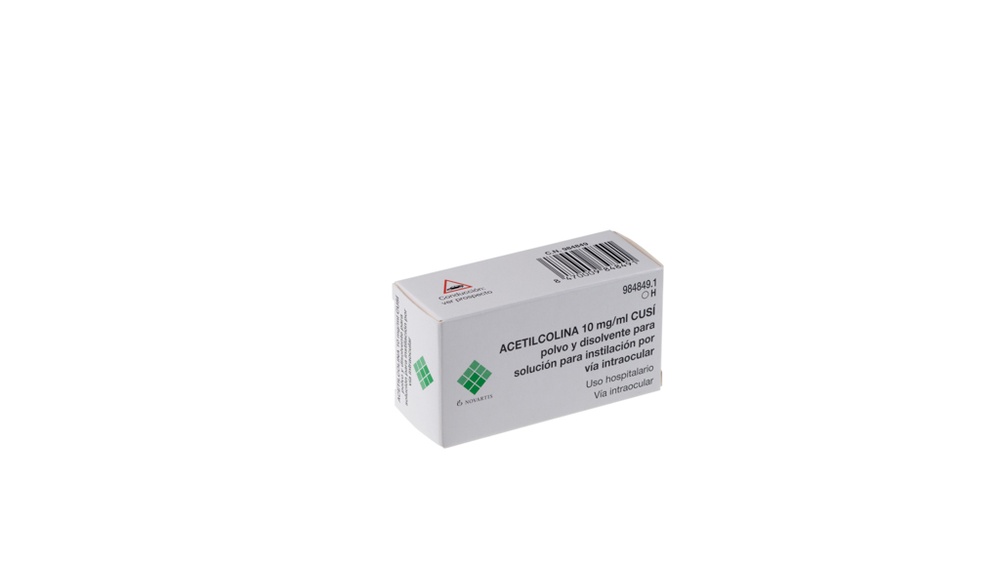
ACETYLCHOLINE 10mg/ml CUSÍ powder and solvent for solution for intraocular instillation
Read the entire package leaflet carefully before starting to use this medication, as it contains important information for you.
- Keep this package leaflet, as you may need to read it again.
- If you have any questions, consult your doctor or pharmacist.
- This medication has been prescribed to you only, and you should not give it to others, even if they have the same symptoms as you, as it may harm them.
- If you experience side effects, consult your doctor or pharmacist, even if they are not listed in this package leaflet. See section 4.
Contents of the Package Leaflet
- What ACETYLCHOLINE 10 mg/ml CUSÍ is and what it is used for
- What you need to know before you are given ACETYLCHOLINE 10 mg/ml CUSÍ
- How to use ACETYLCHOLINE 10 mg/ml CUSÍ
- Possible side effects
- Storage of ACETYLCHOLINE 10 mg/ml CUSÍ
- Contents of the pack and further information
Your doctor will administer ACETYLCHOLINE 10mg/ml CUSÍ. This package leaflet is intended to inform you about the medication.
1. What is Acetylcholine 10 mg/ml CUSÍ and what is it used for
The active substance of this medication is acetylcholine chloride, which is involved in the transmission of nerve impulses in the body. It acts, among other places, on a muscle of the iris of the eye.
Acetylcholine 10 mg/ml Cusí is indicated during cataract surgery and other types of surgery on the anterior segment of the eyes to constrict the pupil (central part of the eye). This helps the surgeon to complete the operation.

2. What you need to know before you are given Acetylcholine 10 mg/ml CUSÍ
Acetylcholine 10 mg/ml Cusí should not be administered
- If you are allergic to acetylcholine chloride or to any of the other components of this medication (listed in section 6).
Warnings and precautions
Consult your doctor before you are given Acetylcholine 10 mg/ml Cusí.
Tell your doctor if you have:
- Angle-closure glaucoma
- Cardiovascular problems
- Bronchial asthma
- Ulcers
- Hyperthyroidism
- Intestinal problems
- Urinary tract problems
- Parkinson's disease
Patient over 65 years
Patient over 65 years should be cautious as they may be more prone to hypotension and/or bradycardia due to the medication reaching the bloodstream.
Children
The safety and efficacy of Acetylcholine 10 mg/ml Cusí have not been established in children.
Other medications and Acetylcholine 10 mg/ml CUSÍ
Tell your doctor if you are using, have recently used, or may need to use any other medication.
Some medications may interfere with the mechanism of action of this medication. Inform your doctor if you are applying topical preparations containing NSAIDs (non-steroidal anti-inflammatory drugs) to your skin to treat pain and swelling.
Pregnancy, breastfeeding, and fertility
If you are pregnant or breastfeeding, think you may be pregnant, or plan to become pregnant, consult your doctor before you are given this medication.
Acetylcholine 10 mg/ml Cusí is not recommended during pregnancy.
If you are breastfeeding, you should decide whether to discontinue breastfeeding or discontinue treatment with this medication, considering the benefit of breastfeeding to the child and the benefit of treatment to the mother.
Driving and using machines
You may experience difficulty adapting to darkness, blurred vision, and other visual disturbances for a prolonged period. Do not drive or use machines until this effect has disappeared.
3. How to use Acetylcholine 10 mg/ml CUSÍ
This medication is for Hospital Use Only.
This medication should only be administered by your doctor during eye surgery.
The recommended dose is:
Adults
Your doctor will calculate the correct dose for you.
If you use the extemporaneous solution of 10 mg/ml (solution prepared for use); it is prepared according to the Reconstitution Instructions explained below.
Using 0.5 to 2 ml, in most cases, adequate pupil constriction (miosis) is achieved within seconds. The effect lasts for 10-20 minutes. If longer miosis is needed, the application can be repeated, or a pilocarpine (2%) solution can be used via the ocular route after surgery and before applying the dressing.
Your doctor will decide when to use this solution. In cataract surgery, it should only be used after the lens has been removed.
Your doctor will administer this medication following these instructions:
- Using a needle, aspirate the contents of the ampoule into a dry and sterile syringe.
- Add it to the vial containing the acetylcholine chloride lyophilized (powder).
- Shake carefully until the powder is dissolved.
- Aspirate the solution again with the syringe and replace the needle with a suitable atraumatic cannula for intraocular instillation.
- Instill the acetylcholine solution into the anterior chamber before or after securing one or more sutures.
- The instillation should be gentle, parallel to the iris surface, and tangential to the pupil edge.
- It is not necessary to remove the solution from the anterior chamber of the eye after achieving miosis.
- The acetylcholine chloride solution is unstable. Therefore, it should be prepared by a healthcare professional immediately before use and any unused solution should be discarded.
Use in children
The efficacy and safety of Acetylcholine 10 mg/ml Cusí have not been studied in children, so its use is not recommended.
Use in elderly patients
See the "Warnings and precautions" section in section 2.
If you use more ACETYLCHOLINE 10 mg/ml CUSÍ than you should
If you use more than the recommended amount, your doctor may need to administer an injection of atropine or other anticholinergic medications to control the symptoms.
Overdose symptoms may include: slow heart rate, low blood pressure, flushing, difficulty breathing, and sweating.
If you have any other questions about the use of this medication, ask your doctor.

4. Possible side effects
Like all medications, this medication can cause side effects, although not everyone gets them.
Side effects are classified by frequency, which is defined as: Very common (may affect more than 1 in 10 people); common (may affect up to 1 in 10 people); uncommon (may affect up to 1 in 100 people); rare (may affect up to 1 in 1,000 people); very rare (may affect up to 1 in 10,000 people); frequency not known (cannot be estimated from available data).
The following side effects have been reported with this medication:
Frequency not known:
- Eye effects: swelling or clouding of the cornea (the transparent layer that protects the front of the eye), inflammation inside the eye. This may affect your vision.
- General effects: flushing, sweating, slow heart rate, low blood pressure, and difficulty breathing. These effects occur rarely when acetylcholine is absorbed from the eye into the rest of the body. Patients over 65 years may be more prone to these effects.
Reporting side effects
If you experience any side effects, consult your doctor or pharmacist, even if they are not listed in this package leaflet. You can also report them directly through the Spanish Medication Surveillance System for Human Use: https://www.notificaRAM.es.By reporting side effects, you can help provide more information on the safety of this medication.
5. Storage of Acetylcholine 10 mg/ml CUSÍ
Keep this medication out of the sight and reach of children.
No special storage conditions are required.
Use immediately after preparing the solution and discard any unused solution.
Do not use this medication after the expiration date shown on the vial and carton after EXP. The expiration date is the last day of the month indicated.
6. Contents of the pack and further information
Composition of ACETYLCHOLINE 10 mg/ml CUSÍ
- The active ingredient is acetylcholine chloride. One ml of the prepared solution contains 10 mg of acetylcholine chloride (1%).
- The other ingredients are mannitol (E-421) in the vial and water for injectable preparations in the ampoule.
Appearance of the product and contents of the pack
The medication is presented as a powder and solvent for solution for intraocular instillation.
The pack contains a vial with white powder and an ampoule with clear and colorless solvent. The powder must be reconstituted with the solvent before use, resulting in a clear and colorless solution.
Marketing authorization holder and manufacturer
Marketing authorization holder and manufacturer
Fidia Farmaceutici S.p.A.
Via Ponte della Fabbrica, 3/A - 35031 Abano Terme – Italy
Local representative
Laboratorios Fidia Farmacéutica S.L.U.
Parque Empresarial de la Moraleja
Edificio Torona. Avenida de Europa, 24 – Edificio A – 1 B
Alcobendas 28108 | Madrid Spain
Date of last revision of this package leaflet:November 2016.
Detailed information about this medication is available on the website of the Spanish Agency for Medicines and Health Products (AEMPS) http://www.aemps.gob.es/
-

- Country of registration
- Dosage formINJECTABLE, 20 mg acetylcholine chloride
- ATC codeS01EB09
- Active substance
- Prescription requiredYes
- Manufacturer
- This information is for reference only and does not constitute medical advice. Always consult a doctor before taking any medication. Oladoctor is not responsible for medical decisions based on this content.
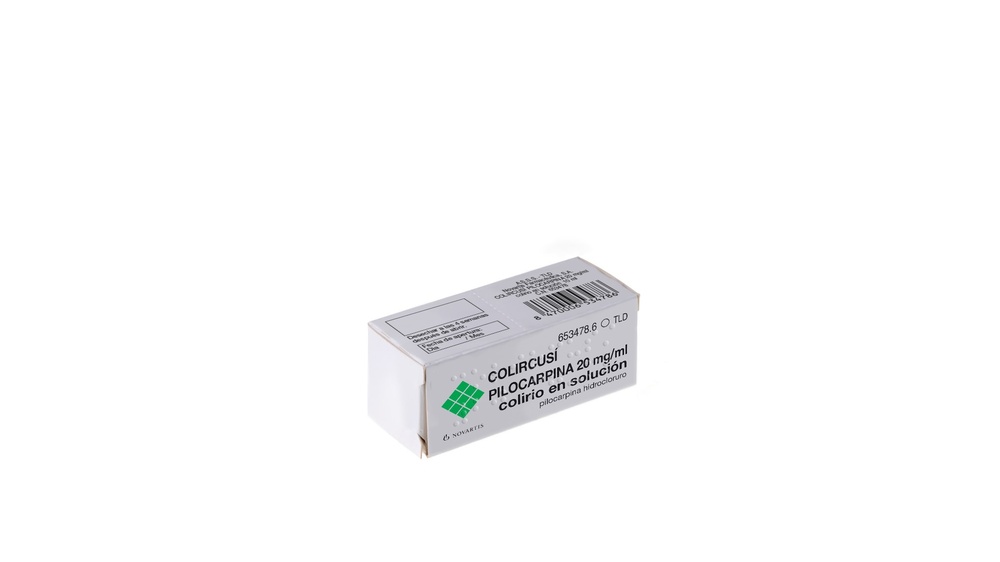
- Alternatives to Acetylcholine 10 mg/mL Cusí Powder and Solvent for Intraocular Instillation SolutionDosage form: EYEDROP, 20 mgActive substance: pilocarpineManufacturer: Mizar Farmaceutica S.L.Prescription requiredDosage form: EYEDROP, 0.3 mg/mlActive substance: bimatoprostManufacturer: Tiedra Farmaceutica S.L.Prescription requiredDosage form: EYE DROP, 2 mg/mlActive substance: brimonidineManufacturer: Tiedra Farmaceutica S.L.Prescription required

Online doctors for Acetylcholine 10 mg/mL Cusí Powder and Solvent for Intraocular Instillation Solution
Discuss questions about Acetylcholine 10 mg/mL Cusí Powder and Solvent for Intraocular Instillation Solution, including use, safety considerations and prescription review, subject to medical assessment and local regulations.



Get Acetylcholine 10 mg/mL Cusí Powder and Solvent for Intraocular Instillation Solution Prescription Online
Fill in a 2-min form
Tell us your symptoms, history, and what medicine you're requesting.
Pick a doctor or let us assign
Choose a specialist or we'll match you with the next available doctor.
Doctor reviews your case
Usually within 30 minutes. They may ask follow-up questions via chat.
Collect from any pharmacy
Electronic prescription sent to your email — valid across Spain.
Frequently Asked Questions
Acetylcholine 10 mg/mL Cusí Powder and Solvent for Intraocular Instillation Solution requires a prescription in Spain. You can check with a doctor online whether this medicine may be appropriate for your situation.
The active ingredient in Acetylcholine 10 mg/mL Cusí Powder and Solvent for Intraocular Instillation Solution is acetylcholine. This information helps identify medicines with the same composition but different brand names.
Acetylcholine 10 mg/mL Cusí Powder and Solvent for Intraocular Instillation Solution is manufactured by Fidia Farmaceutici S.P.A.. Pharmacy brands and packaging may differ depending on the distributor.
Doctors such as Family doctors, Psychiatrists, Dermatologists, Cardiologists, Endocrinologists, Gastroenterologists, Pulmonologists, Nephrologists, Rheumatologists, Hematologists, Infectious disease physicians, Allergists, Geriatricians, Paediatricians, Oncologists may assess whether Acetylcholine 10 mg/mL Cusí Powder and Solvent for Intraocular Instillation Solution is appropriate, depending on your situation and local regulations. You can book an online consultation to discuss your symptoms and possible next steps.
Spain has a well-developed healthcare infrastructure across major cities such as Madrid, Barcelona, Valencia, and Seville. Pharmacies are widely available and operate under strict regulations, ensuring access to prescribed medications.
You can buy Acetylcholine 10 mg/mL Cusí Powder and Solvent for Intraocular Instillation Solution in Madrid, Barcelona, Seville, or Valencia at any local pharmacy with a valid prescription.
To obtain a prescription, you can use Oladoctor:
Other medicines with the same active substance (acetylcholine) include COLIRCUSI PILOCARPINE 20 mg/ml EYE DROPS SOLUTION, ABIPROST 0.3 mg/ml EYE DROPS SOLUTION IN SINGLE-DOSE CONTAINERS, ABRADEL 2 mg/ml EYE DROPS SOLUTION. These may have different brand names or formulations but contain the same therapeutic ingredient. Always consult a doctor before switching or starting a new medicine.
