


AMMONAPS 940 mg/g GRANULES
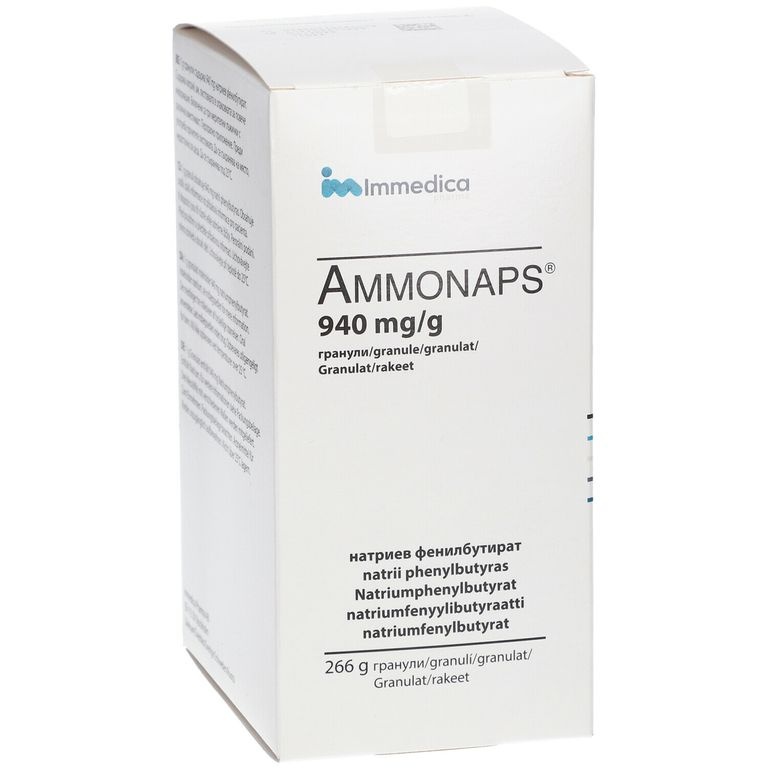



How to use AMMONAPS 940 mg/g GRANULES
Translated with AI
This page provides general information and does not replace a doctor’s consultation. Always consult a doctor before taking any medication. Seek urgent medical care if symptoms are severe.
Show originalContents of the leaflet
Introduction
Package Leaflet: Information for the User
AMMONAPS 940 mg/g Granules
Sodium Phenylbutyrate
Read all of this leaflet carefully before you start taking this medicine because it contains important information for you.
- Keep this leaflet, you may need to read it again.
- If you have any further questions, ask your doctor or pharmacist.
- This medicine has been prescribed for you only. Do not pass it on to others. It may harm them, even if their signs of illness are the same as yours.
- If you get any side effects, talk to your doctor or pharmacist. This includes any possible side effects not listed in this leaflet. See section 4.
Contents of the pack and other information:
- What is AMMONAPS and what is it used for
- What you need to know before you take AMMONAPS
- How to take AMMONAPS
- Possible side effects
- Storage of AMMONAPS
- Contents of the pack and further information
1. What is AMMONAPS and what is it used for
AMMONAPS is prescribed to patients with urea cycle disorders. Patients with these rare disorders lack certain liver enzymes. Since nitrogen is a constituent of proteins, it accumulates in the body after protein consumption. Excess nitrogen, in the form of ammonia, is particularly toxic to the brain and, in severe cases, can cause a reduction in the level of consciousness and coma.
AMMONAPS helps the body eliminate excess nitrogen and reduces the amount of ammonia in the body.

2. What you need to know before you take AMMONAPS
Do not take AMMONAPS:
- If you are pregnant.
- If you are breast-feeding.
- If you are allergic (hypersensitive) to sodium phenylbutyrate or any of the other ingredients of this medicine (listed in section 6).
Warnings and precautions
Consult your doctor or pharmacist before taking AMMONAPS
- If you have heart failure, reduced kidney function or other conditions where the sodium content of this medicine may worsen your condition.
- If you have reduced liver or kidney function, as AMMONAPS is eliminated from the body through the kidneys and liver.
AMMONAPS should be combined with a low-protein diet that your doctor or dietitian has specifically designed for you. You should follow this diet carefully.
AMMONAPS does not completely prevent excess ammonia in the blood and is not suitable for treating this condition, which is a medical emergency.
If you are to have tests, it is important that you remind your doctor that you are taking AMMONAPS, as sodium phenylbutyrate may alter the results of some tests.
Taking AMMONAPS with other medicines
Tell your doctor or pharmacist if you are using, have recently used or might use any other medicines.
It is especially important that you tell your doctor if you are taking medicines that contain:
- valproic acid (an antiepileptic medicine)
- haloperidol (used to treat some psychotic disorders)
- corticosteroids (medicines similar to cortisone used to relieve inflamed areas of the body)
- probenecid (for the treatment of hyperuricemia associated with gout)
These medicines may change the effect of AMMONAPS, and you may need to have blood tests more frequently. If you are not sure if your medicines contain these substances, consult your doctor or pharmacist.
Pregnancy and breast-feeding
Do not take AMMONAPS if you are pregnant, as this medicine may harm the fetus. If you could become pregnant, you must use an effective contraceptive method during treatment with AMMONAPS.
Do not use AMMONAPS if you are breast-feeding, as this medicine may pass into breast milk and harm your baby.
Driving and using machines
No studies on the ability to drive and use machines have been performed.
AMMONAPS contains sodium
A small white spoonful of AMMONAPS granules contains 149 mg of sodium.
A medium yellow spoonful of AMMONAPS granules contains 408 mg of sodium.
A large blue spoonful of AMMONAPS granules contains 1,200 mg of sodium.
Consult your doctor or pharmacist if you need 2 or more small white spoonfuls or 1 or more medium yellow spoonfuls or large blue spoonfuls daily for a prolonged period, especially if you have been advised to follow a low-salt (sodium) diet.
3. How to take AMMONAPS
Follow the instructions for administration of this medicine exactly as prescribed by your doctor.
In case of doubt, consult your doctor or pharmacist again.
Dosage
The daily dose of AMMONAPS will be calculated according to your tolerance to proteins, diet, and body weight or body surface area. You will need to have regular blood tests to adjust the correct daily dose. Your doctor will tell you how many tablets to take.
Method of administration
AMMONAPS should be taken in equal doses by mouth, through gastrostomy (a tube that goes from the abdomen to the stomach) or through a nasogastric tube (a tube that goes from the nose to the stomach).
AMMONAPS should be taken while following a special low-protein diet.
AMMONAPS should be taken with each meal or feeding. In small children, this may be 4 to 6 times a day.
To measure the dose:
- Shake the bottle slightly before opening it.
- Use the correct spoon depending on the amount of AMMONAPS you need: 1.2 g = small white spoon, 3.3 g = medium yellow spoon, and 9.7 g = large blue spoon.
- Take a heaped spoonful of granules from the bottle.
- Pass a flat surface, e.g. the back of a knife blade, over the spoon to remove excess granules.
- The granules remaining in the spoon correspond to the measure of one spoonful.
- Remove the correct number of spoonfuls of granules from the bottle.
If administration is by mouth:
Mix the measured dose with solid foods (such as mashed potato or apple sauce) or with liquids (such as water, apple juice, orange juice, or protein-free infant formula) and swallow immediately after mixing.
Patients with gastrostomy or nasogastric tube:
Mix the granules with water until no dry granules remain (stirring the solution helps to dissolve the granules). When the granules are dissolved in water, you will get a white, milky liquid. Take the solution immediately after mixing.
You will need to follow the diet and treatment for life unless you have a successful liver transplant.
If you take more AMMONAPS than you should
Patients who have taken very high doses of AMMONAPS have experienced:
- drowsiness, fatigue, dizziness, and, less frequently, confusion.
- headache.
- changes in taste (taste disorders).
- reduced hearing.
- disorientation.
- memory problems.
- worsening of existing neurological conditions.
If you experience any of these symptoms, you should contact your doctor or the emergency department of the nearest hospital immediately for symptomatic treatment.
If you forget to take AMMONAPS
You should take a dose as soon as possible with the next meal. Make sure that at least 3 hours pass between two doses. Do not take a double dose to make up for forgotten doses.
If you have any further questions on the use of this medicine, ask your doctor or pharmacist.

4. Possible side effects
Like all medicines, this medicine can cause side effects, although not everybody gets them.
The following frequencies are used to describe the occurrence of side effects:
Very common: | Affect more than 1 in 10 people. |
Common: | Affect between 1 and 10 in 100 people. |
Uncommon: | Affect between 1 and 10 in 1,000 people. |
Rare: | Affect between 1 and 10 in 10,000 people. |
Very rare: | Affect less than 1 in 10,000 people. |
Not known: | Frequency cannot be estimated from the available data. |
Very common side effects: irregular menstrual periods and cessation of menstruation.
It is possible that the absence of menstruation in sexually active women is not caused by the use of AMMONAPS. If this occurs, consult your doctor, as you may be pregnant (see "Pregnancy and breast-feeding" in the previous section).
Common side effects: changes in blood cell counts (red blood cells, white blood cells, and platelets), reduced appetite, depression, irritability, headache, fainting, fluid retention (swelling), changes in taste (taste disorders), abdominal pain, vomiting, nausea, constipation, body odor, rash, abnormal kidney function, weight gain, alteration of test results.
Uncommon side effects: low red blood cell count (anemia) due to bone marrow depression, bruising, altered heart rhythm, rectal bleeding, stomach irritation, gastroduodenal ulcer, pancreatitis.
If you experience persistent vomiting, you should consult your doctor immediately.
Reporting of side effects
If you get any side effects, talk to your doctor or pharmacist. This includes any possible side effects not listed in this leaflet. You can also report side effects directly via the national reporting system listed in Appendix V. By reporting side effects, you can help provide more information on the safety of this medicine.
5. Storage of AMMONAPS
Keep this medicine out of the sight and reach of children.
Do not use AMMONAPS after the expiry date which is stated on the packaging and the label on the bottle after "EXP". The expiry date is the last day of the month stated.
Do not store above 25°C.
Medicines should not be disposed of via wastewater or household waste. Ask your pharmacist how to dispose of medicines no longer required. These measures will help protect the environment.
6. Contents of the pack and further information
Composition of AMMONAPS
- The active substance is sodium phenylbutyrate.
One gram of AMMONAPS granules contains 940 mg of sodium phenylbutyrate.
- The other ingredients are magnesium stearate and anhydrous colloidal silica.
Appearance and packaging of the product
AMMONAPS granules are white.
The granules are packaged in plastic bottles with child-resistant caps. Each bottle contains 266 or 532 g of granules. Three spoons (one small white spoon, one medium yellow spoon, and one large blue spoon) are included to measure the daily dose.
Marketing authorisation holder
Immedica Pharma AB
SE-113 29 Stockholm
Sweden
Manufacturer
PATHEON France – BOURGOIN JALLIEU
40 boulevard de Champaret
BOURGOIN JALLIEU
38300
France
Date of last revision of this leaflet:
Detailed information on this medicine is available on the European Medicines Agency website http://www.ema.europa.eu.
- Country of registration
- Active substance
- Prescription requiredYes
- Manufacturer
- This information is for reference only and does not constitute medical advice. Always consult a doctor before taking any medication. Oladoctor is not responsible for medical decisions based on this content.
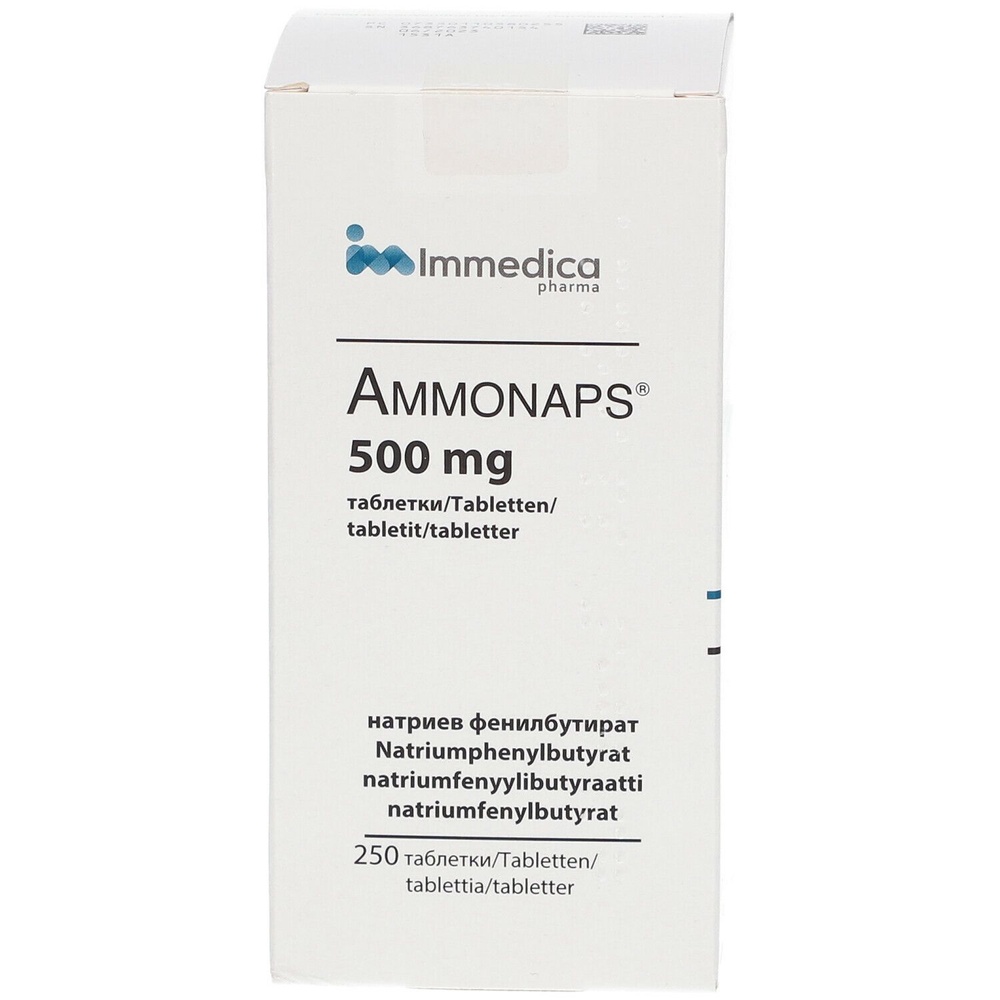
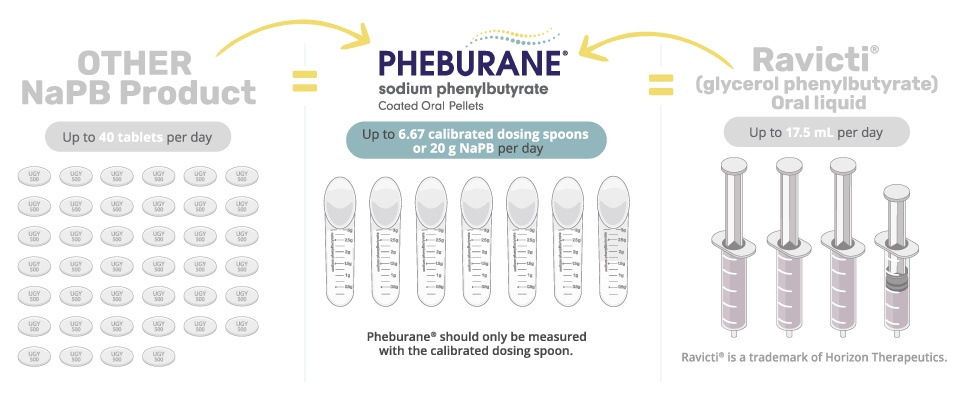
- Alternatives to AMMONAPS 940 mg/g GRANULESDosage form: TABLET, UnknownActive substance: sodium phenylbutyrateManufacturer: Immedica Pharma AbPrescription requiredDosage form: ORAL SOLUTION/SUSPENSION, 350 mg/mlActive substance: sodium phenylbutyrateManufacturer: Eurocept International B.V.Prescription requiredDosage form: ORAL SOLUTION/SUSPENSION, 483 mg/gActive substance: sodium phenylbutyrateManufacturer: Eurocept International B.V.Prescription required

Online doctors for AMMONAPS 940 mg/g GRANULES
Discuss questions about AMMONAPS 940 mg/g GRANULES, including use, safety considerations and prescription review, subject to medical assessment and local regulations.






Frequently Asked Questions
