



YASNAL 10 mg Comprimidos Bucodispersables

Revisión de receta online
Un médico revisará tu caso y determinará si la prescripción es médicamente apropiada.

Habla con un médico sobre este medicamento
Comenta tus síntomas y las opciones de tratamiento en una consulta online.



Cómo usar YASNAL 10 mg COMPRIMIDOS BUCODISPERSABLES EFG
Contenido del prospecto
- Introducción
- Qué es Yasnal y para qué se utiliza
- Qué necesita saber antes de empezar a tomar Yasnal
- Cómo tomar Yasnal
- Posibles efectos adversos
- Conservación de Yasnal
- Contenido del envase e nformación adicional
Introducción
Prospecto: información para el paciente
Yasnal10mg comprimidos bucodispersables EFG
hidrocloruro de donepezilo
Lea todo el prospecto detenidamente antes de empezar a tomar este medicamento, porque contiene información importante para usted.
- Conserve este prospecto, ya que puede tener que volver a leerlo.
- Si tiene alguna duda, consulte a su médico o farmacéutico.
- Este medicamento se le ha recetado solamente a usted, y no debe dárselo a otras personas aunque tengan los mismos síntomas que usted, ya que puede perjudicarles.
- Si experimenta efectos adversos, consulte a su médico o farmacéutico, incluso si se trata de que efectos adversos que no aparecen en este prospecto. Ver sección 4.
Contenido del prospecto
- Qué es Yasnal y para qué se utiliza
- Qué necesita saber antes de empezar a tomar Yasnal
- Cómo tomar Yasnal
- Posibles efectos adversos
5 Conservación de Yasnal
- Contenido del envase e información adicional
1. Qué es Yasnal y para qué se utiliza
Yasnal contiene la sustancia activa hidrocloruro de donepezilo. Yasnal (hidrocloruro de donepezilo) pertenece a un grupo de medicamentos denominados inhibidores de la acetilcolinesterasa.
Donepezilo aumenta los niveles de una sustancia (acetilcolina) en el cerebro involucrada en la función de la memoria al disminuir la descomposición de la acetilcolina.
Yasnal se utiliza para el tratamiento sintomático de la enfermedad de Alzheimer leve o moderadamente grave. Los síntomas incluyen el aumento de la pérdida de memoria, la confusión y los cambios de comportamiento. Como resultado, los enfermos de Alzheimer tienen cada vez más dificultades para llevar a cabo sus actividades diarias normales.
Yasnal solo se usa en pacientes adultos.

¿No estás seguro de si este medicamento es adecuado para ti?
Comenta tus síntomas y tratamiento con un médico online.
2. Qué necesita saber antes de empezar a tomar Yasnal
No tome Yasnal:
Si es alérgico a hidrocloruro de donepezilo, a derivados piperidínicos o a alguno de los demás componentes de este medicamento (incluidos en la sección 6).
Advertencias y precauciones
Consulte a su médico o farmacéutico antes de empezar a tomar Yasnal si padece o ha padecido:
- Úlceras gástrica o duodenal;
- Ataques o convulsiones;
- Problemas cardiacos (como latidos cardiacos irregulares o muy lentos, insuficiencia cardiaca, infarto de miocardio );
- una afección cardiaca denominada «prolongación del intervalo QT» o antecedentes de determinados ritmos cardiacos anómalos llamados torsade de pointes o si alguien de su familia presenta «prolongación del intervalo QT»
- niveles bajos de magnesio o potasio en la sangre
- Asma o cualquier enfermedad pulmonar;
- Problemas hepáticos o hepatitis;
- Dificultad para orinar o enfermedad renal leve;
Consulte también a su médico si está embarazada o piensa que podría estarlo.
Niños y adolescentes
No se recomienda el uso de Yasnal en niños y adolescentes (menores de 18 años de edad).
Otros medicamentos y Yasnal
Informe a su médico o farmacéutico si está tomando, ha tomado recientemente o pudiera tener que tomar cualquier otro medicamento, incluso los adquiridos sin receta médica.
Informe igualmente en un futuro de aquellos medicamentos que pueda tomar si sigue en tratamiento con Yasnal. Esto se debe a que estos medicamentos pueden debilitar o intensificar el efecto de Yasnal.
En particular, es importante que informe a su médico si está tomando alguno de los siguientes medicamentos:
- medicamentos para los problemas del ritmo cardiaco (p. ej., amiodarona, sotalol)
- medicamentos para la depresión (p. ej., citalopram, escitalopram, amitriptilina)
- medicamentos para las psicosis (p. ej., pimozida, sertindol, ziprasidona)
- medicamentos para las infecciones bacterianas (como claritromicina, eritromicina, levofloxacino, moxifloxacino)
- medicamentos antifúngicos por ej: ketoconazol
- otros medicamentos para tratar la enfermedad de Alzheimer, por ejemplo galantamina.
- analgésicos o tratamientos para la artritis por ejemplo: aspirina, medicamentos antiinflamatorios no esteroideos (AINE) como ibuprofeno o diclofenaco sódico.
- medicamentos anticolinérgicos, por ejemplo: tolterodina.
- anticonvulsivantes, por ejemplo: fenitoína, carbamazepina.
- medicamentos para enfermedades cardiacas, por ejemplo: quinidina, beta-bloqueantes (propranolol y atenolol).
- relajantes musculares, por ejemplo: diazepam, succinilcolina.
- anestesia general.
- medicamentos obtenidos sin receta médica, como remedios fitoterápicos.
Si va a someterse a una intervención quirúrgica que requiera de anestia general, deberá informar a su médico y anestesiólogo que está tomando Yasnal. El motivo es que este medicamento puede afectar la cantidad de anestesia necesaria.
Yasnal puede usarse en pacientes con enfermedad renal o con enfermedad hepática leve o moderada. Informe a su médico si padece una enfermedad renal o hepática. Los pacientes con enfermedad hepática grave no deberán tomar Yasnal.
Informe a su médico o farmacéutico del nombre de su cuidador. Esta persona le ayudará a tomar la medicación tal como se le ha prescrito.
Toma de Yasnal con los alimentos, bebidas y alcohol
Los alimentos no influyen en el efecto de Yasnal.
No beba alcohol durante el tratamiento con Yasnal porque puede reducir su eficacia.
Embarazo, lactancia y fertilidad
Si está embarazada o en período de lactancia, cree que podría estar embarazada o tiene intención de quedarse embarazada, pregunte a su médico o farmacéutico antes de utilizar este medicamento.
Si está en período de lactancia, no debe tomar este medicamento.
Conducción y uso de máquinas
La enfermedad de Alzheimer puede afectar a su capacidad para conducir o utilizar máquinas, por lo que no debe realizar estas actividades a menos que su médico le indique que es seguro hacerlo.
Además, este medicamento puede provocar cansancio, mareos y calambres musculares. Si usted experimenta cualquiera de estos síntomas, no debe conducir o utilizar máquinas.
- Yasnal contiene:Aspartamo (E951)
Este medicamento contiene 0,75 mg de aspartamo en cada comprimido.
El aspartamo contiene una fuente de fenilalanina que puede ser perjudicial en caso de padecer fenilcetonuria (FCN), una enfermedad genética rara en la que la fenilalanina se acumula debido a que el organismo no es capaz de eliminarla correctamente.
- Glucosa (dextrosa) y sacarosa
Este medicamento contiene glucosa. Si su médico le ha indicado que padece una intolerancia a ciertos azúcares, consulte con él antes de tomar este medicamento.
Este medicamento contiene sacarosa. Si su médico le ha indicado que padece una intolerancia a ciertos azúcares, consulte con él antes de tornar este medicamento.
3. Cómo tomar Yasnal
Siga exactamente las instrucciones de administración de este medicamento indicadas por su médico o farmacéutico. En caso de duda, consulte de nuevo a su médico o farmacéutico.
Cantidad de Yasnal que debe tomar
Inicialmente la dosis recomendada es de 5 mg cada noche antes de acostarse.
Si tiene sueños anormales, pesadillas o dificultad para dormir (ver sección 4), su médico puede recomendarle que tome Yasnal por la mañana.
Después de un mes, puede que su médico le prescriba 10 mg cada noche antes de acostarse.
La dosis del comprimido que tomará puede cambiar dependiendo de la cantidad de tiempo que ha estado tomando el medicamento y de lo que su médico le recomiende. La dosis máxima recomendada es de 10 mg cada noche.
Siempre siga los consejos de su médico o farmacéutico sobre cómo y cuándo tomar su medicamento.
No altere la dosis usted mismo sin el consejo de su médico.
Cómo tomar su medicamento
Los comprimidos bucodispersables de Yasnal son frágiles. No se deben apretar a través de la lámina de aluminio del blíster, ya que esto podría dañar el comprimido. No maneje los comprimidos con las manos húmedas, ya que se podrían deshacer. Saque un comprimido del blíster según se detalla a continuación:
- Sujete el blíster por los bordes y separe una de las celdas del resto del blíster desgarrando suavemente por la línea perforada que delimita la celda.
- Tire del borde de la lámina hasta separarla completamente.
- Deje caer el comprimido sobre su mano.
- Deposite el comprimido sobre la lengua tan pronto lo haya sacado de su envoltorio.
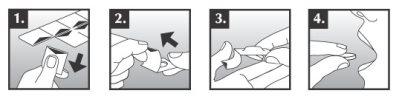
En pocos segundos el comprimido comenzará a desintegrarse en la boca y puede ser tragado con o sin agua. La boca debe estar vacía antes de depositar el comprimido en la lengua.
Uso en niños y adolescentes
No se recomienda el uso de Yasnal en niños y adolescentes (menores de 18 años).
Si toma más Yasnal del que debe
Contacte inmediatamente con su médico o con el servicio de urgencias del hospital más cercano si toma más medicamento del que debe. Lleve este prospecto y sus comprimidos siempre consigo.
Los síntomas de sobredosis pueden incluir nauseas (sensación de malestar) y vómitos (enfermedad) , babeo, sudoración, disminución del ritmo del corazón, tensión sanguínea baja (vahídos o mareos al levantarse), problemas al respirar, pérdida de conocimiento y convulsiones (ataques).
En caso de sobredosis o ingestión accidental, consulte a su médico o farmacéutico o llame al Servicio de Información Toxicológica, teléfono 91 562 04 20, indicando el medicamento y la cantidad ingerida.
Si olvidó tomar Yasnal
Si olvida tomar su medicamento, tome la siguiente dosis a su hora habitual. No tome una dosis doble para compensar las dosis olvidadas.
Si olvida tomar su medicamento durante más de una semana, llame a su médico antes de tomar ningún comprimido más.
Si interrumpe el tratamiento con Yasnal
No deje de tomar los comprimidos a menos que se lo haya indicado su médico. Si usted deja de tomar Yasnal los beneficios del tratamiento se irán perdiendo gradualmente.
Si tiene cualquier otra duda sobre el uso de este medicamento, pregunte a su médico o farmacéutico.
Cuánto tiempo debe tomar Yasnal
Su médico o farmacéutico le aconsejará cuanto tiempo debe continuar tomando los comprimidos.
Usted necesitará ver a su médico de vez en cuando para revisar su tratamiento y evaluar sus síntomas.

¿Has empezado a tomar el medicamento y tienes preguntas?
Comenta tus síntomas y tratamiento con un médico online.
4. Posibles efectos adversos
Al igual que todos los medicamentos, este medicamento puede producir efectos adversos, aunque no todas las personas los sufran.
Los siguientes efectos adversos han sido reportados por personas que toman Yasnal.
Dígale a su médico si tiene alguno de estos efectos mientras está tomandoYasnal.
Efectos adversos graves
Contacte inmediatamente con su médico si advierte cualquiera de los siguientes efectos adversos graves. Puede que necesite tratamiento médico urgente.
- daño hepático, por ejemplo, hepatitis. Los síntomas de la hepatitis son náuseas, vómitos, pérdida de apetito, sensación de malestar general, fiebre, picor, amarilleamiento de la piel y de los ojos, y orina de color oscuro (puede afectar hasta a 1 de cada 1.000 personas);
- úlceras gástricas o duodenales. Los síntomas de las úlceras son dolor de estómago, sensación de malestar entre el ombligo y las costillas (indigestión) (pueden afectar hasta a 1 de cada 100 personas);
- hemorragia en el estómago o intestino. Esto puede causarle deposiciones negras —de aspecto alquitranado— o sangre visible desde el recto (puede afectar hasta a 1 de cada 100 personas);
- convulsiones o ataques (pueden afectar hasta a 1 de cada 100 personas).
- fiebre con rigidez muscular, sudoración o disminución del nivel de conciencia (un trastorno llamado "Síndrome Neuroléptico Maligno") (puede afectar hasta 1 de cada 10.000 personas).
- debilidad muscular, sensibilidad o dolor y, sobre todo, si al mismo tiempo, se siente mal, tiene fiebre u orina oscura. Pueden ser causadas por una ruptura muscular anormal que puede ser potencialmente mortal y causar problemas renales (una condición llamada rabdomiólisis) (puede afectar hasta a 1 de cada 10.000 personas).
Frecuencia no conocida
- Cambios en la actividad cardiaca que pueden observarse en un electrocardiograma (ECG) denominados «prolongación del intervalo QT»
- Latido cardiaco rápido e irregular, desmayos que pueden ser síntomas de un trastorno potencialmente mortal conocido como torsade de pointes
Otros efectos adversos:
Muy frecuentes (pueden afectar a más de 1 de cada 10 personas):
- diarrea
- dolor de cabeza.
Frecuentes (pueden afectar hasta a 1 de cada 10 personas):
- calambre muscular
- cansancio
- dificultad para dormir (insomnio)
- resfriado común
- alucinaciones (ver u oír cosas que no existen realmente)
- sueños anormales, incluyendo pesadillas;
- agitación
- conducta agresiva
- desmayo
- mareo
- molestias abdominales
- erupción
- incontinencia urinaria
- dolor
- accidentes (los pacientes pueden ser más propensos a caídas o lesiones accidentales).
Poco frecuentes (pueden afectar hasta a 1 de cada 100 personas):
- disminución del ritmo del corazón
- hipersecreción salival
Efectos adversos raros (pueden afectar hasta a 1 de cada 1.000 personas):
- rigidez, temblor o movimiento incontrolado, especialmente de la cara y la lengua, pero también de las extremidades (síntomas extrapiramidales)
Frecuencia no conocida (no puede estimarse a partir de los datos disponibles):
- líbido aumentada
- síndrome de Pisa (una afección que implica una contracción muscular involuntaria con una flexión anormal del cuerpo y la cabeza hacia un lado)
Comunicación de efectos adversos
Si experimenta cualquier tipo de efecto adverso, consulte a su médico o farmacéutico, incluso si se trata de posibles efectos adversos que no aparecen en este prospecto. También puede comunicarlos directamente a través del Sistema Español de Farmacovigilancia de Medicamentos de Uso Humano: www.notificaram.es. Mediante la comunicación de efectos adversos usted puede contribuir a proporcionar más información sobre la seguridad de este medicamento.
5. Conservación de Yasnal
Mantener este medicamento fuera de la vista y del alcance de los niños.
No utilice este medicamento después de la fecha de caducidad que aparece en el envase después de CAD. La fecha de caducidad es el último día del mes que se indica.
Conservar en el embalaje original para protegerlo de la humedad. Este medicamento no requiere ninguna temperatura especial de conservación.
Los medicamentos no se deben tirar por los desagües ni a la basura. Deposite los envases y los medicamentos que no necesita en el Punto SIGRE de la farmacia. En caso de duda pregunte a su farmacéutico cómo deshacerse de los envases y de los medicamentos que ya no necesita. De esta forma, ayudará a proteger el medio ambiente.
6. Contenido del envase e nformación adicional
Composición deYasnal:
- El principio activo es hidrocloruro de donepezilo. Cada comprimido bucodispersable contiene 10,43 mg de hidrocloruro monohidrato de donepezilo, equivalente a 10 mg de hidrocloruro de donepezilo.
- Los demás componentes son manitol (E421), celulosa microcristalina, hidroxipropilcelulosa poco sustituida, saborizante de plátano (maltodextrina, dextrosa, sacarosa, goma arábica), aspartamo (E951), silicato cálcico y estearato de magnesio.
Aspecto de Yasnal y contenido del envase
Comprimidos bucodispersables blancos y redondos con borde biselado.
Los comprimidos están disponibles en estuches de 10, 28, 30, 50, 56, 60, 84, 90, 98 y 100 comprimidos bucodispersables en blísteres.
Puede que solamente estén comercializados algunos tamaños de envases.
Titular de la autorización de comercialización y responsable de la fabricación
KRKA, d.d., Novo mesto, Šmarješka cesta 6, 8501 Novo mesto, Eslovenia.
Pueden solicitar más información respecto a este medicamento dirigiéndose al representante local del titular de la autorización de comercialización:
KRKA Farmacéutica, S.L., C/ Anabel Segura 10, Pta. Baja, Oficina 1, 28108 Alcobendas, Madrid, España
Este medicamento está autorizado en los estados miembros del Espacio Económico y en el Reino Unido (Irlanda del Norte) Europeo con los siguientes nombres:
Nombre de Estado Miembro | Nombre del medicamento |
Republica Checa | Donepezil Krka 10 mg tablety dispergovatelné v ústech |
Italia | Yasnoro 10 mg compresse orodispersibili |
España | Yasnal 10 mg comprimidos bucodispersables EFG |
Reino Unido | Donepezil hydrochloride 10 mg orodispersible tablets |
Fecha de la última revisión de este prospecto:diciembre 2022
La información detallada de este medicamento está disponible en la página web de la Agencia Española de Medicamentos y Productos Sanitarios (AEMPS) (http://www.aemps.gob.es/).
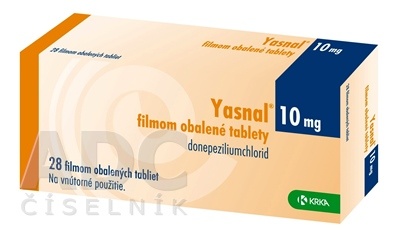
- País de registro
- Forma farmacéuticaCOMPRIMIDO BUCODISPERSABLE/LIOTAB, 10 mg
- Código ATCN06DA02
- Principio activo
- Requiere recetaSí
- Fabricante
- ComposiciónMANITOL (E-421) (81.07 mg mg), ASPARTAMO (E-951) (1.50 mg mg)
- Esta información es de carácter general y no sustituye la consulta con un profesional sanitario.
- Alternativas a YASNAL 10 mg COMPRIMIDOS BUCODISPERSABLES EFGForma farmacéutica: COMPRIMIDO, 10 mgPrincipio activo: DonepeziloFabricante: Eisai GmbhRequiere recetaForma farmacéutica: COMPRIMIDO, 5 mgPrincipio activo: DonepeziloFabricante: Eisai GmbhRequiere recetaForma farmacéutica: COMPRIMIDO BUCODISPERSABLE/LIOTAB, 10 mgPrincipio activo: DonepeziloFabricante: Eisai GmbhRequiere receta
Médicos online para YASNAL 10 mg COMPRIMIDOS BUCODISPERSABLES EFG
Comenta la dosis, los posibles efectos secundarios, interacciones, contraindicaciones o la revisión de receta de YASNAL 10 mg COMPRIMIDOS BUCODISPERSABLES EFG, sujeto a valoración médica y a la normativa local.









Obtén una receta de YASNAL 10 mg COMPRIMIDOS BUCODISPERSABLES EFG online
Rellena un formulario de 2 minutos
Cuéntanos tus síntomas, historial y el medicamento que necesitas.
Elige un médico o nosotros te asignamos uno
Escoge un especialista o te conectamos con el próximo médico disponible.
El médico revisa tu caso
Normalmente en 30 minutos. Puede hacerte preguntas adicionales por chat.
Recógela en cualquier farmacia
Receta electrónica enviada a tu correo, válida en toda España.
Preguntas frecuentes
YASNAL 10 mg COMPRIMIDOS BUCODISPERSABLES EFG requiere receta en España. Puedes confirmarlo con un médico online según tu caso.
El principio activo de YASNAL 10 mg COMPRIMIDOS BUCODISPERSABLES EFG es Donepezilo. Esta información ayuda a identificar medicamentos con la misma composición pero con diferentes nombres comerciales.
YASNAL 10 mg COMPRIMIDOS BUCODISPERSABLES EFG es fabricado por Krka D.D. Novo Mesto. La marca y el envase pueden variar según el distribuidor.
Los Médicos de familia, Psiquiatras, Dermatólogos, Cardiólogos, Endocrinólogos, Gastroenterólogos, Neumólogos, Nefrólogos, Reumatólogos, Hematólogos, Infectólogos, Alergólogos, Geriatras, Pediatras, Oncólogos pueden valorar la prescripción de YASNAL 10 mg COMPRIMIDOS BUCODISPERSABLES EFG cuando esté clínicamente indicado. Puedes reservar una videoconsulta para comentar tu caso y las opciones de tratamiento.
España cuenta con una infraestructura sanitaria bien desarrollada en ciudades principales como Madrid, Barcelona, Valencia y Sevilla. Las farmacias están ampliamente disponibles y operan bajo estrictas regulaciones, garantizando el acceso a medicamentos con receta.
Puedes comprar YASNAL 10 mg COMPRIMIDOS BUCODISPERSABLES EFG en Madrid, Barcelona, Sevilla o Valencia en cualquier farmacia local con una receta válida.
Para obtener una receta, puedes utilizar Oladoctor:
Otros medicamentos con el mismo principio activo (Donepezilo) incluyen ARICEPT 10 MG COMPRIMIDOS RECUBIERTOS CON PELICULA, ARICEPT 5 mg COMPRIMIDOS RECUBIERTOS CON PELICULA, ARICEPT FLAS 10 MG COMPRIMIDOS BUCODISPERSBLES. Pueden tener diferentes nombres comerciales o formulaciones, pero contienen el mismo componente terapéutico. Consulta siempre con un médico antes de cambiar o iniciar un nuevo medicamento.
