



TREVICTA 350 mg Suspensión Inyectable De Liberacion Prolongada

Revisión de receta online
Un médico revisará tu caso y determinará si la prescripción es médicamente apropiada.

Habla con un médico sobre este medicamento
Comenta tus síntomas y las opciones de tratamiento en una consulta online.



Cómo usar TREVICTA 350 MG SUSPENSION INYECTABLE DE LIBERACION PROLONGADA
Contenido del prospecto
- Introducción
- Qué es TREVICTA y para qué se utiliza
- Qué necesita saber antes de empezar a usar TREVICTA
- Cómo usar TREVICTA
- Este medicamento es administrado por un médico o profesional sanitario El médico le indicará cuándo se debe administrar la siguiente inyección. Es importante que no omita la dosis programada. Si no puede asistir a su cita con el médico, asegúrese de llamarle de inmediato para concertar otra cita tan pronto como sea posible.
- Posibles efectos adversos
- Conservación de TREVICTA
- Mantener este medicamento fuera de la vista y del alcance de los niños.
- Contenido del envase e información adicional
Introducción
Prospecto: información para el usuario
TREVICTA 175 mg suspensión inyectable de liberación prolongada
TREVICTA 263 mg suspensión inyectable de liberación prolongada
TREVICTA 350 mg suspensión inyectable de liberación prolongada
TREVICTA 525 mg suspensión inyectable de liberación prolongada
paliperidona
Lea todo el prospecto detenidamente antes de empezar a usar este medicamento, porque contiene información importante para usted.
- Conserve este prospecto, ya que puede tener que volver a leerlo.
- Si tiene alguna duda, consulte a su médico, farmacéutico o enfermero.
- Si experimenta cualquier tipo de efecto adverso, consulte a su médico, farmacéutico o enfermero, incluso si se trata de posibles efectos secundarios que no aparezcan en este folleto. Ver sección 4.
Contenido del prospecto
- Qué es TREVICTA y para qué se utiliza
- Qué necesita saber antes de empezar a usar TREVICTA
- Cómo usar TREVICTA
- Posibles efectos adversos
- Conservación de TREVICTA
- Contenido del envase e información adicional
1. Qué es TREVICTA y para qué se utiliza
TREVICTA contiene el principio activo paliperidona, que pertenece a la clase de los medicamentos antipsicóticos y se utiliza como tratamiento de mantenimiento para combatir los síntomas de la esquizofrenia en pacientes adultos.
Si usted ha respondido bien al tratamiento con palmitato de paliperidona inyectable administrado una vez al mes, su médico puede decidir iniciar el tratamiento con TREVICTA.
La esquizofrenia es un trastorno con síntomas "positivos" y "negativos". Positivo significa un exceso de síntomas que normalmente no están presentes. Por ejemplo, una persona con esquizofrenia puede escuchar voces o ver cosas que no existen (denominadas alucinaciones), tener creencias erróneas (denominadas delirios) o tener una desconfianza en los demás fuera de lo normal. Negativo se refiere a la falta de conductas o sentimientos que normalmente están presentes. Por ejemplo, una persona con esquizofrenia se puede encerrar en sí misma y no responder a ningún estímulo emocional o pueden tener problemas para hablar de una manera clara y lógica. Las personas que padecen este trastorno también se pueden sentir deprimidas, ansiosas, culpables o tensas.
TREVICTA puede aliviar los síntomas de su enfermedad y reducir la probabilidad de que se vuelvan a presentar.

¿No estás seguro de si este medicamento es adecuado para ti?
Comenta tus síntomas y tratamiento con un médico online.
2. Qué necesita saber antes de empezar a usar TREVICTA
No debe usar TREVICTA
- si es alérgico a la paliperidona o a alguno de los demás componentes de este medicamento (incluidos en la sección 6).
- si es alérgico a otros medicamentos antipsicóticos incluida risperidona.
Advertencias y precauciones
Consulte a su médico, farmacéutico o enfermero antes de empezar a usar TREVICTA.
Este medicamento no se ha estudiado en pacientes de edad avanzada con demencia. Sin embargo, los pacientes de edad avanzada con demencia, que están siendo tratados con otros medicamentos similares, pueden tener un aumento de riesgo de ataque cerebral o muerte (ver sección 4).
Todos los medicamentos tienen efectos adversos y algunos de los efectos adversos de este medicamento pueden empeorar los síntomas de otras patologías. Por esa razón, es importante que comente con su médico cualquiera de las siguientes enfermedades, que podrían empeorar durante el tratamiento con este medicamento.
- si tiene la enfermedad de Parkinson
- si se le ha diagnosticado una enfermedad cuyos síntomas incluyen temperatura elevada y rigidez muscular (conocido como Síndrome Neuroléptico Maligno)
- si ha tenido espasmos o movimientos bruscos que no puede controlar en la cara, la lengua u otras partes del cuerpo (discinesia tardía)
- si en el pasado se le han detectado recuentos bajos de glóbulos blancos (que pueden haber sido provocados por otros medicamentos o no)
- si es diabético o tiene tendencia a la diabetes
- si ha tenido cáncer de mama o un tumor en la hipófisis (una glándula del cerebro)
- si padece alguna enfermedad cardíaca o si recibe tratamiento para enfermedades cardíacas que pueden hacerle más propenso a una reducción de la presión arterial
- si tiene la presión arterial baja cuando se incorpora o sienta bruscamente
- si tiene antecedentes de convulsiones
- si tiene problemas renales
- si tiene problemas de hígado
- si tiene erección prolongada y/o dolorosa
- si tiene dificultad para controlar la temperatura corporal o presenta un calentamiento excesivo
- si tiene una concentración sanguínea anormalmente elevada de la hormona prolactina o si tiene un posible tumor dependiente de prolactina
- si usted o alguien de su familia tienen antecedentes de coágulos sanguíneos, ya que los antipsicóticos se han asociado con la formación de coágulos.
Si se encuentra en alguna de estas situaciones, hable con su médico, ya que puede ser necesario ajustarle la dosis o vigilar su estado durante algún tiempo.
Teniendo en cuenta que, raramente, se ha observado un número peligrosamente bajo de determinado tipo de glóbulos blancos encargados de combatir las infecciones en la sangre en los pacientes que reciben este medicamento, es posible que el médico decida practicarle recuentos de leucocitos.
Incluso si usted ha tolerado previamente paliperidona oral o risperidona, raramente ocurren reacciones alérgicas después de recibir inyecciones de TREVICTA. Solicite ayuda médica inmediatamente si experimenta una erupción cutánea, hinchazón de la garganta, picor o problemas de la respiración, ya que éstos pueden ser signos de una reacción alérgica grave.
Este medicamento puede hacerle aumentar de peso. Un aumento de peso significativo podría ser perjudicial para su salud. El médico le controlará regularmente el peso corporal.
Dado que se ha observado diabetes mellitus o empeoramiento de una diabetes mellitus preexistente, en algunos pacientes que estaban usando este medicamento, el médico debe vigilar los posibles signos de hiperglucemia. En los pacientes con diabetes mellitus preexistente se debe controlar regularmente el nivel de glucosa en sangre.
Dado que este medicamento puede reducir el reflejo del vómito, existe la posibilidad de que enmascare la respuesta normal del organismo a la ingestión de sustancias tóxicas u otras enfermedades.
Durante la intervención en el ojo por turbidez de las lentes (cataratas), la pupila (el círculo negro situado en medio del ojo), puede no aumentar de tamaño como se necesita. Además, el iris (la parte coloreada del ojo) se puede poner flácido durante la cirugía y esto puede causar daño en el ojo. Si usted está pensando en ser operado de los ojos, asegúrese de informar a su oftalmólogo que está usando este medicamento.
Niños y adolescentes
No utilice este medicamento en niños y adolescentes menores de 18 años de edad. No se conoce su seguridad ni su eficacia en estos pacientes.
Otros medicamentos y TREVICTA
Informe a su médico si está tomando, ha tomado recientemente o podría tener que tomar cualquier otro medicamento.
Si toma este medicamento con carbamazepina (un antiepiléptico y estabilizador del estado de ánimo) puede que tenga que modificar la dosis de este medicamento.
Dado que este medicamento actúa principalmente en el cerebro, el uso de otros medicamentos con acción cerebral podría exagerar efectos secundarios como la somnolencia u otros efectos sobre el cerebro como otros medicamentos psiquiátricos, opioides, antihistamínicos y medicamentos para dormir.
Debido a que este medicamento puede hacer disminuir la presión arterial, se debe tener precaución al combinarlo con otros medicamentos que reducen la presión arterial.
Este medicamento puede reducir el efecto de los medicamentos que se usan para la enfermedad de Parkinson y el síndrome de piernas inquietas (p. ej., levodopa).
Este medicamento puede provocar una anomalía del electrocardiograma (ECG) que indica que los impulsos eléctricos tardan en llegar a una parte concreta del corazón (conocido como “prolongación del intervalo QT”). Entre los medicamentos que ejercen este efecto figuran algunos medicamentos que se usan para regular el ritmo cardíaco o tratar infecciones, además de otros antipsicóticos.
Si tiene antecedentes de convulsiones, este medicamento puede aumentar la probabilidad de que vuelva a presentarlas. Otros medicamentos que ejercen este efecto incluyen algunos medicamentos que se usan para tratar la depresión o las infecciones y otros antipsicóticos.
TREVICTA se debe usar con precaución con medicamentos que aumentan la actividad del sistema nervioso central (psicoestimulantes tales como metilfenidato).
TREVICTA con alcohol
El alcohol se debe evitar.
Embarazo y lactancia
Si está embarazada o en periodo de lactancia, cree que podría estar embarazada o tiene intención de quedarse embarazada, consulte a su médico o farmacéutico antes de utilizar este medicamento. No debe usar este medicamento durante el embarazo sin haberlo comentado antes con su médico. En niños recién nacidos de madres que han recibido paliperidona en el último trimestre (los tres últimos meses del embarazo) pueden aparecer los síntomas siguientes: temblores, rigidez o debilidad muscular, somnolencia, agitación, trastornos de la respiración y dificultad para alimentarse. Si su hijo manifiesta alguno de estos síntomas, solicite atención médica para su hijo.
Este medicamento puede pasar de la madre al hijo a través de la leche materna y ser perjudicial para el niño. Por este motivo no debe dar el pecho mientras esté usando este medicamento.
Conducción y uso de máquinas
Durante el tratamiento con este medicamento pueden aparecer mareos, cansancio extremo y problemas de visión (ver sección 4). Estos efectos se deben tener en cuenta en los casos en que se requiera una atención máxima, por ejemplo al conducir vehículos o manejar maquinaria.
TREVICTA contiene sodio
Este medicamento contiene menos de 1 mmol de sodio (23 mg) por dosis, esto es, esencialmente "exento de sodio".
3. Cómo usar TREVICTA

¿Has empezado a tomar el medicamento y tienes preguntas?
Comenta tus síntomas y tratamiento con un médico online.
Este medicamento es administrado por un médico o profesional sanitario El médico le indicará cuándo se debe administrar la siguiente inyección. Es importante que no omita la dosis programada. Si no puede asistir a su cita con el médico, asegúrese de llamarle de inmediato para concertar otra cita tan pronto como sea posible.
Se le administrará una inyección de TREVICTA en la parte superior del brazo o en la nalga una vez cada 3 meses.
En función de los síntomas que tenga, el médico aumentará o reducirá la cantidad de medicamento que se le administrará en la siguiente inyección programada.
Pacientes con trastornos renales
Si padece algún trastorno renal leve, el médico determinará la dosis adecuada de TREVICTA basándose en la dosis de palmitato de paliperidona inyectable mensual que haya estado recibiendo. Si padece un trastorno renal grave o moderado no debe usar este medicamento.
Población de edad avanzada
Si tiene la función renal disminuida, el médico determinará la dosis adecuada de este medicamento.
Si recibe más TREVICTA del que debe
Este medicamento se le administrará bajo supervisión médica; por lo tanto, es improbable que reciba más cantidad de la debida.
Si un paciente recibe una cantidad excesiva de paliperidona puede presentar los síntomas siguientes: Somnolencia o sedación, aceleración de la frecuencia cardíaca, presión arterial baja, alteraciones del electrocardiograma (registro eléctrico del corazón) o movimientos lentos y anormales de la cara, el cuerpo, los brazos o las piernas.
Si interrumpe el tratamiento con TREVICTA
Si deja de recibir las inyecciones pueden empeorar los síntomas de la esquizofrenia. No debe dejar de usar este medicamento a menos que se lo indique su médico.
Si tiene cualquier otra duda sobre el uso de este producto, pregunte a su médico o farmacéutico.
4. Posibles efectos adversos
Al igual que todos los medicamentos, este medicamento puede producir efectos adversos, aunque no todas las personas los sufran.
Informe inmediatamente a su médico si:
- presenta coágulos sanguíneos en las venas, especialmente en las piernas (los síntomas son hinchazón, dolor y enrojecimiento de las piernas), que a través de los vasos sanguíneos pueden llegar hasta los pulmones causándole dolor en el pecho y dificultad para respirar. Si nota alguno de estos síntomas pida consejo médico inmediatamente.
- tiene demencia y observa un cambio brusco de su estado mental o una debilidad o entumecimiento repentinos de cara, brazos o piernas, especialmente en un solo lado del cuerpo; o si le cuesta hablar, aunque sea un tiempo breve. Puede ser signo de un ictus.
- presenta fiebre, rigidez muscular, sudores o un nivel de conciencia reducido (un trastorno llamado “Síndrome Neuroléptico Maligno"). Puede necesitar tratamiento médico inmediato
- es varón y tiene erecciones prolongadas o dolorosas. Es lo que se denomina priapismo. Puede necesitar tratamiento médico inmediato.
- presenta movimientos rítmicos involuntarios de la lengua, boca y cara. Puede ser necesario la retirada de paliperidona.
- sufre una reacción alérgica grave caracterizada por fiebre, hinchazón de la boca, la cara, los labios o la lengua, dificultad respiratoria, picor, erupción de la piel y a veces bajada de la tensión (lo que constituye una “reacción anafiláctica”). Incluso si ha tolerado previamente la risperidona oral o la paliperidona oral, raramente podría sufrir reacciones alérgicas después de recibir las inyecciones de paliperidona.
- tiene previsto someterse a una operación en el ojo, asegúrese de decir a su oftalmólogo que está recibiendo este medicamento. Durante una operación del ojo por opacidad de las lentes (cataratas), es posible que el iris (la parte coloreada del ojo) quede flácido durante la cirugía (lo que se denomina “síndrome del iris flácido”) con el consiguiente daño ocular.
- presenta un número peligrosamente bajo de un tipo de células blancas de la sangre necesarias para combatir las infecciones sanguíneas.
Pueden aparecer los siguientes efectos adversos:
Efectos adversos muy frecuentes: pueden afectar a más de 1 de cada 10 personas
- dificultad para conciliar o mantener el sueño
Efectos adversos frecuentes: pueden afectar hasta 1 de cada 10 personas
- síntomas de resfriado común, infección de las vías urinarias, sensación de tener la gripe
- TREVICTA puede aumentar los niveles de una hormona llamada “prolactina” que se detecta en los análisis de sangre (que puede causar síntomas o no). Cuando aparecen los síntomas del aumento de la prolactina, pueden incluir (en hombres) hinchazón de los pechos, dificultad en tener o mantener erecciones u otras disfunciones sexuales; (en mujeres) malestar de las mamas, secreción de leche por las mamas, pérdida de períodos menstruales u otros problemas con el ciclo menstrual.
- concentración elevada de azúcar en sangre, aumento de peso, pérdida de peso, apetito disminuido
- irritabilidad, depresión, ansiedad
- sensación de inquietud
- parkinsonismo: Esta enfermedad puede incluir movimiento lento o alterado, sensación de rigidez o tirantez de los músculos (haciendo movimientos bruscos) y algunas veces una sensación de “congelación” del movimiento que después se reinicia. Otros signos del parkinsonismo incluyen caminar despacio arrastrando los pies, temblor mientras descansa, aumento de la saliva y/o babear y pérdida de expresividad de la cara.
- inquietud, sentirse somnoliento o menos atento
- distonía: Es un trastorno que implica contracción involuntaria lenta o continua de los músculos. Aunque puede estar afectada cualquier parte del cuerpo (y puede originar posturas anormales), la distonía afecta con frecuencia a los músculos de la cara, incluyendo movimientos anormales de los ojos, boca, lengua o mandíbula.
- mareo
- discinesia: Este trastorno implica movimientos musculares involuntarios y puede incluir movimientos repetitivos, espasmódicos o de retorcimiento, o espasmos
- temblor (agitación)
- dolor de cabeza
- frecuencia cardíaca acelerada
- hipertensión arterial
- tos, congestión nasal
- dolor abdominal, vómitos, náuseas, estreñimiento, diarrea, indigestión, dolor dental
- aumento de la concentración de transaminasas hepáticas en la sangre
- dolor de huesos o músculos, dolor de espalda, dolor en las articulaciones
- falta de periodos menstruales, secreción de leche de los pechos
- fiebre, debilidad, fatiga (cansancio)
- reacciones en el lugar de inyección, con picor, dolor o hinchazón.
Efectos adversos poco frecuentes (pueden afectar hasta 1 de cada 100 pacientes)
- neumonía, infección en el pecho (bronquitis), infección de las vías respiratorias, sinusitis, infección de la vejiga, infección de oídos, amigdalitis, infección de las uñas por hongos, infecciones de la piel
- reducción del número de glóbulos blancos, disminución de un tipo de células blancas de la sangre que ayudan a combatir las infecciones, reducción de plaquetas (células necesarias para detener las hemorragias), anemia
- reacción alérgica
- diabetes o empeoramiento de la diabetes, aumento de la concentración sanguínea de insulina (hormona que regula los niveles de azúcar en la sangre)
- aumento del apetito
- pérdida del apetito que resulta en malnutrición y disminución del peso corporal
- triglicéridos (un tipo de grasas) altos en la sangre, aumento del colesterol en la sangre
- trastornos del sueño, euforia (manía), disminución del deseo sexual, nerviosismo, pesadillas
- discinesia tardía (espasmos o movimientos espasmódicos que no se pueden controlar en la cara, lengua u otras partes del cuerpo). Informe a su médico inmediatamente si experimenta movimientos rítmicos involuntarios de la lengua, boca o cara. Puede ser necesaria la retirada de este medicamento.
- desmayo, deseo apremiante de mover determinadas partes del cuerpo, mareo al ponerse de pie, problemas de atención, trastornos del habla, pérdida o alteración del sentido del gusto, menor sensibilidad de la piel para el dolor y el tacto, sensación de hormigueo, pinchazos o entumecimiento de la piel
- visión borrosa, infección ocular u ojos enrojecidos, sequedad de ojos
- sensación de que todo da vueltas (vértigo), zumbido de oídos, dolor de oídos
- interrupción de la conducción entre las partes superiores e inferiores del corazón, trastornos de la conducción eléctrica cardíaca, prolongación del intervalo QT del corazón, aceleración de los latidos al ponerse de pie, frecuencia cardíaca enlentecida, anomalías en el registro eléctrico del corazón (electrocardiograma o ECG), sensación de palpitación o aleteos en el pecho (palpitaciones)
- tensión baja, hipotensión al ponerse de pie (debido a este efecto, algunas personas tratadas con este medicamento pueden sentir debilidad o mareos, o pueden desmayarse cuando se levantan o se sientan de forma repentina)
- dificultad para respirar, congestión de las vías respiratorias, jadeo, dolor de garganta, hemorragia nasal
- molestias abdominales, infección gástrica o intestinal, dificultad al tragar, sequedad de boca, expulsión excesiva de gases o flatulencias
- aumento de la GGT (una enzima del hígado llamada gamma glutamiltransferasa) en la sangre, aumento de las enzimas hepáticas en la sangre
- aparición de habones (o urticaria), picor, erupción, caída del cabello, eccema, sequedad de piel, enrojecimiento de la piel, acné
- aumento de la CPK (creatinfosfoquinasa) en la sangre, una enzima que a veces se libera con la degradación muscular
- espasmos musculares, rigidez de las articulaciones, debilidad muscular, dolor de cuello
- incontinencia (falta de control) de la orina, micción frecuente, dolor al orinar
- disfunción eréctil, trastornos de la eyaculación, falta de periodos menstruales o alteraciones del ciclo (en las mujeres), desarrollo de las mamas en los varones, disfunción sexual, dolor de mamas
- hinchazón de cara, boca, ojos o labios, hinchazón del cuerpo, los brazos o las piernas
- aumento de la temperatura corporal
- cambios de la forma de caminar
- dolor o molestias en el pecho, sensación de malestar general
- endurecimiento de la piel
- caídas.
Efectos adversos raros: pueden afectar hasta 1 de cada 1.000 pacientes
- infección de ojos
- inflamación de la piel causada por ácaros, absceso bajo la piel
- aumento de los eosinófilos (un tipo de glóbulos blancos) en la sangre
- secreción inapropiada de una hormona que controla el volumen de orina
- presencia de azúcar en la orina
- complicaciones de la diabetes no controlada con peligro para la vida
- disminución del azúcar en la sangre
- ingesta excesiva de agua
- confusión
- falta de movimiento o de respuesta estando despierto (catatonía)
- sonambulismo
- ausencia de emociones
- incapacidad de alcanzar el orgasmo
- síndrome neuroléptico maligno (confusión, disminución o pérdida de consciencia, fiebre alta y rigidez muscular grave), problemas en los vasos sanguíneos del cerebro, que incluyen pérdida repentina del riego de sangre al cerebro (ictus o “mini” ictus), sin respuesta a estímulos, pérdida de la consciencia, disminución del nivel de consciencia, convulsiones (crisis epilépticas), trastorno del equilibrio
- coordinación anormal
- glaucoma (aumento de la presión interna del ojo)
- alteraciones de los movimientos oculares, "ojos en blanco", hipersensibilidad de los ojos a la luz, aumento de lagrimeo, enrojecimiento de los ojos
- fibrilación auricular (una alteración del ritmo cardíaco), latidos irregulares
- coágulos de sangre en las venas especialmente en las piernas (los síntomas incluyen hinchazón, dolor y enrojecimiento de la pierna). Si usted sufre alguno de estos síntomas solicite ayuda médica inmediatamente
- rubor
- dificultad para respirar durante el sueño (apnea del sueño)
- congestión pulmonar
- ruidos crepitantes de los pulmones
- inflamación del páncreas, hinchazón de la lengua, incontinencia de las heces, excreción de heces muy endurecidas
- labios agrietados
- erupción de la piel relacionada con el medicamento, engrosamiento de la piel, caspa
- hinchazón de las articulaciones
- incapacidad para orinar
- malestar mamario, hinchazón de las glandulas mamarias, aumento del tamaño de las mamas
- flujo vaginal
- temperatura corporal muy baja, escalofríos, sensación de sed
- síntomas de abstinencia del medicamento
- acumulación de pus debida a infección en el lugar de inyección, infección de las capas profundas de la piel, quiste en el lugar de inyección, hematomas (moratones) en el lugar de inyección.
Frecuencia no conocida: no se puede estimar a partir de los datos disponibles
- número peligrosamente bajo de un tipo células blancas de la sangre necesarias para combatir infecciones
- reacción alérgica grave caracterizada por fiebre, hinchazón de la boca, la cara, los labios o la lengua, dificultad respiratoria, picor, erupción de la piel, y, a veces, bajada de la tensión
- ingestión de cantidades de agua peligrosamente excesivas
- trastorno alimentario relacionado con el sueño
- coma por diabetes no controlada
- sacudidas de la cabeza
- coágulos de sangre en los pulmones provocando dolor en el pecho y dificultad respiratoria. Si sufre alguno de estos síntomas acuda al médico inmediatamente.
- respiración superficial y agitada, neumonía causada por la aspiración de alimentos, alteraciones de la voz
- disminución del oxígeno en partes del cuerpo (debido a la disminución del flujo sanguíneo)
- obstrucción intestinal, falta de movimiento intestinal que causa una obstrucción intestinal
- color amarillo de la piel y los ojos (ictericia)
- reacción alérgica grave con hinchazón que puede afectar a la garganta y provocar dificultad para respirar
- decoloración de la piel, descamación, picor del cuero cabelludo o de la piel
- postura anómala
- los recién nacidos cuya madre haya tomado TREVICTA durante el embarazo pueden experimentar efectos adversos al medicamento y/o síntomas de abstinencia, como irritabilidad, contracciones musculares lentas o mantenidas, temblores, insomnio, problemas respiratorios o alimentarios
- priapismo (una erección prolongada que puede requerir tratamiento quirúrgico)
- disminución de la temperatura corporal
- acumulación de células muertas en la piel que rodea al punto de inyección, úlcera en el lugar de inyección.
Notificación de efectos secundarios
Si experimenta cualquier tipo de efecto adverso, consulte a su médico, farmacéutico o enfermero, incluso si se trata de posibles efectos secundarios que no aparezcan en este prospecto. También puede comunicarlos directamente a través del sistema nacional de notificación incluido en el Apéndice V. Mediante la notificación de efectos secundarios usted puede contribuir a proporcionar más información sobre la seguridad de este medicamento.
5. Conservación de TREVICTA
Mantener este medicamento fuera de la vista y del alcance de los niños.
No utilice este medicamento después de la fecha de caducidad que aparece en el envase. La fecha de caducidad es el último día del mes que se indica.
Este medicamento no requiere condiciones especiales de conservación.
Los medicamentos no se deben tirar por los desagües ni a la basura. Pregunte a su farmacéutico cómo deshacerse de los envases y de los medicamentos que ya no necesita. De esta forma ayudará a proteger el medio ambiente.
6. Contenido del envase e información adicional
Composición de TREVICTA
El principio activo es paliperidona.
Cada jeringa precargada de TREVICTA 175 mg contiene 273 mg de palmitato de paliperidona.
Cada jeringa precargada de TREVICTA 263 mg contiene 410 mg de palmitato de paliperidona.
Cada jeringa precargada de TREVICTA 350 mg contiene 546 mg de palmitato de paliperidona.
Cada jeringa precargada de TREVICTA 525 mg contiene 819 mg de palmitato de paliperidona.
Los demás componentes son:
Polisorbato 20
Polietilenglicol 4000
Ácido cítrico monohidratado
Dihidrogenofosfato sódico monohidratado
Hidróxido de sodio (para ajuste del pH)
Agua para preparaciones inyectables
Aspecto del producto y contenido del envase
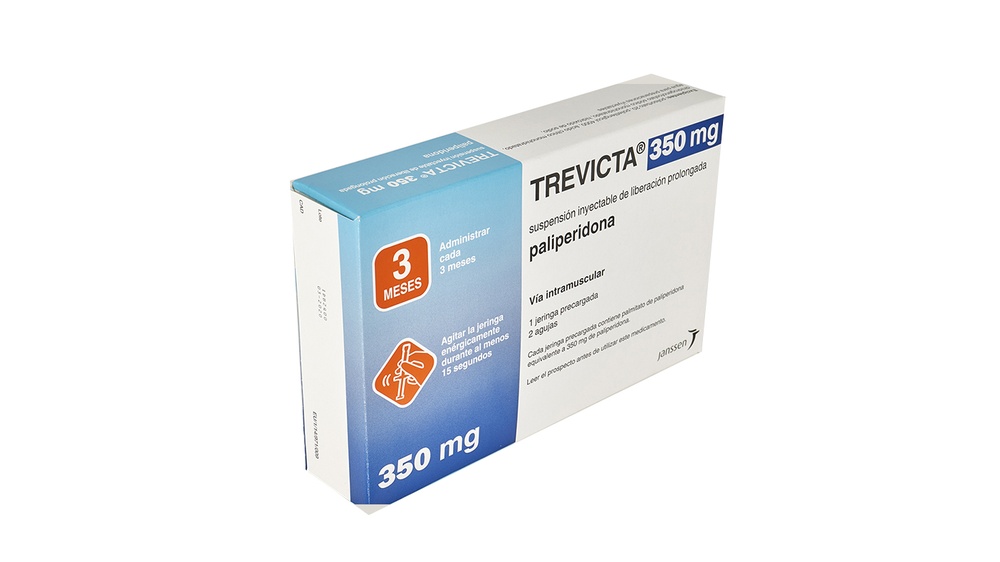
TREVICTA es una suspensión inyectable de liberación prolongada, de color blanco a blanquecino, que se presenta en una jeringa precargada que el médico o enfermero agitarán enérgicamente para homogeneizar la suspensión antes de inyectarla.
Cada envase contiene 1 jeringa precargada y 2 agujas.
Puede que solamente estén comercializados algunos tamaños de envases.
Titular de la autorización de comercialización
Janssen-Cilag International NV
Turnhoutseweg 30
B-2340 Beerse
Bélgica
Responsable la fabricación
Janssen Pharmaceutica NV
Turnhoutseweg 30
B-2340 Beerse
Bélgica
Pueden solicitar más información respecto a este medicamento dirigiéndose al representante local del titular de la autorización de comercialización.
België/Belgique/Belgien Janssen-Cilag NV Tel/Tél: +32 14 64 94 11 | Lietuva UAB “JOHNSON & JOHNSON” Tel: +370 5 278 68 88 |
???????? ”??????? & ??????? ????????” ???? ???.:+359 2 489 94 00 | Luxembourg/Luxemburg Janssen-Cilag NV Tél/Tel: +32 14 64 94 11 |
Ceská republika Janssen-Cilag s.r.o. Tel:+420 227 012 227 | Magyarország Janssen-Cilag Kft. Tel.:+36 1 884 2858 |
Danmark Janssen-Cilag A/S Tlf: +45 45 94 82 82 | Malta AM MANGION LTD. Tel: +356 2397 6000 |
Deutschland Janssen-Cilag GmbH Tel: +49 2137-955-955 | Nederland Janssen-Cilag B.V. Tel: +31 76 711 1111 |
Eesti UAB “JOHNSON & JOHNSON” Eesti filiaal Tel.: +372 617 7410 | Norge Janssen-Cilag AS Tlf: +47 24 12 65 00 |
Ελλ?δα Janssen-Cilag Φαρμακευτικ? Α.Ε.Β.Ε Tηλ: +30 210 80 90 000 | Österreich Janssen-Cilag Pharma GmbH Tel: +43 1 610 300 |
España Janssen-Cilag, S.A. Tel: +34 91 722 81 00 | Polska Janssen-Cilag Polska Sp. z o.o. Tel.: +48 22 237 60 00 |
France Janssen-Cilag Tel: 0 800 25 50 75 / +33 1 55 00 40 03 | Portugal Janssen-Cilag Farmacêutica, Lda. Tel: +351 214 368 600 |
Hrvatska Johnson & Johnson S.E. d.o.o. Tel: +385 1 6610 700 | România Johnson & Johnson România SRL Tel: +40 21 207 1800 |
Ireland Janssen Sciences Ireland UC Tel: +353 1 800 709 122 | Slovenija Johnson & Johnson d.o.o. Tel: +386 1 401 18 00 |
Ísland Janssen-Cilag AB C/o Vistor hf Sími: +354 535 7000 | Slovenská republika Johnson & Johnson s.r.o. Tel: +421 232 408 400 |
Italia Janssen-Cilag SpA Tel: +39 02 2510 1 | Suomi/Finland Janssen-Cilag Oy Puh/Tel: +358 207 531 300 |
Κ?προς Βαρν?βας Χατζηπαναγ?ς Λτδ Tηλ: +357 22 207 700 | Sverige Janssen-Cilag AB Tel: +46 8 626 50 00 |
Latvija UAB “JOHNSON & JOHNSON” filiale Latvija Tel: +371 6789 3561 | United Kingdom Janssen-Cilag Ltd. Tel: +44 1 494 567 444 |
Fecha de la última revisión de este prospecto:
La información detallada de este medicamento está disponible en la página web de la Agencia Europea de Medicamentos: http://www.ema.europa.eu/.
Información reservada para médicos o profesionales sanitarios
Esta información está destinada únicamente a los médicos o profesionales sanitarios, que deben leerla junto con la información de prescripción completa (Resumen de las Características del Producto).
| Administrar cada 3 meses |
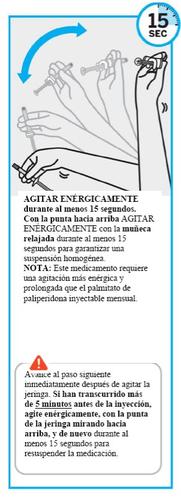
| Agitar la jeringa enérgicamente durante al menos 15 segundos |


Para inyección intramuscular exclusivamente. Noadministrar por ninguna otra vía.
Importante
Lea las instrucciones completas antes de usar el producto. Para asegurar una administración adecuada de TREVICTA, es necesario leer atentamente estas instrucciones de uso.
TREVICTA debe ser administrado por un profesional sanitario como inyección única. NOfraccionar la dosis en inyecciones repetidas.
TREVICTA está indicado para administración intramuscular exclusivamente. Inyectar lenta y profundamente en el músculo procurando evitar la inyección en un vaso sanguíneo.
Dosificación
TREVICTA se administrará una vez cada 3 meses.
Preparación
Desprenda la etiqueta de la jeringa e incorpórela a la historia clínica del paciente.
TREVICTA requiere una agitación más enérgica y prolongadaque el palmitato de paliperidona inyectable mensual. Agite la jeringa enérgicamente, con el extremo mirando hacia arriba, durante almenos 15 segundos en el intervalo de 5 minutos que precede a la administración(ver paso 2).
Selección de la aguja de seguridad de pared fina
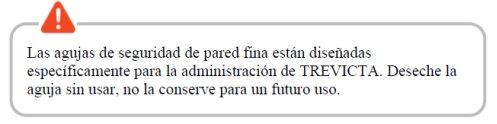
Las agujas de seguridad de pared fina están diseñadas para ser utilizadas con TREVICTA. Es importante utilizar únicamente las agujas que se facilitan en el envase de TREVICTA.
Contenido del envase por dosis
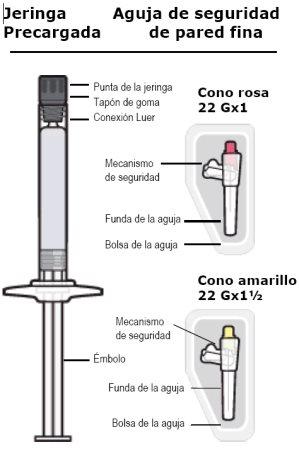

La selección de la aguja está determinada por el lugar de inyección y el peso del paciente.
|
|
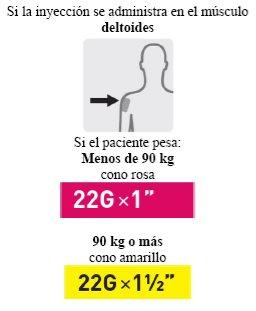
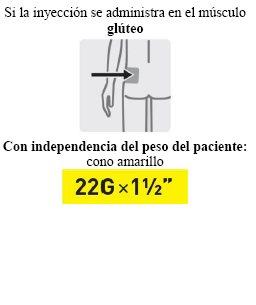

Compruebe la suspensión
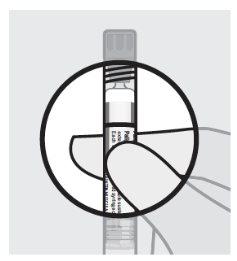
Después de agitar la jeringa durante al menos 15 segundos, compruebe el aspecto de la suspensión en el visor.
La suspensión debe presentar un aspecto uniforme y color blanco lechoso.
Es normal que aparezcan pequeñas burbujas de aire.
Abra el blíster de la aguja y retire el tapón.
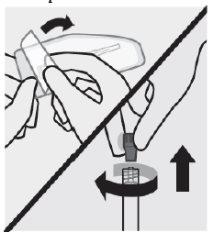
Primero, abra el blíster de la aguja despegando hasta la mitad la cubierta. Apóyese sobre una superficie limpia.
Luego, con la jeringa mirando hacia arriba, haga girar el tapón de goma tirando hacia fuera para extraerlo.
Sujete el blíster de la aguja.
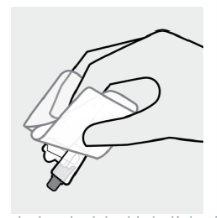
Doble hacia atrás la lámina que cubre la aguja y la bandeja de plástico. A continuación, agarre con firmeza la funda de la aguja sujetándola por el blíster, como se indica.
Acople la aguja
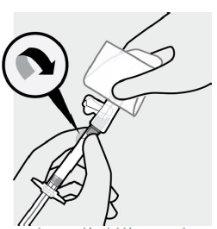
Con la otra mano, sujete la jeringa por la conexión del lúer y acople en ella la aguja de seguridad con un suave giro en el sentido de las agujas del reloj.
No retireel blíster hasta haber encajado perfectamente la jeringa y la aguja.
Retire el capuchón de la aguja
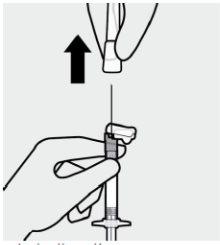
Quite el capuchón de la aguja tirando de ella en línea recta.
Nogire el capuchón, ya que se podría soltar la aguja de la jeringa.
Elimine las burbujas de aire
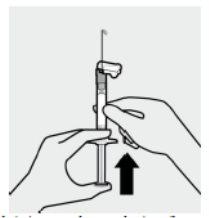
Dé unos pequeños golpecitos a la jeringa, con la punta hacia arriba, para que asciendan las burbujas de aire que pueda haber.
Lenta y cuidadosamente, presione el émbolo hacia arriba para sacar el aire.

Inyecte la dosis
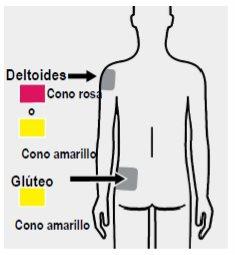
Lentamente inyecte el contenido íntegro de la jeringaintramuscularmente, de forma profunda en el deltoides o el glúteo.
No administrar por ninguna otra vía.

Proteja la aguja
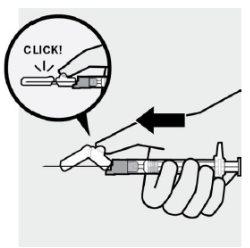
Después de la inyección, ayúdese con el pulgar o con una superficie plana para activar el mecanismo de seguridad de la aguja. La aguja estará segura cuando se oiga un “clic".
Eliminación correcta
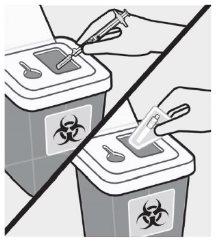
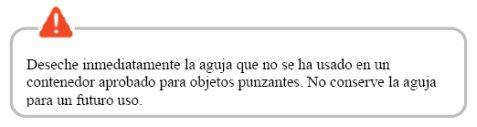
Deseche la jeringa y la aguja sin usar en un contenedor aprobado para objetos punzantes.
- País de registro
- Forma farmacéuticaINYECTABLE, 350 mg
- Código ATCN05AX13
- Precio medio en farmacia560.29 EUR
- Principio activo
- Requiere recetaSí
- Fabricante
- ComposiciónPOLISORBATO 20 (17.50 mg mg), FOSFATO MONOSODICO MONOHIDRATO (10.50 mg mg), HIDROXIDO DE SODIO (E 524) (9.45 mg mg)
- Esta información es de carácter general y no sustituye la consulta con un profesional sanitario.
- Alternativas a TREVICTA 350 MG SUSPENSION INYECTABLE DE LIBERACION PROLONGADAForma farmacéutica: INYECTABLE, 150 mg + 100 mgPrincipio activo: paliperidoneFabricante: Teva Pharma S.L.U.Requiere recetaForma farmacéutica: INYECTABLE, 50 mgPrincipio activo: paliperidoneFabricante: Teva Pharma S.L.U.Requiere recetaForma farmacéutica: INYECTABLE, 1000 mgPrincipio activo: paliperidoneFabricante: Janssen-Cilag International N.VRequiere receta
Médicos online para TREVICTA 350 MG SUSPENSION INYECTABLE DE LIBERACION PROLONGADA
Comenta la dosis, los posibles efectos secundarios, interacciones, contraindicaciones o la revisión de receta de TREVICTA 350 MG SUSPENSION INYECTABLE DE LIBERACION PROLONGADA, sujeto a valoración médica y a la normativa local.







Obtén una receta de TREVICTA 350 MG SUSPENSION INYECTABLE DE LIBERACION PROLONGADA online
Rellena un formulario de 2 minutos
Cuéntanos tus síntomas, historial y el medicamento que necesitas.
Elige un médico o nosotros te asignamos uno
Escoge un especialista o te conectamos con el próximo médico disponible.
El médico revisa tu caso
Normalmente en 30 minutos. Puede hacerte preguntas adicionales por chat.
Recógela en cualquier farmacia
Receta electrónica enviada a tu correo, válida en toda España.
Preguntas frecuentes
TREVICTA 350 MG SUSPENSION INYECTABLE DE LIBERACION PROLONGADA requiere receta en España. Puedes confirmarlo con un médico online según tu caso.
El principio activo de TREVICTA 350 MG SUSPENSION INYECTABLE DE LIBERACION PROLONGADA es paliperidone. Esta información ayuda a identificar medicamentos con la misma composición pero con diferentes nombres comerciales.
El precio medio en farmacia de TREVICTA 350 MG SUSPENSION INYECTABLE DE LIBERACION PROLONGADA es de aproximadamente 560.29 EUR. Puede variar según el fabricante y la forma farmacéutica.
TREVICTA 350 MG SUSPENSION INYECTABLE DE LIBERACION PROLONGADA es fabricado por Janssen-Cilag International N.V. La marca y el envase pueden variar según el distribuidor.
Los Médicos de familia, Psiquiatras, Dermatólogos, Cardiólogos, Endocrinólogos, Gastroenterólogos, Neumólogos, Nefrólogos, Reumatólogos, Hematólogos, Infectólogos, Alergólogos, Geriatras, Pediatras, Oncólogos pueden valorar la prescripción de TREVICTA 350 MG SUSPENSION INYECTABLE DE LIBERACION PROLONGADA cuando esté clínicamente indicado. Puedes reservar una videoconsulta para comentar tu caso y las opciones de tratamiento.
España cuenta con una infraestructura sanitaria bien desarrollada en ciudades principales como Madrid, Barcelona, Valencia y Sevilla. Las farmacias están ampliamente disponibles y operan bajo estrictas regulaciones, garantizando el acceso a medicamentos con receta.
Puedes comprar TREVICTA 350 MG SUSPENSION INYECTABLE DE LIBERACION PROLONGADA en Madrid, Barcelona, Sevilla o Valencia en cualquier farmacia local con una receta válida.
Para obtener una receta, puedes utilizar Oladoctor:
Otros medicamentos con el mismo principio activo (paliperidone) incluyen BACEQ 150 MG y BACEQ 100 MG SUSPENSION INYECTABLE DE LIBERACION PROLONGADA EFG, BACEQ 50 MG SUSPENSION INYECTABLE DE LIBERACION PROLONGADA EFG, BYANNLI 1.000 MG SUSPENSION INYECTABLE DE LIBERACION PROLONGADA EN JERINGA PRECARGADA. Pueden tener diferentes nombres comerciales o formulaciones, pero contienen el mismo componente terapéutico. Consulta siempre con un médico antes de cambiar o iniciar un nuevo medicamento.
